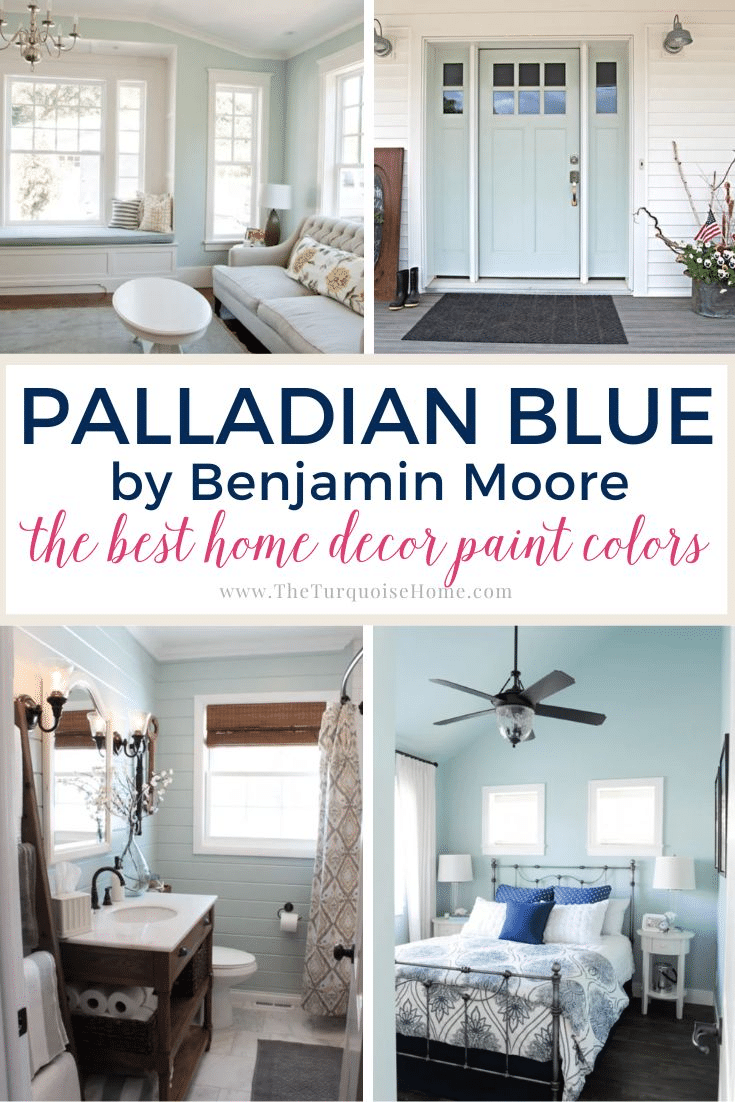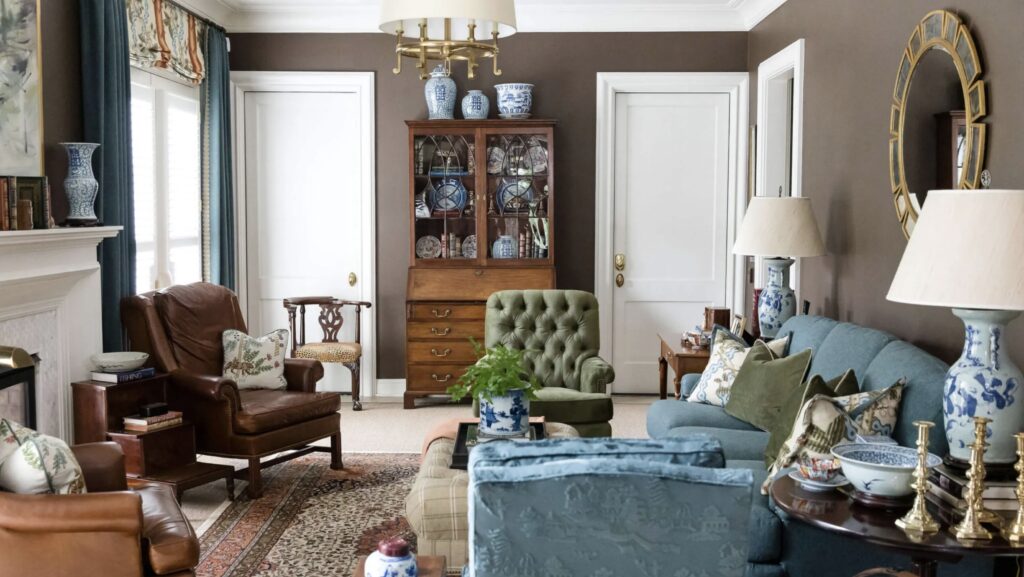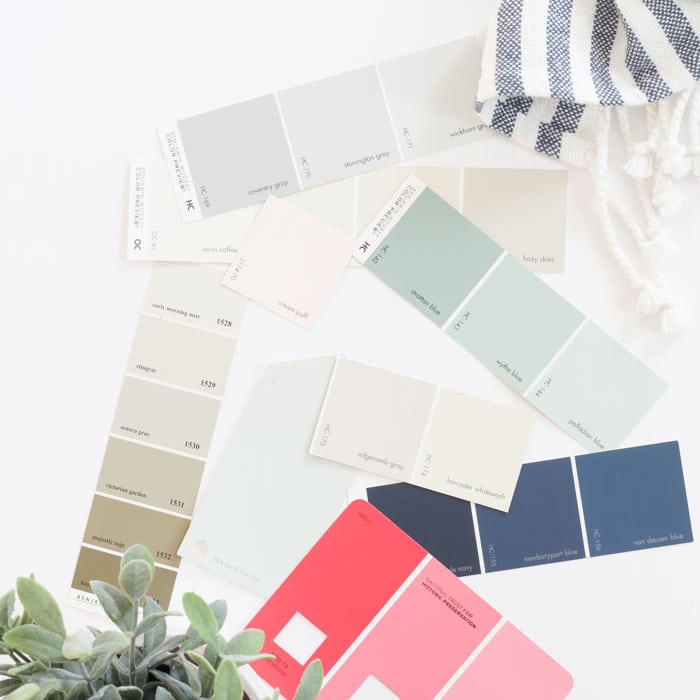
A whole house color scheme forms the backdrop for your home, which takes the guesswork out of decorating. Follow this step-by-step guide, based on color theory and real-life examples, to build your own whole home color palette. You'll save money, time and sanity when you use this process to make decorating choices!
Picking a whole house color palette, from painted walls to throw pillows, can seem daunting. I get countless emails and comments from sweet readers asking how to choose the right colors.
They often ask where to begin when they feel overwhelmed and have no clue how to pull a home together. And don't even get me started on the paint aisle at the hardware store. Talk about overwhelming!
How do you even start choosing paint for your whole home while staring at eleventy bajillion colors that don't even look the way they do on the chip once they're on your walls?!

Just the other day a reader asked whether you could use one paint color throughout the whole house. I'll give you a hint: you can! These are all questions I had when I started decorating the three homes we've owned so far.
Each of them came to me as a blank slate, and let's just say I learned quite a few lessons from the first house. As I sat staring at the home we live in now, I decided to create a color palette that kept things simple and straightforward. I wanted a plan for my home that would let me:
- Make easy design choices about the paint colors on my walls and the decor I buy at the store.
- Never second-guess the decisions I make the first time. It turns out that choosing a select few colors now prevents confusion down the road.
- Walk through a store quickly and confidently know which items will and won't work in my home. Fewer impulse buys and wasted trips to the store is always a win in my book!
- And … create a home that flows well together without looking matchy-matchy.
The good news is you don't have to be an interior designer to select the paint colors for your home!
Whole House
Color Palette Worksheet
If you'd like an easy way to discover your colors and keep them all in one spot, I've made a free worksheet to go along with each of these steps!
Get the FREE Worksheet
What to Know Before You Pick Paint Colors
This includes not just your walls, but your floors, furnishings, accents and more!
1. Get Inspired
We'll look for inspiration for possible color combinations by checking out the colors already surrounding us.
What are your favorite colors? Look around your home and see whether a color pattern you love is already there. Scroll through your Pinterest account and see if you've pinned a lot of one color.
And finally, peek into your closet. Do you mostly wear neutrals or lots of color? Narrow your inspiration down to 2-3 favorite colors from these sources.
Need help figuring out your decorating style? Start here!
2. Choose the Mood
I like to think of my home in terms of the season and when I feel most comfortable in it. Here are some traits you might relate to when it comes to seasons, mood and color.
- Spring – open, creative, clean, on-trend, contemporary, friendly and simple
- Colors: light, bright and clear. Pastels like yellow and lime green.
- Summer – elegant, graceful, balanced, efficient, romantic, luxurious, abstract, casual
- Colors: cool, delicate and muted. Lavender, mint, navy and greens.
- Autumn – passionate, warm, earthy, organic, comfortable, family-centered, historical
- Colors: warm, intense and muted. Burnt umber, pale straw, reds and browns.
- Winter – strong, dynamic, focused, luxurious, glamorous, decisive, uncompromising
- Cool, strong, intense and clear. Ice blues, metallics, neons and blacks.
I don't want to dive too deep into color psychology, but these moods will guide you as you think about how colors can play nicely together in your home. You can definitely overlap between seasons, but you'll likely find yourself drawn to one more than the other.
3. Use the Color Wheel to Your Advantage
Understanding basic color theory helps when deciding which colors to bring into your home. The color wheel is a tool that shows how colors work together. Let's dive in!
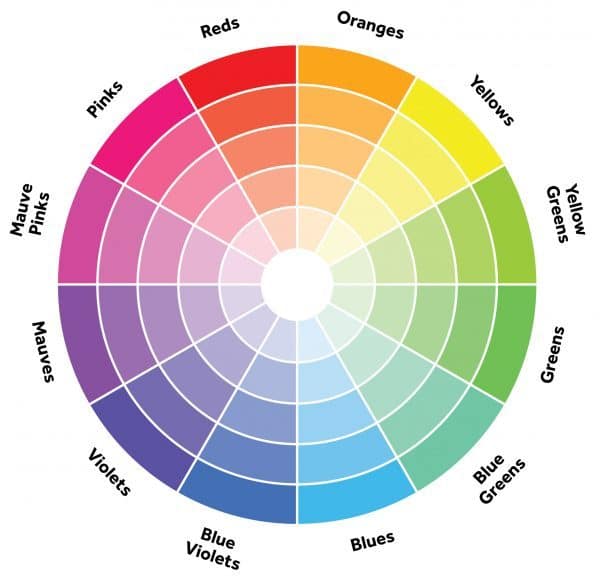
- Colors that sit next to each other on the wheel are called analogous and create a harmonious, casual and relaxing atmosphere (perfect for a bedroom). I use a lot of blues and greens in my home and mix them often. This creates the easygoing feel I'm after!
- Colors that sit opposite each other on the color wheel are called complementary colors. They create a dramatic, colorful atmosphere in your home. I love to pair pops of pink with my blues and greens. It's a complementary color and looks fabulous in small doses, at least to someone like me who loves color!
- If you want a monochromatic color scheme in your home, that's perfectly fine too! Pick your favorite color and use different tones of it throughout the house. This answers the question from the sweet reader above who wanted to know if she could use the same paint color throughout the whole house. Absolutely! Just use different shades and it will look so good!
Warm vs. Cool Colors
It's also helpful to know your warm and cool colors. Keep in mind that most neutrals carry a warm or cool undertone, so it's important to remember this difference.
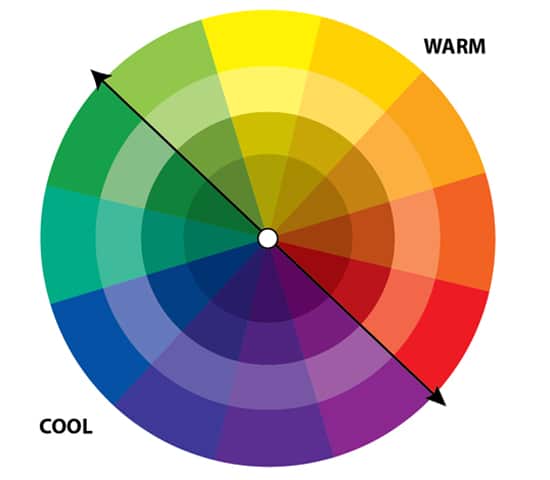
- Warm colors lend a happy, fun and energetic vibe. They tend to push their way into a space, sometimes making rooms look smaller than they are.
- Cool colors lend themselves to a calm, soothing and relaxing vibe. They tend to create a feeling of more space, so rooms can feel larger.
You can choose one or the other, or mix the two to create both calming and cheerful feelings in a space. I personally favor cool colors like blues and greens, but I like to add pops of pink and yellow for fun and energy!
4. Consider Hard Finishes
Take a look at the permanent colors already in your home, such as flooring, cabinet and countertop colors. Do you have wood floors with warm or cool undertones?
Are your cabinets a warm wood or a cool color? Do your countertops work well with browns or grays, or do they have hints of both? Are you lucky enough to have very neutral cabinets and countertops that will go with anything? (Yay!)
One of the best decisions you can make, if you have wood floors installed, is to choose a medium brown stain. Then your floors will act like blue jeans, which go with anything!
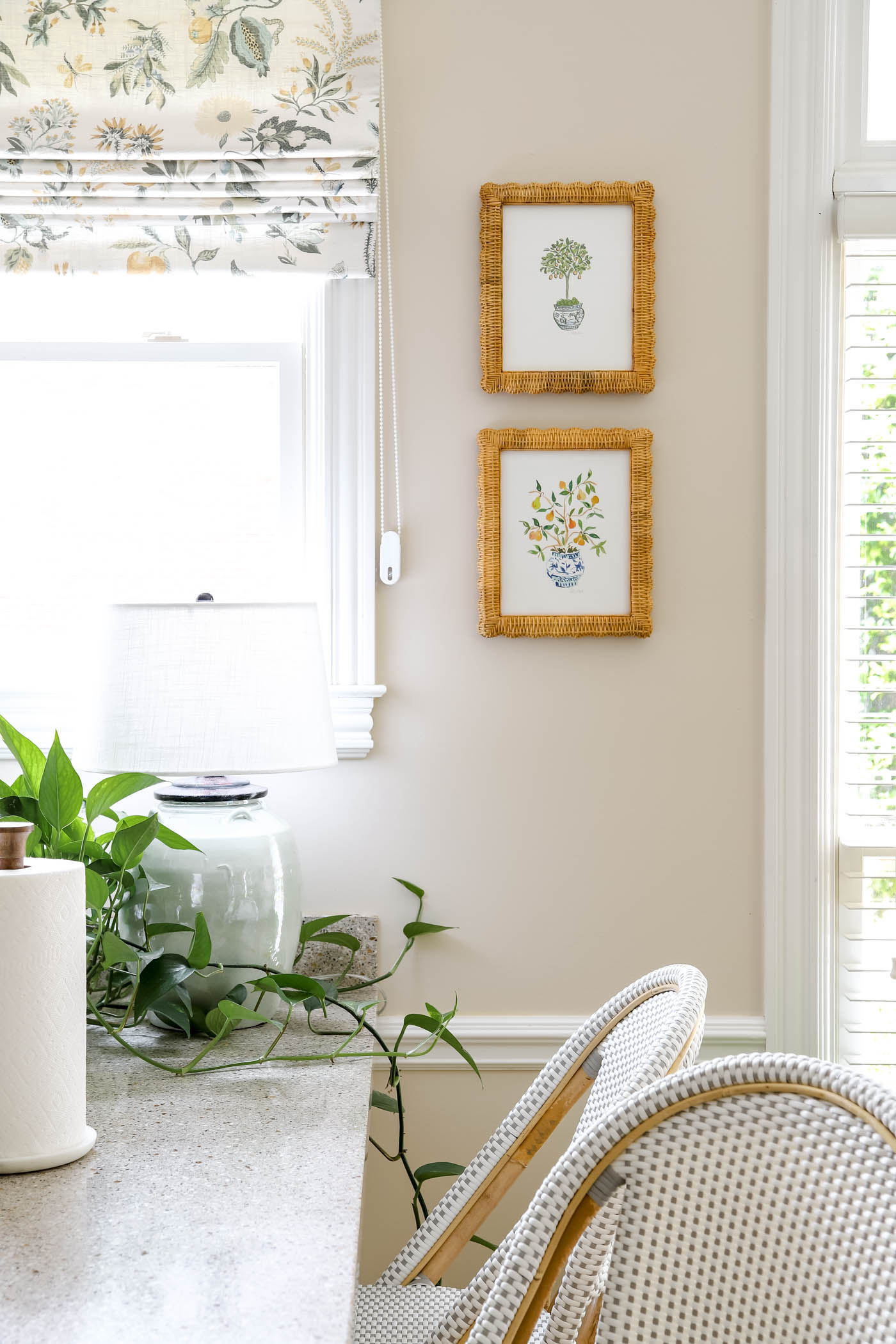
The existing countertops in my kitchen have browns, taupes and greige tones in them. So I chose a main color that worked with the countertops instead of against them!
How to Choose a Whole House Color Palette
Let's walk through the step-by-step process of choosing paint colors that work together seamlessly!
1. Choose Trim and Ceiling Paint Color
Start with your trim color, since this is the paint that will be used throughout the entire home. Typically this is a clean white or off-white that you can use in every room. I personally use Simply White, a creamy white, on every trim, ceiling and cabinet in my home.
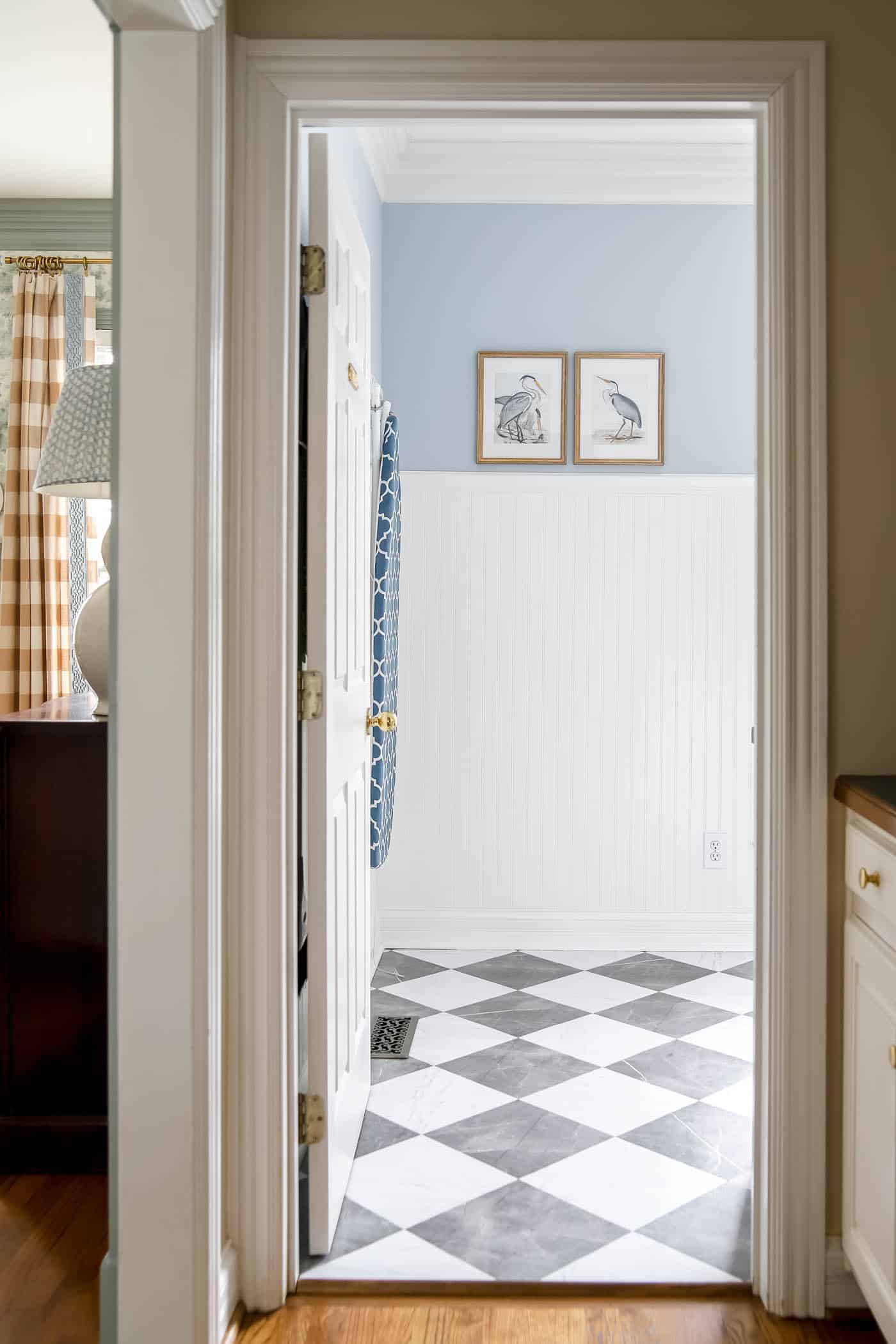
When you move into a new home, the trim color is often already chosen for you and can be costly to change. So you'll need to consider whether your trim is a pure white or an off-white.
If it isn't pure white, choose wall colors with some warmth so your trim doesn't look dingy. Or just be prepared for how it may look, and know you may need to repaint it in your new default white.
When choosing a white, think about the colors you already have in your home. If your floors are warm and you're going for a complementary color scheme, choose a cool, crisp white.
If your home has blue cabinets and you want a monochromatic palette, you'll want a cool white too. If red is your favorite color and you want a monochromatic palette, choose a warm white.
Tip: You can paint a room white and it can match your trim color. Just use semi-gloss or gloss sheen on the trim and flat or eggshell sheen on the walls, and the paint will read differently.
2. Choose Your Primary Neutral Color for Your Main Space
Next, choose a neutral paint color for your common areas. Depending on your floor plan, this may include living rooms, kitchens, hallways and entryways.
In most modern homes with open floor plans, these rooms all flow together and should be treated as one large room. In homes with a more closed layout, you may be able to choose different paint colors for individual rooms.
When choosing a neutral, most people pick a gray, beige or white. But you don't have to stick to those. It just needs to be a lighter color that plays well with others.
Keep the undertones (cool vs. warm) in mind and how the color will work with your trim color.
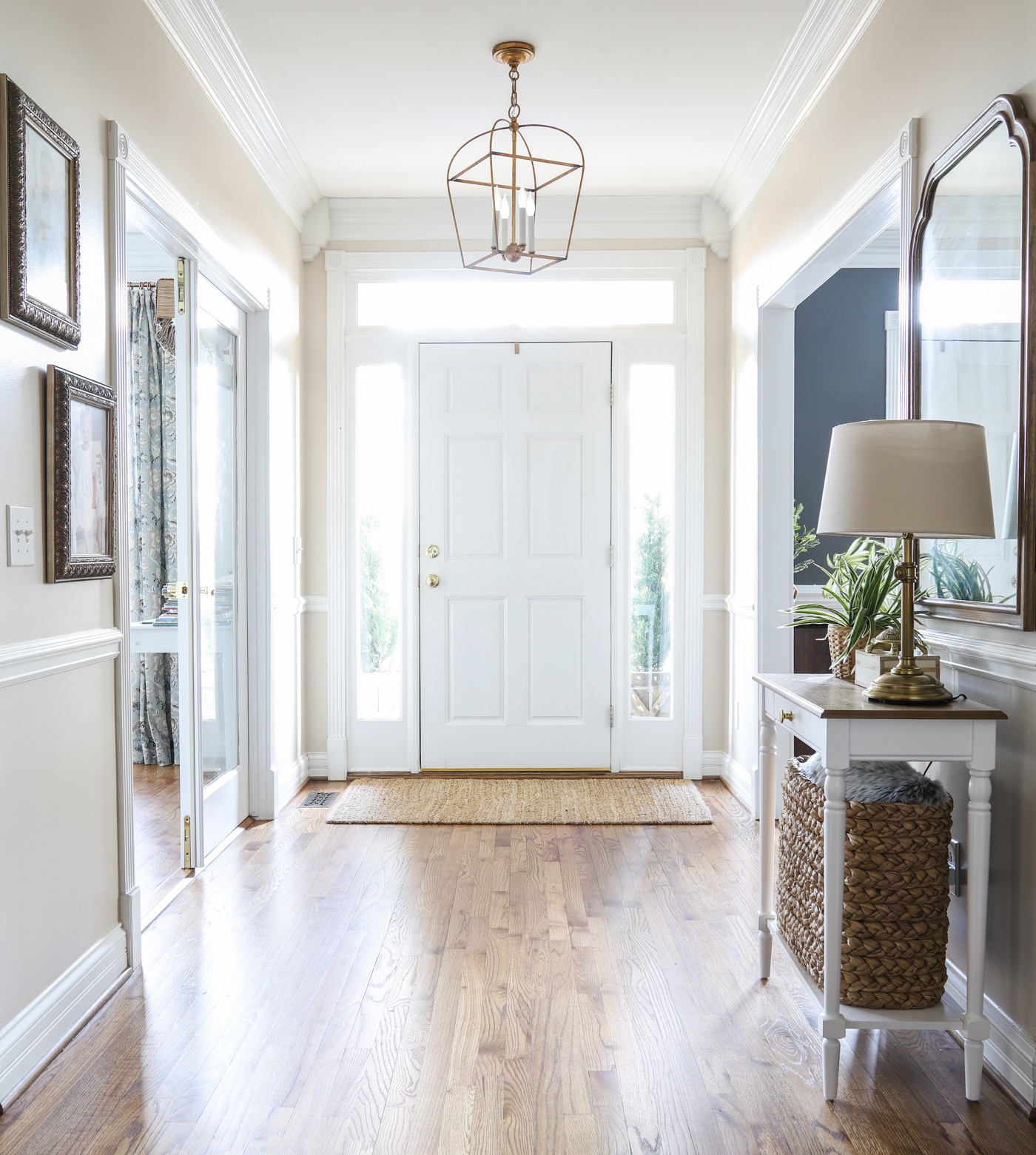
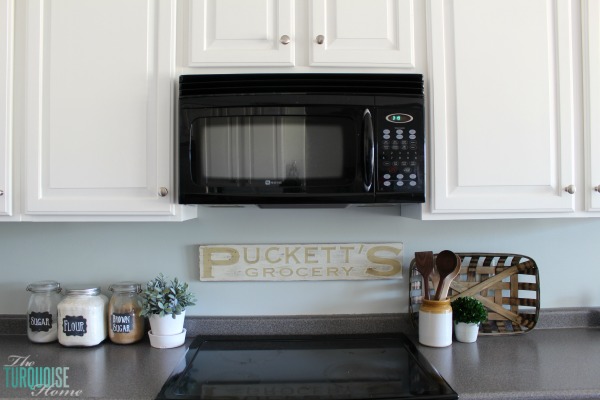
I chose a green-beige neutral for both my current home and my previous one. In my current home, I used Edgecomb Gray in my kitchen, hallways, entryway, stairwell and loft area.
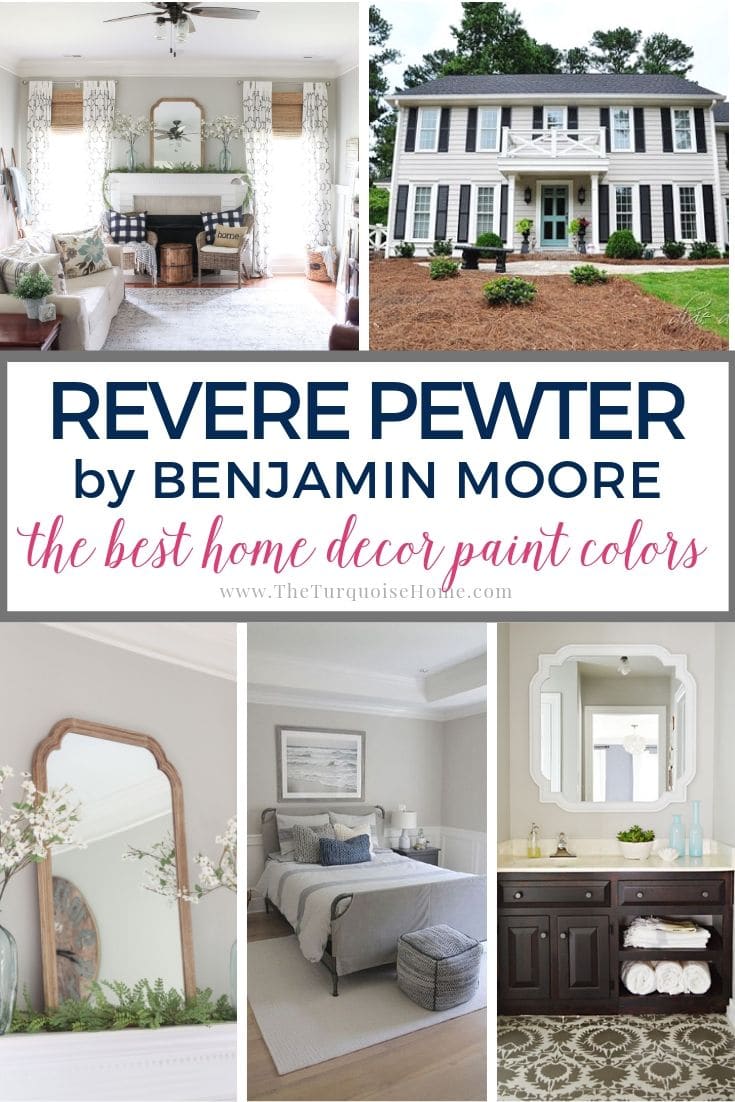
In my former home, I picked Revere Pewter as the main color for my living room and hallways.
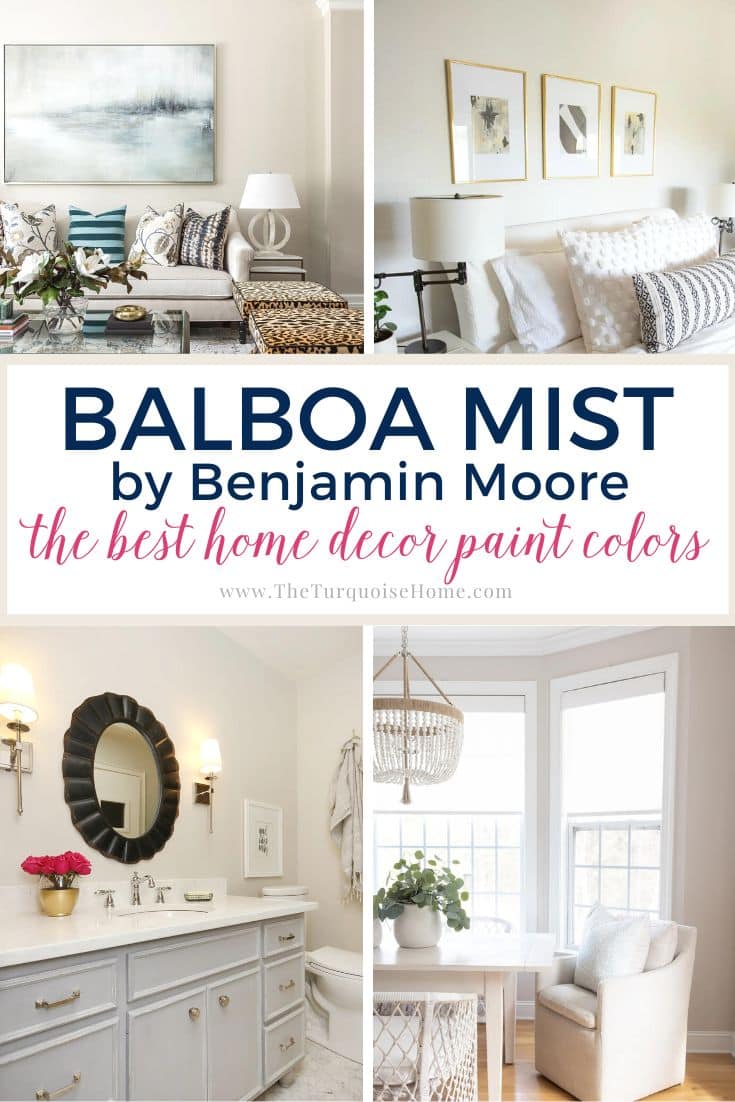
Popular Neutral Paint Colors
As always, try any and all colors on your walls before committing. Colors look different in every room depending on other colors, lighting, the room's direction and more!
PRO Tip
Whenever you choose a new paint color, try out the real paint color in your home first!
The easiest and quickest way to do that is with Samplize! I use them exclusively for paint samples now. There's no mess and no leftover sample pots. Plus, these no-mess, peel-and-stick rectangles made from real paint are easy to move around the room and easy to save for future reference!
Order REAL Paint Samples
3. Choose Another Color for Secondary Rooms
As we move into the secondary living spaces, bathrooms and laundry rooms, it's time to pick some fun colors that work well together!
Go back to the color wheel and the mood you want in your home to choose another color. This color will show up on walls and accessories throughout your home.
It could also be another neutral, like black, gray, taupe or beige. Just pick a general color, since you can use varying shades of the same color and everything will still look cohesive.
For me, I chose shades of blue and green. Surprise, surprise! Ha!
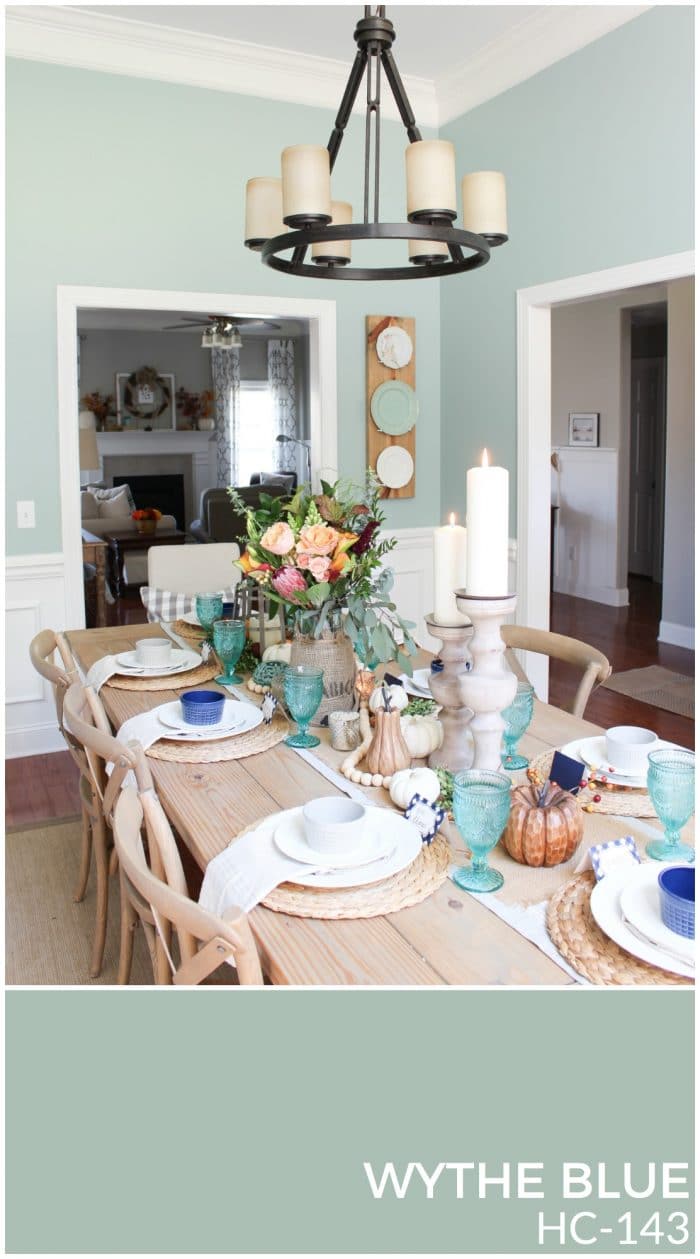
In my former home, I chose Wythe Blue (by Benjamin Moore) as my blue-green paint color. It was the wall color in my dining room and showed up in many of the accessories throughout my home. I toned it down quite a bit and painted my kitchen walls a very light blue-green (Sea Salt by Sherwin Williams).
4. Choose an Accent Color for Bedrooms, Small Rooms and Accessories
This accent color can work in a bedroom or small space for a pop of color. Or you can simply bring it in through accessories! Use it in small doses, either on the walls of separate rooms, on an accent wall or as a door color.
These are great colors for kids' bedrooms upstairs, where they can't be seen from the main living spaces. I think kids should have a say in how they decorate their rooms, so if they want a fun color that doesn't match the rest of the house, that's fine!
You can choose either a harmonious color (next to your first color on the color wheel) or a complementary color (opposite your first color on the color wheel).
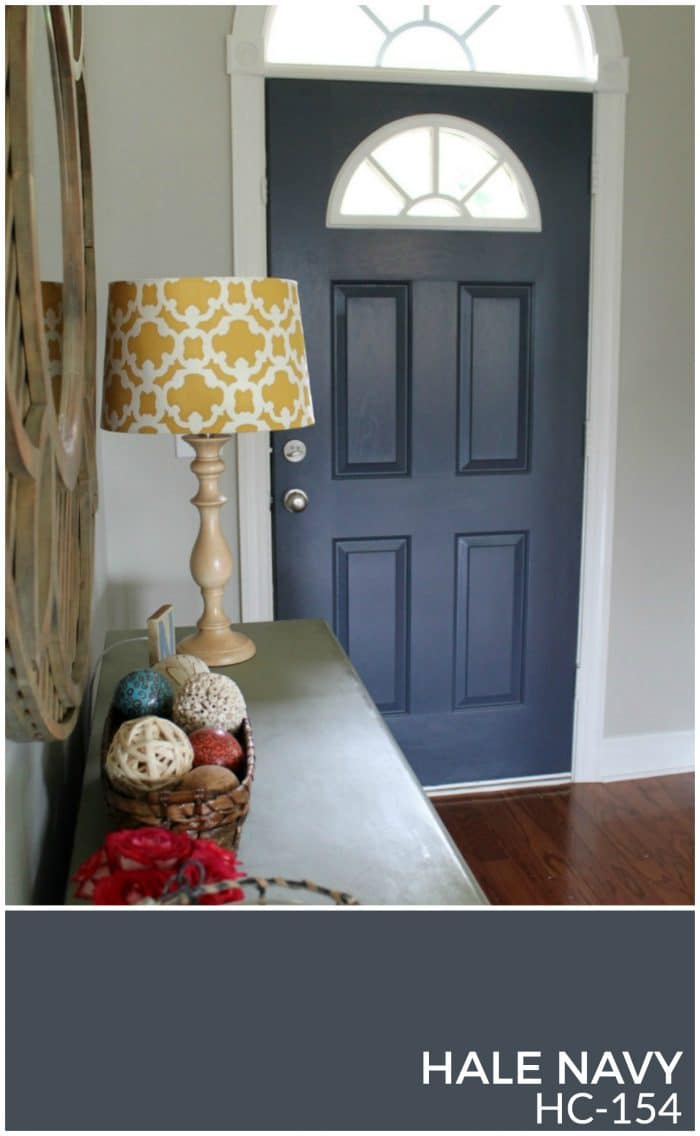
I use Hale Navy by Benjamin Moore as an accent color in my home. I've used it in my living room, and I once painted the insides of my doors Hale Navy.
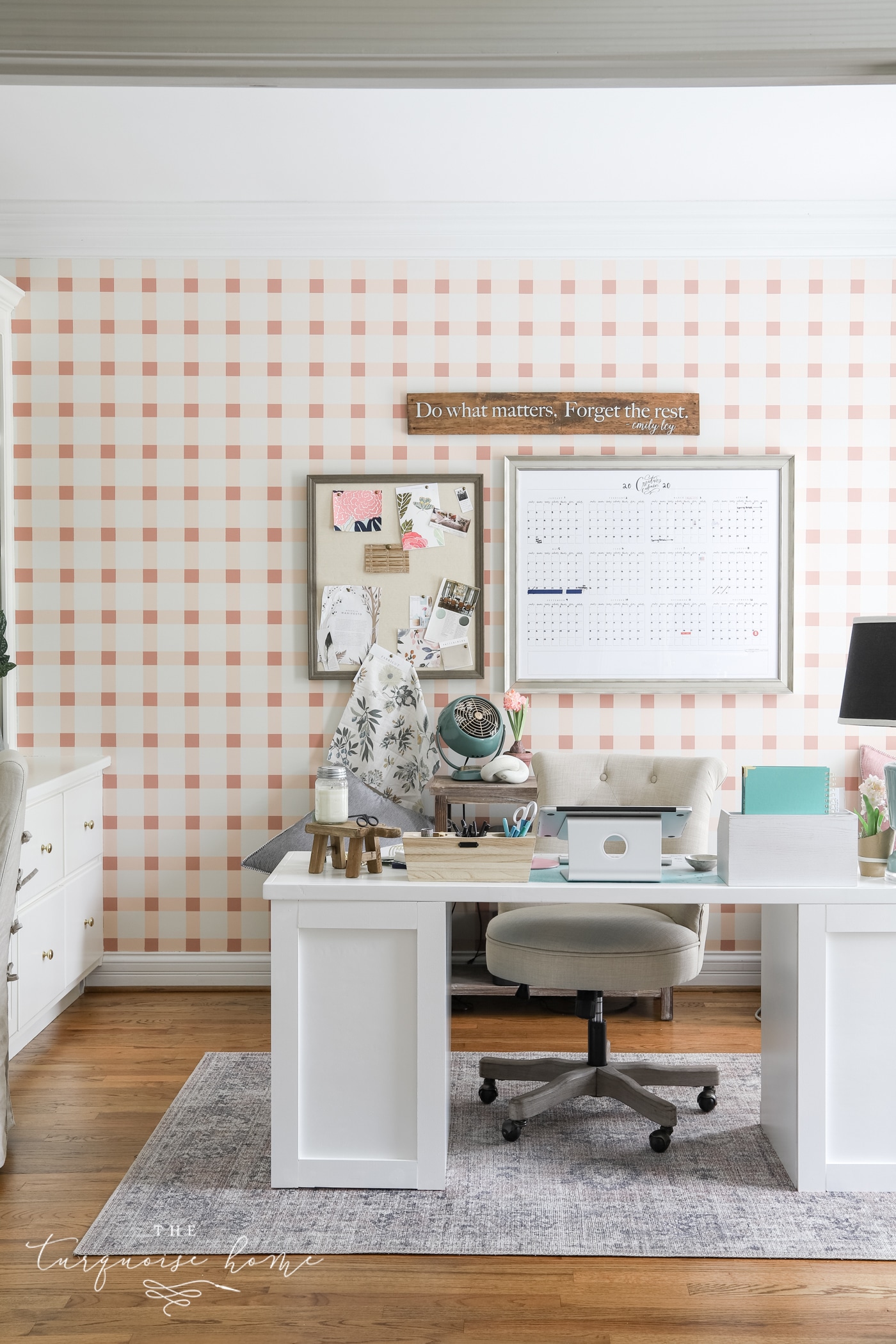
I also like to use pink as an accent color in my decor. For example, my office has a pink plaid accent wall that you can see from the front entrance of my home!
Frequently Asked Questions
How Many Colors Should Be in a Whole House Paint Color Scheme?
A whole house paint color scheme should include 4-8 paint colors.
– 1 white for the trim and ceilings
– 1 neutral for main living spaces and more
– 1-2 additional colors for smaller living and accent spaces
– 1-4 more accent colors for bedrooms, accessories and more!
Do I Have to Choose All of the Paint Colors at Once?
No! But it helps to pick the trim and neutral paint colors quickly. Other colors can be chosen as needed, but set the foundation first.
A Real-Life Whole House Color Palette
Once you've settled on all your colors, create a collage with them or make one on a poster board.
It's easy to make a collage with a digital design tool like Canva or PicMonkey. I made a sample floor plan and placed the paint colors I chose in each room. I even added some of the wallpaper and fabrics I use in the spaces.
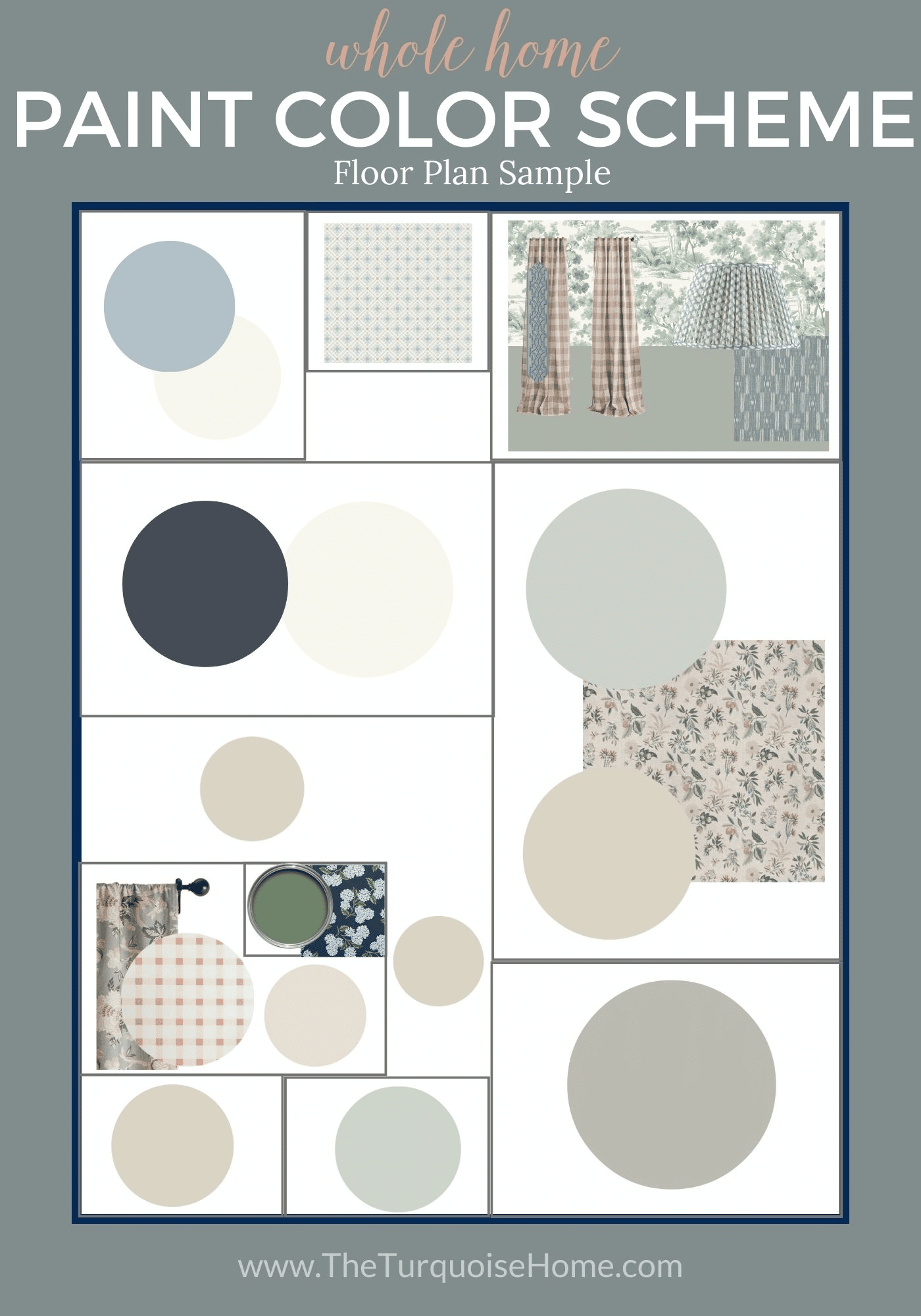
This lets you see all the colors together and gives you a visual when you're choosing things.
I highly recommend making a small binder where you can keep this color palette printed out. You can also add any paint swatches and fabric swatches you use, and take it with you when you shop for decor or new fabrics.
My Paint Colors by Room
Find every paint color we've used in our home, room by room!
See Them All
Bring Your Color Palette Into Your Whole Home
You may be asking yourself what now. You have your colors, but how do you actually carry them over to your walls, furniture and accessories?
You'll obviously use the white on trim and the insides of closets. And you'll want to paint the main living space and any open areas around it in your default neutral.
But you may not want to start painting every single space. Instead, look for fabrics or textiles that use your colors, and then decide which color would look best on the walls.
I highly recommend creating a vision board for each space with your color palette in mind.
You don't have to stick with the saturated hues in your palette. You can choose different shades or tones of your palette colors for different rooms.
Here's an example of how I used color in three different rooms in my house, yet they all flow together.
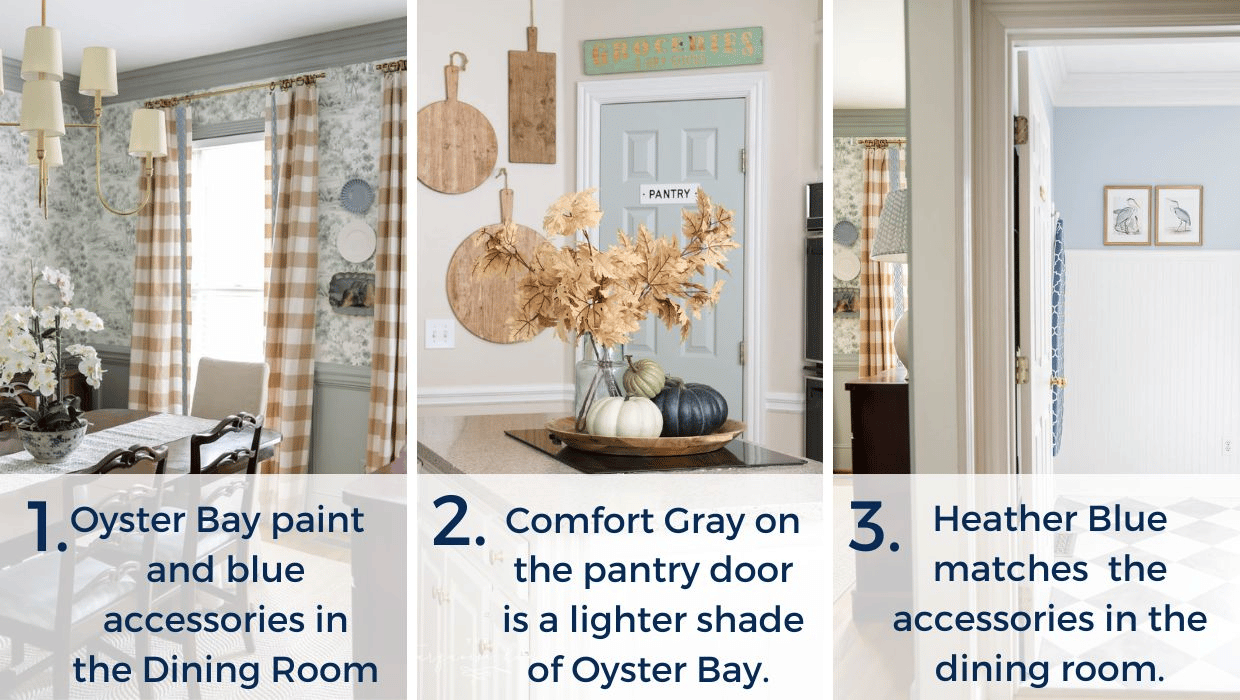
I hope you see how knowing your home's color palette makes everything flow together! It's so simple when I'm shopping for decor. If an item is in one of the colors in my home, I can buy it with confidence and use it interchangeably in any room!
I hope you find freedom in knowing how to choose the paint palette for your entire home!
Free Whole Home Color Palette Worksheet
Whole House
Color Palette Worksheet
If you'd like an easy way to discover your colors and keep them in one spot, I've made a free worksheet to go along with each of these steps!
Get the FREE Worksheet
More Posts You Will Love:
- How to Paint a Concrete Patio
- The Best Gray Paint Colors for Your Home
- The Best Blue Paint Colors For Your Home
- How to Paint Outlet Covers
- Which Interior Paint Finishes to Use? {+ Where To Use Them}
SaveSaveSaveSaveSaveSaveSaveSaveSaveSave