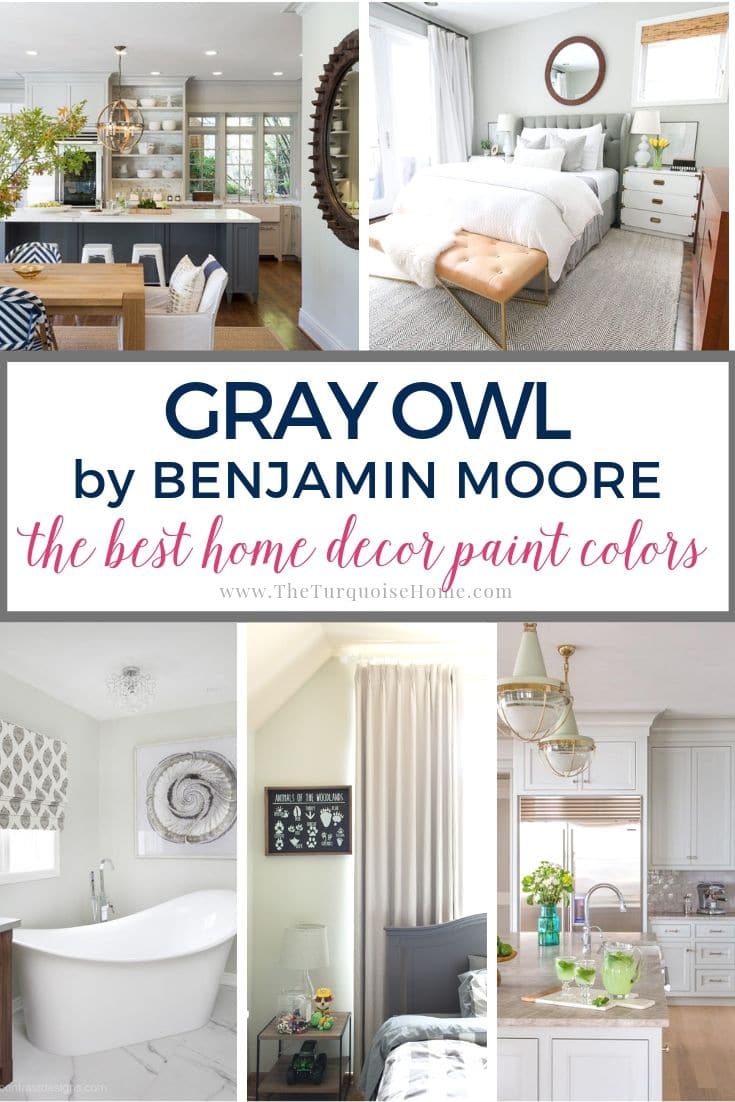
Gray Owl by Benjamin Moore is a soft neutral gray paint color. It’s a lovely choice for anyone who wants a light feel in the room without using white. It makes a nice backdrop for white accent pieces to stand out, creating a clean look while warming the room.
PRO Tip
Whenever you’re choosing a new paint color, you need to try out the real paint color in your home first!
The easiest and quickest way to do that is with Samplize! I use them exclusively for paint samples now. There’s no mess and no leftover sample pots of paint. Plus, these no-mess, peel-and-stick rectangles are made from real paint, so they’re easy to move around the room and easy to save for future reference!
Order REAL Paint Samples
Benjamin Moore’s Gray Owl
BM Gray Owl is certainly a popular color in the home decor world. In fact, according to a recent poll, it’s the second most popular gray, right behind Revere Pewter.
Its popularity comes from the subtle depth it gives while still being a truly neutral paint color. This warm, creamy gray is extremely easy to live with and works in a wide variety of rooms and lighting conditions.
NOTE: If you’re painting the room yourself, these tools will help tremendously. And this post will give you my best tips for painting a room in 5 easy steps.
Gray Owl Undertones
Compared with similar grays, Gray Owl has green undertones, whereas others usually have blue or brown undertones.
In lighting that brings out the blue shades, Gray Owl will look more like a crisp neutral. Lots of natural light and blue accents in the rugs or furniture will highlight the blue even further.
The green undertones, on the other hand, can help Gray Owl feel cozy and warmer when paired with earth tones. When paired with a darker gray, you’ll see the green stand out without looking muddy.
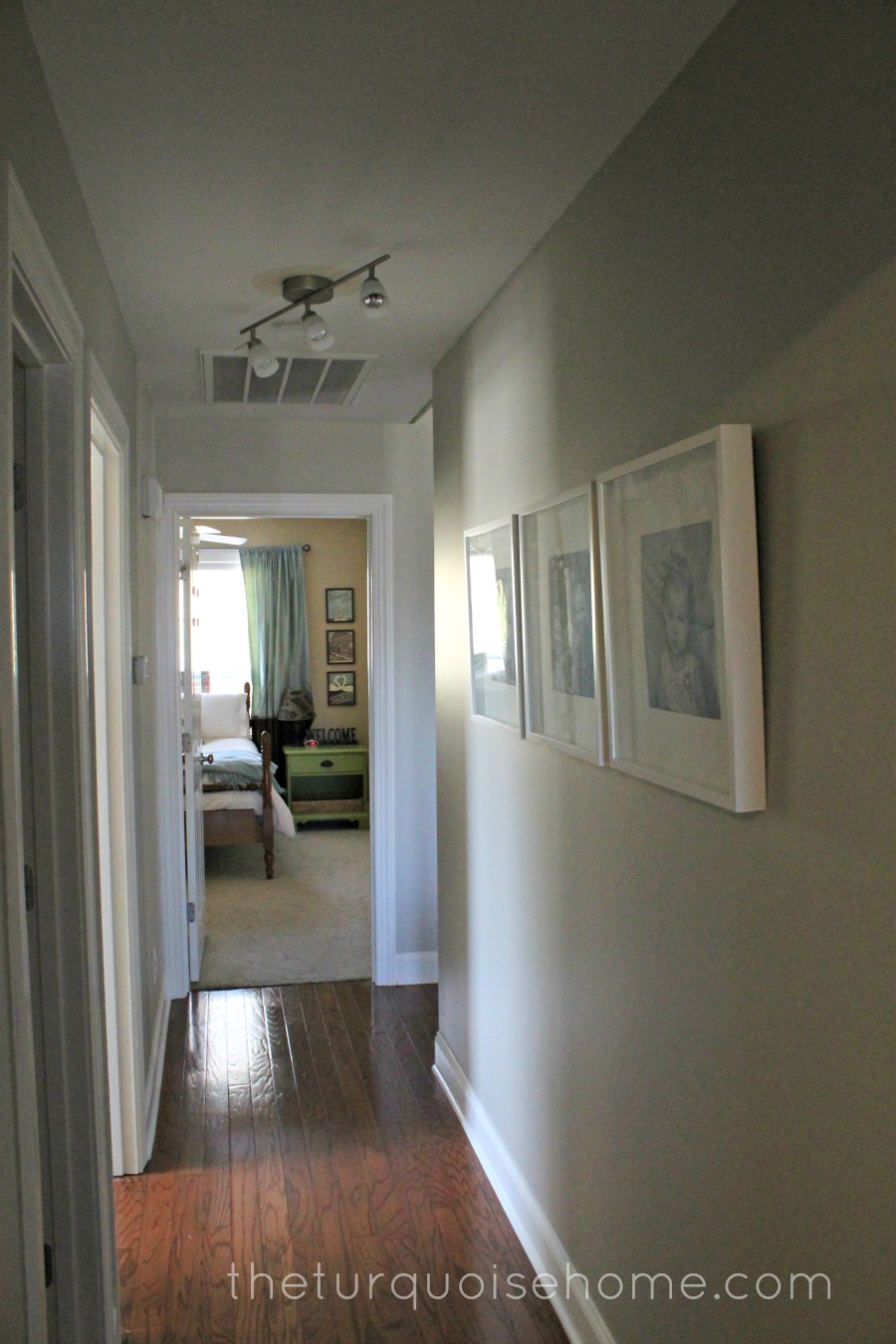
It’s worth noting that Gray Owl can shift dramatically between green and blue undertones depending on the light. One hallway could show three variations—green undertones, blue undertones and a light gray—all on the same walls, depending on how the light hits!
Be sure to sample it and view it under every type of light that will play on it in that room, because the variations can be quite dramatic. I like to paint a white poster board with the color, leaving a white border around the edge. Then I move it around the space at different times of day to see how the light plays with the paint.
Coordinating Colors
Being a neutral shade, Gray Owl pairs nicely with a wide variety of colors. For an earthy feel, pair it with Tea (2091-10) and Smoky Ash (986) from Benjamin Moore. Tea is a ruddy brown, while Smoky Ash is a brown with gray undertones. Gray Owl will look greener in rooms with these colors.
Another trio with this classic gray from Benjamin Moore is Silver Spring (2120-50) and Appalachian Brown (2115-10). Appalachian Brown is a rich, deep, true brown, and Silver Spring is a metallic gray with no brown undertones. Like the first set, this one also brings out the green in Gray Owl, and Gray Owl helps the trio feel neat and clean.
Pairings that bring out the blue undertones include Anew Gray, along with Burnt Ember and Peacock. Hale Navy and Edgecomb Gray sandwich Gray Owl between a lighter gray and a deep blue, and they also draw out the blue undertones.
Gray Owl Examples in Rooms
I know reading about undertones can be a bit confusing, so let’s look at some real examples of this pretty Benjamin Moore gray in a few rooms.
Kitchens with Gray Owl
Light wood with white trim in this kitchen with Gray Owl cabinets shows how light can play off this color. This image from Main Street Kitchens at Botellos shows how, in the back, the blue undertones come out in the darker light. In the foreground on the island, Gray Owl takes on a pure gray.
Notice how Gray Owl warms and cools this room at the same time—pretty cool, right?
The open layout of this Gray Owl kitchen lets us see the color with multiple undertones in this design from Heydt Designs.
On the cabinets in the back, Gray Owl takes on blue undertones, though this may shift throughout the day. On the wall to the right, the green undertones show up. That may come from the greenery outside reflecting onto it.
The dark gray island helps Gray Owl recede into its undertones. With dark gray on the island and white on the ceiling acting as bookends, Gray Owl shows off its chameleon nature.
Bedrooms with Gray Owl
This bedroom shows Gray Owl in its truest form. This gray with green undertones matches the swatch almost exactly. DIY Playbook shows how Gray Owl warms this room significantly and ties the wood and gray furniture together.
This next bedroom with Gray Owl makes it look like a light green or blue. The room designed by Sengersen shows how the gray gets pushed out by the dark gray bedding and headboard, along with true gray curtains. That contrast really pulls out the green undertones. You can see it gets greener the farther it is from the light.
Bathrooms with Gray Owl
Similar to the first bedroom above, this bathroom with Gray Owl is very true to the color. Claire Jeffords uses Gray Owl to provide a warm backdrop for the white fixtures with its green undertones. Here Gray Owl shows its gray color without being forced to exaggerate its undertones.
This bathroom with Gray Owl is similar to the one above but feels a little darker. It has less green undertone thanks to the deeper gray and the navy blue on the tiles. Gray Owl helps this bathroom feel more open and buttoned up.
Living and Dining Rooms with Gray Owl
This living room with Gray Owl may look like it has blue undertones to some people and green undertones to others. It isn’t swayed heavily one way or the other by lighting and accents in the room.
This Gray Owl dining room from The Essence of Home is a darker take on Gray Owl than we’ve seen so far. With more light, it would likely pull green undertones, but in this photo it reads as a true gray.
Now that you’ve had a chance to look at these lovely rooms and get a feel for how the paint looks in different settings, are you tempted to grab a sample or two? I know I am!
Don’t forget to check out these other fantastic paint colors!
Tips for Painting a Room Yourself
I’ve gathered some of the best tools for painting a room yourself. First, check out this post I wrote: Painting a Room in 5 Easy Steps. These are the top tools I use when painting my own rooms, which is how they get painted 95% of the time!
- Paint Brush – These brushes cost a little more than a basic brush, but they’re worth it! I’ve used these for more than a decade, and if you wash them out well after each use, they’ll last for years.
- Painter’s Tape – an absolute MUST for taping off edges. You’ll need to tape off every edge if you don’t have a steady hand.
- Drop Cloths – a must-have if you don’t already have some lying around the house.
- Paint cup – Sure, you could use any old cup, but I’ve come to swear by this one. The magnetic piece holds your brush neatly in place when you need to take a break. And it fits my hand perfectly, so it doesn’t cramp.
- Roller Tray – I’ve found the only paint tray I’ll ever use again. The magnetic piece is great for holding the roller in place. The liners are a luxury, but I won’t paint without them, because they make cleanup a breeze!
More Paint Colors You Will Love: