Today's paint color spotlight is Hale Navy, one of the most popular navy paints. It's a rich, multi-faceted dark blue that can make a room feel cozy and comfortable, or it can be a striking yet understated pop of color.
This is one of my favorite paint colors. I used it to paint the inside of my front door several years ago, and I've never looked back! I've since painted my new living room Hale Navy, as you'll see in the living room section below.
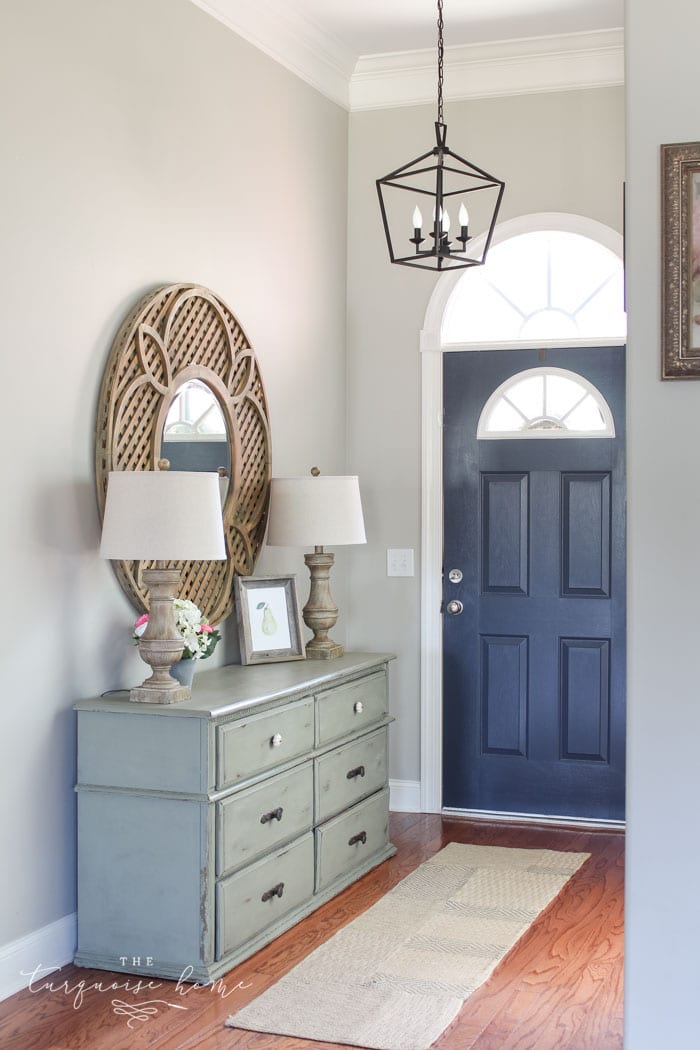
Whether you're after rustic charm or a modern look that draws the eye, Benjamin Moore Hale Navy may be exactly what you need. Here's everything you need to know about Hale Navy!
NOTE: If you're painting the room yourself, these tools will make a big difference. And this post shares my best tips for painting a room in 5 easy steps.

Hale Navy Undertones
Surprisingly, this navy is quite unusual compared to other blues. It has only the faintest green undertone, and that only appears when there's a lot of greenery nearby. Instead, BM Hale Navy shows gray undertones in almost any setting, especially next to wood or lighter stained floors. The gray also comes out when it's paired with gray roofing or brick.
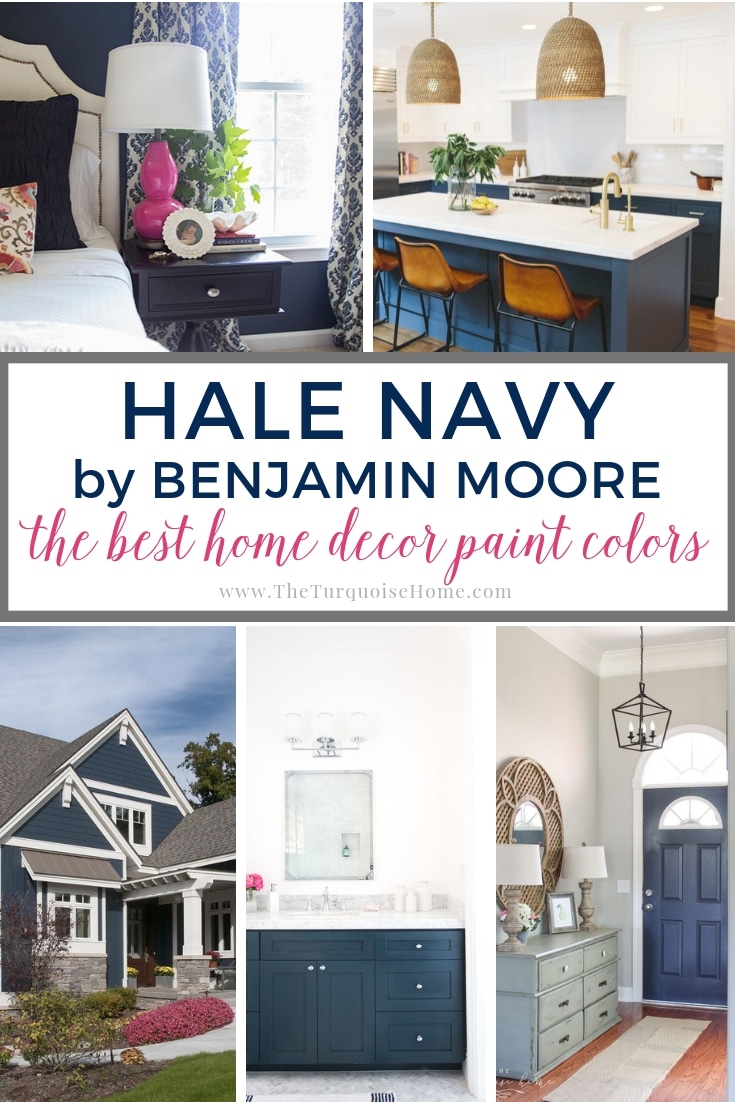
Hale Navy works in almost any room because it's a transition color, meaning it has both warm and cool undertones. The one caveat is a room with little natural light, where its darkness can feel overpowering. In that case, use it on an accent wall so it doesn't feel too dark.
Many paint colors shift noticeably in south- or north-facing rooms, but Hale Navy mainly changes in how strongly the gray undertones show. If you want that deep, rich blue to come through, pair it with white accents in a room that gets plenty of natural light.
What Colors Go with Hale Navy?
Many colors coordinate well with Benjamin Moore Hale Navy. In fact, many people (myself included) would argue that navy is quickly becoming a neutral. That said, a few colors look especially good with Hale Navy. Some favorites from Benjamin Moore include:
- Spring Meadow
- Butterfield
- Hidden Oaks
- Woodmont Cream
- White Dove
- Cloud White
- Simply White
- Gray Wisp
- Fawn Brindle
- Revere Pewter
- Wythe Blue
Hale Navy in Rooms
Below are real-life examples of Hale Navy as both a main wall color and an accent. If you plan to use Hale Navy in your home, test a swatch in each room, since it can look different in every space.
Hale Navy Kitchens
Let's start with the heart of the home: the kitchen. Yes, you'd better believe Benjamin Moore's famous navy has shown up in plenty of kitchens. This kitchen with Hale Navy cabinets uses it as a major accent color throughout this gorgeous space from Kountry Kraft. The shifting light brings out the depth of the Hale Navy, while the white countertops and white and gray backsplash keep the blue shining through.
This next kitchen shows how bright and cheerful a Hale Navy island can be. The island was designed by Studio McGee. The white cabinetry and light wood floor make the blue really pop as a fun accent.
Bathrooms with Hale Navy
This bathroom shows Hale Navy's dark side. The design by Christina's Adventures features dark floors and grout. Those elements, along with the natural light next to it, bring out the rich, dark navy.
As a study in contrasts, this bathroom with Hale Navy from Studio McGee shows how light the color can feel. Here, the warm and gray undertones are drawn out by natural light and the white surrounding the cabinets.
Bedrooms with Hale Navy
This master bedroom with Hale Navy walls from DIY Decor Mom shows the color as a cozy neutral, balanced by cream curtains and carpet. The green accent side tables, along with natural light that doesn't shine directly on the Hale Navy, bring out just a slight hint of deep green undertone. Can you see it?
The gray undertones stand out in this Hale Navy boys' bedroom, emphasized by the wood floors and accents, as well as natural light falling directly on the walls. Lehman Lane did a great job showing off this pretty navy!
This room from View Along The Way shows how versatile the color is. It works with almost every style. Here, the rich blue comes through in this Hale Navy master bedroom. The warm undertones are brought out by the curtains and the dark side table, which transition from the white accents.
Hale Navy in Dining Rooms
This Hale Navy accent dining room shows how gray the color can be. Claire Jefford's dining nook looks almost slate rather than navy.
With wood floors and white accents, the gray also comes out of Hale Navy in this dining room from Saffron Avenue. The result is a warm accent wall that's bold without being overpowering.
Hale Navy in the Living Room
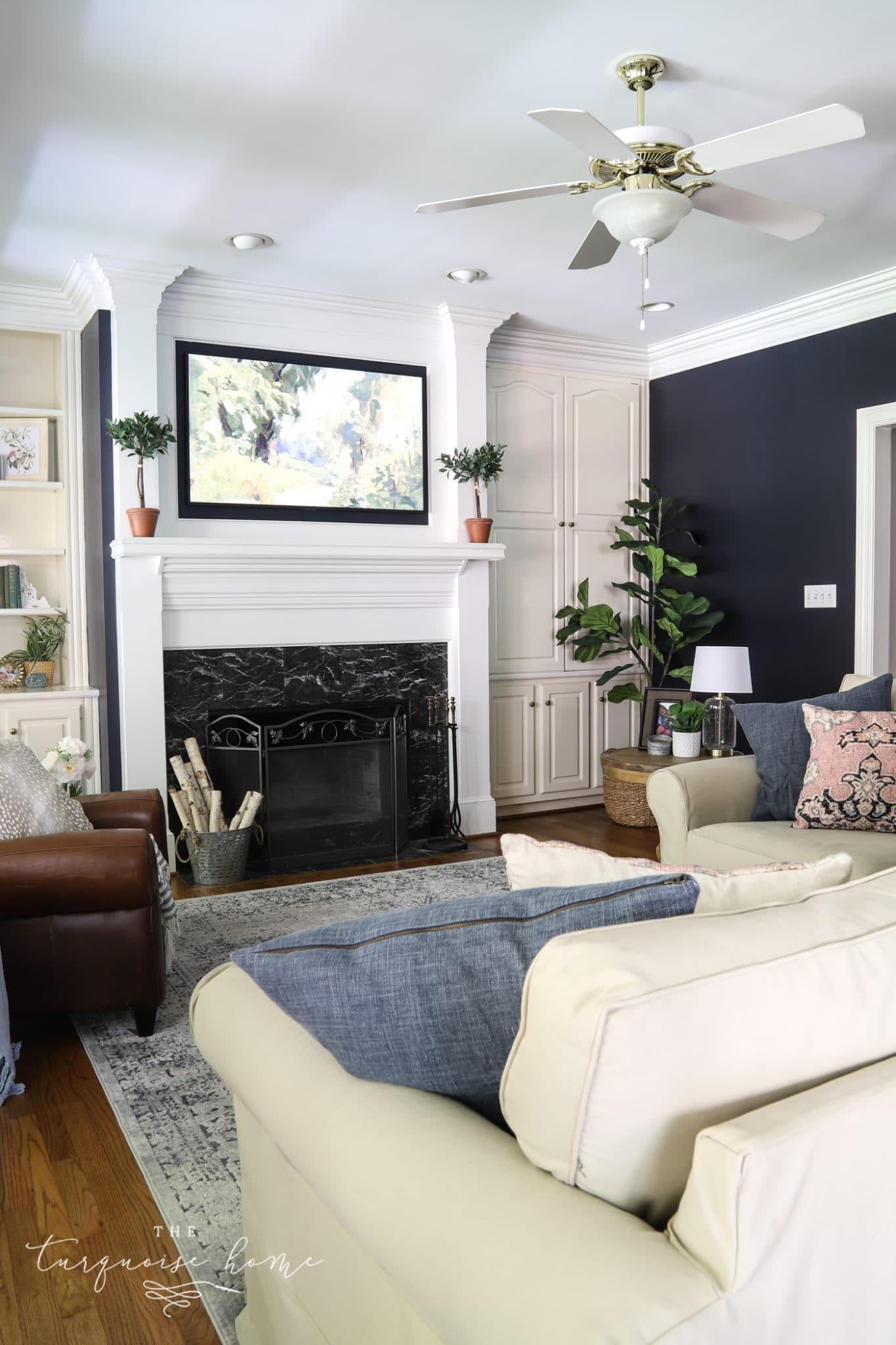
While this bold color could be too much for a living room, Hale Navy works beautifully in rooms with lots of natural light and white trim.
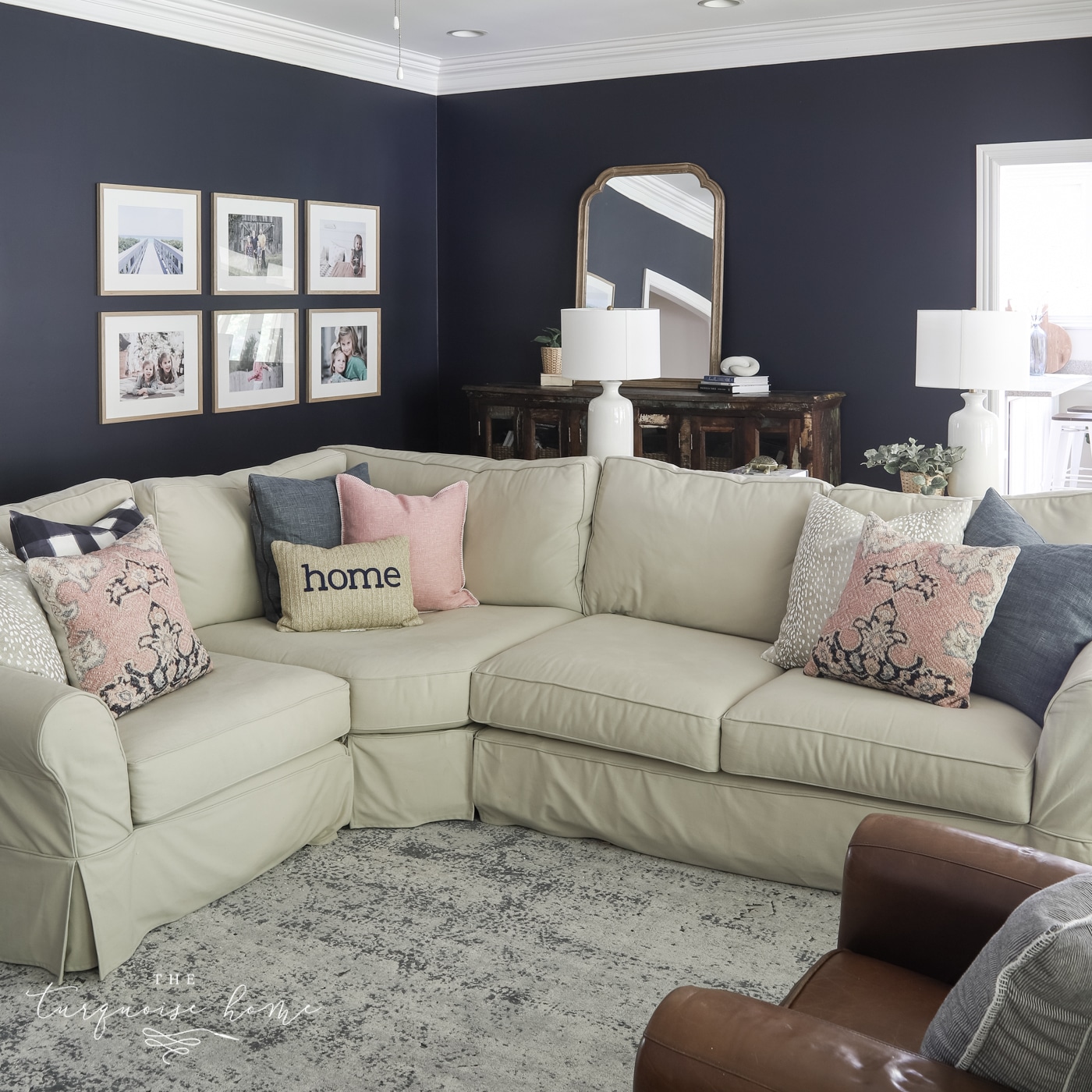
My new home has a full wall of windows and a wall of white built-in bookshelves and a fireplace, so this beautiful blue was the perfect moody backdrop.
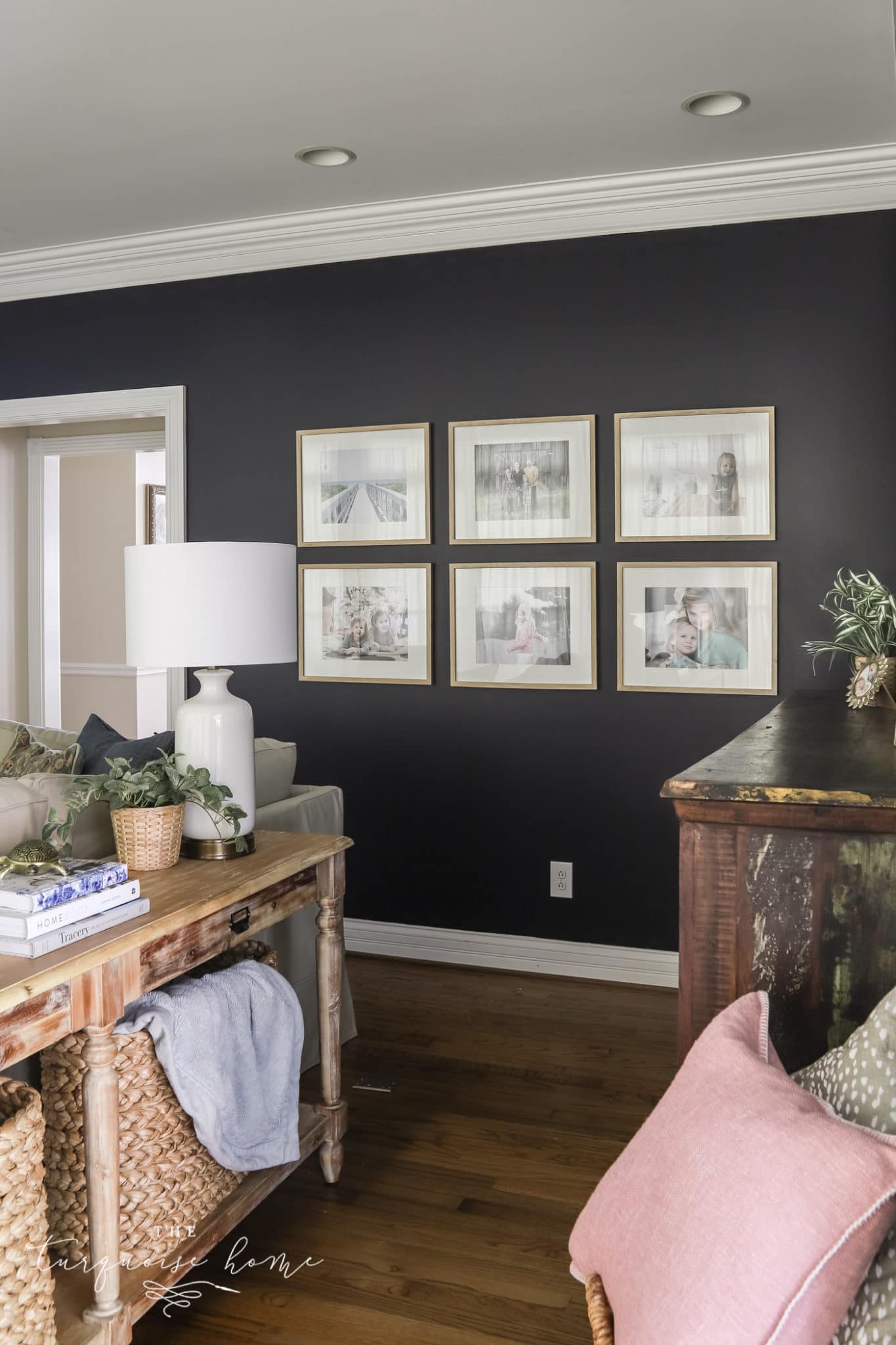
The pops of white from my trim and the light wood tones in my gallery wall really stand out against the dark, cozy background! (I've since learned that it's perfectly fine to paint outlet covers. I'll be tackling those soon!)
Exterior Examples
This beautiful Hale Navy exterior shows once again how versatile the color can be. The white accents and gray bricks and roof bring out the gray undertones, creating an inviting feel. Isn't it just gorgeous?!?
If you look closely, you'll see those slight green undertones come out again near the greenery around this Hale Navy exterior by Gordon James. The cream in the bricks balances the gray undertones and pulls the navy through.
As you can see, Hale Navy can be both a neutral and a fun pop of color. Which way would you use it? You really can't go wrong with this one.
MORE OF THE BEST HOME DECOR PAINT COLORS:
Tips for Painting a Room Yourself
I've gathered some of the best tools for painting a room yourself. First, check out my post: Painting a Room in 5 Easy Steps. These are the top tools I use when painting my own rooms, which is how they get painted 95% of the time!
- Paint brush – These are a bit pricier than basic brushes, but they're worth it! I've used these for more than a decade. If you wash them thoroughly after each use, they'll last for years.
- Painter's tape – an absolute must for taping off edges. Unless you have a steady hand, you'll want to tape off every edge.
- Drop cloths – a must if you don't already have some lying around the house.
- Paint cup – Sure, you could use any old cup, but I've come to swear by this one. The magnetic piece holds your brush neatly in place when you take a break. And it fits my hand perfectly, so it doesn't cramp me.
- Roller tray – This is the only paint tray I'll ever use again. The magnetic piece is great for holding the roller in place. The liners are a luxury, but I won't paint without them because they make cleanup a breeze!
More Posts You Will Love: