Shoji White (SW 7042) is a warm off-white that can read creamy or more greige, depending on the light and the colors around it. I painted my office walls Shoji White, where it bridges my off-white built-in shelves and whiter trim. Below, I'll show how it looks in my space, then compare it with Accessible Beige and other popular neutrals.

Shoji White in My Office
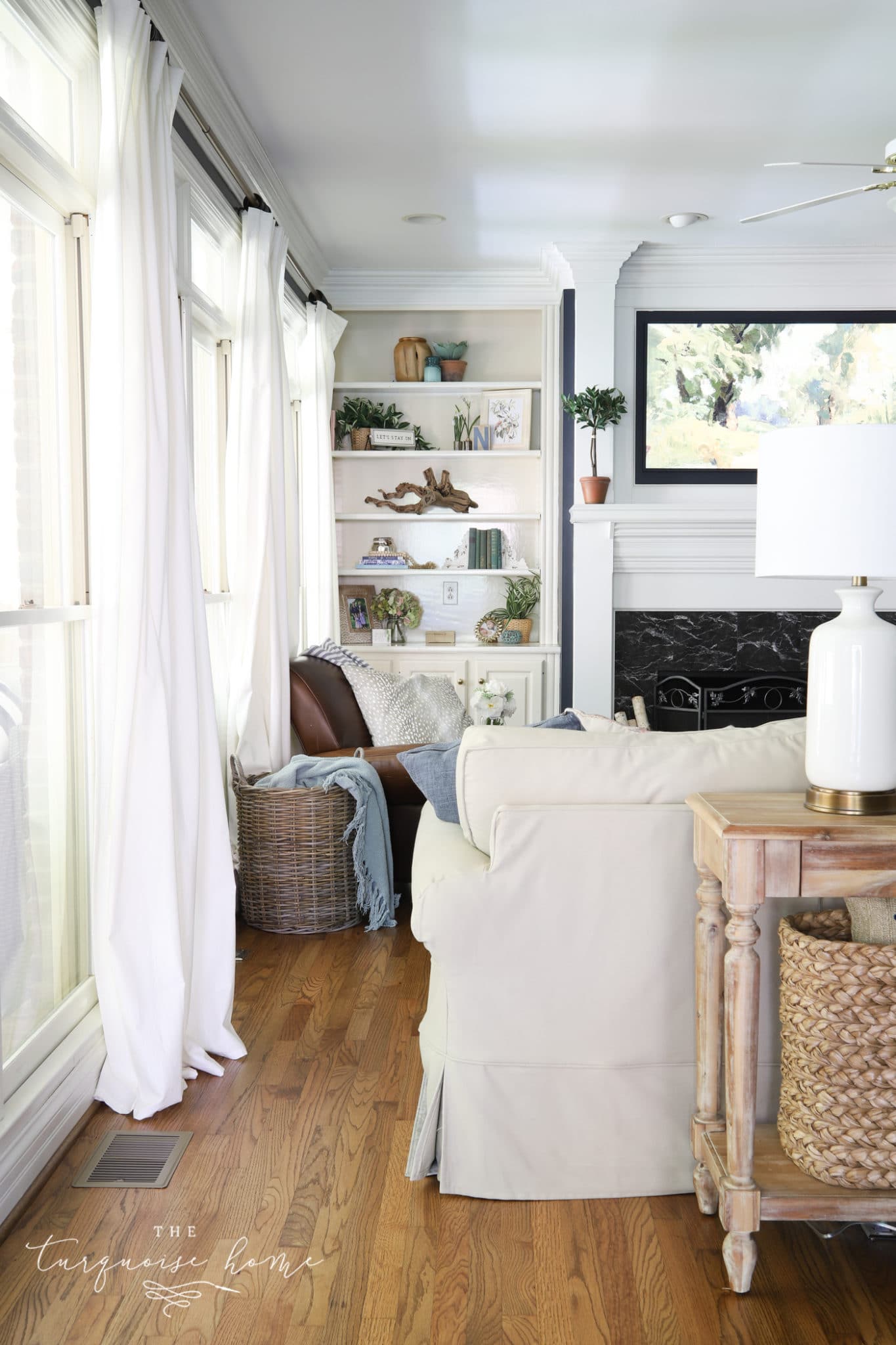
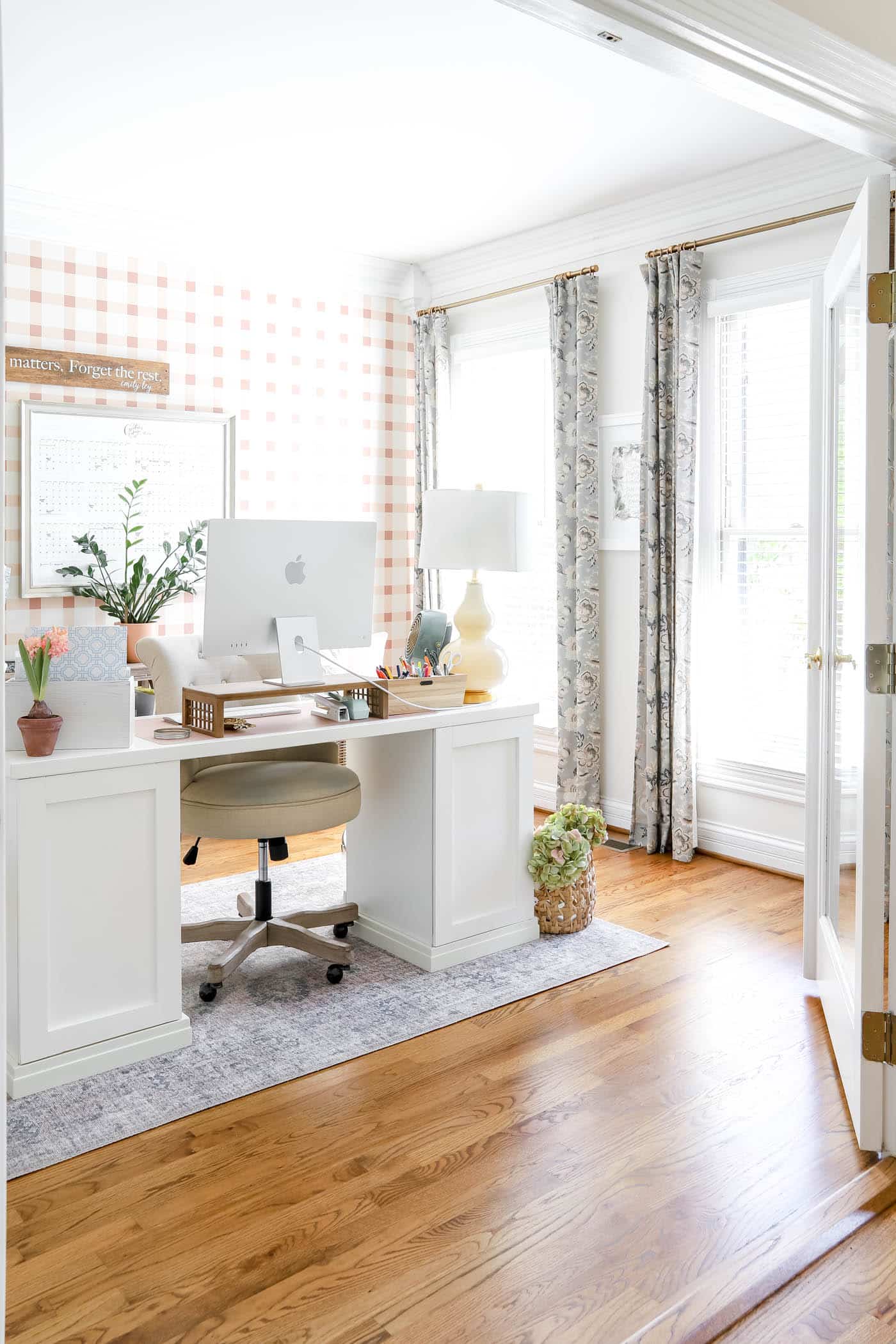
I painted my office Shoji White, and I love that it's richer than a true white, so it reads as a real color. It looks clean and crisp without feeling stark, which makes me so happy!
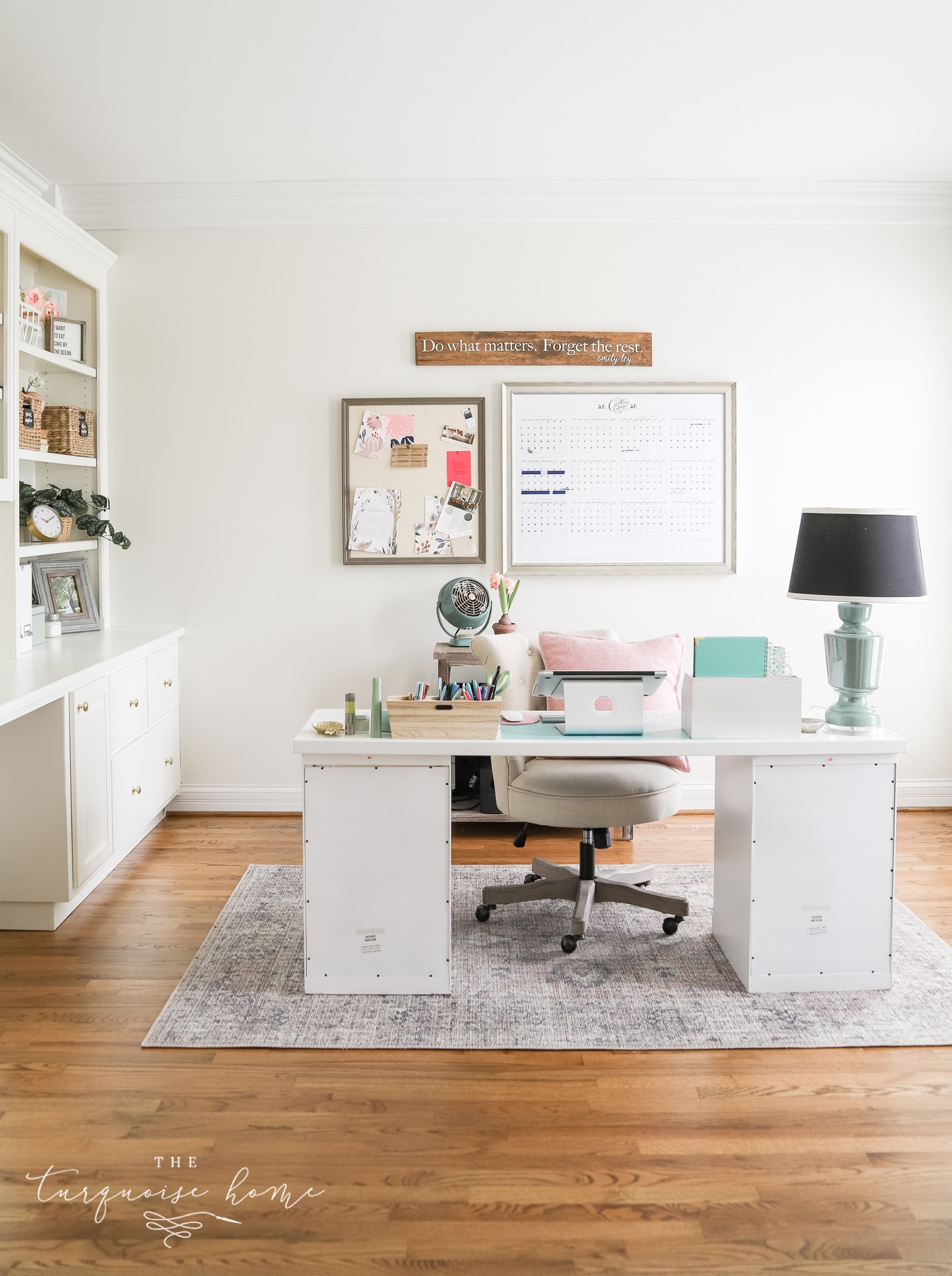
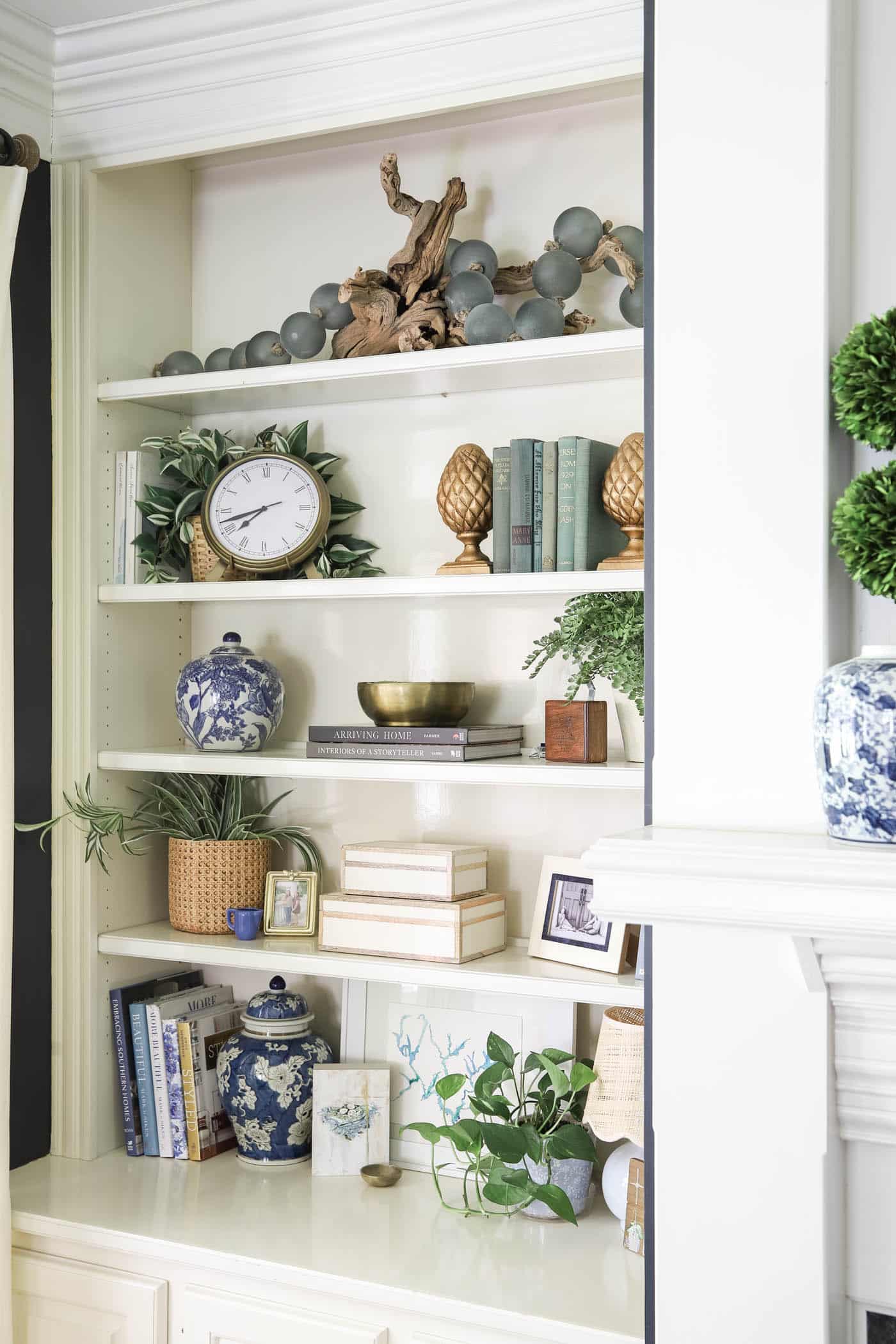
It was also the ideal wall color to tie together my off-white built-in bookshelves and my true white trim.
Scroll and tap to shop the look in my office:
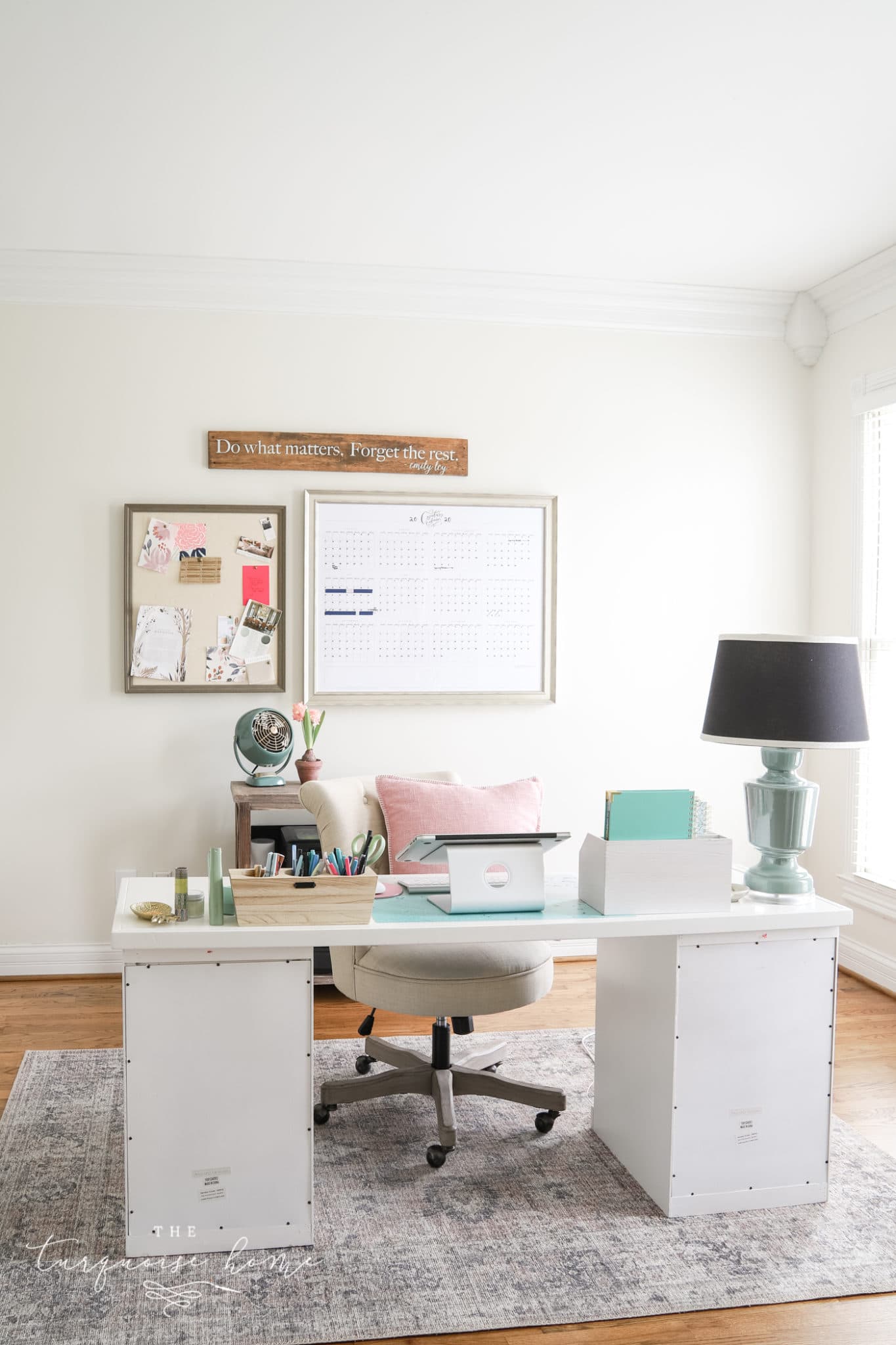
Since then, I've painted the back wall of my office with a cool plaid painted wall treatment. The lighter walls are still Shoji White, though, and I still adore it!

What Color Is Shoji White SW 7042?
Shoji White (SW 7042) is a warm off-white with beige and gray influences. It has more depth than a crisp white, so it's worth sampling if you want light walls with a touch of warmth. Whether it looks creamy or greige depends on your lighting and the finishes around it.
NOTE: If you're painting the room yourself, these tools make a big difference. And this post covers my top tips for painting a room in 5 easy steps.
Pro Tip
Whenever you choose a new paint color, test the actual paint in your home first!
Samplize makes this quick and easy, and it's my only choice for paint samples now. There's no mess and no leftover pots. These peel-and-stick sheets are made from real paint, so you can move them around the room and keep them for later!
Get Real Paint Samples
Where Shoji White Shines
- Open-Plan Living Spaces
- Bedrooms
- Home Offices
- Nurseries
- Entryways
- Kitchens
- Exteriors
Honestly, this color works in many spaces, depending on the lighting and the surrounding finishes!
View this post on InstagramPhoto shared by Jamie Neider (@homeonblue)
Which Home Styles Suit Shoji White Best
It's wonderfully versatile and works with nearly any style, including:
- Farmhouse
- Traditional
- Transitional
- Modern
- Maximalist
- Minimalist
- and plenty more!
The Undertones of Shoji White
This lovely off-white greige leans more beige than gray and now and then picks up a faint green tint. It's a perfect warm white and looks gorgeous with wood or metal finishes.
Its very faint green undertones help Shoji White feel cozy alongside earth tones. Depending on the room's lighting, it can look clean and white or even slightly taupe.
Take time to sample it and view it in every kind of light the room gets, since the variations can be quite striking.
How to Test a Paint Color
My favorite way to test a paint color is with a real sample. There are two good options.
- Samplize offers mess-free, reusable, peel-and-stick sheets of real paint. I've ordered many of my favorite colors from them so I can see the paint on different walls before fully committing.
- The second option is to order a sample pot and paint a piece of white poster board, leaving a white border around the edge. Then move it around the space at different times of day to see how the color shifts in different light.
Coordinating Colors With Shoji White
Shoji White goes with almost anything, though some shades suit it better than others. Because it sits in the orange family with beige undertones, it pairs well with other beiges and greiges. I have it in a room next to one painted in Edgecomb Gray, and the two look beautiful together. Here are a few more ideas:
- Pure White (SW 7005)
- Fawn Brindle (SW 7640)
- Perle Noir (SW 9154)
- Worldly Gray (SW 7043)
- Edgecomb Gray (BM HC-173)
- Amazing Gray (SW 7044)
- Intellectual Gray (SW 7045)
- Porpoise (SW 7047)
- Urbane Bronze (SW 7048)
- Iron Ore (SW 7069)
Shoji White Compared With Other Neutral Paints
Shoji White versus SW Accessible Beige
If you love warm neutrals, both Shoji White and Accessible Beige deserve a sample, though they create different moods. Shoji White (SW 7042) is the lighter option. It reads as a soft off-white, especially in a bright room. Accessible Beige (SW 7036) is deeper and more clearly reads as a beige or greige wall color.
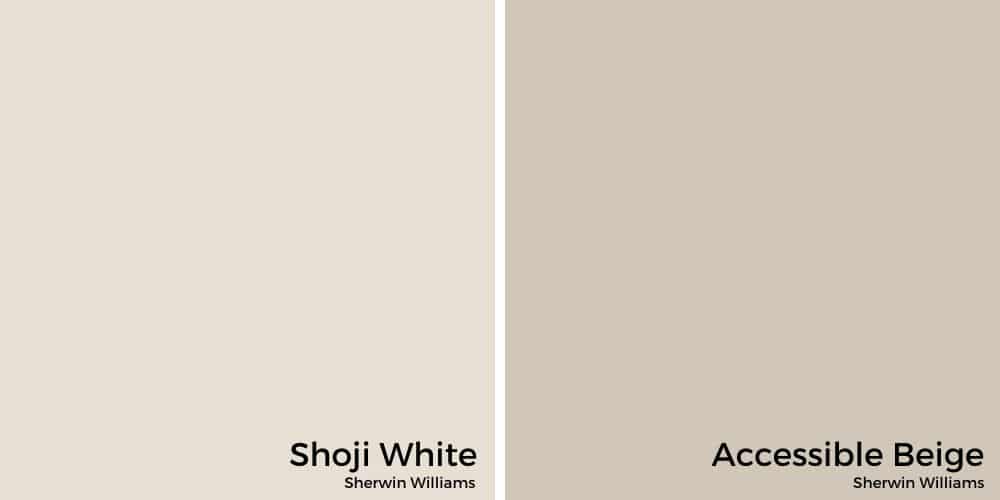
For walls that feel light and airy without looking stark white, I'd start with Shoji White. It's what I chose for my office, and I love how it sits between my off-white built-ins and whiter trim. If you want more color on the walls, sample Accessible Beige instead.
You can also use them in adjoining rooms. Shoji White can give one space a lighter feel while Accessible Beige adds warmth and depth to the next. Before deciding, move samples into both rooms and check them in the morning and evening, since lighting and nearby finishes change how each color looks.
Curious about the deeper option? Read my Accessible Beige review.
Shoji White vs. BM Alabaster
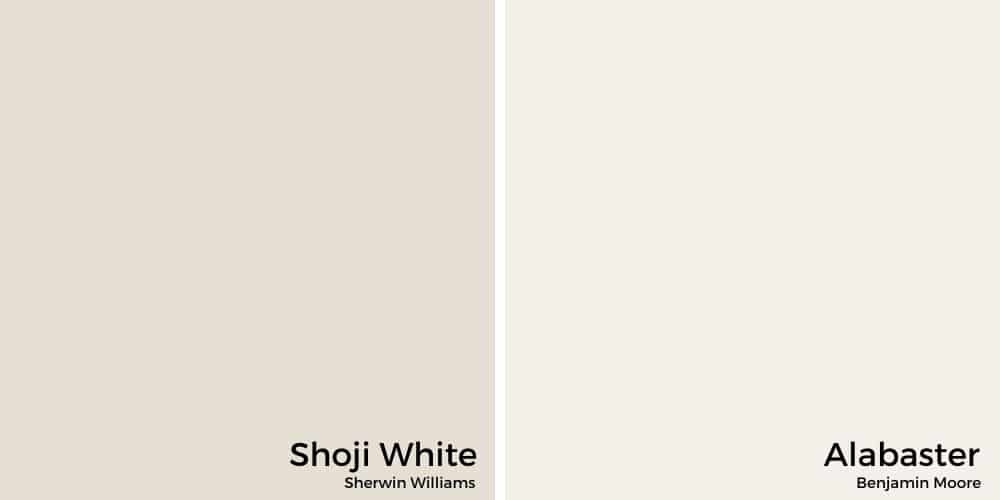
Benjamin Moore's Alabaster is a very popular color that sits in the white category, while Shoji White falls into off-whites. Side by side, it's clear that Shoji White reads more beige than greige, while Alabaster looks lighter but just as warm.
Shoji White vs. BM Swiss Coffee
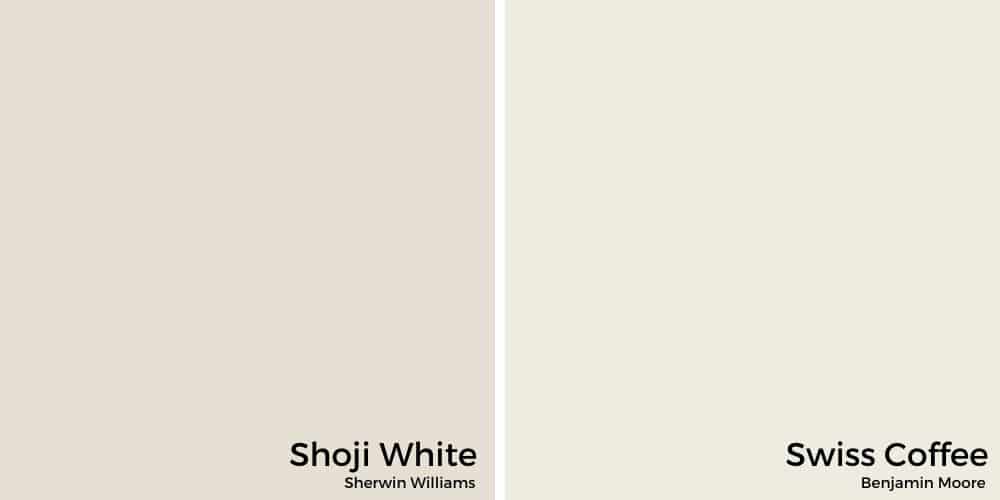
Shoji White reads as a creamy white with beige undertones, while Swiss Coffee is a creamy white with slight gray, green, and yellow undertones. Swiss Coffee can look a touch golden in certain lighting. Both are lovely warm whites that work in nearly any room!
What Is the LRV of Shoji White?
LRV stands for light reflectance value, measured on a scale from 0 (pure black) to 100 (pure white). Colors with an LRV near 0 are darker and absorb more light, while numbers nearer 100 are lighter and reflect more light.
Shoji White has an LRV of 74.
That number places it firmly in the off-white category.
So it behaves more like an off-white than a true gray, and it looks best in a room with moderate natural light. In a very sunny room it may look like a muted white, but paired with stark white trim, you'll see the contrast.
How SW Shoji White Works in Different Rooms
Undertones can be confusing to read about, so here are some real examples of this lovely Sherwin Williams light greige. These rooms show how Shoji White looks with different finishes, furnishings, and lighting.
Kitchens With Shoji White
Shoji White can make a lovely cabinet color if you want something softer than crisp white. In this bright kitchen, the wood table, rustic chairs, and floors bring out its warmth. The cabinets still look light, yet carry a little more color than bright white would.
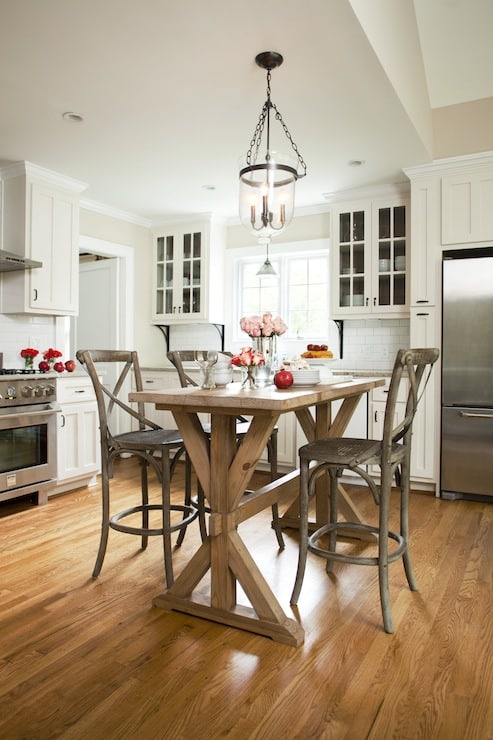
If you're considering Shoji White for cabinets, look at this cabinetry shared by Lauren Liess. It gives the cabinets a warm, soft finish while keeping the kitchen bright. Before committing, sample it on a cabinet door and hold it beside your countertop and backsplash, since those are the surfaces you'll see next to it every day.
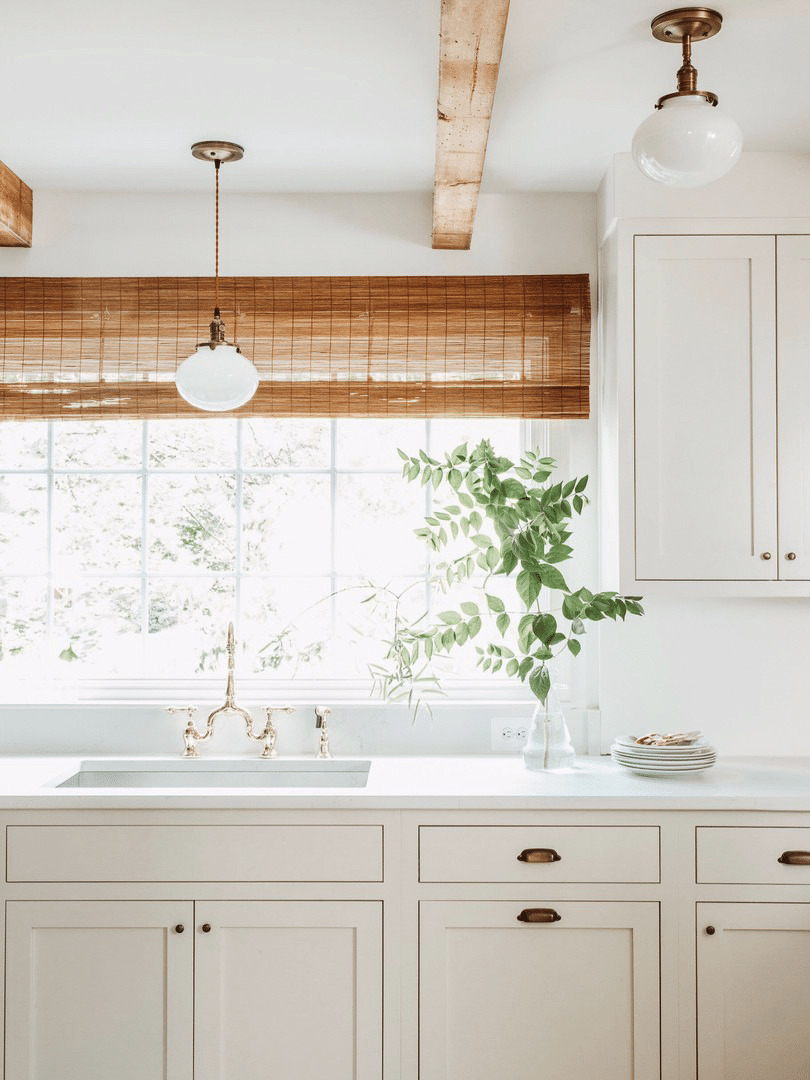
Bedrooms With Shoji White
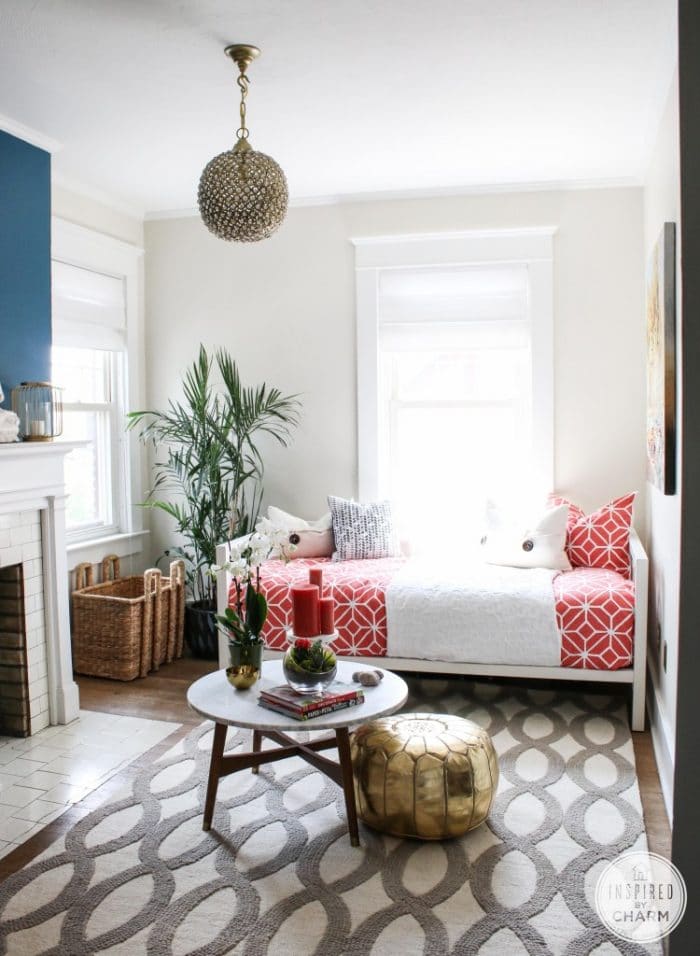
In this bright guest bedroom, Shoji White looks soft and light. The white accents offer just enough contrast to show that the walls are a warm off-white rather than a crisp white. For that subtle contrast in your own bedroom, compare a sample of Shoji White with the white you plan to use for trim or bedding.
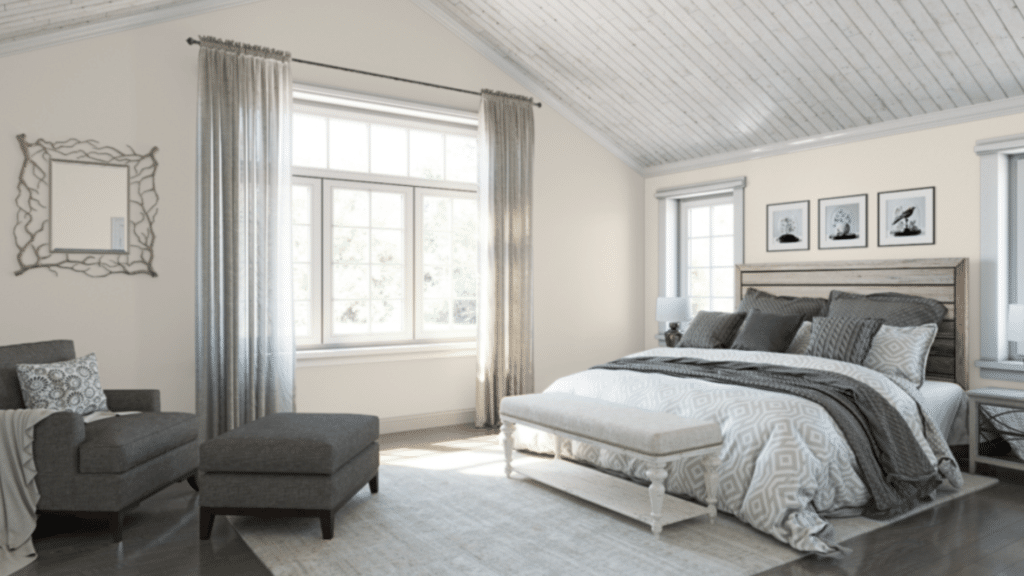
In this Sherwin-Williams bedroom, darker gray furnishings and brighter whites make Shoji White's beige warmth easier to see. The mix feels cozy without making the walls look dark.
A Shoji White Bathroom
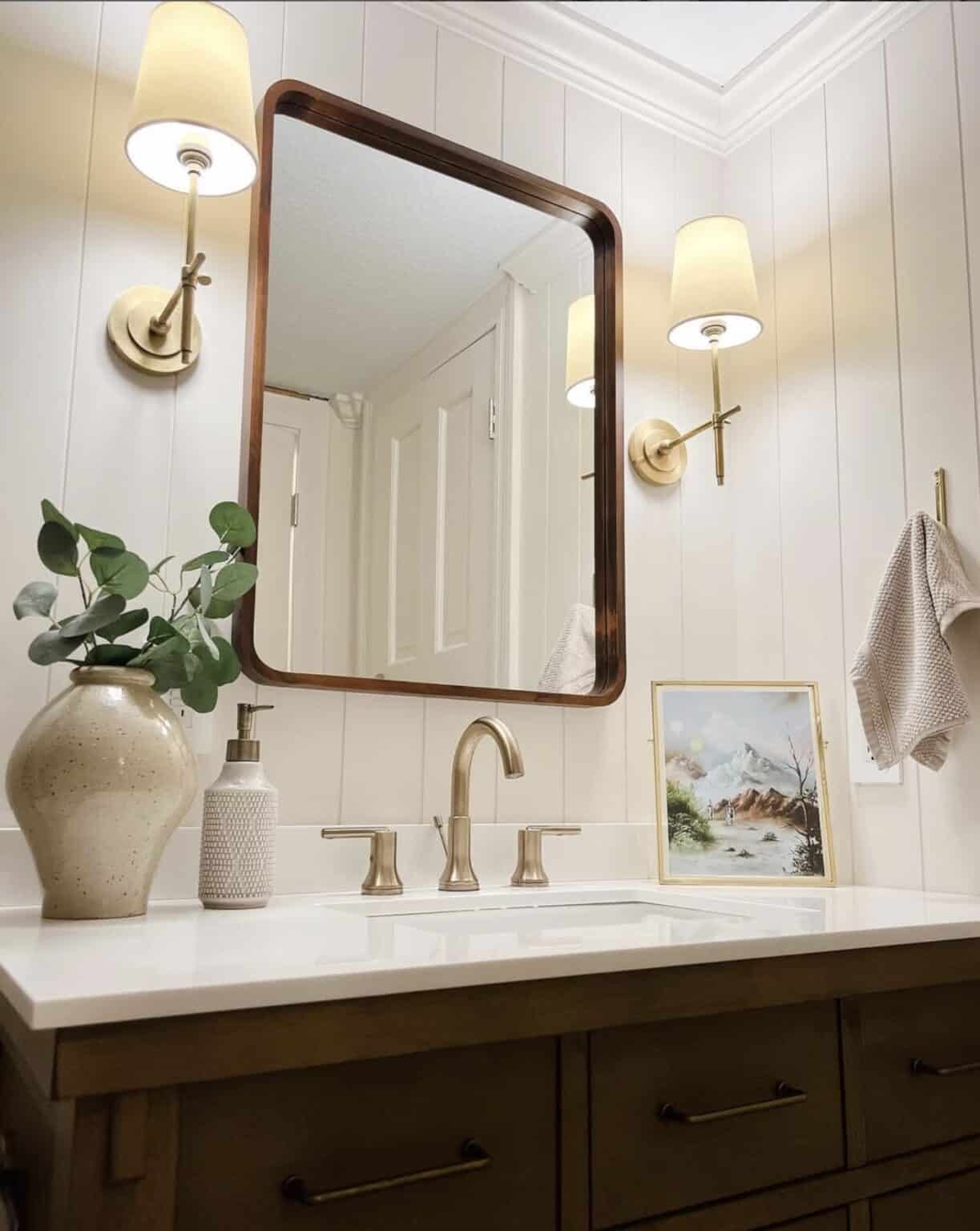
In this bathroom from Kaylee Johnson Home, Shoji White on the paneled walls looks soft and warm beside the white countertop and trim. The dark wood vanity and mirror frame add contrast that makes the wall color easier to see. If you're choosing a warm white for a bathroom, this shows why it helps to compare your sample directly with the whites already in the room.
Living Rooms With Shoji White
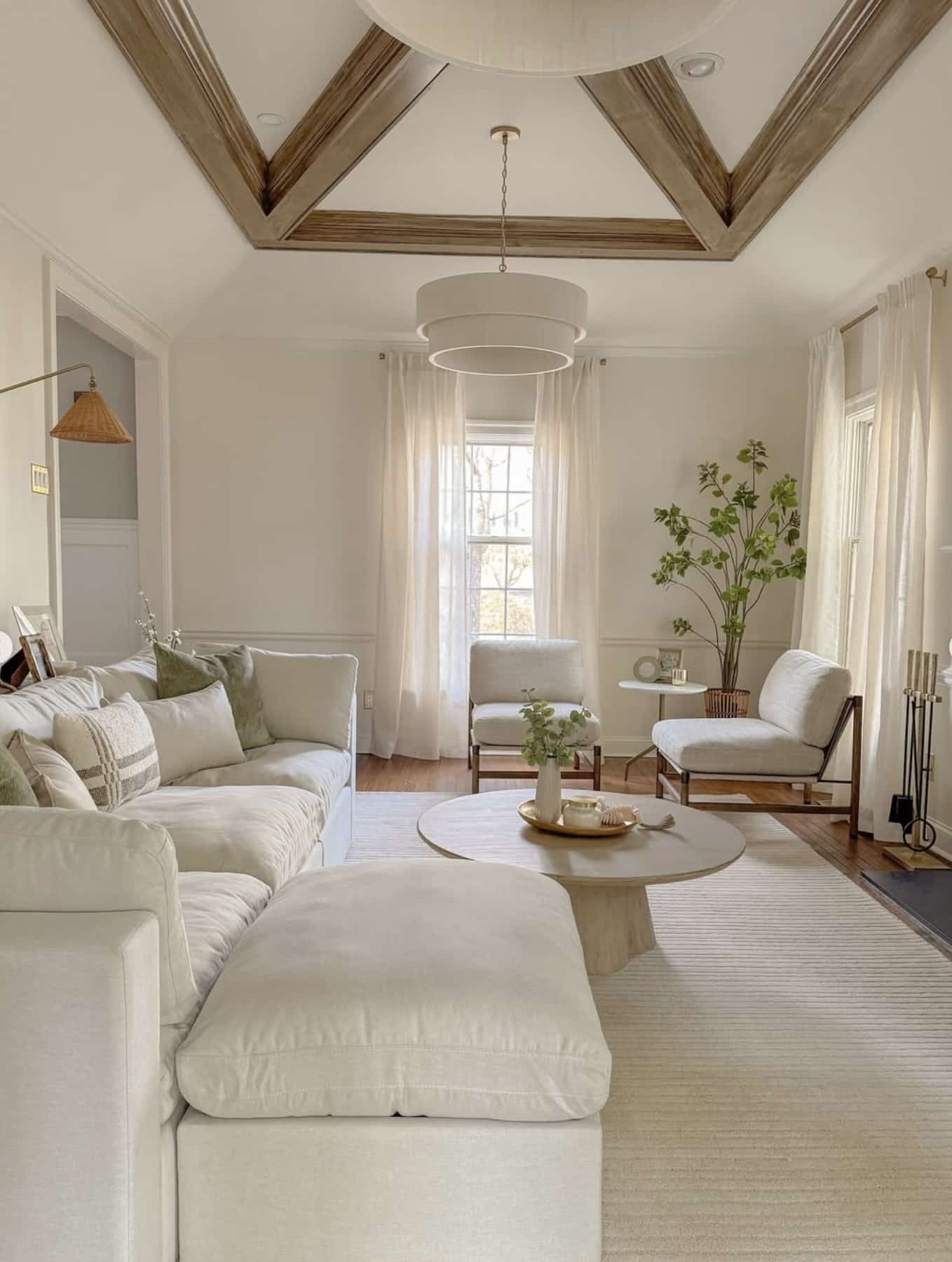
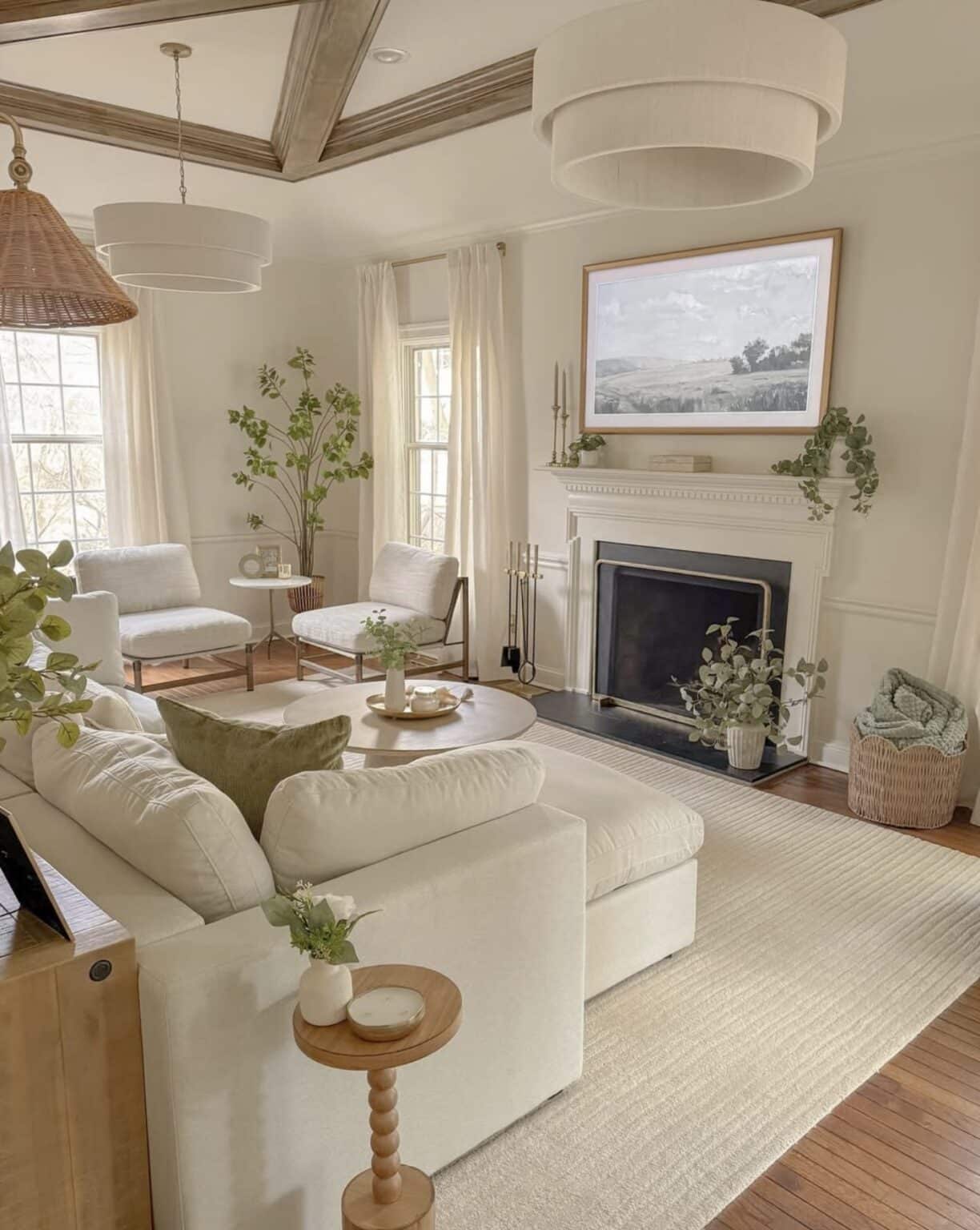
This living room from Get Shelf Help is fully drenched in Shoji White, with warm wood beams adding texture and contrast. Using the same color on the walls and trim creates a softer, more seamless backdrop that lets the furnishings and architectural details stand out.
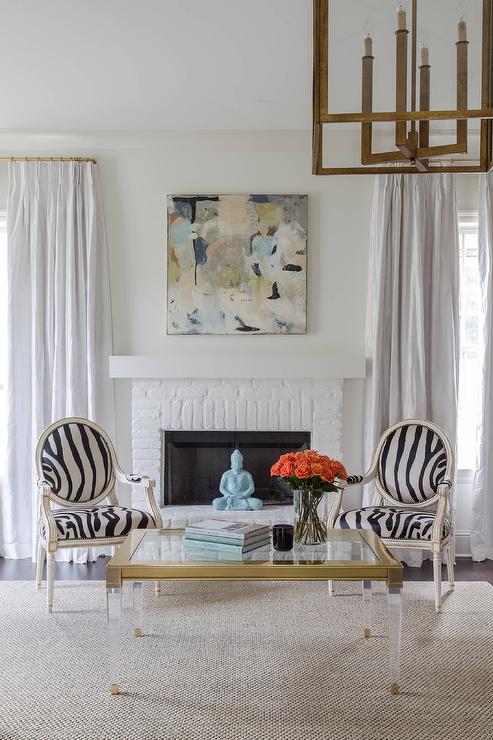
In this formal living room, Shoji White looks closer to white than beige. It's a useful contrast to the warmer examples above, since lighting, surrounding finishes, and even photography can change how a paint color appears. For a soft off-white living room, sample Shoji White beside your sofa, flooring, and existing trim to check whether it offers the warmth and contrast you want.
Shoji White for Exterior Paint
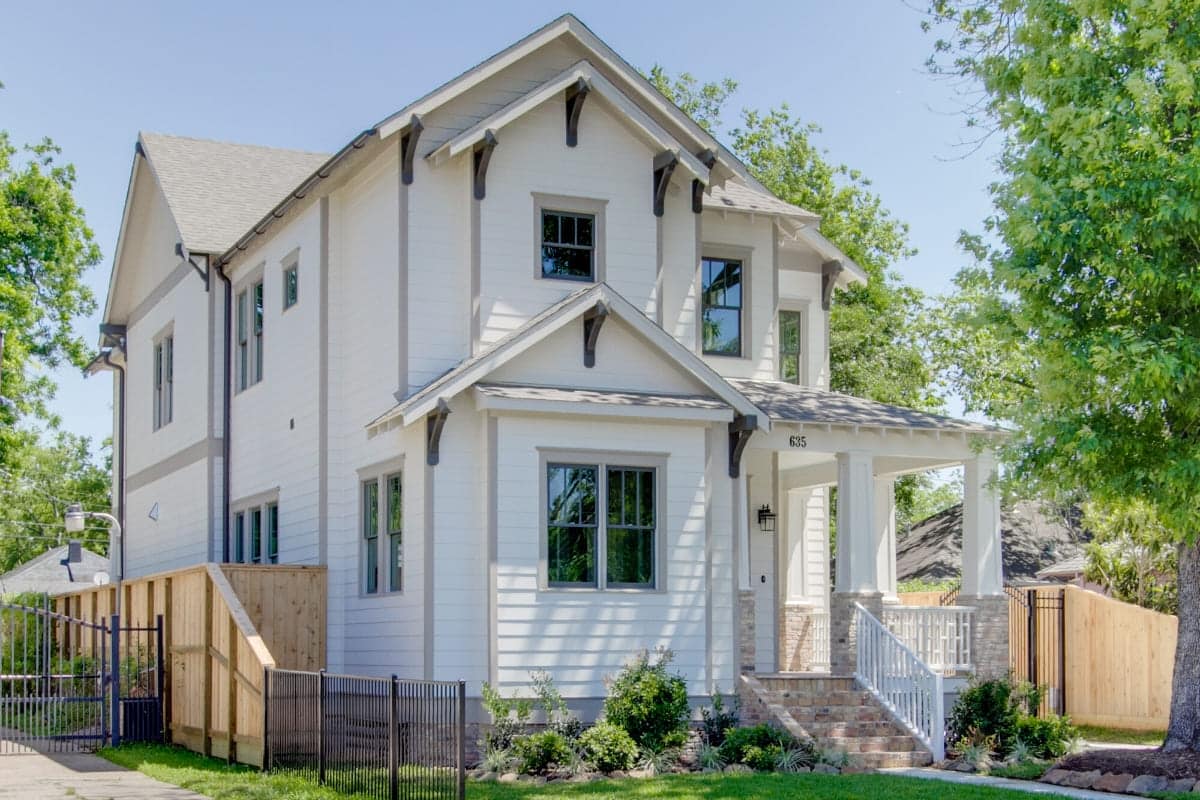
Shoji White is worth considering for a soft, warm white exterior. Outdoor light can make it look brighter than it does indoors, so test a large sample beside your roof, brick, or stone before committing.
On this Craftsman home from Southern Green Builders, Shoji White siding forms a light backdrop for the Craftsman details. It shows how a warm off-white can give an exterior a fresh look while still feeling welcoming.
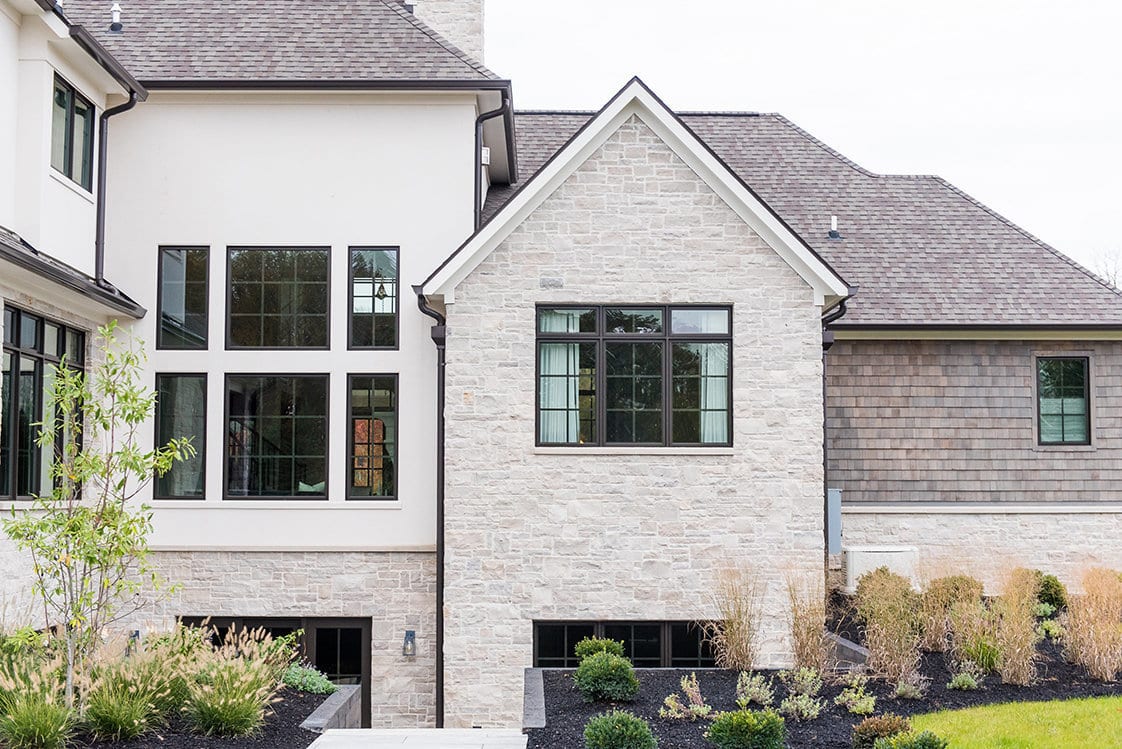
On this home by Whittney Parkinson Design, Shoji White stucco sits beside slightly darker greige stone. The pairing shows how a warm off-white can complement natural materials without a harsh contrast. If your home has stonework, compare your sample with several stones, since their mix of colors matters as much as the overall shade.
Now that you've seen how well this gorgeous white works in so many settings, I highly recommend finding a space to paint and enjoy this warm, beautiful color.
Don't forget to check out these other great paint colors!
Tips for Painting a Room on Your Own
I've gathered some of my favorite tools for painting a room yourself. First, check out this post I wrote: Painting a Room in 5 Easy Steps. These are the tools I rely on when painting my own rooms, which is about 95% of the time!
- Paint Brush – These cost a bit more than a basic brush, but they're worth it! I've used them for over a decade, and if you rinse them well after each use, they'll last for years.
- Painter's Tape – an absolute must for taping off edges. Tape every edge if your hand isn't steady.
- Drop Cloths – essential if you don't already have some lying around the house.
- Paint Cup – You could use any old cup, but I've come to swear by this one. The magnetic piece holds your brush neatly in place during breaks, and it fits my hand perfectly without cramping it.
- Roller Tray – This is the only paint tray I'll ever use again. The magnetic piece holds the roller in place nicely. The liners are a luxury, but I won't paint without them because they make cleanup a breeze!
Closing Thoughts
If you want a warm off-white with a little more depth than crisp white, add Shoji White to your sample list. Try it beside your trim and largest fixed finishes, then check it throughout the day. If you want a deeper neutral, compare it with Accessible Beige before deciding.
More Posts You'll Enjoy: