Struggling to find the perfect living room curtains? Balancing design and function can be tricky, but these tips will help you narrow down your search.
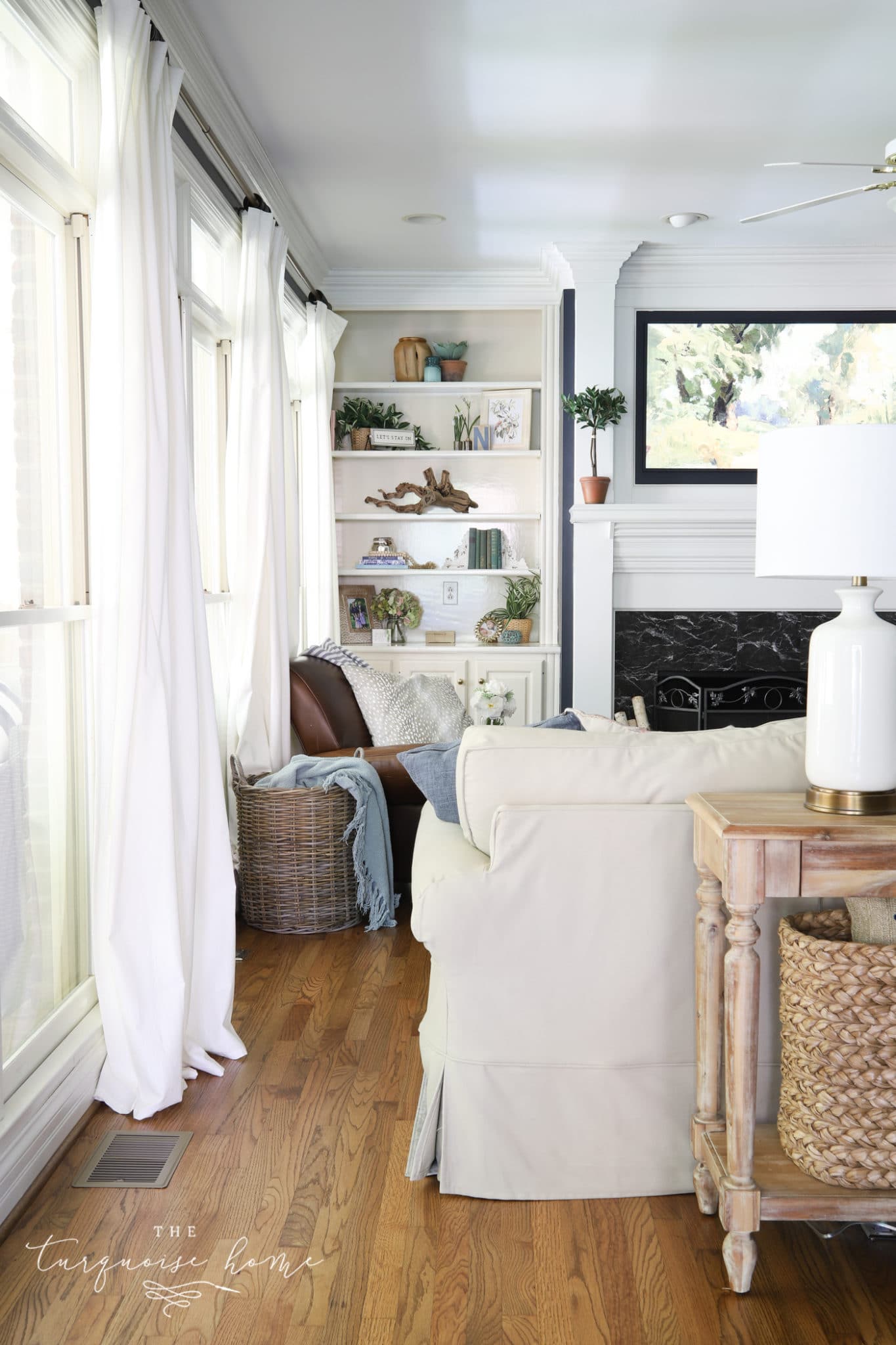
When I first decorated my living room, one of the first things I wanted to do was take down the blinds. The big windows let in great light, and I wanted to make the most of it. I also wanted curtains that would make the room feel soft and cozy.
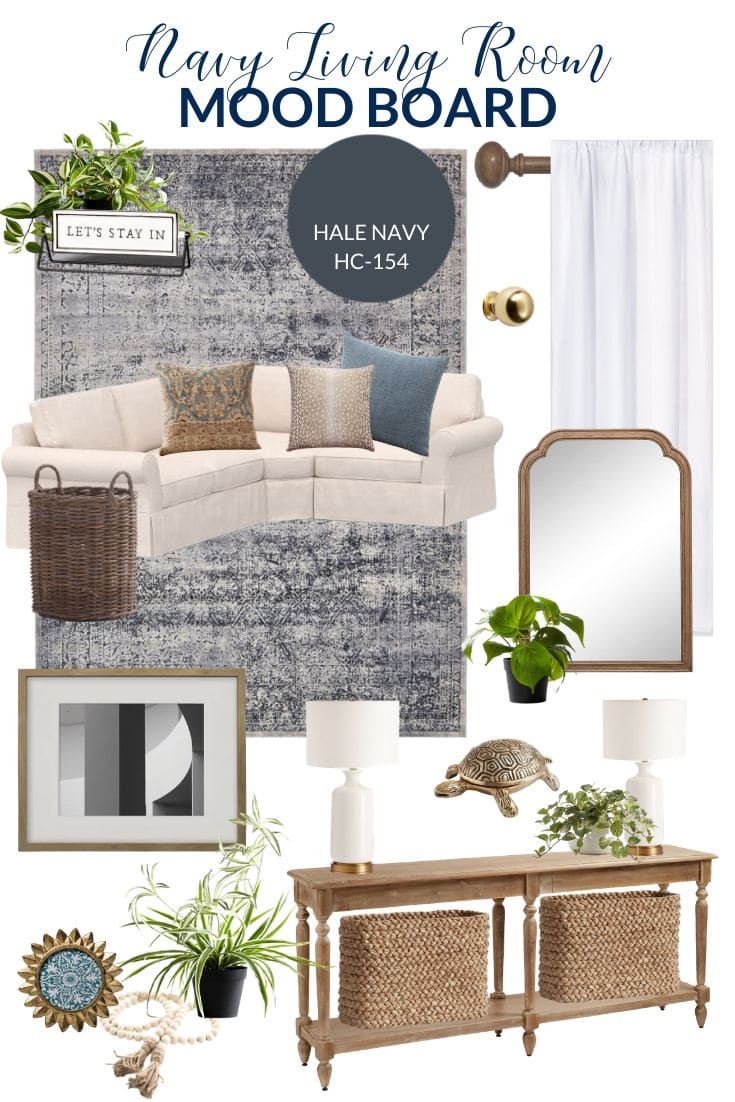
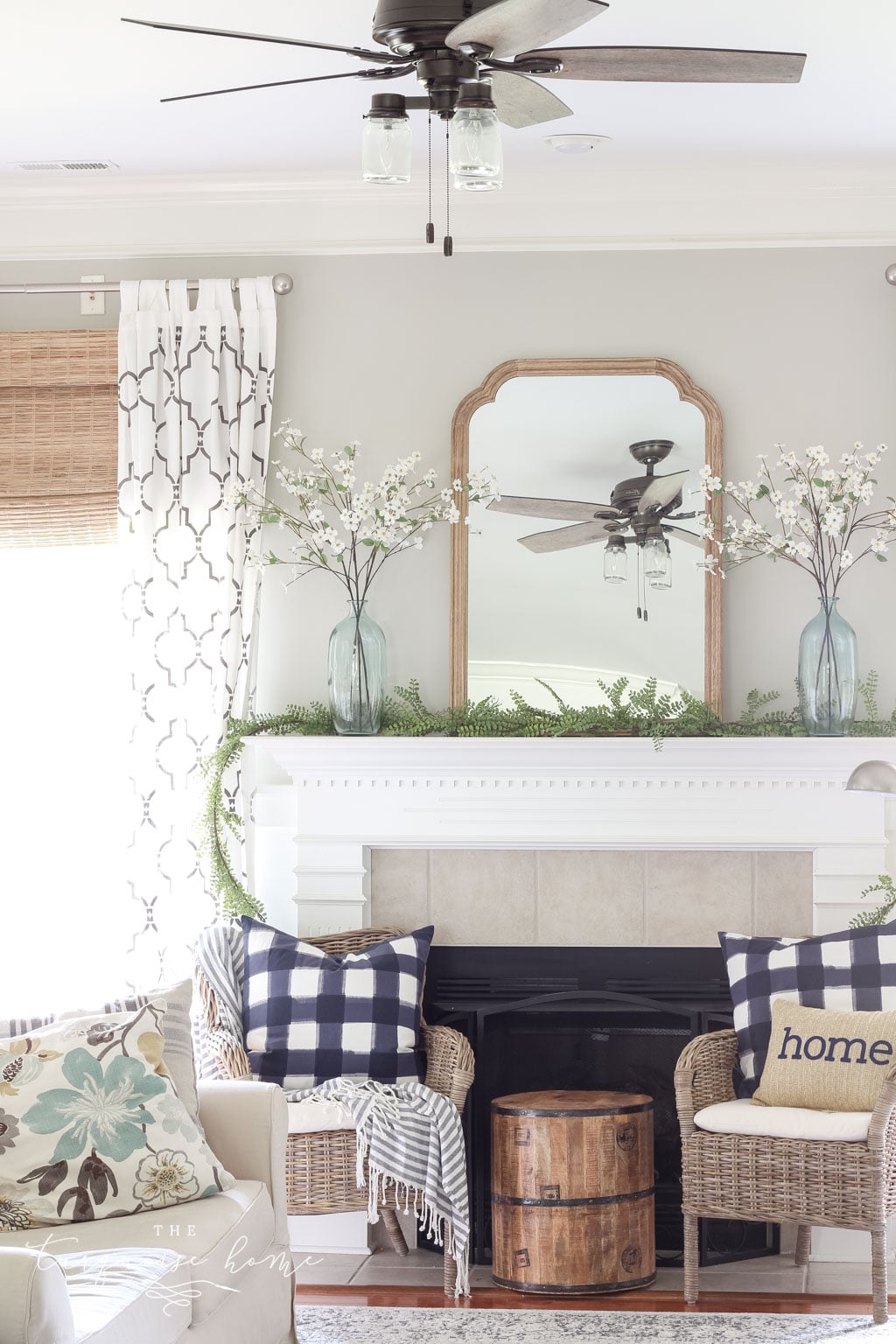
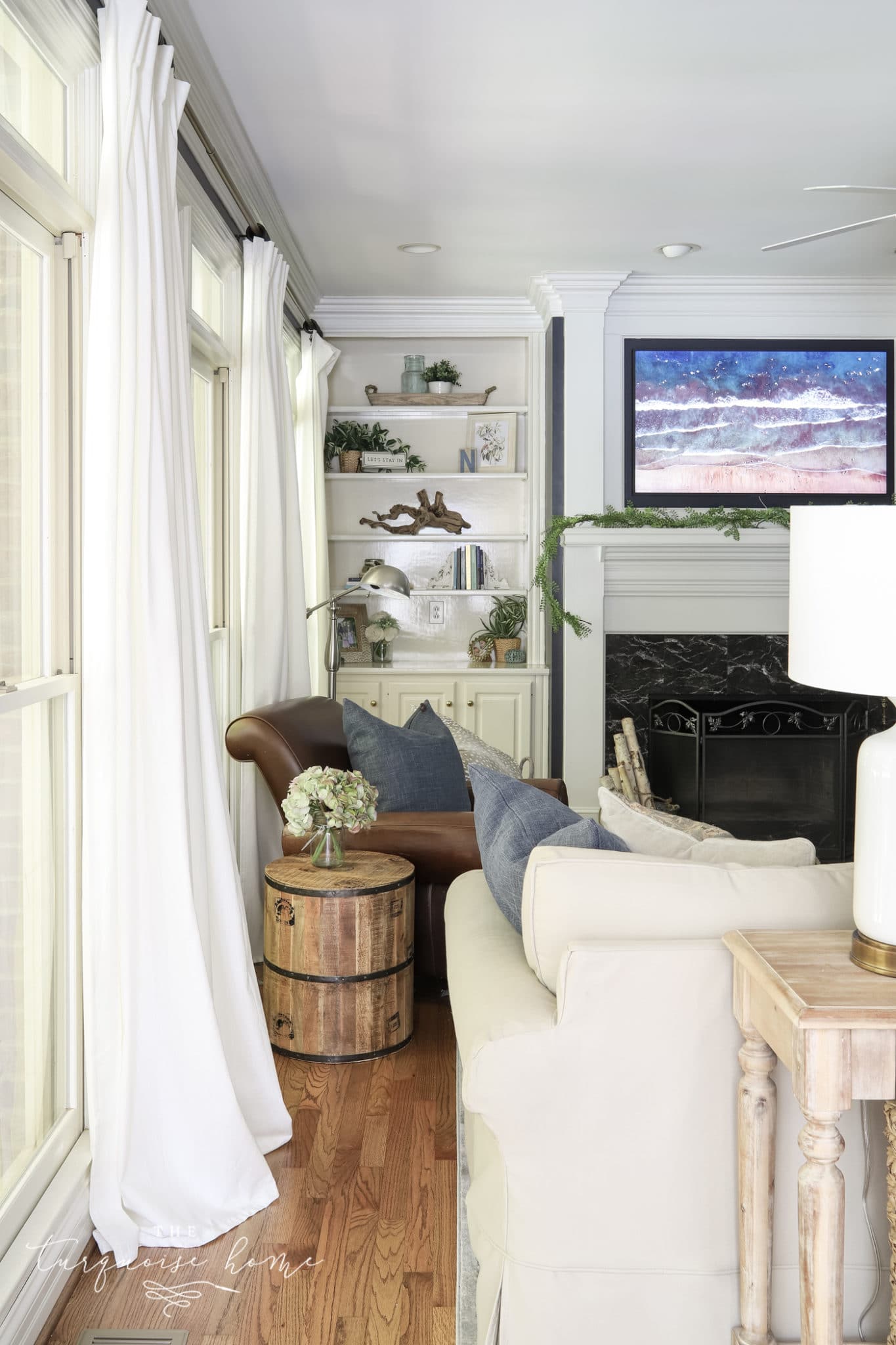
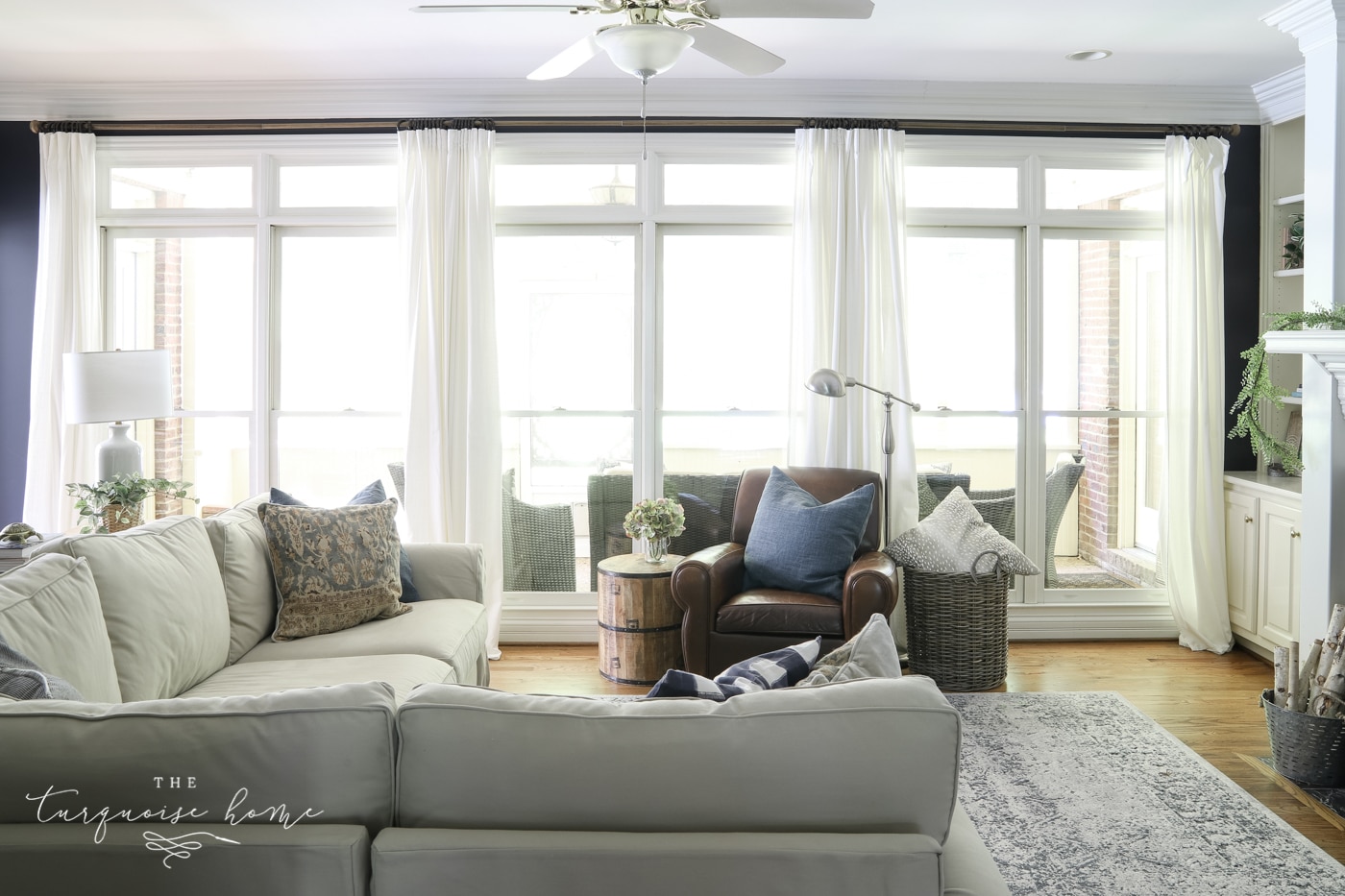
Since my living room is painted Hale Navy, a fairly dark color, I wanted to balance it out and keep things simple and bright with solid white curtain panels. Navy and white are one of my favorite color pairings, too.
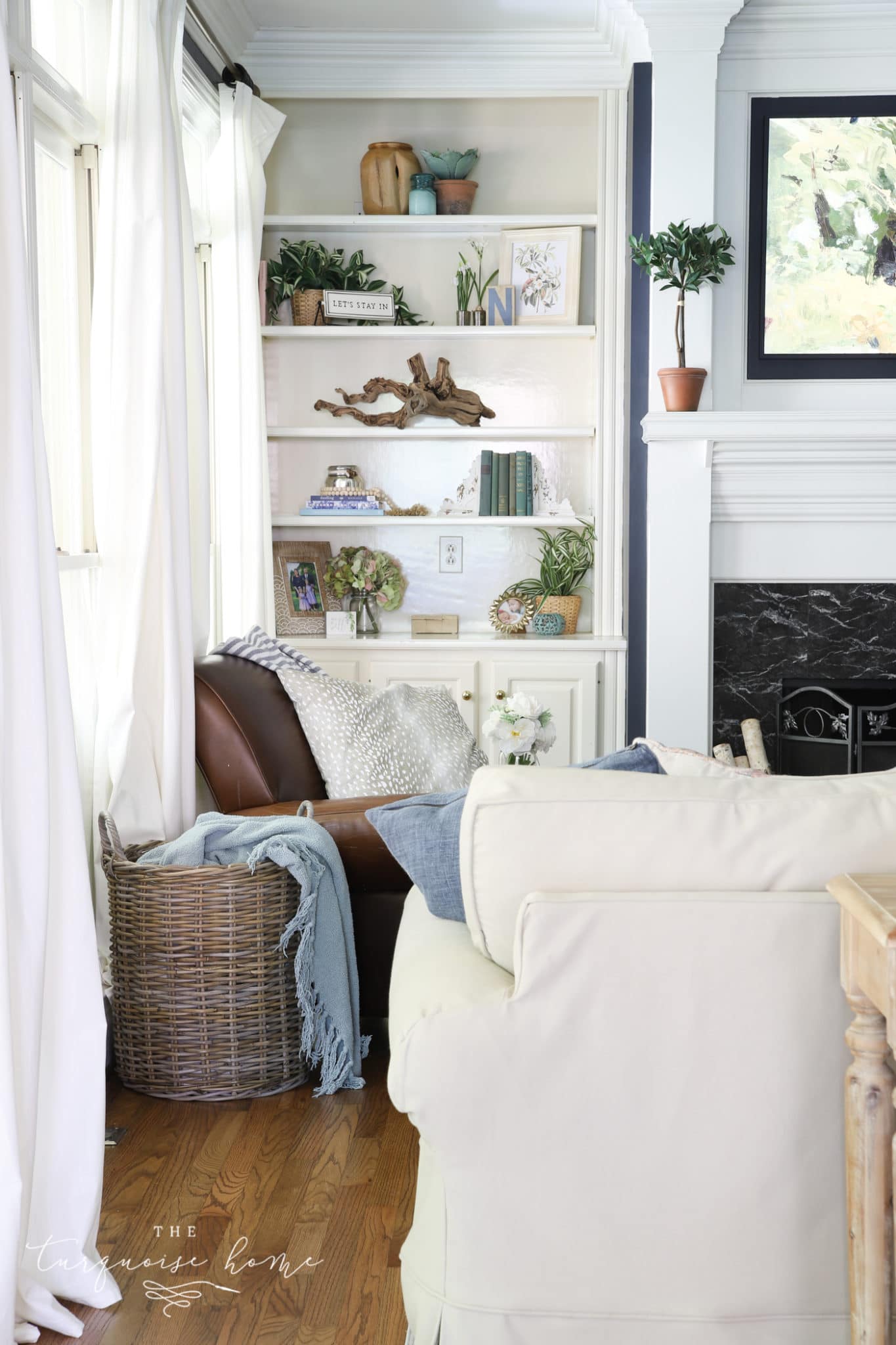
Even though I settled on white, I know how hard it can be to find the right curtains. There are endless options in design, texture, fabric, and size, and it can get overwhelming fast!
Here are some of my best tips for choosing curtains for the living room.

Consider the Surrounding Space
First, think about the curtains' design! The color should tie into the room's existing decor and palette, whether through accents like wall art and throw pillows or through the furniture itself.
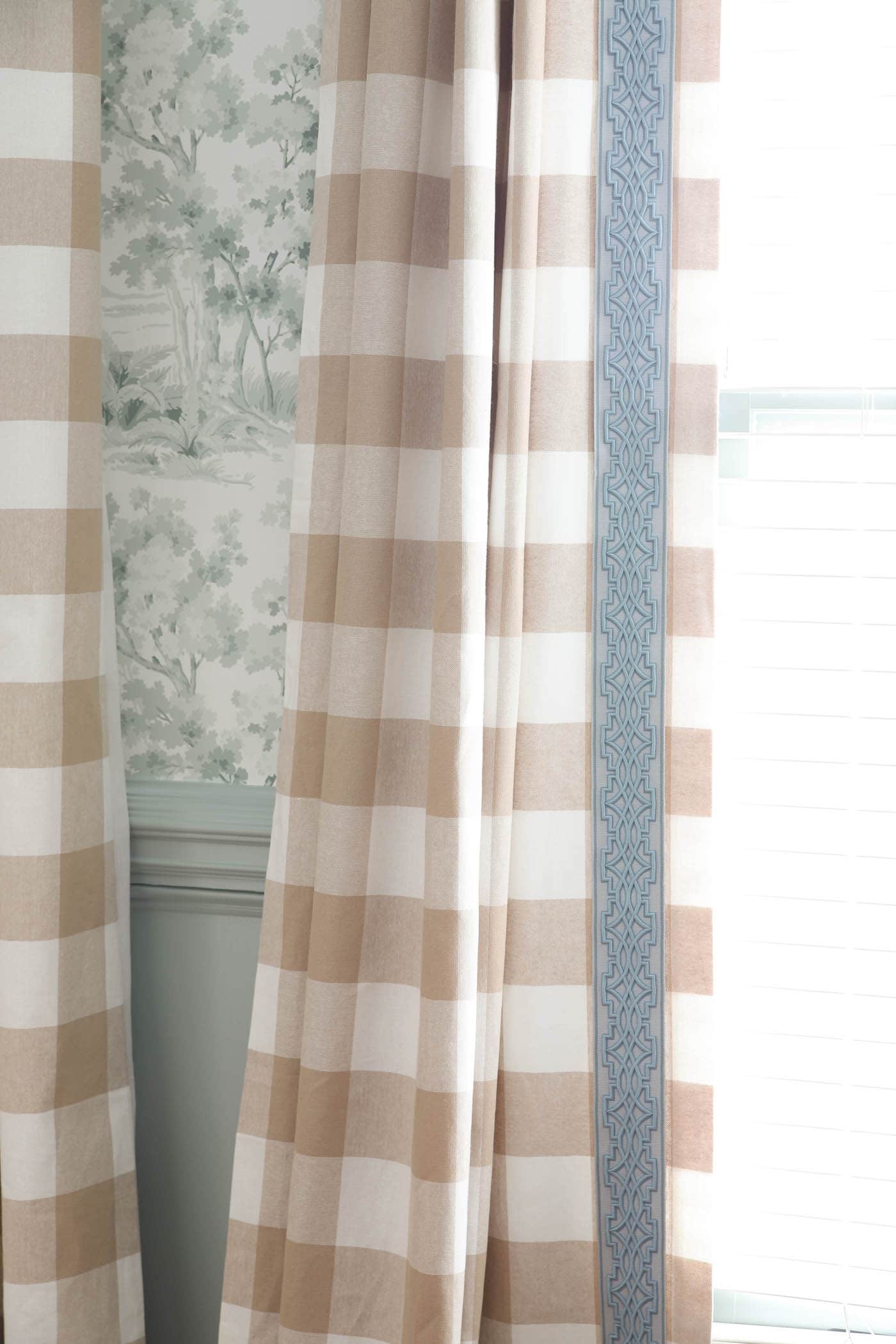
Patterned curtains are trickier than solid panels. Because they cover so much wall, they can easily become a focal point, which is useful if you want to add weight to the room and show off your personal style. For example, floral patterns look lovely in traditional living rooms, while dark geometric shapes could suit an art deco inspired room.
Patterns can easily make a room feel overdone, and the same goes for bold solid colors. Look at what else is in the room first to strike the right balance.
In fact, curtains are often one of the last design decisions I make, because they're versatile and far easier to swap out than furniture.
You can change curtains as often as you like, even with the seasons. Go with thicker window treatments to cozy up in winter, then switch to sheers for summer breezes. I've done this many times!
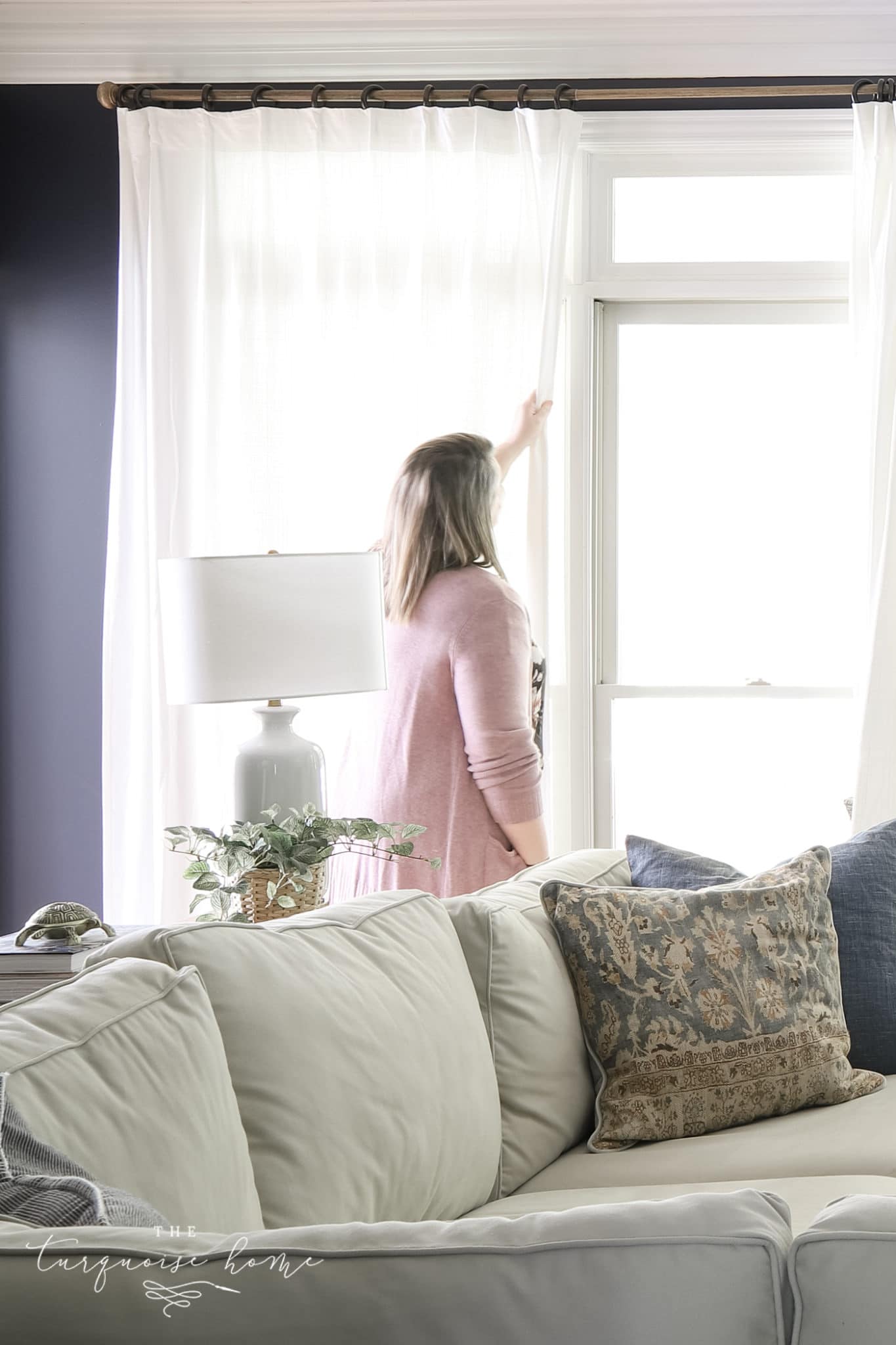
Decide the length of curtains for the living room
For living rooms, you usually want something long and sweeping. Shorter curtains and valances work better in spaces like kitchens, bathrooms, and hallways.
Here are the standard curtain lengths by style:
- Above sill curtains: This short style hangs about ½ inch above the windowsill. It's ideal for windows you open often.
- Below sill curtains: These end 6 inches below the windowsill for a relaxed feel.
- Floor-length curtains: For the most tailored look, hang them ¼ inch above the floor. In more traditional designs, full-length drapes can rest an inch or two on the floor.
- Dramatic length curtains: For a more luxurious, romantic look, let 3-4 inches of the drapes pool on the floor.
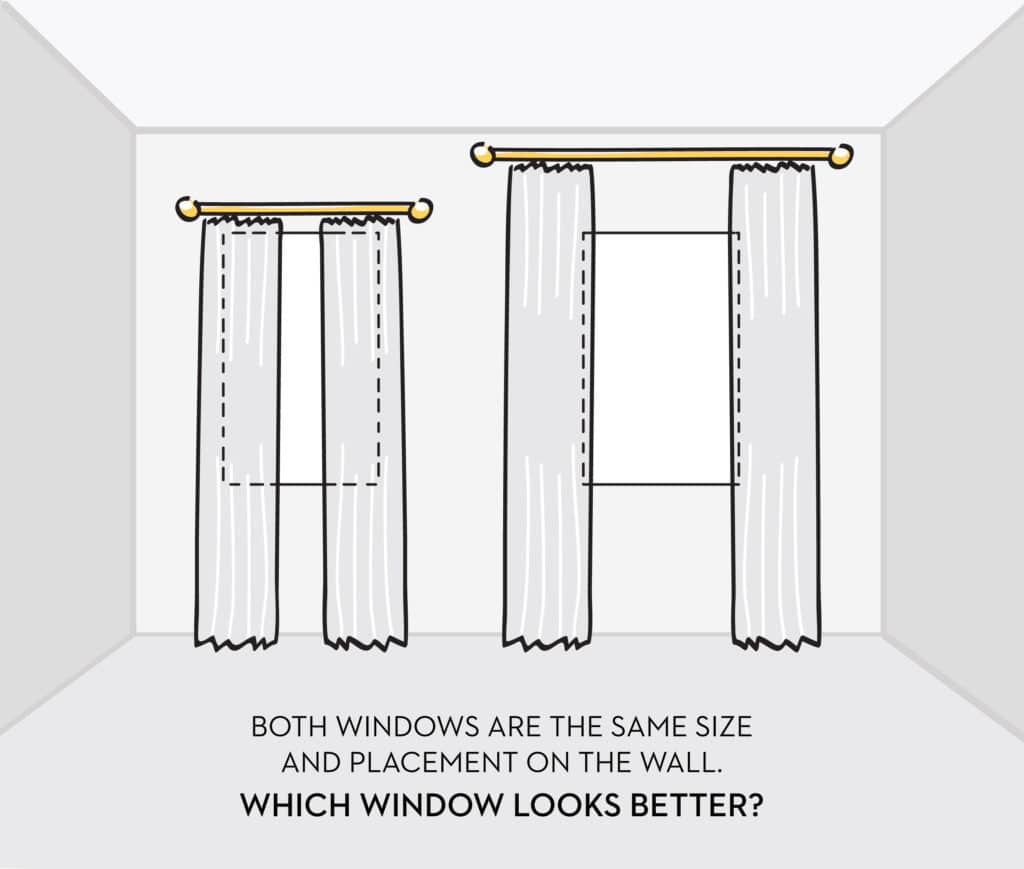
Many people also like to hang curtains higher than the window itself. This creates an illusion of space and a grand, elegant look. It would look amazing in a formal living room, since it makes the ceilings seem taller than they really are.
Width of Window Curtains
Curtain width should be 1 ½ to 3 times the width of your window. It depends on the look you want. Greater width gives fuller curtains, while a narrower width gives a more tailored appearance.
The thickness of the fabric also affects how full the living room curtains look.
Choose a Curtain Fabric
Know exactly how you plan to use your curtains. How much light do you want coming through? Are the curtains mainly decorative, or do you need them for privacy and blocking light?
Thickness depends on the fabric you pick. Heavy velvet gives a dramatic, glamorous look, while lightweight lace and sheer fabrics create an airy, boho feel.
Also think about upkeep. Some heavier fabrics need more care than others. Can you machine wash your curtains, or will they need dry cleaning, hand washing, or ironing to keep their shape?
Types of Curtains
Popular fabrics for living room curtains include linen, velvet, and linen-cotton blends. In my home I prefer a linen sheer, linen with a blackout liner, or a linen-cotton blend.
Curtain Headings
You can completely change the look of a room with the curtain heading. You might think it doesn't matter, but the heading determines how the curtains attach to the rod. And
- Rod Pocket – These curtains can be fastened with ring clips, or the rod slides through a top pocket for a casual look.
- Tab Top – This style has fabric loops made from the header or top edge of the curtain. The loops wrap around the rod and are fixed at the front with buttons or lace ties.
- Grommet Top – Curtains with a grommet top have metal rings set into the fabric along the top of the panels, so they glide easily along the rod.
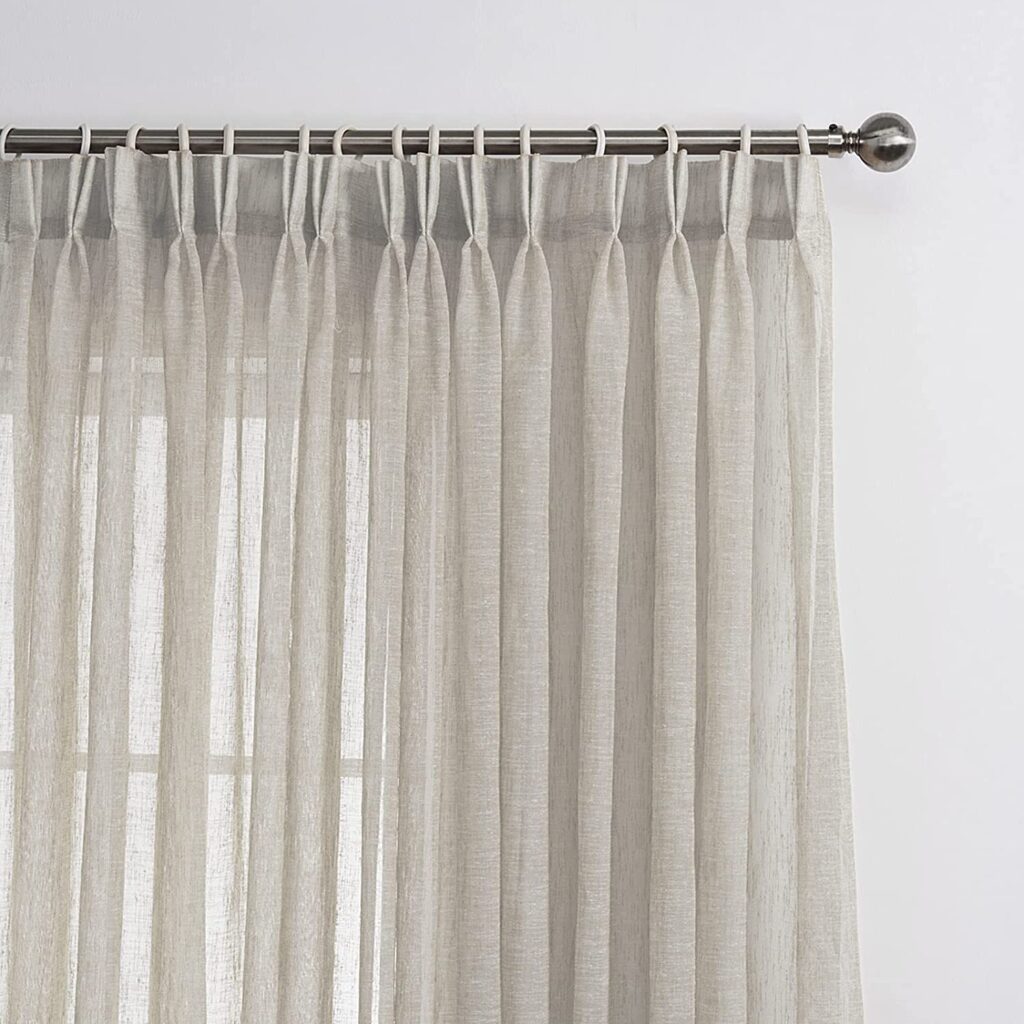
- Pinch Pleat Drapes – This is a high-end look where the fabric is pinched together two or three times across the top of the curtain. Several versions are available, including French pinch pleat, top pinch pleat, double, and triple.
- Pencil Pleat – A classic style with tightly gathered folds across the top that form a semi-cylindrical heading resembling a row of pencils. It works with a curtain pole or track system.
- Box Pleat – A box pleat is made by bringing fabric together to form a loop on the front of the drape. The loop is pressed flat against the face in equal parts on each side to form a "box" shape, then stitched in place.
- Flat Panel – These curtains are simply flat across the top with no set style. They're very common and usually attach to the rod with rings and clips or drapery hooks. When the curtains are opened, they look pleated. They're a great DIY option.
Protective lining
You may want a liner inside your curtains. If your curtains get direct sunlight, for example, they can fade faster than others, and a liner helps them last longer.
Liners also help control the light and how visible the room is from outside. An extra sheer liner is a nice touch sometimes. You can layer several liners to get different effects!
Add final touches with living room curtain hardware
Here are a few more things to consider when choosing living room curtains (or curtains for any room in your home!).
Curtain Rods
Curtain rods are a design element all on their own! Their color, finish, and finials can all tie into the final look of your curtains.
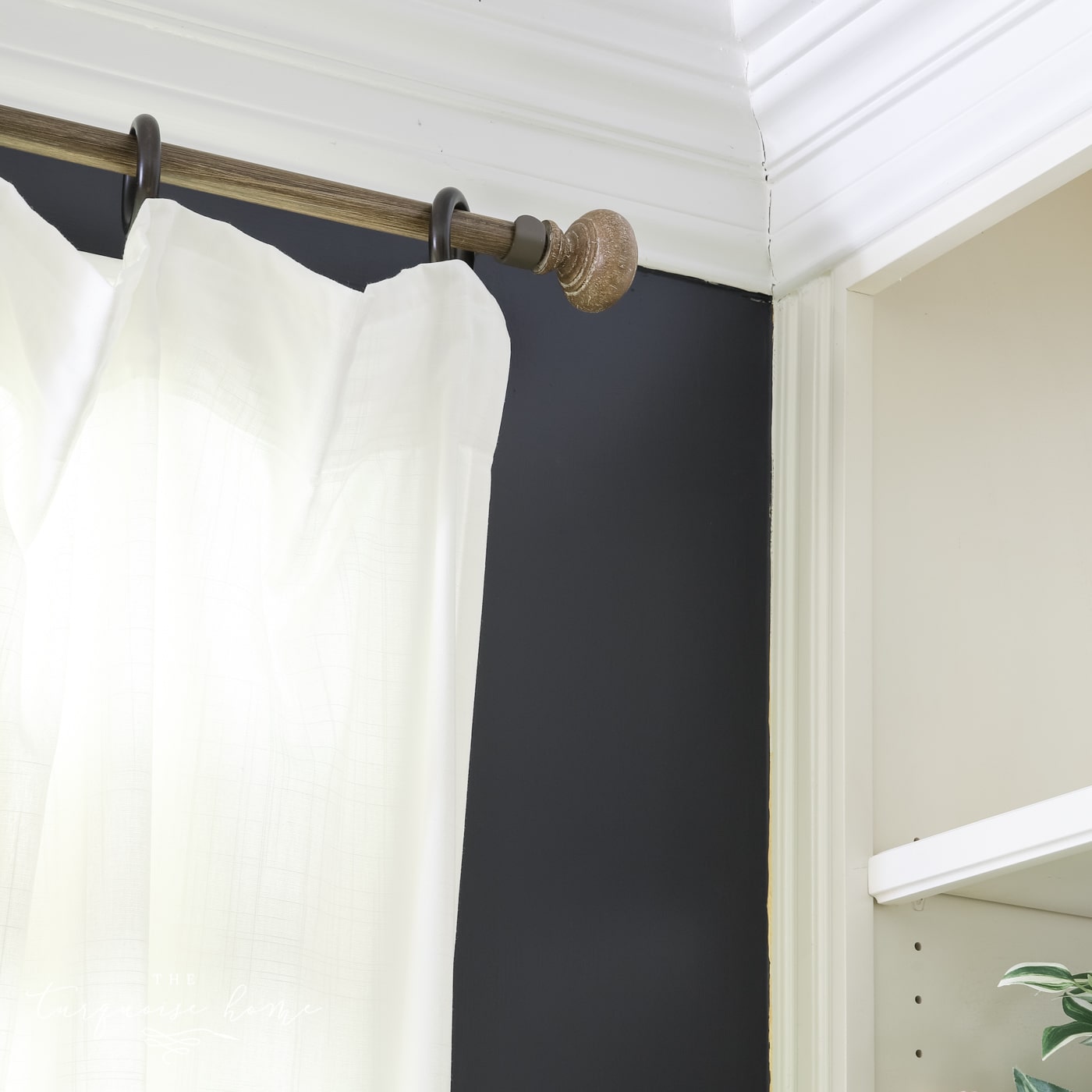
Finials are the decorative knobs at the ends of the rod. I'm very fond of intricate, ornate designs for a subtle touch of glamour, but I also like simple finials for a more casual look.
Where to Mount Curtain Rods
Another key decision is where to mount the rod. You can mount it outside either end of the window frame or inside the frame.
Mount the rod 1-2 inches from the ceiling or crown molding. Otherwise, hang the curtains high and wide for the most visually appealing look.
Mounting inside the frame is less common, but it gives a distinct look. In most cases, the rod extends 3-6 inches past each side of the window frame. The rod should be at least 1 inch thick so it doesn't bow in the middle.
Other Living Room Curtain Hardware and Accessories
Beyond the rod, there are a few more design and function choices to make.
- Tiebacks: These work well with panel curtains and are usually made of a soft material like cord or rope. Tiebacks suit traditional living rooms, since they gather the center and let more light stream through.
- Holdbacks: Similar in function to tiebacks, holdbacks are mounted directly to the wall so you can tuck your curtains to the side.
- Brackets: The most essential hardware, brackets are mounted to the wall to hold the curtain rod and the curtains in place. They're rarely a big design decision, but I've seen unique styles beyond standard metal, such as wooden inserts or leather straps.
- Rings or Clips: This is the last piece of hardware you might need. Depending on the curtain, you either slide the rod through the fabric or attach rings or clips and then hang them on the rod. As with shower curtains, this hardware can be decorative as well as functional.
- Drapery Wand: This tool lets you open and close draperies without touching the fabric. It's especially helpful when the draperies hang high and are hard to reach. It also keeps the oils from your hands from wearing out the fabric over time.
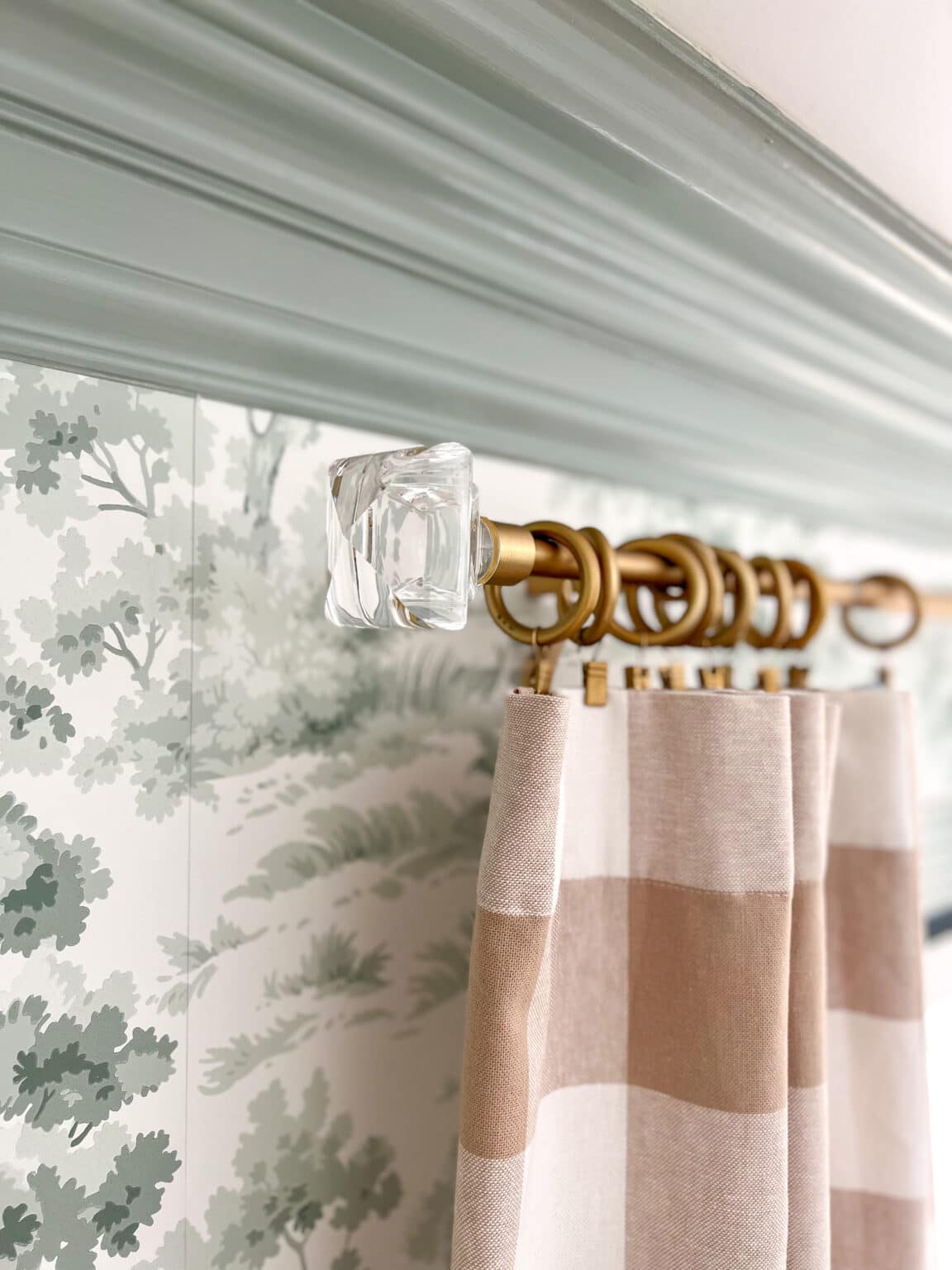
Together, these pieces create the final look of your curtains.
Types of Curtains We Love for Living Rooms
You could choose any color or style of curtain for your home's interior design, but these are the living room curtain ideas we love most!
Pinch Pleat Linen Drapes
The pinch pleat is a classic that suits any home decor! It elevates your space, and the beautiful yet durable linen gives it a comfortable feel. You can get these with a light-filtering or blackout liner. I wish I'd chosen these for my living room from the start!
See linen drapes
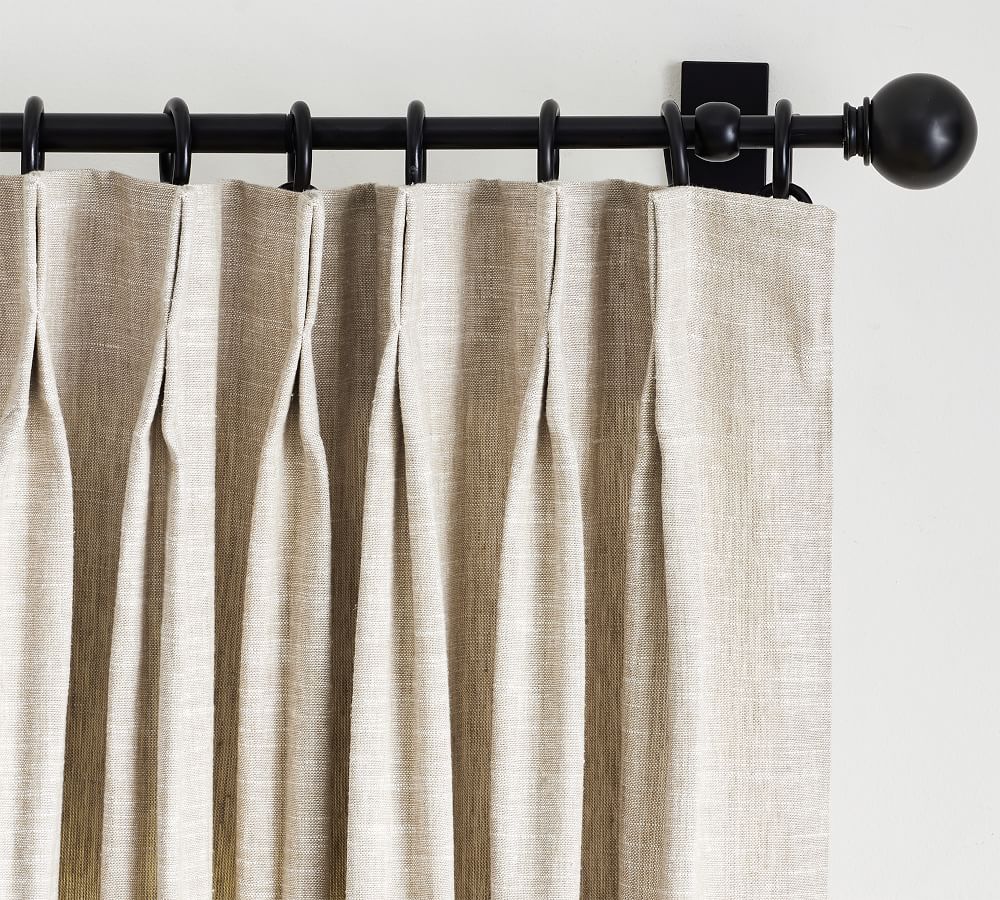
Pinch Pleat Faux Linen Curtains
Get the high-end linen look without the high-end price! These faux linen curtains can really pass for the real thing, and only you will know the difference. They come with a room-darkening liner that lets in about 30% of the natural light.
See FAUX LINEN CURTAINS
Pinch Pleat Sheer Curtains
The popular pinch pleat again, this time in a sheer! Most living rooms don't need blackout curtains. If you just want the look of curtains without full opacity, these are perfect. You can leave them open or closed and still let in plenty of light.
See SHEER drapes
Flat Panel Linen Window Curtain Panels
For a more casual vibe, try flat panel linen curtains hung with drapery rings and hooks or clips. This is the style I use most in my home, and it's the closest match to what I have in my living room (in white).
See FLAT PANEL LINEN CURTAINS
Final Thoughts
When you're deciding how to choose curtains for the living room, keep two essential questions in mind. Do you like the design? And do the curtains work well in the room? If the answer to both is yes, go ahead and have fun experimenting with your style!
More Posts You Will Love: