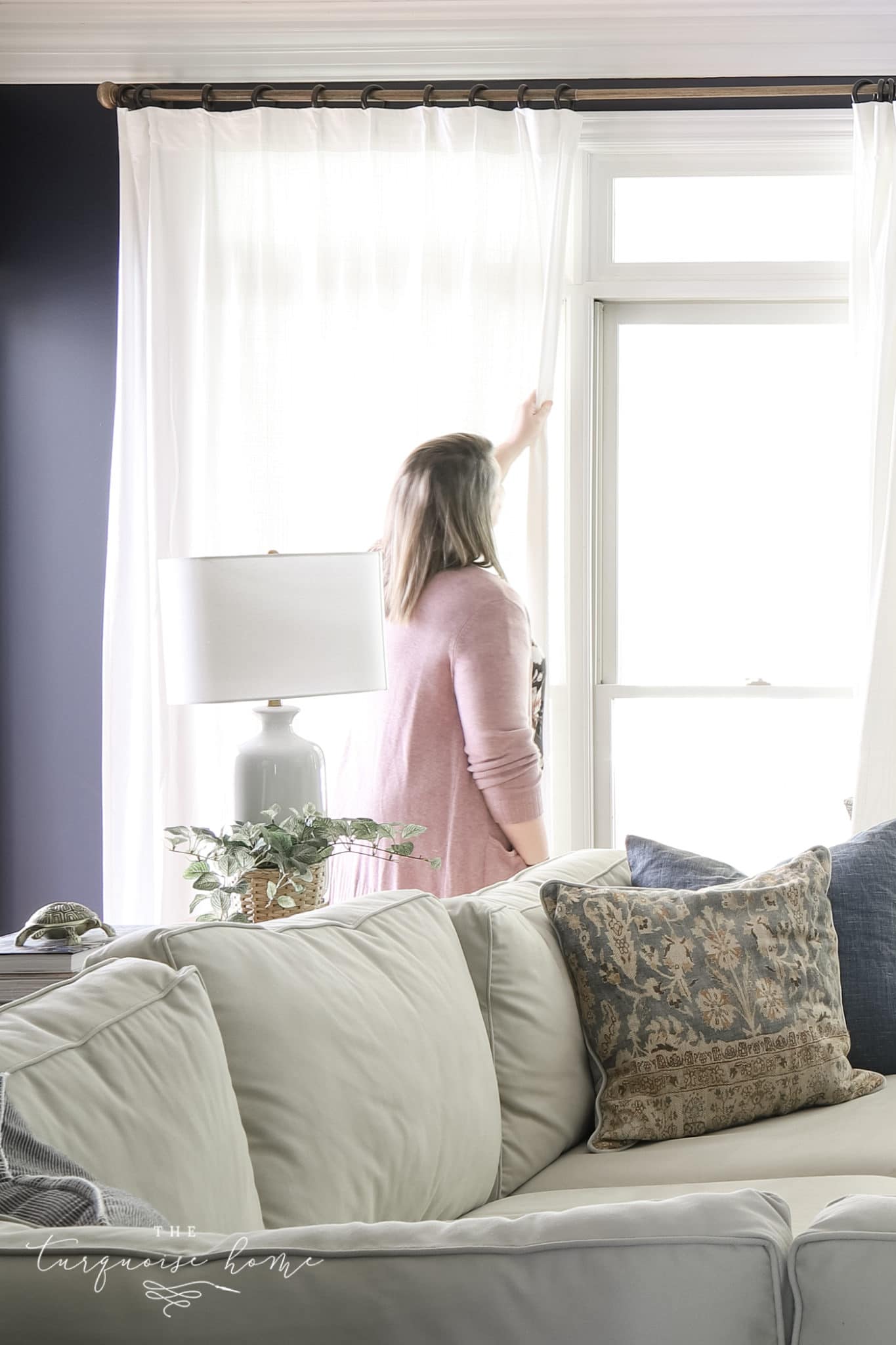
You've picked the perfect mix of fabric, color, and hardware, and now it's time to hang the curtains. Ready to move your window treatment plans from mood board to real life? Choosing curtains or drapes to finish a look is one of my favorite decor jobs. Hanging them? Not so much.
To make things easier for both of us, I've put together this simple guide to hanging curtains, with examples for every step.
Over the years I've hung plenty of curtains and picked up a few lessons along the way. I'm glad to share them so you won't end up frustrated with a wall full of extra holes. Trust me, I've been there.
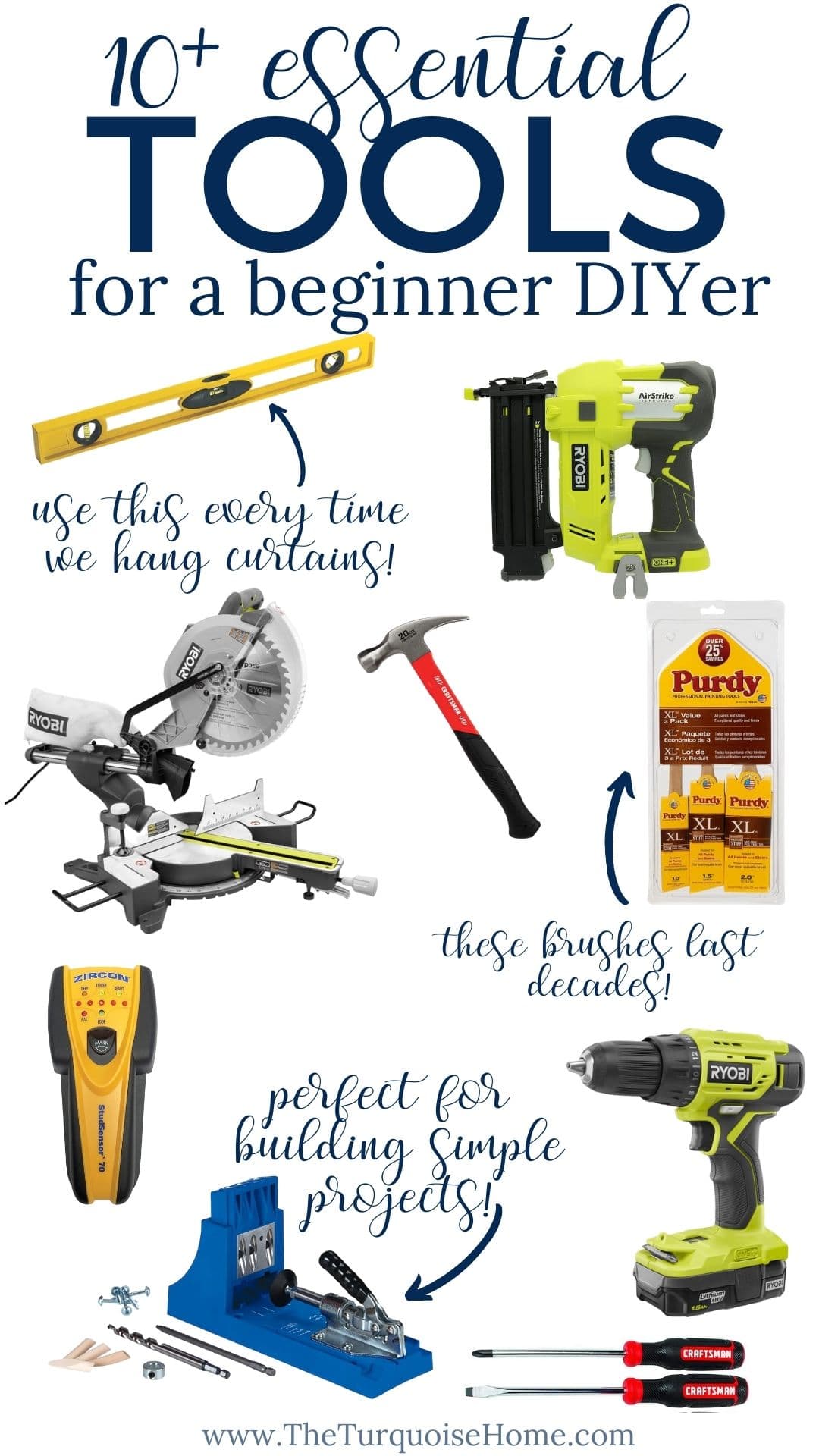
Supplies You'll Need to Hang Curtains
- Tape Measure
- Spirit Level
- Laser Level, if you're hanging curtains across several windows
- Marking Pencil
- Stud Finder
- Power Drill
- Hand Screwdriver
- Step Ladder
- Drywall anchors – These are the only ones I ever use!
- An extra pair of hands. Honestly, a helper makes it much easier! I've also done it solo many times, though, so it isn't essential.
- Curtain Rod Hardware
- Curtain Panels
Browse all of my favorite DIY tools in my Amazon storefront.

How to Hang Curtains
If you're like me, you already know the look you want and probably have a sense of which window coverings and hardware will get you there. For instance, in our master bedroom makeover window treatments, I wanted to skip heavy draperies but still keep things private.
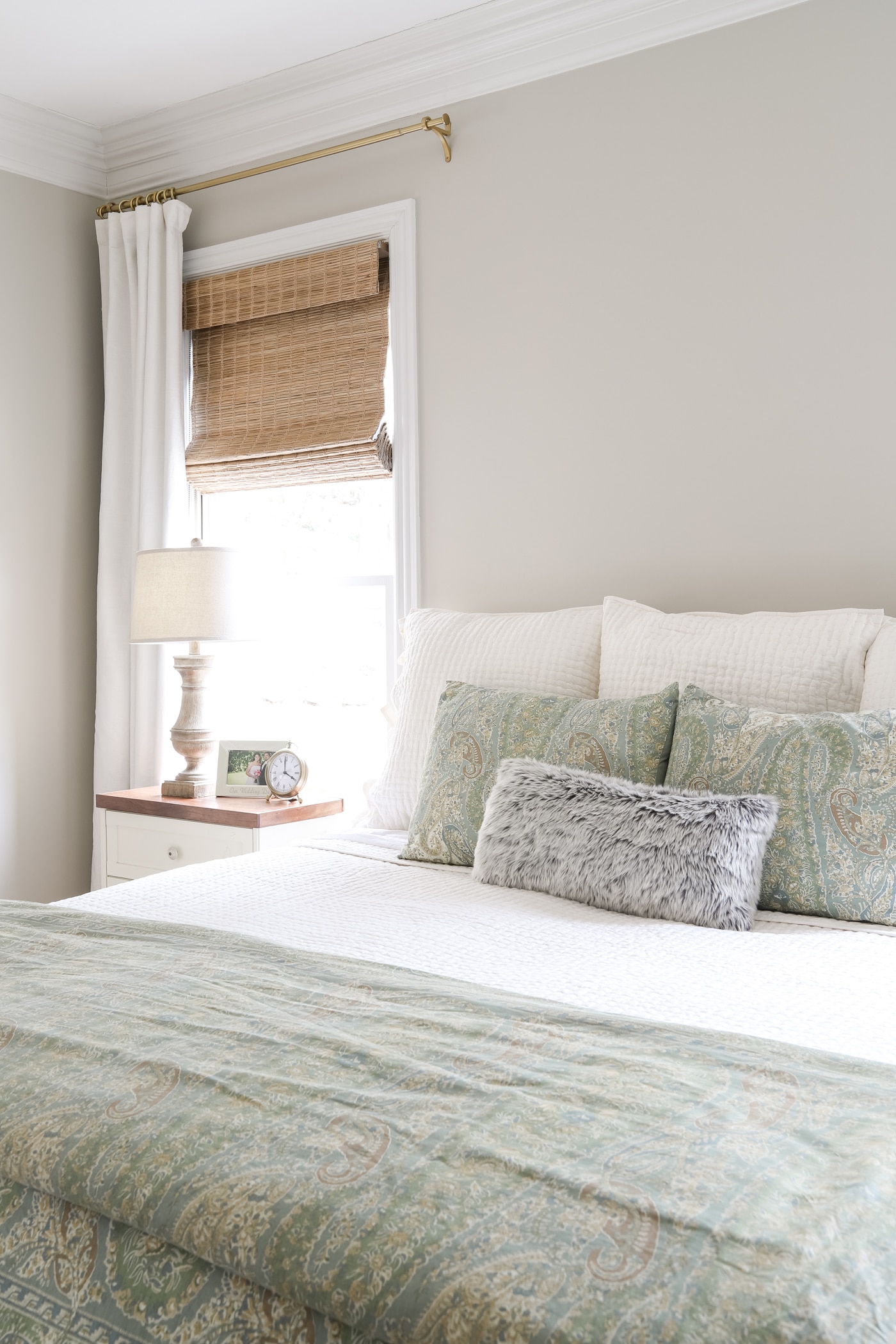
I've admired the pairing of ivory curtains, bamboo shades, and lovely brass hardware for years, so I'm thrilled to finally have it. The linen-cotton panels are blackout curtains, and the shades come with a blackout liner. We get just the right amount of light, exactly when we want it.
Even with a style in mind, work through the first three steps below before buying your curtain panels (or drapes), rods, and other hardware. Paying attention to window placement and size is essential for a polished, designer look.
1. Measure Your Windows & Run the Numbers
You'll need a tape measure and a notepad for sketching your space and jotting down numbers. Seriously, you don't need any artistic talent.
Your lines don't even have to be straight. All you need is handwriting you can read and rough rectangles showing the ceiling, floor, and wall space around the window frame.
Accurate measurements matter most. A sturdy metal tape measure works best, and it's worth measuring two or even three times.
For curtains on bracket-mounted rods, measure the window width from the farthest edge of the trim to the opposite outer edge of the frame*.
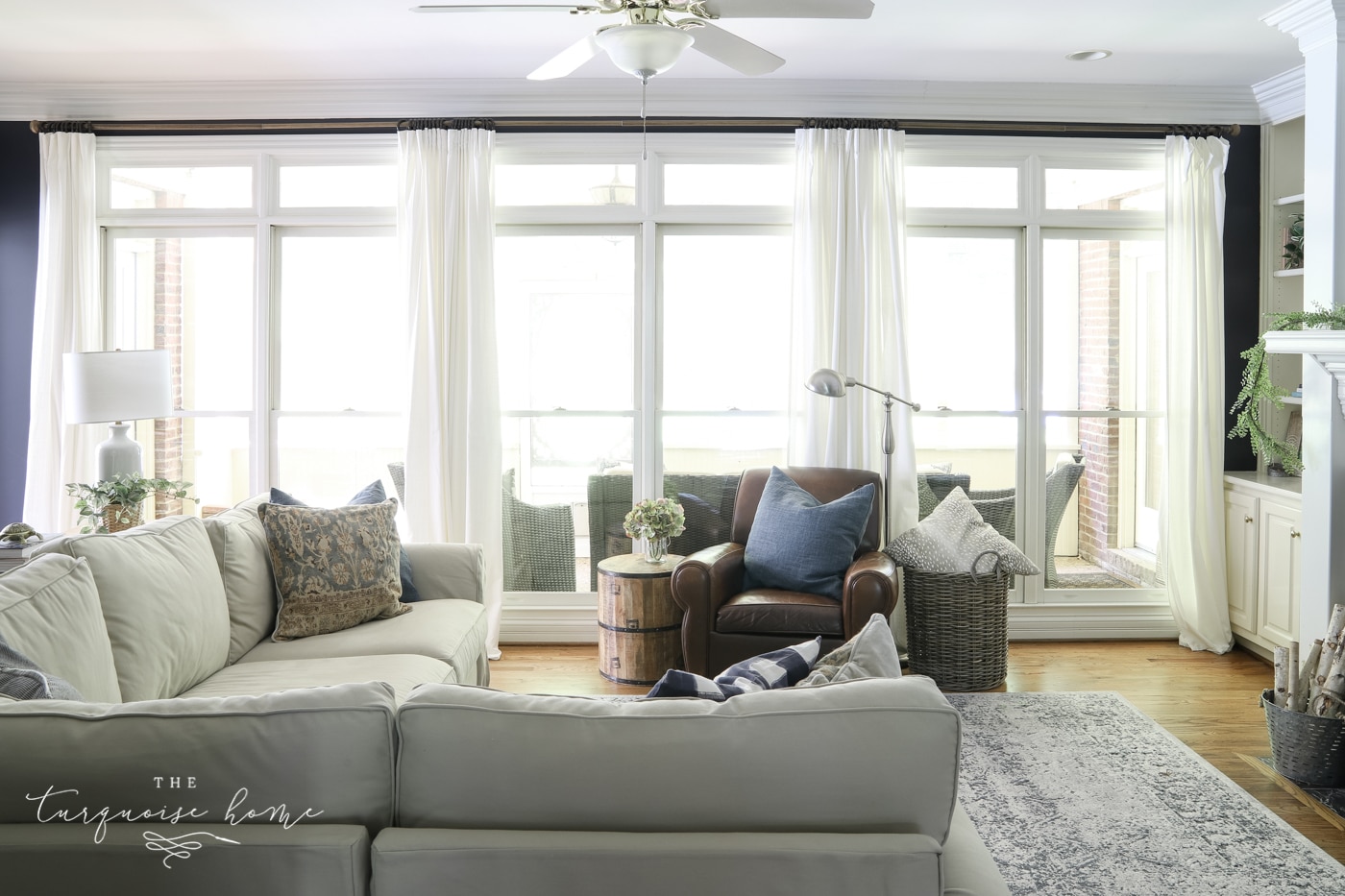
If you're planning a treatment for several windows, like the curtains I hung in my living room, measure each section as well as the full combined width. These figures will tell you how many panels you need and how long the rods should be to cover the space neatly.
How you measure the height depends on where you want the curtains to fall and how high you plan to hang them. For high, floor-to-ceiling curtains, measure from at least four to six inches above the top of the frame all the way to the floor. For small windows that call for shorter curtains, such as in kitchens or powder rooms, measure to the window sill or just below it.
*One exception: measure inside the frame if you're using tension rods for an inside mount.
2. Pick the Right Curtain Width
As a rule of thumb, start with your window width and add 6 inches to each side, 12 in total. So a 48-inch window becomes 60 inches. Divide that total by the number of panels you want.
Most often you'll use two panels per window. In this example, look for panels that are at least 30 inches wide. Going a little wider never hurts, especially for a fuller look. If your fabric is sheer or gauzy, consider doubling up panels for a fuller effect.
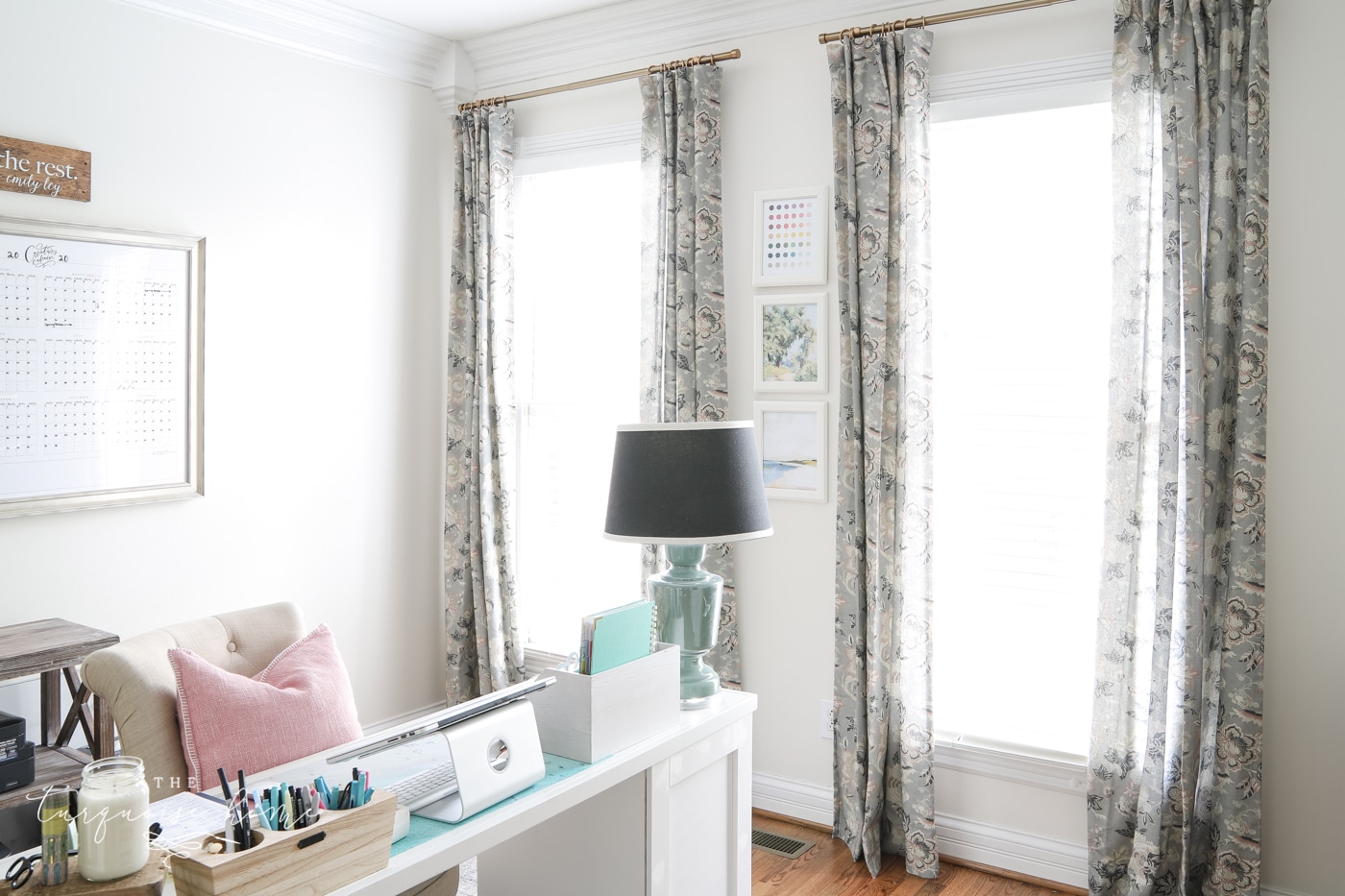
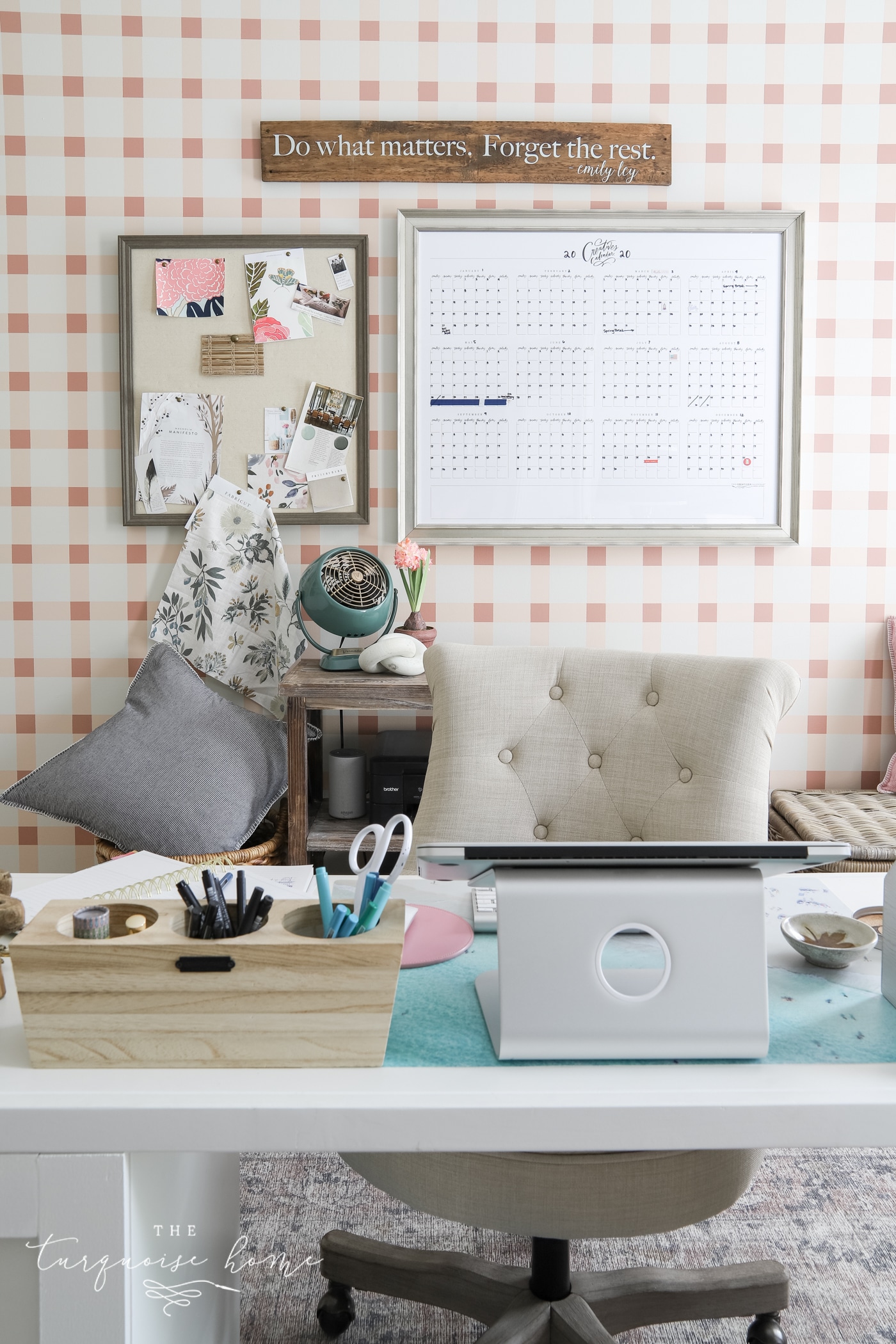
The measurements worked out beautifully for the floral fabric and brass hardware I installed in my home office. They keep the panels full when closed and give clean, straight lines when open.
3. Pick the Right Curtain Length
The last consideration for choosing the best size of curtains is the length. This may have you wondering what exactly is the rule for hanging curtains at the best height.
If you've noticed in my photos and posts, I'm a firm believer in hanging curtains close to the ceiling using the high-and-wide approach. Use the height measurement from earlier, which places the curtains four to six inches above the frame. I always say go as high as you can for the most dramatic effect.
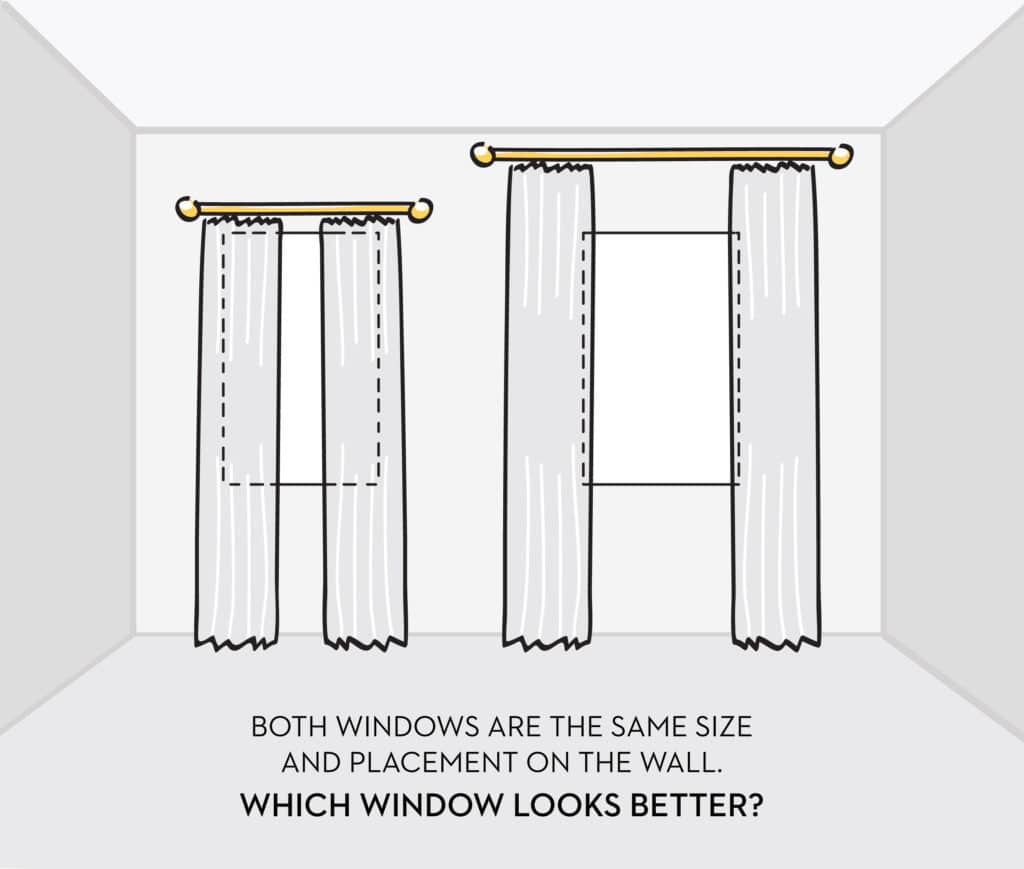
It really does make rooms feel bigger. I covered this in more depth in an earlier post about gorgeous budget curtain ideas for your home.
Here's one example. At first I hung the curtains right along the top of the frame in my eat-in kitchen dining area, but they were far too short for the space. Just buying the right length, hanging them higher, and adding shades made a dramatic difference.
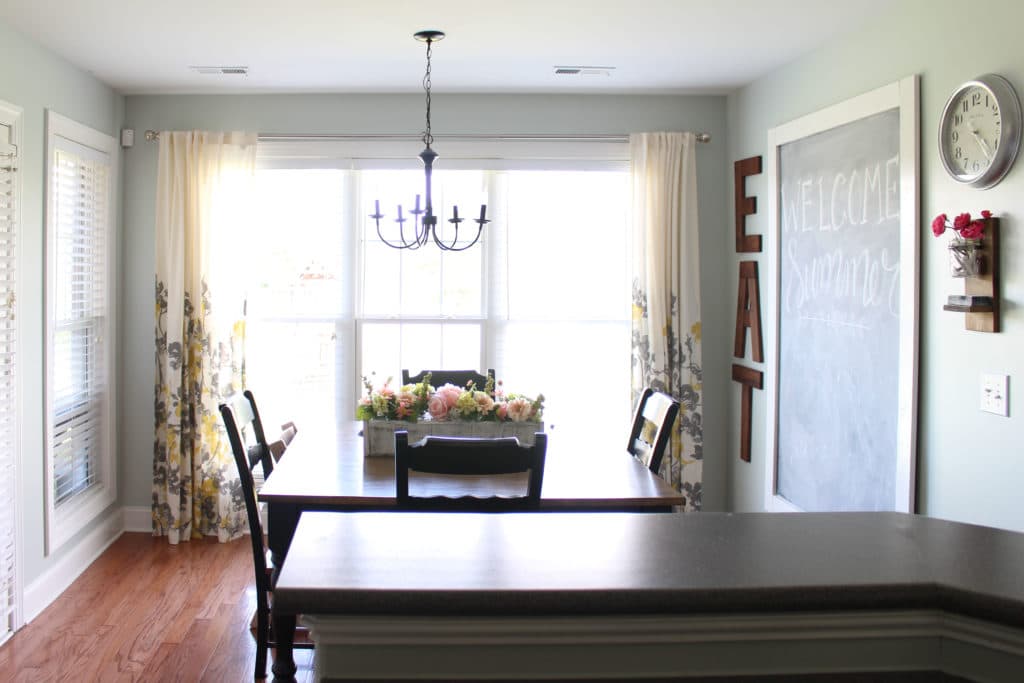
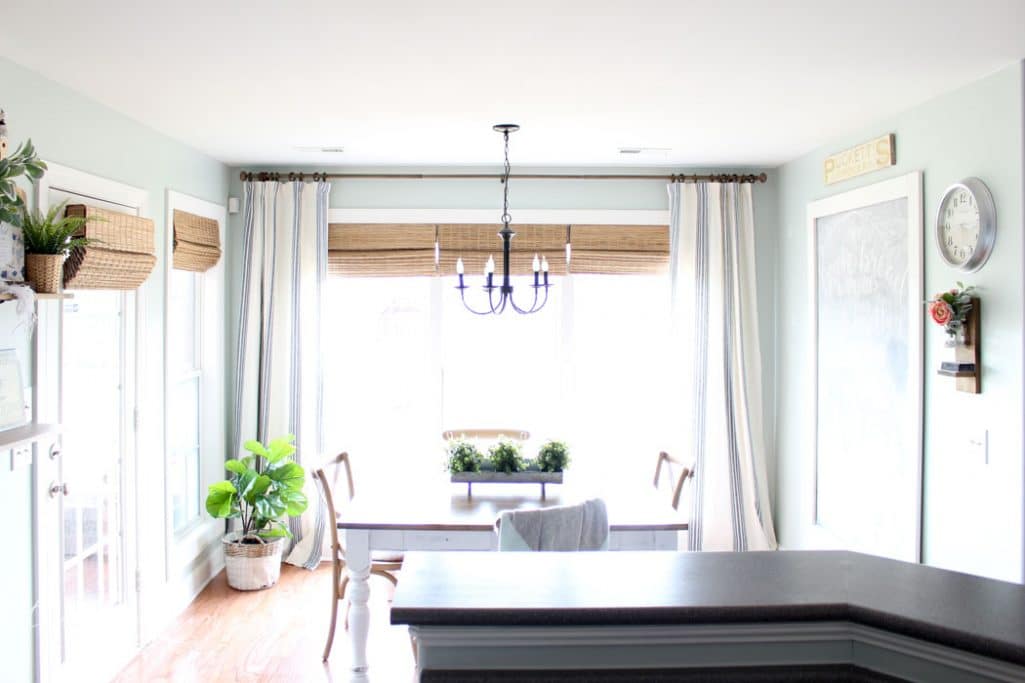
Even without the shades, the difference is obvious.
The ideal panel length depends on how you'll use them. If you plan to open and close them often, leave about half an inch of clearance above the floor.
If the panels will mostly stay put, like these in the kitchen dining area, a little pooling on the floor looks lovely. It's especially elegant in bedrooms or dressing rooms with luxe fabrics. It isn't ideal for dusty spaces, rooms that need frequent cleaning, or busy traffic areas. We want lovely windows, not a tripping hazard.
Standard curtain lengths are 63, 84, 96, 108, and 120 inches. Pick the one that fits your measurements most closely.
4. Pick the Right Curtain Rod Length
Next, work out how long the rod needs to be. Start with your original measurement, still 48 inches from the earlier example, and add 8 to 12 inches, depending on how far you want the rod to extend beyond each side of the window.
Typically that means four to six inches on each side. For this example, you'd want a rod 56 to 60 inches long.
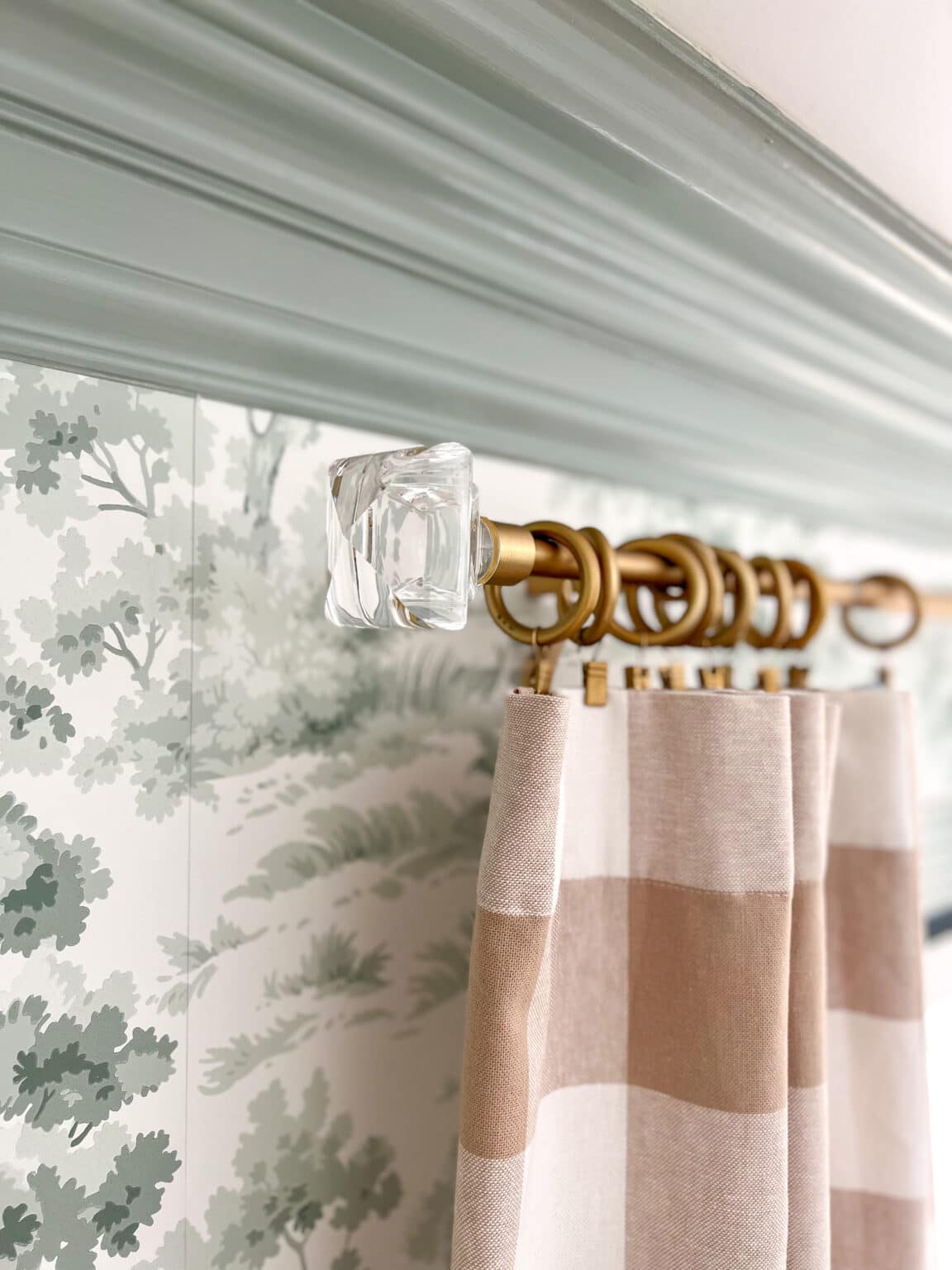
Remember to factor in the length of any decorative finials you choose. Also, standard metal or wood drapery rods need a middle support bracket about every 60 inches to prevent sagging.
That spacing may need to be even tighter for heavy fabrics like damask and some velvets. Choose 2-inch or wider drapery rods for heavier draperies.
5. Mount the Curtain Rod Brackets
That brings us to mounting the brackets. Here's what you'll need: pencil, tape measure, stud finder, drill, screwdriver, level, and ladder. If you can't drill straight into studs, you'll also need drywall anchors.
Use your pencil to mark a spot three inches sideways from the top corner of the window frame and four to six inches above it.
Feel free to go closer to the ceiling if you prefer. Once the spot is marked, use a drill or screwdriver to mount the first bracket. Ideally, use the stud finder to hit a wall stud. If you can't, plastic drywall anchors will give a more secure hold.
I've linked my favorite drywall anchors, and I always use them instead of the ones that come with the rod hardware.
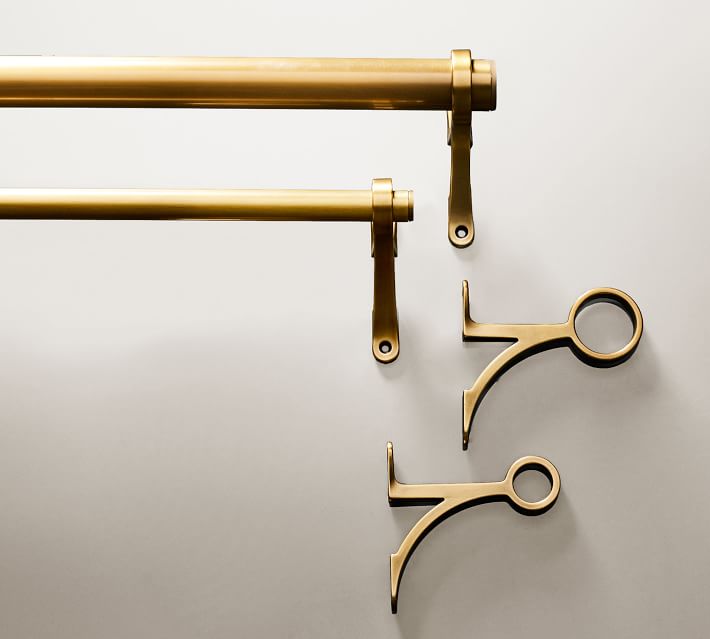
Repeat the process on the other side of the window, using a level to make sure both sides line up perfectly. If you need a middle bracket, use the two end brackets as guides to position it. A laser level can help if you're spanning a wide space.
6. Hang the Curtains and Adjust
How you attach the curtains depends on their style. For rod pocket curtains, slide the rod through the pockets and adjust the drape to your liking. These stay put by design, so they suit spaces like powder rooms that need extra privacy. Tab curtains don't slide as easily, but they hang straighter because they don't pinch at the top the way pocket curtains often do. Grommet curtains are likely the simplest to hang: line up the grommets and slide the whole panel onto the rod at once. Last, here's a trick I recently learned that uses rings with hooks.
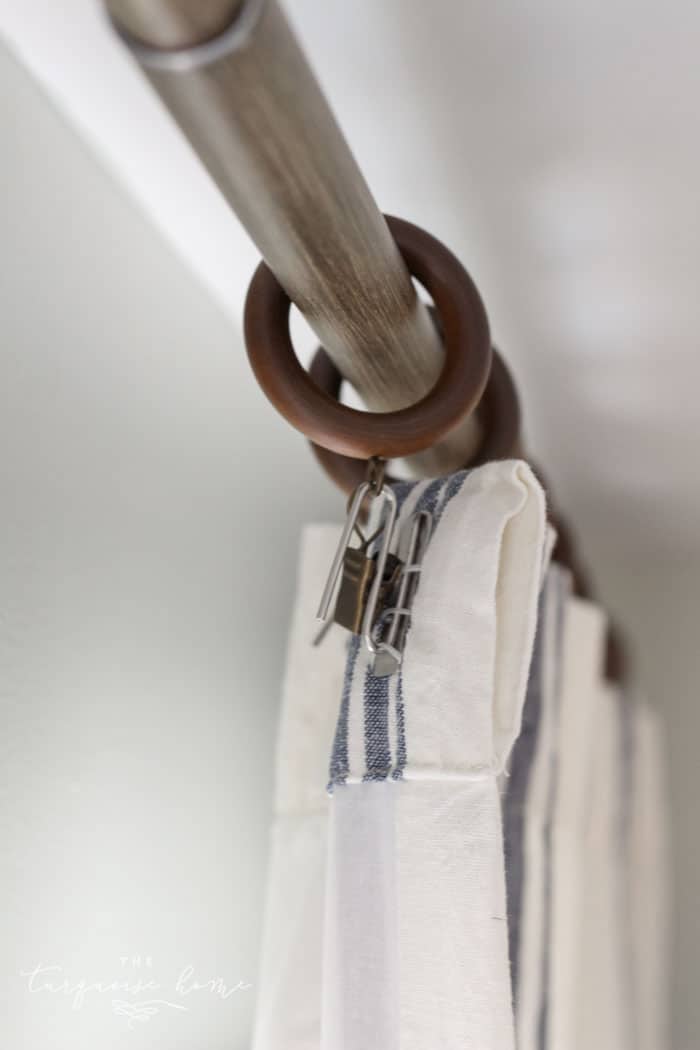
Why bother? I had my heart set on a ring style that was far too expensive for this project. The cheaper version I found had clips that made the curtains hang too long. Then a friend shared a budget-friendly workaround, and I'm delighted with it. I bought a larger ring set that looks like the pricey one I loved, then used the panels' clip feature to bypass the clip and get the perfect length.
The detail shot shows what I did, but the ring and neat drapes only look right once everything is positioned correctly. Check out the post with a video to see the difference.
Closing Thoughts
As you can see, many factors go into hanging curtains correctly. Your goal, room, window size, lighting, and budget all play a part. I hope you feel ready to tackle the basics on your next curtain project.
And if curtains don't suit your window, a fabric-covered cornice board is another lovely way to add color and pattern without covering much of the glass.
More Posts You'll Enjoy: