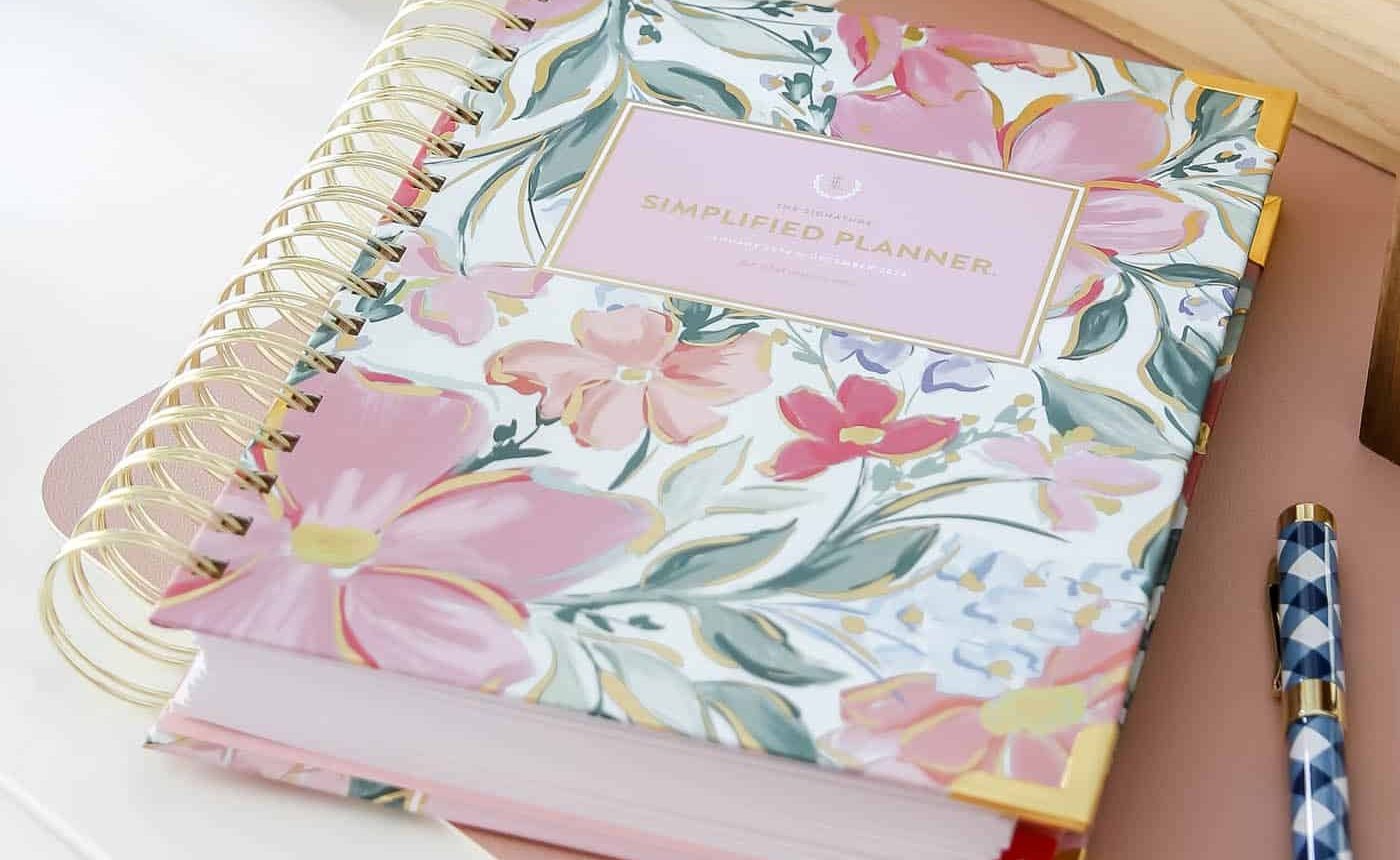
Using the Simplified Planner for over nine years has changed the way I organize my days. From meal planning to managing appointments, it keeps everything in one place. I’m genuinely obsessed—here’s why it works so well for me.
This post contains affiliate links for your convenience. See my full disclosure policy.
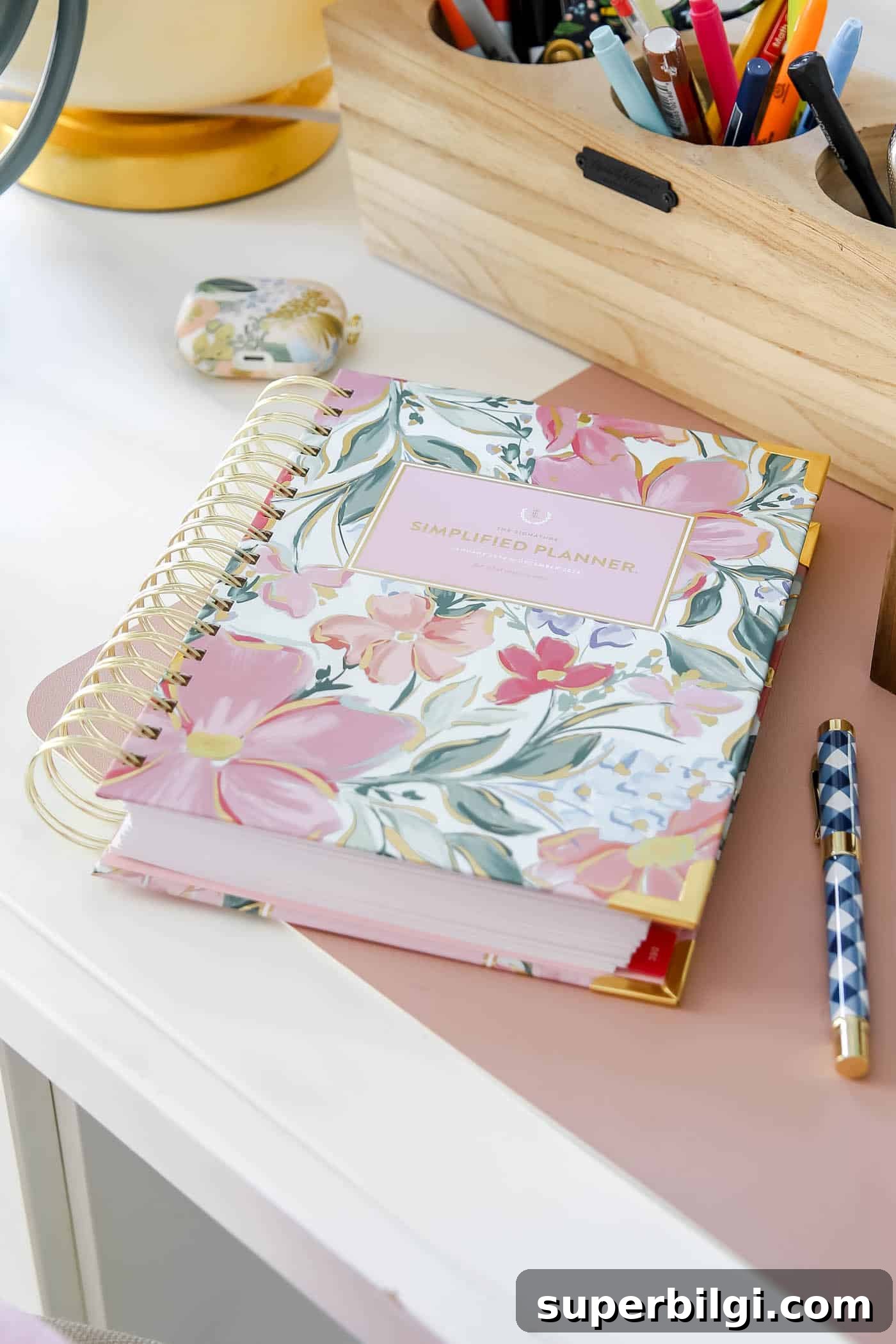
I’ve been a pen-and-paper planner person for more than two decades. In 2015 I set out to find a paper planner that suited a busy life. After testing many brands, the Simplified Daily Planner from Emily Ley became my go-to—and I’ve used some version of it every year since.
The Simplified Planner lives up to its name: it’s clean and uncluttered, giving you the freedom to use it your way. There aren’t dozens of preset boxes or complicated sections, which makes it flexible. If you want to add sticker systems or habit trackers, you can—but the basic layout is deliberately simple.
The company releases new covers every year, with academic planners launching in spring and calendar-year planners available each September.
Updated for 2025: This year I switched to the Savannah Blooms weekly planner. For the first time I tried a spiral-bound weekly format to see my entire week at a glance. I like the new spiral binding and the fresh weekly layout; if it doesn’t work out, I’ll likely return to the daily edition next year.
Daily Edition: Key Details
Simplified Planner Specifications
- Calendar Year: January–December
- Academic Year: August–July
- Cover size: 7″ x 9.25″ (approx. 1.25″ thick), roughly 2.5 lbs.
- Inner pages: 6″ x 8.75″
- Paper: thick 80 lb. pure white paper (high-quality, smooth)
- Layout: space for schedule, to-do list, notes and meals
- Daily format: one day per page with shared weekend pages
- Includes full month views and a year-at-a-glance
- Six notes pages in the front
- Hourly schedule: 6 AM to 9 PM
- Simplified Prep-Work pages and monthly simplicity tips
- Full-color insert with the pattern’s image and story
- Excellent ink-bleed resistance
Packaging, Cover and Binding
- Sturdy gold wire-o binding
- Hard cover with gold foil accents and protective gold corners
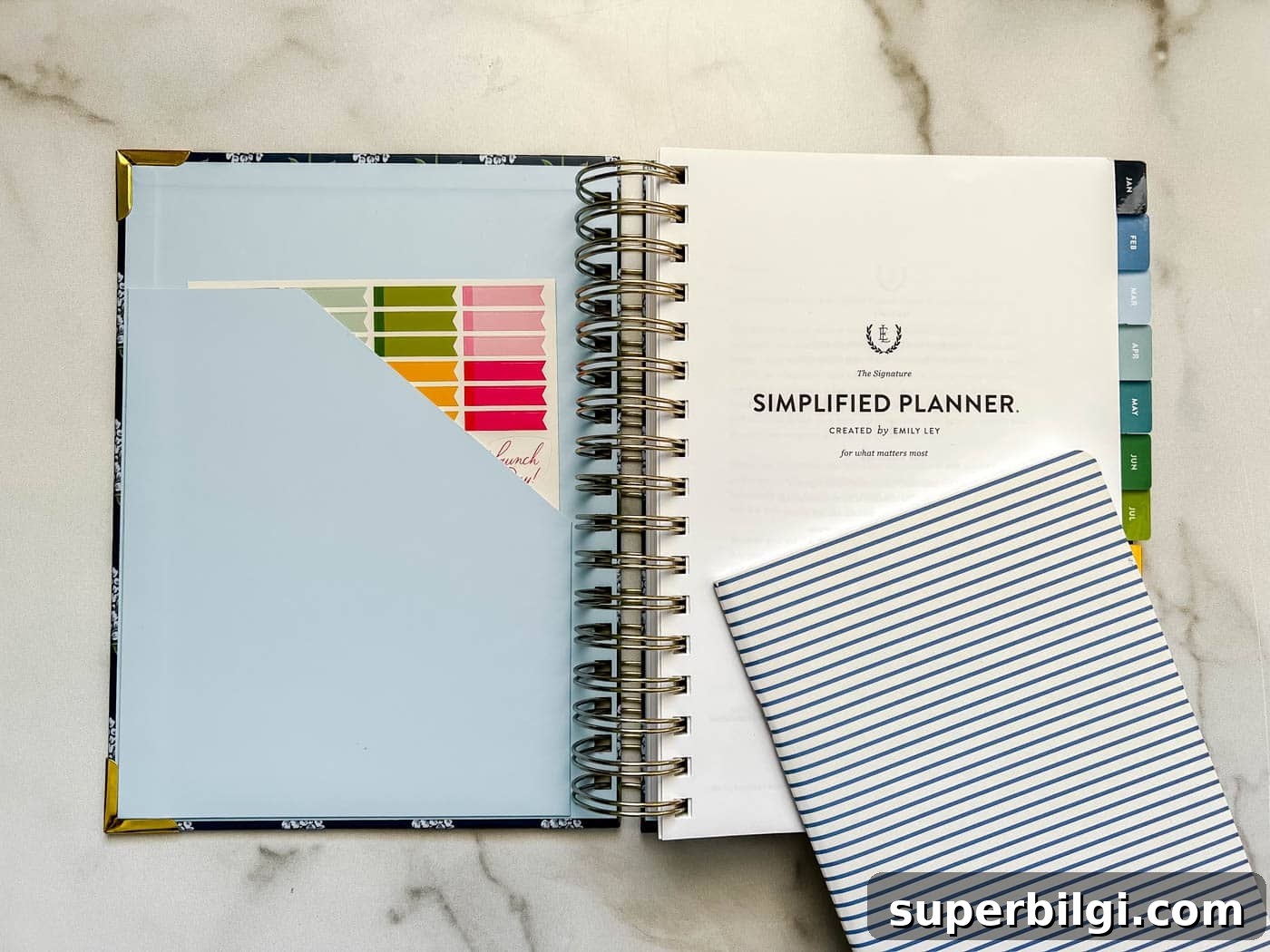
- Navy interior with a pocket inside the front cover
- Colorful, durable mylar tabs
- Comes with an informative insert booklet and a navy + gold keepsake box
One of my favorite features is the generous white space for jotting notes, reminders or meal ideas. Recent versions also include extra note pages for lists, doodles, project planning or habit tracking.
Extras Included
Daily planners typically come with a sticker sheet tucked into a slim front pocket. The pocket can hold a mini notebook, a sticker page or a few receipts—but it’s not large enough for bulkier items.
Prep Work & Simplicity Challenge
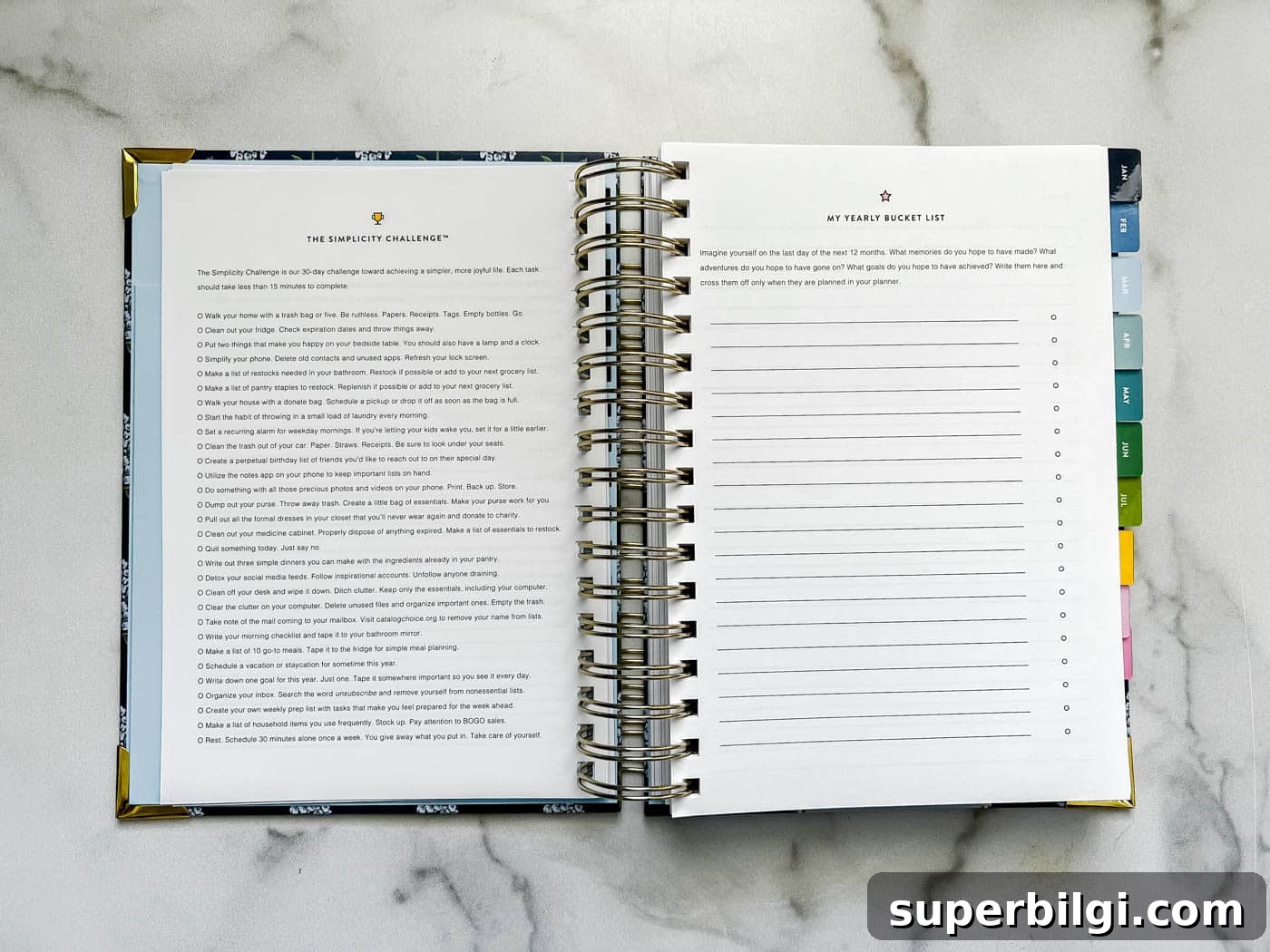
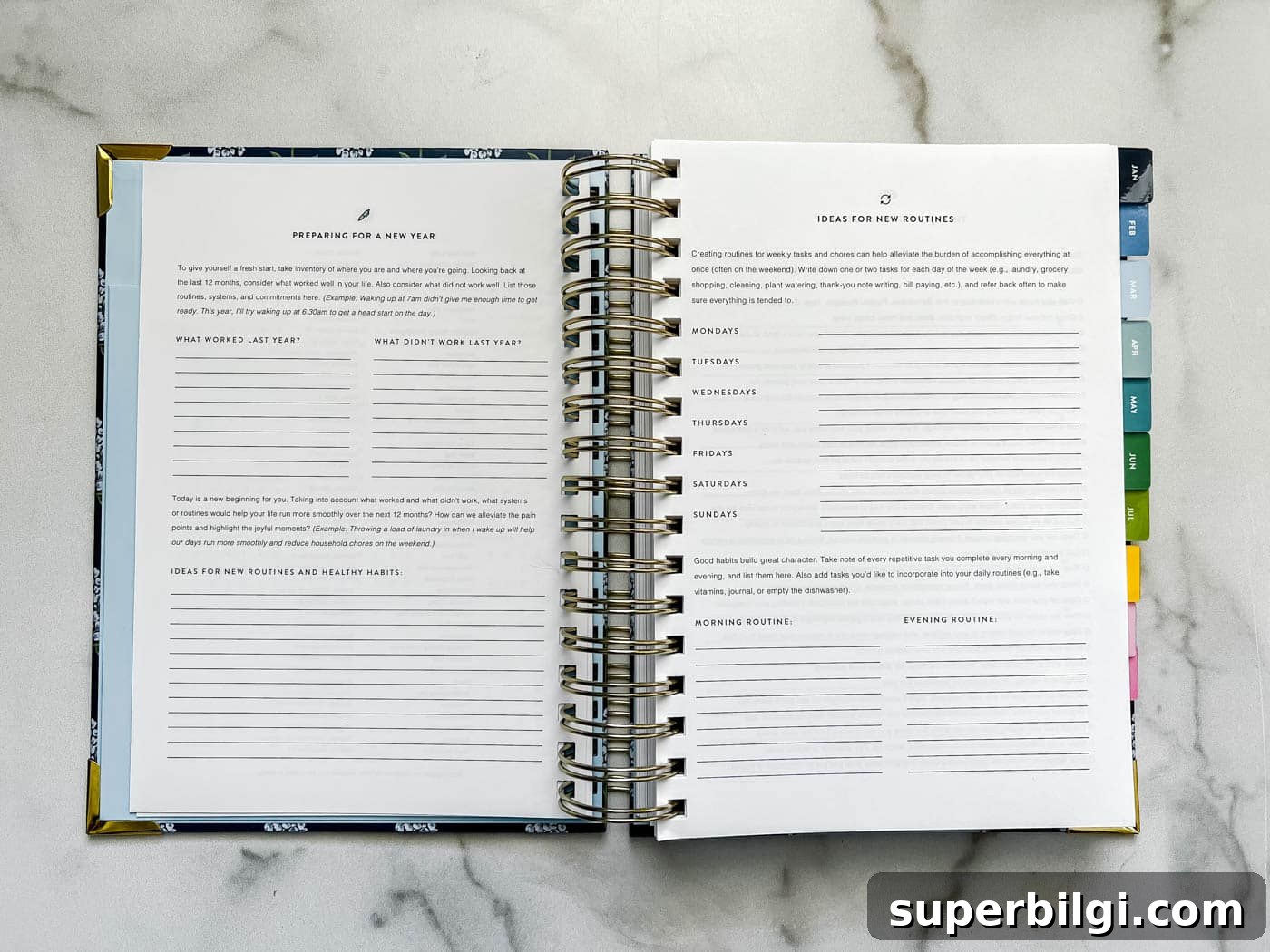
The front of the planner includes a prep-work section to help you set priorities and plan your year. Typical pages include:
- The Process of Simplifying
- How to use your Simplified Planner
- Year-at-a-glance and holiday lists
- Ideas for preparing for a new year and establishing routines
- The Simplicity Challenge checklist
- Yearly bucket list and notes pages
Simplified Planner: Monthly Spread
The monthly spread is a full two-page layout with a small notes column on the left. Each monthly view also features a short simplicity tip at the top—useful reminders to keep planning intentional and uncluttered.
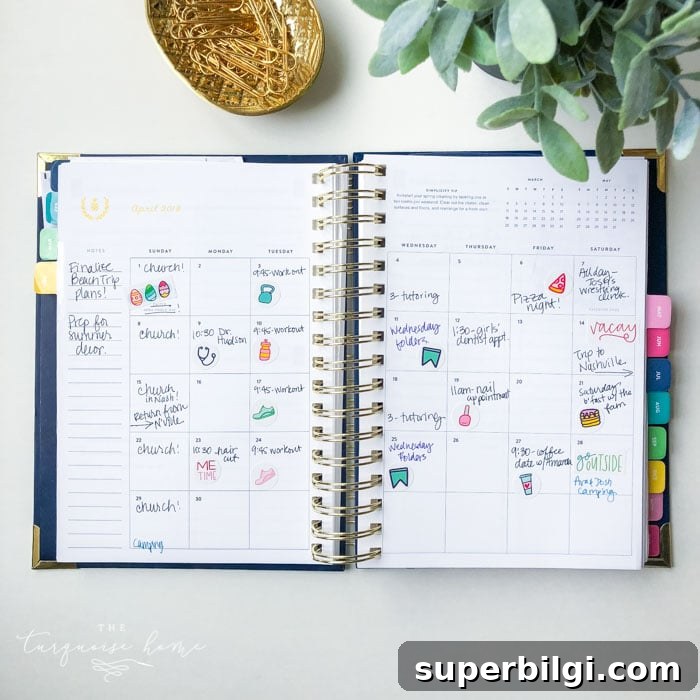
At the start of each month I fill in all events and important dates. Seeing the entire month helps identify busy weeks when we might need quick meals versus slower weeks for more elaborate cooking. It also makes planning gifts, outfits and travel much easier.
I use the planner together with a goal-setting system (PowerSheets), which helps break large goals into manageable steps. Using both tools keeps long-term projects on track while the planner manages daily and weekly tasks.
Simplified Planner: Daily Pages
Weekday Pages
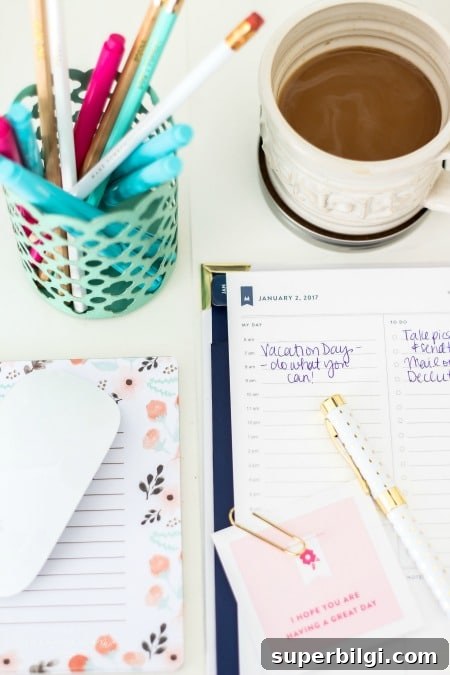
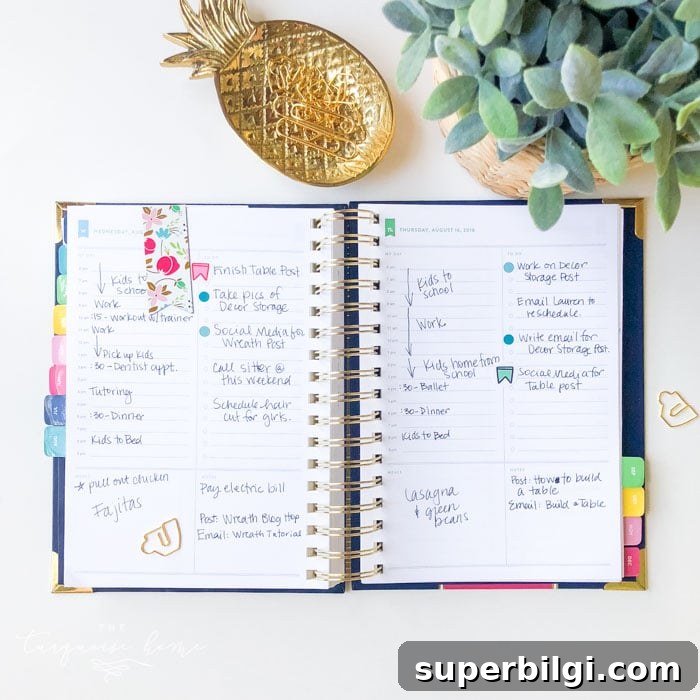
Weekday pages have two columns plus a notes section. The left column is an hourly timeline (6 AM–9 PM) and the right column is for to-dos. The bottom section provides unruled space for notes—perfect for dinner plans, quick reminders, or meeting notes.
Weekend Pages
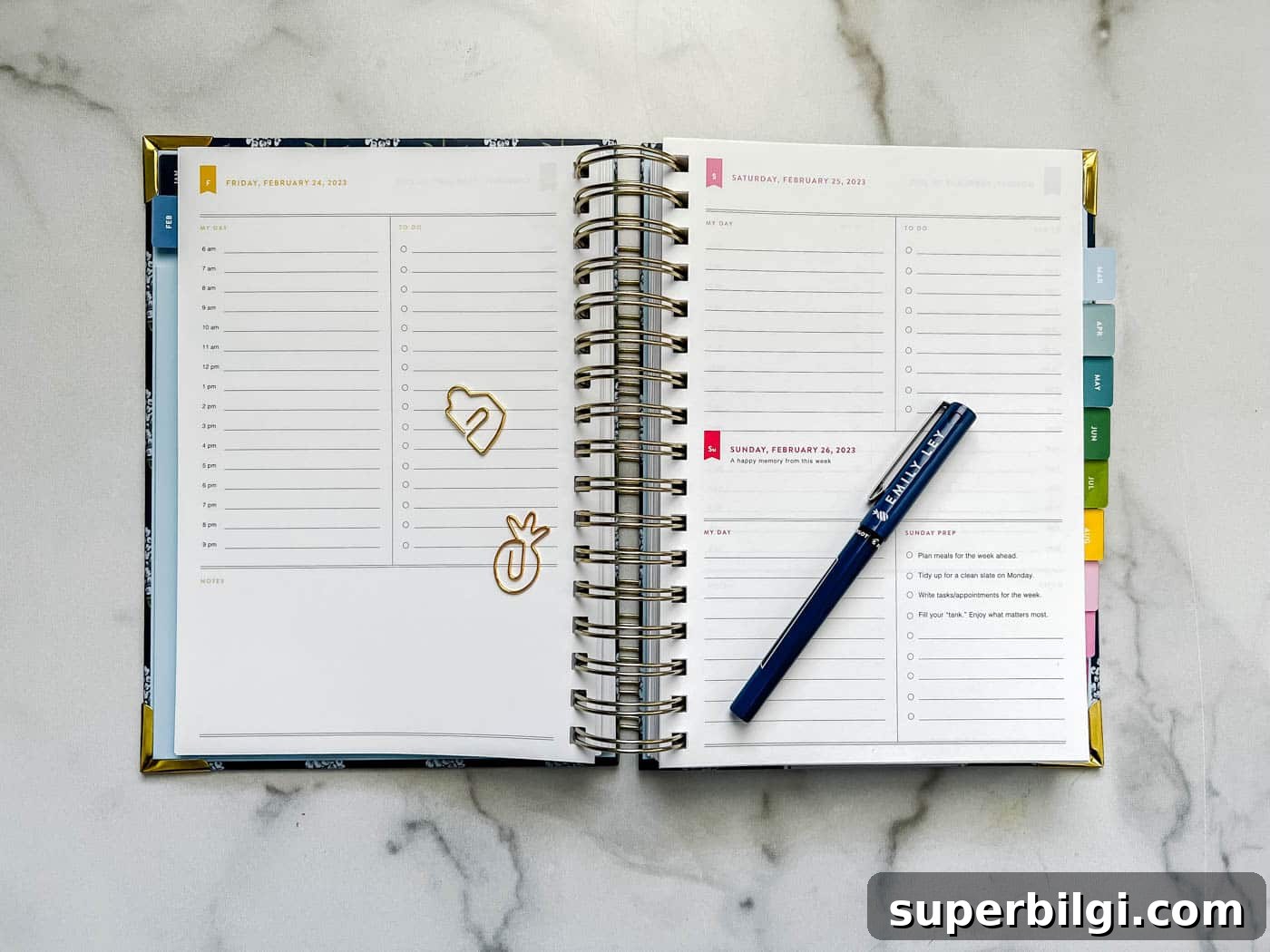
Weekend pages share a single spread. Recent updates give Saturday and Sunday equal space with side-by-side columns and the same structure as weekday pages—time slots, to-do list and notes—so weekends feel balanced and flexible.
How I Use the Daily Pages
I use the planner in two ways. First, I populate the monthly calendar with events and deadlines to visualize busy weeks. Second, each night I write my schedule and top to-dos for the next day. This nightly ritual calms my mind and helps me sleep, and it keeps mornings efficient because I can immediately focus on what matters most.
A tip I follow: prioritize just the top three tasks for the day. Keeping goals to three prevents overwhelm and makes daily progress realistic and satisfying. I sometimes mark these with stickers, a star, or numbers—whatever helps them stand out.
What I Don’t Do with My Simplified Planner
- Not every detail: I don’t list routine steps like my morning routine; instead I block time for work and record the main tasks. Detailed task lists live in Asana, WordPress back-end notes, or my phone.
- No strict color coding: I avoid elaborate color systems to keep the planner simple. I might use stickers for fun, but not for complex categorization.
- Not pristine: I write, scribble, and use margins freely. The planner is a tool, not a museum piece—mistakes get crossed out and notes get added wherever needed.
More Purchasing Options
I know the original Simplified Planner can be pricey. There are more budget-friendly alternatives, including weekly/monthly versions sold through retailers and accessory options like binders and sticker books. However, the flagship daily planner’s high-quality paper and binding are what keep me coming back.
Planner Accessories and a Simple Hack
Etsy and other sellers offer accessories to personalize your planner, but I keep mine fairly basic. One simple and practical hack I created is a laminated daily checklist that fits into the planner as a bookmark—so I can check off recurring tasks with a wet-erase marker and wipe it clean each day.
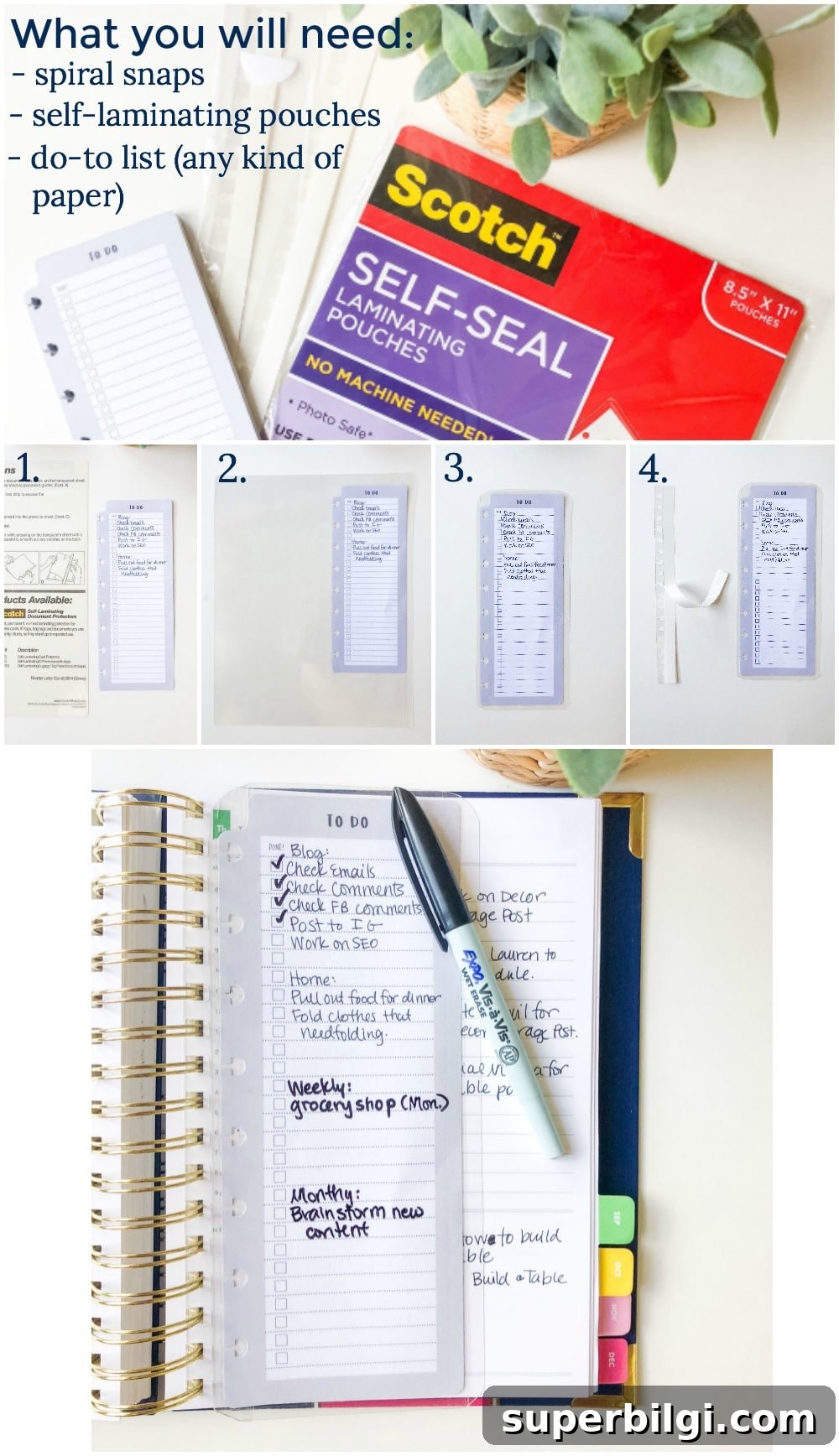
To make this, I printed my daily must-dos, used self-laminating sheets, trimmed the edges, attached the laminated card to a coil-friendly snap-in bookmark, and used a wet-erase marker to check off items each day. Wipe clean with a damp cloth and reuse.
Final Thoughts on the Simplified Planner
I hope this review helps you decide which planner format fits your life. After nearly a decade of use, the Simplified Planner continues to be my favorite because it’s reliable, well-made, and intentionally simple. Its durable construction and smooth paper make it worth the investment for many people.
Beyond the product itself, there’s a community around the Simplified Planner that many users appreciate—the planner becomes part of a habit, a system and a way to simplify a busy life.
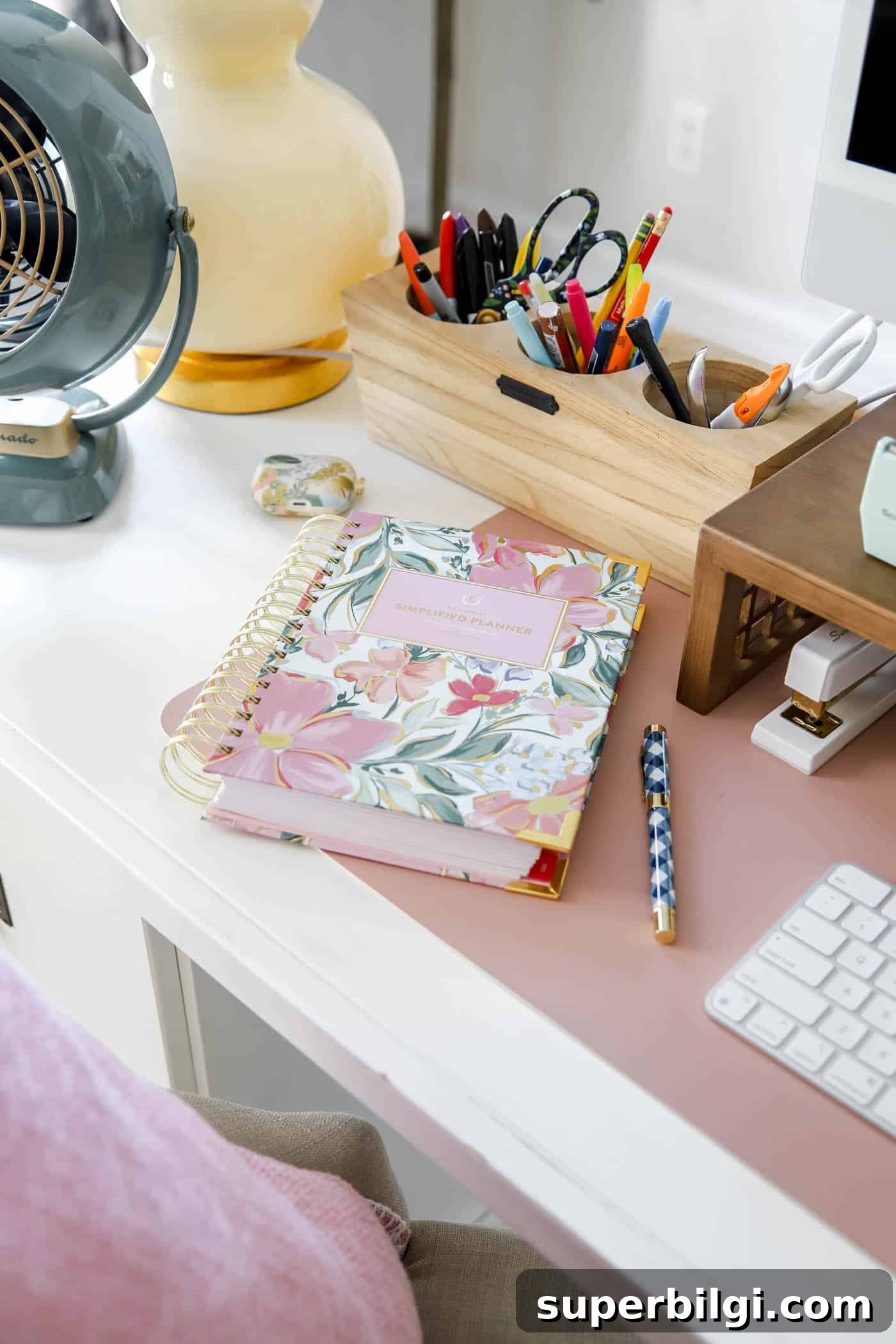
Yes, the planners are an investment, but they last all year without falling apart, the paper is exceptional, and the simple layout helps you focus on what matters. Tell me in the comments which cover you prefer—classic stripes or floral?—and what feature you love most about the Simplified Planner.
MORE POSTS YOU WILL LOVE:
- How to Organize a Messy Garage
- How to Declutter Your Home in 5 Simple Steps
- How to Organize Christmas Decorations
- How to Organize a Pantry
- Under the Bathroom Sink Storage
- How to Organize a Linen Closet