Hello everyone!
A few nights ago I shared a photo of my new console table in progress. You might remember the DIY abstract art I showed a few weeks back — it’s finally time to finish styling the table and add a few fall touches.
I love how the beachy art pairs with autumn neutrals, so my plan is to keep that coastal feel while bringing in subtle fall accents—think textured neutrals, warm tones, and natural elements.
Here’s the photo I posted and asked for opinions about:
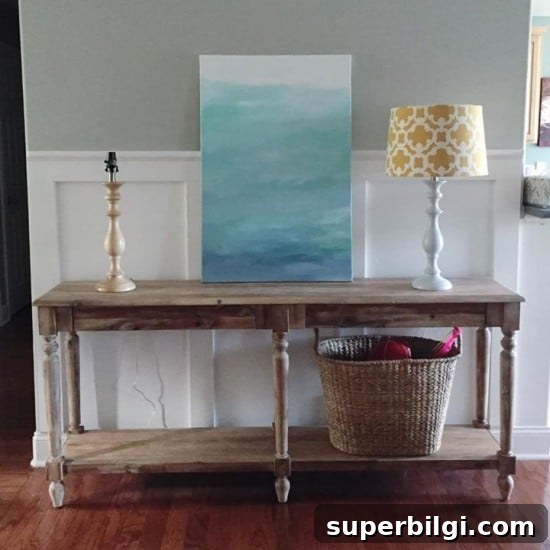
I asked for input because I’m debating a few things and would love to share the process and what I learned while deciding. It’s a common styling dilemma: how to balance practical needs (hello, baby who loves to explore) with a beautiful, finished look.
On the practical side I’ll add another basket underneath the table—either a matching one or two new baskets. Baskets are perfect for stashing toys and keeping the lower shelf tidy when you have little ones around.
On top of the table I’m deciding how to style the sides of the art. Right now I have two matching lamps I picked up on clearance, but I’ve already painted one and I’m undecided about the other lamp and the lampshades. My options include:
- Paint the other lamp to match, or paint both lamps a completely new color to better fit the palette.
- Replace the lamps with chunkier bases for a bolder, more substantial silhouette.
- Change the lampshades—either get a second one to match the painted shade or choose entirely new shades that better suit the finished look.
Asymmetrical vs. Symmetrical
After gathering feedback and experimenting with pieces I already own, the biggest question became whether to style the table symmetrically or asymmetrically. Do I place a lamp on each side with two baskets below, or should I create a more organic, layered vignette with one lamp and complementary objects on the opposite side?
If I go asymmetrical I’m also weighing whether the art should remain centered or be shifted slightly off center to work with the composition of objects. Both approaches can look intentional and polished, but they require different balancing moves.
I’m leaning toward an asymmetrical composition with layered elements, but I’ll probably make a short trip to HomeGoods to find a couple of pieces to finish the look. In the meantime, I’ve been following a few guiding principles that help make an asymmetrical console table feel balanced and visually appealing.
Elements for a Beautiful & Balanced Asymmetrical Style
To build a cohesive, magazine-worthy vignette, consider including these elements:
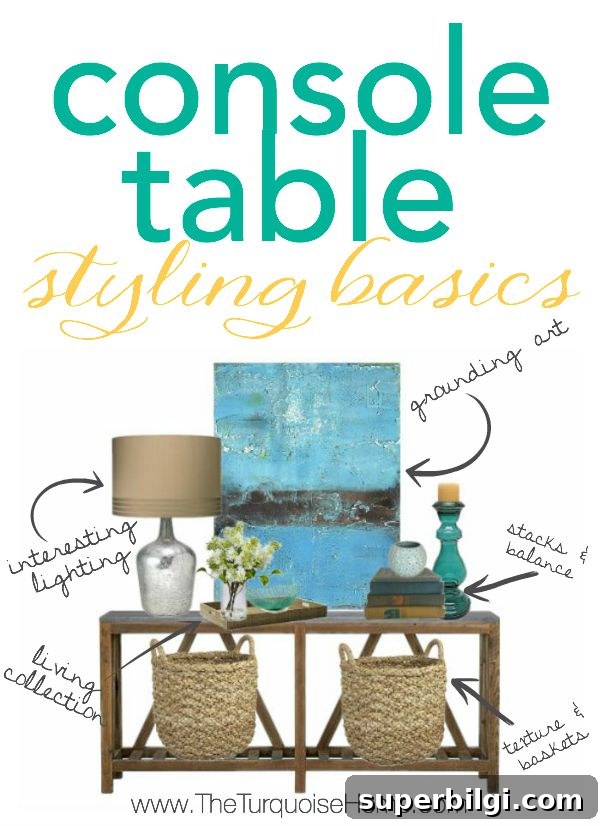
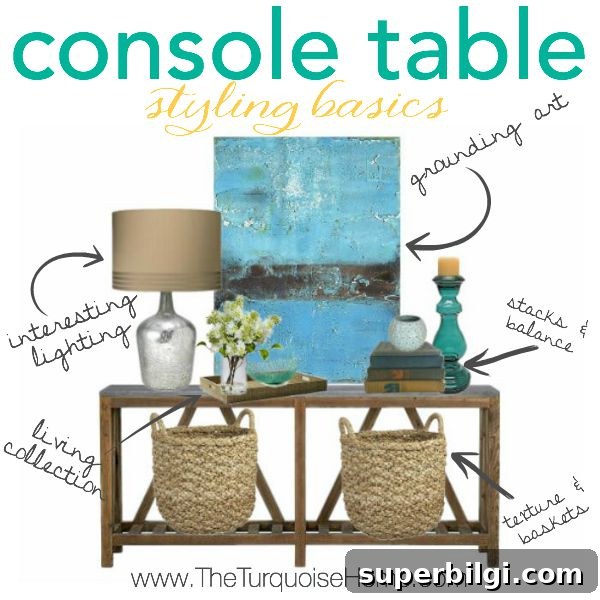
- Interesting lighting: A lamp that overlaps the artwork slightly adds depth and draws the eye. The lamp should have presence without dominating the composition.
- Height to balance: Opposite the lamp, include an item with substantial height—such as a tall vase, a sculptural object, or a stack of boxes—to create visual equilibrium.
- Anchoring art or mirror: The art can be leaned or hung. It acts as the backdrop and ties the vignette together.
- Something stacked: Stacks of books, vintage suitcases, or decorative boxes add layers and horizontal interest. These elements help carry the eye across the surface.
- Something round: Introduce a round shape—a bowl, a globe-style object, or a curvy vase—to soften the overall look and contrast with rectangular shapes.
- Rectangular tray: A tray groups smaller accessories like candles, small sculptures, or bowls, keeping the tabletop tidy and intentional.
- Plant or flowers: A touch of greenery or a small arrangement brings life and freshness to the vignette, softening hard lines and adding texture.
- Textured baskets or stools underneath: Use baskets or small stools to ground the table and provide functional storage while adding warmth with natural fibers and texture.
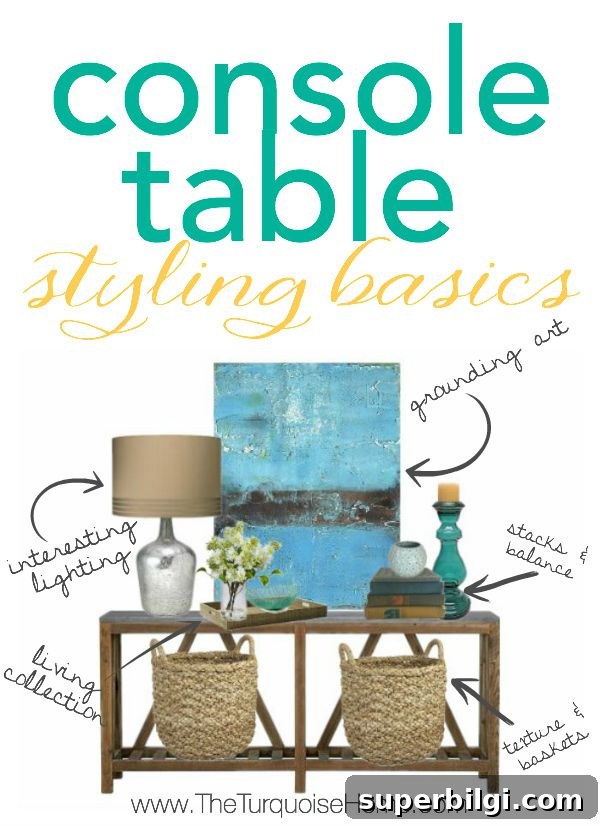
When you study great vignettes, you’ll notice these same elements repeated in various ways: layered heights, mixed shapes, a grounding base, and a few curated accessories to make the space feel lived-in but intentional.
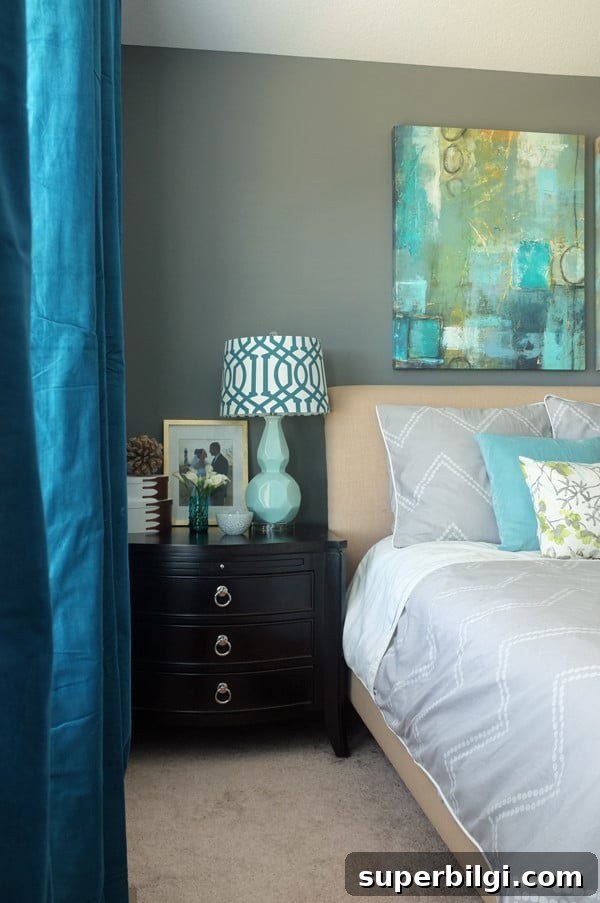
via Teal & Lime (School of Decorating)
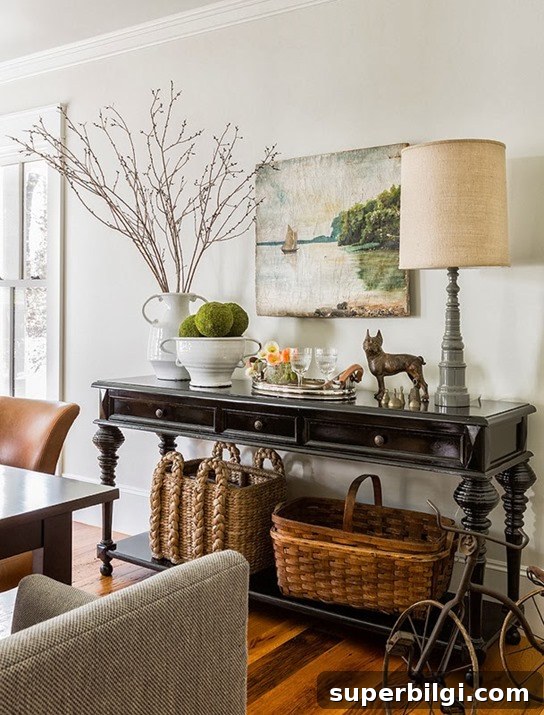
Hudson Interior Design
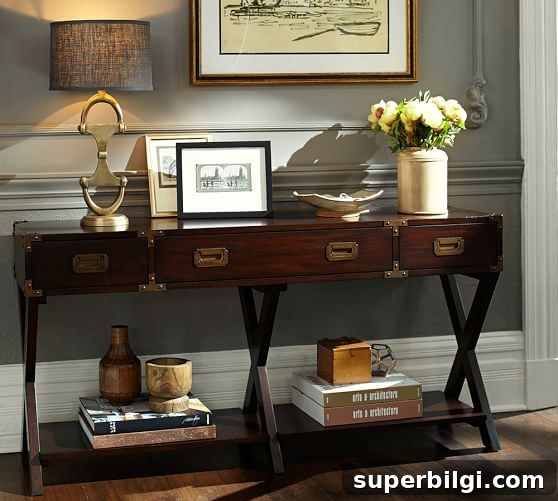
Pottery Barn inspiration
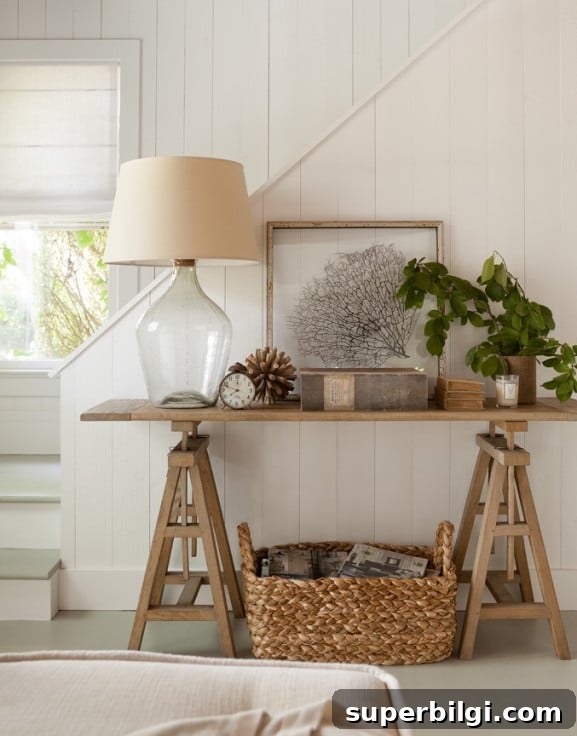
Jenny Wolf Interiors
I hope these pointers help you—and me—next time you’re styling console tables, sideboards, or any vignette. The key is to mix shapes, balance heights, and include a few functional pieces for everyday life.
What would you add to this list of must-haves for a well-styled console table?
If you want a step-by-step guide on decorating a console table behind a sofa, check out the post titled “How to Decorate a Console Table Behind the Sofa (4 Ways!).”
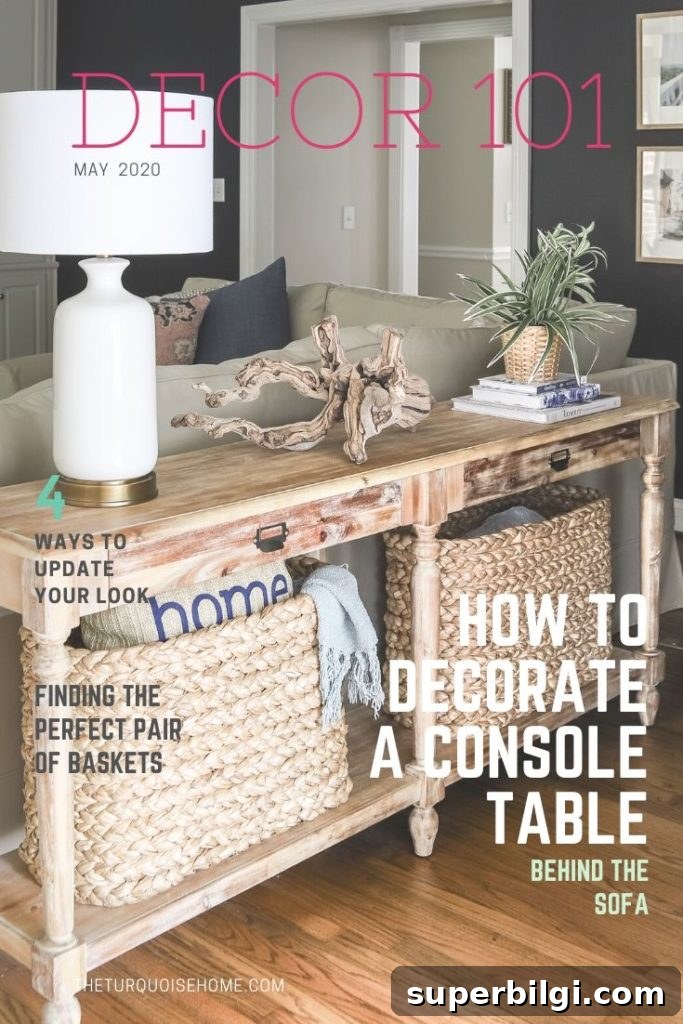
MORE POSTS YOU WILL LOVE:
- How to Style a Console Table Behind a Couch (4 ways!)
- DIY Farmhouse Media Console Table
- Cozy Navy Living Room Reveal