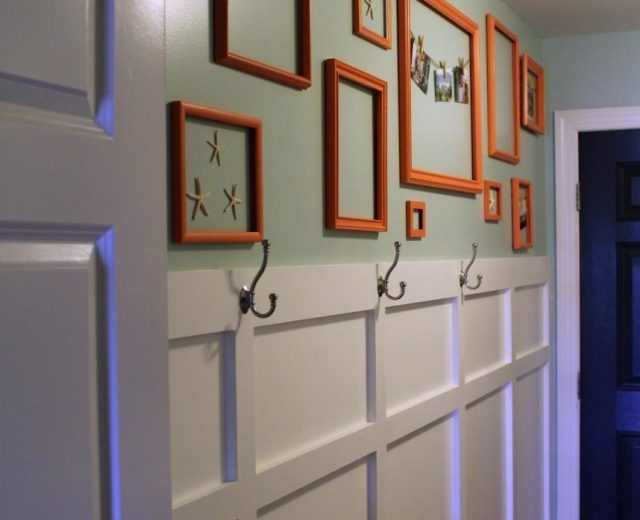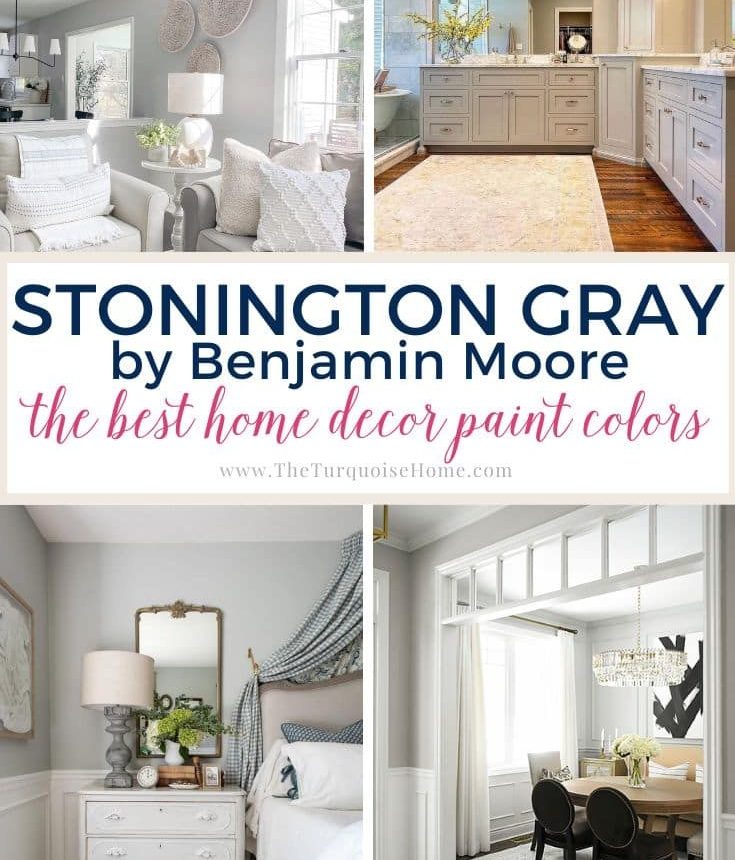
From modern farmhouse to coastal glam, Benjamin Moore Stonington Gray is a versatile neutral that suits many styles. In this paint spotlight, we’ll cover what makes this cool-toned gray so popular and how to use it in your home.
Choosing paint for your home is a big decision. It takes time and money, and you’ll likely live with the color for years, so you want to be confident the tone creates the right atmosphere.
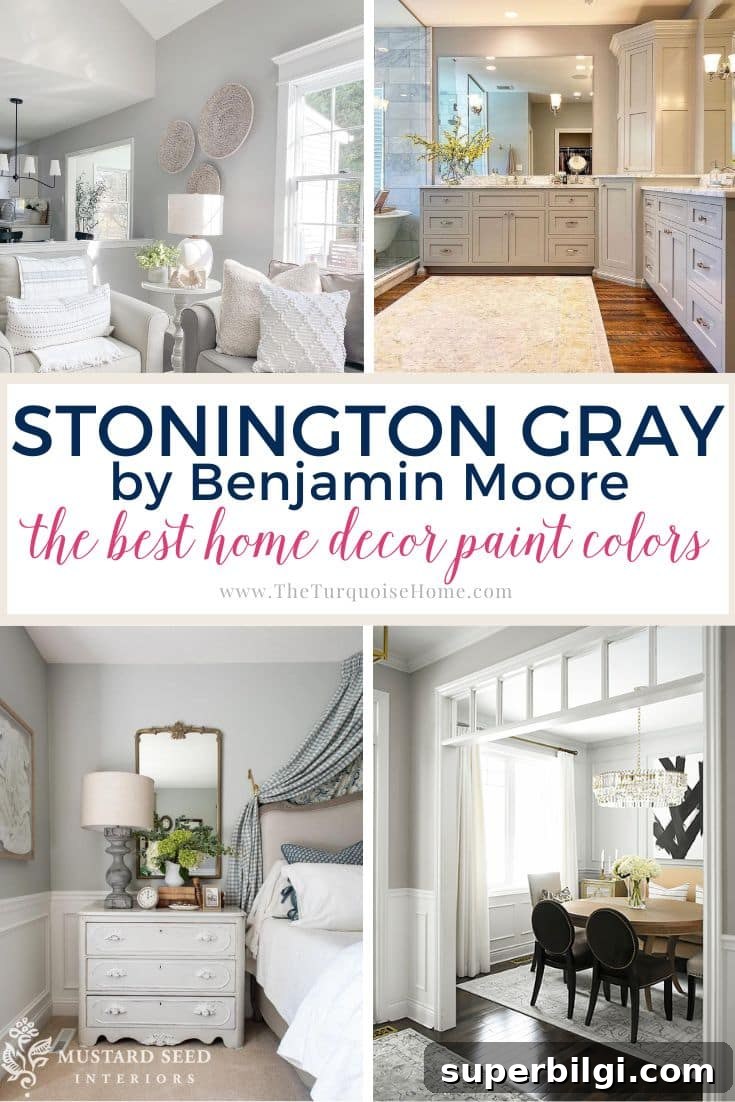
Neutral grays can be deceptively complex—small undertones and lighting changes can shift how a color reads. Benjamin Moore Stonington Gray (BM HC‑170) is a best-selling choice from the Historical Collection that performs well on both interior and exterior surfaces.
Stonington Gray is a medium, cool gray with a slightly stormy character that keeps rooms feeling fresh and current without looking sterile. Below I’ll explain its undertones, light reflectance value, complementary colors, and examples of how it looks in different rooms.
What Are the Undertones of Benjamin Moore Stonington Gray?
Every paint color has undertones, and Stonington Gray shows primarily blue undertones. Those blue hints give the color a cool, calming feel, but they aren’t so dominant that the paint reads icy in most settings.
Depending on light and surrounding finishes, you may also notice faint green or purple undertones. North-facing light tends to intensify any cool or blue qualities, while warmer south-facing light can bring out subtle greenish hints.
What is the Light Reflectance Value of Stonington Gray?
Stonington Gray has a light reflectance value (LRV) of about 59.36. LRV measures how much visible light a color reflects on a scale from 0 (black) to 100 (white). With an LRV near 59, Stonington Gray sits in the medium-toned range—it won’t wash out bright rooms, nor will it overly darken spaces with limited natural light.
What Colors Go With Benjamin Moore Stonington Gray?
Stonington Gray reads as a true neutral in many interiors and generally plays well with a wide range of colors. Because its undertones are subtle, the paint tends to harmonize rather than compete with other finishes.
For trim, a soft warm white—such as Simply White or Cloud White—will soften the coolness and add a welcoming contrast. If you prefer a crisp, modern look, a true bright white like Chantilly Lace offers a clean, noticeable contrast; Benjamin Moore often recommends pairing Chantilly Lace with Stonington Gray for a crisp profile.
For deeper accents, consider a darker cool gray like Puritan Gray or a rich navy such as Hale Navy to create strong contrast. If you choose darker furniture or built-ins alongside Stonington Gray, keep other elements (floors, ceilings, trim) relatively light to maintain balance.
To highlight the subtle green hints in some light, use both light and deeper green accents—these can help bring out hidden complexity in the gray.
Benjamin Moore Stonington Gray in the Home
Stonington Gray works well in many rooms. Below are practical examples and finish recommendations for common home spaces.
Stonington Gray in the Kitchen & Dining Room
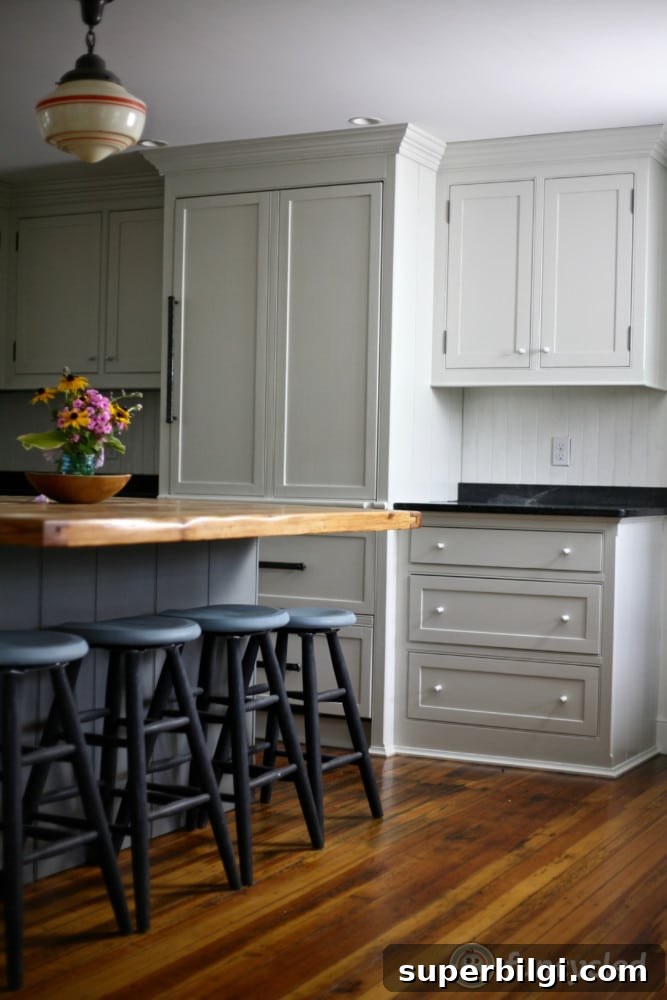
A neutral wall color is often a great choice for kitchens where cabinets, countertops, backsplash, and accessories compete for attention. Stonington Gray provides a subtle backdrop that unifies those elements without feeling boring.
It’s also a lovely cabinet color, offering contrast without making the room feel too dark. For kitchens, choose satin for walls and satin, semi-gloss, or high-gloss for painted cabinets. Satin is a good compromise—durable and easy to clean while avoiding overly shiny finishes.
Bedroom
Stonington Gray’s cool-blue undertones can create a serene, restful bedroom palette. Pair it with soft linens, layered neutrals, and subtle blues for a calm, spa-like feel, or introduce brighter accents—rugs, throws, or artwork—to add personality.
Finish tip: Eggshel or satin are ideal for bedrooms. Eggshell gives a softer, low-sheen look, while satin offers slightly more durability if you expect more wear.
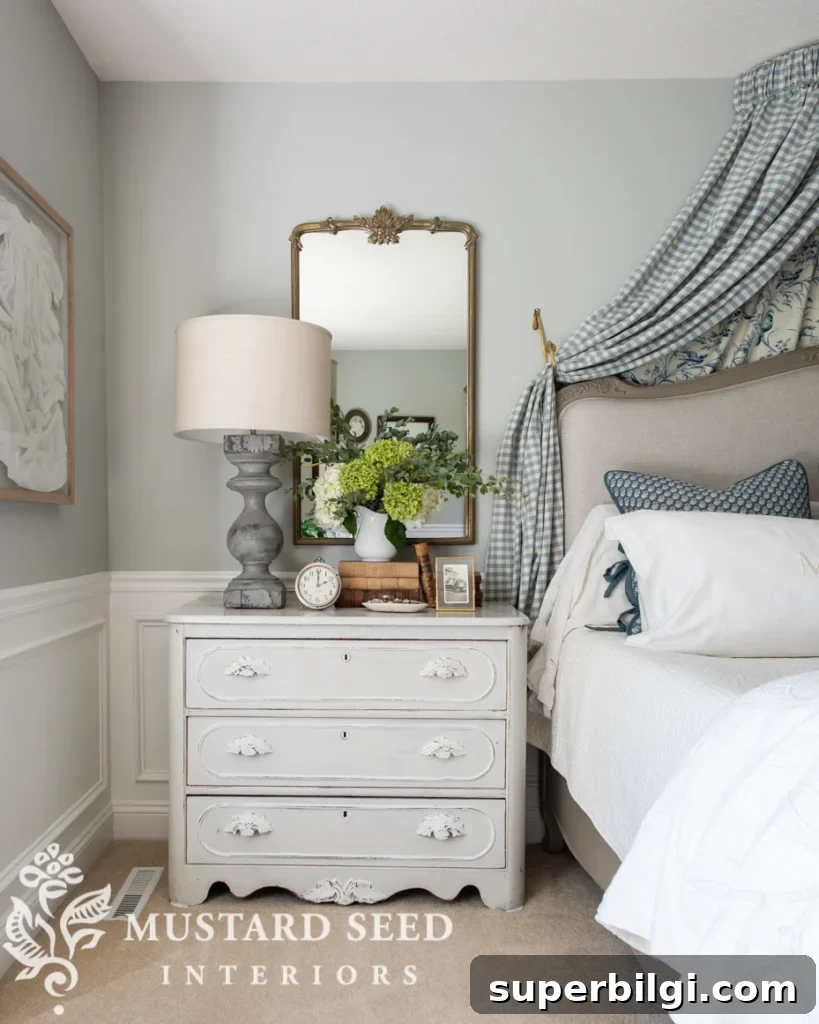
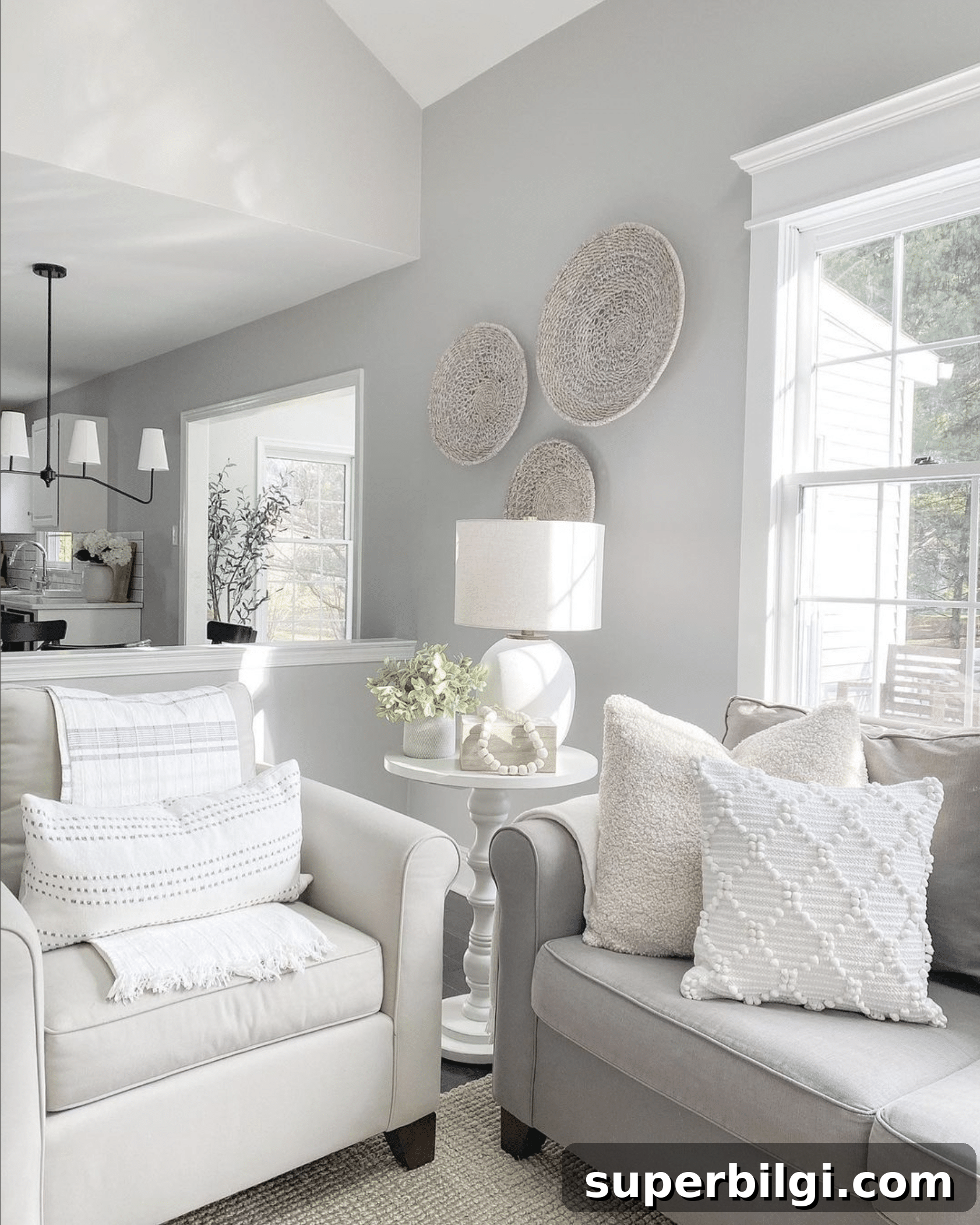
Living Room
Living rooms typically receive varied light throughout the day, which suits Stonington Gray well—its subtle shifts with daylight can add interest. The color works with both neutral furnishings and bolder accent colors, giving you flexibility in styling.
Finish tip: Choose an eggshell or satin sheen for living rooms—both offer a pleasant balance between durability and soft appearance.
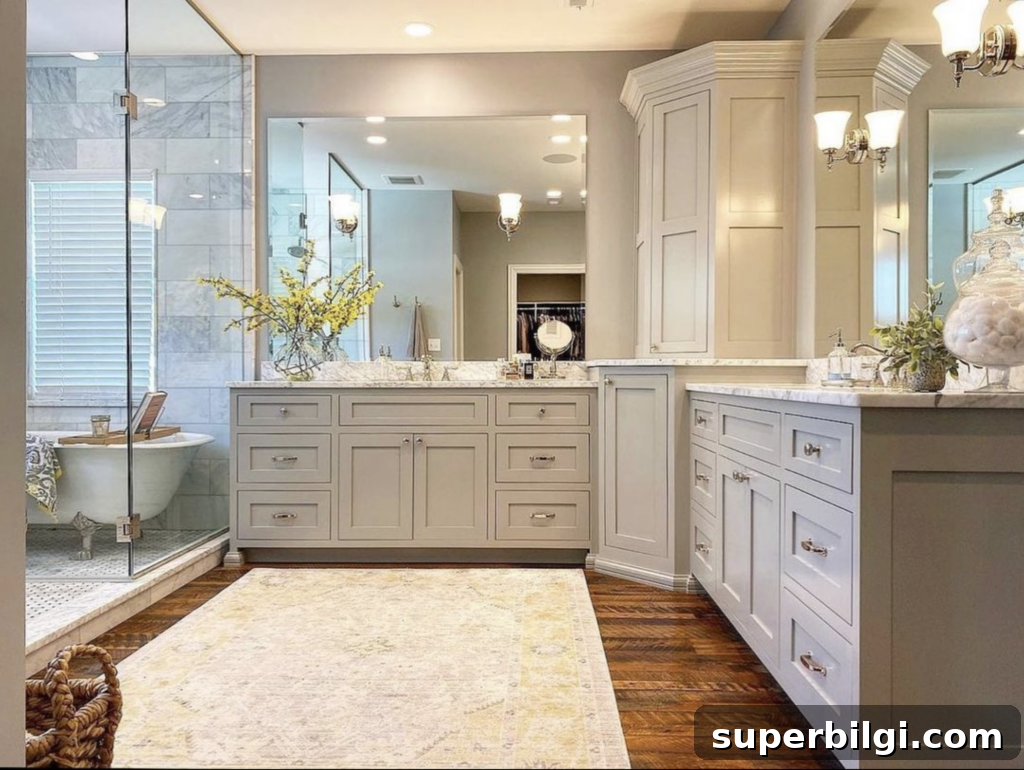
Bathroom
Cool grays are ideal for bathrooms, where they create a clean, spa-like atmosphere. Stonington Gray pairs beautifully with crisp white fixtures and can be complemented by blue towels or tile accents for a coastal feel.
Finish tip: Use a satin finish in bathrooms for better moisture resistance and easy cleaning, especially in powder rooms and high-traffic areas.
Other Gray Colors to Consider
If Stonington Gray doesn’t feel quite right in your space, consider these alternatives that offer slightly different undertones and lightness.
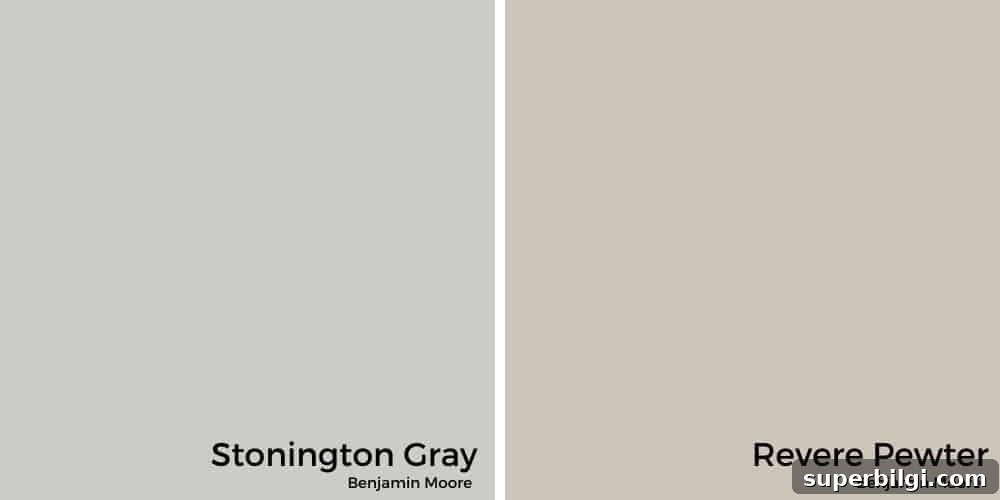
Revere Pewter
Revere Pewter is another top-selling Benjamin Moore gray with an LRV around 55.5, making it a touch darker than Stonington Gray. Unlike Stonington’s cool leanings, Revere Pewter reads warmer—sometimes edging toward greige—so it’s a strong choice if you prefer a warmer neutral.
Gray Owl
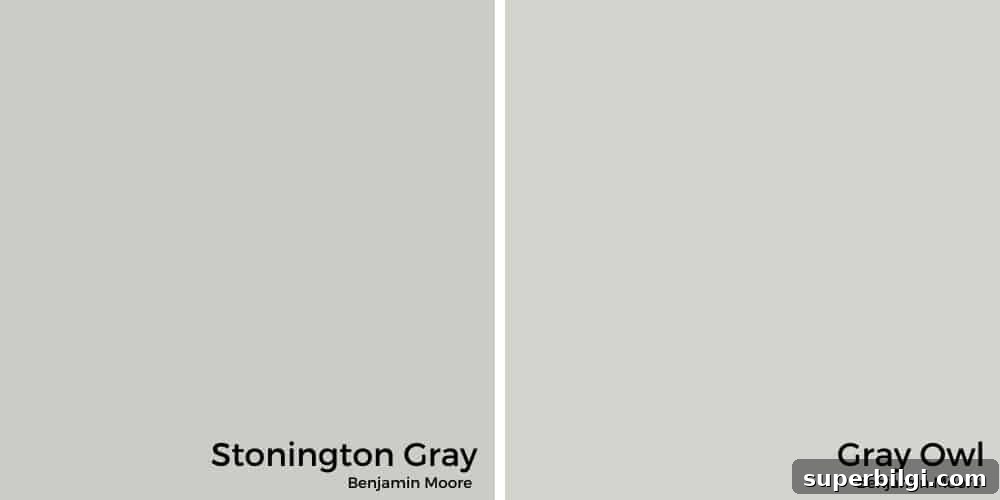
Gray Owl leans slightly greener than Stonington Gray and has a higher LRV (around 65), so it appears lighter in many settings. If you want a softer, brighter cool gray, Gray Owl can be a strong alternative.
Final Thoughts on Benjamin Moore Stonington Gray
Stonington Gray is a reliable, adaptable neutral that works in many different rooms and design styles. Its medium-toned LRV keeps spaces balanced—neither too bright nor too dark—and its subtle blue undertones contribute to a calm, contemporary look.
Before committing, test the real paint on your walls in different lighting conditions. Small samples or peel-and-stick paint swatches made from actual paint are the quickest ways to see how Stonington Gray will behave in your home.
If you use Benjamin Moore Stonington Gray in your space, I’d love to hear how it looks—share what pairing and finish you chose and how it performed with your lighting.
More Posts You Might Like:
- The Best 17 Sage Green Paint Colors For Your Home
- How to Paint Countertops to Look Like Marble
- The Best Bedroom Paint Colors
- How to Paint Outlet Covers
- Best Living Room Paint Colors