
The paint color spotlight for today is Hale Navy—one of the most popular navy paint colors. This rich, multi-faceted deep blue can create a cozy, sophisticated room or serve as a bold yet understated accent.
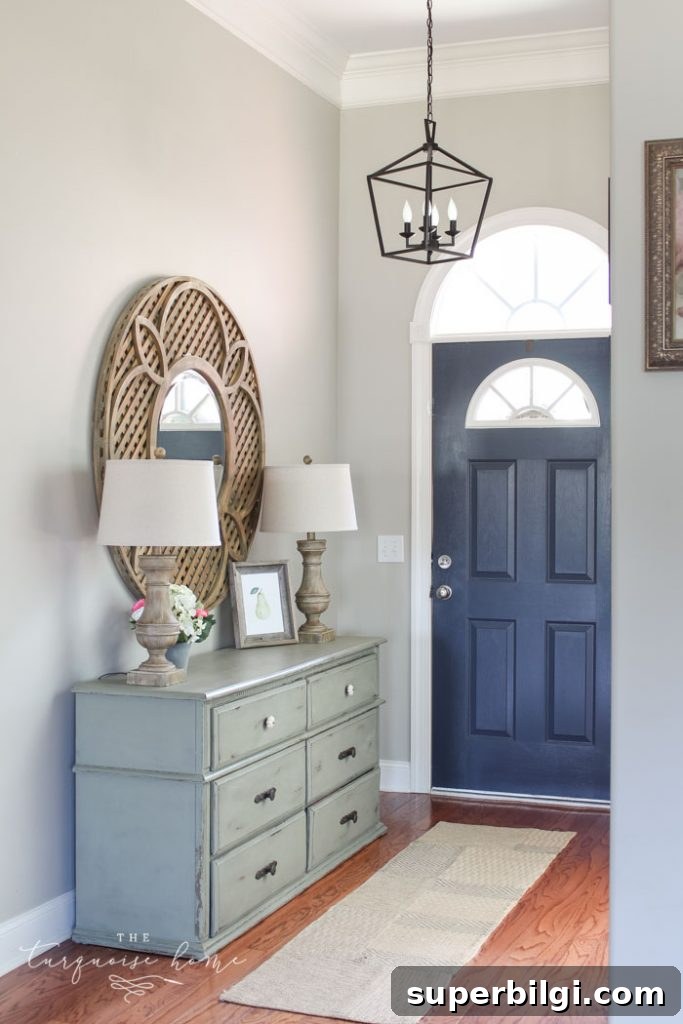
This is one of my favorite paint colors. I painted the inside of my front door Hale Navy several years ago and loved it so much I used it again on a living room wall in my new home. The result was a moody, inviting space that still feels fresh and timeless.
This post contains affiliate links for convenience; please consult the author’s disclosure for details.
Whether your home leans rustic or modern, Benjamin Moore Hale Navy offers versatility and depth. Below you’ll find practical guidance about its undertones, pairing options, real-room examples, and tips for using it successfully in your home.
Hale Navy Undertones
Hale Navy is distinctive among blues because it reads as a true navy with subtle complexity. Rather than a strong green or overly warm cast, it has faint green undertones that typically only show near lush foliage. More commonly, Hale Navy reveals gray undertones—especially when paired with wood floors, gray brick, or gray roofing. These gray notes soften the blue and make it feel grounded and sophisticated.
Because it sits between warm and cool, Hale Navy is a great transitional color. It works in many rooms, but be cautious using it in spaces with little natural light: in darker rooms it can feel heavy. If light is limited, consider using Hale Navy for an accent wall, cabinetry, or trim instead of covering an entire room.
Lighting affects how the color reads: north- or south-facing rooms may emphasize the gray undertones more than the deep blue. If you want the full richness of navy to shine, pair Hale Navy with crisp white trim and abundant natural light.

What Colors Go with Hale Navy?
Hale Navy is surprisingly easy to coordinate. Many designers treat navy as a neutral because it pairs so well with both warm and cool palettes. Here are complementary shades and neutrals that work beautifully with Hale Navy:
- Spring Meadow
- Butterfield
- Hidden Oaks
- Woodmont Cream
- White Dove
- Cloud White
- Simply White
- Gray Wisp
- Fawn Brindle
- Revere Pewter
- Wythe Blue
Hale Navy in Rooms
Hale Navy can be used as the primary color or as an accent. Always test swatches in each room—view them at different times of day—because the color can shift depending on light and surrounding finishes.
Hale Navy Kitchens
Hale Navy makes a stunning cabinet color. When used on island cabinetry or lower cabinets, it provides a bold contrast to white counters and backsplashes. The combination of white surfaces and natural light helps the navy read as vibrant rather than heavy.
Bathrooms with Hale Navy
In bathrooms, Hale Navy can read very dark and dramatic, especially against dark floors or grout. In spaces with ample light and white vanities, the color can also appear lighter and more nuanced, revealing its warm and gray undertones.
Bedrooms with Hale Navy
Hale Navy creates a cozy, restful atmosphere in bedrooms. Pair it with cream bedding, light curtains, and warm wood accents to bring out softer undertones. In rooms with direct natural light, the navy can show sophisticated gray notes that complement wooden floors and decor.
Dining Rooms
As an accent in dining areas, Hale Navy can look slate-like and refined, especially when paired with wood flooring and white trim. It’s bold enough to make a statement but subtle enough to create an elegant backdrop for artwork and table settings.
Living Rooms

Hale Navy works especially well in living rooms with large windows and white trim. It forms a dramatic, moody backdrop that makes whites and light woods pop. In my own living room—featuring a wall of windows and white built-ins—Hale Navy created a cozy, gallery-like feel that still feels open and inviting.
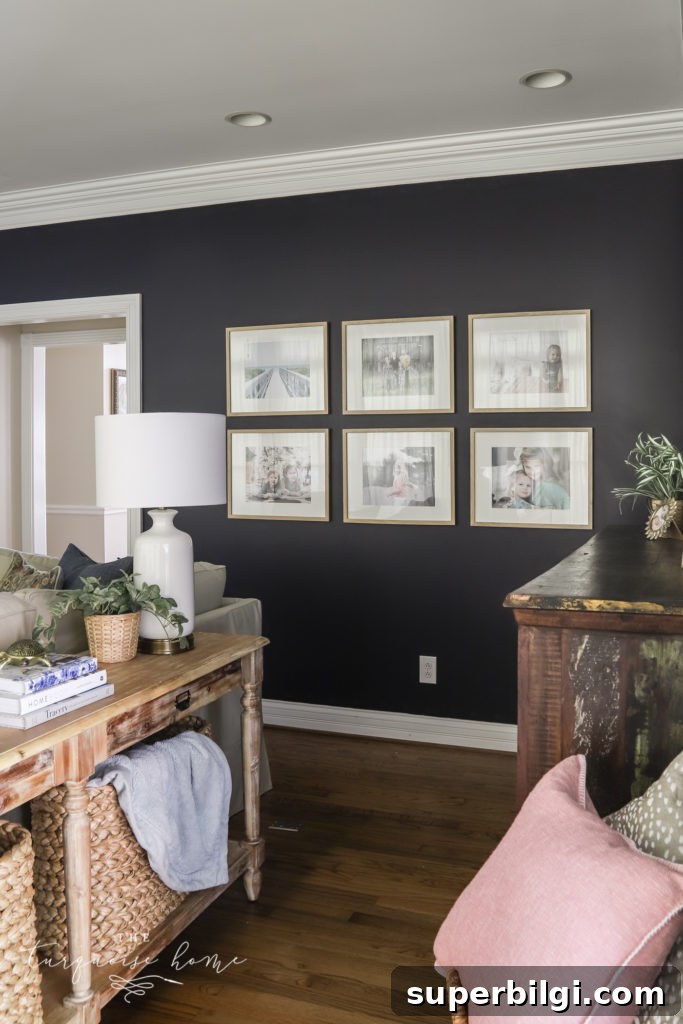
White trim and light wood tones really stand out against the dark blue, creating crisp contrast and visual interest.

Exterior Examples
Hale Navy also makes an attractive exterior color. Paired with white trim, gray brick, or cream accents, it can read more gray and grounded, enhancing curb appeal while remaining elegant and versatile. Near landscaping, the faint green undertones can subtly emerge, giving the exterior added depth.
Tips for Painting a Room Yourself
If you plan to paint Hale Navy yourself, test samples on the walls and view them at different times of day. Use high-quality tools to make the job easier and achieve a professional-looking finish. Helpful tools include:
- Quality paint brushes that hold an edge and last when cleaned properly.
- Painter’s tape for crisp lines around trim and ceilings.
- Drop cloths to protect floors and furniture.
- A paint cup or roller tray with features that reduce hand fatigue and simplify cleanup.
- Good rollers and tray liners for fast, even coverage and easy cleanup.
For best results, prepare surfaces thoroughly, use primer where needed, and apply paint in consistent, even coats. Painting a small swatch and living with it for a few days is the best way to confirm whether Hale Navy will read the way you want in your space.
More Paint Color Ideas
- Repose Gray
- Agreeable Gray
- Sea Salt
- Revere Pewter
- White Dove
- Wythe Blue
- Gray Owl
Hale Navy is a versatile choice that can function as a neutral or a statement color depending on how you use it. Whether you choose it for an accent wall, cabinetry, or an entire room, it’s hard to go wrong—just test it, consider the light, and pair it with complementary whites, woods, and neutrals to let its best qualities shine.