Looking for the best window treatment ideas for your home? Below are practical and stylish options for every room to help you get started.
A bare window is a blank canvas. When I see an uncovered window, I instantly picture the possibilities: texture, color, privacy and light control—all things that window treatments can add to a room.
Windows are often an afterthought in decorating, but the right treatment completes a space. If a room still feels unfinished, chances are it needs thoughtfully chosen window coverings.

There are many types of window treatments to suit small bedroom windows, wide living room expanses, or tall windows that reach the ceiling. Pick options that balance light, privacy, insulation and style to suit each room’s needs.
This post contains affiliate links for your convenience. See my full disclosure policy.
Window Treatment Options for the Kitchen
Roman Shades
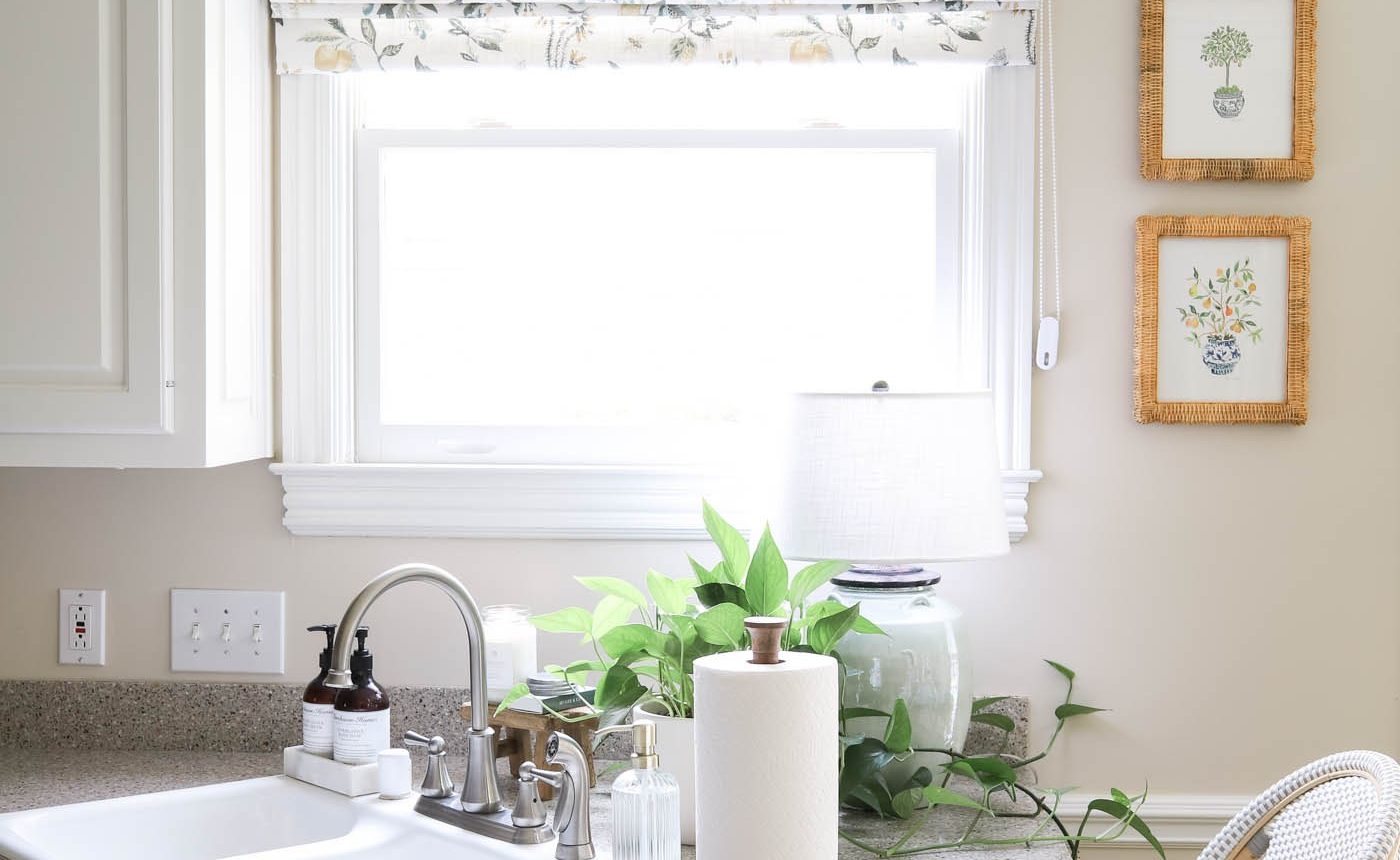
Roman shades are ideal for smaller windows above sinks or counters. They add softness and pattern without blocking too much light. Fabric roman shades can be raised to enjoy the view or lowered for privacy at night.
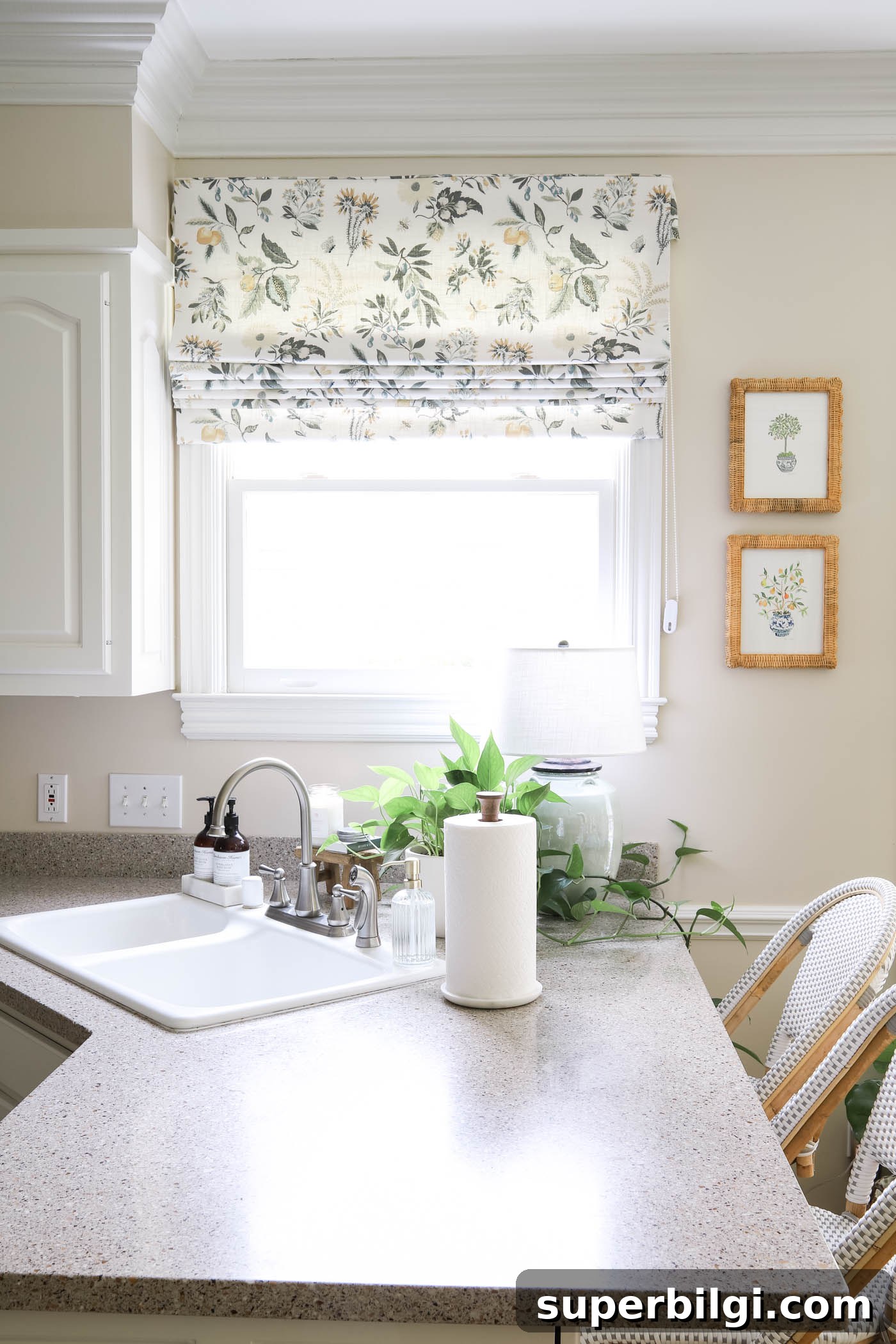
Shop this kitchen look by tapping the images above.
Café Curtains
Café curtains are a charming, cordless option for kitchens. Hung on a rod, they cover the lower portion of a window to preserve light while offering privacy—perfect for a classic European café look.
Café curtains for the kitchen
Cornice Board
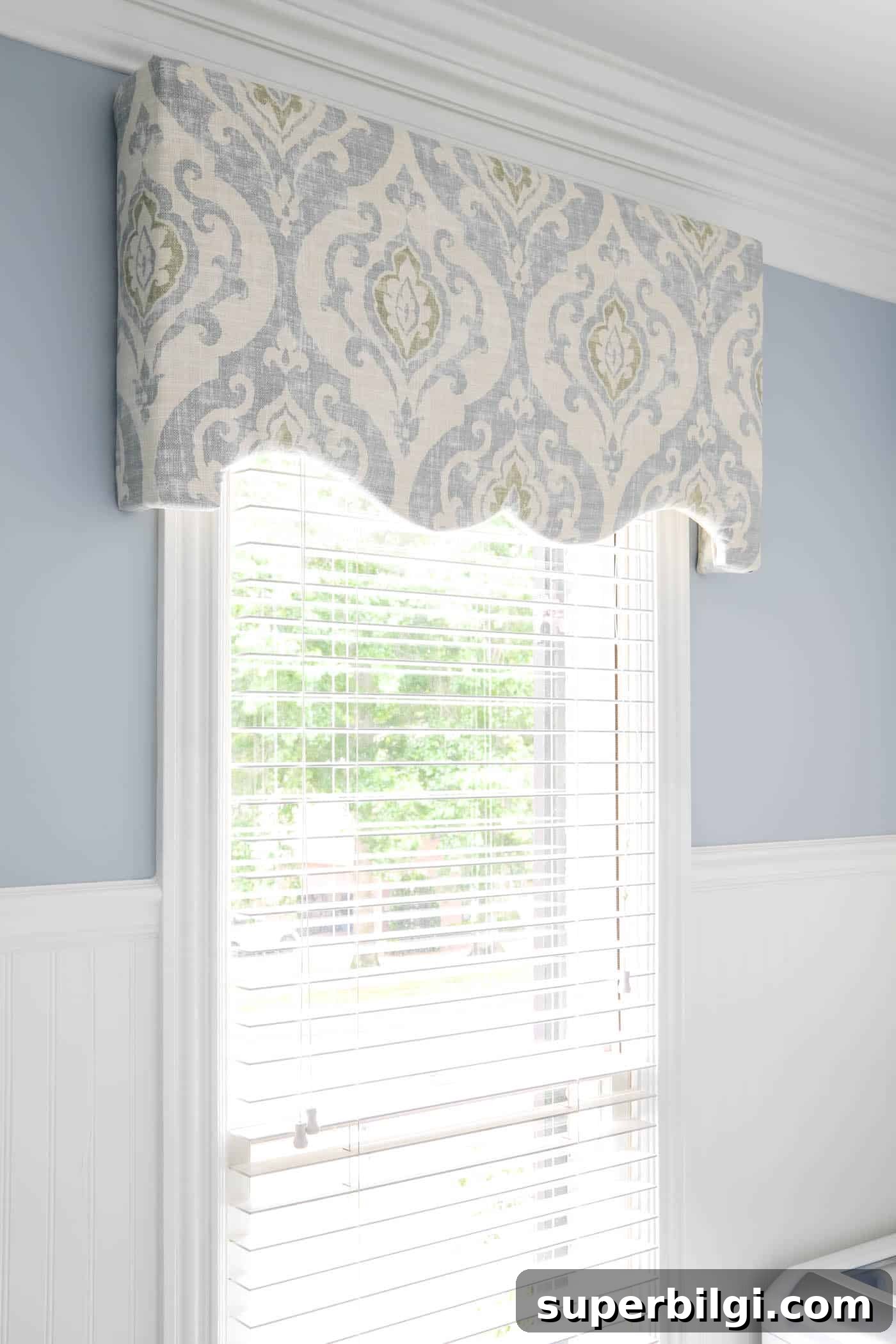
A cornice board adds color and texture without covering the glass—great above a sink where privacy isn’t required. It visually frames the window and introduces pattern. I made a DIY cornice board for my laundry room and paired it with blinds for privacy when needed.
Faux Wood Blinds
Kitchens get messy, so choose materials that are easy to wipe clean. Faux wood blinds resist moisture and stains and keep the space looking fresh. They offer a practical, low-maintenance solution while still looking polished.
Types of Window Treatments for the Living Room
Curtains
Curtains are one of the most versatile choices—available in every fabric, color and length. Light, airy curtains soften a room and provide privacy while still letting light through. Hang them higher than the window to make the window feel larger and the ceiling taller.
In my living room I use breezy white curtains on an extra-long rod across the back wall. They add a cozy texture without blocking too much light. In another room I used Moroccan-style fabric curtains to enhance a global-inspired design.


Roller Shades
Roller shades are a clean, economical solution for large living room windows. They come in different opacities—from light-filtering to blackout—so you can choose the right amount of daylight or darkness.
Panel Tracks
Panel tracks are a modern alternative to vertical blinds for sliding doors and wide windows. Mounted to the wall or ceiling, large fabric panels slide smoothly to open or close and create a streamlined look. If you prefer a softer look, you can hang curtains from a ceiling track for a similar effect.
Motorized Shades
Motorized shades add convenience and accessibility—especially for very high or hard-to-reach windows. They can be controlled by remote, voice command or schedule, making it easy to adjust light and privacy throughout the day.
Window Treatment Options for the Bedroom
Wooden Shades
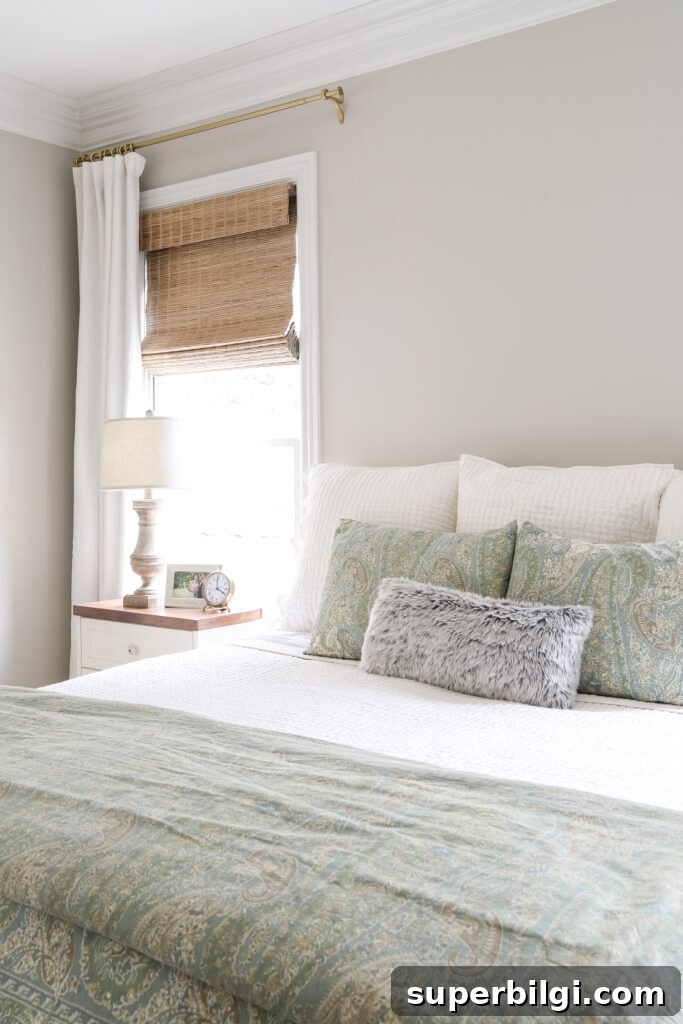
Natural wooden or bamboo shades add warmth and texture to a bedroom. I use bamboo roman shades in my bedroom to create a cozy, inviting atmosphere while allowing easy adjustment to let morning light in.

Shop this bedroom look by tapping the images above.
Blackout Shades
If you’re sensitive to morning light, blackout shades are essential. They fully block daylight and can be installed alone or layered behind curtains. Blackout treatments are also excellent for nurseries or children’s rooms to ensure naps and sleep are uninterrupted.
Fixed Shutters
Fixed shutters offer a classic, structured look. Hinged shutters can open fully for maximum light or be adjusted at the slats for filtered privacy. They’re available in wood or composite materials and add both charm and security to a bedroom.
Thick Drapes
For bedrooms choose denser fabrics to help with light control and insulation. Thick drapes reduce drafts in winter and can be paired with sheer panels to combine softness with privacy and light filtering.
Types of Dining Room Window Coverings
Tall Drapes
In formal dining rooms, floor-to-ceiling drapes create an elegant, dramatic effect. Hang drapery high above the window so the fabric falls from ceiling to floor for a luxurious look that’s perfect for entertaining.
Shoji Panels (or Room Divider Screens)
Shoji-style panels introduce a minimalist, refined feel. Constructed with a wood or bamboo frame and translucent paper, shoji panels filter light while offering privacy. They work well as room dividers or as a unique window treatment in contemporary or eclectic dining spaces.
Sheer Curtains
Sheer curtains are excellent for dining rooms that double as transition spaces. They soften the light throughout the day while maintaining a level of privacy without feeling heavy or closed off.
Bathroom Window Treatment Options
Cellular Shades
Cellular (honeycomb) shades are especially useful in bathrooms. They can be raised from the top or bottom, allowing light in from the upper part of the window while preserving privacy below. Their insulating cells also help retain warmth in cooler months.
Venetian Blinds
Venetian blinds remain a popular, budget-friendly choice. Available in metal, vinyl or wood-look finishes, they’re easy to clean and give precise control over privacy and light. For bathrooms, choose moisture-resistant metal or vinyl slats.
Final Thoughts
While these suggestions are organized by room, many window treatments work well anywhere in the home. Think about the function you need—privacy, light control, insulation and style—and choose materials and mounting methods that meet those needs. Which options are you most excited to try?
More posts you may enjoy:
- DIY Window Cornice Board with Fabric
- Our Master Bedroom Window Treatments
- DIY Fixer Upper Cathedral Window Frame
- ZZ Plant Care Guide
- How to Paint Trim: A Step-by-Step Guide