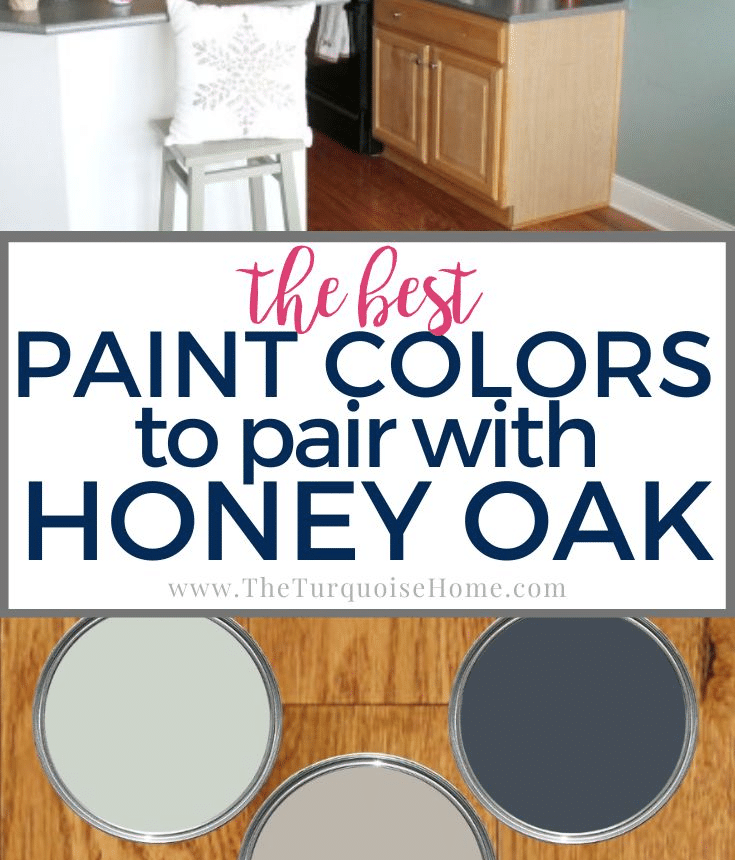
Discover the best paint colors that pair beautifully with oak cabinets. From creamy whites to deep navy, find the perfect color to complement honey oak and light oak finishes.
Oak cabinets—whether golden oak from the 1980s or modern honey-toned styles—bring warmth, texture, and a timeless quality to kitchens and bathrooms. Choosing the right wall color can either highlight that natural beauty or fight with it. This guide simplifies the process and helps you select paint shades that calm the orange undertones and create a balanced, inviting room.
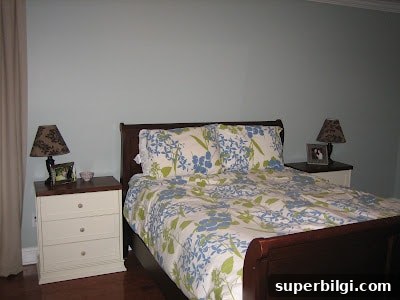
Pairing walls with warm oak often means selecting colors that reduce the orange appearance of the wood. Blues and cool gray-greens sit opposite orange on the color wheel, so they naturally neutralize warm undertones and make the wood feel more balanced and sophisticated.
If you’re planning a refresh, the right paint can make a dramatic difference without replacing cabinetry. Keep reading for practical, tested color choices that work with oak in a variety of styles and lighting conditions.
This post contains affiliate links for your convenience. See the full disclosure policy on the original site.
My Honey Oak Cabinets
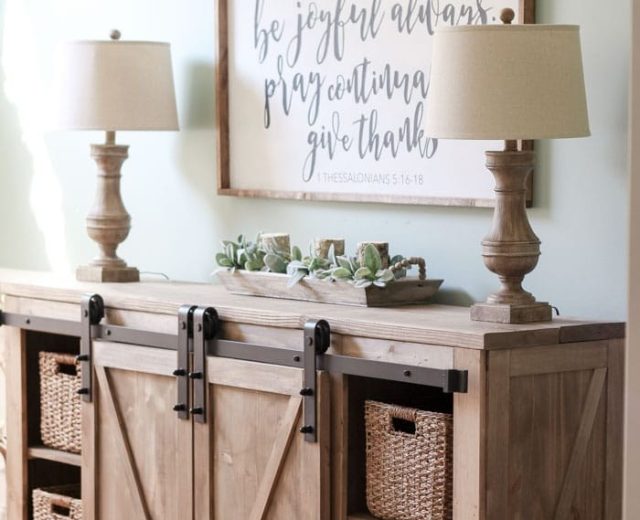
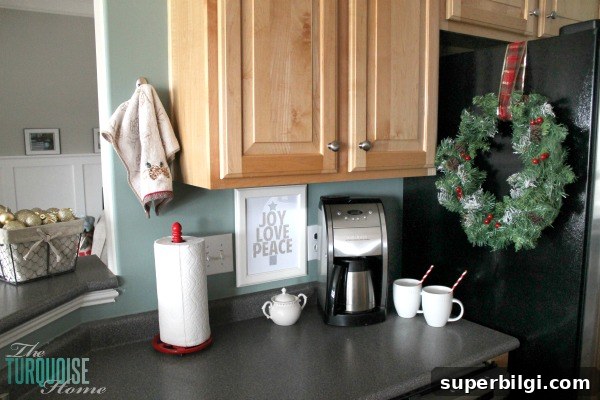
I lived with original honey oak cabinets in my previous kitchen for several years before painting them white. While they were unpainted, I experimented with wall colors to reduce the orange cast and make the room feel fresher. A blue-green paint helped tone down the warm oak and transformed the space into something more lively and layered.
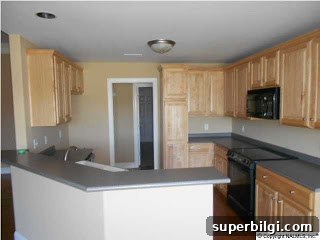
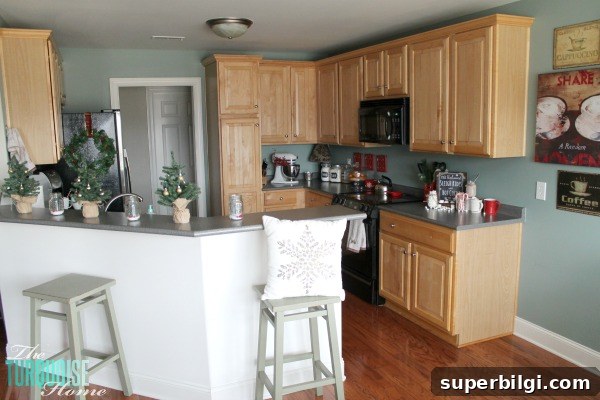
Eventually I painted my cabinets white, but I learned that you don’t need to strip or replace oak to make a kitchen feel updated. Thoughtful paint choices, complementary accents, and layered decor can make warm wood look intentional and modern.
Tip: Try decorating the room and living with new accessories before committing to a wall color. A new paint color often looks different once the room is furnished and styled.
Why Choosing the Right Paint Color Matters
Oak cabinetry is a dominant visual element. The wrong wall color can make a room feel dated or unbalanced, while the right hue will emphasize grain, texture, and warmth. A well-chosen paint color harmonizes with wood tones and lighting, shifting the overall palette toward modern, cozy, or dramatic depending on your goal.
Lighting, cabinet stain, and surrounding finishes (flooring, trim, countertops) all affect how paint reads in the space. Test swatches at different times of day and evaluate them next to the cabinetry before committing.
6 Paint Colors That Go with Light Oak Cabinets
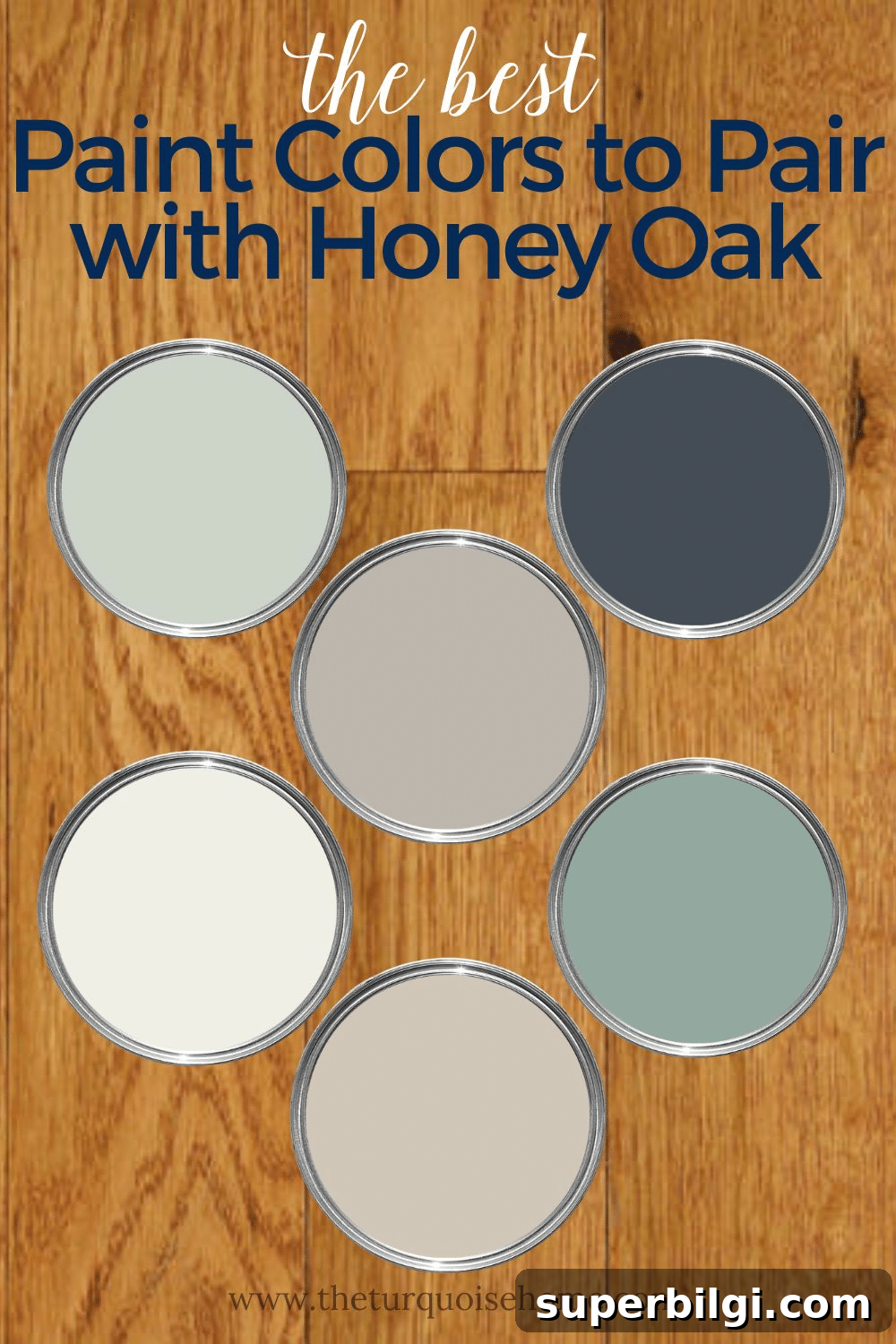
Below are six dependable paint choices that pair well with honey and light oak cabinetry. You’ll notice many cool blues and gray-greens; those tones help neutralize orange undertones. There are also warm neutrals and crisp whites that create a classic, cohesive look with wood cabinetry.
Note: Photo examples sometimes pair these colors with similar warm wood tones in flooring or furniture so you can see how the palette works together.
1. Sea Salt
Sherwin-Williams Sea Salt (SW 6204) is a popular blue-green with subtle gray undertones. It can appear more blue or more green depending on the light, making it a flexible neutral that calms the warm orange in oak. Sea Salt works especially well with lighter oak stains and adds a soft, fresh pop of color without overpowering the wood.
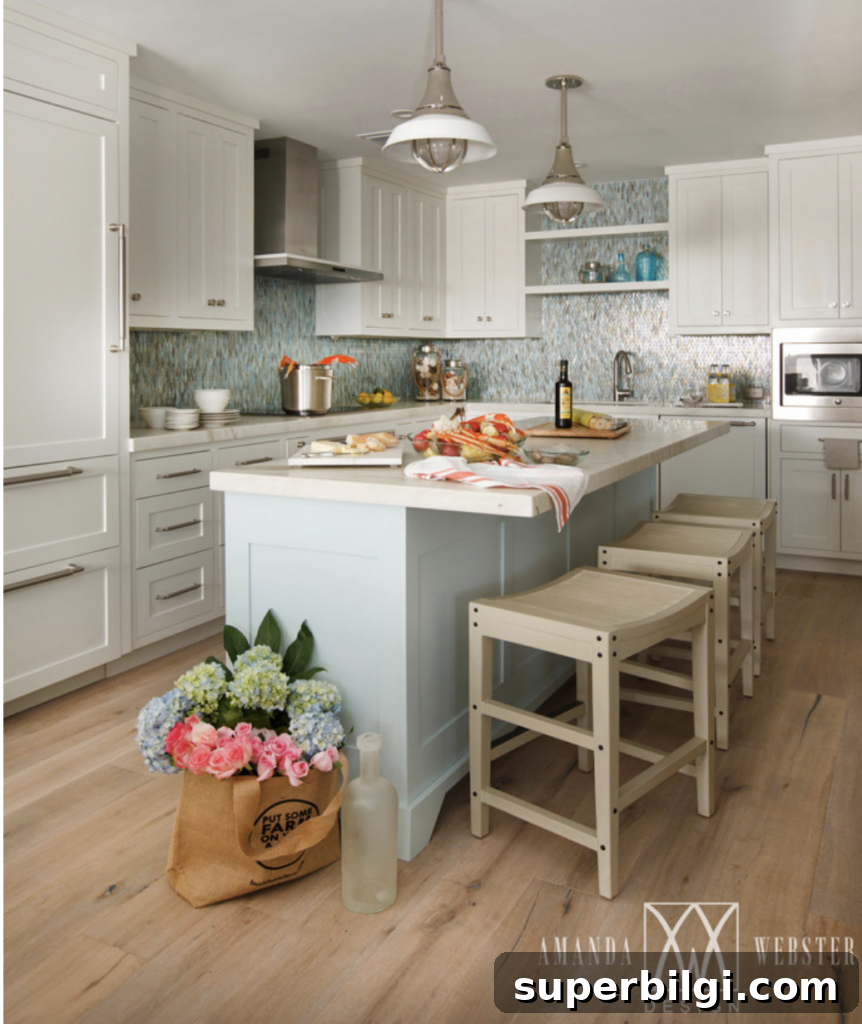
Similar seafoam and soft green options:
- Behr Breezeway
- Sherwin-Williams Rainwashed
- Benjamin Moore Healing Aloe
2. Iron Ore
Sherwin-Williams Iron Ore (SW 7069) is a deep charcoal-gray that almost reads black. Dark grays create a dramatic contrast against light oak cabinets and lend a modern, sophisticated feel. To avoid feeling closed-in, pair this shade with generous natural or layered artificial light and white or light trim to provide balance.
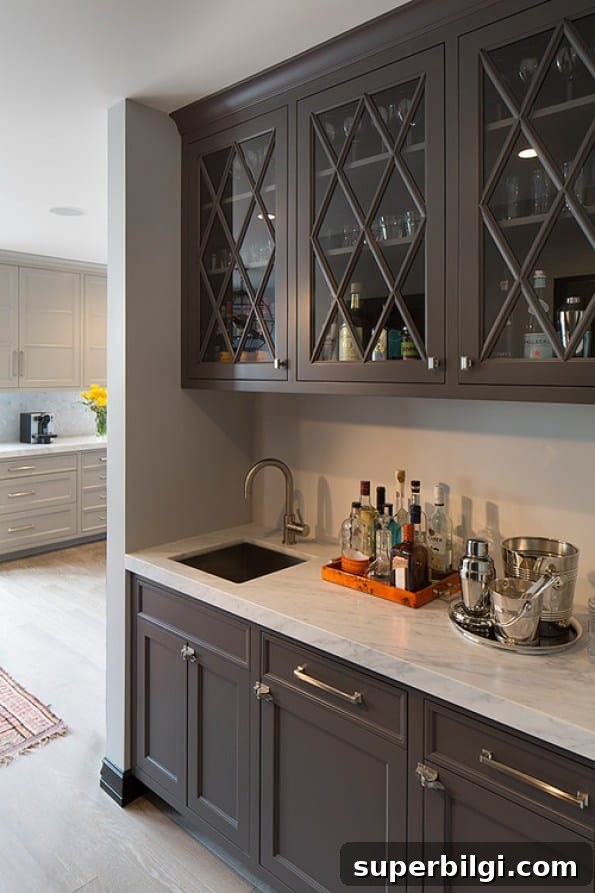
More deep gray choices:
- Benjamin Moore Kendall Charcoal
- Sherwin-Williams Peppercorn
- Behr Chimney
3. Accessible Beige
Sherwin-Williams Accessible Beige (SW 7036) is a reliable warm greige with subtle gray undertones. Unlike yellow-beige tones that can make oak look more orange, Accessible Beige blends seamlessly with warm wood to create a cohesive, modern-neutral backdrop. It’s versatile, flattering with many finishes, and an excellent choice for an understated, soothing palette.
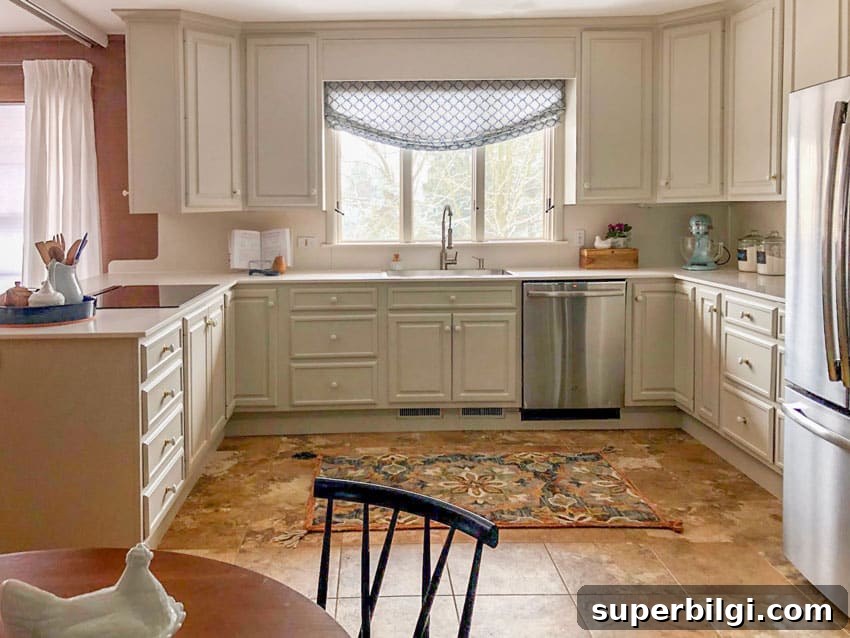
Other warm greige options:
- Benjamin Moore Edgecomb Gray
- Sherwin-Williams Balanced Beige
- Benjamin Moore Revere Pewter
4. Mindful Gray
Sherwin-Williams Mindful Gray (SW 7016) is a greige that leans toward gray with a slight warmth. It offers a modern, neutral backdrop that still complements oak’s golden tones. Mindful Gray helps cool down wood’s warmth without feeling too stark or icy, and it suits both traditional and contemporary decor.
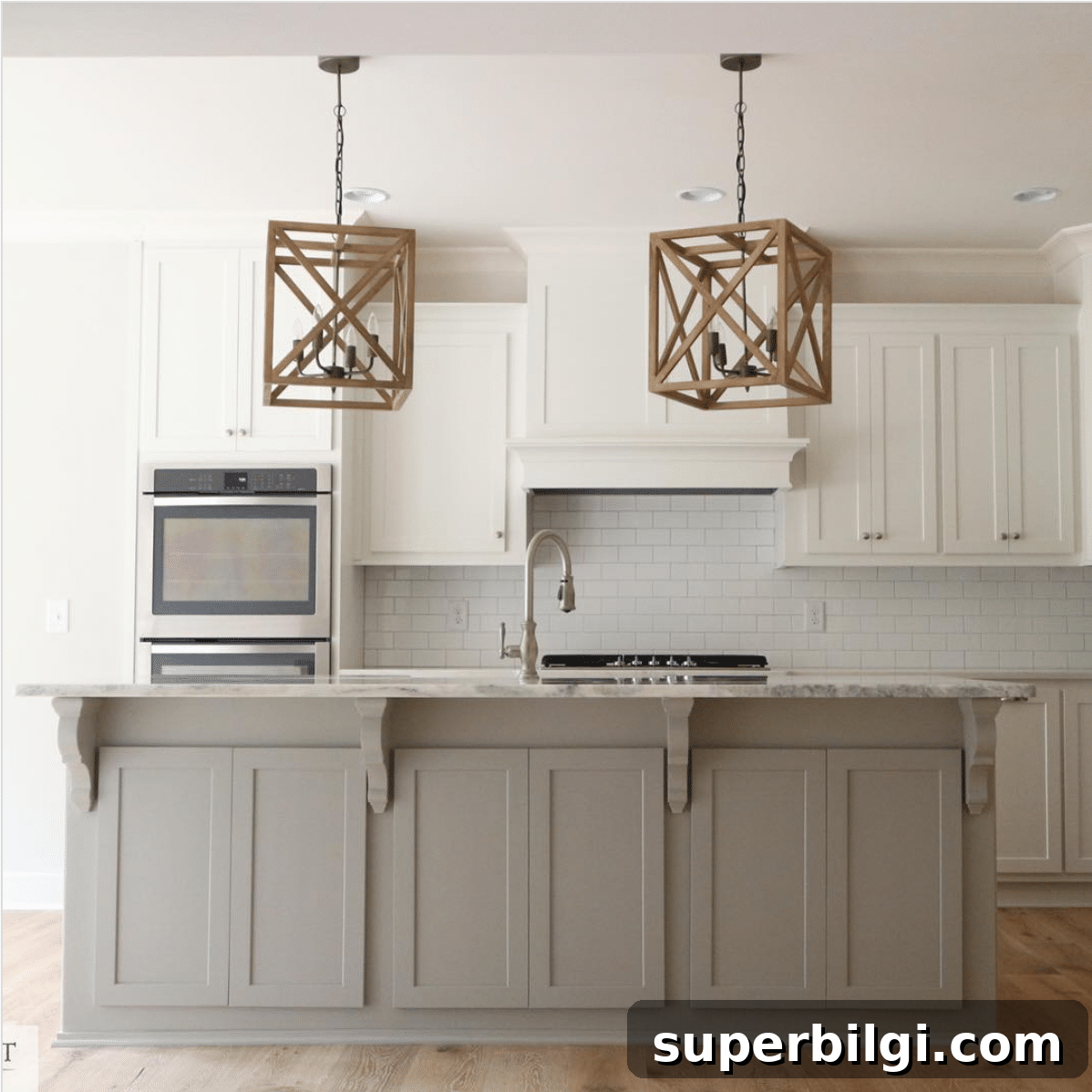
More soft gray picks:
- Sherwin-Williams Agreeable Gray
- Benjamin Moore Classic Gray
- Behr Toasty Gray
5. Hale Navy
A deep navy, such as Benjamin Moore Hale Navy (HC-154), creates a rich, elegant contrast with warm wood. Navy blue naturally mutes orange undertones while adding depth and personality to the room. Use it on walls, an island, or as an accent color, and pair it with crisp white trim and warm metallic accents for a classic, layered look.
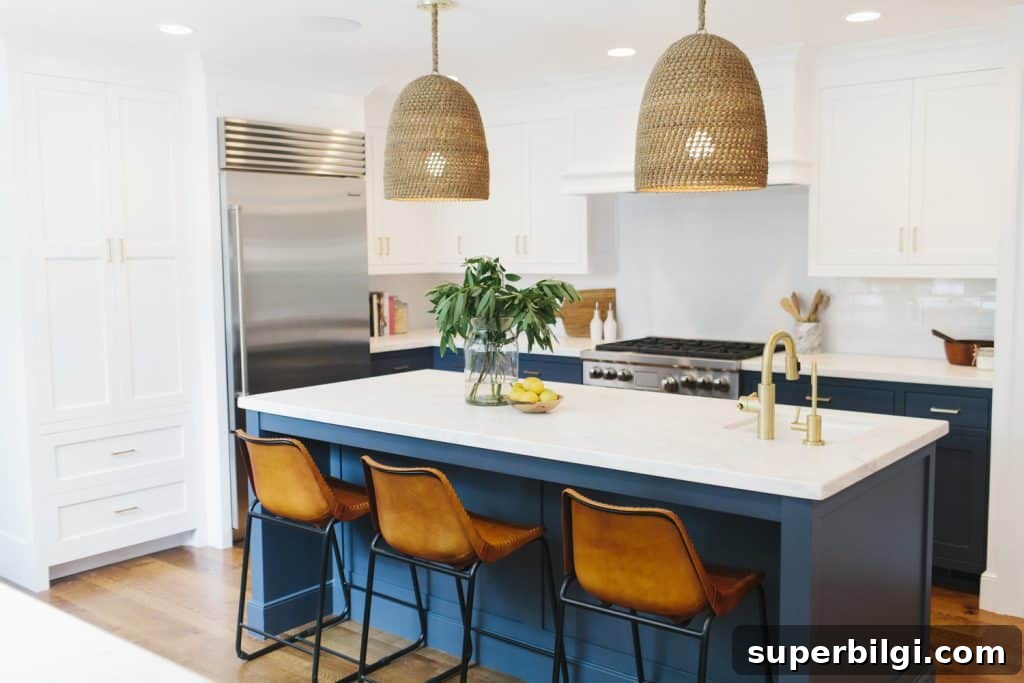
More deep navy alternatives:
- Sherwin-Williams Naval
- Behr Dark Navy
6. White Dove
Benjamin Moore White Dove (OC-17) is a soft, creamy white with a touch of greige. It reads warmer than stark white, making it a good match for orange-tinged woods. White Dove brightens a space while still allowing the cabinetry’s color and grain to be a focal point. Use bright white trim to create definition and make the creamy walls feel intentional.
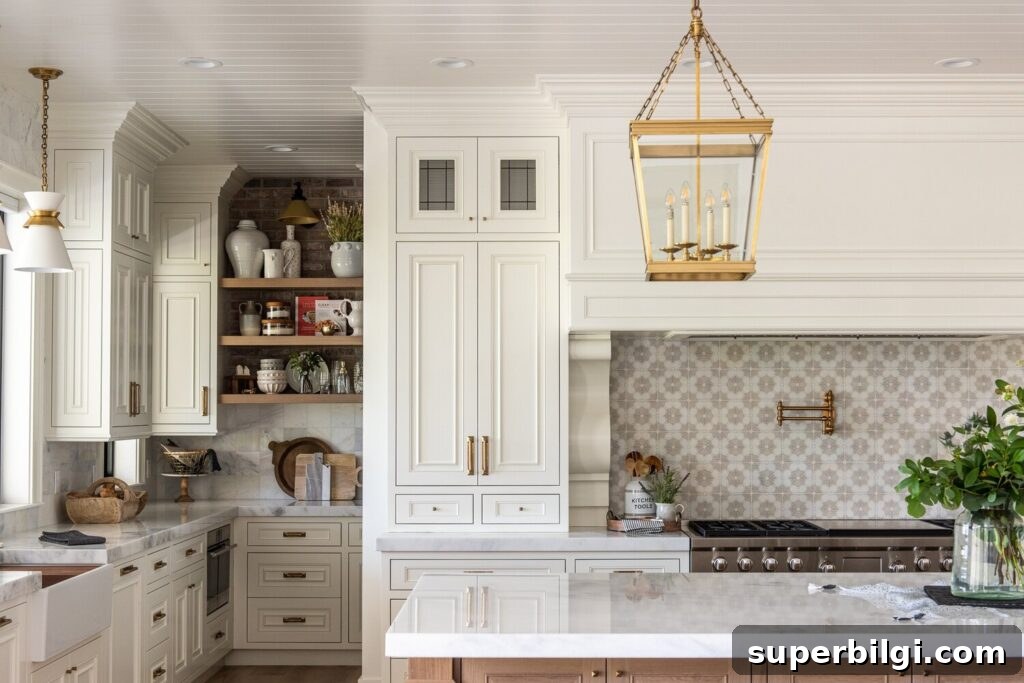
Other creamy white choices:
- Benjamin Moore Swiss Coffee
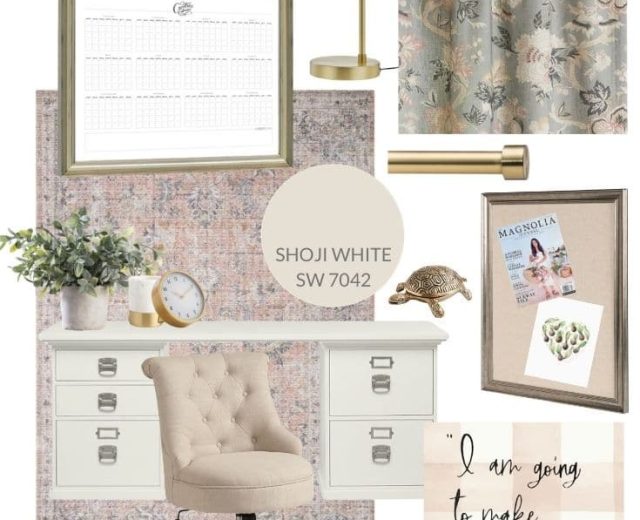
- Sherwin-Williams Shoji White
- Sherwin-Williams Alabaster
Create Your Dream Space with Confidence
You don’t have to replace oak cabinets to create a fresh, intentional kitchen or bathroom. The right paint color will enhance your wood’s warmth, balance undertones, and bring cohesion to the entire room. Whether you prefer soft neutrals, cool grays, or a bold navy, these color options offer dependable starting points.
Before painting, test samples on multiple walls and observe them throughout the day. Small details—trim color, countertops, flooring, and lighting—will affect the final outcome. Start with samples, decorate the room, and adjust based on how the swatches perform in your space.
Which color are you most drawn to? Try one or two swatches and trust your eyes—sometimes a simple change of paint transforms the whole room.
More posts you might enjoy:
- The Best Brown Paint Colors
- How to Paint Outlet Covers
- DIY Picture Frame Moulding
- How to Choose the Right Checkered Floors for Your Home
- Ideal Cabinet Knob Placement