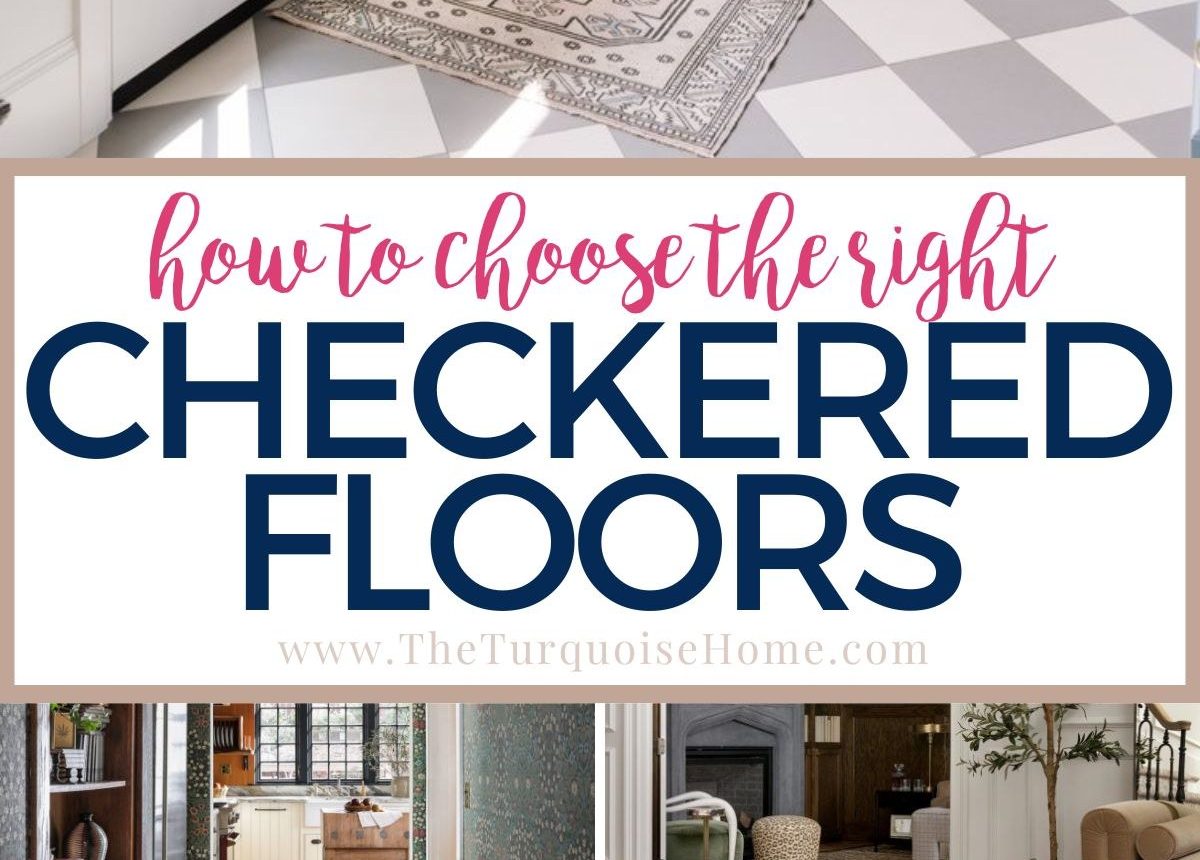
Checkered floors are a timeless flooring choice that never really goes out of style. Their contrasting pattern adds instant character and can be adapted to almost any home with a wide range of materials and color combinations.
When planning a project, I often start with enduring design elements—those classic features that add charm and longevity. Checkered floors are one of those elements: versatile, striking, and suited to both period and contemporary interiors.
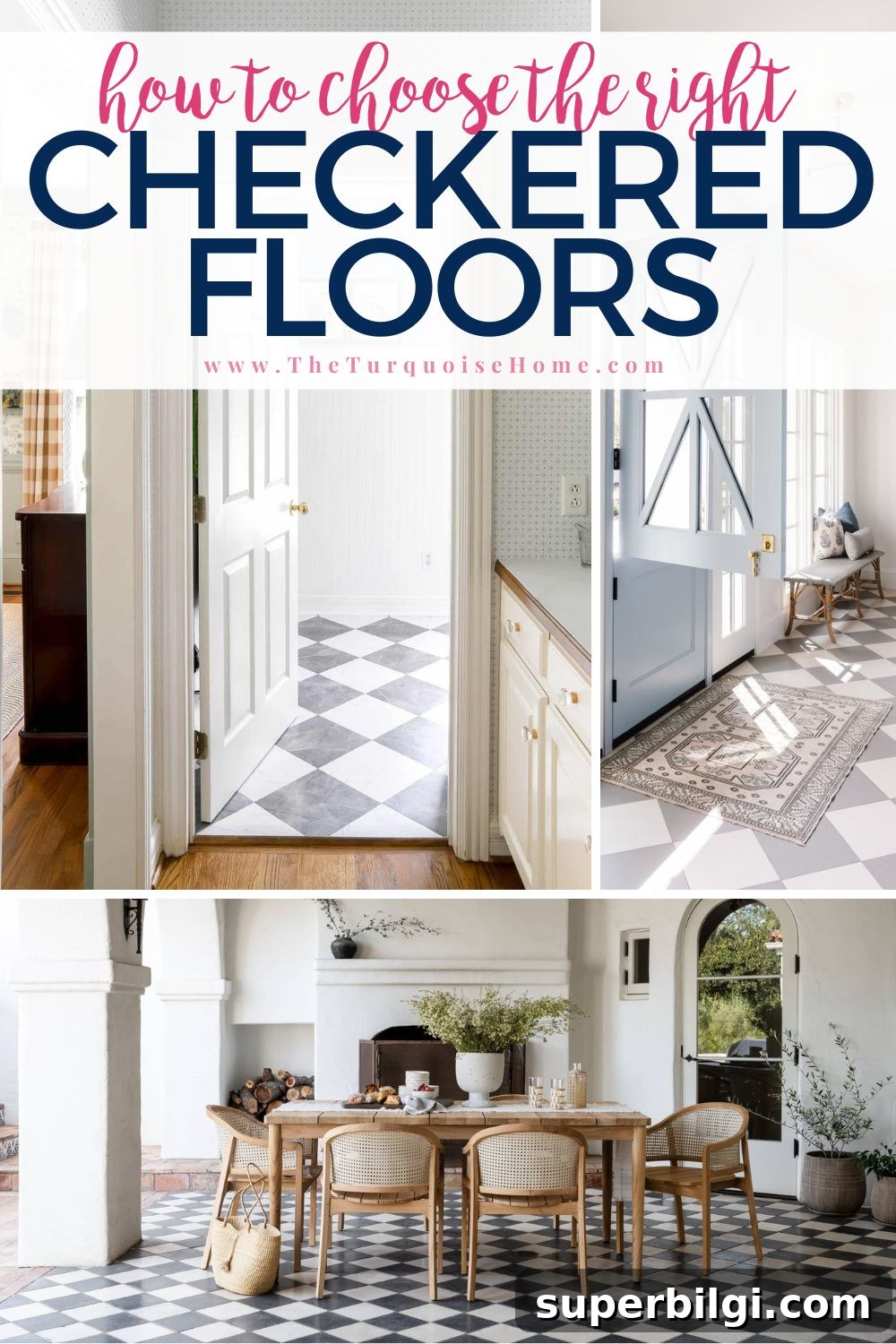
Below I cover the origins of checkerboard floors, why they remain popular, material choices, the best rooms for them, tile sizing guidance, and modern variations to inspire your design decisions. With this information, you’ll be ready to pick the right checkered floor for your home.
A Brief History of Checkered Floors
Checkerboard patterns date back to ancient times: archaeological examples appear in Egyptian temples and Roman bathhouses. In Europe, checkerboard floors were common in churches during the Middle Ages and Renaissance and resurfaced in Victorian interiors. Historically, the alternating squares symbolized balance and duality in life and spirituality.
In the 20th century the pattern remained visible in glamorous settings like the Roaring Twenties and then in everyday homes when linoleum and ceramic tile became popular in kitchens and bathrooms during the 1930s–1950s. Later, the design became associated with retro diners, but that period is just one chapter in a pattern’s long history.
Today, checkerboard and harlequin floors appear in both modern and traditional homes, often reinterpreted in fresh colors and materials to suit current design trends such as grandmillennial and cottage styles.
Why Checkered Floors Have Stood the Test of Time
A few qualities explain the pattern’s longevity: a simple geometric rhythm that creates a clear focal point, adaptability across styles, and the durability of common materials used for the pattern—tile, stone, linoleum, vinyl, and wood alternatives. The bold contrast of a checkered layout defines a room without needing elaborate ornamentation.
Harlequin vs. Checkerboard Flooring
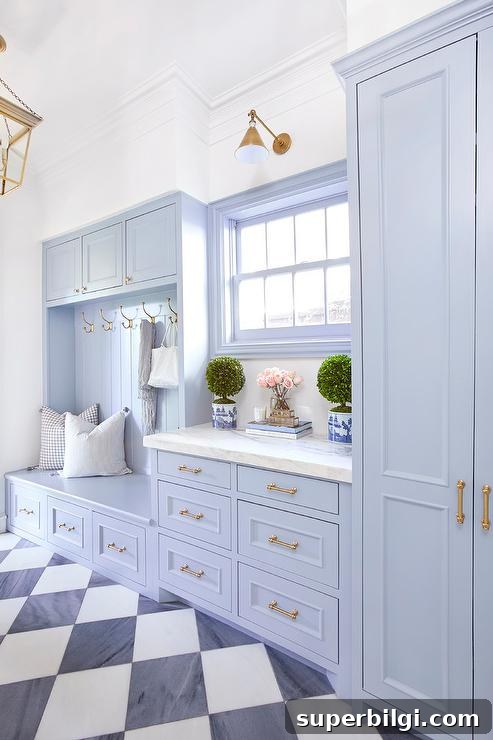
People sometimes use “harlequin” and “checkerboard” interchangeably, but they describe different layouts. A traditional checkerboard aligns squares with the room’s walls—think a chessboard laid in parallel lines. That straight orientation often evokes classic or mid-century modern styling.
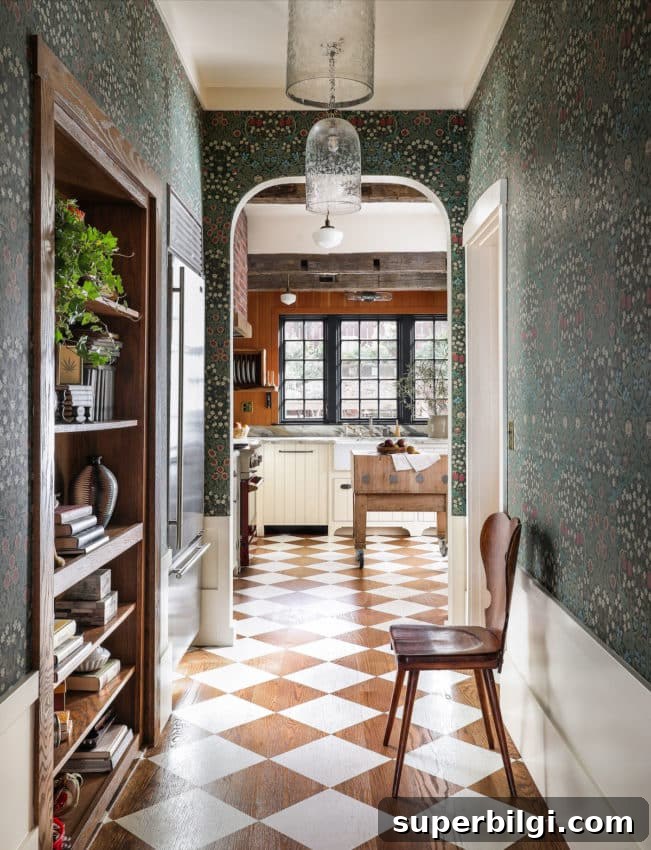
A harlequin pattern rotates the squares 45 degrees so they read as diamonds. That diagonal installation can feel more formal or Renaissance-inspired. Tile size, material, and color will ultimately determine the floor’s character, but the layout is an important design decision.
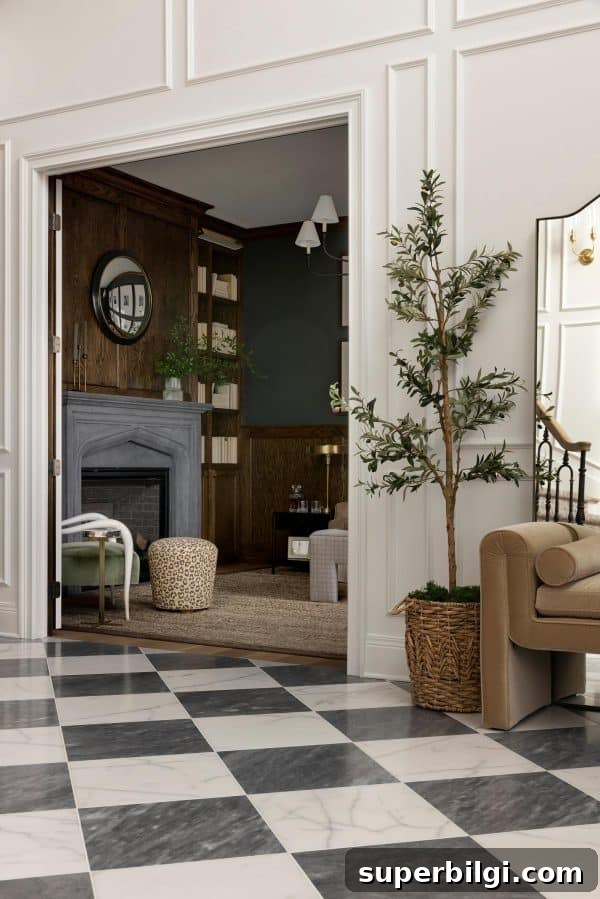
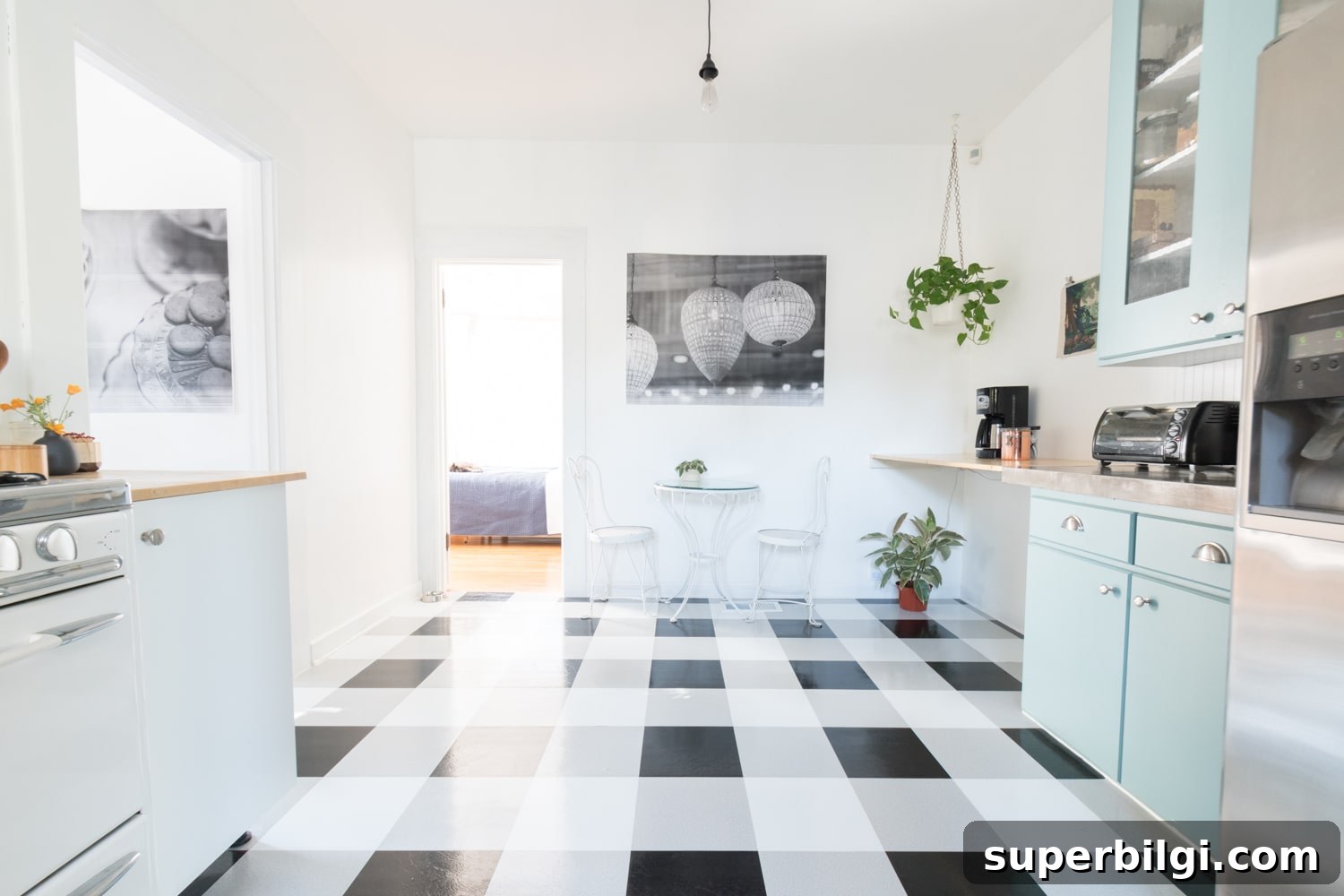
These examples show how the same basic grid can be adapted to suit different interiors—from modern colonial to luxe family homes—simply by changing orientation, tile size, or material.
Choosing the Right Material for Your Checkered Floors
Checkered floors can be executed in nearly any material. Each option provides different aesthetics, durability, and maintenance needs. Choose based on budget, traffic, moisture exposure, and the look you want to achieve.
Common materials include:
- Marble tiles
- Ceramic tiles
- Porcelain tiles
- Painted concrete
- Painted wood
- Vinyl tiles (including peel-and-stick)
- Granite (good for outdoor use)
- Limestone
- Linoleum
- Wood floors with contrasting stains or paint
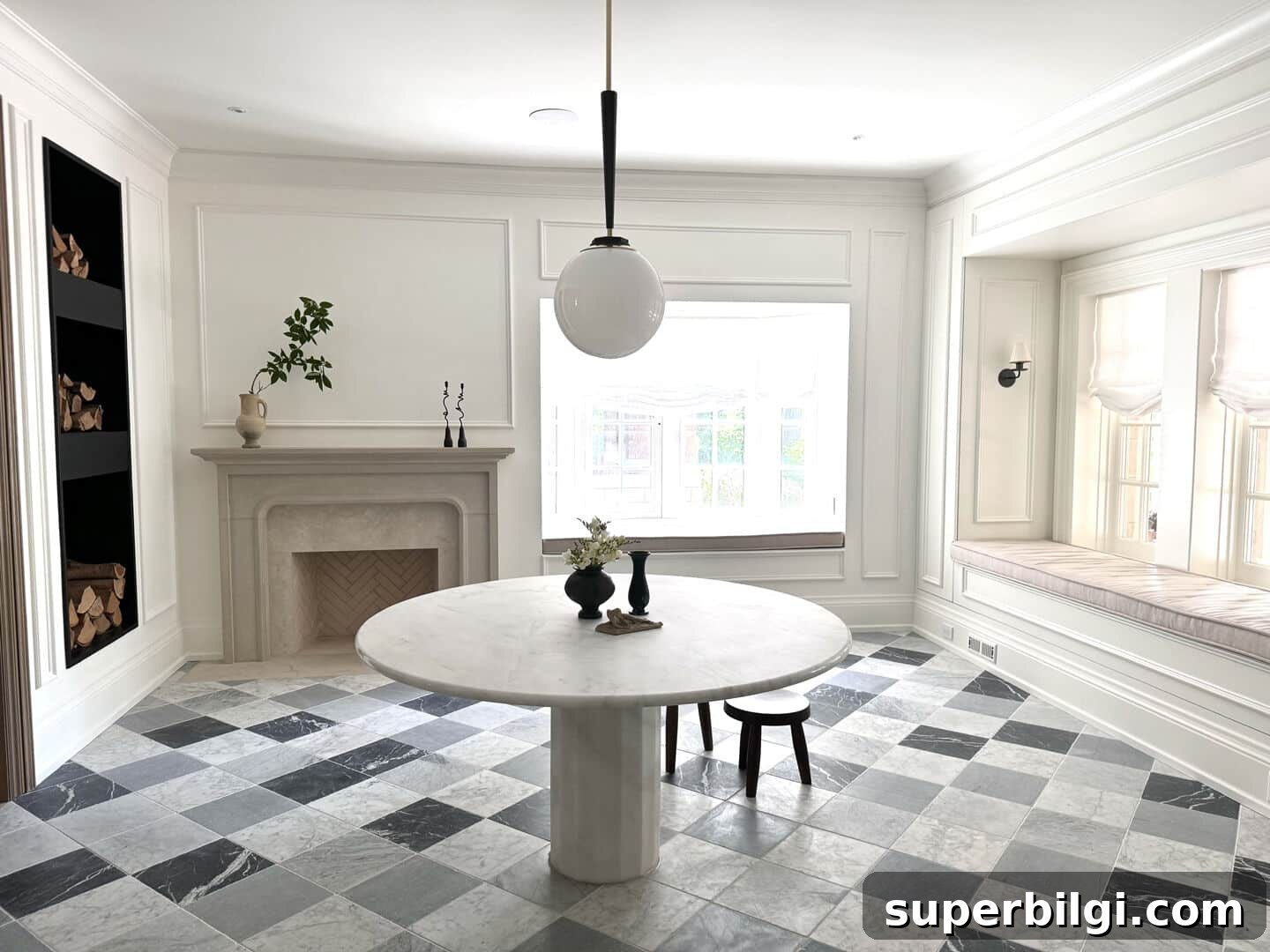
Marble: Marble is a classic, elegant choice. Finishes range from tumbled (a rustic look with natural texture) to honed (matte and smooth), brushed (subtle sheen), and polished (high gloss). Tumbled edges and surface variation add character, while polished marble reads as formal and refined.
Other natural stone and porcelain: Travertine, granite, slate, sandstone, limestone, and porcelain can replicate stone looks at various price points. Engineered stone and porcelain offer excellent durability for high-traffic or moisture-prone spaces.
Vinyl: Budget-friendly and low-maintenance, vinyl tiles can convincingly mimic marble or stone and are especially useful in kitchens, laundry rooms, and bathrooms.
Linoleum: Made from natural materials, linoleum is resilient and eco-friendly. It performs well in many areas but can be more sensitive to standing water than vinyl.
Wood & painted floors: Painted or stained wood can create a warm, custom checkerboard effect. Painted wood is especially suited to casual spaces like sunrooms or porches, while inlaid contrasting wood tones can elevate the look.
Choosing the Right Size Tiles for a Checkered Floor
Tile size and scale dramatically affect how a checkered floor reads. Consider these pointers when planning your layout:
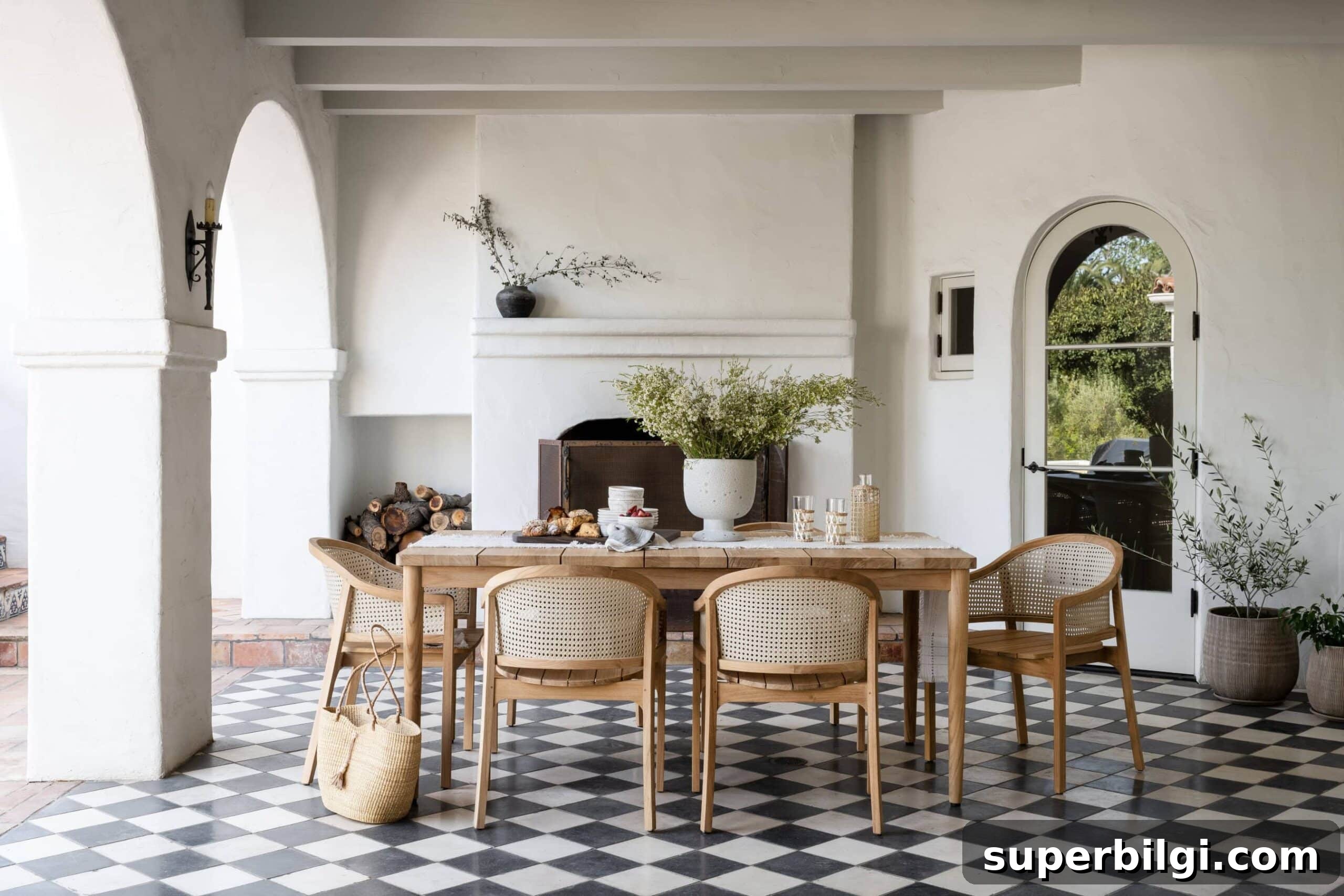
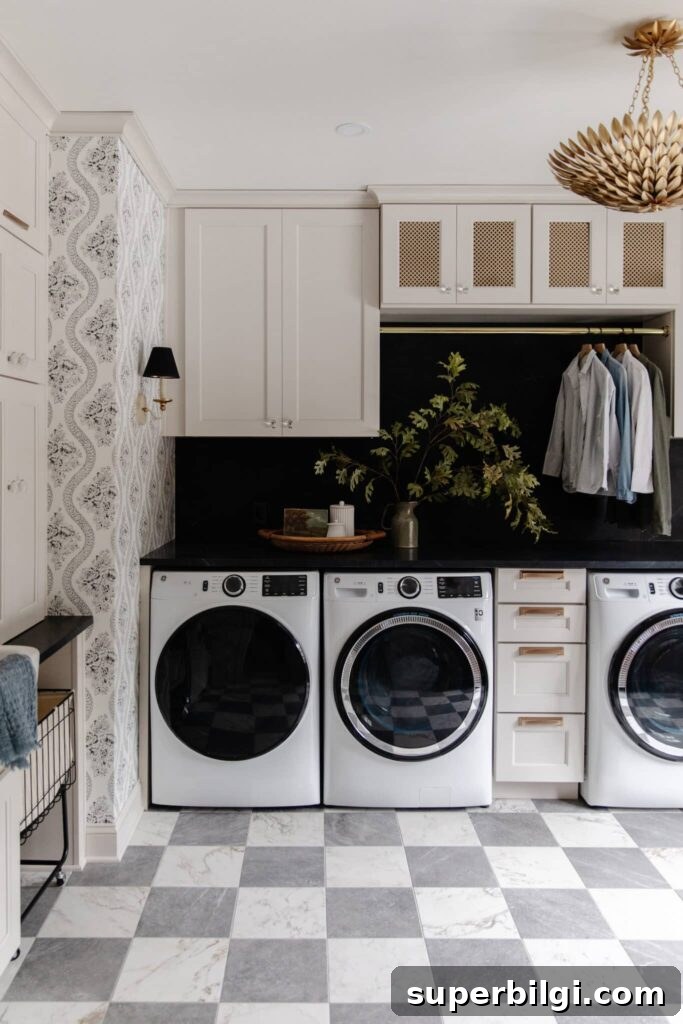
- Assess room dimensions: Larger tiles (12×12 and up) can make small rooms feel more spacious. In larger rooms, smaller tiles create intricate detail without overpowering the space.
- Consider furniture and fixtures: Tile scale should balance the size and pattern of furnishings. Bold furniture may pair better with larger-scale tiles, while patterned upholstery can be grounded with smaller tiles.
- Match the style you want: Large, contrasting squares feel modern and dramatic; smaller tiles read as classic and traditional. Color choice also impacts mood—neutral tones create calm, while strong contrasts add energy.
Checkered Floors in Different Rooms
Checkered floors work beautifully in many rooms. Below are common placements and what to consider for each.
1. Entryway With Checkered Floors
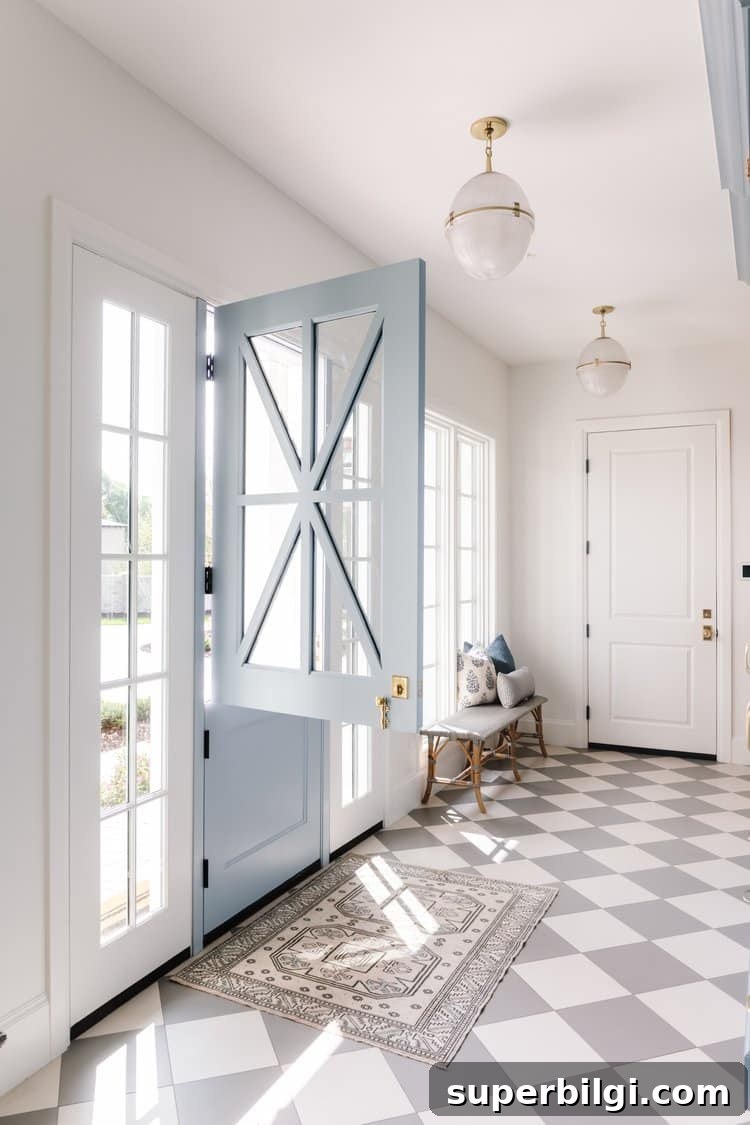
A bold checkered entry sets a confident tone. The pattern highlights architectural details, frames doorways, and makes a striking first impression.
2. Checkerboard Floor Kitchen
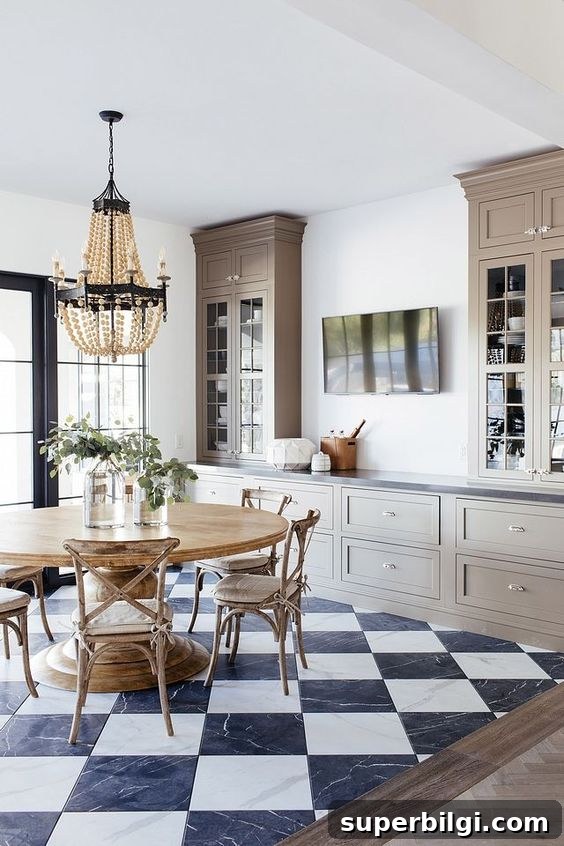
Porcelain or vinyl checkerboard in the kitchen is practical and easy to clean. Swapping black for charcoal or another dark tone refreshes the look while keeping the classic grid.
3. Marble Checker Tile Bathroom
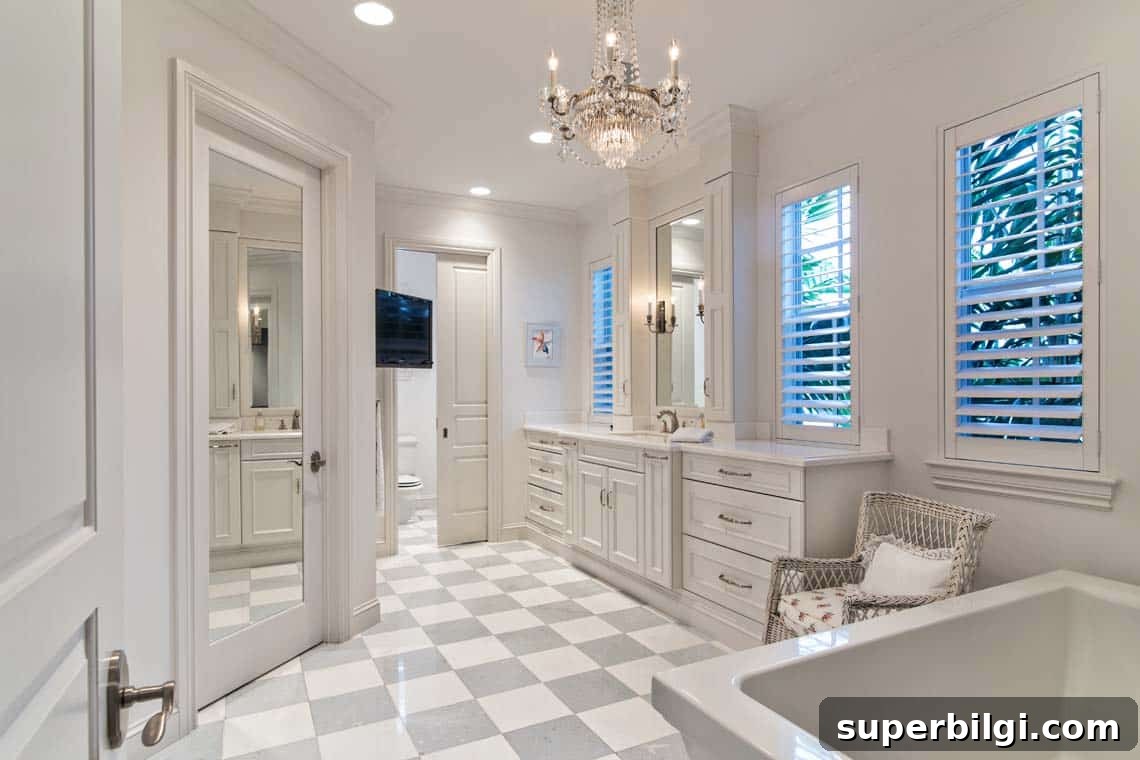
Smaller tiles often help a bathroom feel larger. Gray and white marble variants provide a softer contrast than black and white while feeling luxurious and airy.
4. Vinyl Checkered Tile in a Laundry Room
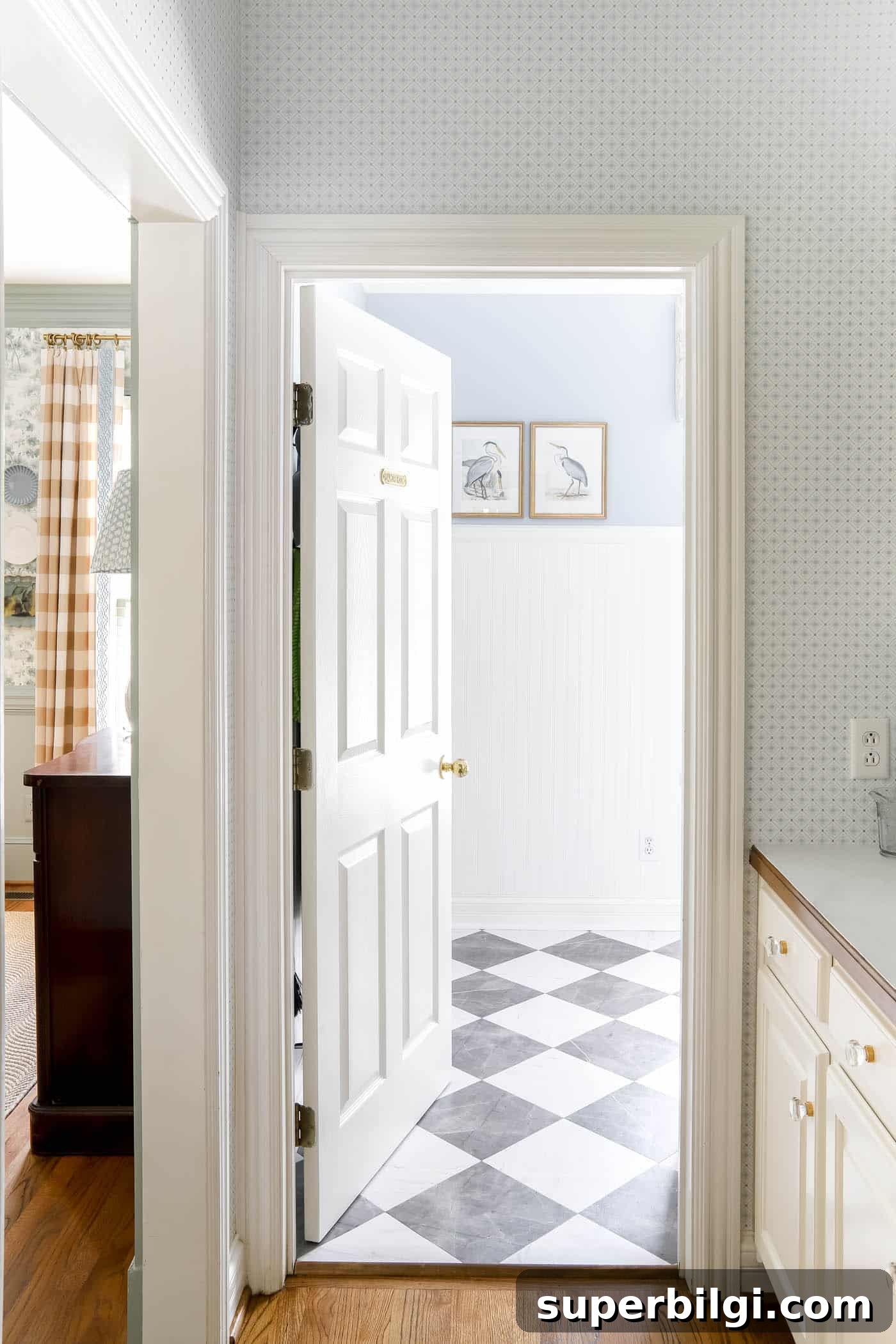
Vinyl peel-and-stick tiles are a practical and affordable way to get the checkerboard look in utility spaces like laundry rooms—durable, easy to install, and replaceable if needed.
5. Painted Wood Checkerboard Floor in a Sun Room
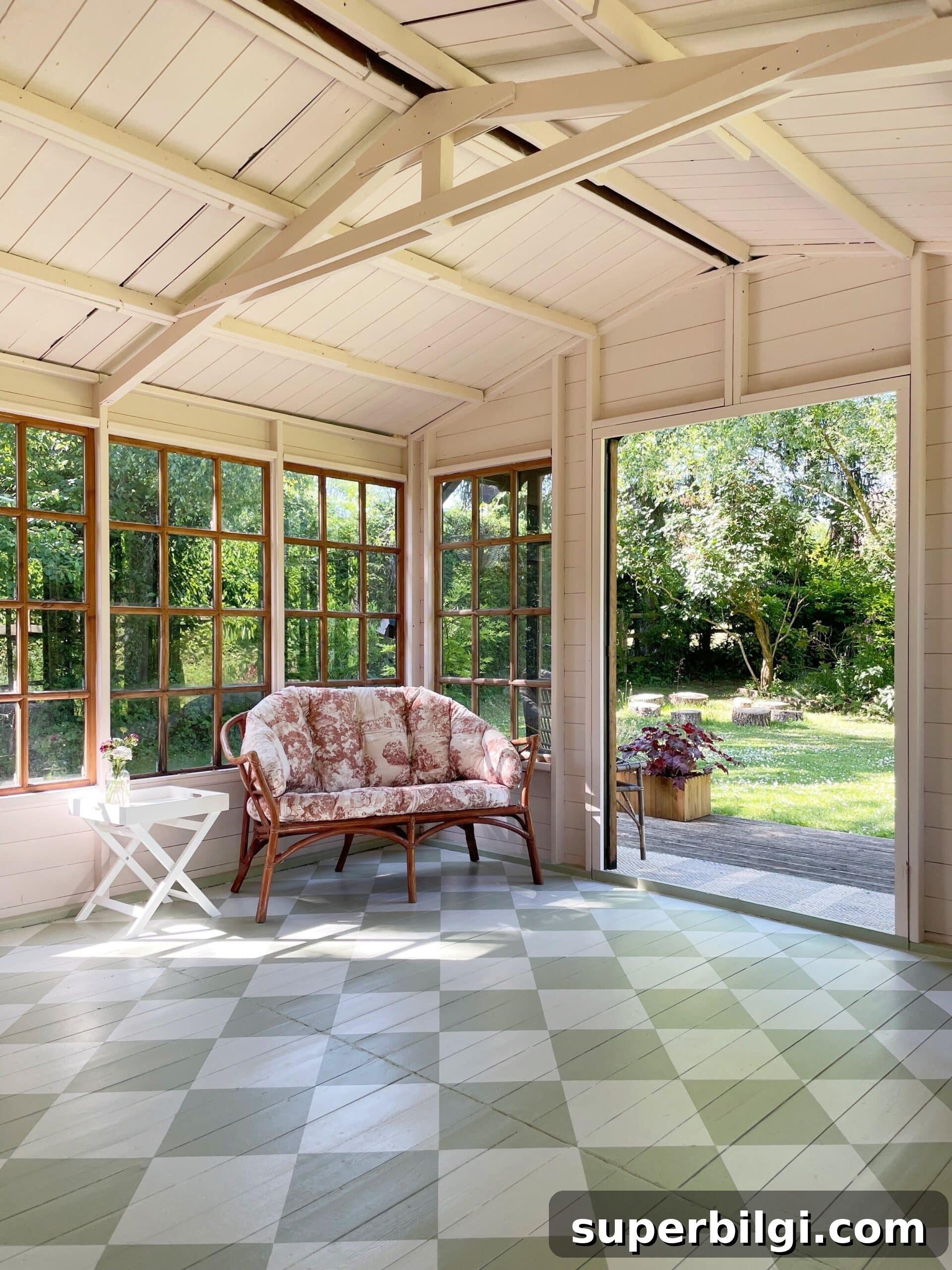
Painted wood floors create an inviting, custom look perfect for sunrooms. Using colors that reference the outdoors helps blur the line between indoor and outdoor living.
Modern Twists on the Classic Checkered Floor
If you want a fresh take, try mixing finishes, changing orientation, or using unexpected color pairs. Some creative variations include retaining visible wood grain through painted squares, introducing a plaid-inspired grid, or pairing nontraditional hues like navy and cream or olive and ivory.
Final Thoughts
A checkered floor is a deceptively simple way to make a bold statement. With the right material, scale, and layout, it can transform a room—feeling classic in one home and cutting-edge in another. Consider traffic, moisture, and overall style to select the best tile size and material, and don’t be afraid to experiment with color and orientation for a personalized result.
More posts you might like:
- Washable Kitchen Runner Rugs: 10 Favorite Pretty Floor Runners
- Cheap Flooring Ideas: Update Your Floors on a Budget
- Luxury Vinyl Plank Flooring Review
- Coastal Book Nook Makeover
- How to Choose the Best Entryway Rug