Benjamin Moore Palladian Blue is a widely loved muted blue-green paint color. Its soft, calming tone makes it a popular choice when you want a serene, sophisticated look in any room.
Palladian Blue (HC-144) from Benjamin Moore is a cool-leaning blue-green with subtle gray undertones that keep it from reading too cold. It’s a light, versatile hue that works well in many home styles and spaces.
If you’re searching for a paint color that looks effortlessly chic in traditional, coastal, farmhouse, or contemporary settings, Palladian Blue is an excellent option. It sits between blue and green, shifting slightly depending on the light in the room. Because of that flexibility, it can feel more blue in cool light and greener in warmer light.
What color is Benjamin Moore Palladian Blue?
Quick highlights about this popular shade:
- Cool-leaning blue-green with gray undertones
- Light shade with a Light Reflectance Value (LRV) of 60.4
- Great for walls, kitchen cabinets, doors, and trim
- Versatile and neutral enough to pair with many decor styles
- Creates a calm, spa-like atmosphere in a room
Palladian Blue Undertones
This shade is a balanced mix of blue and green with gray grounding it. In cool or shaded rooms Palladian Blue can lean bluer and appear more muted; in warm, sunlit rooms the green side becomes more noticeable. Because it blends several undertones, it pairs well with many colors—just avoid pairing it with shades that have purple undertones if you want to keep the palette harmonious.
LRV of BM Palladian Blue
Light Reflectance Value (LRV) measures how much light a paint color reflects. LRV 100 is pure white and LRV 0 is pure black. Palladian Blue has an LRV of 60.4, placing it in the light-to-medium range. It reflects a fair amount of light, so in very bright rooms it can appear soft and airy, yet it still maintains enough pigment to read clearly as a color rather than a tint of white.
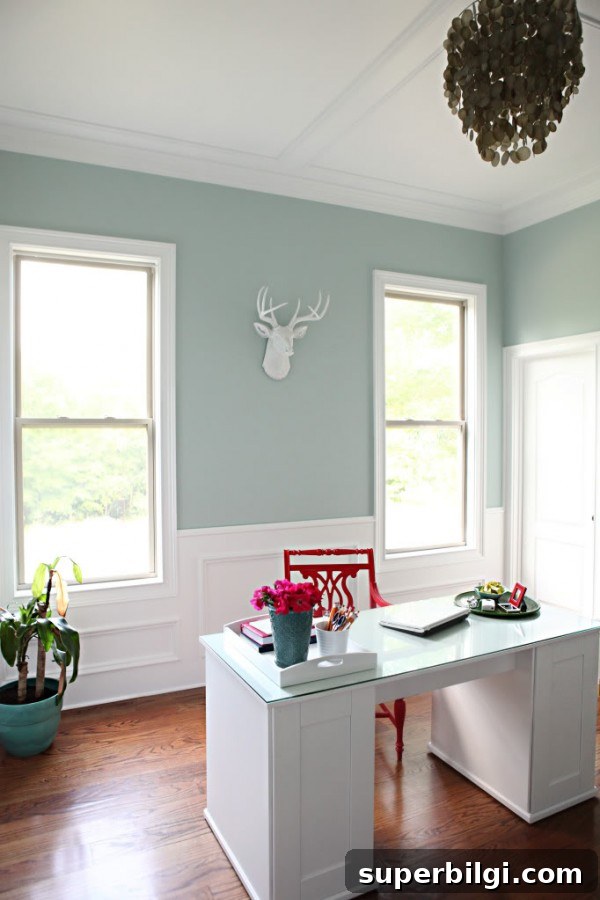
Benjamin Moore Palladian Blue Coordinating Colors
Palladian Blue pairs beautifully with a wide range of colors. Benjamin Moore suggests combinations such as Elmira White, Persimmon, Willow Creek, and Wood Grain Brown. In practice, this shade works well with:
- Whites and warm whites for crisp contrast
- Creams and soft beiges
- Greiges and neutral grays
- Dark browns and wood tones
- Soft corals and muted terracotta accents
- Deeper blues and navy accents for depth
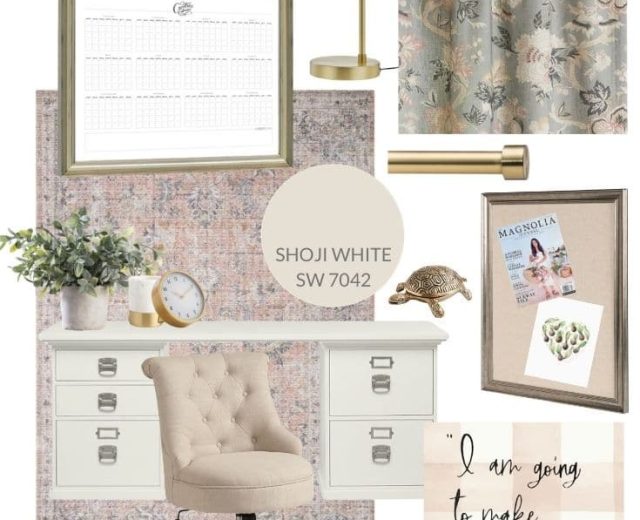
Personal pairings that complement Palladian Blue include Hale Navy, Revere Pewter, Silver Satin, Beach Glass, Storm, Comfort Gray, Chelsea Gray, and Kendall Charcoal. For trim, a clean white such as Chantilly Lace or White Dove creates a crisp frame and brightens the overall look.
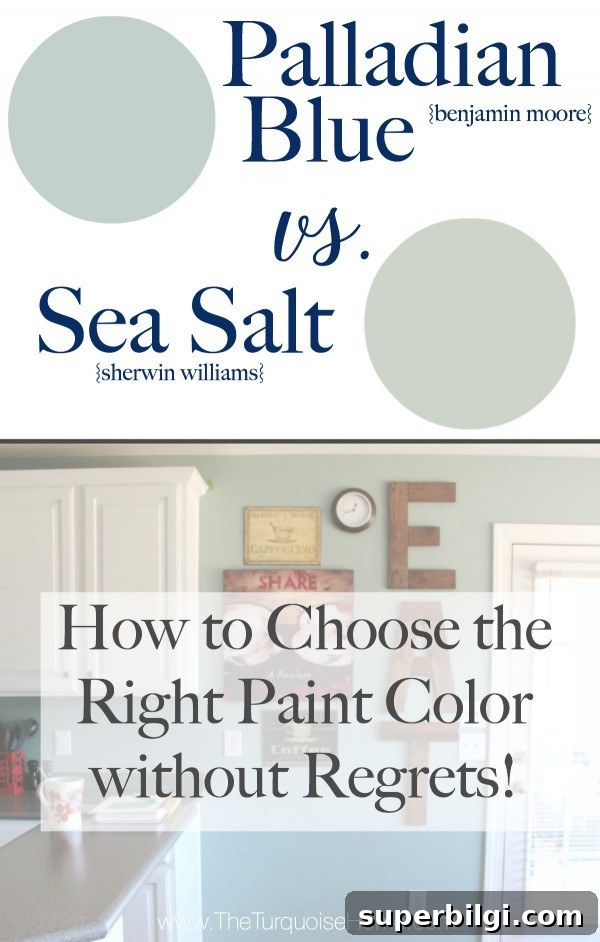
Benjamin Moore Palladian Blue vs. Sherwin Williams Sea Salt
Sherwin-Williams Sea Salt is a slightly lighter, airier blue-green than Palladian Blue. Sea Salt has an LRV around 63 and tends to show more green than blue in many lighting conditions. If you’re choosing between the two, sample both on your walls—lighting and surrounding decor can make a noticeable difference. In some rooms Palladian Blue will read as a richer, slightly deeper option, while Sea Salt stays softer and more muted.
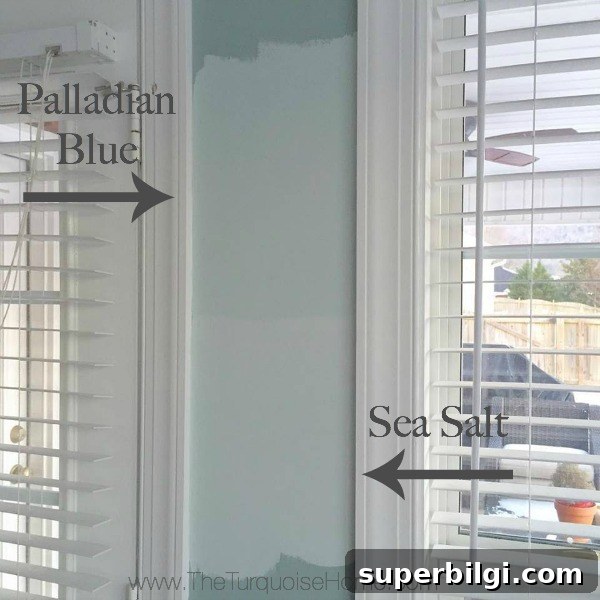
Sampling both colors in different parts of the room over several hours is the best way to choose. Many homeowners find that Palladian Blue offers a touch more presence and works well when you want a subtle but definite color.
Benjamin Moore Palladian Blue vs. Wythe Blue
Wythe Blue is darker than Palladian Blue. With an LRV around 48, Wythe Blue reads as a deeper, more saturated blue-green. If your room gets abundant natural light and you want a stronger, more vivid statement, Wythe Blue could be the better choice. For rooms with moderate light or where you prefer a lighter feel, Palladian Blue typically feels more versatile.
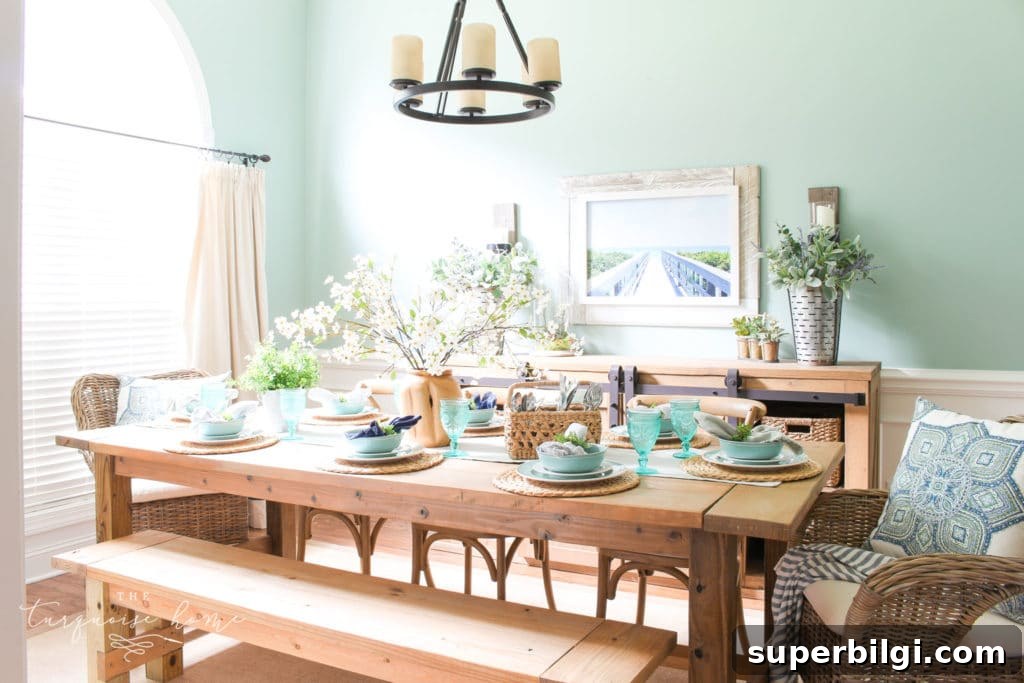
Where can you use Benjamin Moore Palladian Blue?
Palladian Blue is one of Benjamin Moore’s most adaptable blues and can be used in many places, including:
- Interior walls in living rooms, bedrooms, and home offices
- Kitchen cabinets and islands for a gentle pop of color
- Bathroom walls and vanities to create a spa-like vibe
- Accent walls, built-ins, or trim accents
- Exterior doors for a subtle curb-appeal boost
- Ceilings or interior doors for unexpected interest
Home Styles that Work with Palladian Blue
- Traditional
- Transitional
- Coastal
- Farmhouse
- Classic and cottage styles
- Contemporary spaces seeking a soft, natural accent
Room Examples using Palladian Blue HC-144
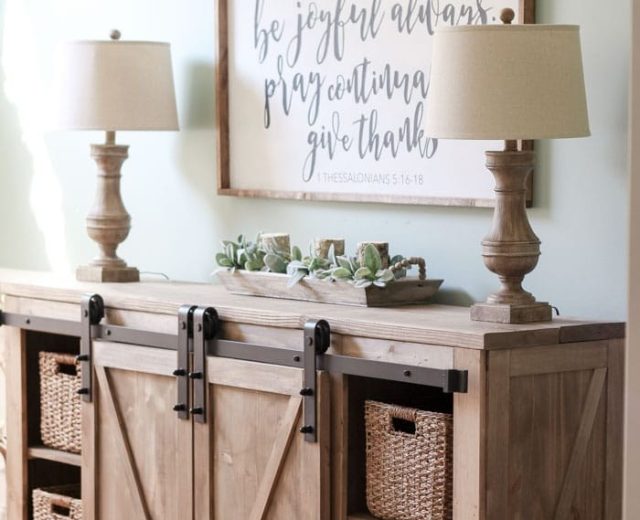
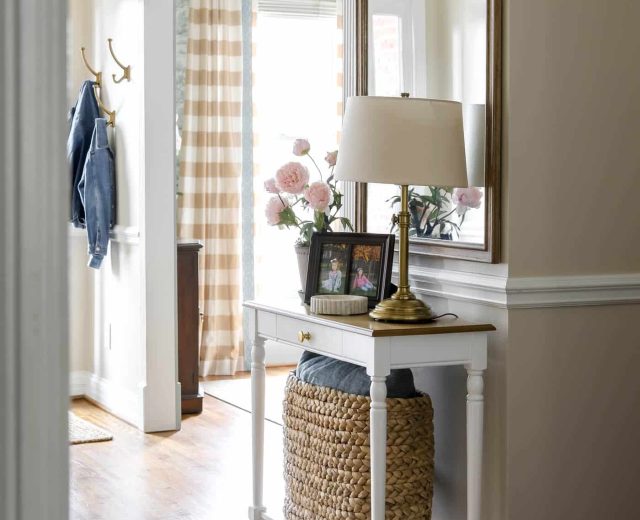
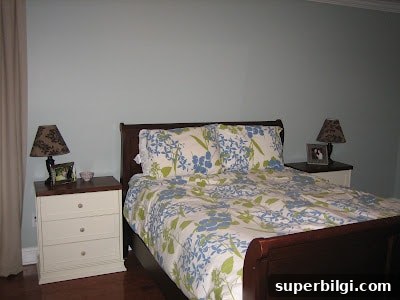
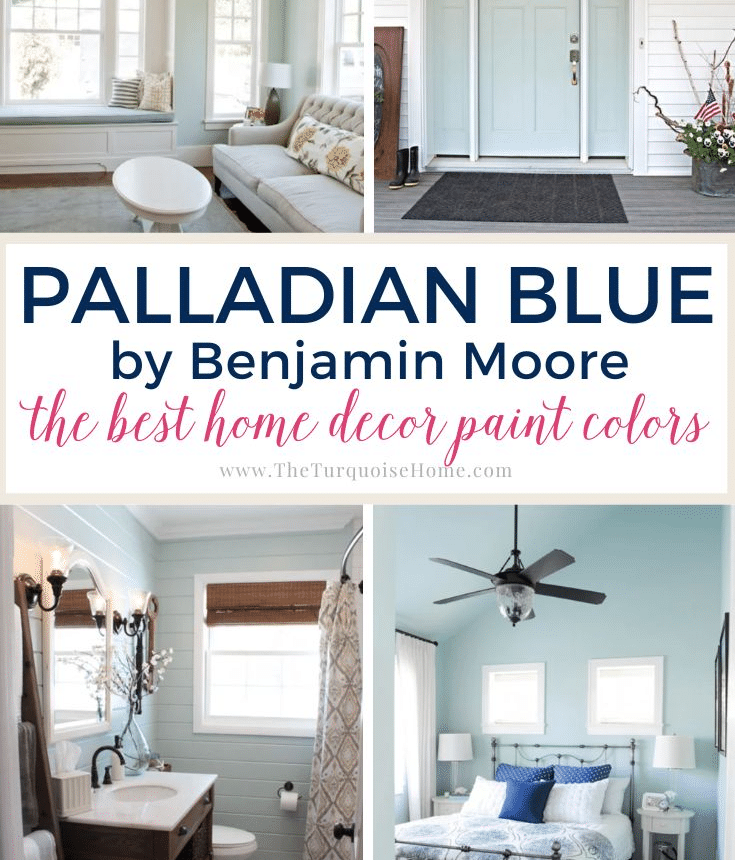
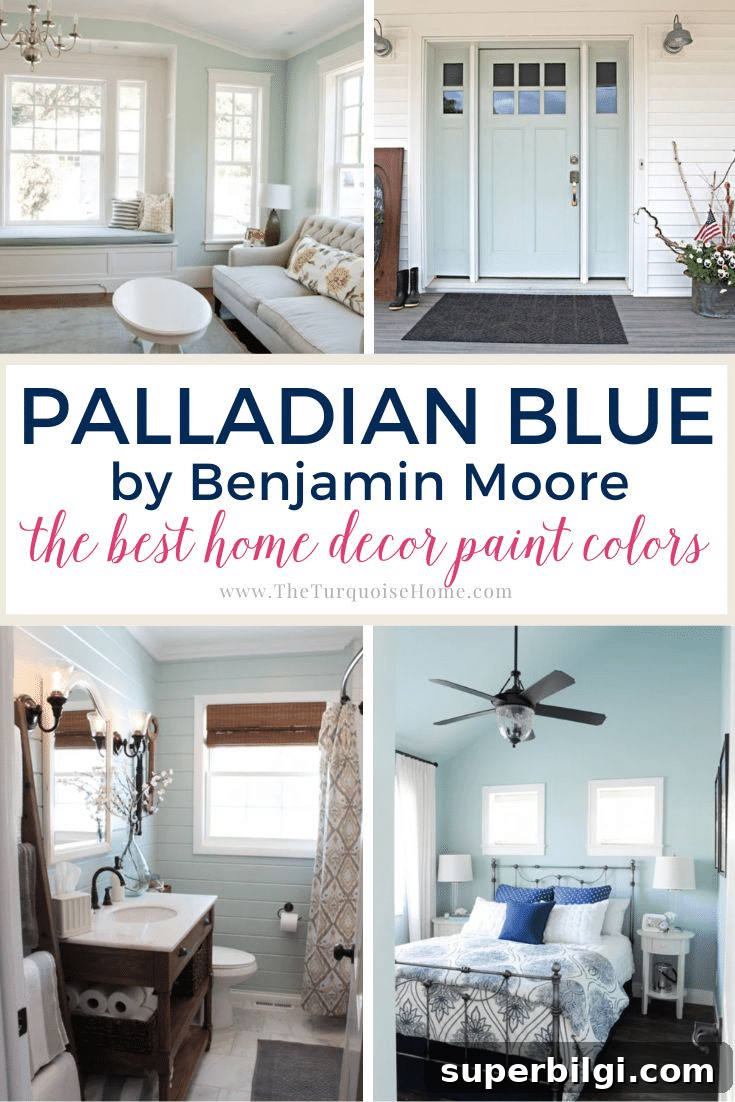
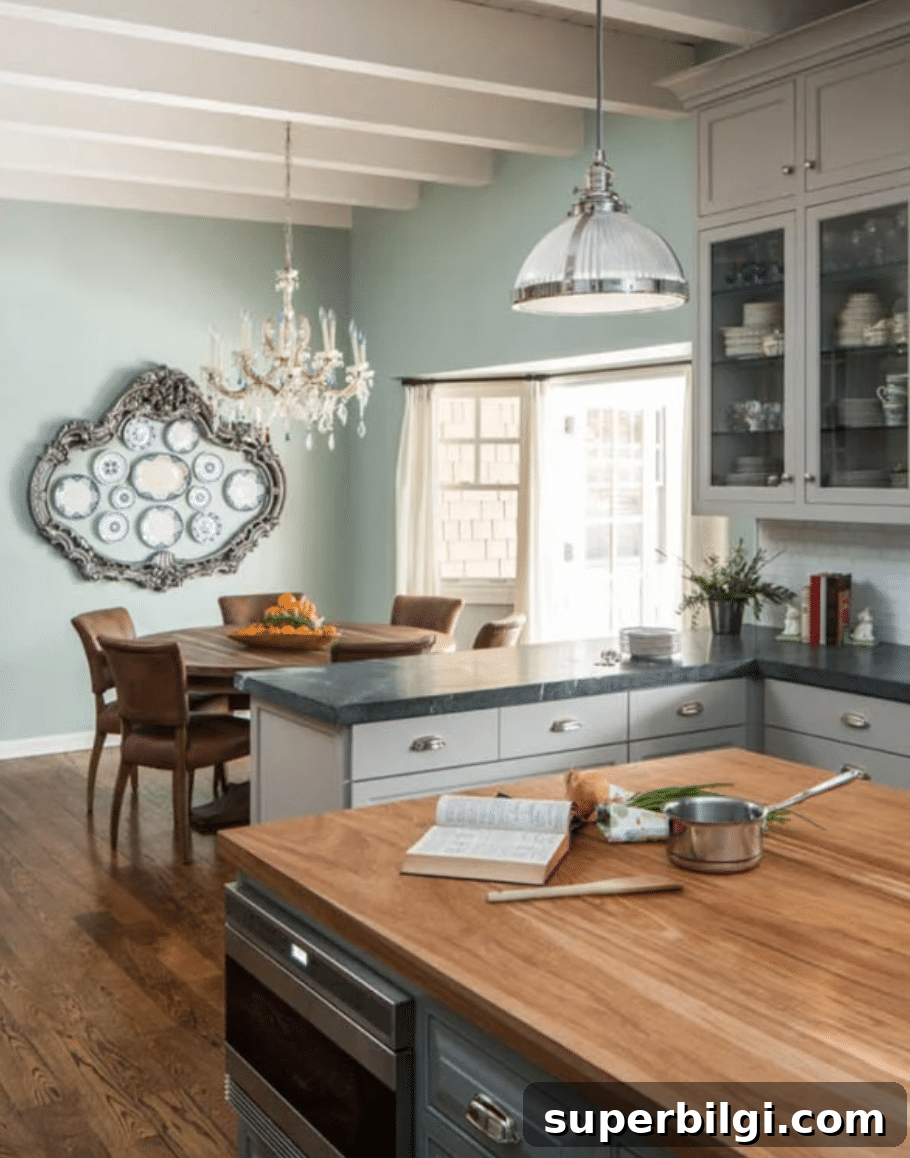
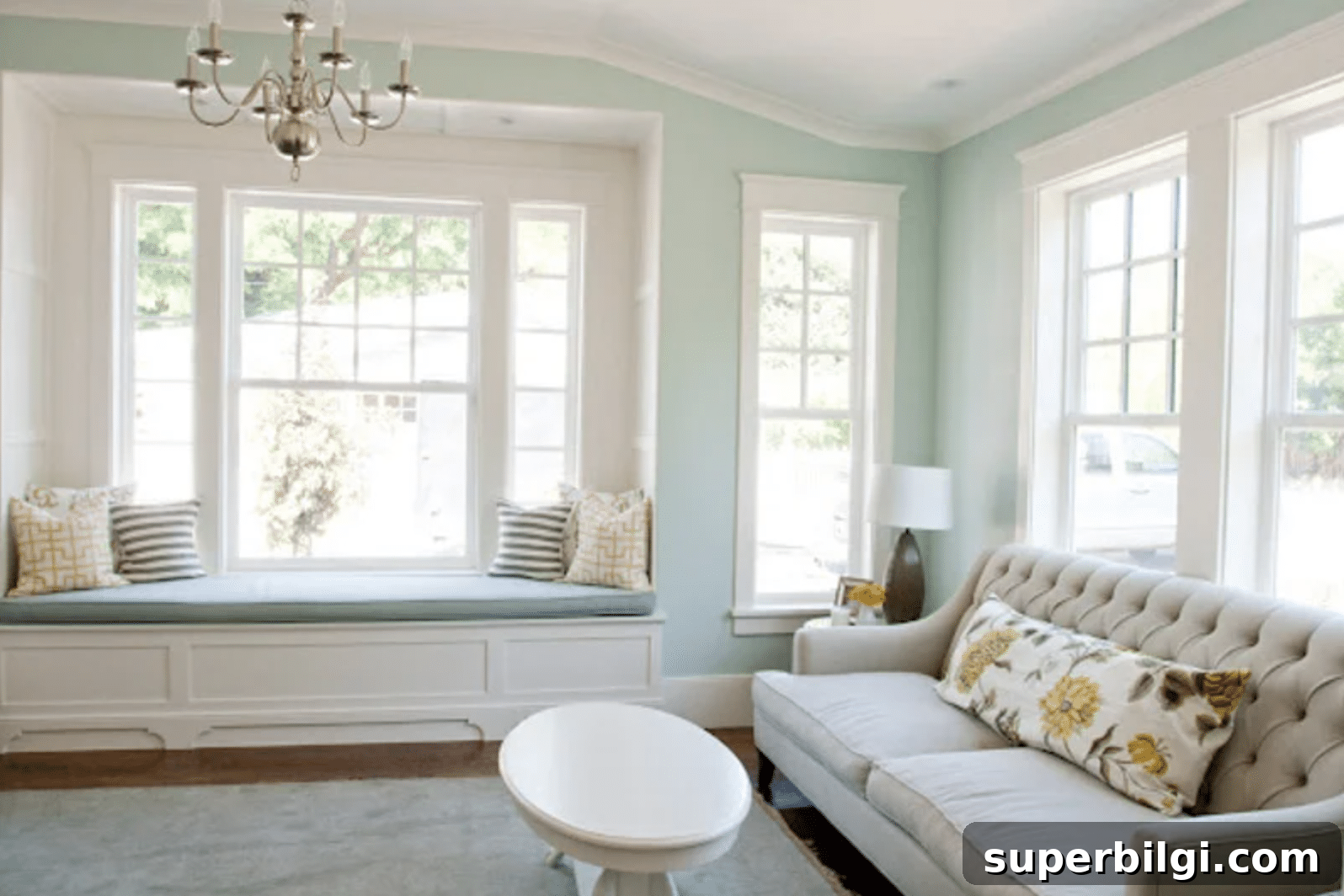
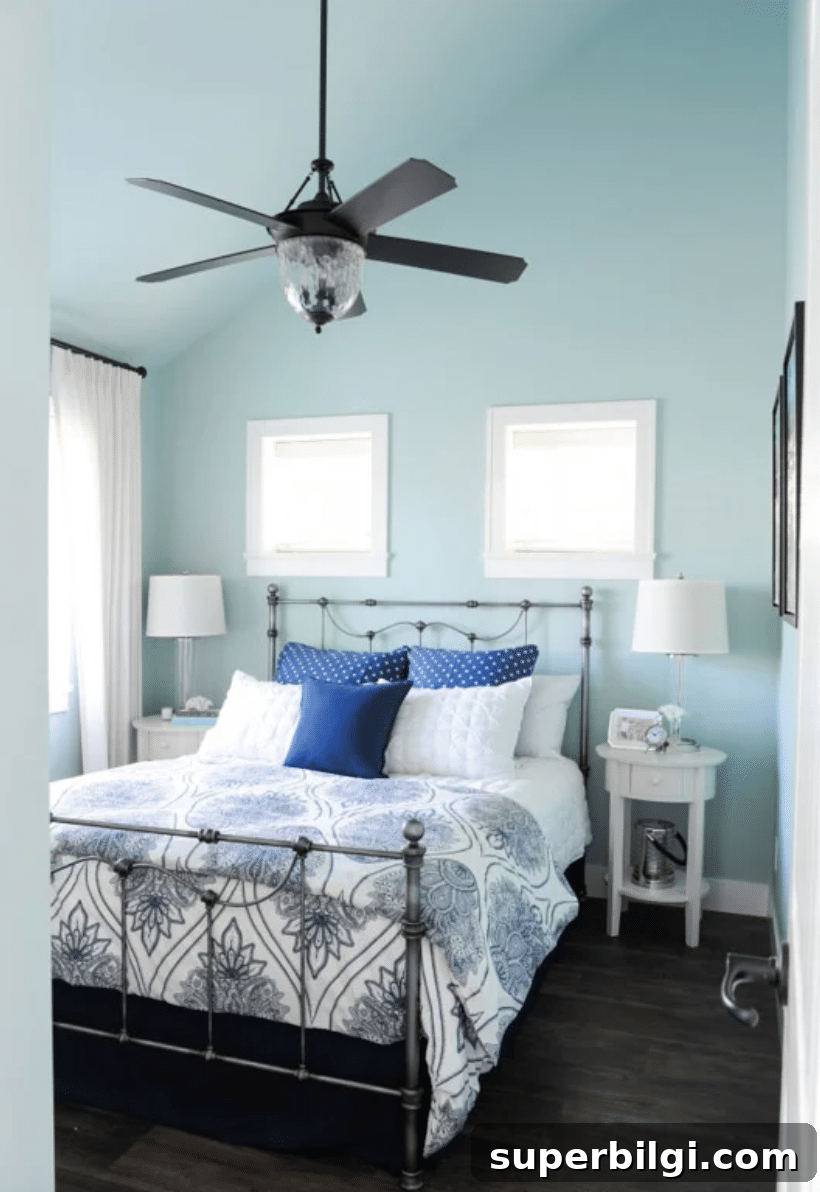
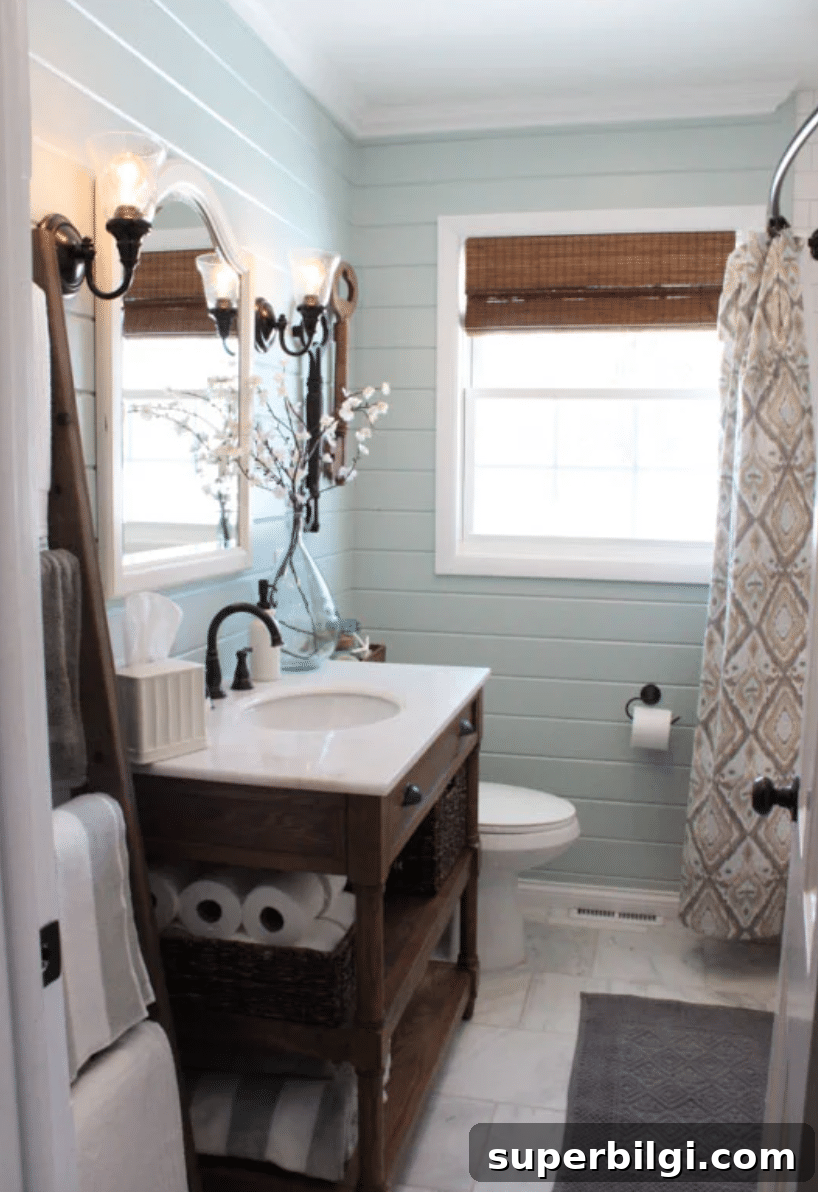
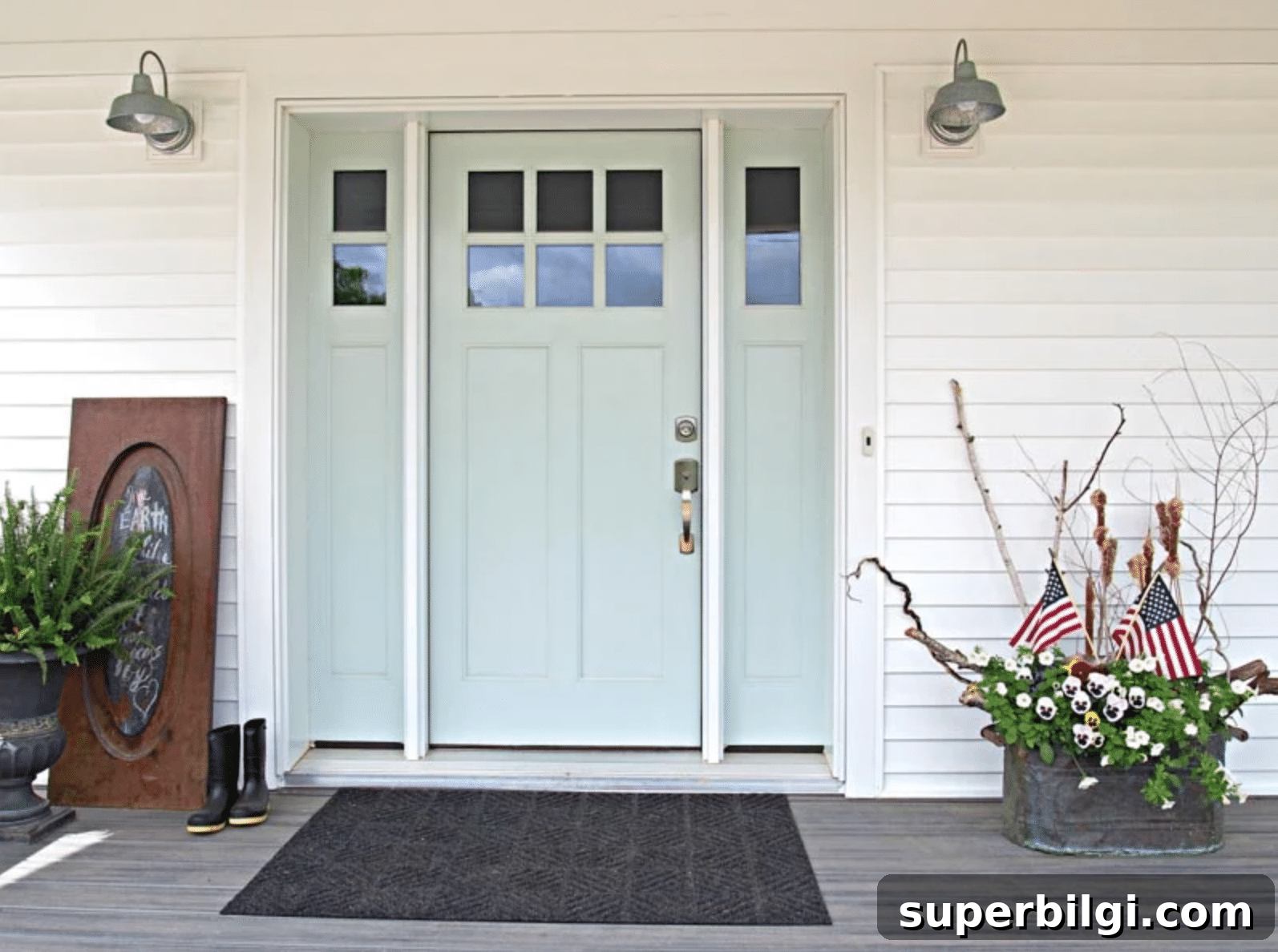
Seeing Palladian Blue in real rooms helps decide if it’s right for your home. In kitchens it can tie together wood floors, white ceilings, and gray countertops. In living rooms it reads soft and tranquil with bright natural light and crisp white trim. In bedrooms and bathrooms it can lean bluer or greener depending on lighting and accent colors, and it works beautifully on exterior doors as a subtle focal point.
Frequently Asked Questions
Palladian Blue leans cool overall, but its gray and green undertones temper the coolness so it rarely feels uncomfortably cold in living spaces.
It’s a balanced mix of blue and green. Depending on lighting and surrounding colors, it can read as more blue or more green—this adaptability is part of its appeal.
How to Choose a Paint Color
Choosing paint is easier when you research a few options and test real samples in your home. Try peel-and-stick or small painted samples, view them at different times of day, and compare them to your existing finishes—flooring, cabinetry, and fabrics—before making a final decision. Use those samples to build a cohesive palette for your home.
Tools to Help Paint a Room Yourself
If you plan to paint yourself, a few reliable tools make the job smoother: quality brushes, painter’s tape, drop cloths, a comfortable paint cup, and a sturdy roller tray with liners for easy cleanup. Good tools help achieve professional-looking results and speed up the process.
More Paint Colors
If you’re exploring more shades, consider researching popular neutrals, greiges, blue-grays, and other blue and green families to narrow your choices and build a complementary palette for your home.