A rug in the master bedroom adds warmth, reduces noise and creates an extra layer of style. Whether you pick a solid color or a patterned rug, a few simple guidelines will help you choose the right rug to place under your bed.
When we installed our new luxury vinyl plank (LVP) floors, my only real complaint was how noisy they are. The finish tends to make a shuffling sound when feet move across it, which is most noticeable in our master bedroom. I eventually decided a rug was the practical and decorative solution I needed.
I’m a light sleeper (the kids trained me well), so the footsteps on the LVP were becoming a nightly annoyance. That prompted me to look for a rug that would soften the sound and tie the room together. Though I’d planned a room refresh for the fall, the noise pushed the rug purchase forward.
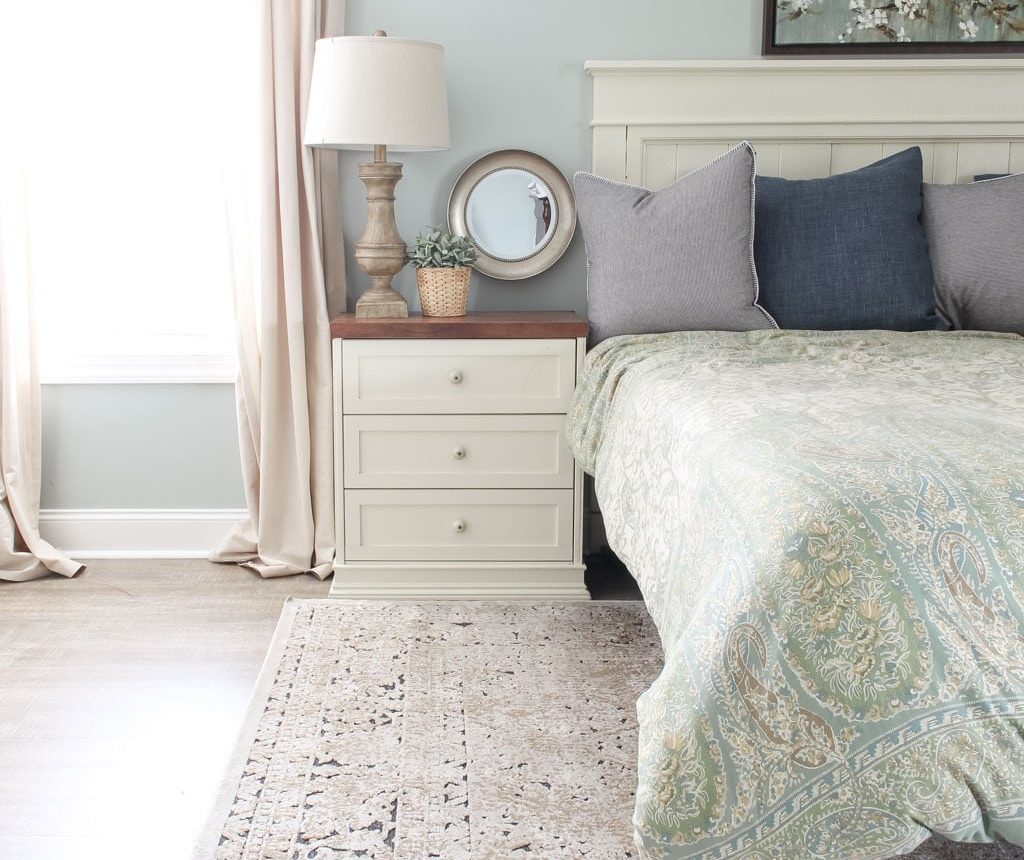
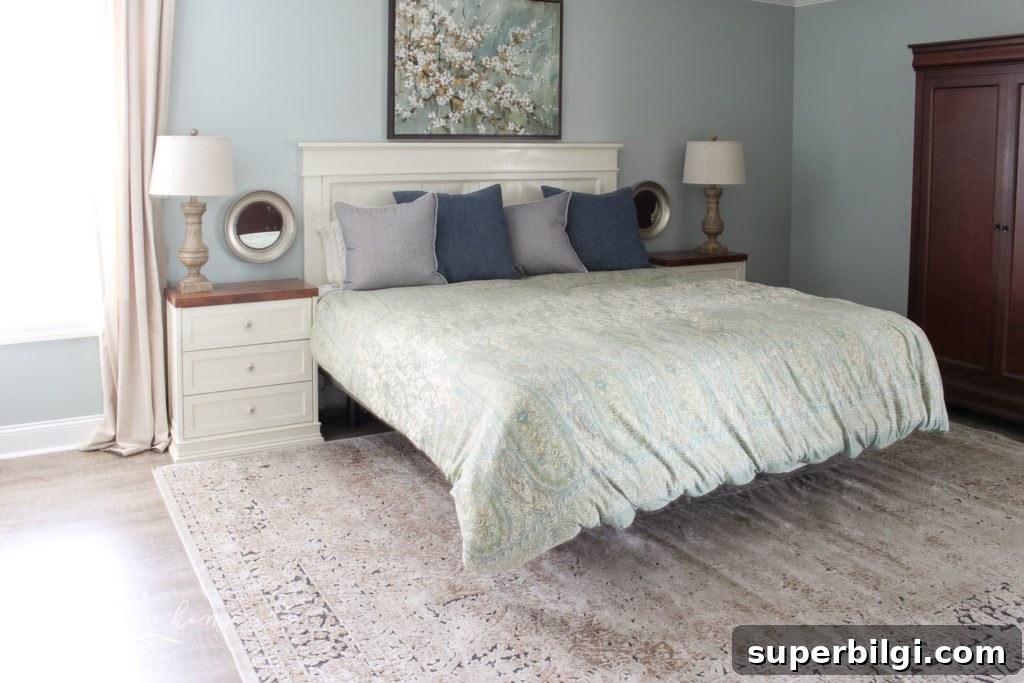
I ultimately chose an ivory-and-beige, antique-style rug. It leans more brown and beige than I usually prefer, but it complements the browns and golds in my duvet cover and brings a softer, warmer feel against the floor. In person the rug looks beautiful and reads as a neutral layer, even with some pattern in the bedding.
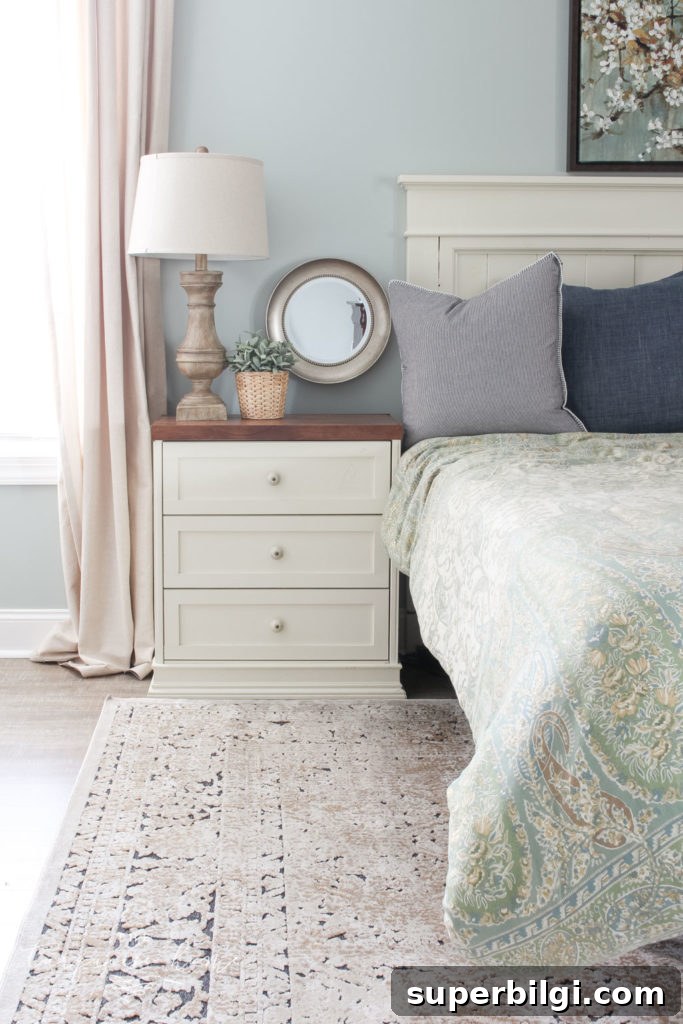
To keep the overall look calm, I plan to balance the patterned duvet with solid pillows and neutral accents. I may add a solid quilt at the foot of the bed to break up pattern repetition, but I love the duvet and don’t intend to replace it.
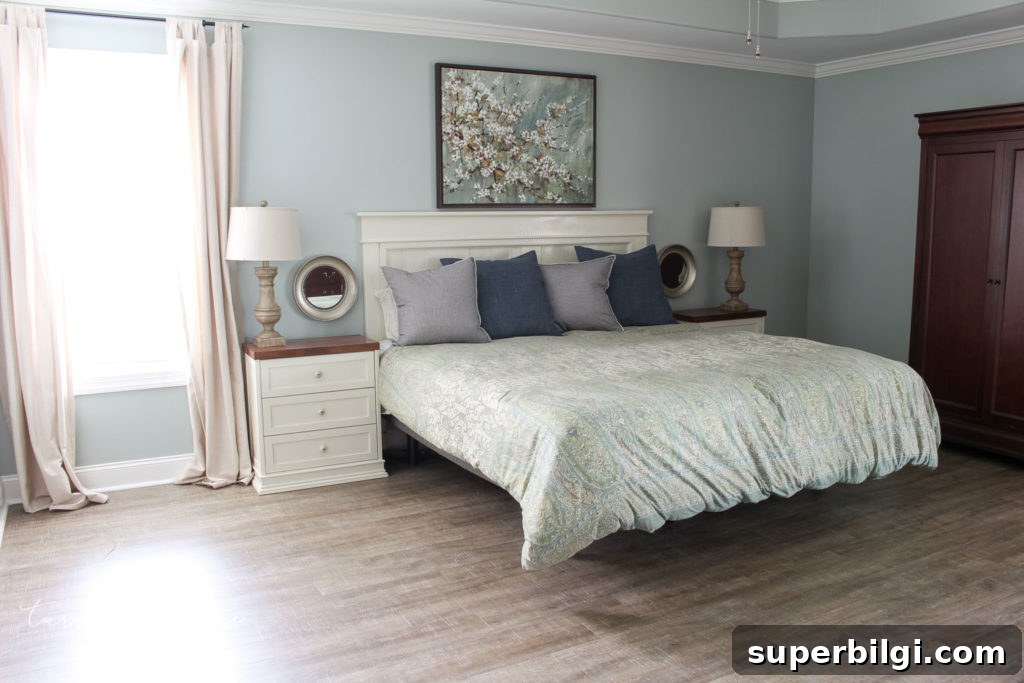
I bought the rug in a 9×12 size because I wanted to cover as much of the floor as possible under our king bed. If you have a bench at the foot of the bed or a seating area, a larger rug is especially useful to unify the space.
Tips for Buying a Rug for Under Your Bed
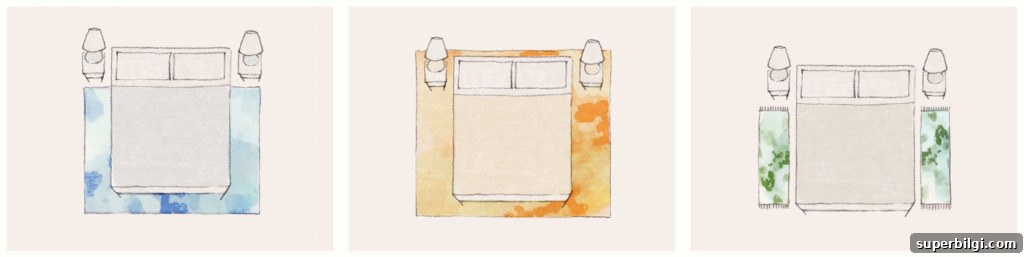
- What size rug should you buy? The right rug size depends on your bed and how much floor you want to cover. Aim for as large a rug as your room allows while leaving at least 18 inches of bare floor between the rug edge and the walls whenever possible.
- Rug size for a queen or full bed: Consider 5×8, 6×9 or 8×10. An 8×10 is a great choice for a queen if your budget allows; it frames the bed well and provides ample walking space.
- Rug size for a king bed: An 8×10 or 9×12 works for a king bed. I chose a 9×12 to maximize floor coverage and to make sure the rug extended beyond the foot of the bed, especially since we have a wider sleep surface.
- How should the rug be positioned? Place the rug so its long side runs from nightstand to nightstand. The rug should extend past the front of the bedside tables and continue beyond the foot of the bed. The bed’s foot should rest on the rug, but the nightstands ideally should sit off the rug.
- Other placement options: You can place all bedroom furniture on a large rug to create a unified look. Another option is to use runners on both sides of the bed; just choose runners that are substantial enough to look intentional rather than like bath mats.
- Keep space from the wall: As a general rule, leave about 18 inches between the rug edge and the wall to maintain balanced proportions in the room.
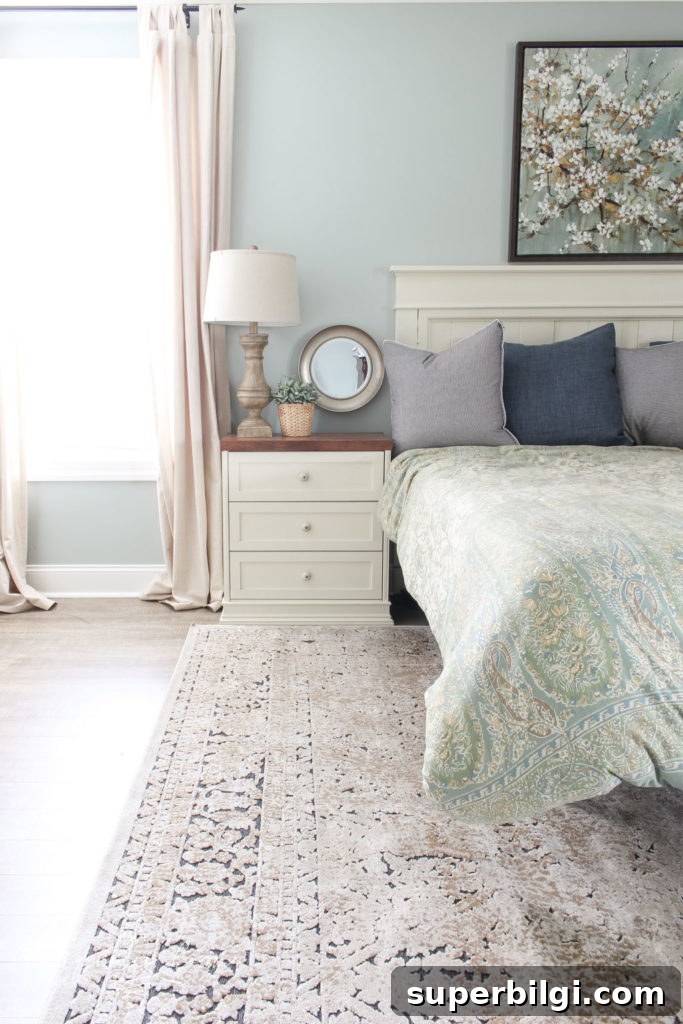
My Bedroom Sources:
- Rug
- Nightstands {DIY tutorial}
- Headboard {DIY tutorial}
- Striped pillows
- Solid pillows (plus pillow inserts)
- Duvet cover (older; similar styles are available)
- Floors
- Lamps
- Art
- Round mirrors
- Lenda curtains from IKEA
Need a Vintage Blue Rug?
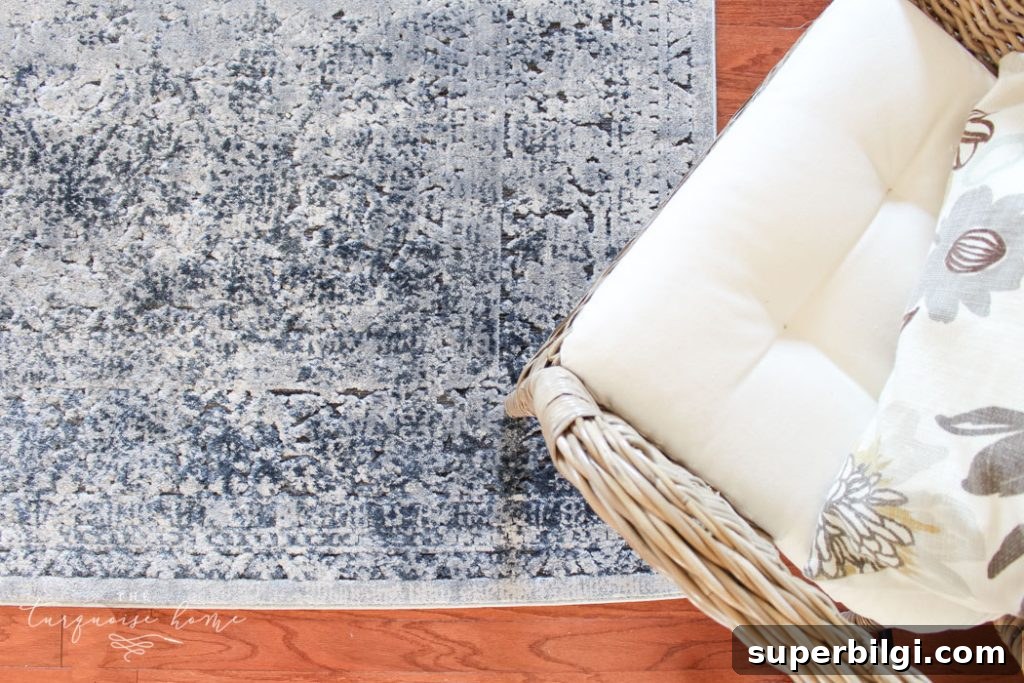
I also own the same rug design in a vintage blue colorway, and it’s a favorite in our living room. If you prefer blue tones, look for distressed or vintage-inspired rugs to get that layered, lived-in look without spending a fortune.
More posts you may enjoy:
- My Honest Ruggable Rug Review
- Best Places to Buy Rugs + Shopping Tips
- What Rug Sizes Should You Use in Your Home?