Do you know how high you should mount a TV? These tips will help you find the right height for a comfortable, enjoyable viewing experience.
Do you remember the old box TVs? They were eyesores for anyone hoping for a chic space, since they always seemed to stick out like a sore thumb!
Then came flat-screen TVs. Sleek, more stylish, and far less obtrusive, they can be mounted on a wall for truly immersive viewing. And now we even have the Frame TV, which displays art when it's not in use.
Suddenly, households could have one space that doubled for entertaining and relaxing while still looking stylish.
However, this also created a challenge, because there weren't really any guidelines on where to place a television, especially when it was mounted on a wall rather than sitting on a console. If you're wondering how high to mount a TV, there are several factors to weigh before you start drilling into your wall.
How high should you mount a TV?
If you've been asking yourself that very question, I've got everything you need to know!
Before you even reach for the drill, it's important to consider key factors such as the room (size, layout, features), the size of your TV, viewing angle, furniture placement, and the height of family members.
Here is my guide to weighing all of these elements to find the ideal height for maximum viewing pleasure.
1. Viewing angle
Mounting your TV too high can cause neck discomfort and be a real pain (in the neck, ha!) to adjust and reposition.
Most home entertainment experts and TV manufacturers recommend mounting a TV at eye level when reclining for the most comfortable viewing experience.
Think about how you and your family usually watch TV. Do you sit? Lie down? Stand up (for example, in a home gym or game room)?
If you mostly watch TV sitting in a chair, you don't want to mount it too high, or it will quickly become uncomfortable. On the other hand, if you usually watch from the couch while lying down, viewing height isn't as important (or you may want it higher).
Pro Tip: Consider TV wall mounts that can swivel and tilt so the screen is comfortable to view from multiple spots and heights around the room!
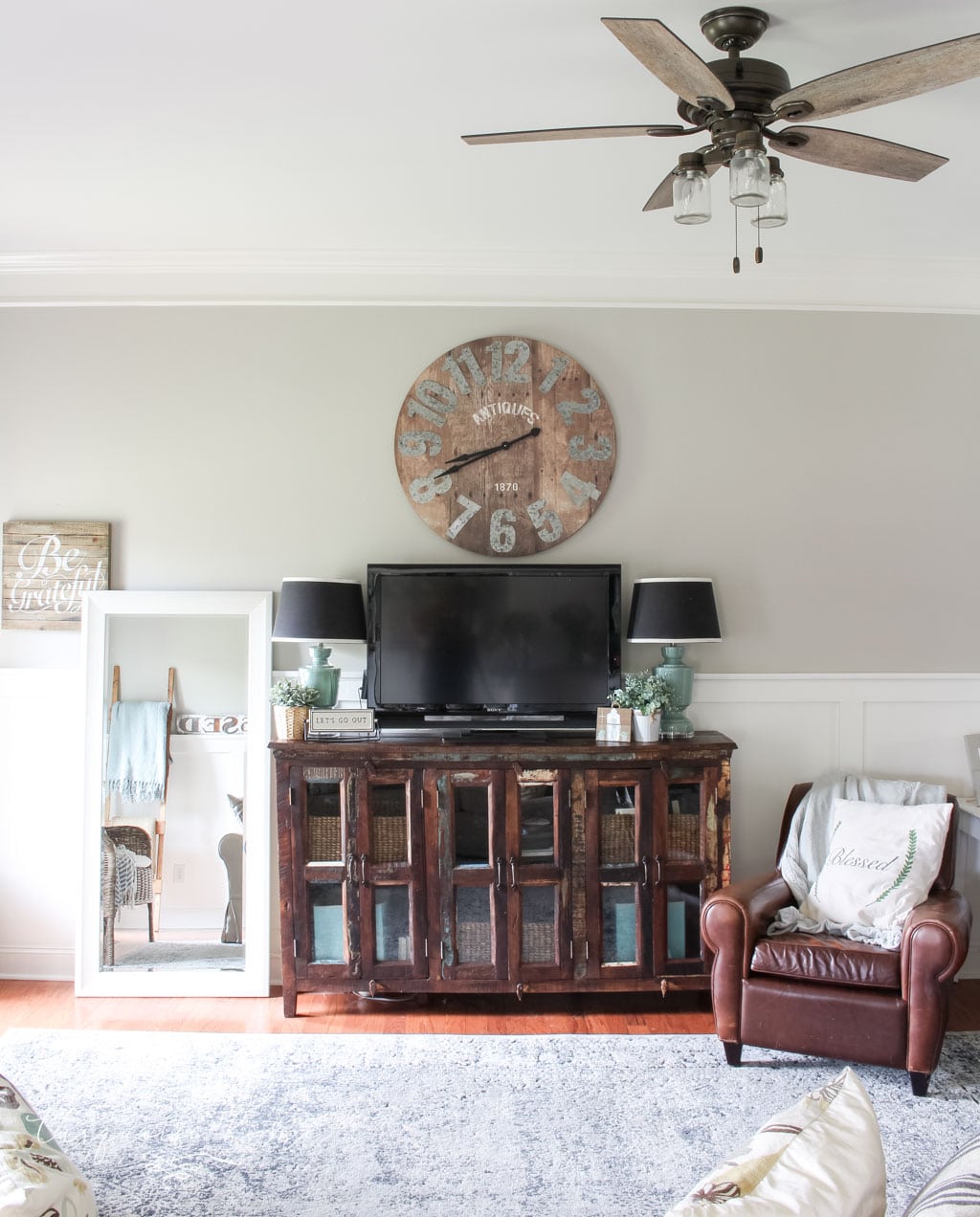
2. Size of the TV
TVs range in size from about 32" to 65" and even larger. If you search online for how high to mount a TV, you'll find specific hanging heights based on screen size. Those measurements may work for some people, but they don't work for everyone or every home.
People watch TV in different ways, so I prefer to keep things simple and flexible when deciding how high to mount a TV.
Manufacturers suggest using the center of the screen as an easy reference point for setting an ideal hanging height. Since you want the TV at eye level, finding the ideal viewing height simply comes down to placing the center of the screen at a height that's comfortable for each viewer.
What if each viewer is a different height? Don't worry, that's common in most families, and the easy solution is to average the heights of the usual viewing positions and use that number.
Then your ideal mounting height places the center of the TV at the average eye level, measured from the floor.
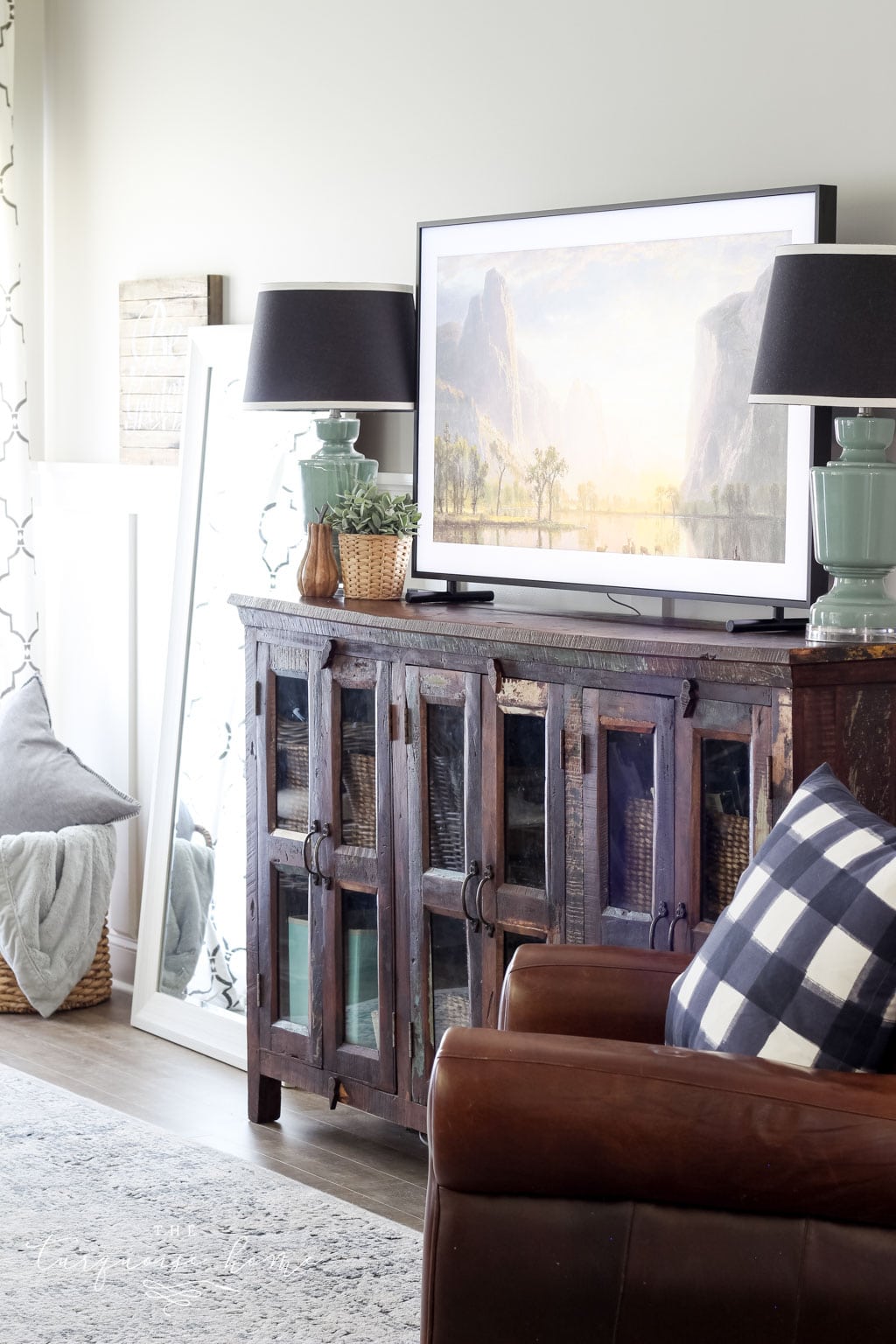
3. The room
Although a flat-screen TV can be a great addition to any room, it's important to think through several things about the space before you decide how high to mount it.
For example, facing the TV toward a large window with western light can create glare so strong it's nearly impossible to see the screen at certain times of day.
Think about these things:
- Size of your room
- The room's layout
- Visual obstructions
- Features on the wall where you want to mount the TV
- Distance from the TV to the viewing area
- Which direction the TV will face (for example, potential glare on the screen)
- Location of the electrical outlets
4. Viewing distance
Believe it or not, how far you sit from the screen plays a big part in where to mount your TV. Sitting too close can cause eyestrain and even headaches. On the other hand, a viewing distance that's too far can make the screen hard to see clearly.
There is an ideal viewing distance: some experts suggest a simple formula of dividing your TV's size in inches (for example, 55) by 0.55 to get your ideal viewing distance in inches. In this example, the answer would be 100 inches.
Or, you can use this handy TV Mounting Height Calculator to skip the math and take the guesswork out of deciding how high to mount a TV. It uses a slightly different distance formula but also factors in other considerations, such as viewing height.
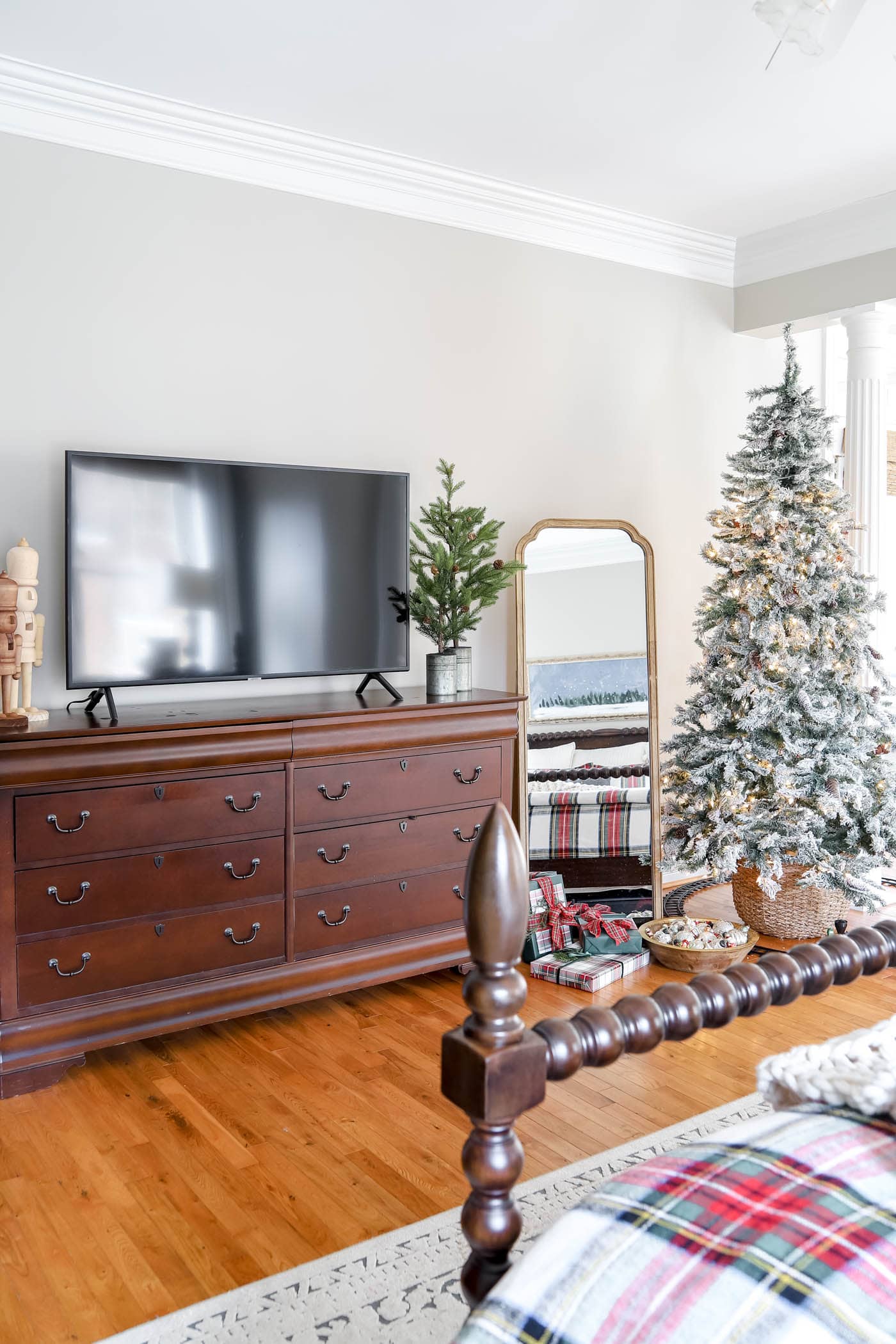
5. Layout
Finally, you'll need to work with the space you have. For example, you may not be able to mount your TV at the ideal height if there's a structural element (fireplace mantel, built-ins, etc.) or a piece of furniture in the way.
If you run into issues like that, you can adjust the height or look at the room differently and consider mounting the TV on another wall.
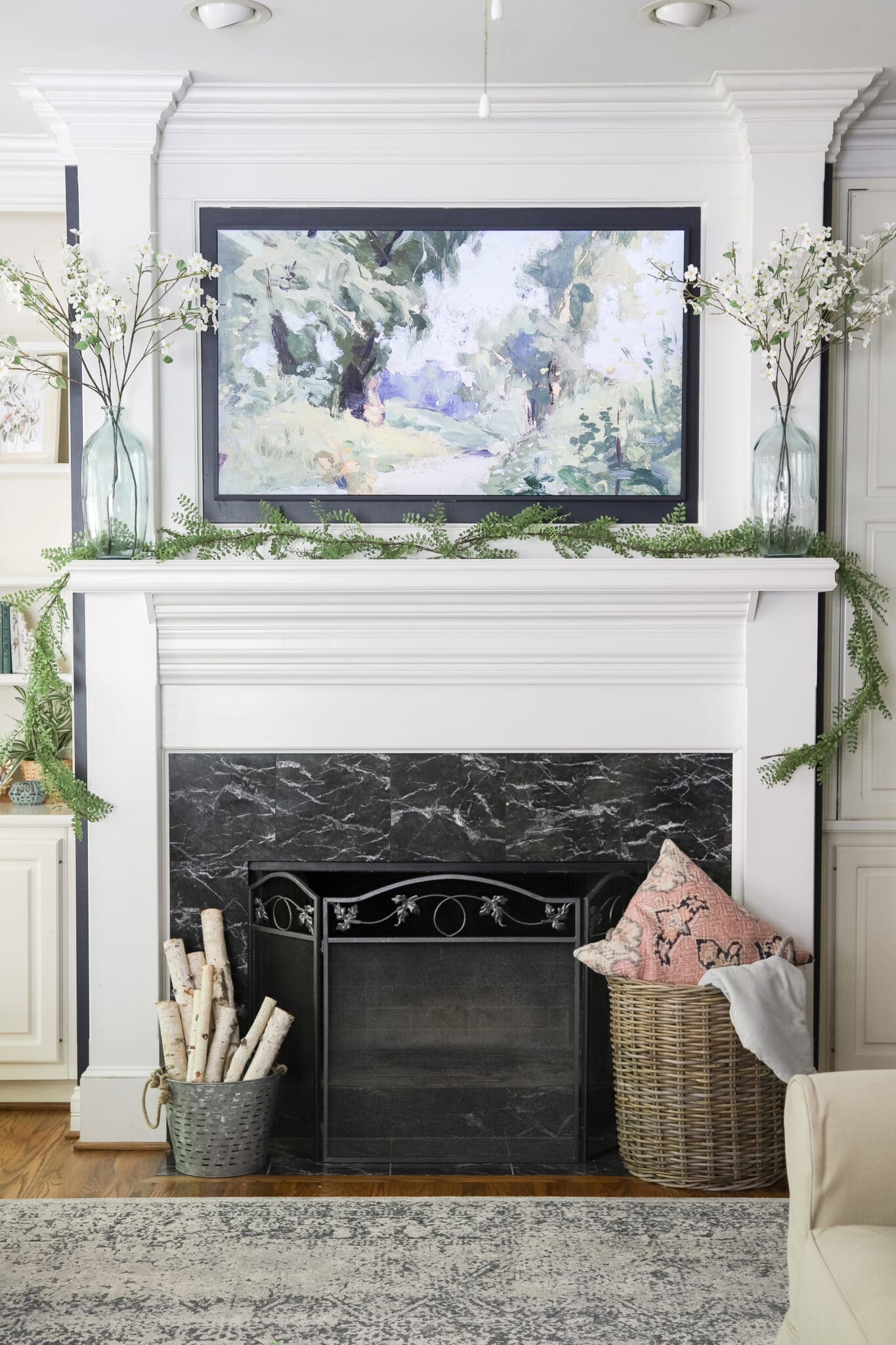
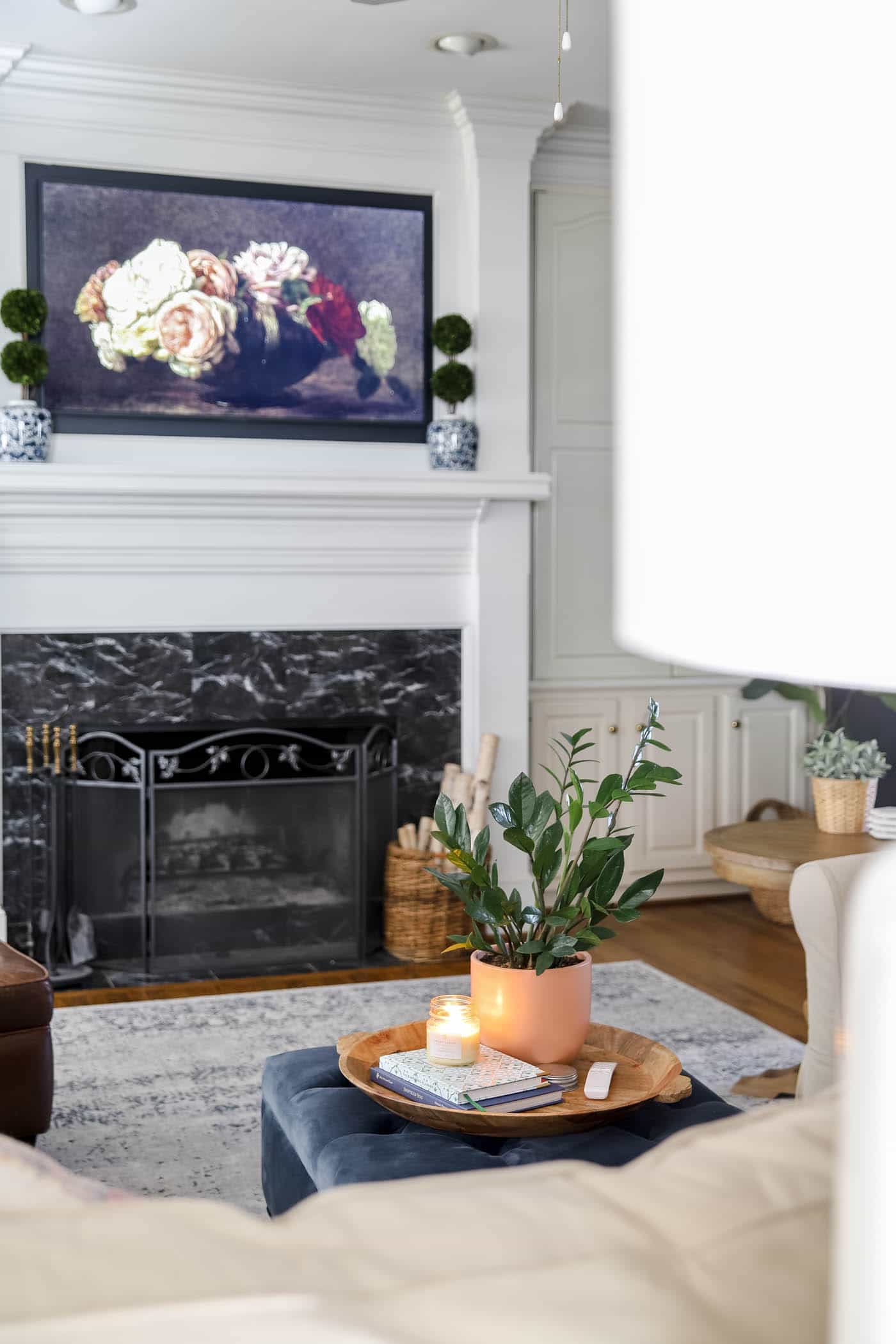
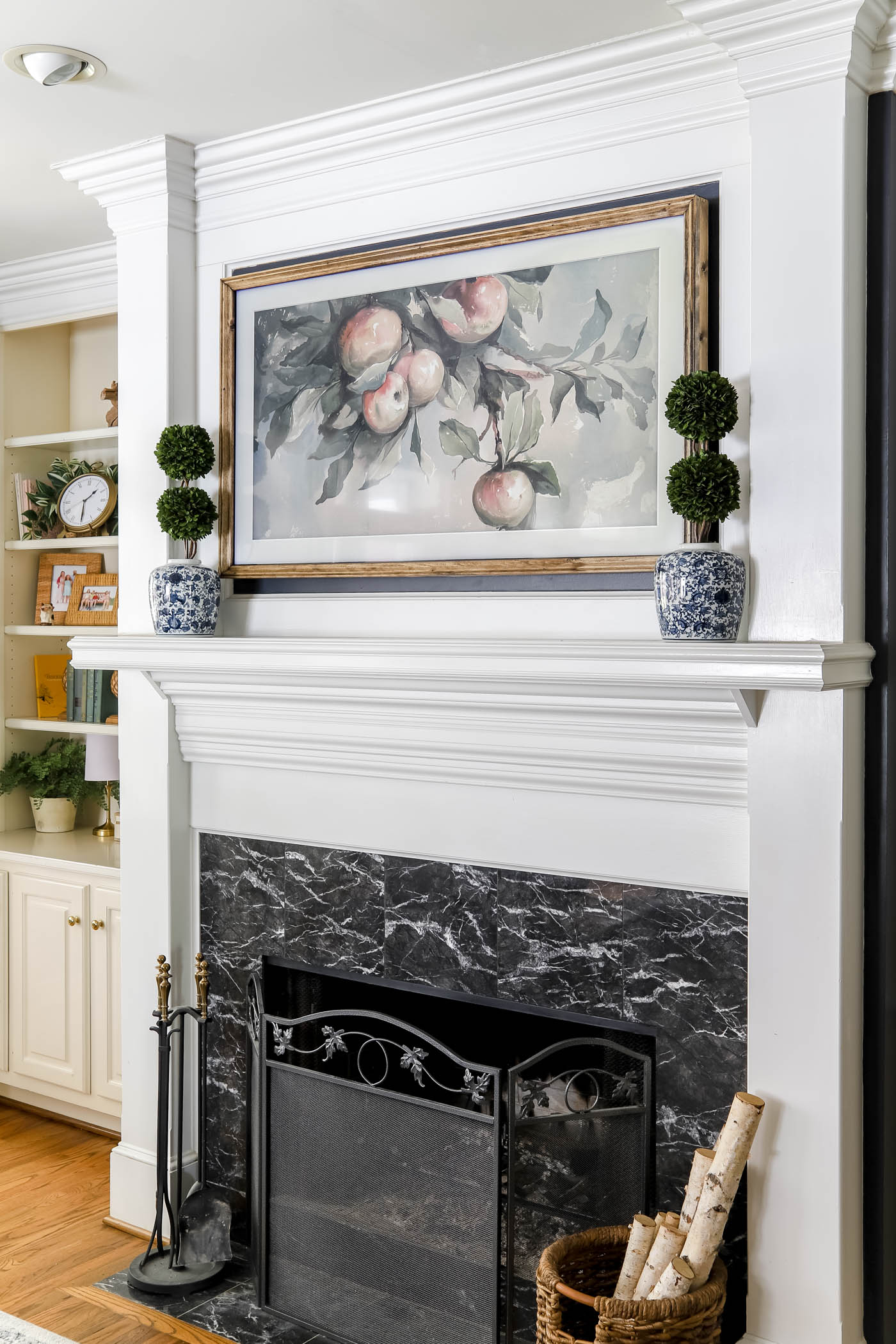
Our living room had only one place to display our Frame TV, above the fireplace mantel, between the two built-ins. This limited the TV height dramatically. But because the sofa sits far enough back from the TV, it's no strain to watch a movie or favorite show.

How high to mount a TV: Special considerations
Since everyone watches TV differently, there are a few special cases to cover.
People who watch TV lying down
Whether you prefer to recline on the couch or the floor, or watch TV in bed, you'll want to mount your TV a little higher to avoid neck strain and create a comfortable viewing experience.
The easiest way to find the best mounting height in this situation is to have someone lie down on the bed while another person marks the preferred line of sight on the wall with a pencil. That spot is where you'll want the center of the TV to sit when you hang it.
Also, depending on the size of the bedroom and how you like to lie down, you may want to position the TV somewhere other than directly at the foot of the bed (for example, to the side). In a small room, this may help you reach a better viewing distance.
Areas where viewers watch standing up
In rooms where you're unlikely to sit and watch TV (for example, home gyms and gaming rooms), use a similar approach to find an ideal viewing height for standing. If household members differ in height (excluding young children), you may want to use the average of their heights.
Mounting a TV above a mantle or fireplace
I resisted having a TV above our mantle for many years, but I finally gave in and have been glad I did. The new Frame TVs display a framed painting when switched off, so the screen looks like art on your wall instead of a TV.
When you hang a TV above a mantle, I recommend centering it over the mantle (both vertically and horizontally). However, if you need to adjust the height so it's comfortable for binge-watching your favorite show, you can.
Note: Leave about 4-6 inches of clearance between the bottom of the TV and the mantle for decorating and to avoid creating a visual obstacle.
If you want to mount your TV above a fireplace, first check that there are proper materials, insulation and barriers around the fireplace to prevent heat damage to your device.
I also recommend mounting a TV above a fireplace so the bottom of the unit sits a bit higher above the mantle (about 6-12 inches) to reduce the risk of heat damage.
We also customized the look of our TV by hiding the cord behind the wall and running it into the cabinet beside it. This makes the setup look seamless, like an actual piece of art!
Final thoughts on how high to mount a TV
Although eye-level viewing is the gold standard for deciding how high to mount a TV, several other factors can shape your final installation spot, including the room's layout and features and whether you plan to watch mostly lying down, standing or sitting.
The biggest takeaway is to think carefully about the viewing experience you want before you start drilling holes in your wall!
More Living Room Posts You Will Love: