Cabinet hardware adds the finishing touch to your kitchen’s style, but it also affects how the space functions. The placement of knobs, handles, pulls and latches can make everyday use easier or more awkward. Below are clear, practical guidelines and design tips to help you decide where to place hardware on kitchen cabinets and drawers.
Choosing where to place cabinet hardware blends function and style. The right hardware design completes your kitchen decor, while correct placement ensures ease of use. Before we dive into placement, it helps to recognize the common hardware types so you can match placement to the piece you choose.
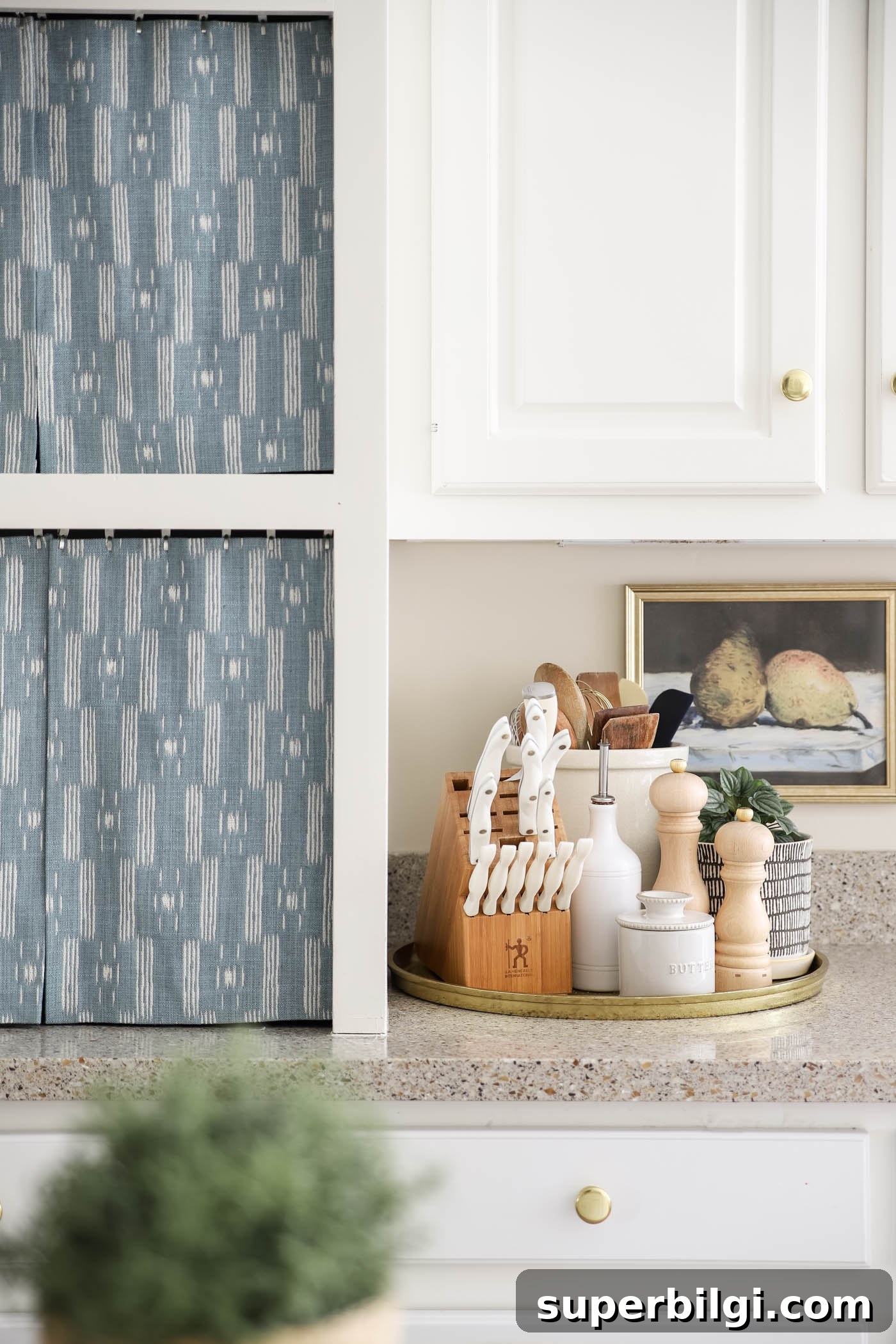
Is there a single correct way to place knobs and pulls? Not exactly. There are recommended standard approaches that balance aesthetics and ergonomics. For example, hardware mounted too high on upper cabinets becomes hard to reach. Use the suggestions below as practical guidelines and adapt them to your own style and cabinet design.
Cabinet knobs and pulls options
Cabinet hardware comes in many styles, shapes and finishes. The style you choose influences both the look and the ideal placement. Here’s a quick overview of common options and their placement considerations.
Knobs
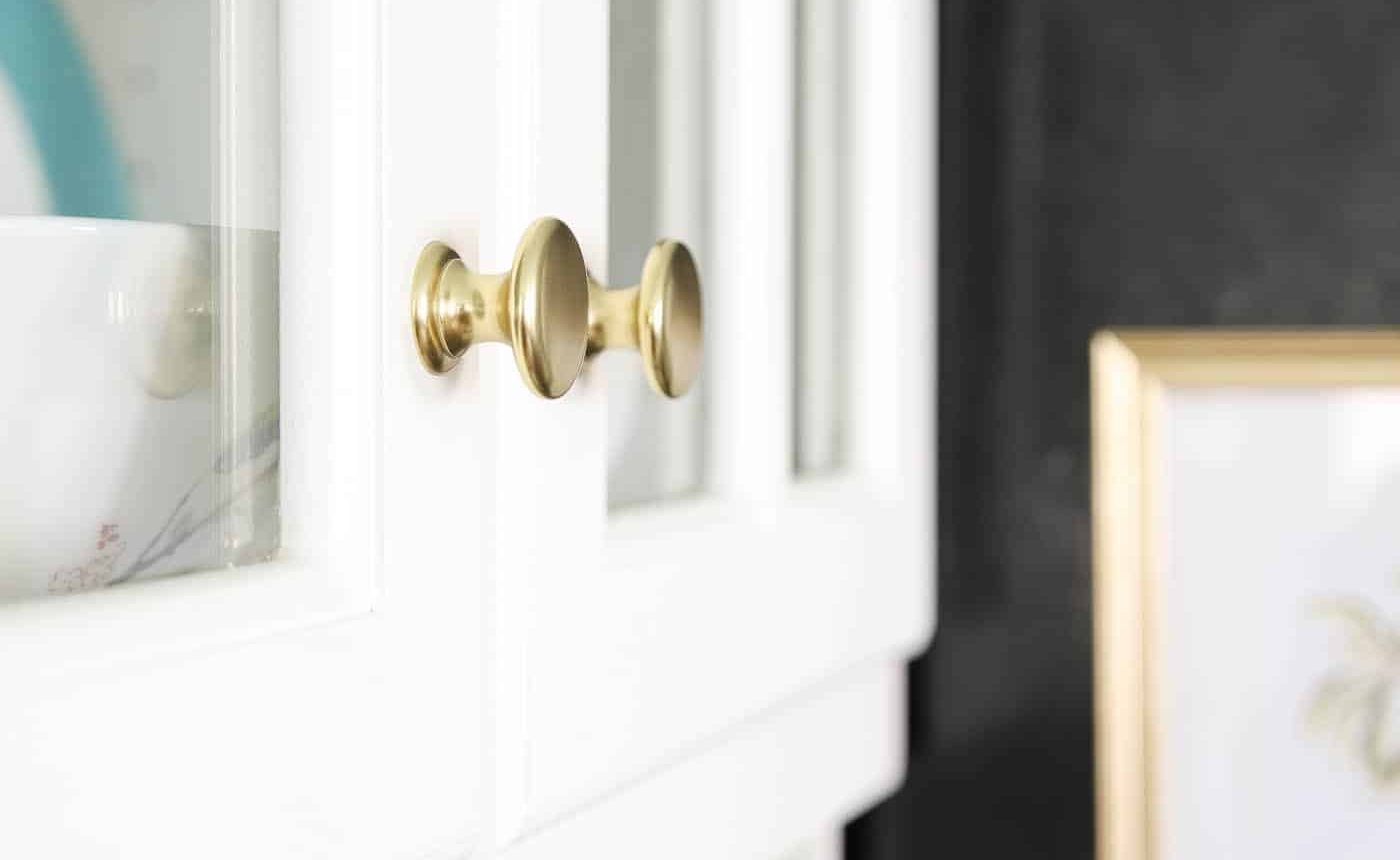
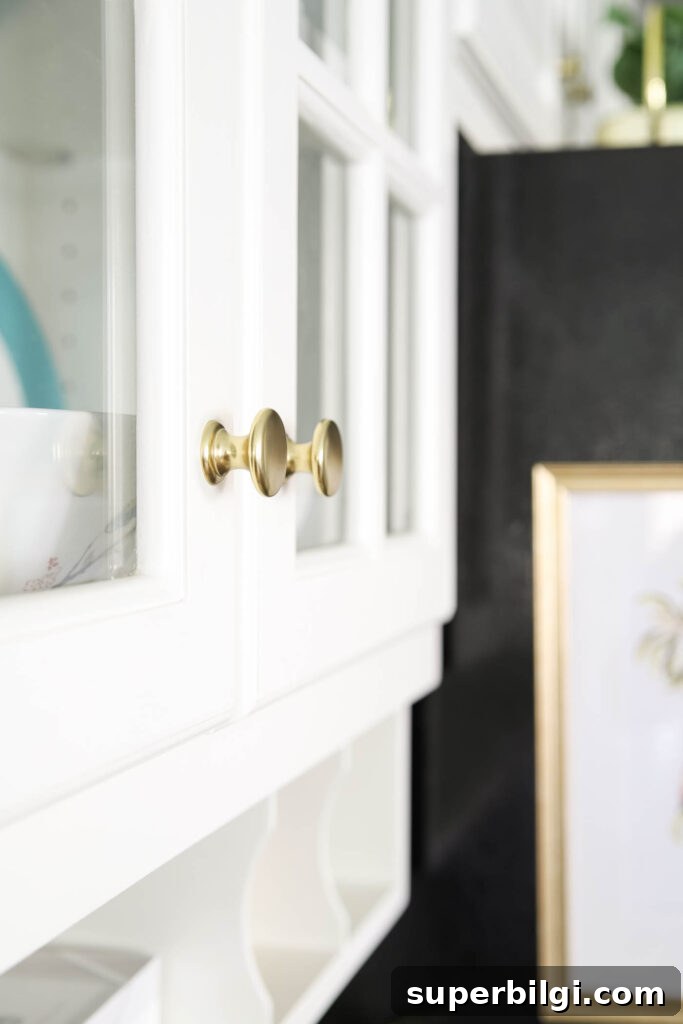
Knobs are single-point attachments that require only one hole, which makes them economical and simple to install. Historically round and wooden, modern knobs are available in countless shapes—square, cylindrical, geometric, glass, stone and more—so you can achieve either classic or distinctive looks while keeping installation simple.
Pulls
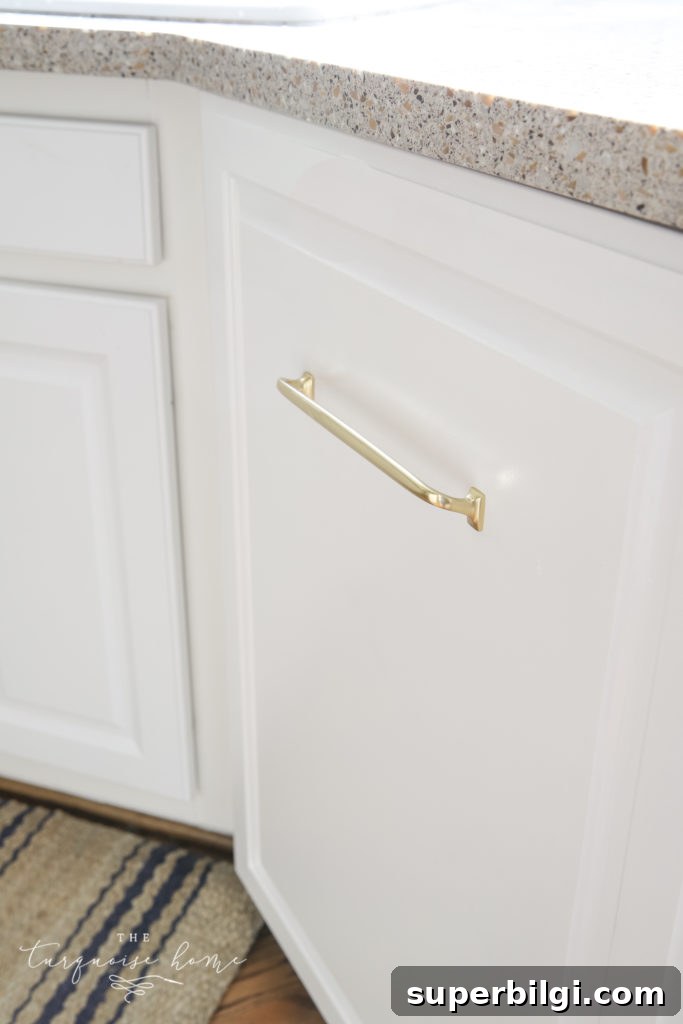
Pulls are short bars that attach with two screws. They offer a variety of looks from traditional to contemporary. Because they span a distance, you should choose a pull size proportional to the cabinet or drawer width—sometimes different sizes for doors and drawers work best.
Cup pulls
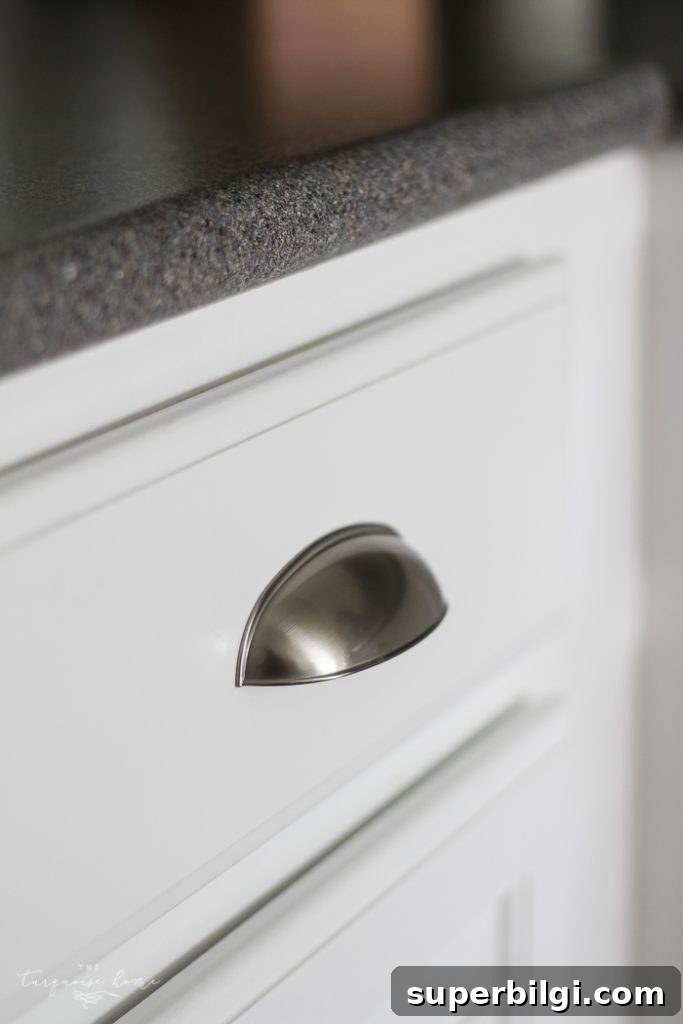
Cup pulls resemble an upside-down cup you slide your fingers under. They’re comfortable, timeless and especially well suited for base cabinet drawers because they’re designed to be grasped from the bottom.
Cabinet latch
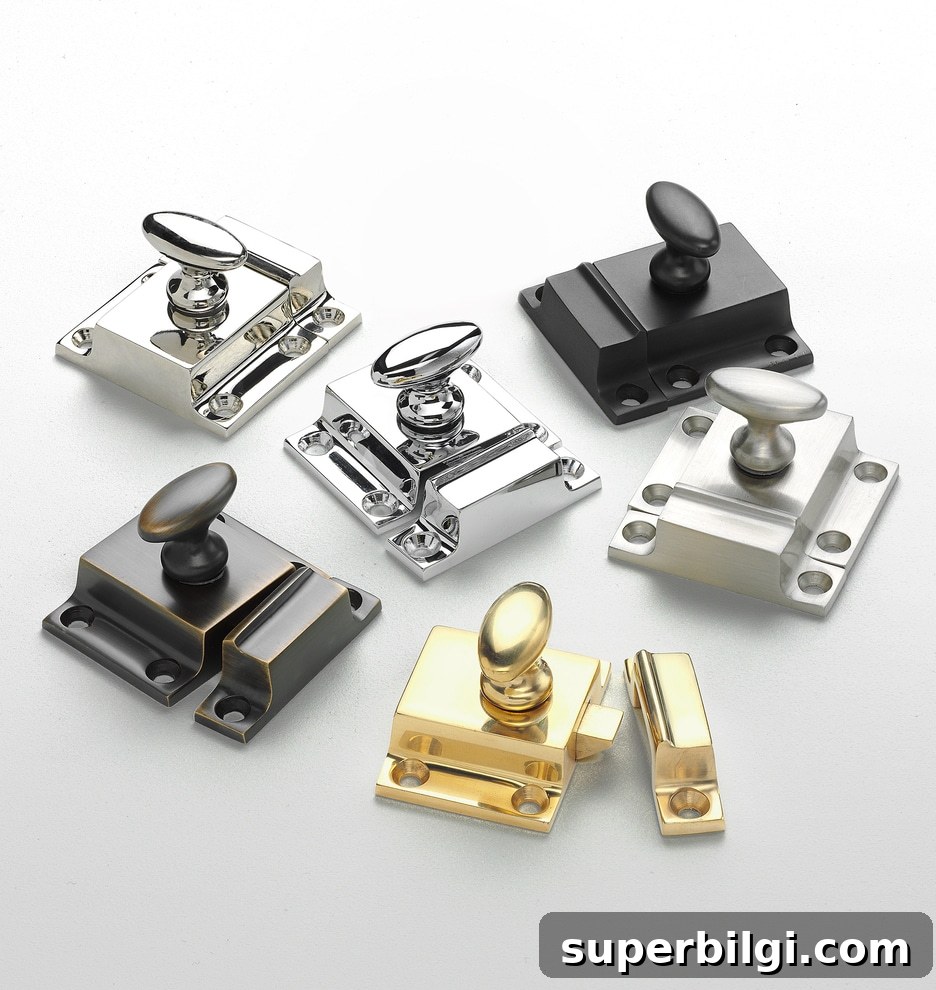
Cabinet latches bring a vintage feel and typically include two or three pieces that secure the door. They work best with inset doors or where two overlay doors meet closely. Generally, latches are best used on storage or display cabinets rather than everyday-use doors.
Finger pulls or edge pulls
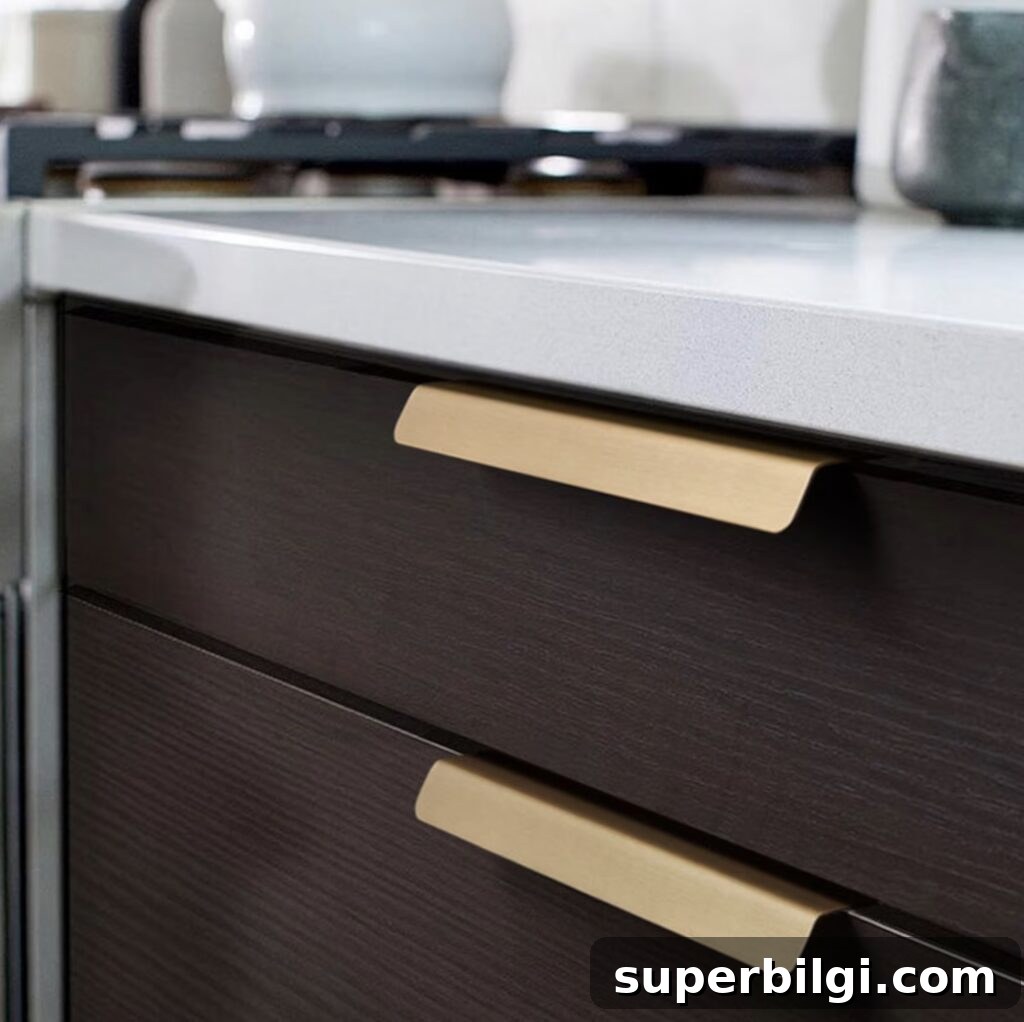
Finger or edge pulls (also called tab pulls) mount along the top edge of a door or drawer and create a subtle lip to grip. They’re very sleek and modern, minimizing visible hardware—an ideal choice in contemporary kitchens.
Knobs vs. pulls
Traditionally doors get knobs and drawers get pulls, but mixing and matching is common. Knobs are classic and reduce visual linearity, while pulls create cleaner, more streamlined lines. Choose what feels and looks best in your kitchen.
Cabinet construction terminology
Understanding basic cabinet terms makes placement easier:
- Rails – Horizontal pieces at the top, bottom and sometimes middle of a door.
- Stiles – Vertical pieces on the sides of a door (remember: stiles stand).
- Panels – The center portion of a door between rails and stiles.
Note: Some modern doors are flat and lack rails, stiles or panels; placement will differ for those surfaces.
Cabinet hardware placement for doors
These placement recommendations balance function and appearance. Adjust them as needed for your cabinet style and personal preference.
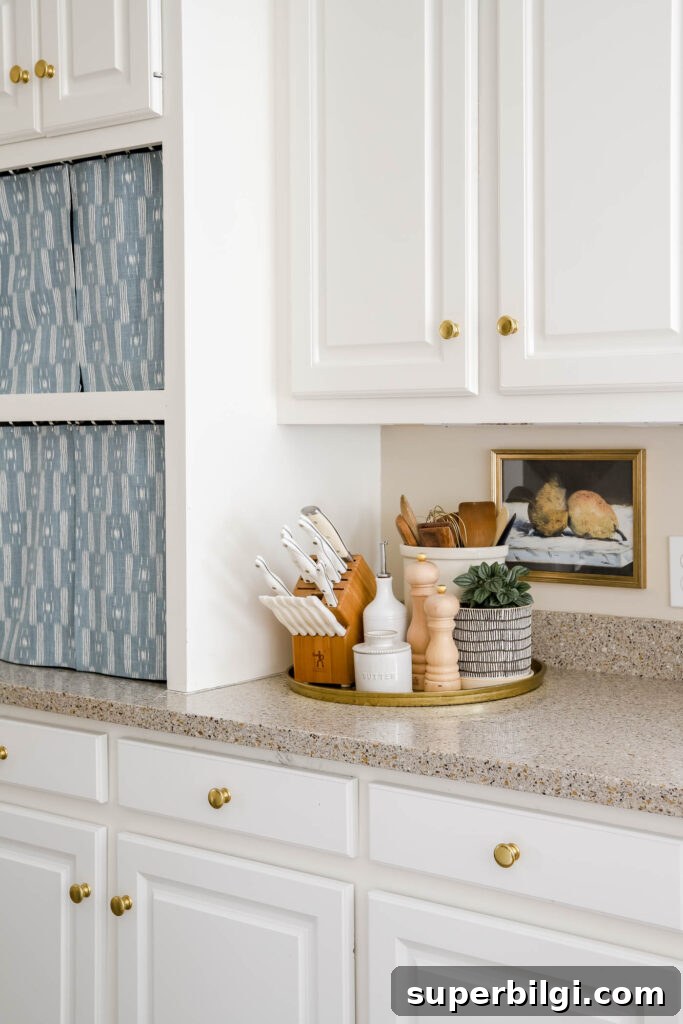
Cabinet knob placement
Place knobs on the stile opposite the hinge, aligned with the inside rail edge. A common measurement is about 2.5″–3″ from the corner of the door. For upper cabinets, mount knobs toward the bottom corner; for base cabinets, place them toward the top corner for easier reach.
Cabinet handle placement
When using pulls on doors, orient them vertically and use the same 2.5″–3″ reference point for the end near the corner. Center the pull horizontally on the stile and space the two screws according to the pull length.
Cabinet latch placement
Latches are usually mounted on the stiles or, in some cases, on a panel. Position the catch roughly 2.5″–3″ up from the bottom of an upper door or down from the top of a lower door so operation is consistent with other hardware.
Cabinet hardware placement for drawers
Drawers don’t have hinges, so placement follows different, simpler rules.
Drawer knob positioning
For drawers under 24″ wide, center a single knob both horizontally and vertically on the drawer front. For drawers wider than 24″, install two knobs for balance: measure the width, divide it into thirds, and place knobs at the one-third and two-thirds marks. Shaker-style drawers sometimes use a top-rail placement for a modern look.
Drawer pulls positioning
Install pulls horizontally and center them on the drawer face or top rail. For very wide drawers, use two pulls positioned roughly in the left and right thirds of the drawer to distribute force and create visual balance.
Drawer cup pulls positioning
Cup pulls are most comfortable when placed either centered on the drawer panel or in the top third of the drawer front, which reduces the need to reach down.
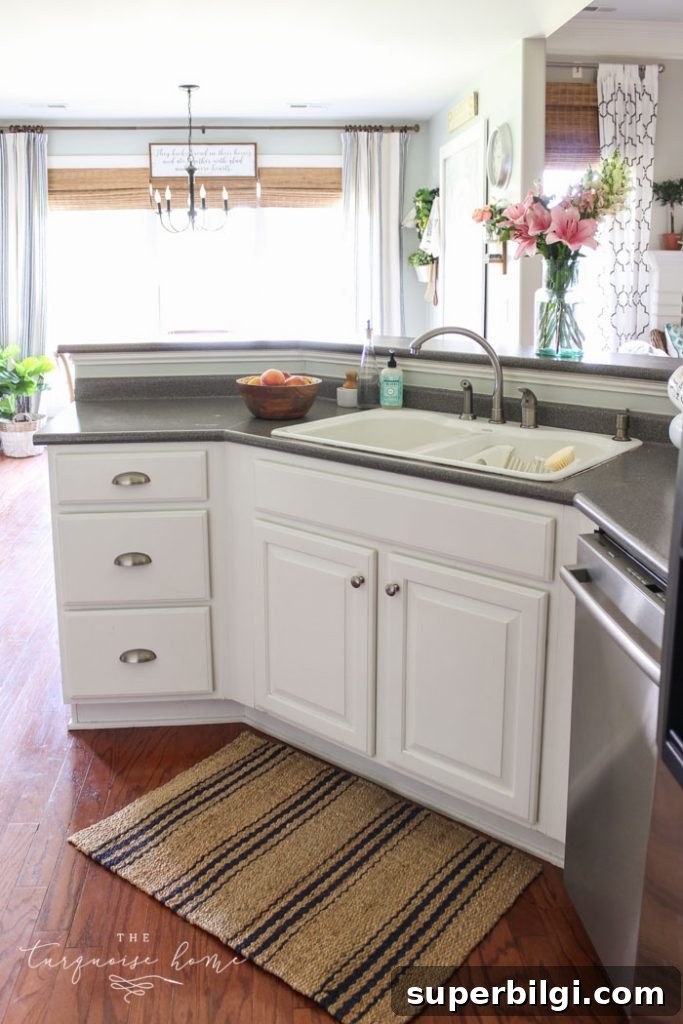
In the photo above, cup pulls centered on the drawer fronts provide both a classic look and comfortable function.
Hardware for appliances
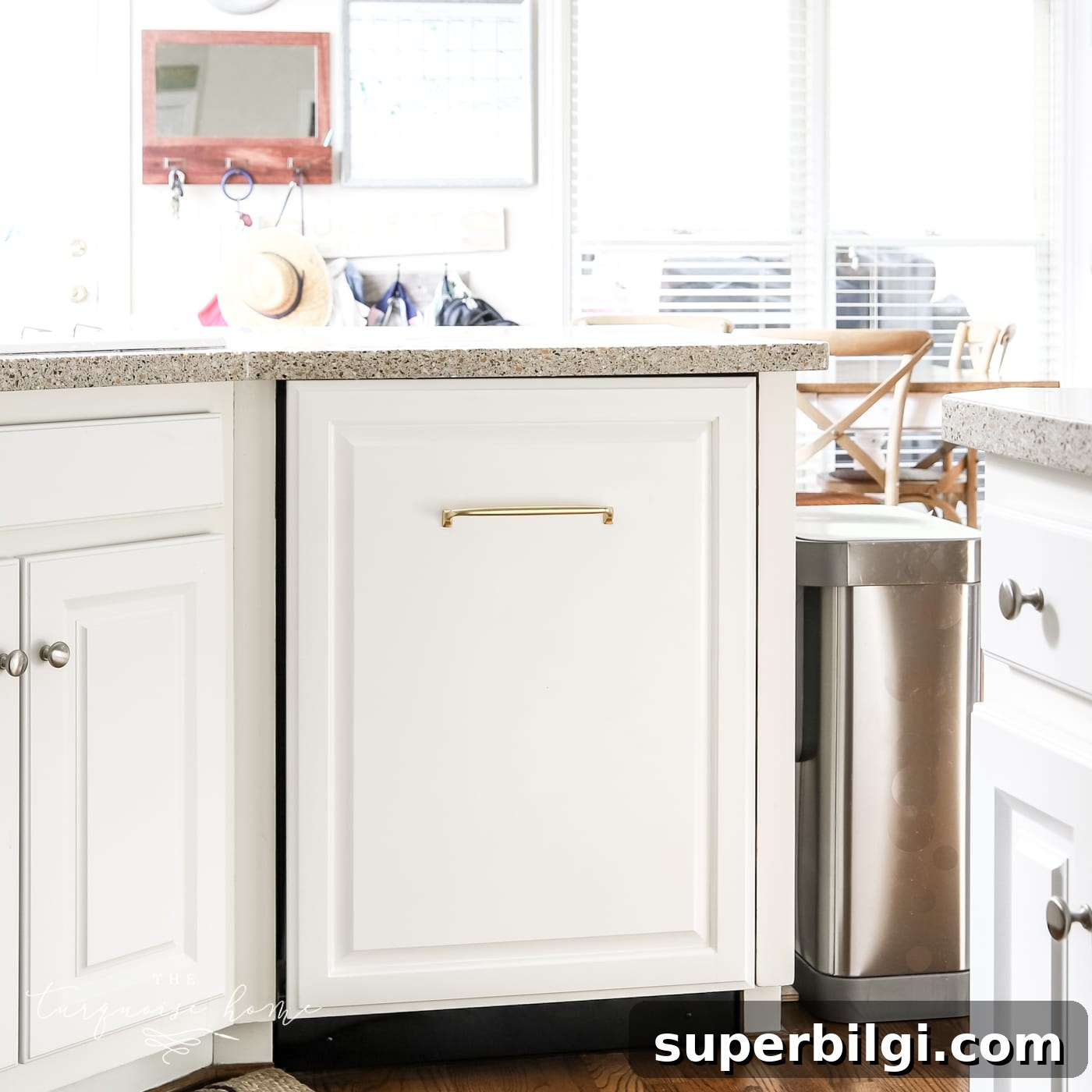
If you use panel-ready appliances, you can achieve a seamless look by matching appliance hardware to your cabinetry. Regular cabinet knobs and pulls are not engineered to support an appliance door’s weight, so choose appliance-specific hardware for dishwashers, refrigerators or microwaves that receive a cabinet panel. Matching finishes across panels and cabinets creates a cohesive kitchen design.
Tips to keep in mind
A few practical tips will make installation easier and keep your kitchen functional and stylish:
- If you’re replacing hardware, try to match the new knobs and pulls to the existing hole spacing so you can reuse holes and avoid extra work.
- Ensure doors and drawers are level before drilling.
- When installing hardware on multiple doors or drawers, use a pre-measured drilling template to keep spacing consistent.
- Prioritize comfort and function: hardware should feel good in your hand. A beautiful piece that’s awkward to use will detract from everyday life.
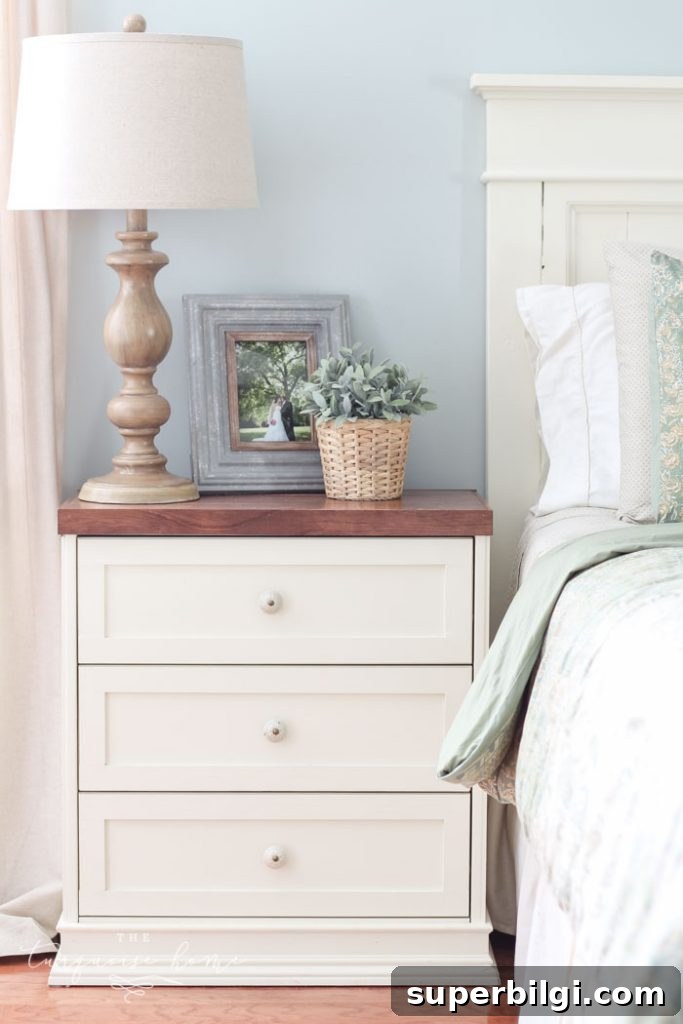
If you were unsure where to place knobs and handles, these guidelines should clarify the basics. Use them as a starting point, then adapt to your cabinet style and personal preferences for a kitchen that looks polished and functions effortlessly.
More posts you may enjoy:
- How to Decorate Kitchen Counters {Decorating 101}
- How To Display Kitchen Cabinet Wreaths
- How to Decorate the Kitchen for Christmas (3-Step Formula)
- 7 Ways to Refresh a Kitchen
- Gorgeous Kitchen Chandeliers You’ll Love