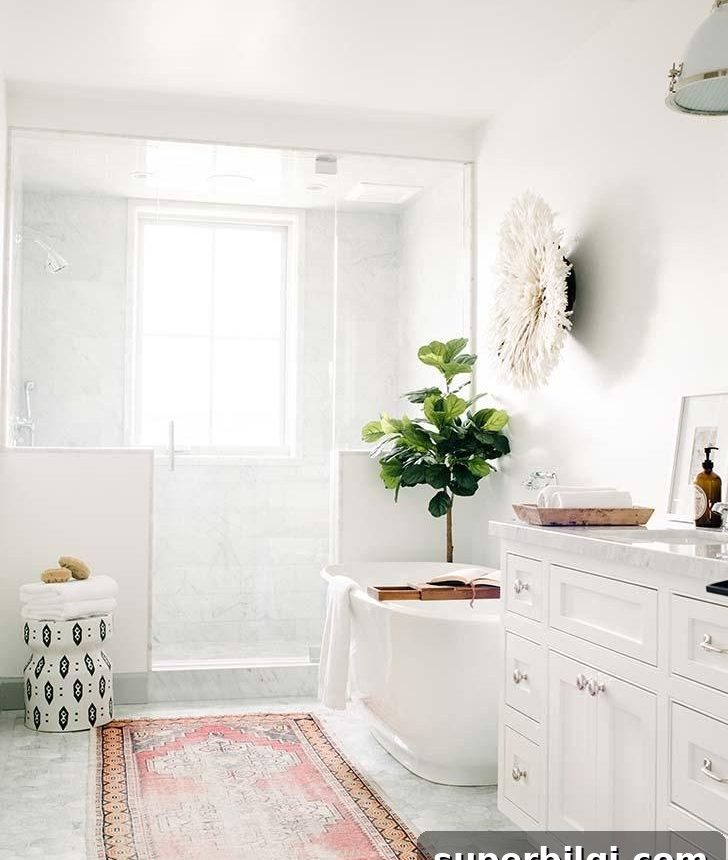
Adding an area rug instantly makes a room feel warmer, more inviting, and visually complete. Use the guidance below to choose the right size, shape, and placement so your next rug enhances your home’s decor.
When you decorate a home, certain elements often come first—furniture, paint, and wall art. Once those are in place, finishing touches like throw pillows and area rugs bring the room together. A well-chosen rug not only adds texture and color but also anchors the layout and defines distinct zones within a space.
Like carefully styled throw pillows, an area rug helps a room feel cohesive and intentional. The right size, placement, and pattern pull furniture and accessories into a unified look—floor to ceiling.
Your Guide to Rug Sizes by Room
Rug shopping can be confusing because sizes and shapes vary widely. Below are practical recommendations for common rooms—entryways, living rooms, dining rooms, kitchens, bathrooms, and bedrooms—plus tips for furniture placement that will help you choose wisely and create a polished result.
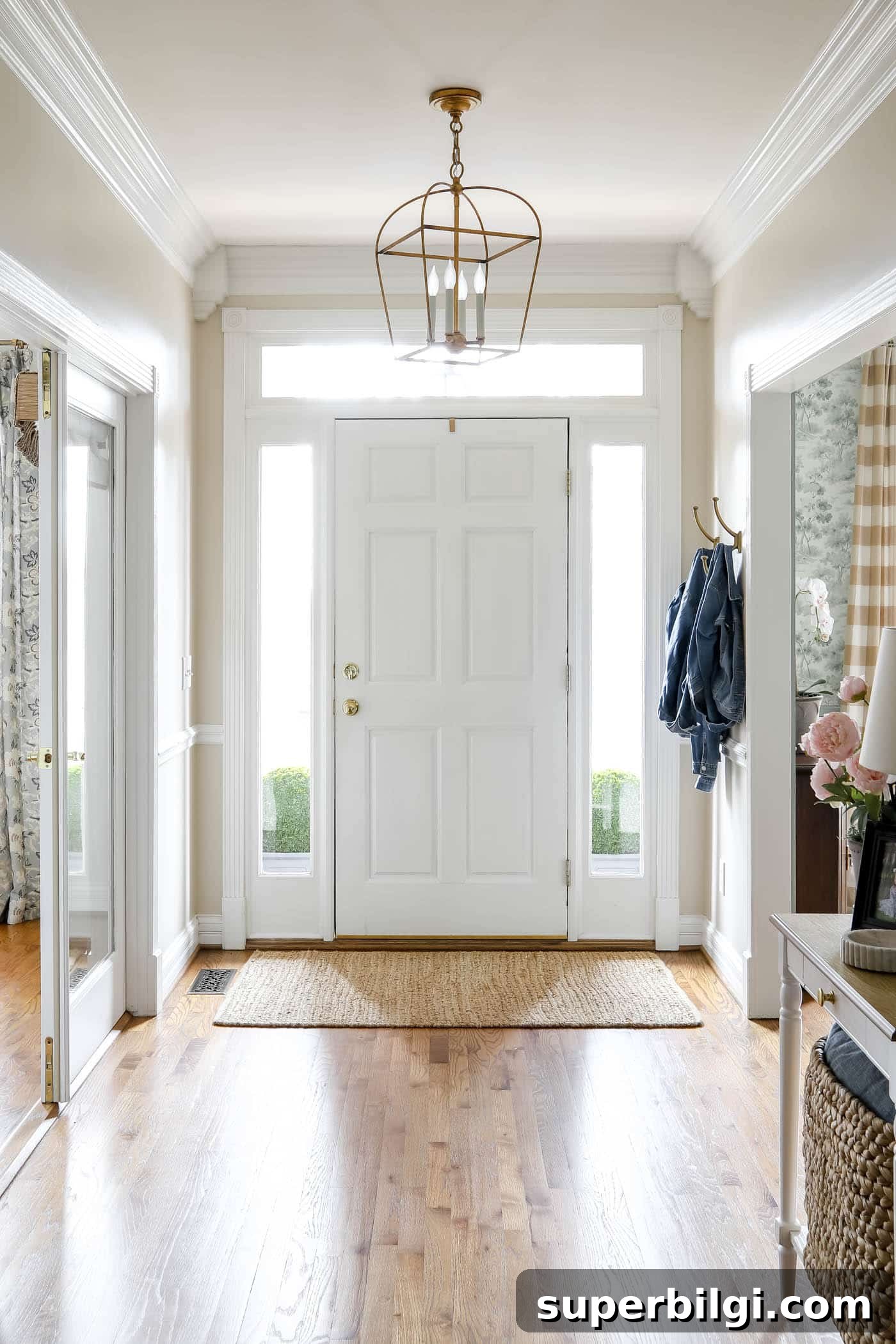
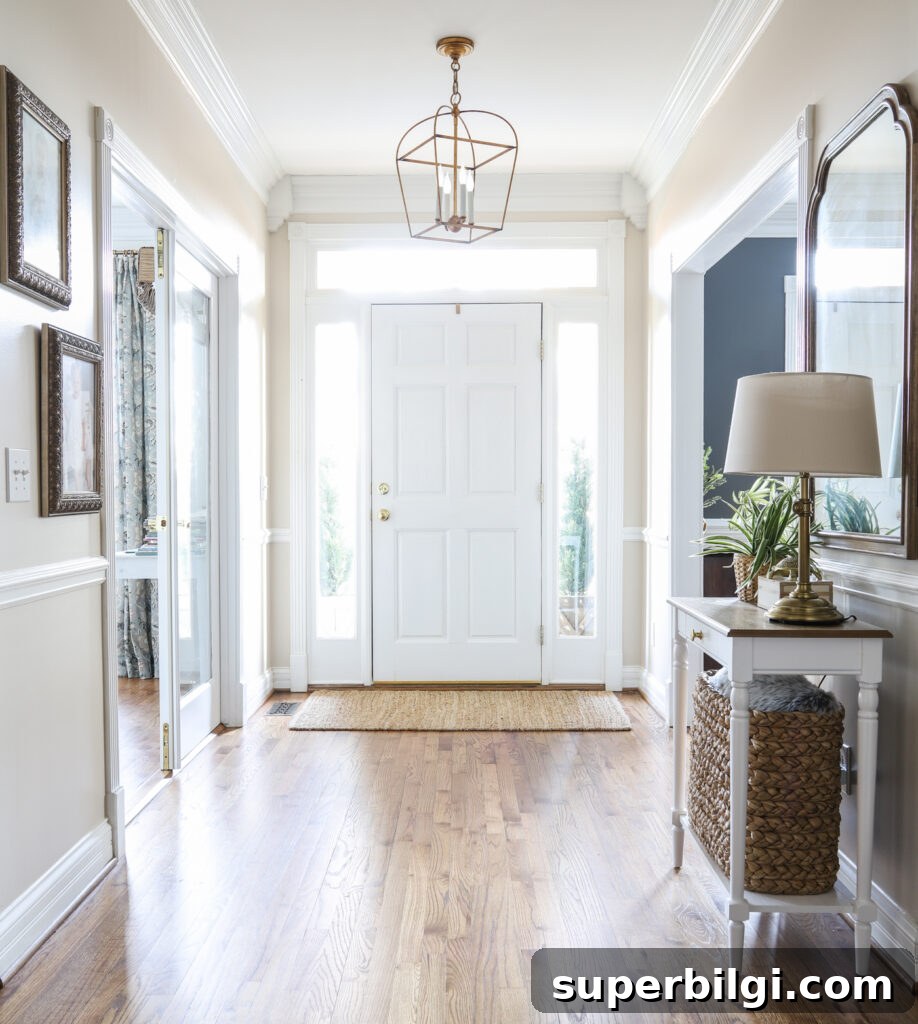
Entryways and Hallways
Entryways set the tone for your home and protect flooring from daily wear. Choose a runner or shaped rug that fits the proportions of the space.
Size: Sizes vary widely, so measure your entry or hall and select a runner or rug that complements the area. Runners are ideal for long, narrow hallways.
Placement: Center the rug in the entry or hallway. In front of a door, align the rug so it greets visitors and looks balanced within the foyer.
Furniture: Keep hallways and narrow entries free of furniture on the rug—these spaces should remain clear and easy to pass through.
Living Room
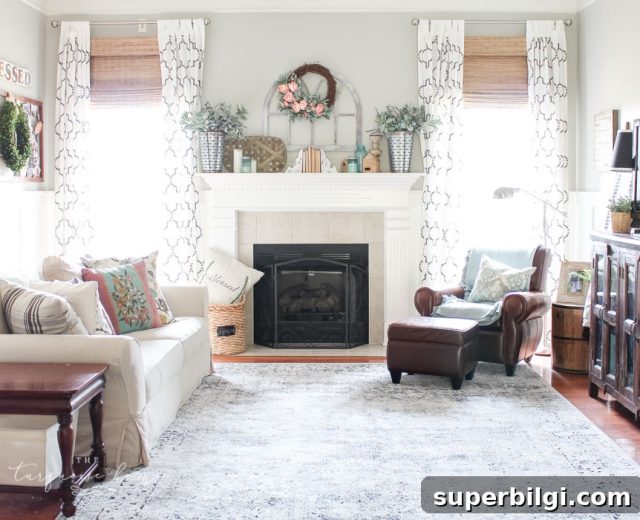
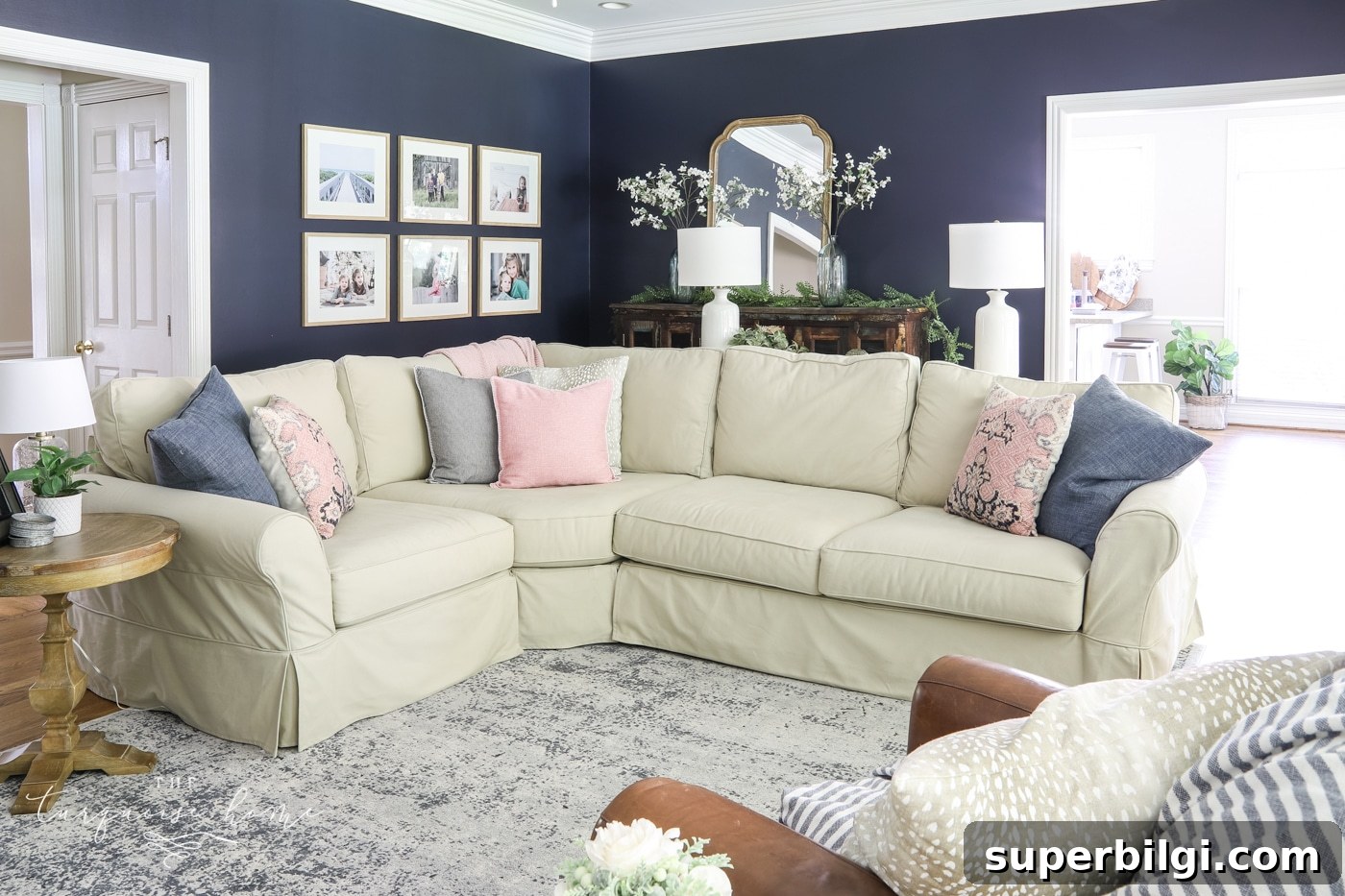
The living room benefits most from a rug that defines the seating area and ties together furniture, lighting, and accents.
Size: Aim for a rug large enough that at least the front two legs of sofas and chairs rest on it. If you prefer a more intimate look, choose a rug that fits under the coffee table and leaves some floor exposed around the perimeter.
Placement: Position the rug so the room feels connected and intentional, but avoid covering the entire floor like wall-to-wall carpeting. Leave 12–18 inches of bare floor between the rug edge and the walls for balance.
Furniture: Common layouts include:
- All furniture legs on the rug: creates a cozy, unified seating area and requires the largest rug.
- Front legs on the rug: works well when furniture backs up to a wall or in open-concept spaces to define a seating zone.
- Rug under coffee table only: in small rooms this approach makes the space feel larger; size the rug according to the entire seating footprint.
Dining Room
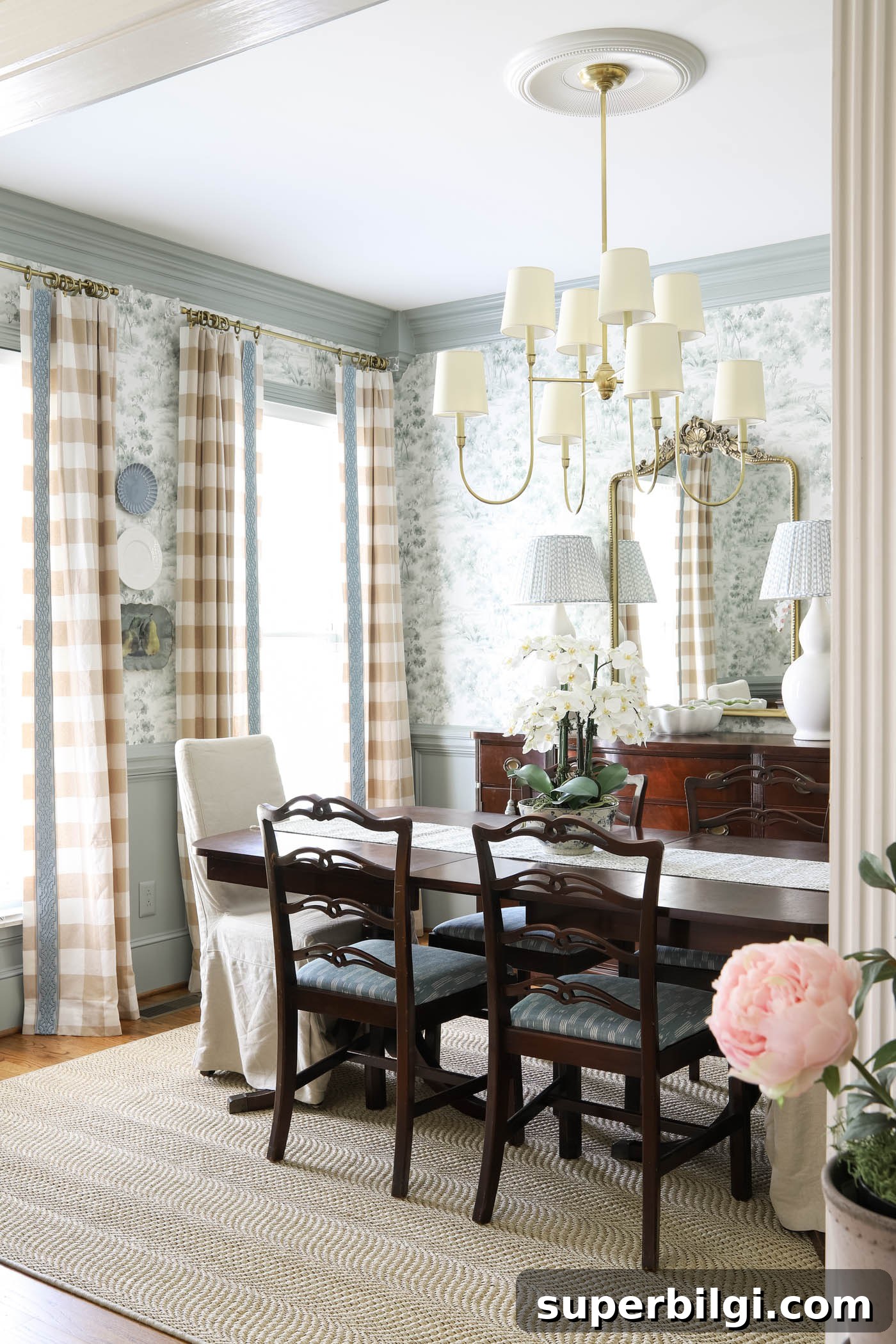
Pick a rug that accommodates both the table and the chairs when they’re pulled out to sit down. This prevents chair legs from catching on the rug and keeps the dining space comfortable and safe.
Size: Choose a rug that extends 24–36 inches beyond the table on all sides. Account for any leaf extensions or extra chairs so movement around the table remains effortless.
Placement: Center the rug beneath the dining table, keeping several inches of bare floor between the rug edge and the walls for visual breathing room.
Furniture: Keep all table and chair legs on the rug so chairs sit sturdily on an even surface.
Kitchen
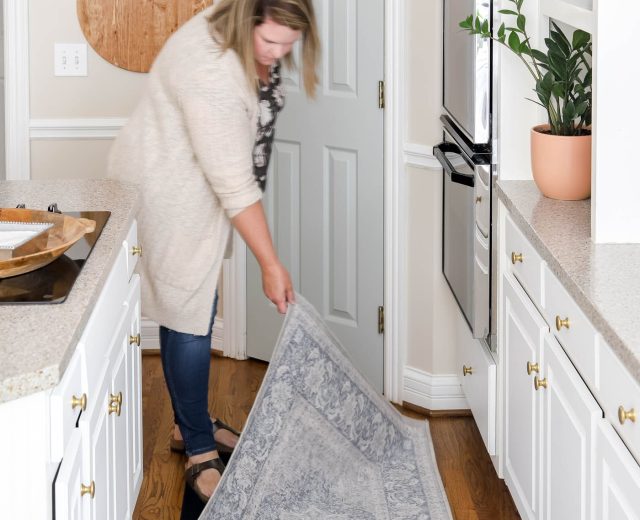
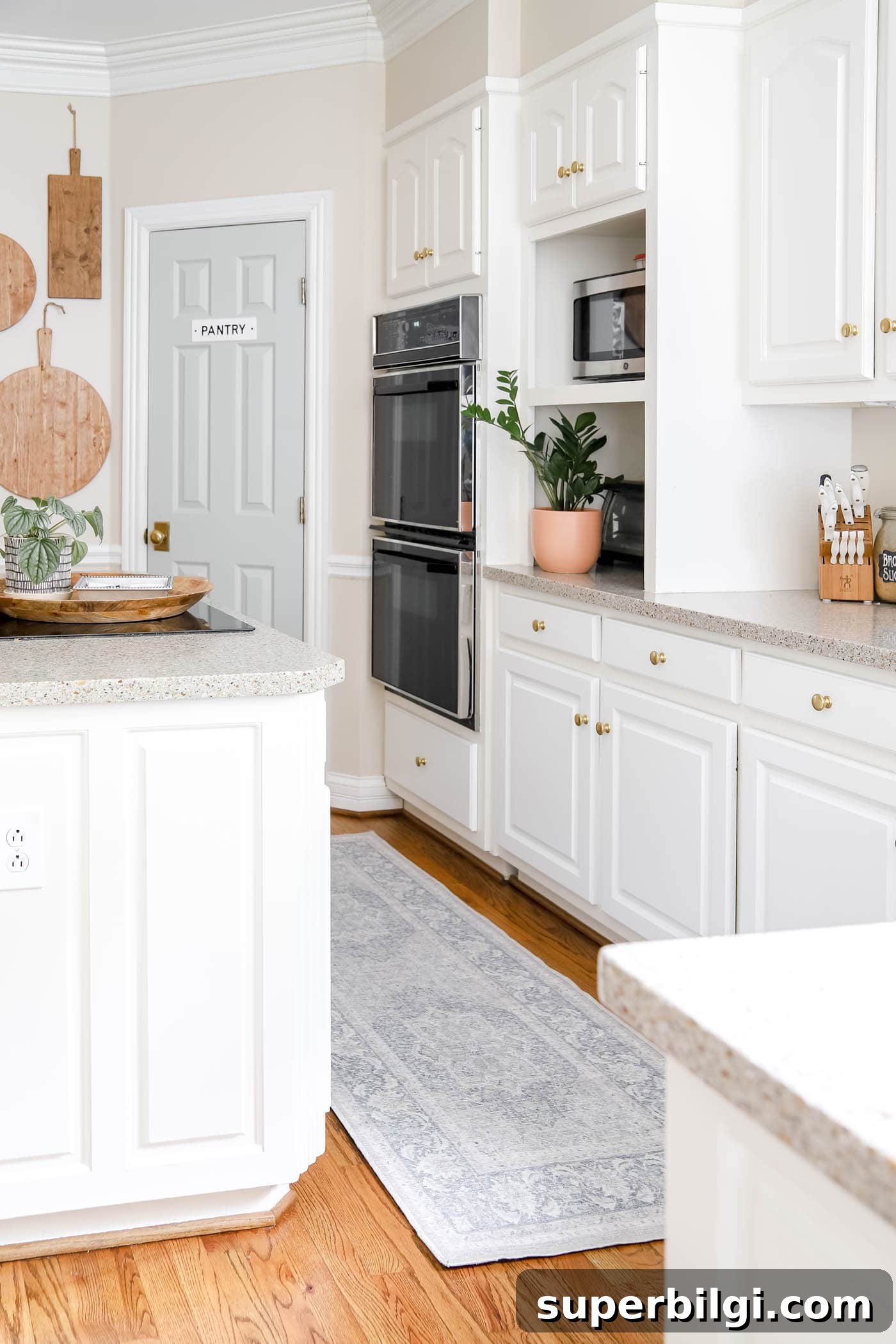
A rug in the kitchen adds comfort underfoot during prep and dishwashing and can bring color and pattern to a hardworking room.
Size: Opt for a non-slip runner between counters and the island or along a long counter run. Runners should fit comfortably in work zones without obstructing cabinet doors or drawers.
Placement: Place the rug where you stand most often—by the sink, stove, or island workstation.
Furniture: Keep kitchen rugs free of furniture. Because kitchens are high-traffic areas, choose a durable, easy-to-clean rug and ensure it remains unobstructed.
Bathroom
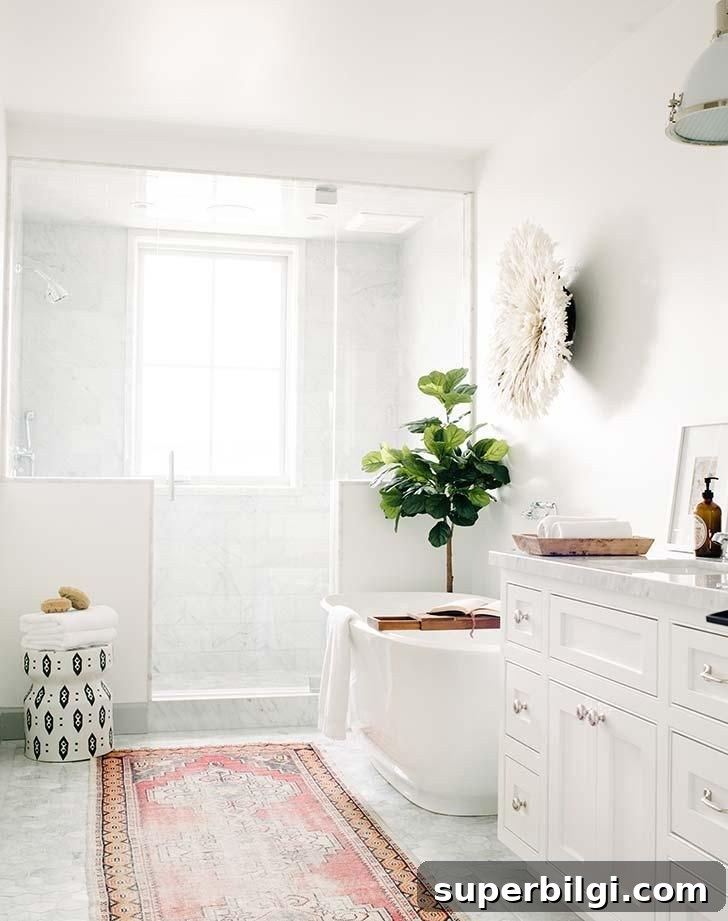
Bathroom rugs add warmth and reduce the risk of slips when stepping from a shower or tub.
Size: Bath runners commonly measure around 24″ x 60″, but choose a size that fits your bathroom’s layout and circulation paths.
Placement: Place runners in front of showers, tubs, or vanities where you step most frequently to provide traction and comfort.
Furniture: If furniture or vanities are present, keep their legs off the rug to avoid shifting and to maintain a stable surface underfoot.
Bedroom
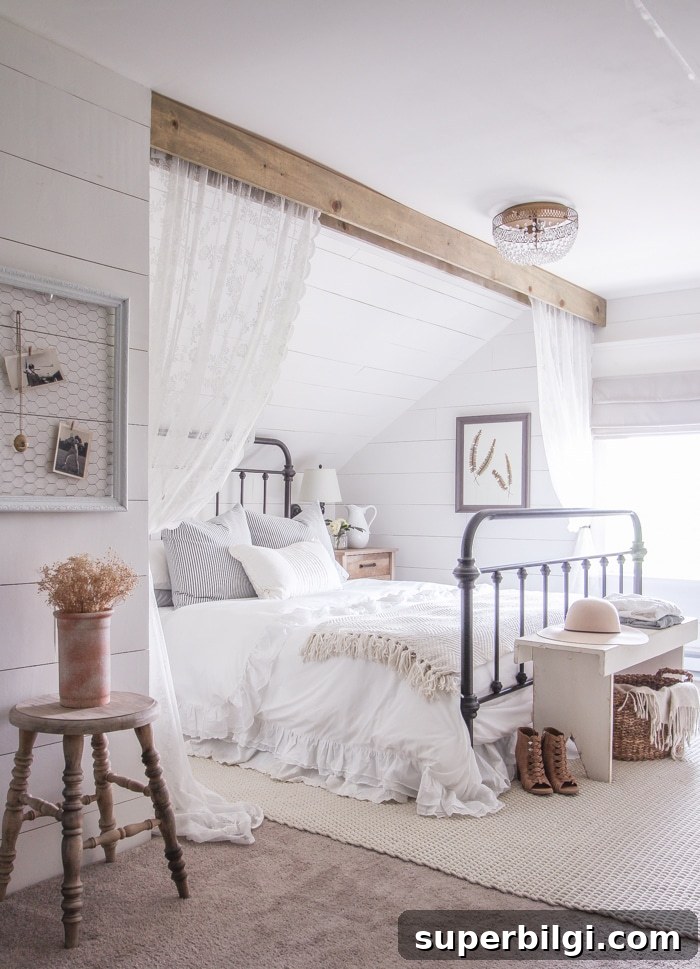
Rugs in the bedroom balance softness underfoot with visual proportion. Let the bed and room size guide your selection.
Size: Common bedroom rug sizes range from 5′ x 8′ up to 9′ x 12′. Choose a size that creates a comfortable landing beside the bed and fits the scale of the furniture.
Placement: Use the bed as the focal point when placing a rug. Popular layouts include:
- All bed legs on the rug for a luxurious, anchored look.
- Two-thirds of the bed on the rug so a large portion of the rug is visible at the foot and sides.
- Runners on each side of the bed for a symmetrical and practical bedside solution.
Choosing the right rug is simple once you measure your space, consider traffic patterns, and think about how furniture will sit on the rug. A well-sized and properly placed rug can transform each room—adding comfort, defining areas, and tying your decor together from the ground up. Use these room-by-room guidelines to find the rug that fits both your style and your lifestyle.
More ideas to explore:
- Hallway decor tips to make narrow spaces inviting
- How to style end tables for balance and function
- Window treatment options to complement every room
- Console table styling ideas for behind a couch
- Simple upgrades that elevate your home’s look