
Learning to budget for home projects removes the overwhelm from a room makeover and helps you focus on what matters most. Let me walk you through a clear, practical process.

If you’ve ever started a room makeover and felt unsure where to begin, you’re not alone. A mood board or a clear vision is a great first step, but the next—figuring out costs and timelines—is what keeps projects on track. Without a plan, small purchases and missed details add up quickly.
Below I’ve laid out a straightforward budgeting process that’s practical, flexible, and focused on helping you complete a room upgrade without financial stress.
How to Budget for Home Projects and Makeovers
Sticking to a budget is often the least exciting part of renovating, but it’s also one of the most important. A few intentional steps—combined with realistic expectations—will keep your makeover moving forward without surprises.
1. Start with a Flexible Total
Begin by choosing a top-line number: the total you’re comfortable spending for this room. Make it honest but flexible. That helps you set priorities and avoid impulse buys. Think of this as a target rather than a hard cap—something to guide choices as you plan.
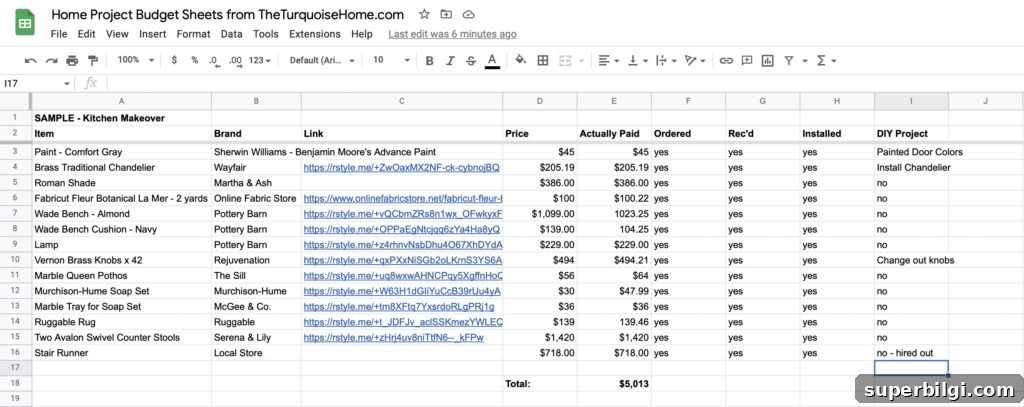
Create a simple spreadsheet to track estimated and actual costs, suppliers, delivery times, and installation dates. A digital tracking sheet makes it easy to update numbers, compare options, and see where you’re closest to or farthest from your budget.
If you don’t already have a template, set up columns for: item or service, estimated cost, actual cost, vendor/store, link or note about where you found it, delivery lead time, and installation notes. This will become your roadmap.
2. Make a Complete Wish List
List everything you imagine for the space—furniture, lighting, paint, trim, rugs, hardware, decor, and any labor costs. Include both materials and installation or contractor fees. Writing every idea down helps you avoid forgetting small but important items like caulk, screws, or trim paint.
3. Research Real Costs
Research each item on your wish list to get realistic price ranges. Note at least two or three options for major purchases (e.g., an affordable, mid-range, and splurge option for a light fixture). Record where you found each price, estimated shipping, and expected delivery time. This gives you choices when you need to pare costs.
4. Evaluate DIY vs. Professional Labor
Decide which tasks you’ll DIY and which need a professional. The more you can confidently do yourself, the more you’ll save—but be realistic. Factor in not only money but also the time required. Add hours or days for DIY projects to your calendar so you don’t underestimate how long the makeover will take.
5. Prioritize the Wish List
With your spreadsheet populated, you’ll have a better grasp of the full cost. Now prioritize: what has the biggest impact on the room’s function and aesthetic? Identify must-haves, nice-to-haves, and optional items. If your total exceeds your budget, move items to a future phase or select lower-cost alternatives until the numbers balance.
6. Include a Contingency
Unexpected issues are common in makeovers. Add a contingency of about 15–20% to cover surprises like additional materials, delivery delays, or small changes you decide to make mid-project. This buffer prevents a minor overage from derailing the whole plan.
7. Save and Plan the Cash Flow
Set aside the money you need before you begin, or plan to complete the makeover in phases as you save. Decide whether you’ll fund the project from savings, a dedicated account, or a payment plan. Waiting until the funds are in place reduces stress and helps you avoid rushed decisions.
8. Order Strategically
Once your budget is funded, order items in the sequence they’ll be needed. Prioritize long-lead items first (custom furniture, large lighting, or anything with extended fabrication and shipping). This minimizes downtime and prevents delays in later stages of the project.
9. Schedule Installations and Work Blocks
Book contractors and installers early and block time in your calendar for DIY tasks. Coordinate delivery dates with installation windows so items aren’t sitting in boxes while you wait for a contractor. Clear scheduling reduces friction and keeps momentum.
Budgeting for a room makeover doesn’t eliminate all uncertainty, but following these steps gives you control and clarity. It helps you prioritize, make smarter purchases, and finish the project without financial stress. Take your time to plan, build in a margin for surprises, and enjoy the process of transforming your space.
More posts you might enjoy: