
A calm, restful master bedroom should be a true retreat—somewhere to unwind after a busy day. Below are design ideas and a clear plan for creating a serene master bedroom with an adjoining sitting area.
I’m excited to share this long‑held bedroom vision. It’s been simmering in my head for years, and I finally began planning to bring it to life. In earlier posts I mentioned I hoped to reveal these plans before the end of the year, and here they are.
Before diving into specifics, a quick note: some pieces in this design are higher‑end, and the price tags may surprise you. That said, this room is the result of years of saving and thoughtful upgrades—not a rushed splurge. Over the past decade I’ve relied on DIY solutions and budget finds to make our bedroom comfortable and functional while I waited to invest in a larger, more refined look.
For years we used a simple DIY farmhouse headboard and modified IKEA dressers as nightstands—affordable solutions that served us well. Those items have since moved on to friends who needed them, which makes me happy. Now I’m ready to upgrade to a more mature, cohesive design while still being resourceful with what we already own.
“Must Have” Design Feature in our Bedroom
One of my non‑negotiables when we bought this house was the layout: I wanted a bed flanked by windows. I’ve always loved the look of a king bed centered between two windows, layered with bamboo shades and ivory curtains for softness and texture.
A favorite inspiration photo captures that balance and coastal calm I’m trying to achieve.
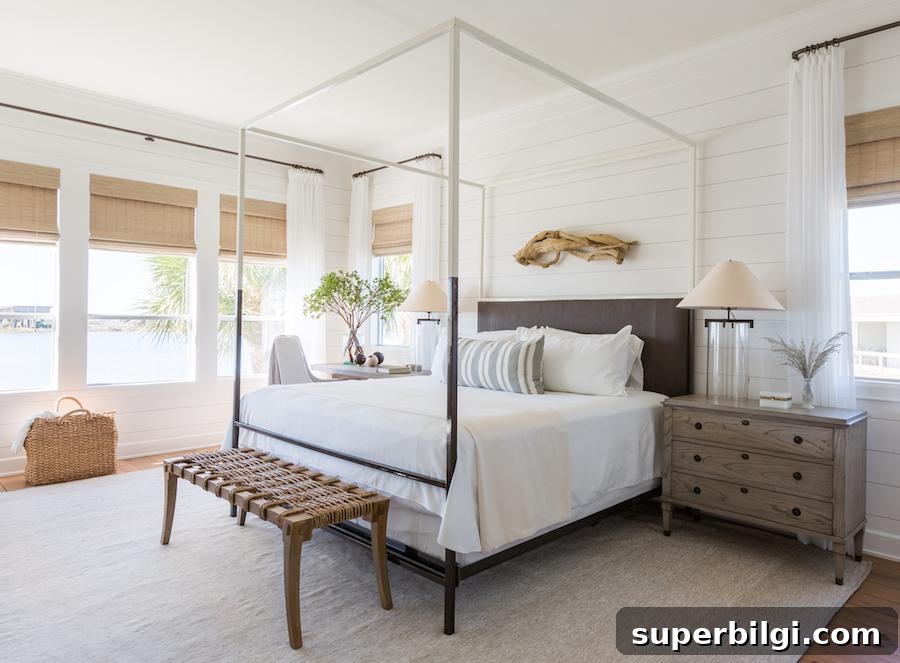
That symmetrical window placement feels cohesive and intentional—much better than the lopsided look of a single window off to one side. If your room only has one window, there are styling tricks for balance, but nothing replaces the real thing.
The Coastal Vibe
A bedroom should be restful. You spend about a third of your life there, so the space should support relaxation and sleep. For me, calm comes from a beach‑inspired palette: warm, light woods that suggest sand, and delicate pops of blue and blue‑green to evoke the sea.
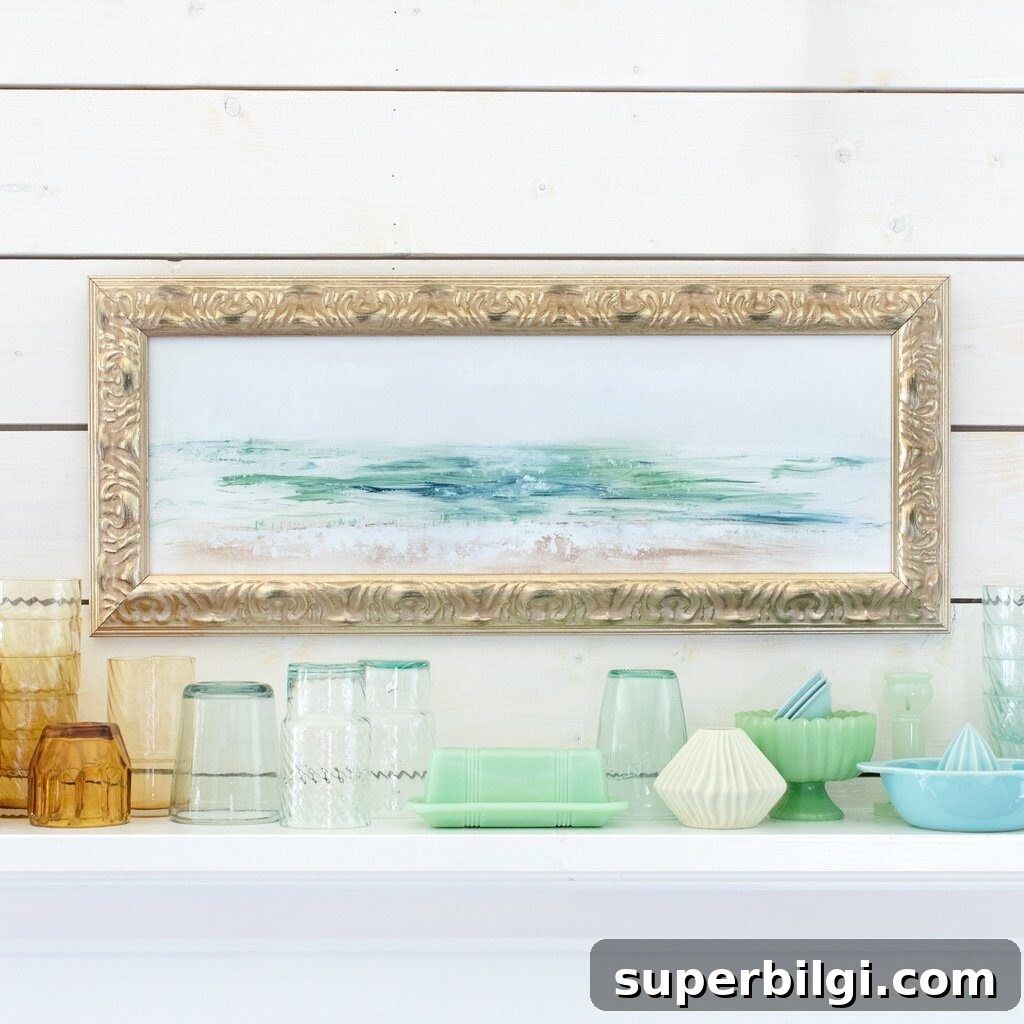
Because our home is a traditional Cape Cod style, the soft blue‑greens, natural wood tones and subtle brass accents complement the architecture nicely without feeling overly coastal or themed.
Where We Started
Here’s the starting point for this makeover—what I lived with while dreaming of the new room.
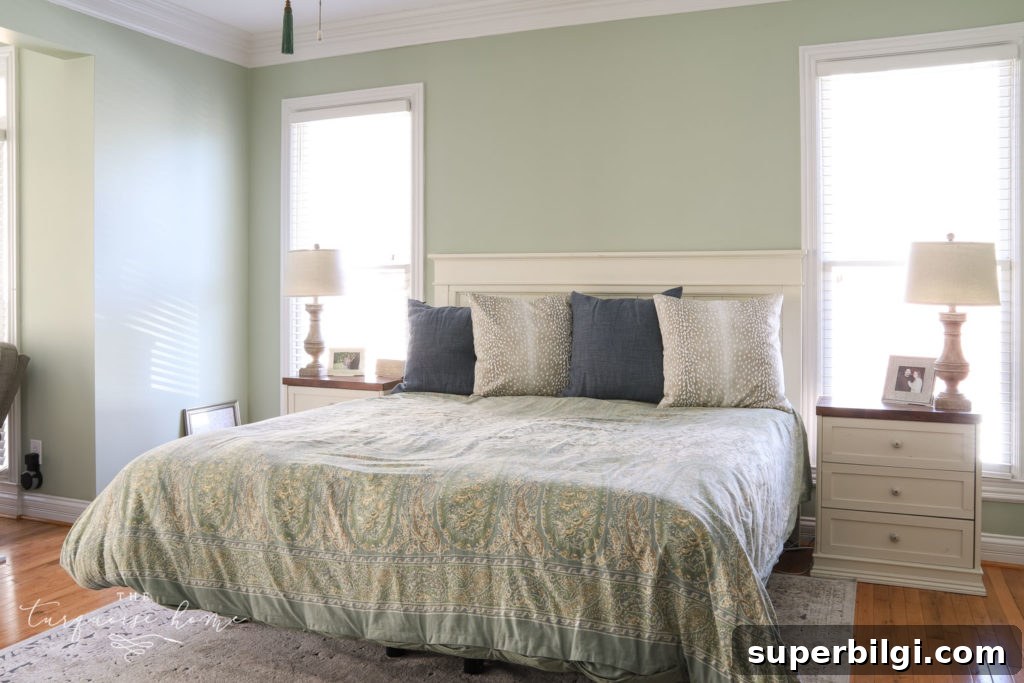
The original pistachio green walls weren’t ideal for me, so one of the first updates was repainting in a neutral gray‑beige that immediately improved the room’s feel. I’ll share details of that paint update soon.
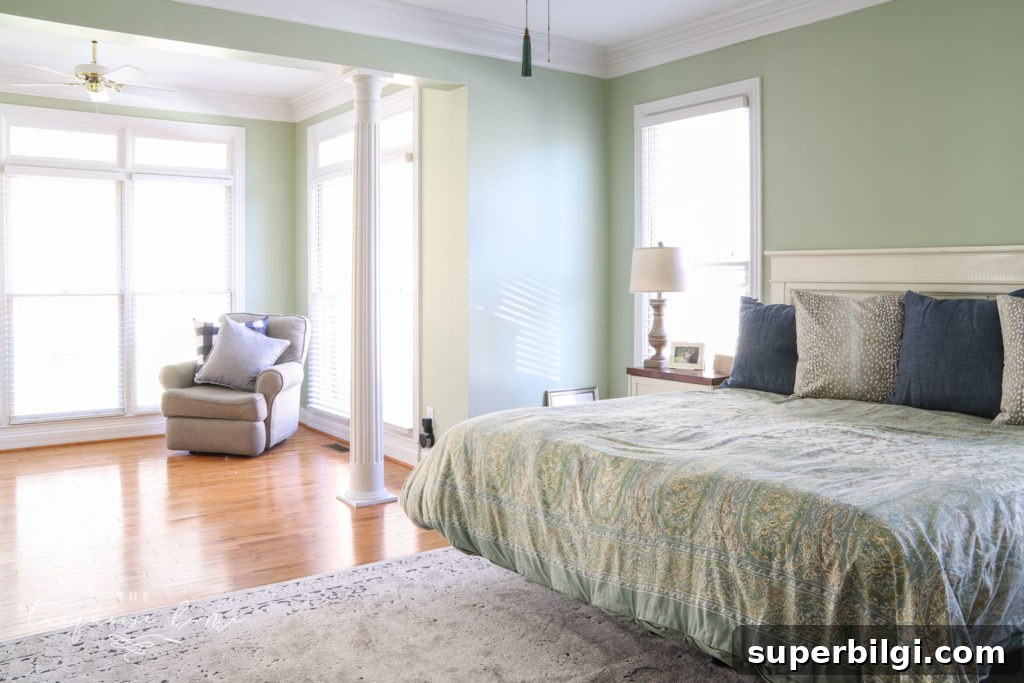
I initially planned to wait to replace columns and refinish floors, but I decided to make progress with smaller improvements now and tackle the major renovations later when the budget allows. The attached sitting area has been a lovely bonus—full of windows and overlooking our private, wooded backyard. It’s already been useful as a quiet office space and will be even cozier once furnished.
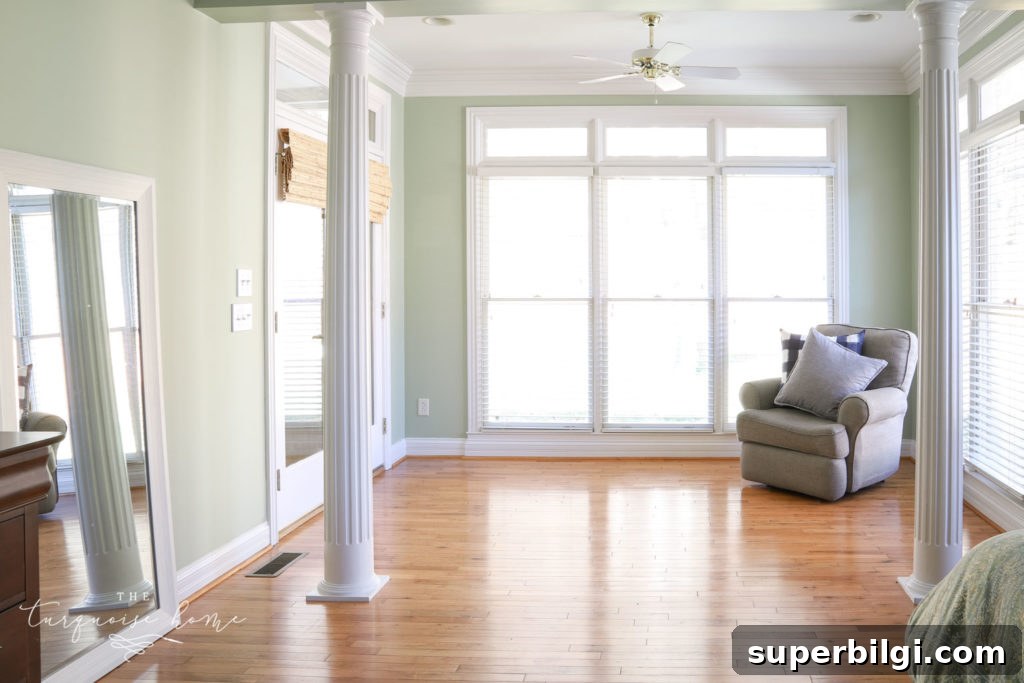
The wall across from the bed currently holds our old dresser and TV; I’m still deciding whether to refresh, replace, or rethink that wall entirely.
Restful Master Bedroom Design Board
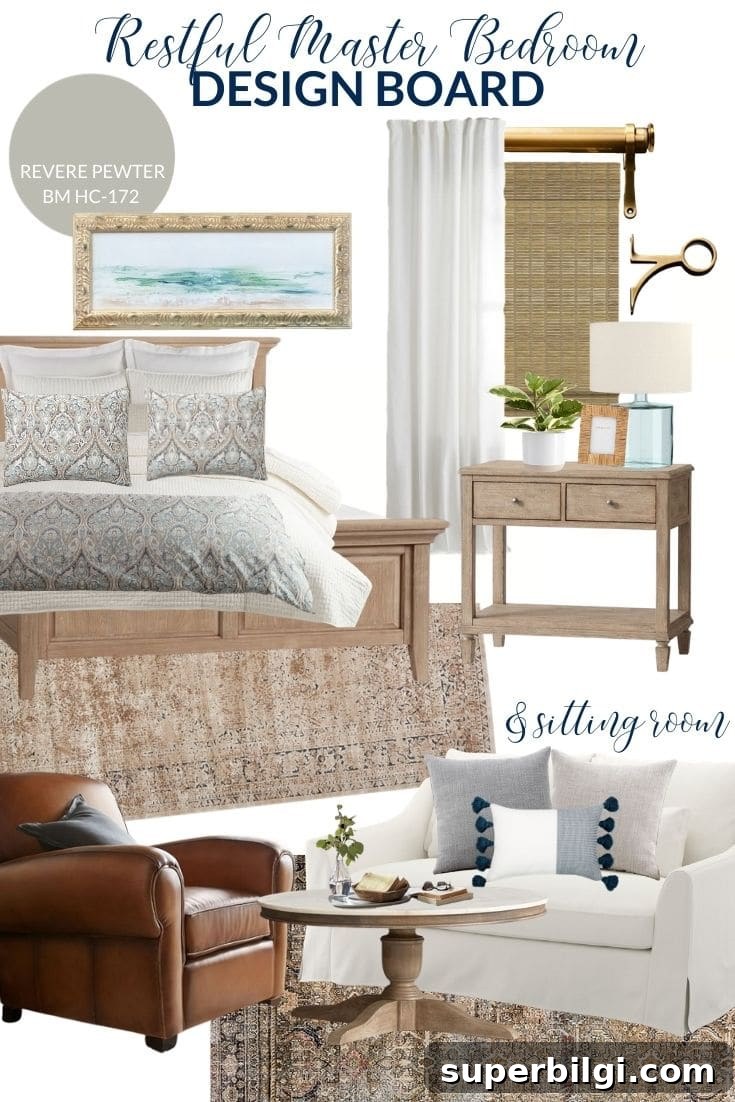
Now for the design vision. I created a mood board that pulls together the key elements: natural woven shades, linen curtains, warm wood furniture, brass accents and blue‑green art to anchor the palette. If you want to make your own design board, a mood board is a great way to visualize the finished space.
This post contains affiliate links for disclosure purposes.
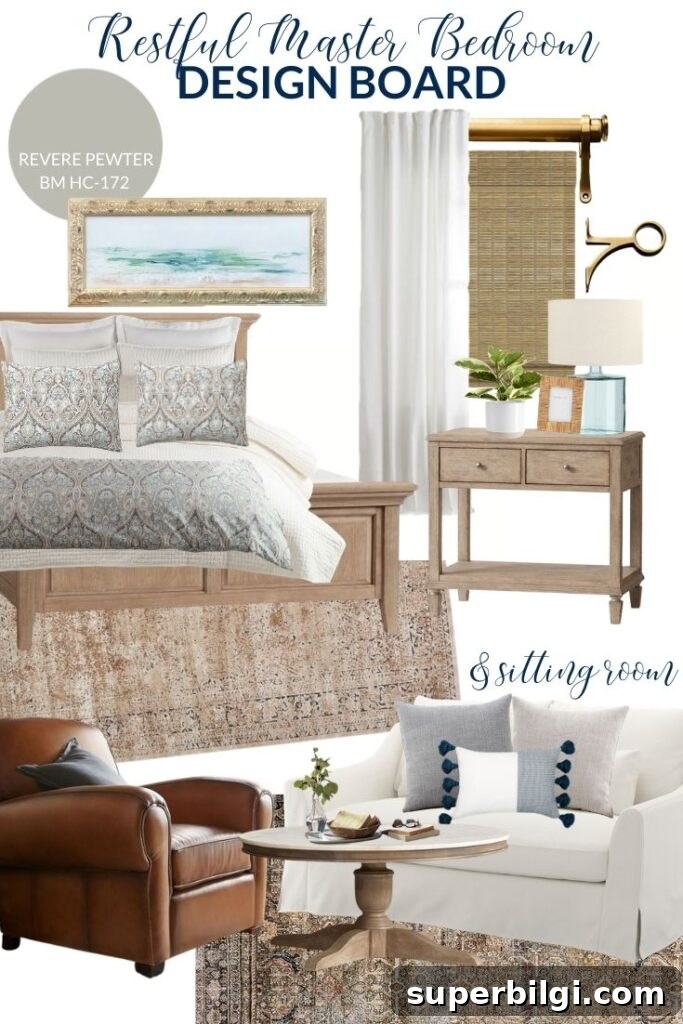
I plan to complete the transformation over several months, prioritizing larger purchases during sales events and sourcing budget‑friendly alternatives where possible. Shipping and lead times are factors, so patience is part of the plan.
Window Coverings in the Bedroom
This bedroom has seven windows and two French doors, so window treatments are central to the design. The existing white wood blinds will remain on most windows, but the shades beside the bed and on the French doors are being replaced with natural woven bamboo shades in a warm jute tone. Those woven shades bring texture and a hint of coastal warmth.

All windows will also get linen‑cotton ivory curtains. For windows facing early morning sun, I’m choosing blackout lining for better sleep; the other windows will have the standard linen drapes for softness and privacy.
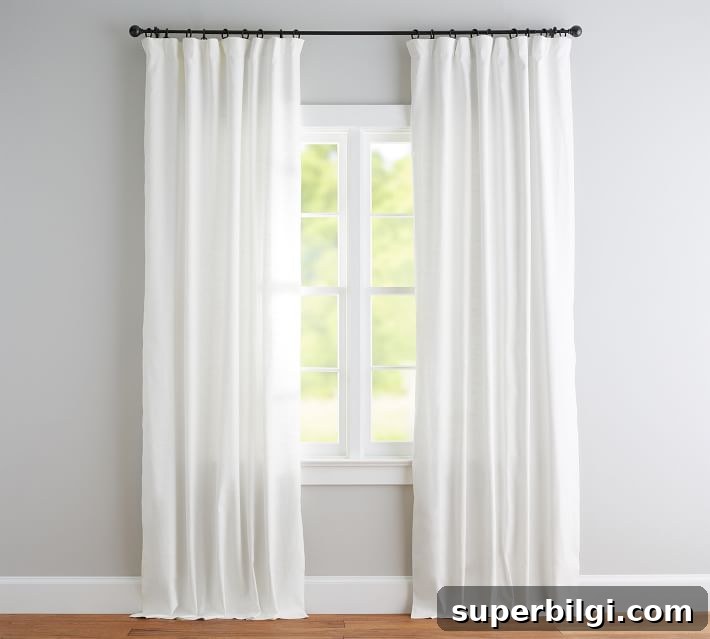
To finish the window treatment look, I invested in brass curtain hardware and simple, streamlined finials. The matching rings and rods give a polished, intentional finish that I think is worth the splurge in a space meant to feel calm and collected.
Bed and Night Stand in the Bedroom
Choosing a bed required consideration of our adjustable base: we use two XL twin adjustable frames, so the bed needed to work without a box spring and accommodate the bases. My husband preferred a wooden bed rather than an upholstered headboard, so we chose a warm wood frame in a light seadrift finish that complements the coastal palette.
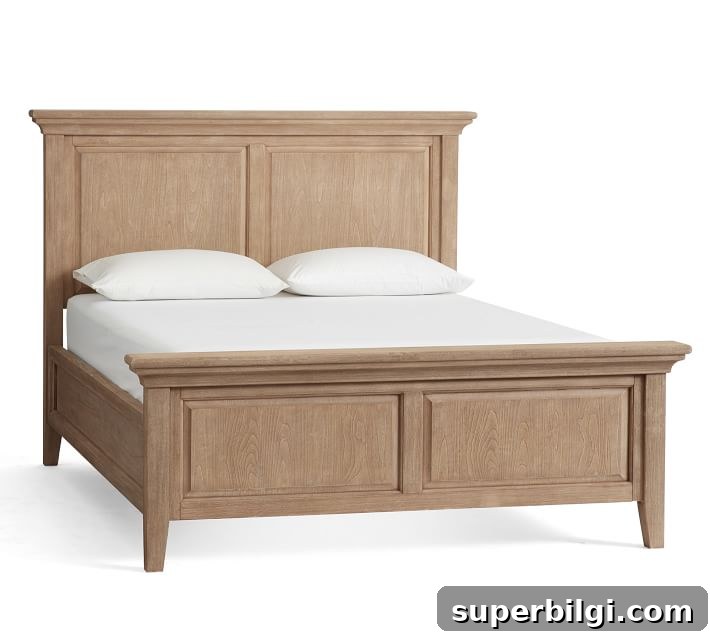
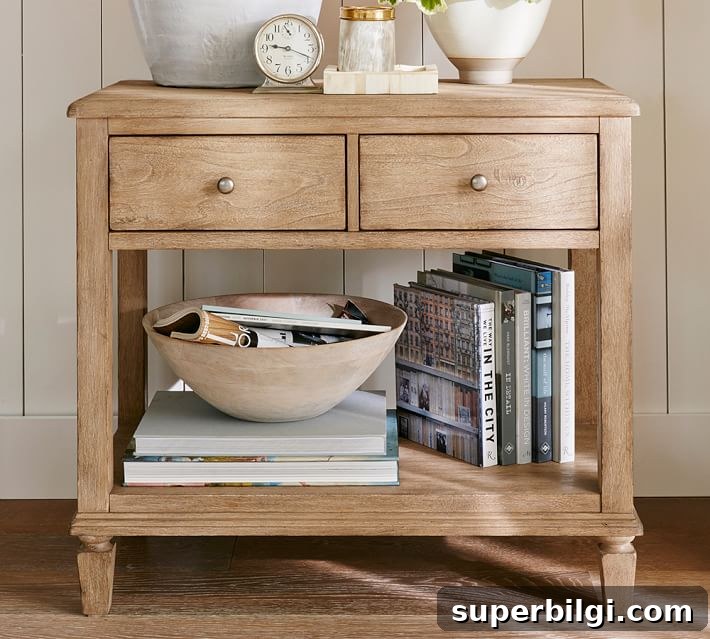
Matching nightstands in the same finish will sit in front of the windows, tying the bed and window treatments together for a cohesive focal wall.
Bedding in the Bedroom
I’ve long admired the layered, magazine‑worthy bedding look. For this room I’m combining textured ivory quilts and euro shams with a paisley duvet that introduces soft blues and greens—enough color to make the bed feel inviting while keeping the overall scheme calm.
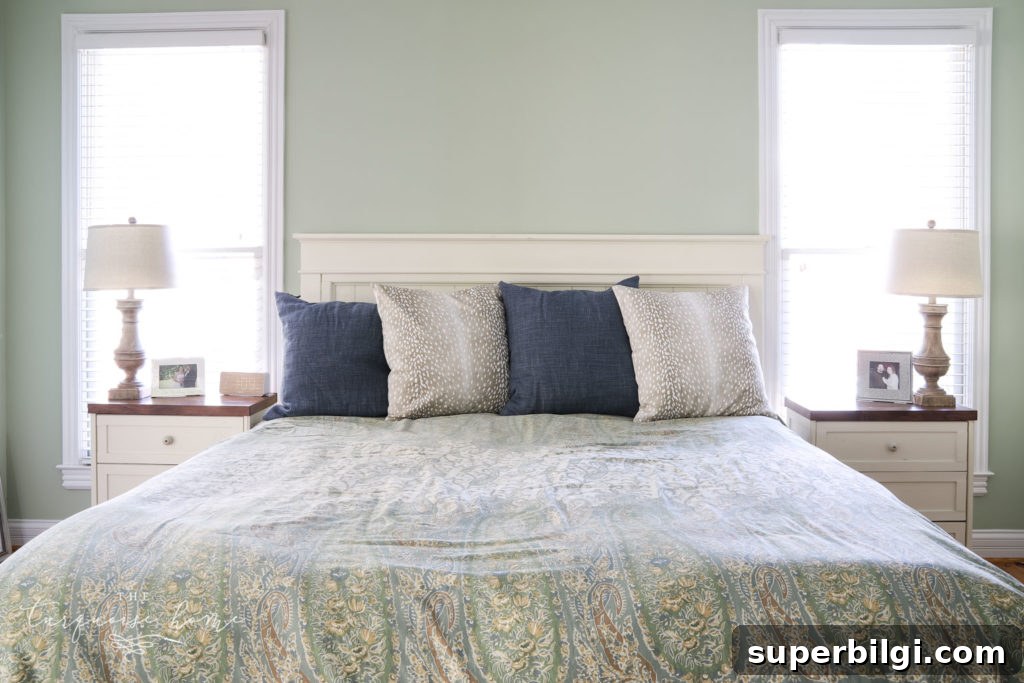
I’ll share tips soon on how to get that polished layered bedding look without spending a fortune.

Accessories in the Bedroom
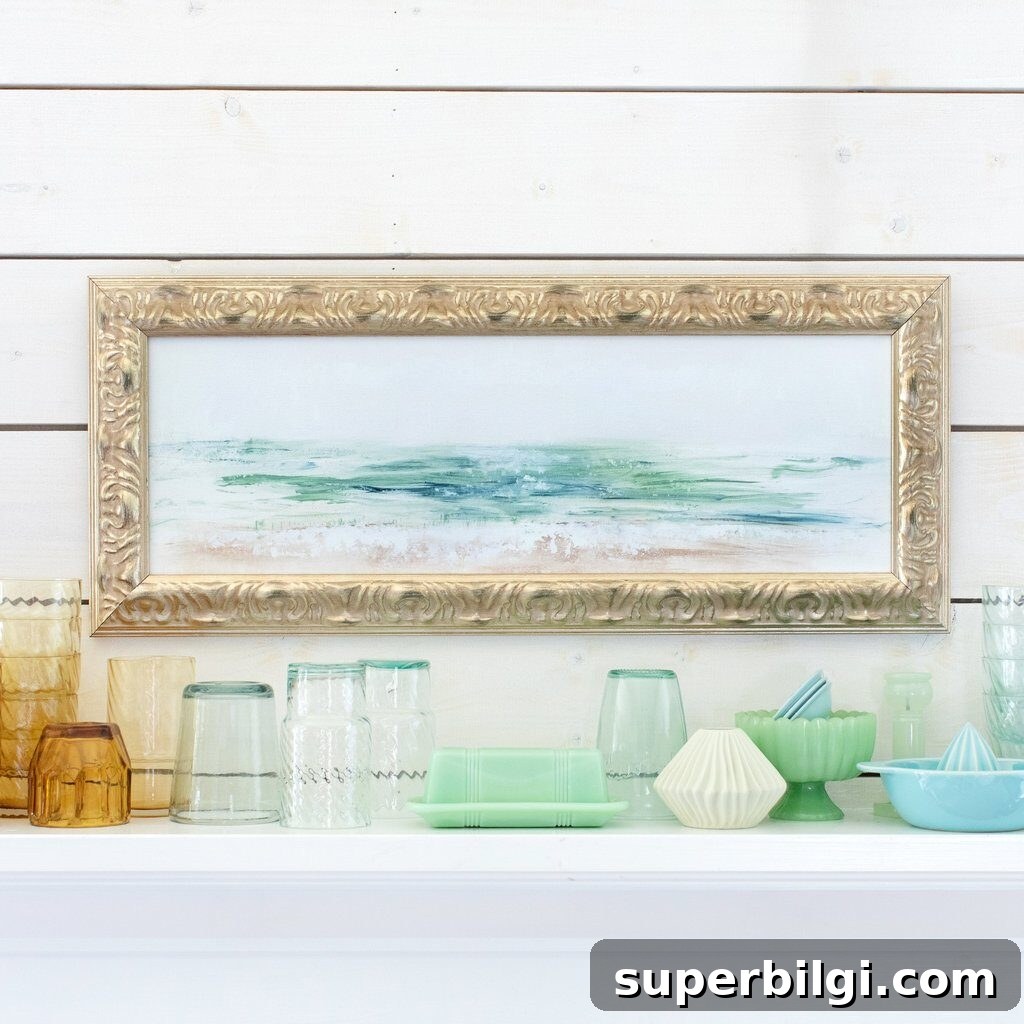
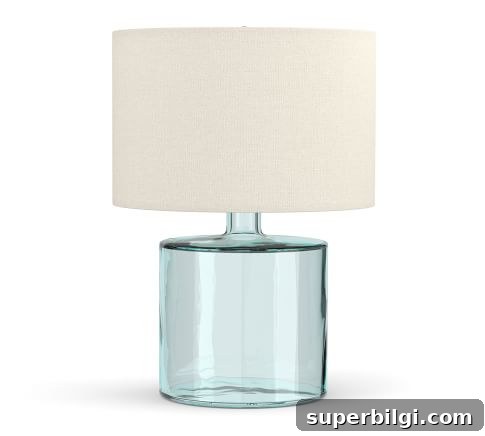
Accessories pull the room together. I plan to use coastal‑inspired art, recycled glass lamps that echo the room’s blue‑green tones, and a mix of real or high‑quality faux greenery for freshness. Small framed photos, a few well‑chosen decorative objects and a stack of books will personalize the nightstands and dressing surfaces.
Rugs in the Bedroom & Sitting Area
Both rugs chosen for this room were items I already owned. A beige and charcoal rug anchors the bed and is versatile across styles; an olive/charcoal rug works beautifully in the sitting area and provides contrast while still harmonizing with the bed rug.


Furniture in the Sitting Area
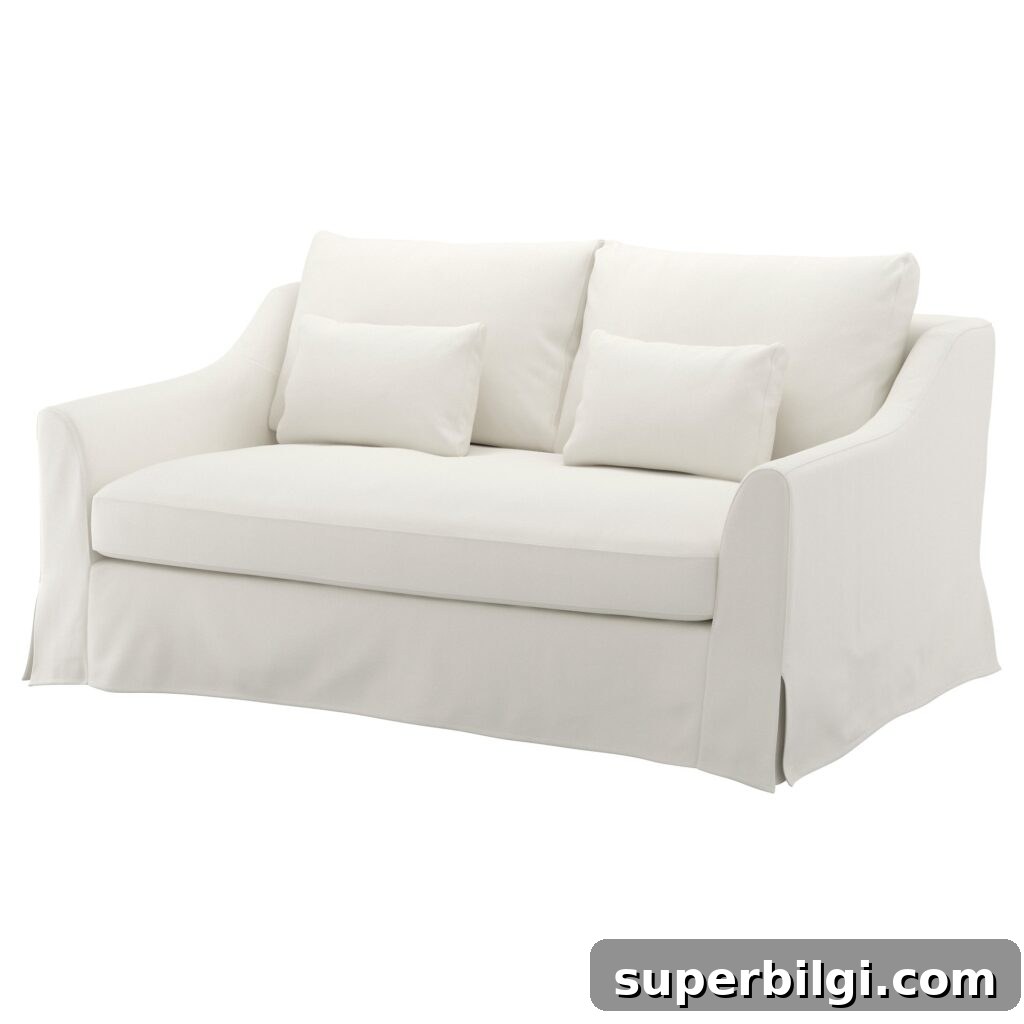
The sitting area off the master was an unexpected bonus. I ultimately drew inspiration from a design I admired that combined a small loveseat, a leather club chair and a round coffee table for comfortable conversation and morning coffee.
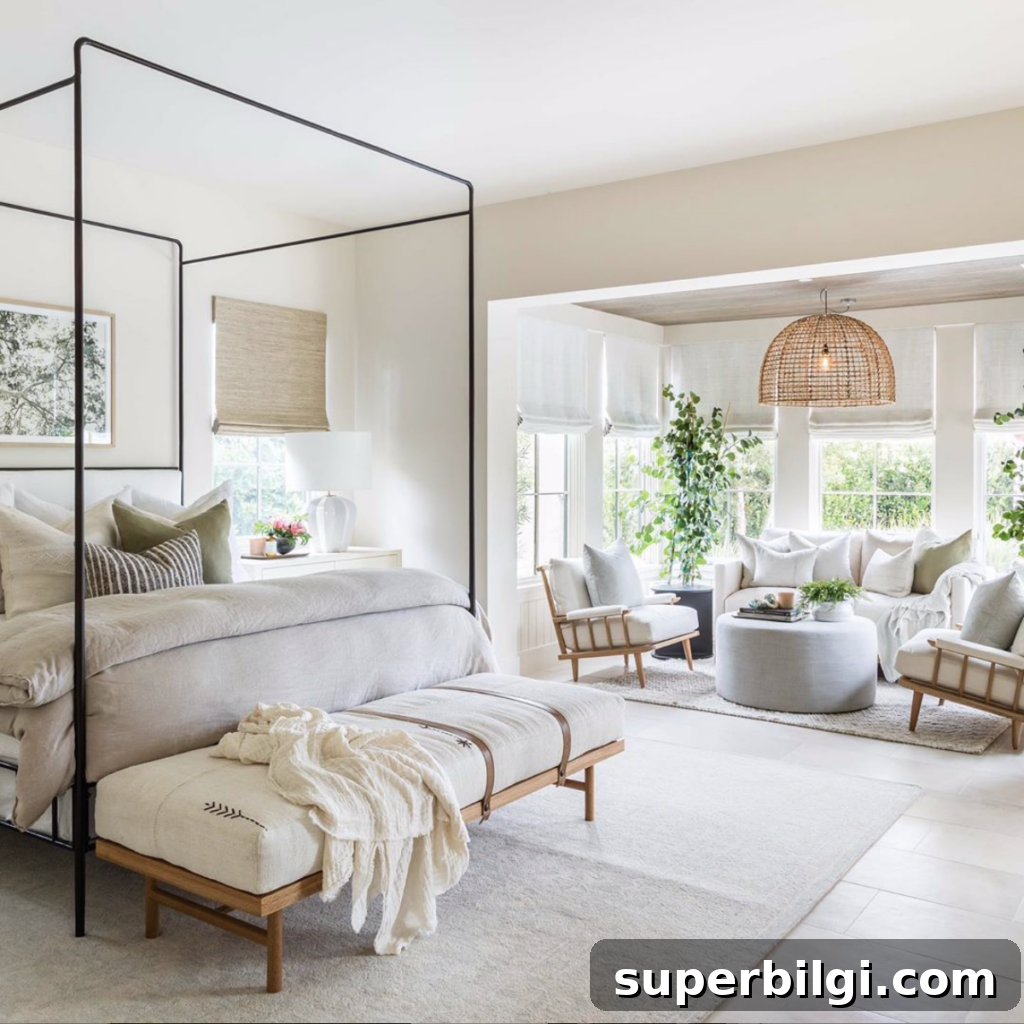
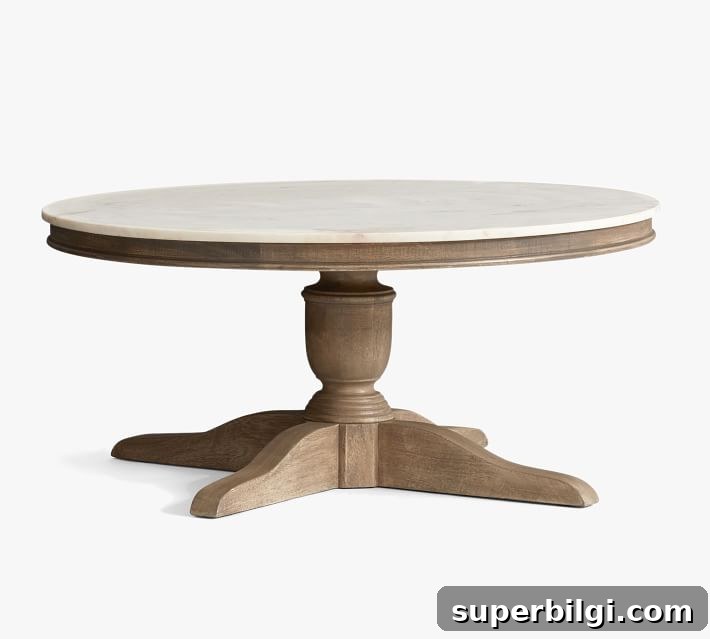
A compact loveseat fits the space well, while moving an existing leather club chair from the living room creates a cozy pairing. A round coffee table with a marble or light wood top will complete the vignette and keep circulation smooth.
Other elements I’m considering include refinishing or painting the armoire and dresser rather than replacing them, updating ceiling fans with painted blades and new hardware, and perhaps a feature treatment on the wall across from the bed. These choices will help stretch the budget while still producing a fresh, elevated look.
I’m looking forward to sharing progress as the room comes together over the next few months.
More posts you may enjoy:
- Our Master Bedroom Window Treatments
- The Best Bedroom Paint Colors
- Christmas Bedroom Decor: Ideas & Inspiration