
Are you struggling to find the perfect pair of living room curtains? Finding the right balance between design and functionality can be tricky, but these practical tips will help you choose the ideal curtains for your living room.
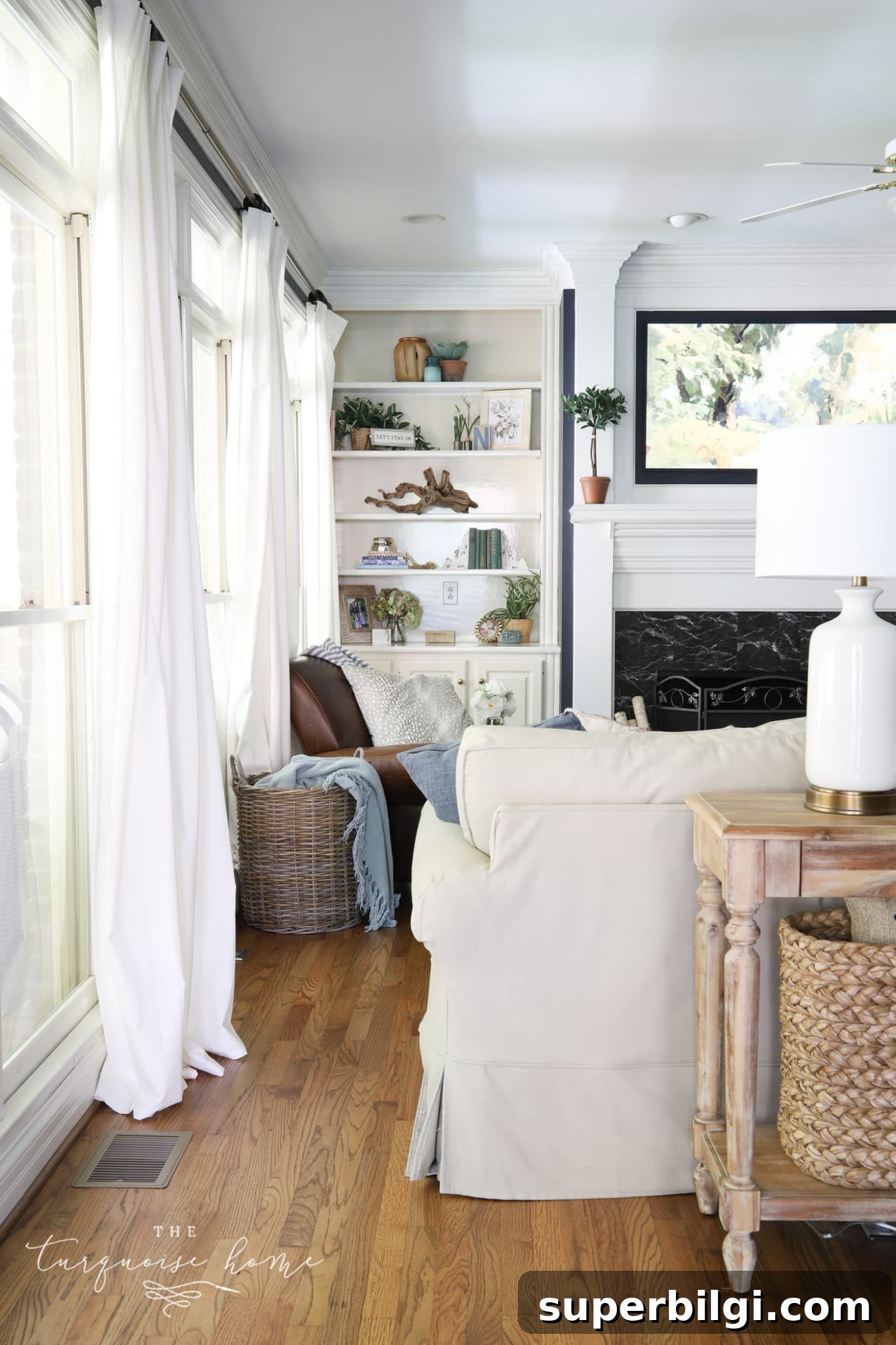
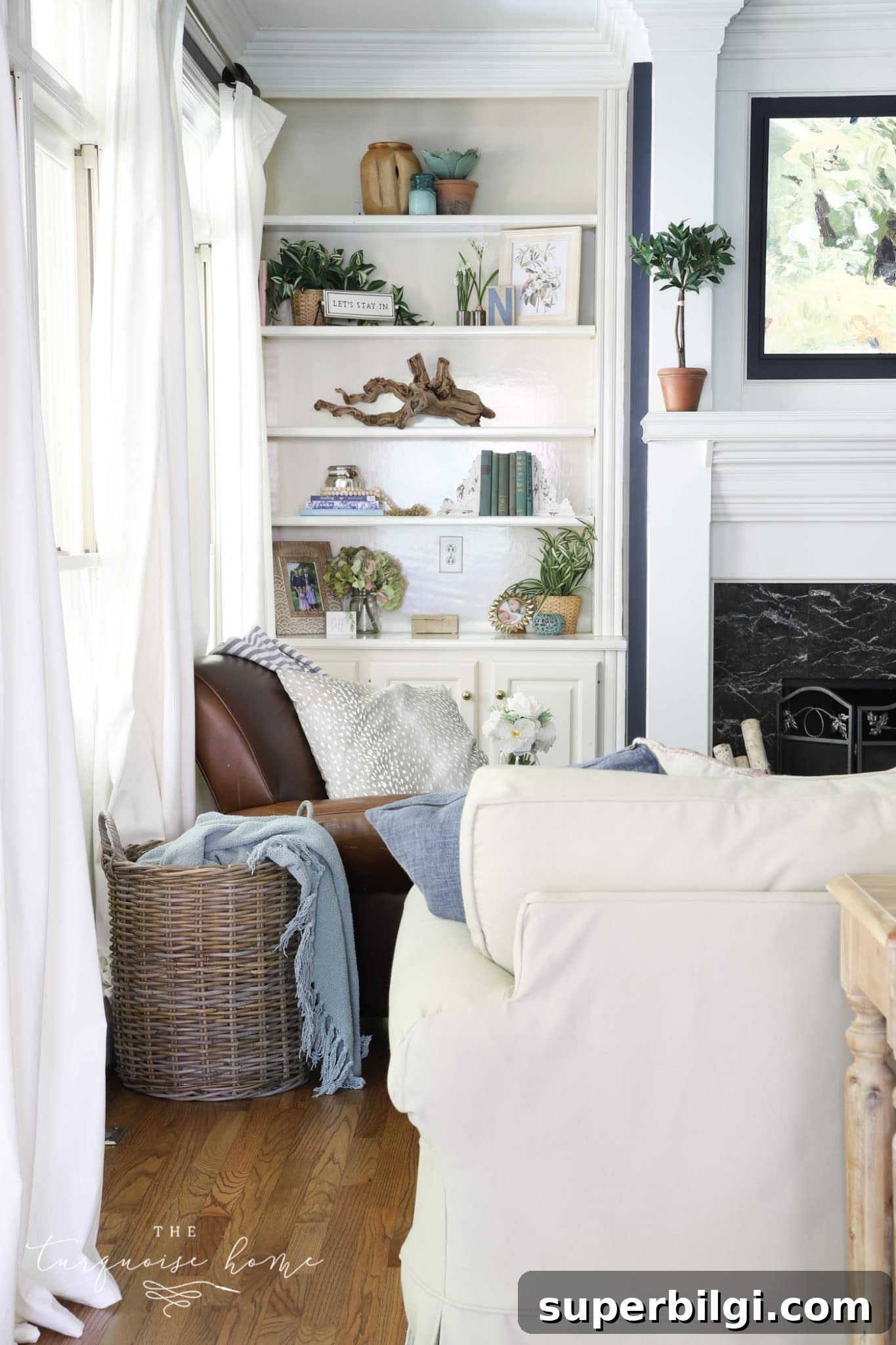
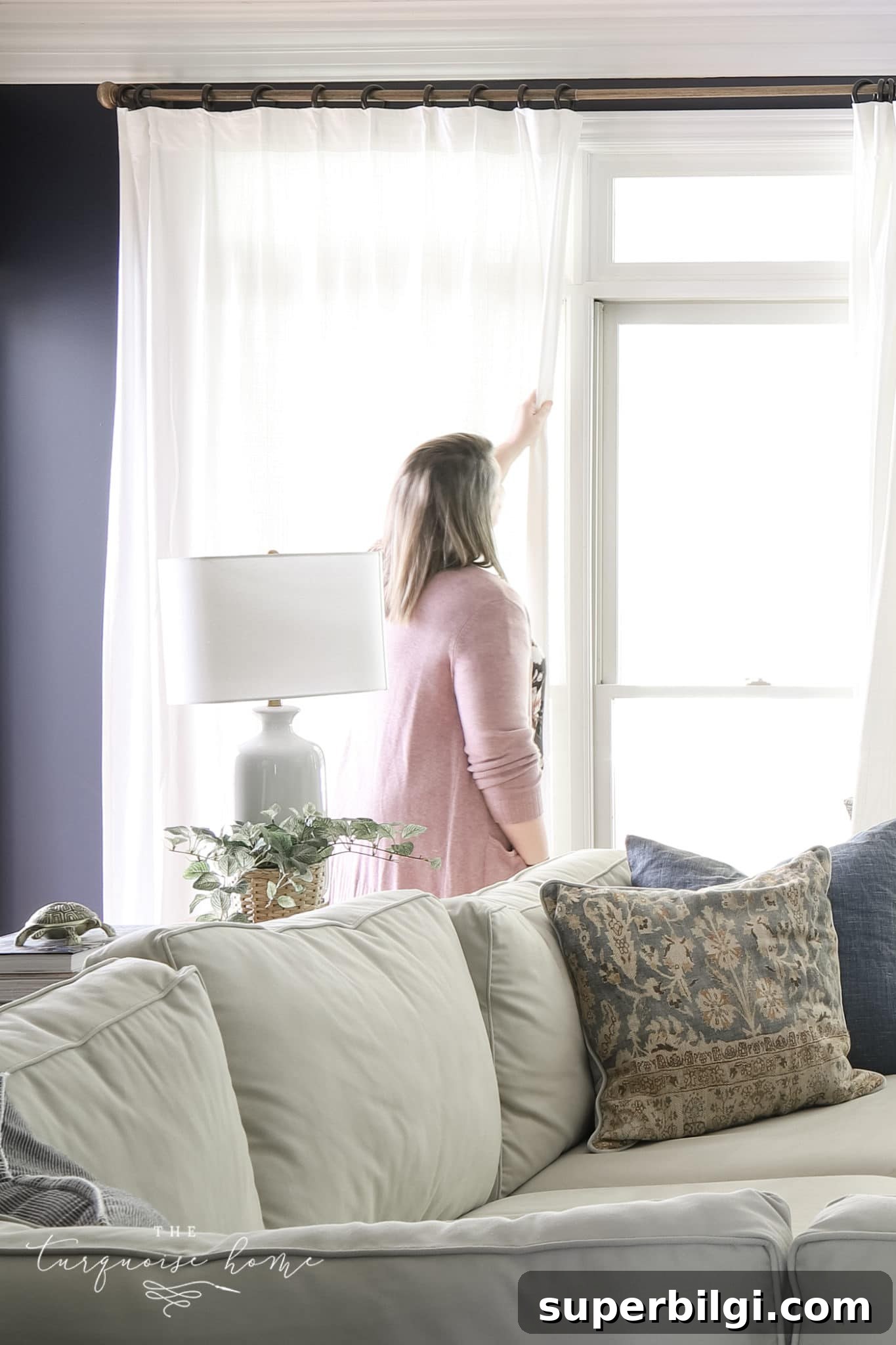
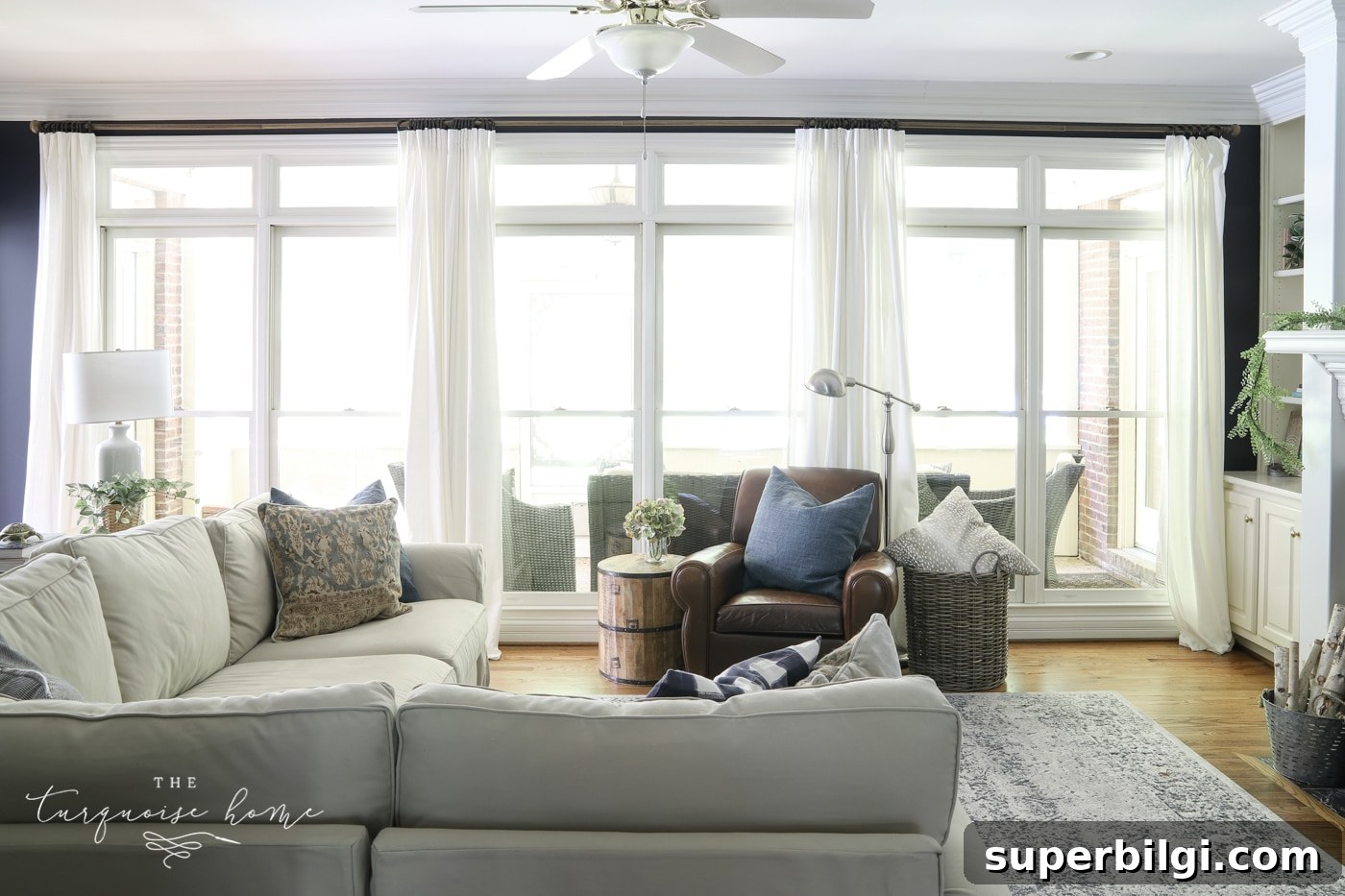
When I first decorated my living room, one of the first decisions I made was to remove the blinds. The large windows bring in a lot of natural light, and I wanted to brighten the room while adding softness and a cozy atmosphere with curtains.
Because my living room walls are painted Hale Navy, a deep shade, I chose solid white curtain panels to balance the tone and keep the space feeling simple and bright. Navy and white make a timeless, high-contrast combination that suits many design schemes.
Even though I ended up choosing white curtains, I know how overwhelming the selection process can be. Curtains come in countless styles, fabrics, textures, patterns, and sizes. Use the following guidance to narrow your search and make confident choices that suit both your living room’s look and your lifestyle.
This post contains affiliate links for convenience. See full disclosure policy if needed.
Consider the Surrounding Space
Start with the room’s overall style and color palette. Your curtain color and pattern should coordinate with existing decor—furniture, throw pillows, artwork, and accent pieces. Solid panels are generally easier to integrate, while patterned curtains can become a focal point that defines the room’s character.
Patterns can be powerful: floral prints work well in traditional or cottage-style living rooms, while geometric or bold shapes suit modern or art-deco-inspired interiors. Keep in mind that curtains occupy a large visual area, so bold patterns or saturated colors can dominate the room. Balance is key—consider other elements in the space before committing to a statement fabric.
Curtains are also one of the simpler design elements to change. Because they’re easy to swap seasonally, many people choose heavier, insulating treatments for winter and lighter sheers for summer to suit both function and mood.
Decide the Curtain Length for the Living Room
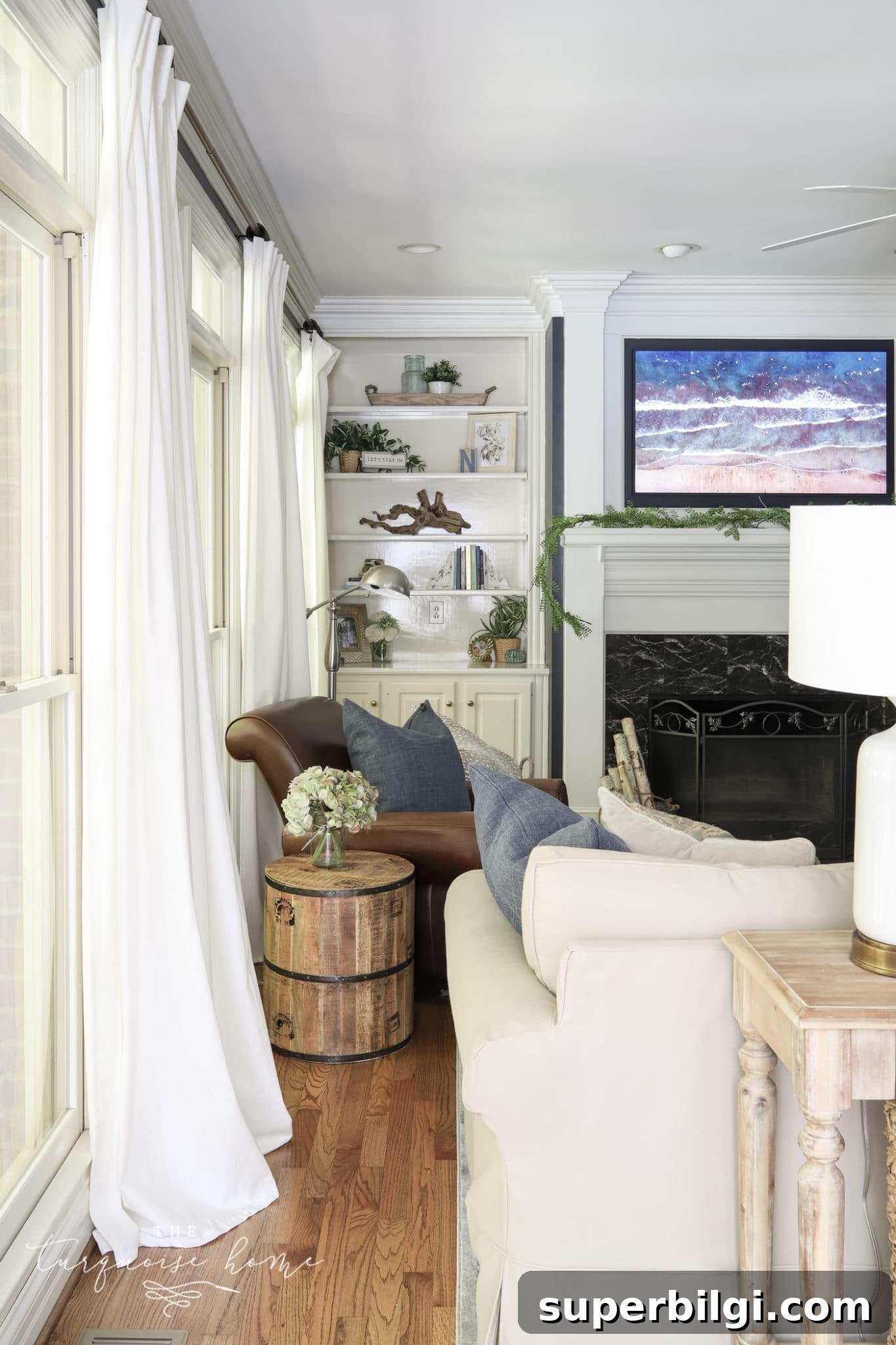
In living rooms, long, sweeping curtains are the go-to choice because they create an elegant, finished look. Shorter curtains and valances are typically reserved for kitchens, bathrooms, or utility spaces where long panels would be impractical.
Standard curtain lengths and styles:
- Above-sill curtains: End approximately ½ inch above the windowsill; ideal for windows you open frequently.
- Below-sill curtains: Extend about 6 inches below the sill for a casual, relaxed look.
- Floor-length curtains: Aim for about ¼ inch above the floor for a tailored appearance. Traditional designs sometimes allow 1–2 inches to rest on the floor for a formal look.
- Dramatic/puddle-length curtains: Allow 3–4 inches (or more) to puddle on the floor for a luxurious, romantic effect.
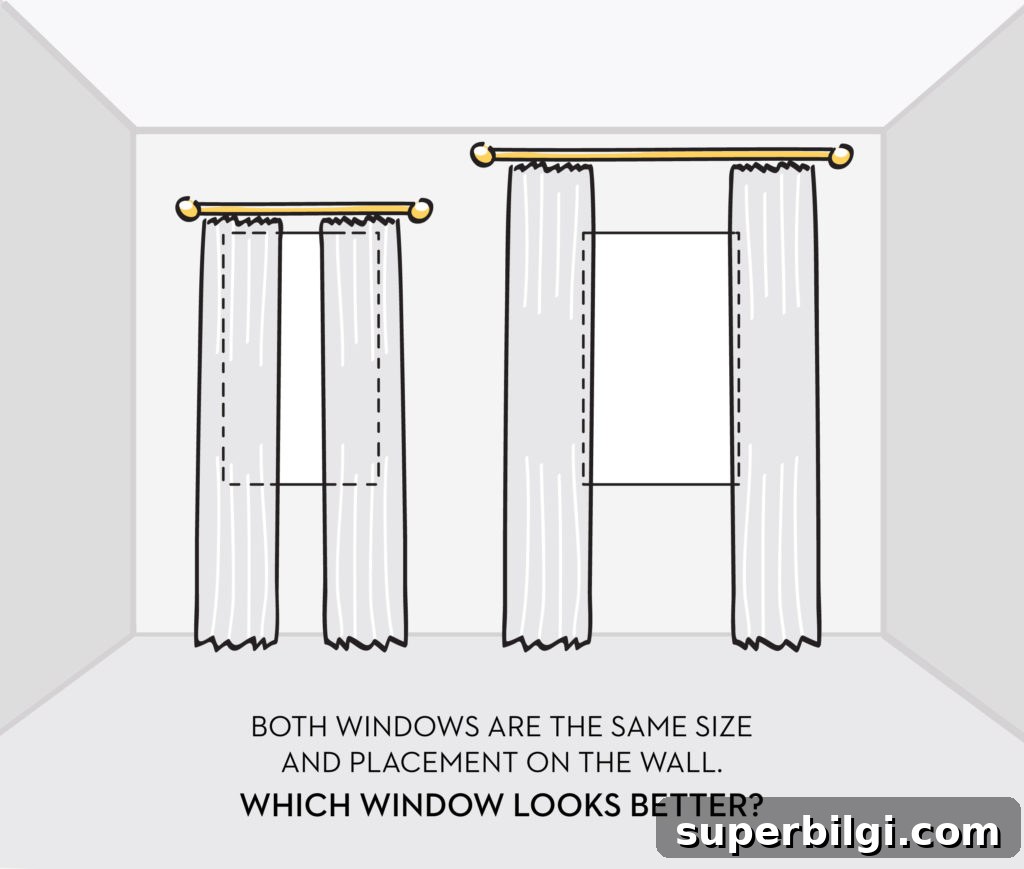
Hanging curtains higher than the window—mounting the rod closer to the ceiling—creates the illusion of taller windows and higher ceilings. For a grand or formal living room, hanging curtains high and wide makes the space feel larger and more elegant.
Curtain Width
The standard recommendation is that curtain panels should total between 1.5 and 3 times the width of the window. More fullness (higher multiples) makes curtains look luxurious and gathered; less fullness feels more tailored and modern. Fabric weight and weave also affect perceived fullness—thicker fabrics hang heavier and look fuller with less width than sheers.
Choose a Curtain Fabric
Decide how your curtains will function. Do you want maximum natural light, privacy, insulation, or sound-dampening? These needs will determine fabric choice and lining options.
Fabric weight ranges from lightweight sheers and lace, which filter light and offer a breezy feel, to medium-weight linen or linen blends for everyday elegance, up to heavy velvet for dramatic, insulating draperies. Consider maintenance: can the fabric be machine-washed, or does it require dry cleaning or professional care?
Popular fabrics
Linen, velvet, and linen/cotton blends are frequently chosen for living rooms. Linen sheers or linen panels with an optional blackout liner provide a versatile mix of style and function—light diffusion with the option to block light and increase privacy when needed.
Curtain headings and attachments
The curtain heading affects both the look and how the panels attach to the rod or track. Headings change the drape, movement, and overall style of the window treatment.
- Rod pocket: A casual header where the rod is slipped through a fabric pocket or rings are used with clips.
- Tab top: Fabric loops sewn into the top edge that slip over the rod for an informal, relaxed style.
- Grommet top: Metal eyelets let panels slide easily and create soft, even folds across the panel.
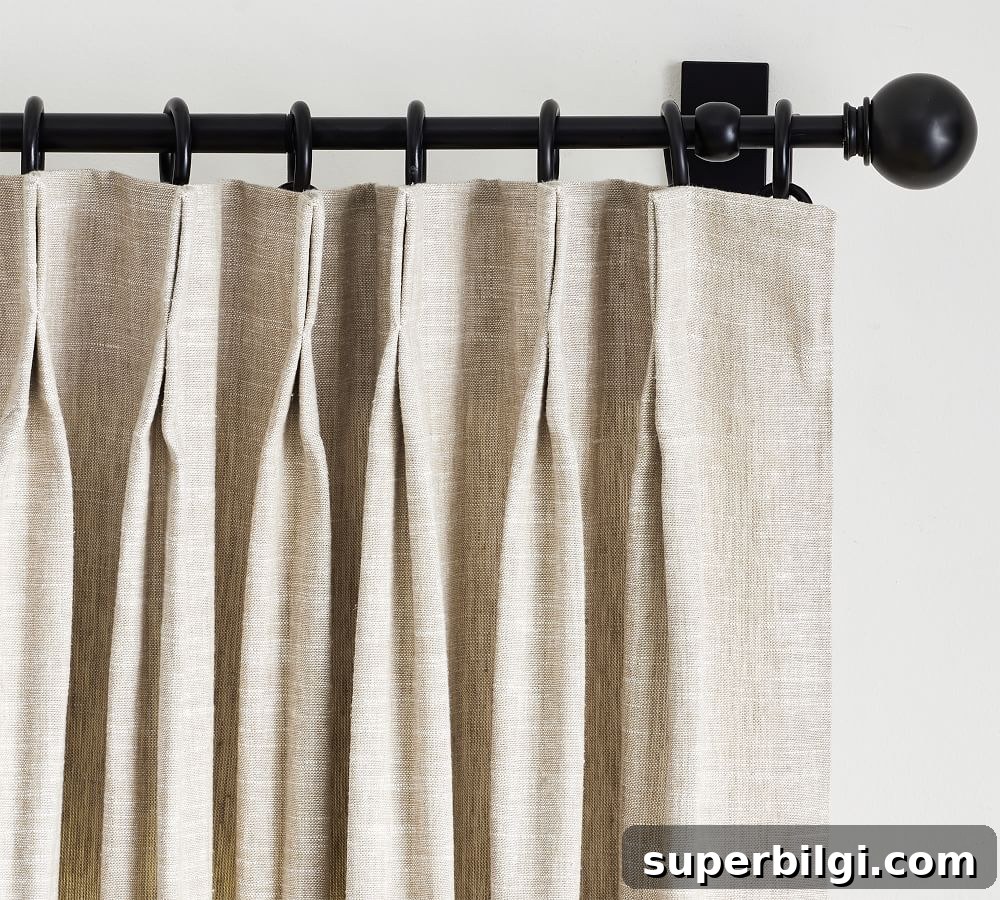
- Pinch pleat: A tailored, high-end look created by pinching fabric at the top; styles range from single to double or triple pinches.
- Pencil pleat: Tightly gathered folds at the top that form a neat, classic heading compatible with poles or tracks.
- Box pleat: Fabric is folded into box-shaped pleats for a structured, formal appearance.
- Flat panel: Simple flat tops hung on rings or clips for a casual, streamlined look and easy DIY installation.
Protective Lining
Adding a lining extends the life of curtain fabric, especially in sun-exposed windows where fading can occur. Liners also improve insulation and light control—combine sheers with a secondary liner for layered versatility and better privacy or blackout performance.
Final Touches: Curtain Hardware and Accessories
Hardware choices complete the look and affect performance. Consider rod style, finish, finials, and additional accessories to match your room’s aesthetic and functionality.
Curtain Rods and Finials
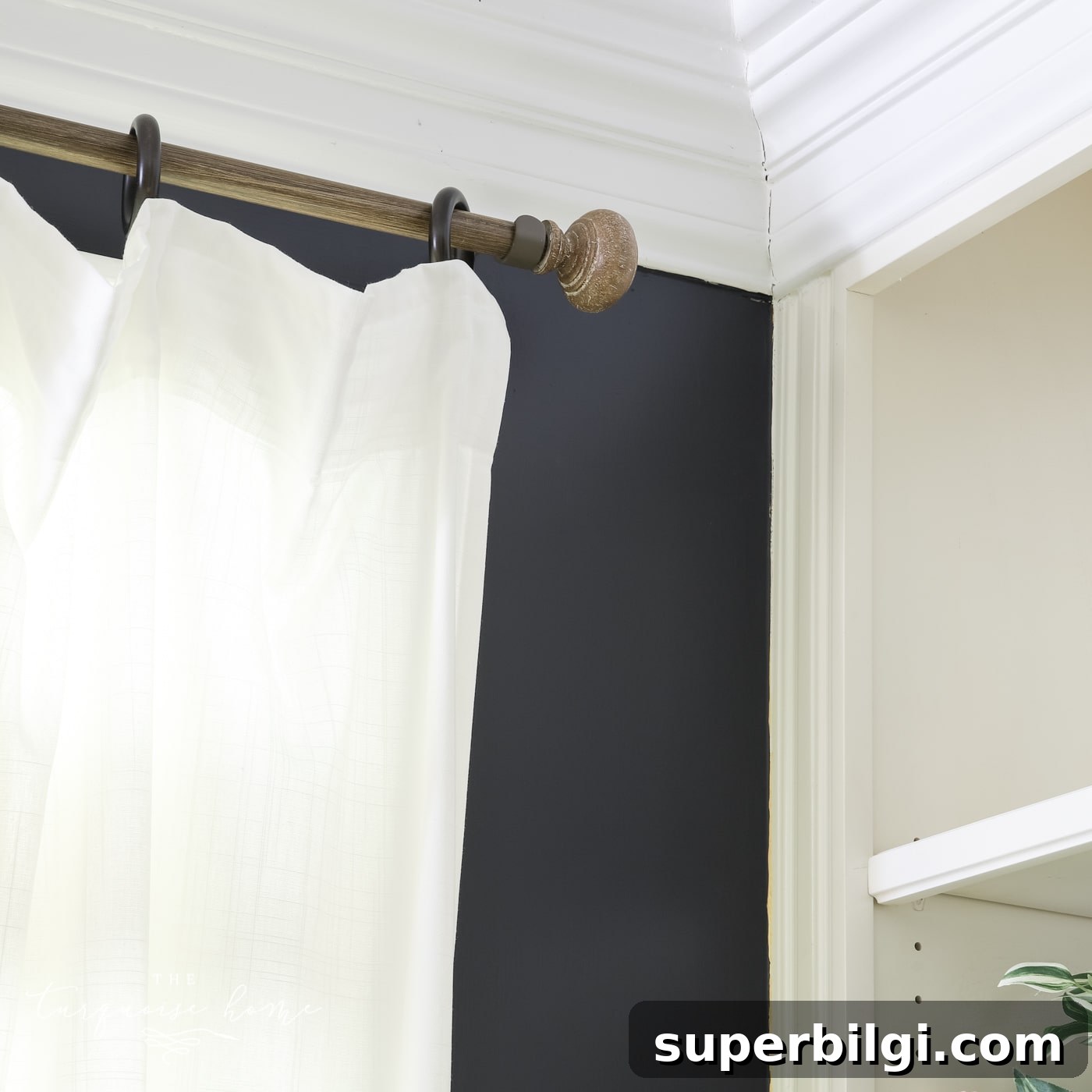
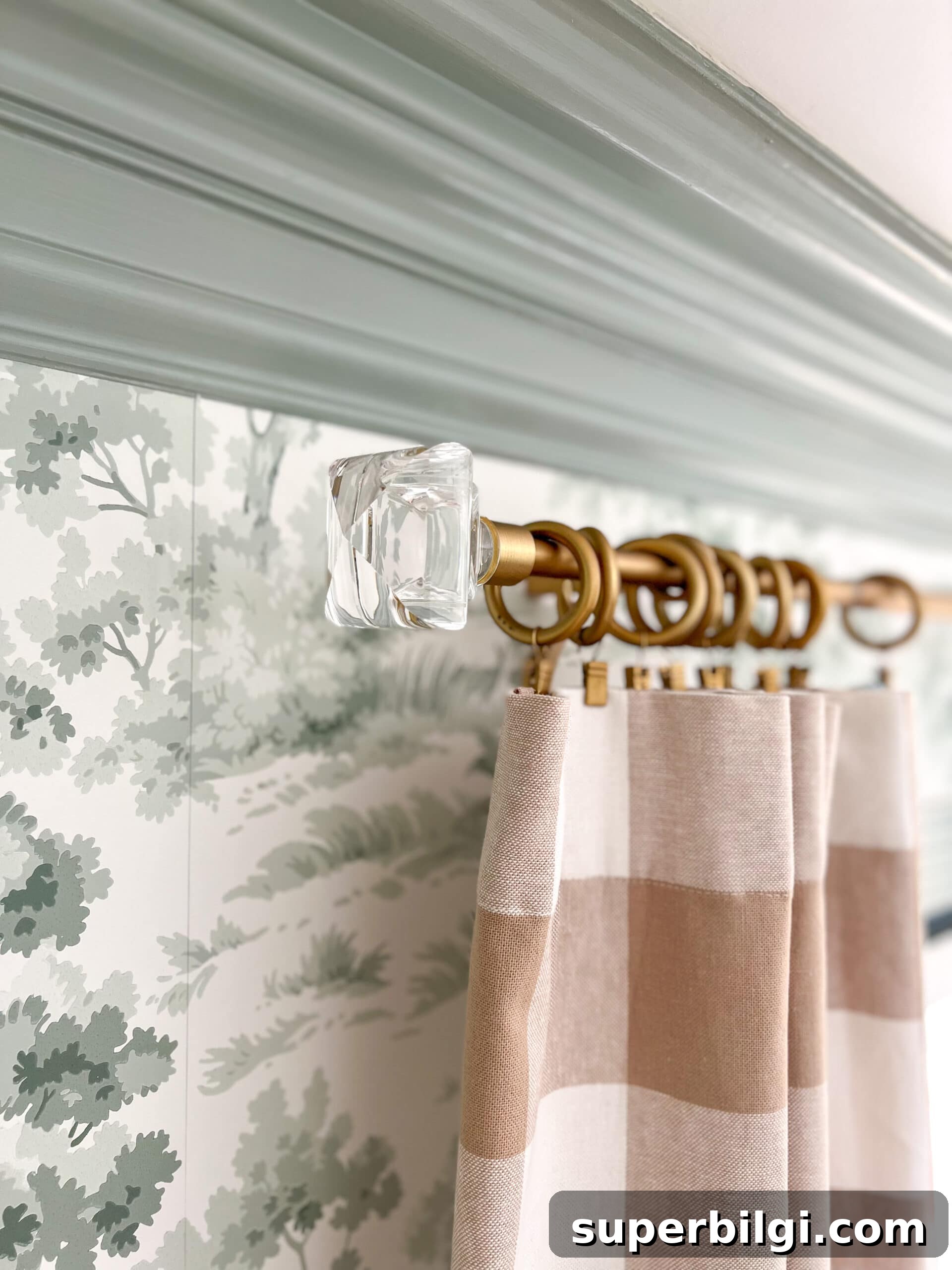
Curtain rods are a visible design element: choose a finish and finial that complements other metal or wood accents in the room. Finials can be ornate for a glamorous room or simple for a minimalist space.
Where to Mount Curtain Rods
Mount curtain rods either inside the window frame for a contained look or outside the frame for a more traditional installation. For a high-and-wide appearance, place the rod 1–2 inches below the ceiling or crown moulding, or hang several inches above the window opening and extend the rod 3–6 inches beyond each side of the frame so curtains can stack neatly and maximize incoming light.
Use a rod diameter of at least 1 inch (or heavier-duty support) to prevent sagging, especially for wide windows or heavy draperies. For very long spans, consider multiple rods joined with proper supports.
Other Hardware and Accessories
- Tiebacks: Fabric or cord tiebacks pull panels to the side for a traditional look and let in more light.
- Holdbacks: Wall-mounted hooks that tuck curtains neatly aside while keeping fabric off the window.
- Brackets: Wall- or ceiling-mounted supports that hold rods in place; heavy curtains need stronger brackets and additional supports across wide spans.
- Rings or clips: Useful for attaching panels to the rod and can be decorative as well as functional.
- Drapery wand: A wand helps open and close heavy draperies without touching the fabric, preserving the material and keeping oils from hands off delicate textiles.
Types of Curtains We Love for Living Rooms
There’s no single right answer when choosing curtains, but these styles consistently perform well in living rooms for both looks and function.
Pinch Pleat Linen Drapes
Pinch pleat linen drapes are a classic, elevated choice. Linen has a beautiful natural texture and pairs well with either light-filtering or blackout liners for versatility. This style is refined and works across a range of decor styles.
Pinch Pleat Faux Linen Curtains
If you love the linen look but prefer a more budget-friendly option, faux linen delivers texture and durability at a lower cost. Many faux linen panels come with room-darkening liners that still allow some natural light to filter through.
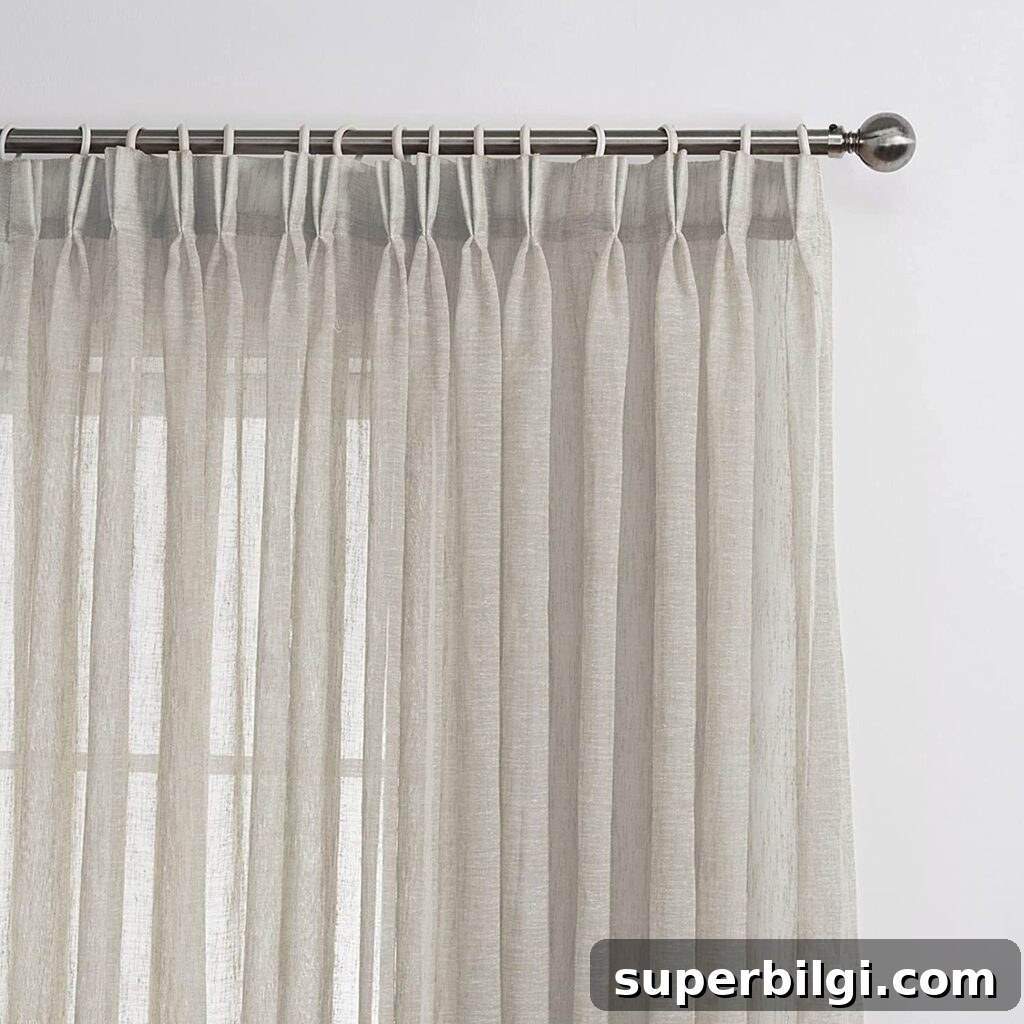
Pinch Pleat Sheer Curtains
For living rooms that prioritize natural light and an airy feel, pinch pleat sheers provide the elegance of tailored pleats without blocking daylight. They’re ideal when you want the look of curtains without full opacity.
Flat Panel Linen Window Curtain Panels
Flat panel linen curtains create a relaxed, modern vibe. Hung with rings or clips, they’re simple to install, easy to care for, and provide a clean, casual look that complements many styles of living rooms.
Final Thoughts
When choosing curtains for the living room, focus on two essentials: style and function. Select fabrics, lengths, and headings that suit your design vision and meet practical needs like privacy, light control, and maintenance. If both questions—do I like the design and do they function properly—are answered with a yes, you’re ready to enjoy your new window treatments and experiment with seasonal swaps or layered looks.
More posts you may enjoy:
- The Best Window Treatment Options for Every Room
- Everything You Need to Know to Choose the Best Bamboo Shades
- The Best Living Room Paint Colors
- How to Decorate a Living Room
- Photo Gallery Wall in the Living Room