
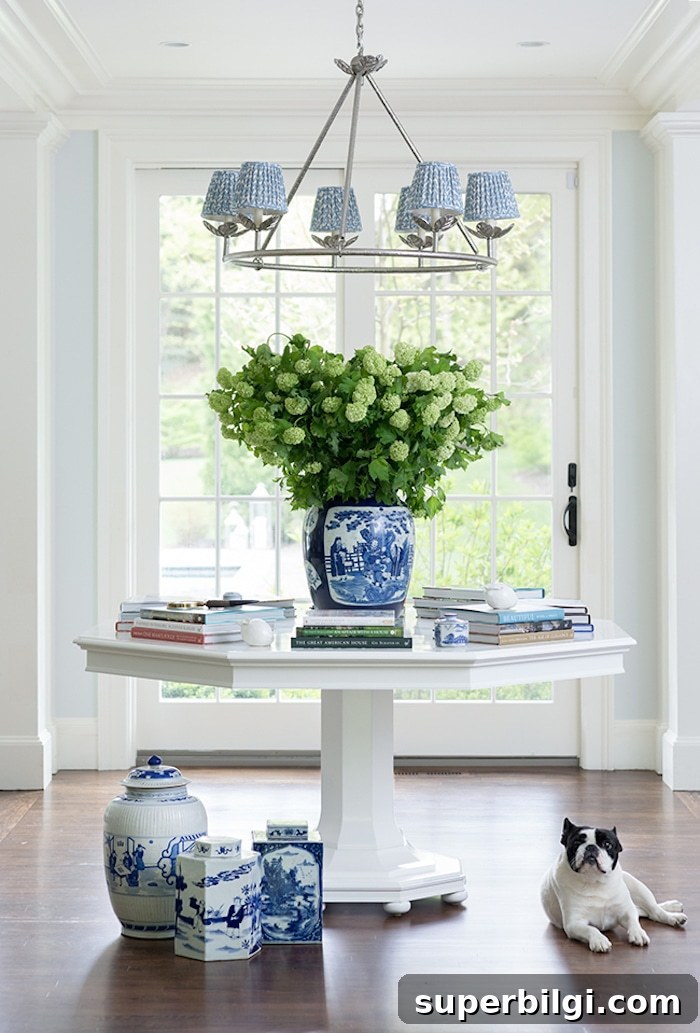
Decorating with ginger jars, temple jars, and other chinoiserie pieces has returned in popularity recently. If you love classic blue-and-white pairings or traditional interiors, these ceramics are easy, timeless accents. If you’ve admired them but aren’t sure how to use ginger jars in your home, this guide offers practical, stylish ideas to get you started.
The great advantage of ginger jars is their versatility. They complement many design styles—from traditional and coastal to farmhouse and grandmillennial—and they work in nearly every room, adding pattern, color, and a sense of crafted detail.
Below I explain a few basics about ginger jars and related pieces, then share creative ways to style them around the house. If you already own a favorite, skip ahead to the styling ideas.
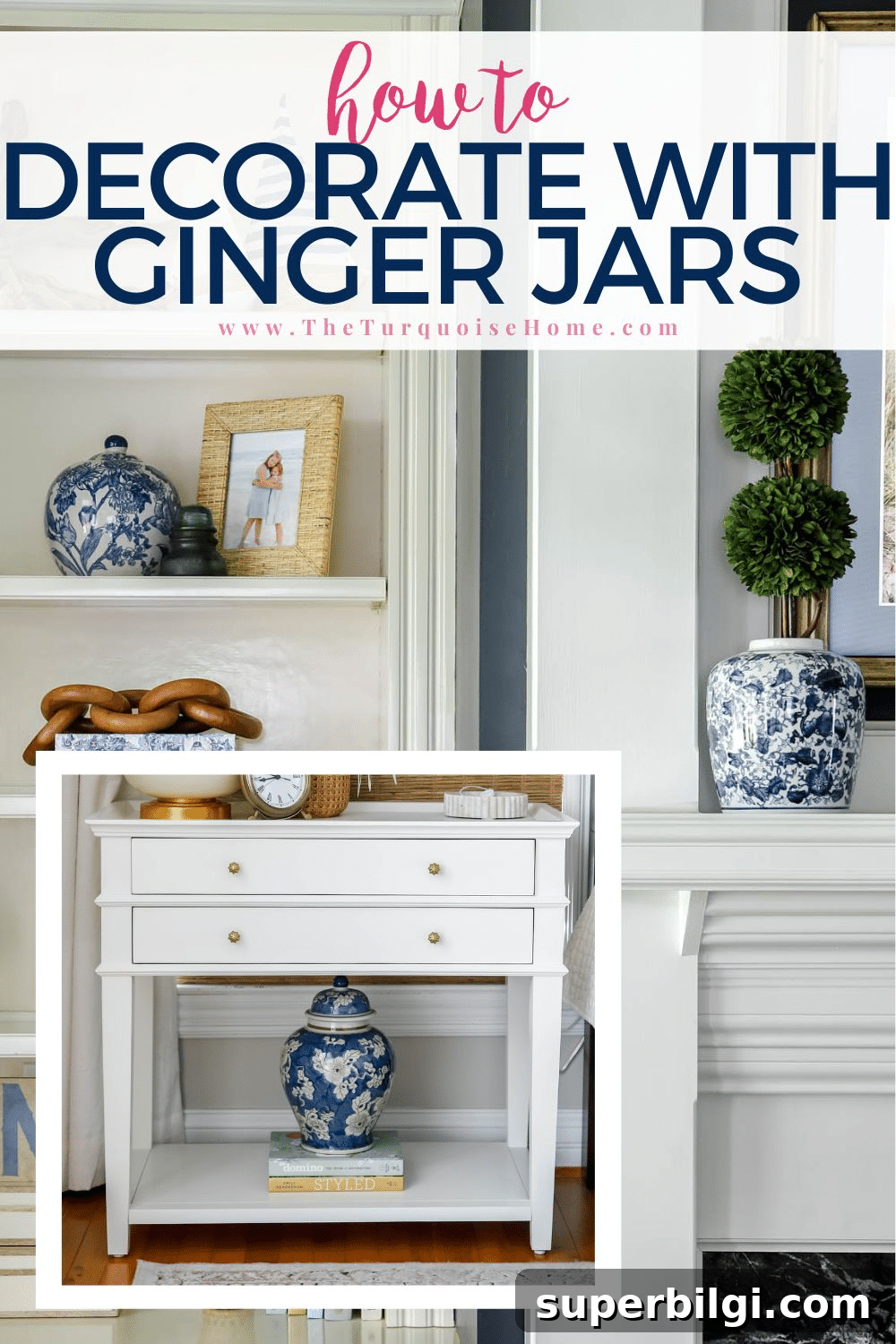
This post contains affiliate links for your convenience.
What is a ginger jar, exactly?
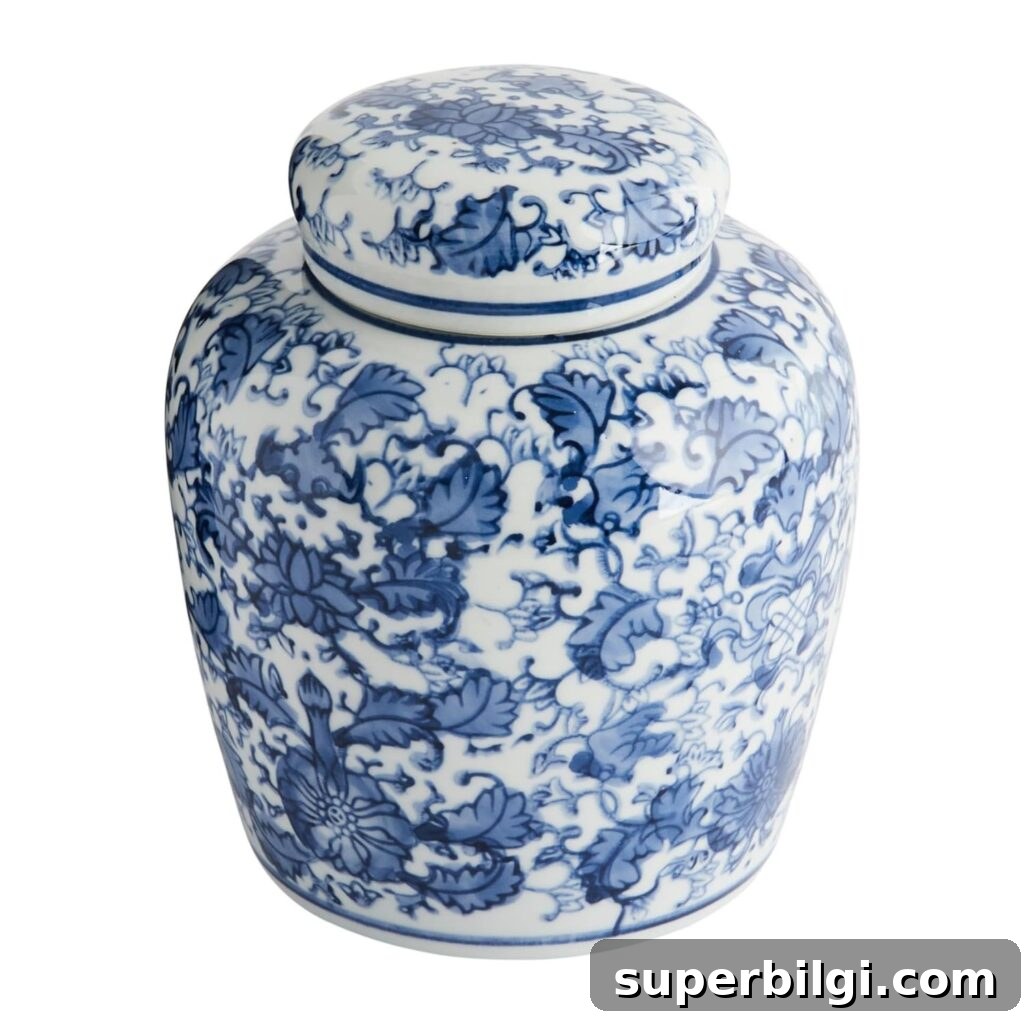
Ginger jars have their origins in ancient China and became more widely known in the West during the 17th to 19th centuries. Originally they were utilitarian storage vessels for spices, herbs, salt, and other goods—ginger being one of the commonly stored spices, which is how the jars came to be associated with that name. Over time they evolved into decorative ceramics prized for their forms and blue-and-white or polychrome patterns.
What is the difference between a ginger jar and a temple jar?
Temple jars and ginger jars share similar decorative motifs but differ in shape. Temple jars tend to be taller, often tapering toward the base, and they may feature a domed lid with a finial. Ginger jars are typically wider and more bulbous. You’ll also encounter rectangular tea jars and canister styles that carry the same chinoiserie patterns—each offers a slightly different silhouette for layering and composition in your decor.
How to Decorate With Ginger Jars, Temple Jars & Tea Jars
Below are tried-and-true ways to incorporate chinoiserie ceramics throughout your home. Mix shapes and sizes for depth, pair with natural textures, and use them both as standalone accents and practical containers.
1. Ginger Jar Topiaries
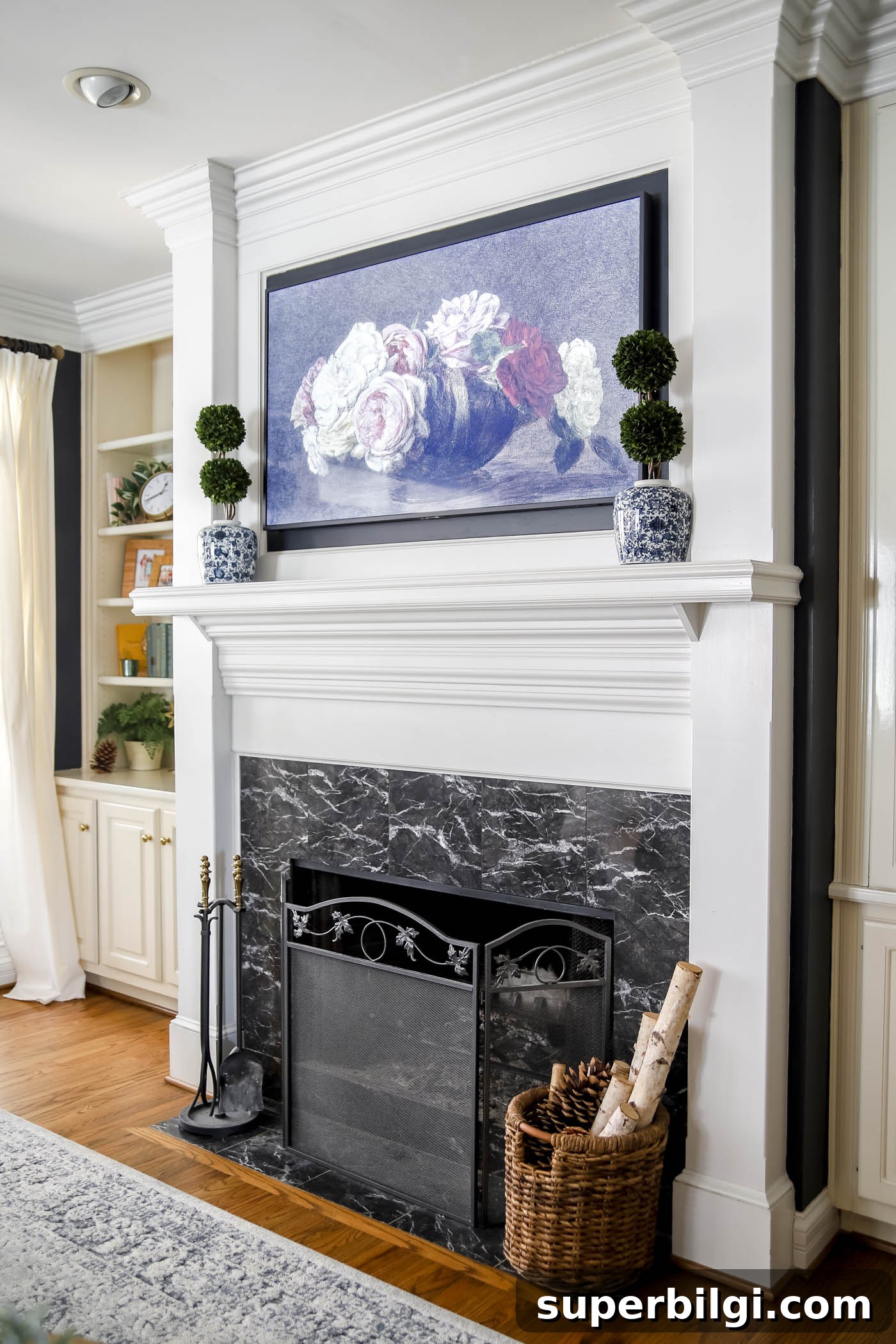
One of the most classic looks is placing preserved or faux topiaries inside ginger jars. A pair flanking a mantel, console, or entry table creates symmetry and timeless appeal. The structured greenery plays beautifully against the ornate patterns—an elegant choice that works year-round.
2. Centerpiece with Ginger Jars
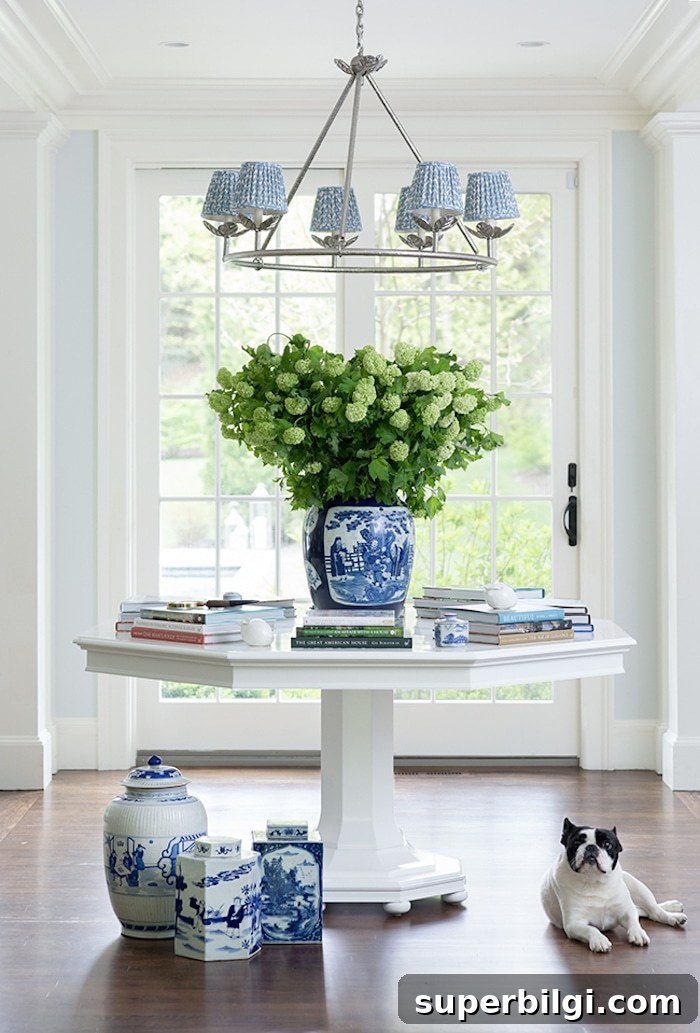
Use a ginger jar as the base for a floral or botanical centerpiece. Their intricate patterns and glossy finishes make arrangements look polished, whether placed on a dining table, entry console, or coffee table. Surround the jar with stacked books or small accessories for a layered vignette.
3. Chinoiserie Jar Art
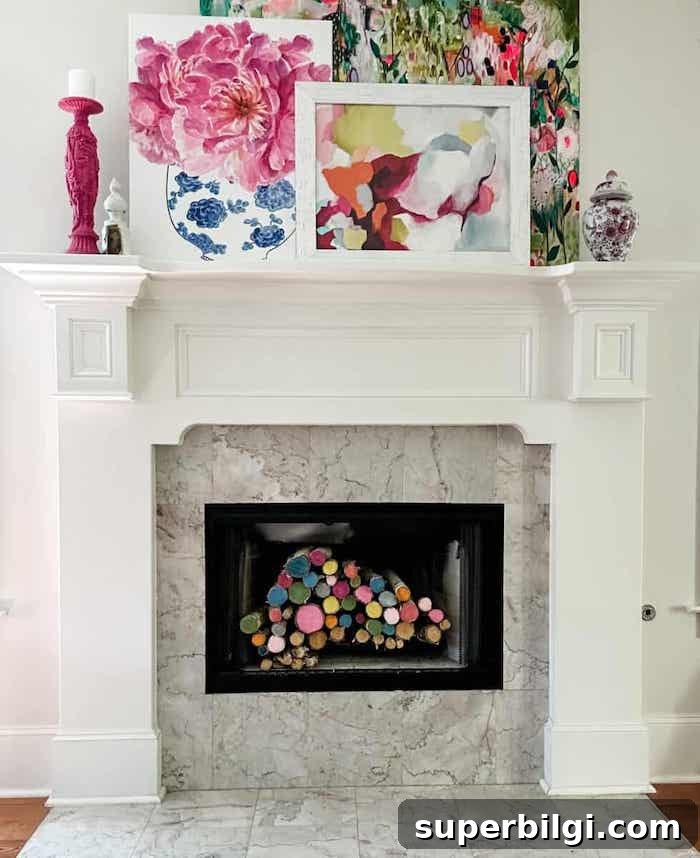
Ginger jars frequently appear in paintings and prints. Hanging artwork that references chinoiserie motifs or displaying a three-dimensional jar alongside bold prints creates an interesting dialogue between 2D and 3D elements.
4. Ginger Jars as a Vase
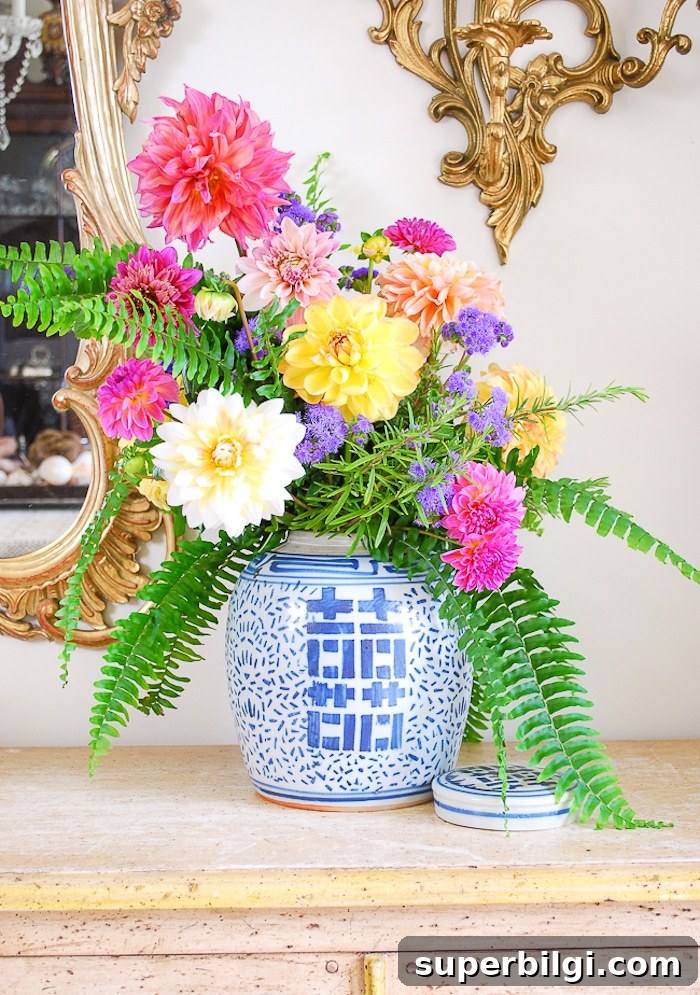
Use a ginger jar as a vase for seasonal blooms. Their narrow necks and decorative bodies frame arrangements beautifully and add a refined focal point to living rooms, dining rooms, or breakfast nooks.
5. Non-Traditional Colored Ginger Jars
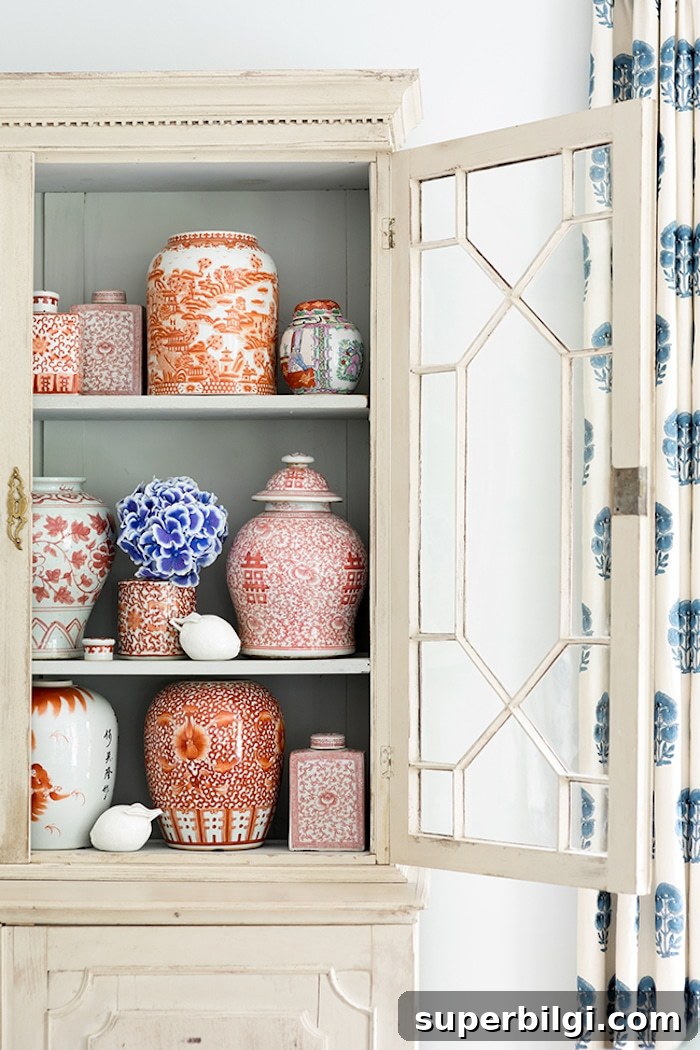
While blue and white is the signature look, ginger jars come in many colors. Introducing a bold hue—like coral or orange—can energize a room and create an unexpected, modern spin on a classic piece.
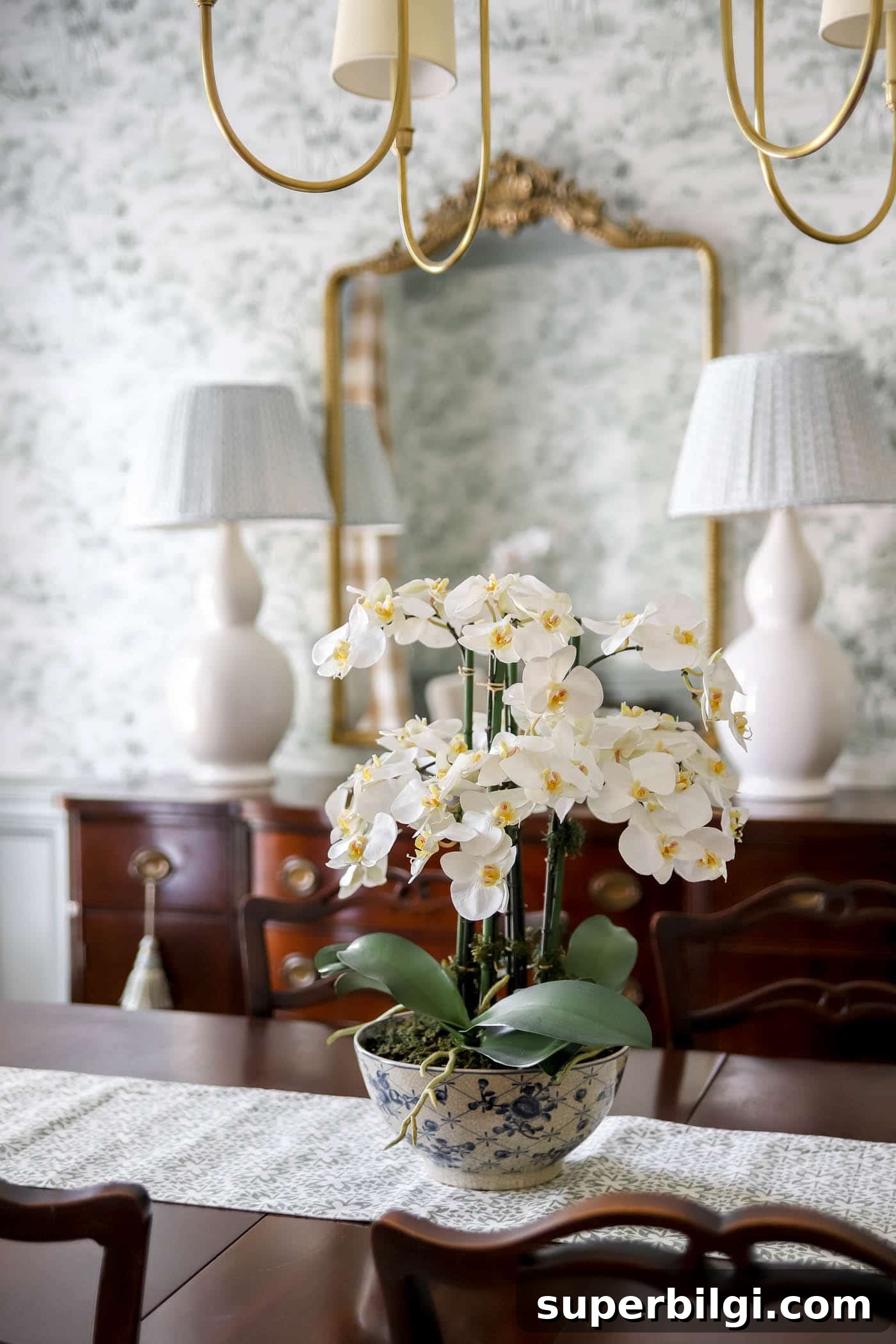
6. Blue and White Bowl Decor
Don’t limit chinoiserie ceramics to jars—bowls and platters work equally well. A blue-and-white bowl can hold faux orchids, fruit, or other decorative objects and instantly brings classic pattern and color into a space.
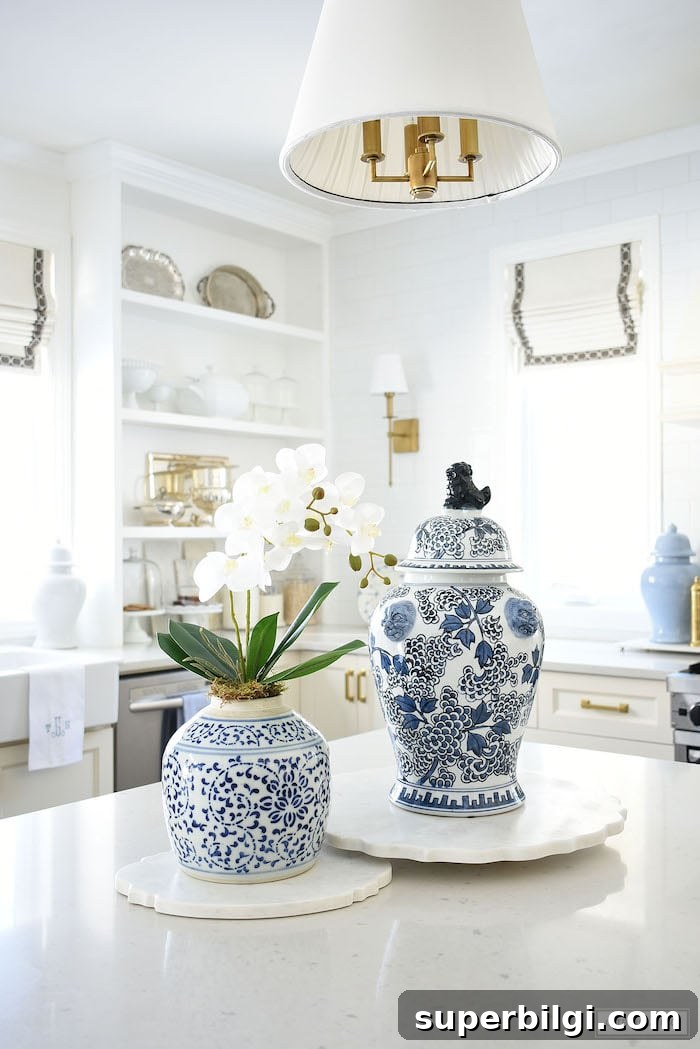
7. Kitchen Counter Decor
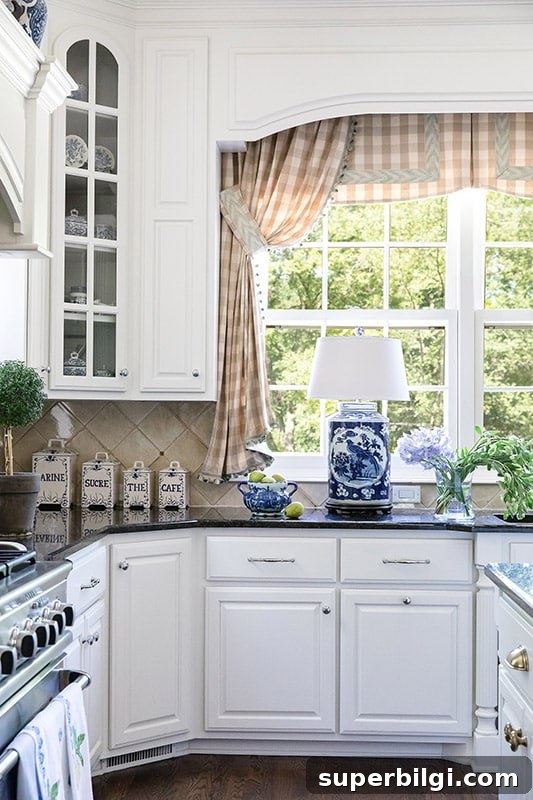
Ginger jars can add charm to kitchens—use them on islands, counters, or open shelves as purely decorative accents or to conceal small essentials. Their pattern provides contrast against plain cabinetry and tile.
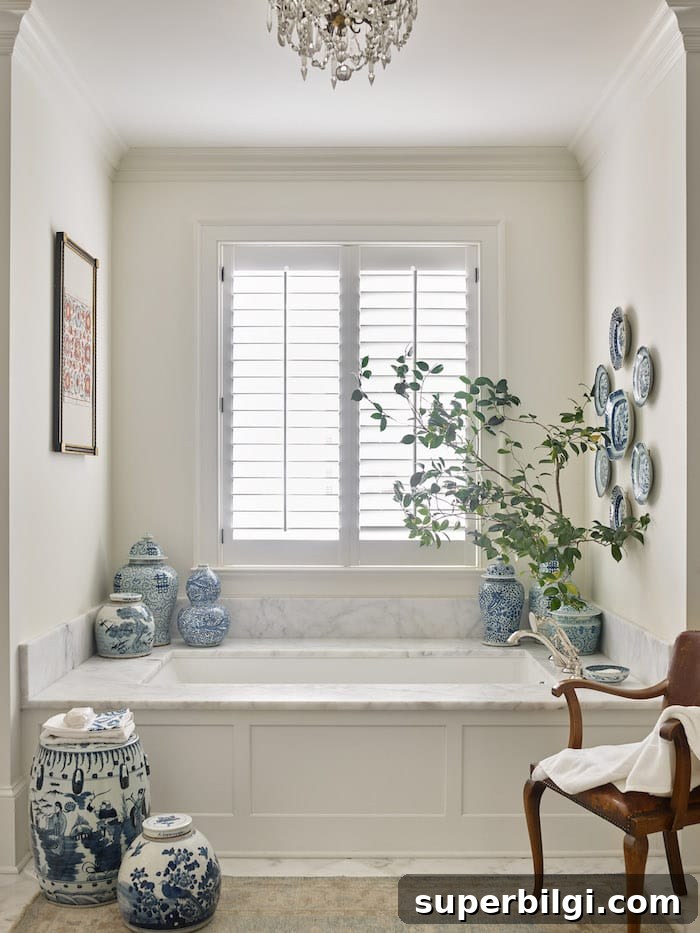
8. Chinoiserie Jars for the Bathroom
In bathrooms, larger jars can store cotton balls or bath salts, while smaller pieces and garden stools bring sculptural interest. The result is a spa-like, collected look that still feels functional.
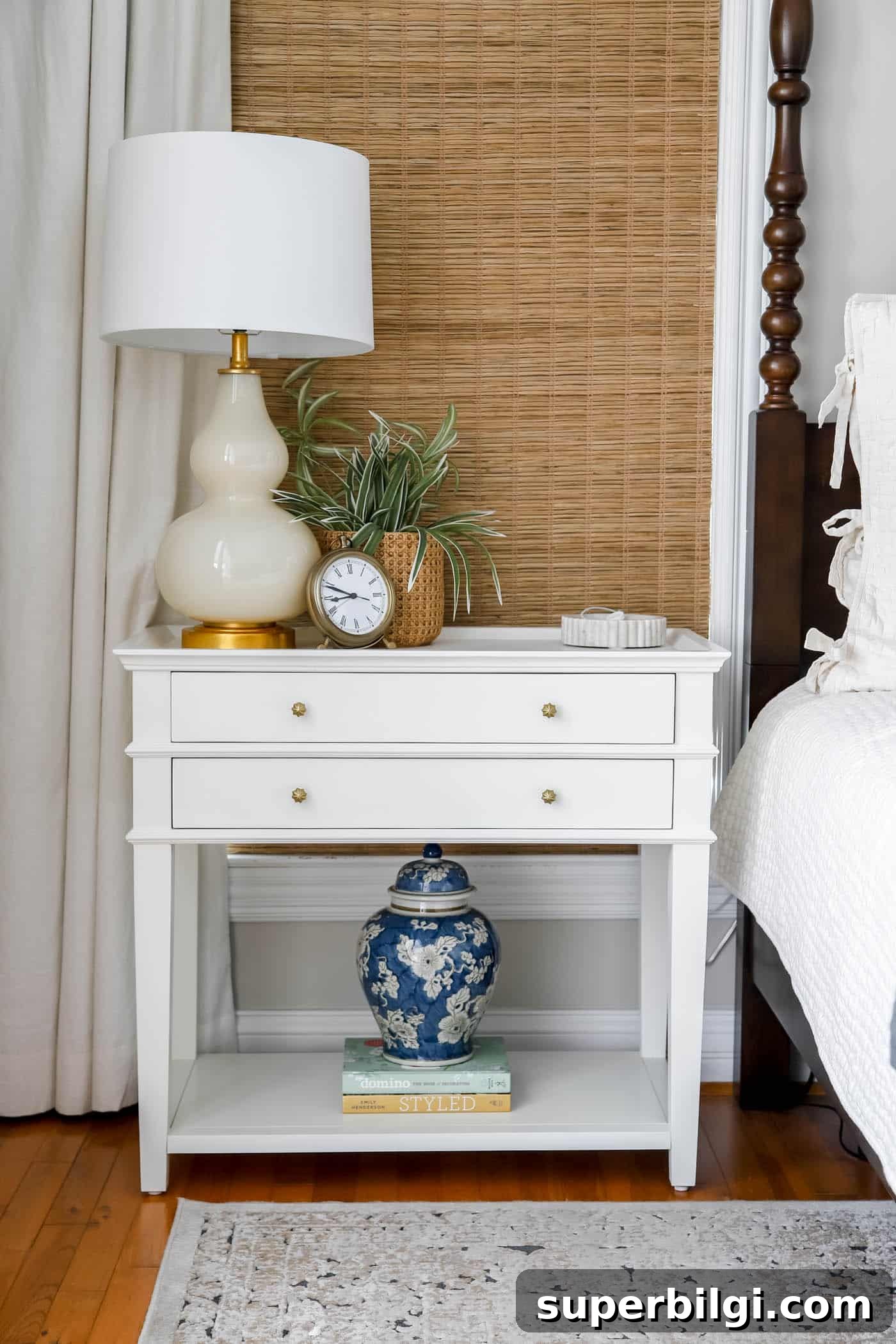
9. Ginger Jar Decor in the Bedroom
Place a temple jar on a bedside shelf or within a nightstand cubby for pattern without clutter. Their decorative shape can soften a modern interior or deepen the traditional character of a cozy bedroom.
10. Ginger Jar Lamps
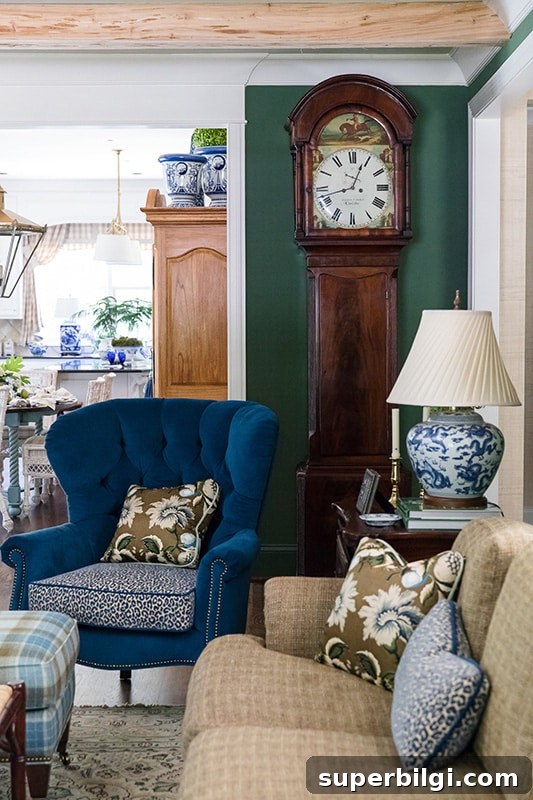
Ginger jar lamp bases combine function and beauty. A well-proportioned lamp with a simple shade highlights the ceramic’s pattern and becomes a compelling focal point on a console, kitchen counter, or living room side table.
11. Printable Ginger Jar Art {Bonus Freebie!}
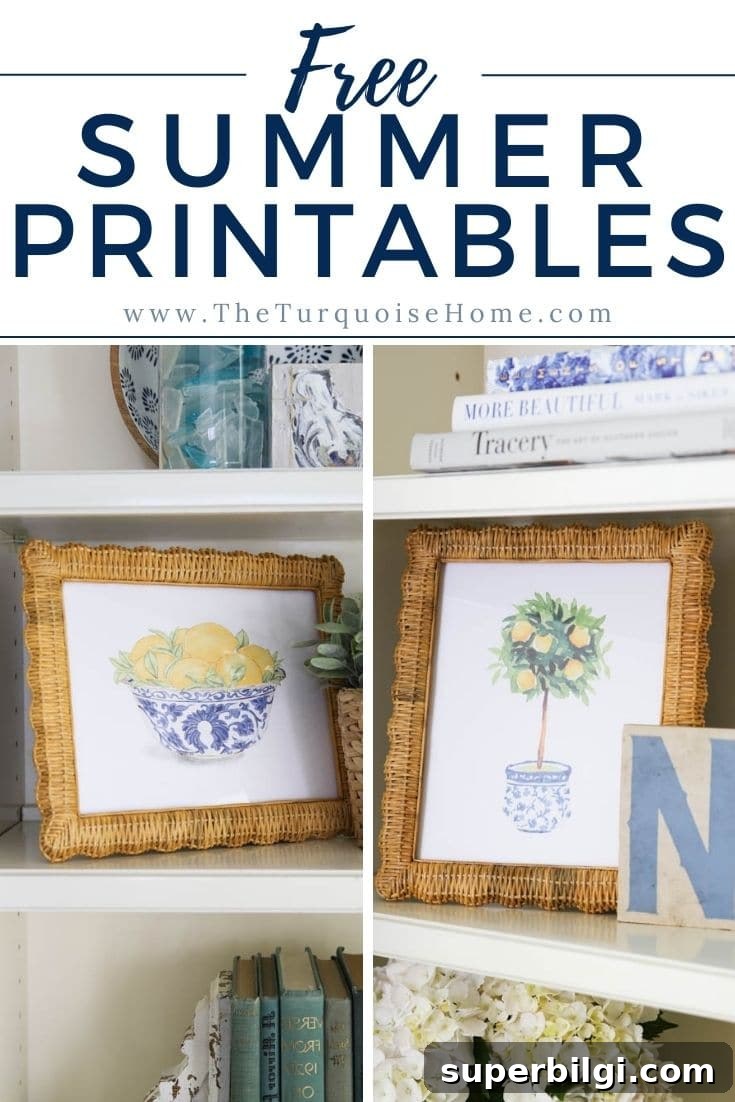
If you prefer 2D solutions, printable ginger jar motifs work beautifully in simple frames or paired with woven textures. They’re an easy, affordable way to introduce the look seasonally—swap prints as the months change for fresh color updates.
Where to Buy Ginger Jars, Temple Jars and Tea Jars
Ginger jars and temple jars are available through many home decor retailers, boutique shops, and antique sources. Search for blue-and-white chinoiserie, temple jars, or tea canisters to compare sizes, finishes, and price ranges. Mixing authentic antiques with modern reproductions is a great way to create a curated, layered look.
Final Thoughts
Ginger jars remain one of the most approachable ways to introduce pattern, color, and classic style into a room. Whether you use them as planters, vases, lamp bases, or simple sculptural accents, they elevate everyday spaces with enduring charm. Try mixing shapes, scales, and colors to find a combination that feels uniquely yours.
More Posts You Will Love:
- What is Grandmillennial Style? {Decorating 101}
- How to Decorate Kitchen Counters {Decorating 101}
- 13 Amazing Corner Decor Ideas
- Styling the Best Coffee Table Books {Decorating 101}
- How to Select Wallpaper {Decorating 101}