
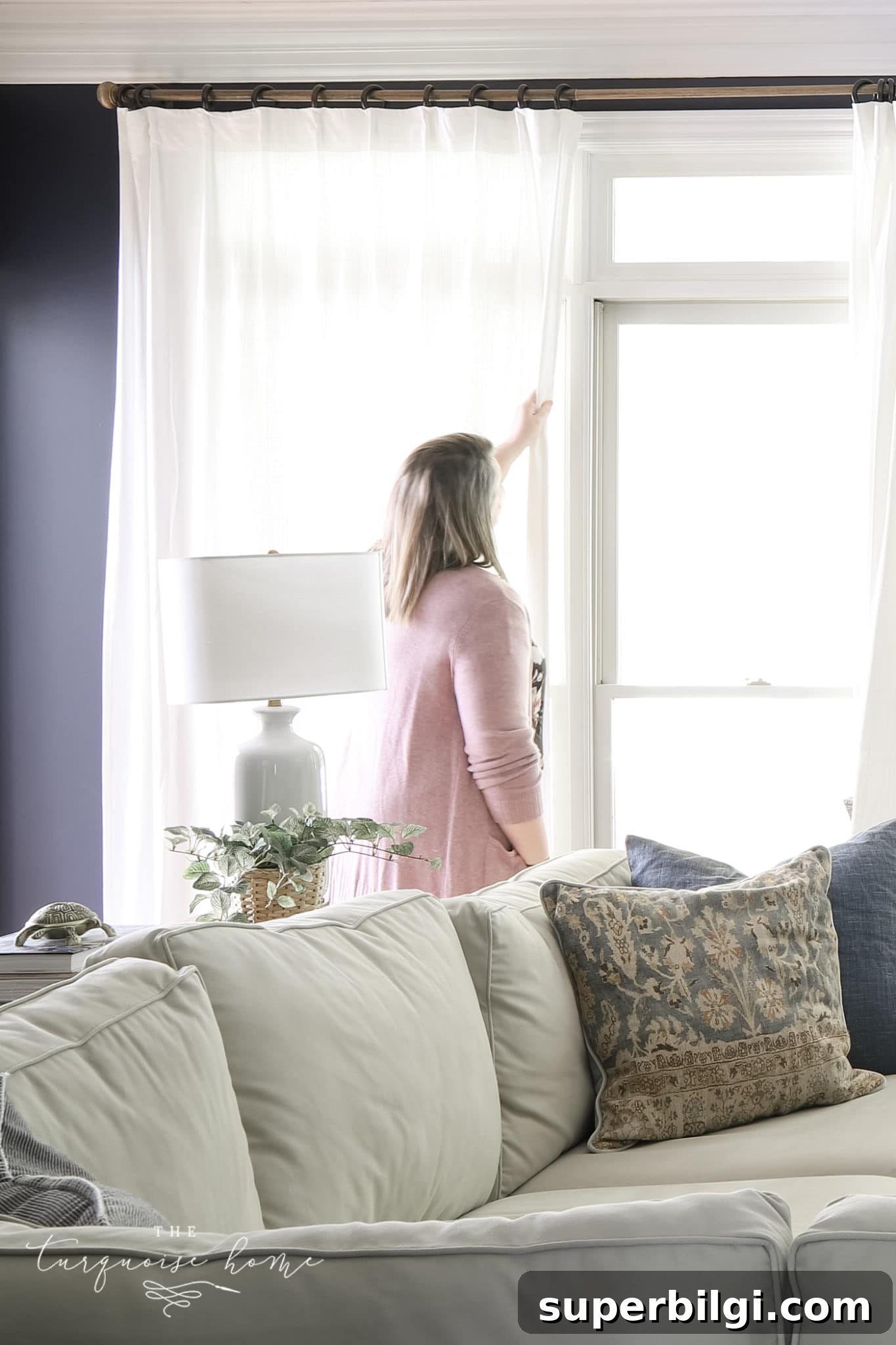
You’ve selected the perfect fabric, color, and hardware, and now it’s time to hang your curtains. Ready to turn your window-treatment vision into reality? Choosing curtains and drapes is one of my favorite decor projects—hanging them, less so. This clear, step-by-step guide will walk you through the process so you get professional-looking results without frustration.
I’ve hung many curtains over the years and learned a few reliable techniques along the way. I’m sharing those tips so you won’t end up with extra holes in your walls or curtains that look off. Follow these steps and you’ll be surprised how much easier the job becomes.
This post contains affiliate links for your convenience. See my full disclosure policy.
Supplies You Will Need to Hang Curtains
- Measuring tape (metal tape recommended)
- Level
- Laser level, if hanging across several windows
- Pencil and notepad
- Stud finder
- Drill
- Screwdriver
- Ladder
- Drywall anchors (if you can’t hit a stud)
- A helper—useful but not strictly required
- Curtain rods and brackets
- Curtain panels or drapes
How To Hang Curtains
Before you buy panels or hardware, take a few measurements and plan the look you want. Window placement, size, and how you want the curtains to function (privacy, blackout, decorative) should guide your choices. Below are the core steps—measure, select width and length, choose the rod, install brackets, and hang and adjust.
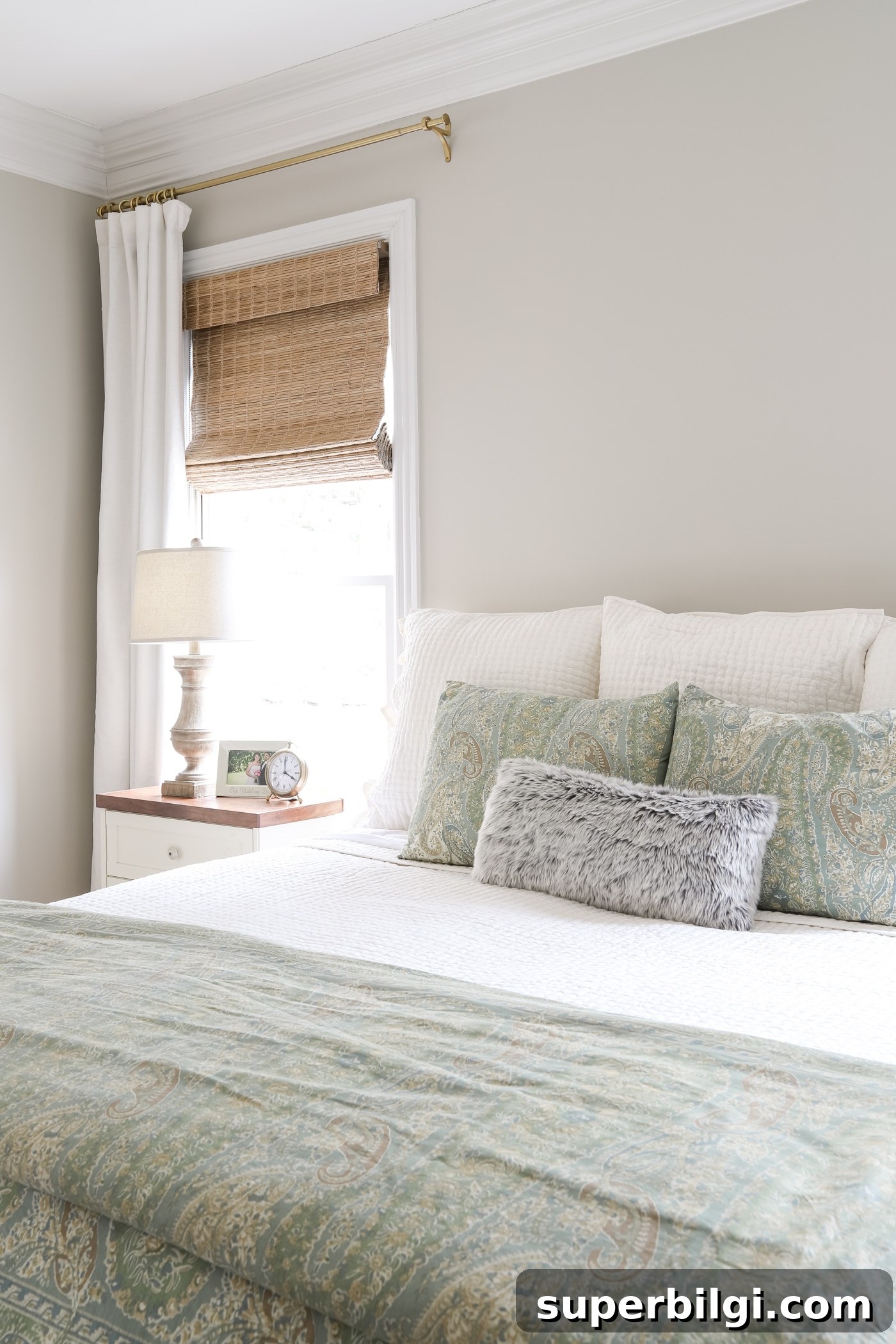
I love pairing light curtains with shades and warm hardware to control light and privacy. The combination of lined shades and blackout panels gives precise control over daylight while maintaining a soft, layered look.
1. Measure Your Windows & Do the Math
Accurate measurements are the foundation of a great installation. Use a durable tape measure and record your measurements clearly. Sketch each window with the surrounding wall and ceiling so you can visualize where the rod and brackets will go.
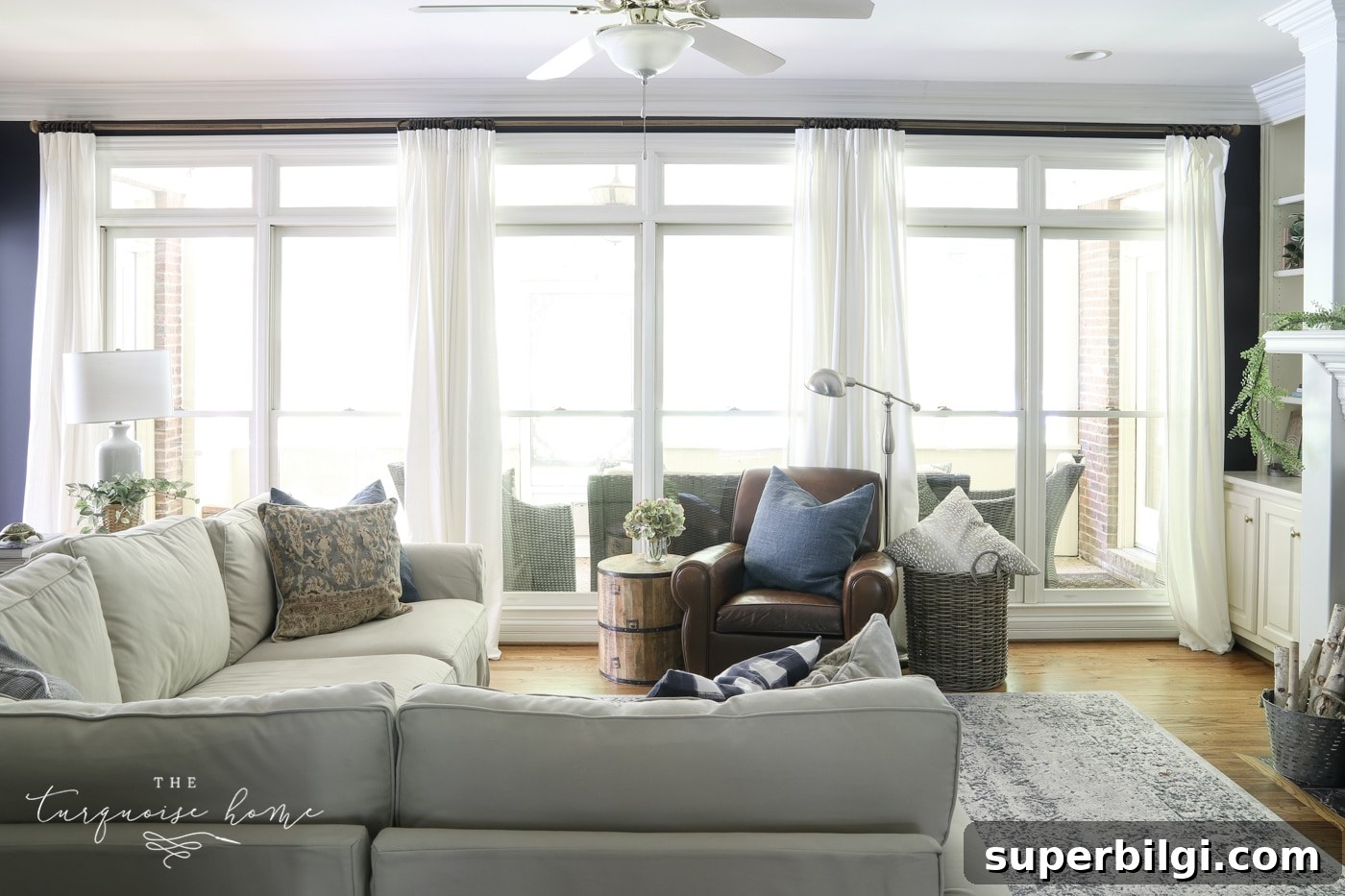
For bracket-mounted rods, measure the window width from the furthest outside edge of trim on one side to the outside edge on the other. If you’re treating several adjacent windows as one span, measure each section and the full combined width to determine rod length and how many panels you’ll need.
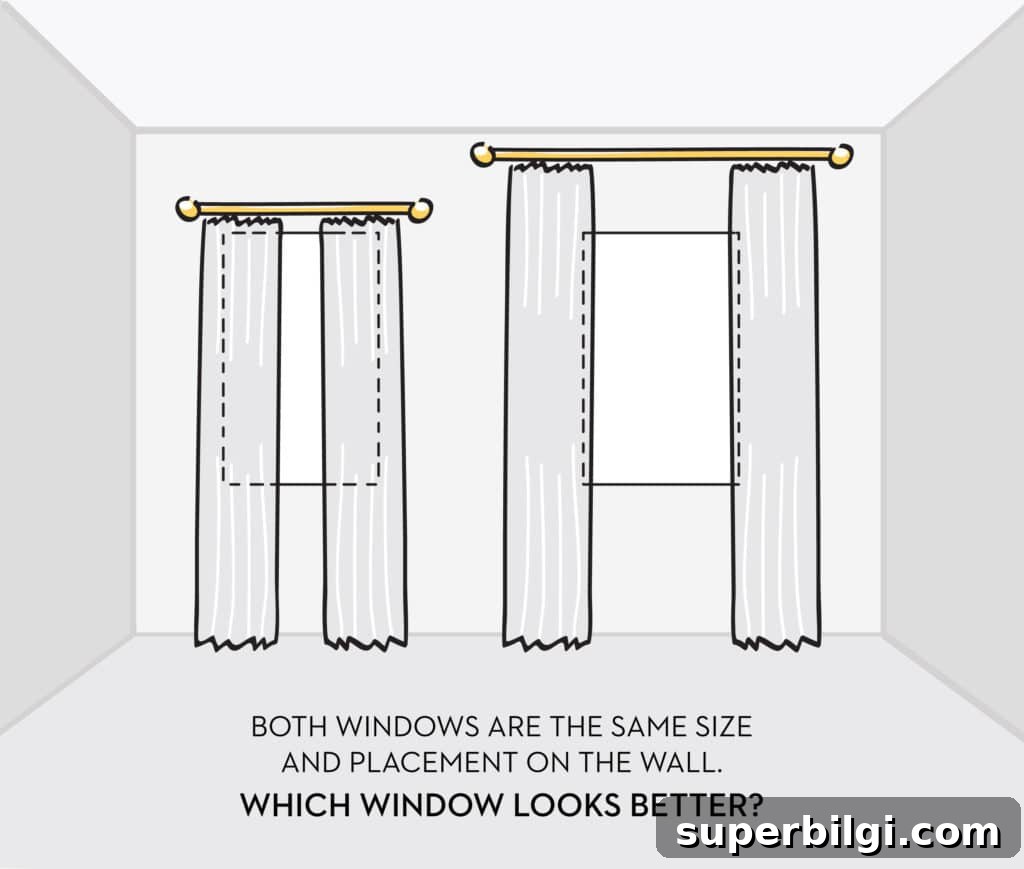
For height, decide whether you want high, floor-to-ceiling curtains or shorter panels. For the high-and-wide look, measure 4–6 inches above the top of the window frame to the floor. For shorter treatments (e.g., at a sill), measure to the desired endpoint. If using tension rods mounted inside the frame, measure inside the frame instead.
2. Choose the Best Curtain Width
A simple rule of thumb: add about 6 inches to each side of the window (12 inches total) to your window width to allow for proper coverage and stacking. For example, a 48-inch window becomes roughly 60 inches of total fabric. Divide that by how many panels you plan to use—usually two panels per window.
Aim for panels that are at least half the total width each. If you want a fuller look, choose wider panels or add extra panels, especially with lightweight or sheer fabrics that don’t naturally gather heavily.
3. Choose the Best Curtain Length
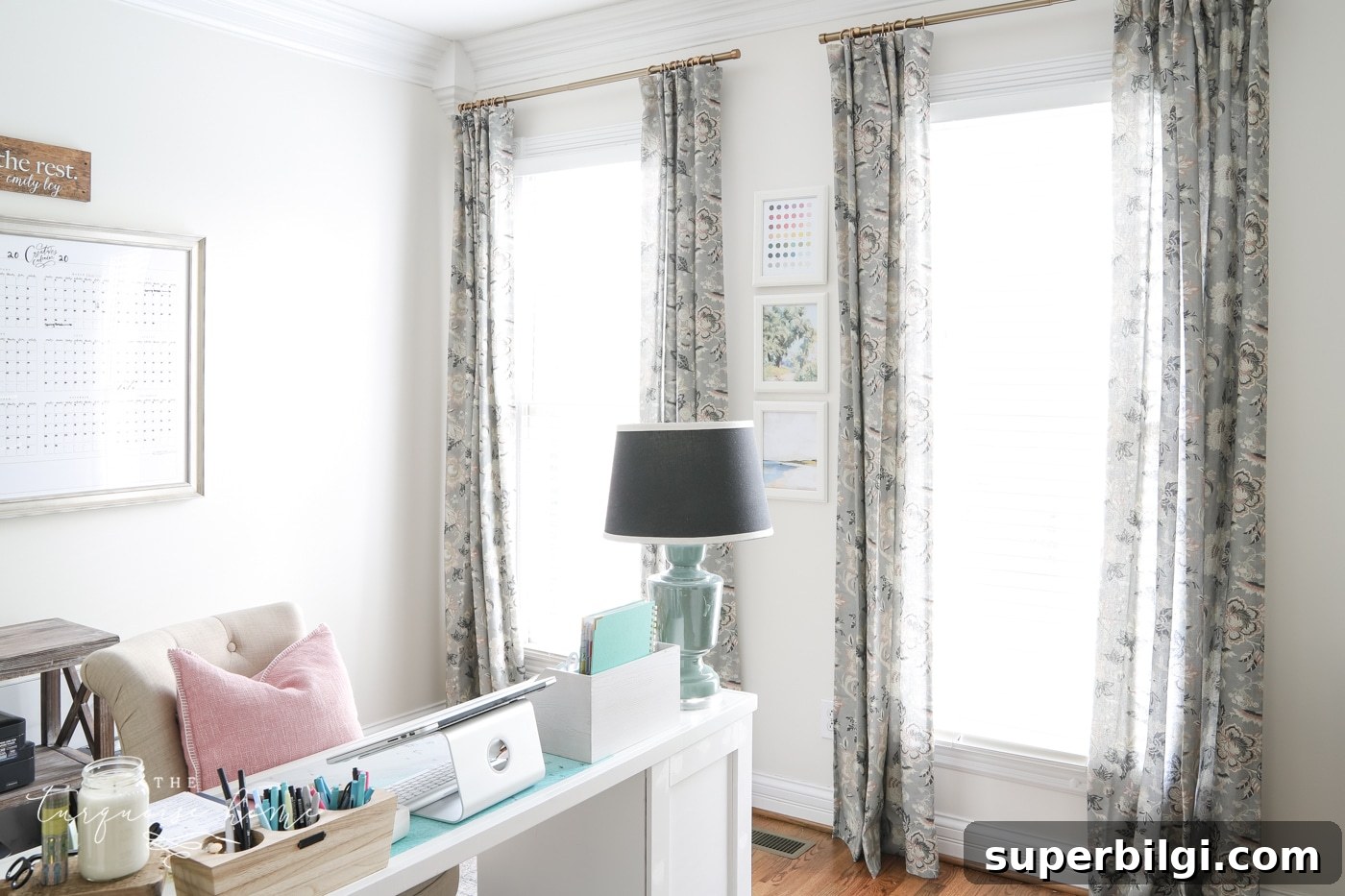
Curtain length affects the mood and perceived height of a room. Hanging rods close to the ceiling and letting full-length panels fall to the floor makes a room feel taller and more polished. If you open and close the curtains frequently, allow about a half-inch clearance above the floor. If panels remain mostly stationary, slight puddling can look luxurious in bedrooms or dressing rooms.
Common panel lengths are 63, 84, 96, 108, and 120 inches—choose the length that matches your measurements and desired look.
4. Choose the Best Curtain Rod Length
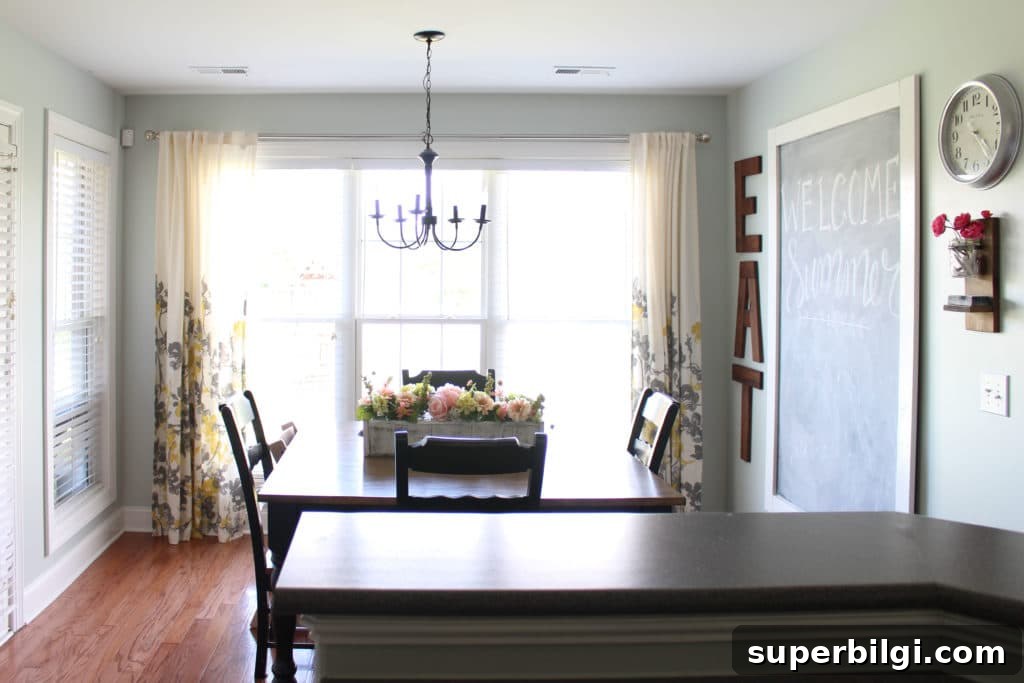
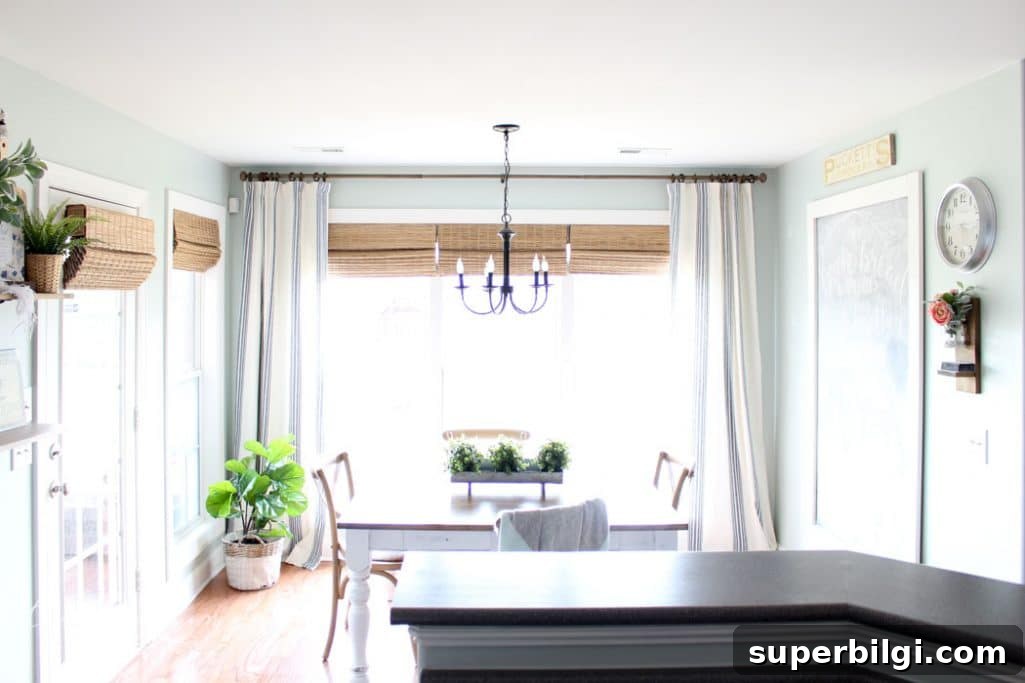
To size the rod, add 8–12 inches to the measured window width (4–6 inches per side is standard). For the 48-inch example, choose a rod about 56–60 inches long. Account for decorative finials when selecting a rod so the finials don’t extend beyond your planned spacing.
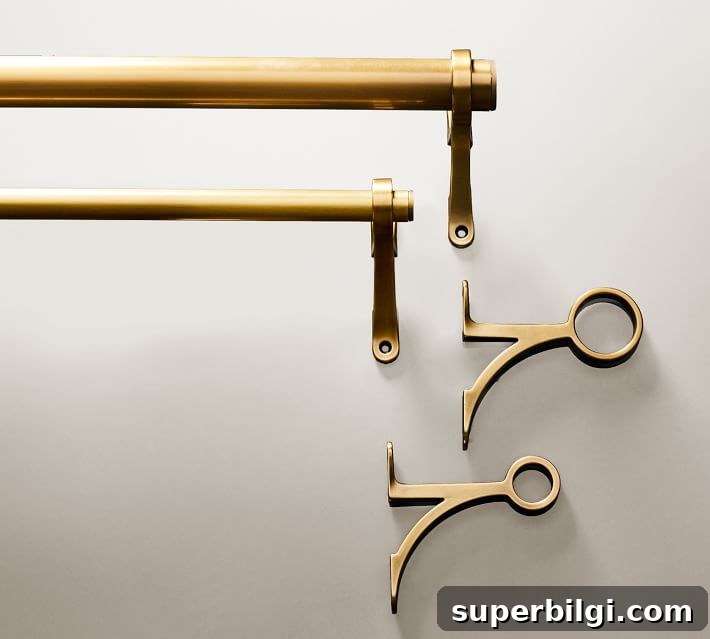
Long rods typically need a support bracket every 60 inches to prevent sagging; use more frequent supports for heavy fabrics or longer spans. Heavier fabrics also benefit from larger-diameter rods for stability.

5. Install Curtain Rod Brackets
Tools for this step: pencil, tape measure, stud finder, drill, screwdriver, level, and ladder. Mark a point about 3 inches horizontally from the top corner of the window trim and 4–6 inches above the frame (or higher toward the ceiling for a dramatic effect). Use a stud finder to locate studs; when a stud is not available, install quality drywall anchors for secure mounting.
Mount one bracket, then locate and level the opposite bracket. If your rod requires a center support, place it based on the end brackets so the rod is evenly supported. For wide spans, a laser level helps ensure straight alignment across multiple brackets.
6. Hang Curtains and Adjust
How you hang panels depends on their style. Rod-pocket panels thread onto the rod and hold a straighter, static look. Tab-top panels also sit on the rod and offer a neat top edge. Grommet panels slide on easily for a clean, modern look. For a tailored, adjustable finish, use curtain rings with hooks—this method allows you to fine-tune the hanging height and achieve a polished appearance.
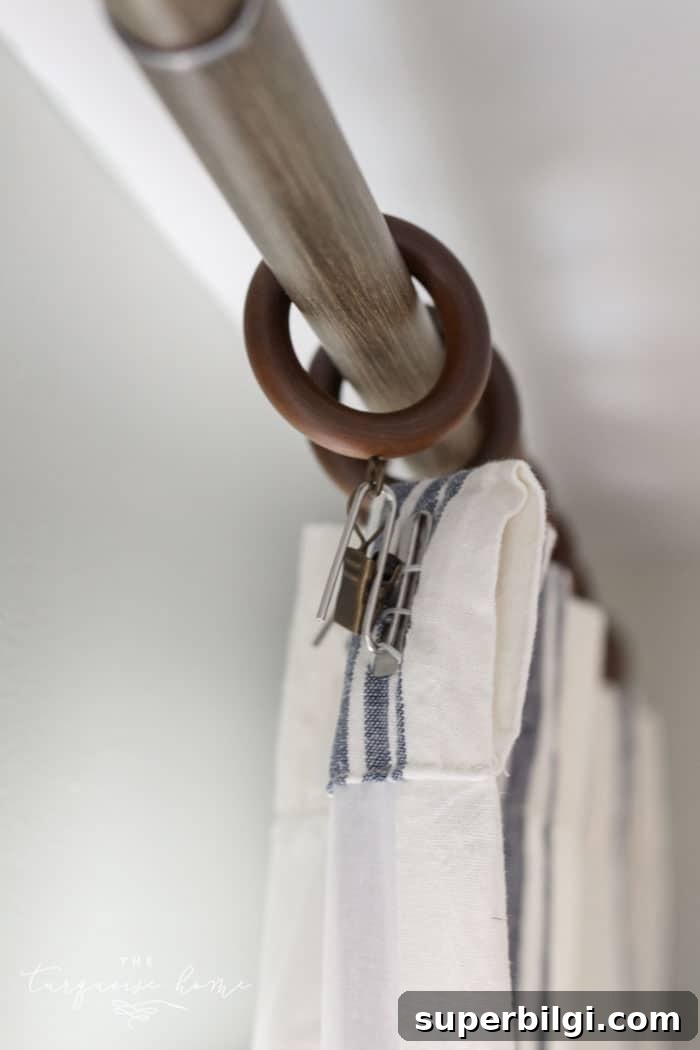
Adjust each panel so the gathers look even and the hems hang at the desired height. Walk the room and view the curtains from different angles, making small tweaks until the installation looks balanced and intentional.
Final Thoughts
Several factors influence the final result—how you want the curtains to function, the size and placement of your windows, the fabric choice, and your budget. With careful measurement and a few thoughtful decisions about width, length, and rod placement, you can achieve a high-end look without hiring a professional.
If full curtains aren’t the right answer for a particular window, consider a fabric-covered cornice board or shades to add pattern and color while leaving more of the glass exposed.
More Posts You Will Love:
- How To Add Curtain Trim Tape For A Custom Look
- The Best Window Treatment Options For Every Room
- How To Choose Living Room Curtains
- How To Hang An Extra Long Curtain Rod
- Gorgeous Cheap Curtain Ideas For Your Home