
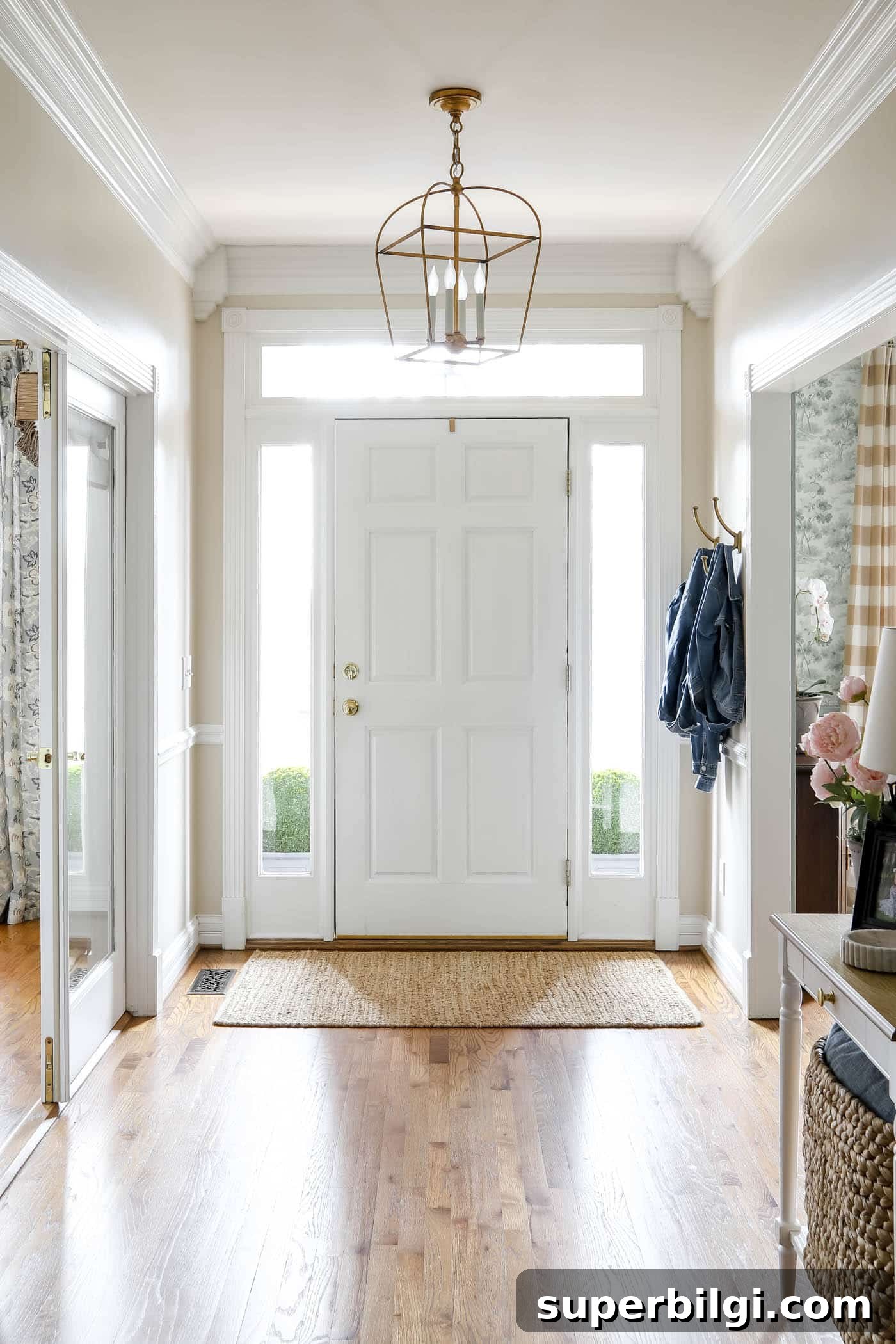
Choosing an entryway rug can be both practical and stylish. Below are clear, easy-to-follow tips to help you select a rug that stands up to heavy foot traffic while enhancing your home’s first impression.
An entryway rug does more than look good — it protects your floors, traps dirt, and helps keep the rest of your house cleaner. The right rug balances durability, appearance, and easy maintenance. Read on for practical advice on sizes, materials, placement, and ways to keep your rug secure.
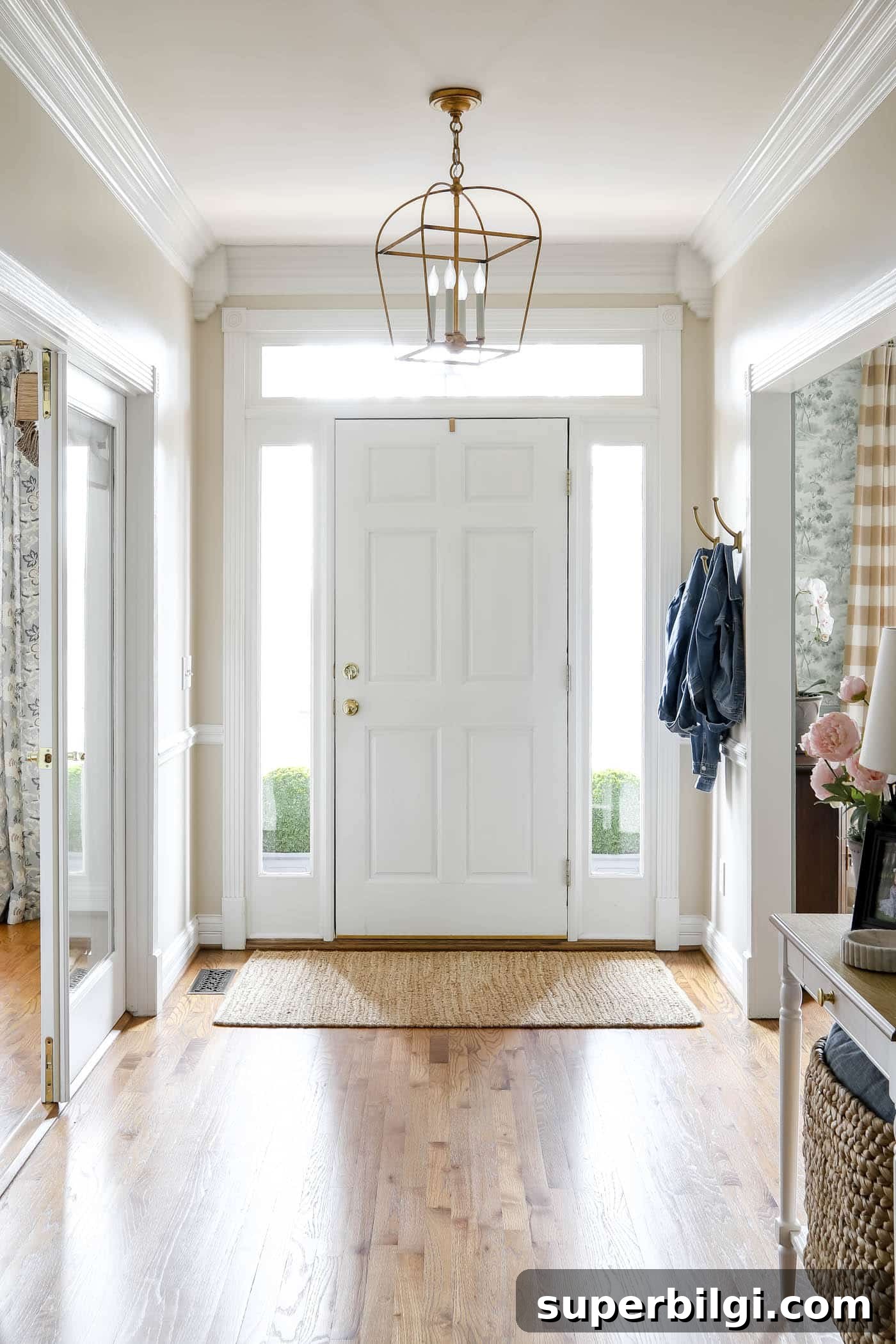
I’ve had a neutral heather jute/chenille rug in front of the door for years. It performs beautifully: attractive texture, coordinates with decor, easy to clean, and prevents dirt from being tracked into the house. That combination of looks and function is what you want to aim for.
How to Choose an Entryway Rug
Entryway rugs are a different category than living room or bedroom rugs. When selecting one, focus on durability, dirt-hiding ability, and safety. Below are seven practical criteria to help you choose wisely.
1. Size of the Rug
Start by measuring the entryway. The rug should cover the primary traffic path so people can wipe their feet before stepping into the home. Common sizes are 3′ x 5′ and runners for long, narrow foyers, but always match the rug to the actual dimensions of your space.
2. Rug Material
Choose a material that can withstand daily wear. Natural fibers like sisal, jute, and coir are durable and attractive; wool is resilient, dirt-resistant, and comfortable but usually costs more. Synthetic options such as nylon and polyester are affordable and stain-resistant. For a blend of good looks and practical maintenance, natural fibers are an excellent choice.
3. Color
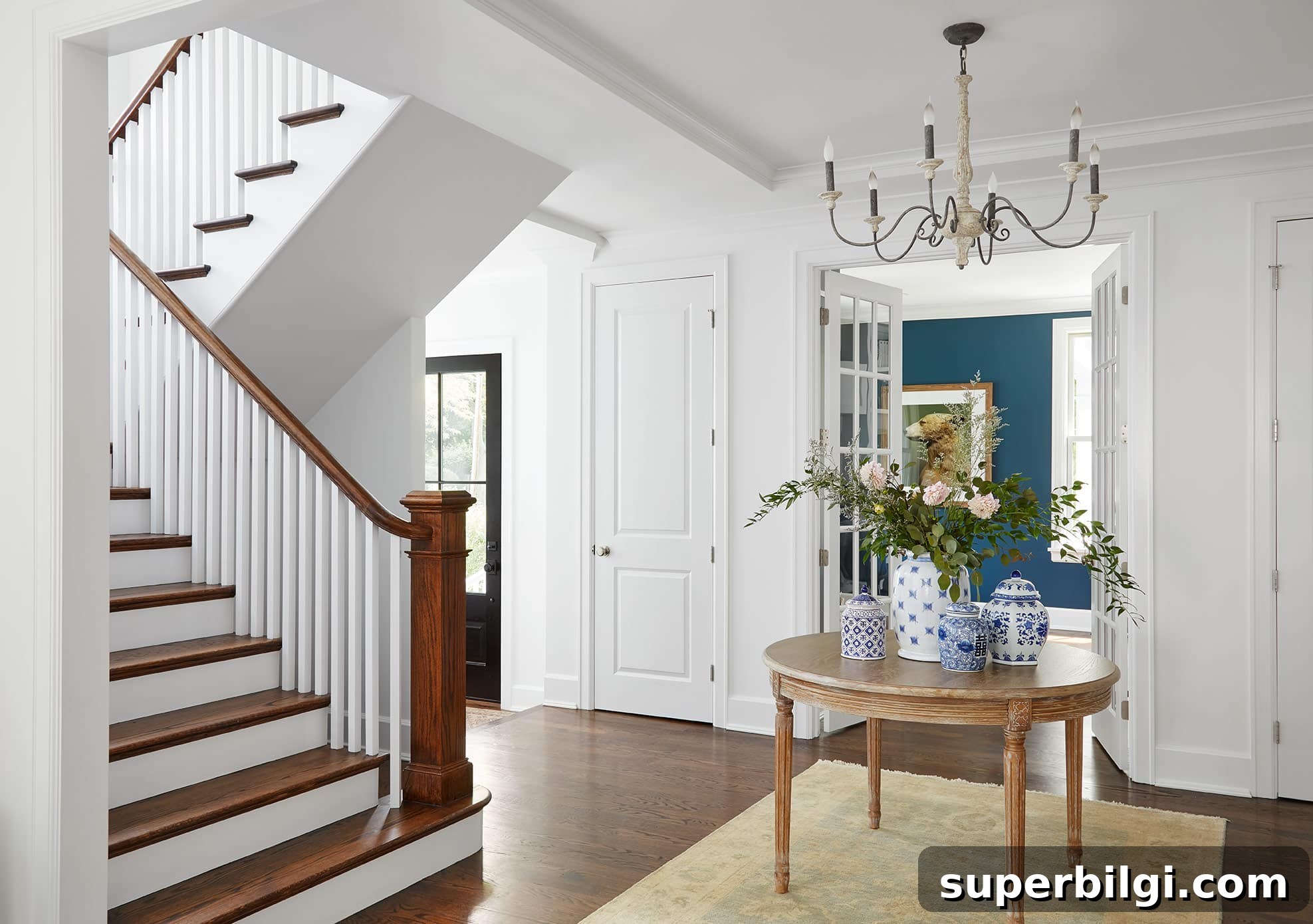
Select colors or patterns that help disguise dirt and stains. Neutrals like beige, gray, and taupe are safe choices, but a patterned rug in a richer hue can mask traffic-related marks while adding visual interest.
4. Pattern
A pattern can give character to a neutral entryway and hide wear more effectively than a solid color. Choose a pattern that complements your home’s style but isn’t so bold that it overwhelms the space.
5. Texture
Texture affects comfort and traction. Low-pile rugs or flatweaves are easier to clean and less likely to show traffic lanes. Avoid overly plush rugs at the door, and aim for enough structure so the rug doesn’t shift or bunch up underfoot.
6. Maintenance
Consider how you’ll keep the rug clean. Frequent vacuuming and occasional spot cleaning are normal for entryway rugs. If you want minimal upkeep, choose durable fibers that resist staining and are easy to vacuum. My jute/chenille rug has needed only weekly vacuuming and no spot treatment in years.
7. Placement
Decide whether the rug will sit directly in front of the door, extend into a foyer, or float under a small table. Use painter’s tape to mark the rug’s footprint on the floor and live with that outline for a day or two before buying to confirm the scale and placement.
How to Keep an Entryway Rug in Place
Preventing slipping and bunching is essential for safety and appearance. Here are three reliable anchoring methods.
1. Rug Pad
A quality rug pad keeps the rug from sliding and protects your floor. Choose a pad slightly smaller than the rug edge so it won’t be visible. For hardwood floors, use non-marking pads designed for hardwood to avoid finish damage.
2. Double-Sided Rug Tape
Heavy-duty double-sided rug tape can secure a rug to the floor. It’s effective but may need occasional replacement and can sometimes leave residue. Test a small area first and follow manufacturer guidance for your floor type.
3. Corner Rug Grippers
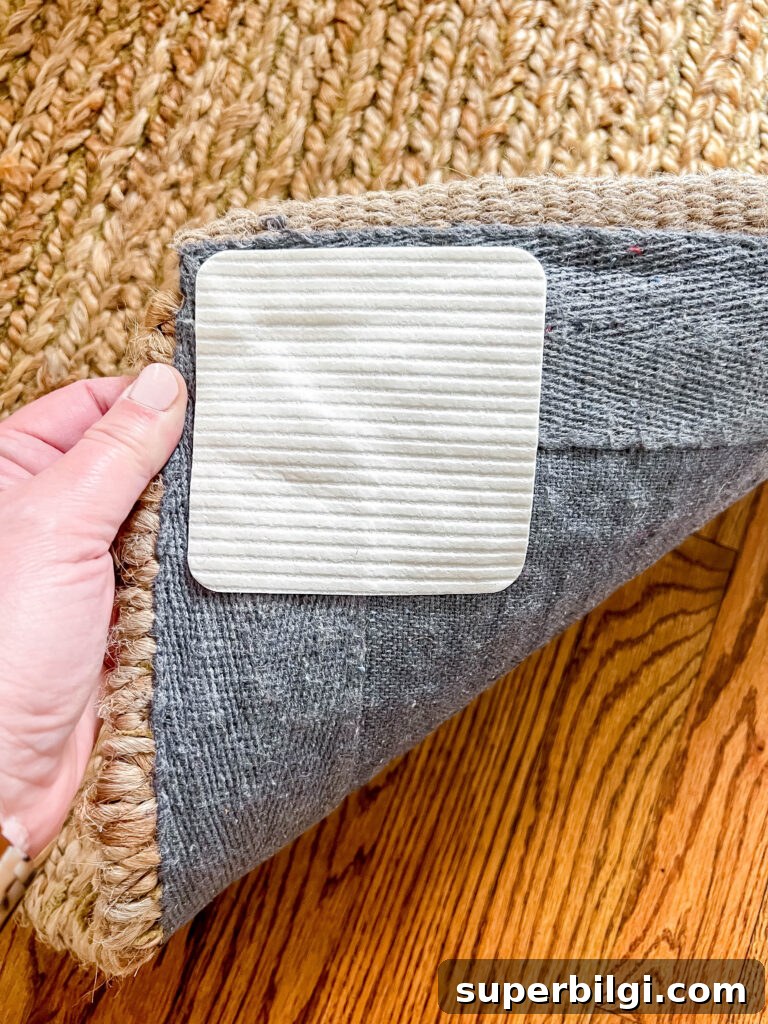
Corner grippers use suction or non-adhesive technology to hold rug corners down without sticky residue. They are a great option if you want a secure solution that’s easy to remove or reposition.
Entryway Rug Size Guide
Follow these practical rules of thumb when sizing a rug for your entryway:
1. Measure the Space
Measure length and width and note obstacles like door swings, furniture, or narrow walkways. Your rug should fit comfortably without obstructing doors.
2. Leave Space Around the Edges
Leave at least 4 inches between the rug edge and walls to create a balanced look and reduce tripping risk. This small margin makes the area feel intentional rather than crowded.
3. Consider Furniture Layout
If you have a console table or bench, size the rug so that at least the front legs of the furniture rest on it. For a freestanding rug in a larger foyer, allow enough room for a small table and a border of visible flooring.
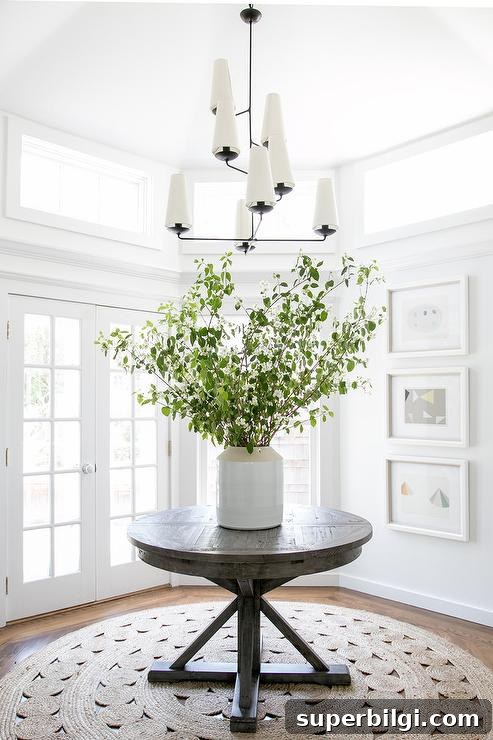
4. Choose a Rug Shape
Select a shape that complements your space: rectangular or square rugs work well in most standard entryways, runners are ideal for long hallways, and round rugs pair nicely with a small entry table.
5. Don’t Skimp on Quality
Because entryways see constant use, invest in durable construction and quality materials. A better-made rug tends to look newer longer and withstand the repeated wear that entryways demand.
In short, pick a rug sized for your space, made from a durable fiber that hides dirt, and anchor it securely. With the right combination of material, color, texture, and maintenance plan, your entryway rug will look great and perform well for years.
Final Thoughts
Your ideal entryway rug balances function and style. Measure carefully, choose materials suited to daily wear, and secure the rug to prevent slipping. Thoughtful selection gives you a welcoming, practical entry that sets the tone for your home.
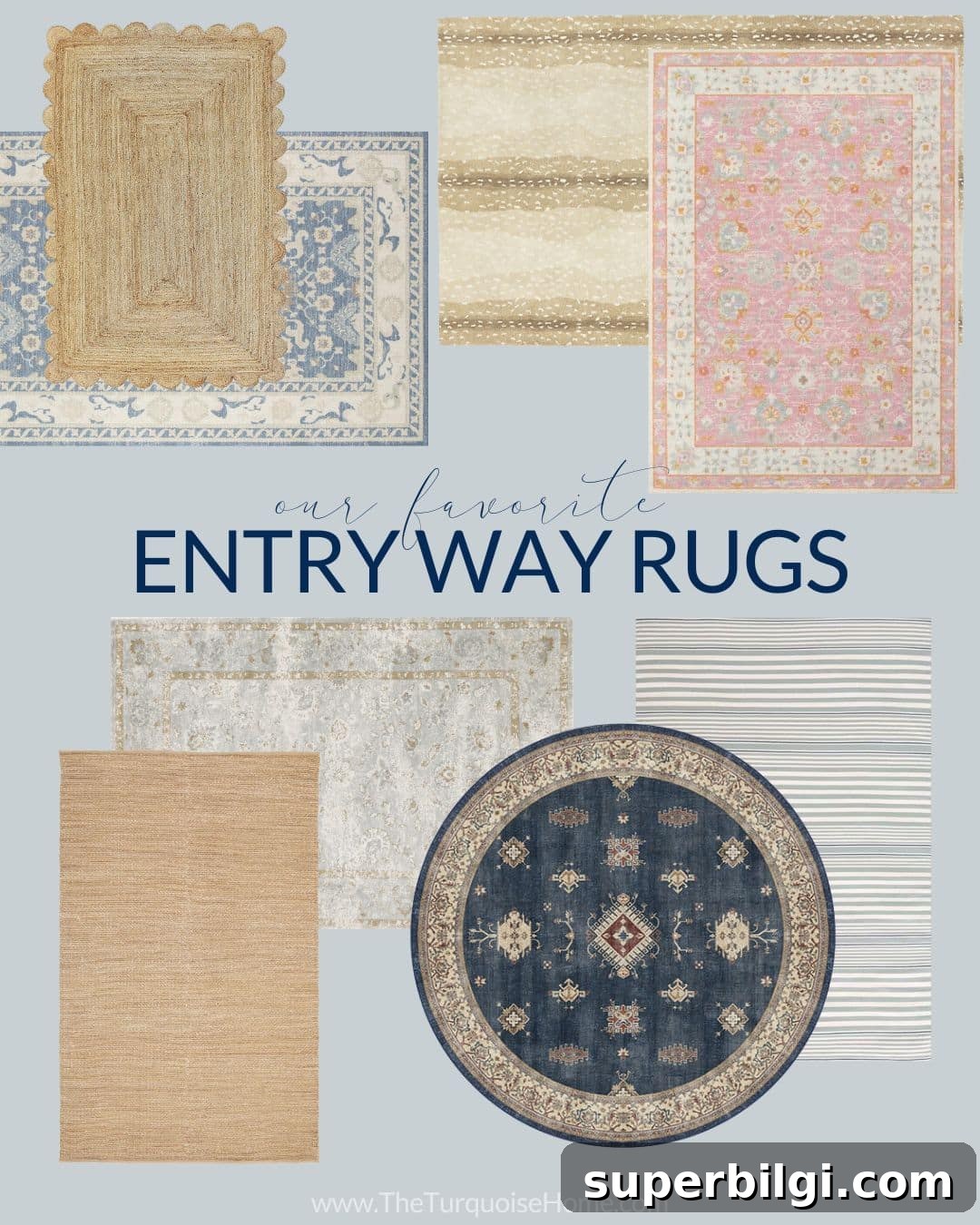
Sources & Favorites: Jute scallop rug; Momeni Anatolia wool rug; Antelope hand-tufted rug; Pink rug; Heather chenille & jute rug; Neutral & sea blue rug; Washable navy round rug; Striped rug.
More posts you might enjoy:
- 17 Stunning, Easy-To-Install Entryway Lighting Fixtures
- A Neutral Christmas Entryway
- 15 Small Entryway Storage Ideas
- My Honest Ruggable Rug Review
- What Rug Sizes Should You Use in Your Home?