
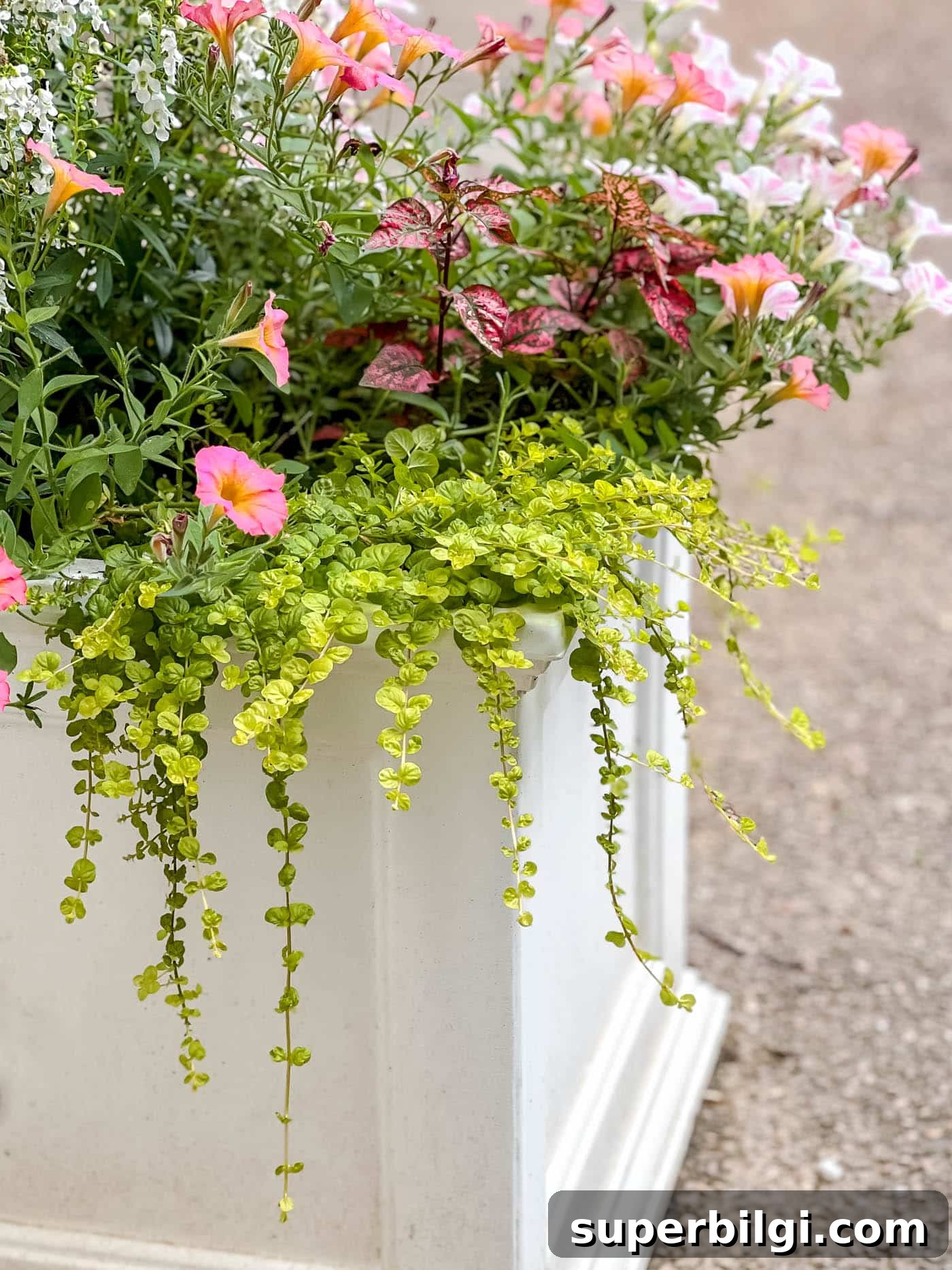
If you’re picturing a lush, layered garden that feels effortless, meet one of the best trailing plants for the job: creeping jenny, commonly called moneywort.
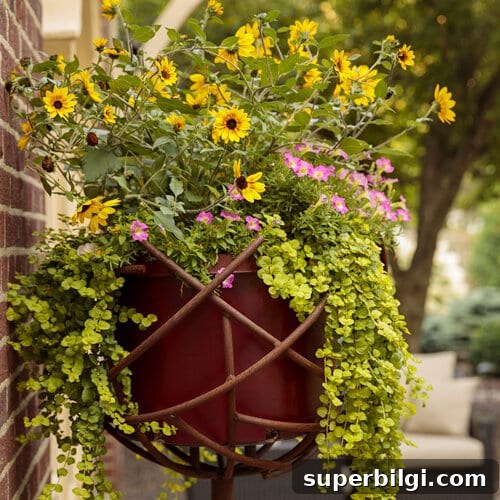
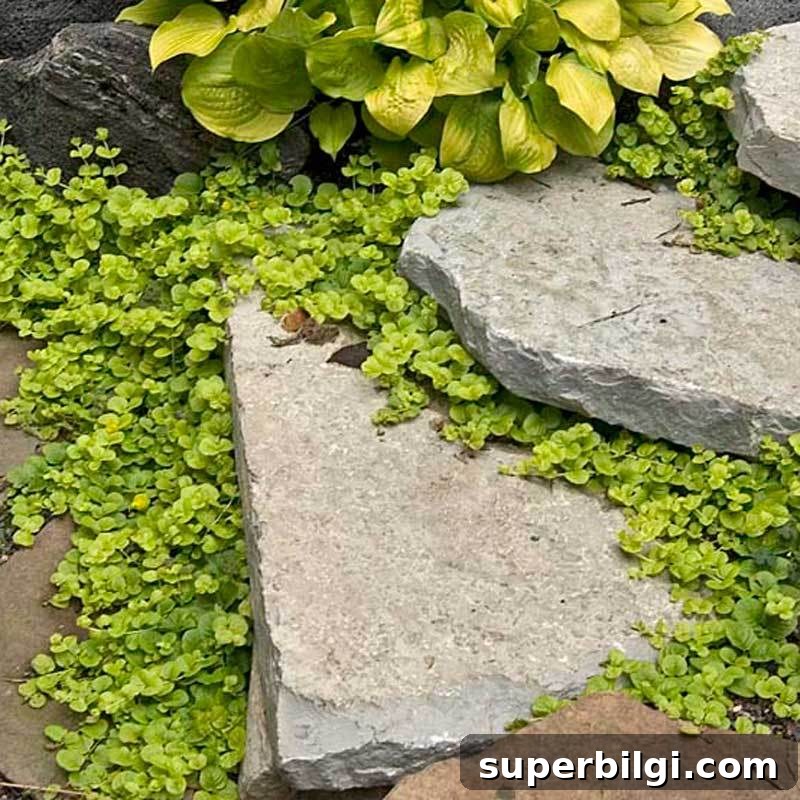
Creeping jenny is a dependable, fast-growing perennial that brings bright chartreuse or golden foliage to borders, containers, and rock gardens. Its trailing habit makes it ideal for softening edges, filling gaps between stepping stones, and acting as a vibrant “spiller” in mixed planters.
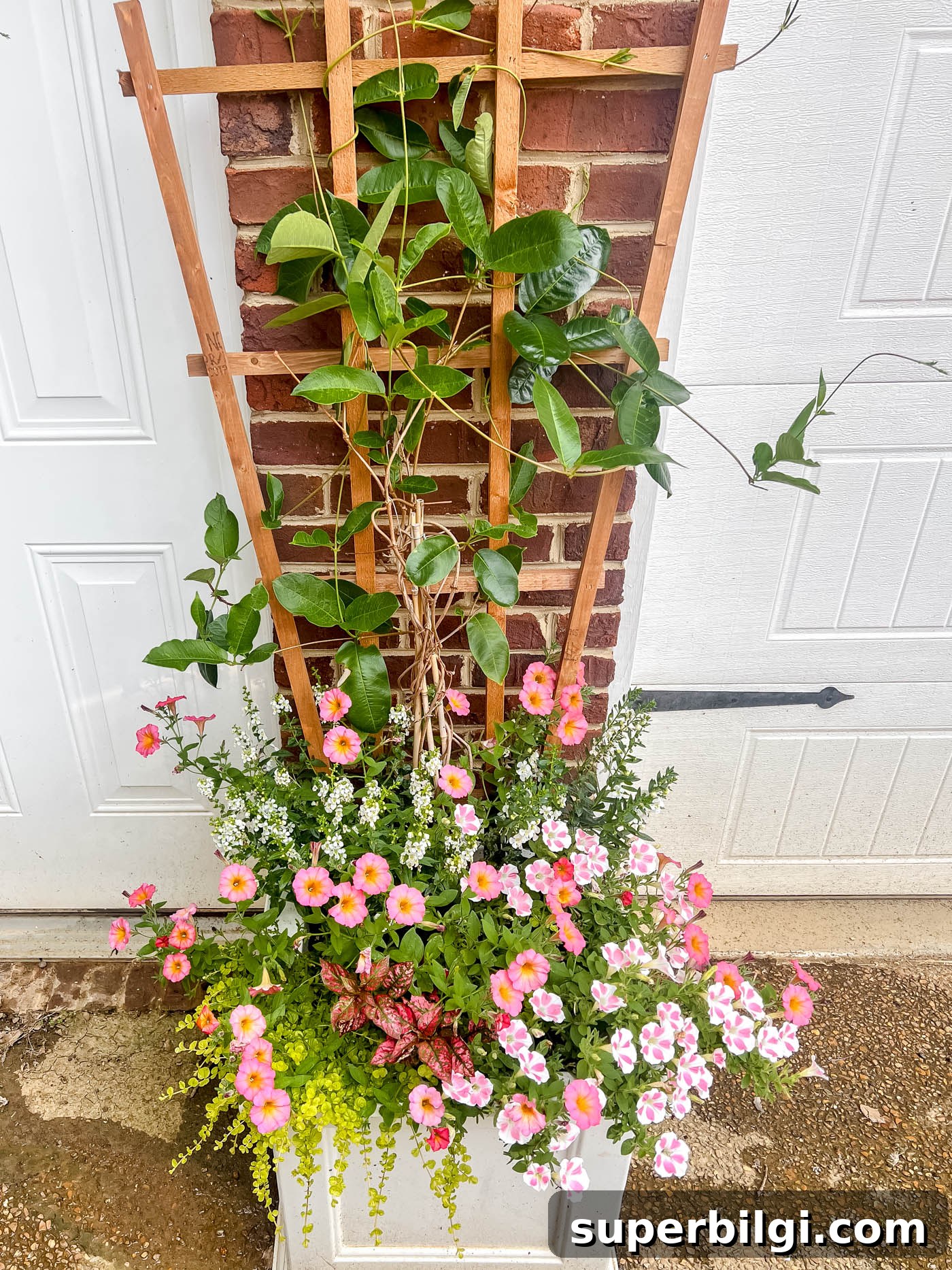
I often use creeping jenny in containers alongside taller thriller and filler plants for contrast and movement. Its lime-colored leaves add a fresh pop that pairs beautifully with darker or more muted tones. Another plant I rotate with it is sweet potato vine for similar cascading effect and color contrast.
Below is a practical guide to growing, pruning, and propagating creeping jenny so you can add this low-maintenance charmer to your garden with confidence.
Why You’ll Love Golden Creeping Jenny
- Vibrant color: The chartreuse to golden-yellow foliage brightens shady corners and adds contrast to mixed beds.
- Low maintenance: Once established, it tolerates a range of conditions and requires minimal fuss.
- Versatile: Works as ground cover, a container spiller, or a soft edge along rock walls and pathways.
- Fast growing: Quickly fills in bare spots, helping suppress weeds and form a continuous carpet.
- Affordable and perennial: Widely available at garden centers and returns year after year in suitable climates.
How to Grow Creeping Jenny
Caring for creeping jenny (Lysimachia nummularia) is straightforward. Here are the essentials for healthy growth and a vibrant display.
1. Choose the right location
Creeping jenny thrives in partial shade to full sun. In hot, dry climates, provide afternoon shade to protect foliage from scorching. In cooler regions, more sun will intensify the golden color.
2. Prepare the soil
This plant prefers consistently moist, well-draining soil rich in organic matter. If you garden in heavy clay, amend the planting area with compost or well-rotted organic material to improve drainage and structure.
3. Planting tips
- Space plants 12–18 inches apart to allow them to spread and fill in.
- Dig a hole twice the width of the root ball and set the plant at the same depth it grew in the container.
- Firm the soil around the roots and water thoroughly after planting to settle soil and remove air pockets.
4. Watering
Creeping jenny prefers consistently damp soil, though it tolerates short dry spells once established. Water deeply during dry periods—typically once a week in moderate weather, more often in heat. In containers, use a deep pot or reservoir system to keep roots evenly moist.
5. Mulching
Apply a 1–2 inch layer of mulch to conserve moisture, moderate soil temperature, and reduce weeds. Keep mulch slightly away from the plant crowns to prevent rot.
How to Prune Creeping Jenny
Pruning creeping jenny is simple and helps maintain a tidy appearance and healthy growth.
- Trim runners that creep into areas where you don’t want them.
- Shear lightly in early spring to encourage denser growth and a fuller carpet of foliage.
- Remove dead or damaged leaves as needed to keep the plant looking fresh.
Regular light pruning prevents it from overwhelming neighboring plants; if it becomes too vigorous, it’s easy to pull back or lift out sections.
How to Propagate Creeping Jenny
Propagating creeping jenny is quick and cost-effective. Try one of these easy methods to expand your plantings.
Division
Dig up a clump in spring or fall and gently pull the roots apart into smaller sections. Replant divisions at the same depth and water well to establish them.
Stem cuttings
Take healthy stem cuttings and place them in a glass of water until roots form, usually within a couple of weeks. Transplant rooted cuttings into soil when the root system is well developed.
Layering
Press a trailing stem into the soil while it remains attached to the parent plant. Once the buried portion roots, sever it from the parent and relocate the new plant.
A Few Extra Tips
- Creeping jenny can be vigorous and spread beyond its intended area in favorable conditions. Monitor its growth and prune or divide as needed to keep it in check.
- Use it as a spiller in container combinations to balance upright and mounding plants for an attractive, layered effect.
- It is generally hardy in USDA Zones 3–9 and will often return year after year where winter temperatures allow.
Final Thoughts
Creeping jenny is an excellent choice for gardeners who want vivid color, easy care, and quick coverage. Whether used as a ground cover, a container spiller, or a soft edging plant, its bright foliage and forgiving nature make it a standout in mixed plantings. Keep an eye on its spread, prune when needed, and enjoy the fresh, lively touch it brings to your garden.
Have you grown creeping jenny before? Share your experiences and favorite combinations in the comments—it’s always helpful to learn how others use this versatile plant.
More Posts You Will Love:
- Decorating with Hydrangeas
- Pothos Plant Care Guide
- The 3 Easiest House Plants + Indoor Plant Care Tips