

Today’s paint color spotlight is Benjamin Moore Hale Navy—one of the most sought-after navy paint shades. It’s a deep, layered blue that can create a warm, cozy room or serve as a bold yet refined accent.
Hale Navy is one of my personal favorites. I painted the inside of my front door this color years ago and loved it so much I later used it in my living room. The shade is versatile enough to feel classic and neutral in many settings while still offering a dramatic pop of color when you want it.
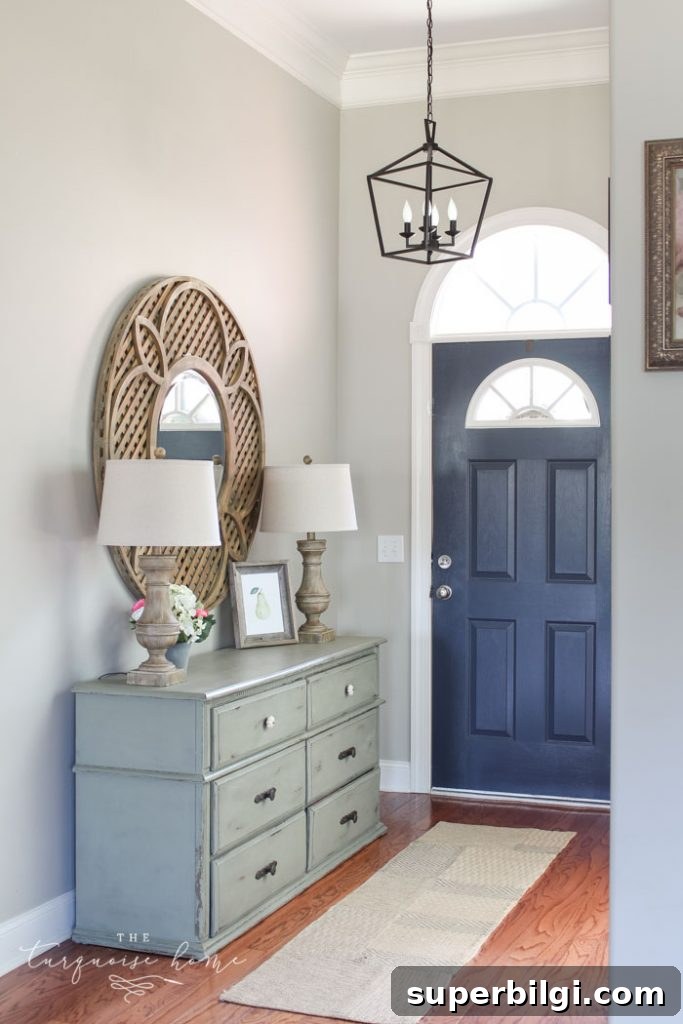
This post contains affiliate links for your convenience. See my full disclosure policy in my site’s disclosure section.
Whether you’re aiming for rustic charm or a contemporary room with visual impact, Benjamin Moore Hale Navy might be the perfect choice. Below is a practical guide to its undertones, complementary colors, and how it performs in different rooms and exteriors.
Hale Navy Undertones
Hale Navy stands apart from many other blues because its undertones are subtle and complex. While it can show a faint green cast near abundant greenery, its dominant undertone is gray. That gray quality becomes more apparent next to wood floors, light-stained floors, gray roofs, or brick, giving the blue a more muted, sophisticated look.
Because Hale Navy sits between warm and cool on the spectrum, it’s considered a transitional color—meaning it can read warm or cool depending on surrounding materials and lighting. In rooms with limited natural light, the shade can feel very dark; in those cases, using Hale Navy as an accent wall or in cabinetry keeps the space balanced. In bright rooms with plenty of white trim or lighter furnishings, the deep blue will appear rich and vivid.

What Colors Go with Hale Navy?
Hale Navy coordinates beautifully with many hues—so much so that navy is often treated like a neutral in contemporary decorating. When planning a palette around Hale Navy, consider colors that either highlight its deep blue or bring out its gray or warm undertones. Popular complementary choices from Benjamin Moore and other classic neutrals include:
- Spring Meadow
- Butterfield
- Hidden Oaks
- Woodmont Cream
- White Dove
- Cloud White
- Simply White
- Gray Wisp
- Fawn Brindle
- Revere Pewter
- Wythe Blue
Hale Navy in Rooms
Below are real-life examples of how Hale Navy performs as both a primary wall color and an accent. Always test a swatch in each room you plan to paint—natural light, surrounding materials, and furnishings will influence the final look.
Hale Navy Kitchens
Hale Navy is a popular choice for kitchen cabinets and islands because it reads as both elegant and inviting. In kitchens with white countertops, light backsplashes, or light wood flooring, the blue becomes a striking focal point while still feeling timeless. Paired with brass or matte black hardware, Hale Navy cabinets can read modern or classic depending on the finishes you choose.
Bathrooms with Hale Navy
In bathrooms, Hale Navy can create drama or serenity depending on contrasts. Dark floors, darker grout, and strong natural light will emphasize its deep navy tone. Conversely, abundant white and softer lighting will soften the color, letting both its warm and gray undertones appear more subtle. It works well on vanities, accent walls, or even as tile color inspiration.
Bedrooms with Hale Navy
Hale Navy excels in bedrooms where you want a cozy, enveloping atmosphere. Use it on all walls for a dramatic retreat or on a single wall for a softer effect. Cream curtains, lighter carpets, and natural wood furniture will draw out either warm or gray undertones, creating a balanced, layered look. It pairs especially well with neutral linens and textured accents.
Hale Navy in Dining Rooms
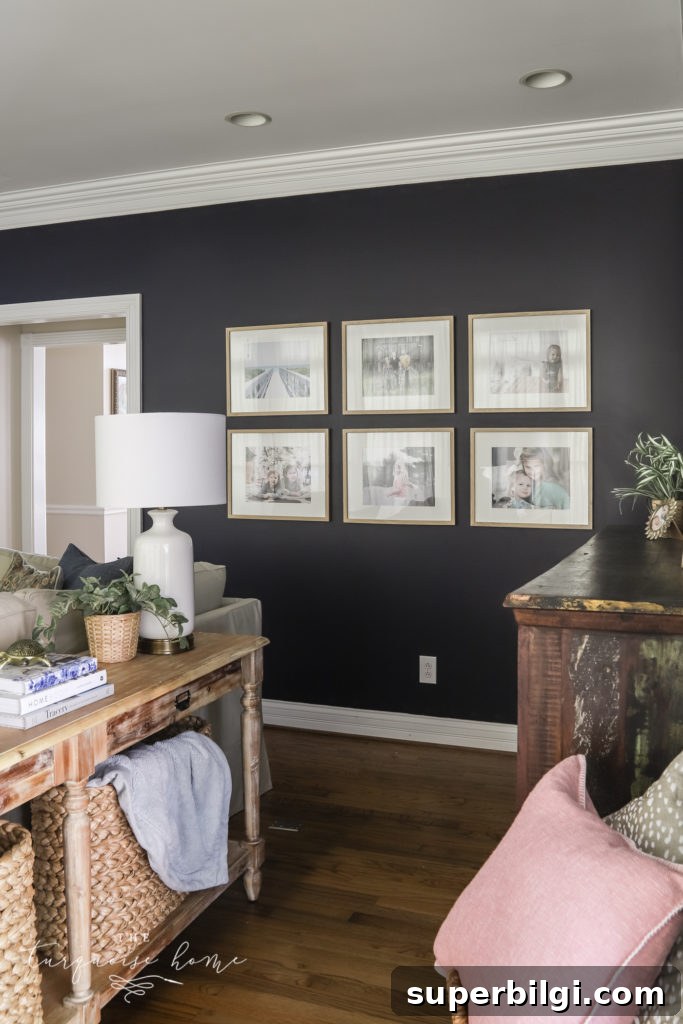
As an accent in dining rooms, Hale Navy can read slate-like and sophisticated—particularly when paired with wood floors and white trim. It creates a strong backdrop for art or a gallery wall and helps make dining spaces feel intimate while remaining elegant.
Hale Navy in the Living Room
In living rooms with ample windows and white trim, Hale Navy can be stunning. It adds depth and moodiness without overwhelming the space when balanced with light furniture and natural textures. A full wall of windows or built-ins in white provides a beautiful contrast that lets the blue stand out while keeping the room inviting.

White trim, light wood tones, and well-placed accents become much more visible and vibrant against a Hale Navy background, offering a dramatic yet comfortable aesthetic.

Exterior Examples
Hale Navy also translates beautifully to exteriors. With white trim and gray or cream brick, the gray undertones become more apparent, giving a welcoming, polished exterior. Near landscaping, you may notice a slight green hint, which can enhance curb appeal when balanced with neutral stone or cream accents.
Hale Navy can act as a neutral or as an expressive color depending on how you use it. It’s versatile, elegant, and remains a favorite for homeowners and designers alike. Which way would you use it—as a dramatic wall, cabinetry, or an exterior statement?
More Excellent Paint Color Options
- Repose Gray
- Agreeable Gray
- Sea Salt
- Revere Pewter
- White Dove
- Wythe Blue
- Gray Owl
Tips for Painting a Room Yourself
If you plan to paint, I recommend testing swatches in each room and gathering quality tools. A few essentials I use when painting my own spaces include a high-quality paint brush, painter’s tape, reliable drop cloths, a comfortable paint cup, and a durable roller tray with liners for quicker cleanup. For best results, follow a simple step-by-step painting process and take your time preparing edges and trim.
More posts you may enjoy:
- Benjamin Moore Swiss Coffee
- The Best Green Paint Colors For Your Home
- Benjamin Moore Edgecomb Gray
- Sherwin Williams Sea Salt
- Paint a Room Like a Pro in 5 Easy Steps