
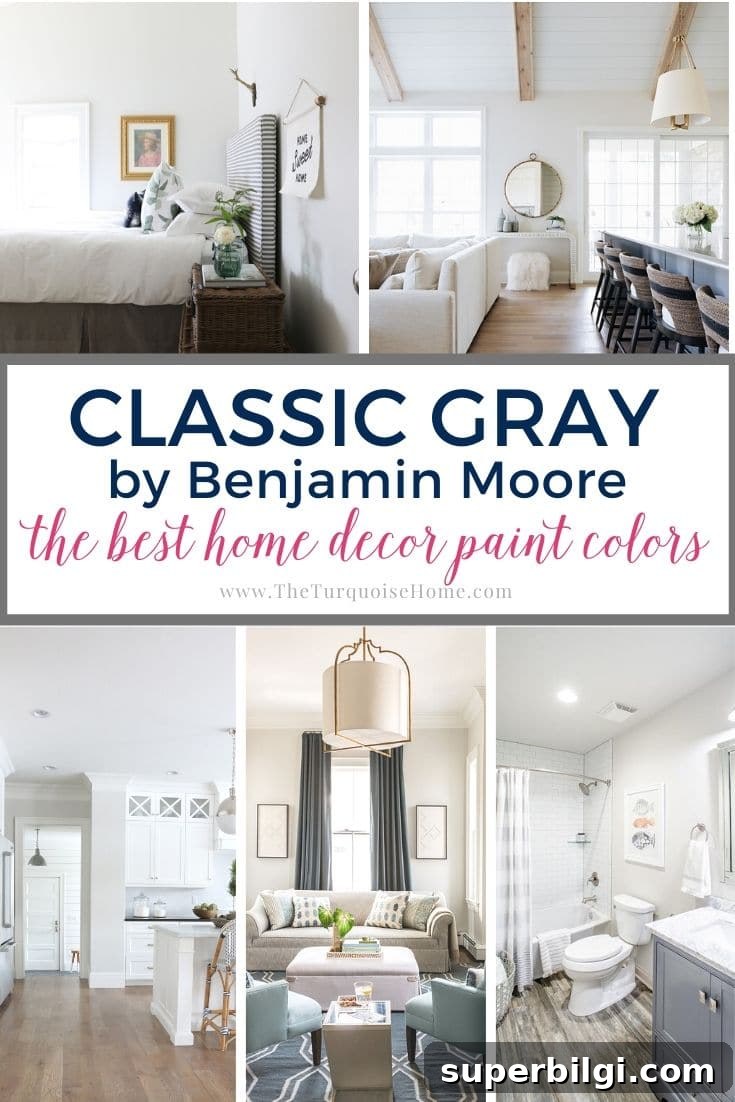
Benjamin Moore Classic Gray is a reliable, neutral greige that reads as a soft, warm gray. This light shade carries gentle warmth that makes spaces feel welcoming while still offering the sophisticated calm of gray. It pairs beautifully with crisp white trim.
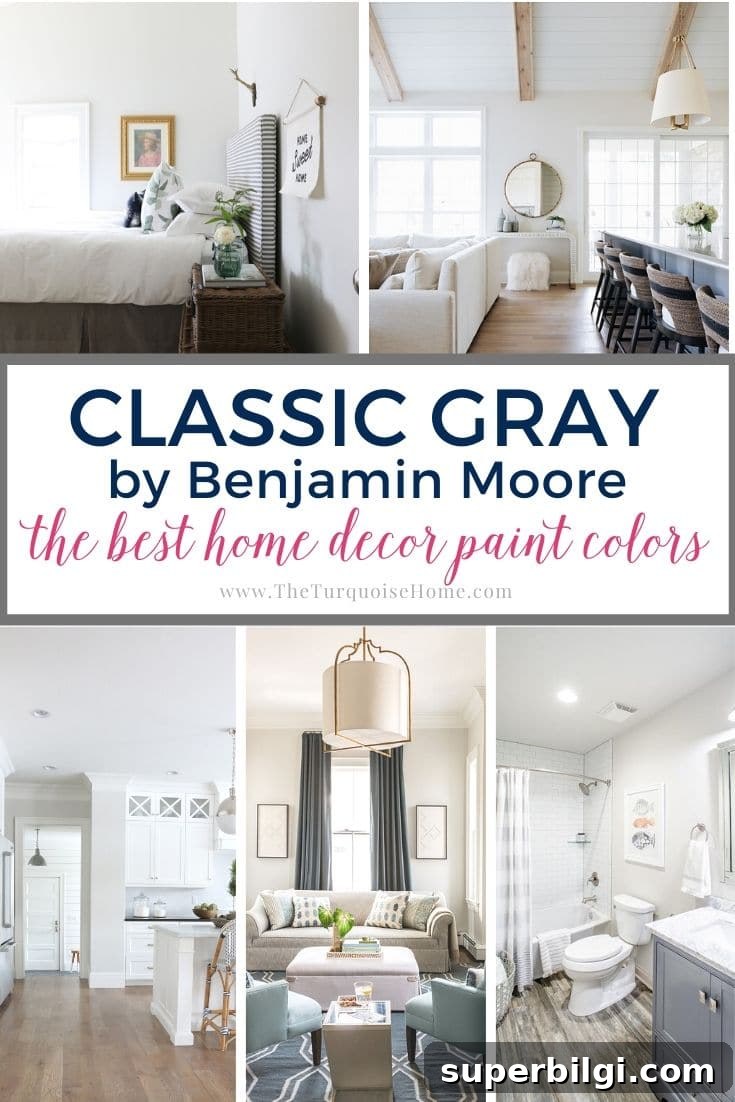
This post contains affiliate links for convenience; please see the author’s full disclosure policy for details.
Choosing paint colors can feel overwhelming, so I use a simple method to narrow down options. Still, it helps to explore how a color behaves in real rooms before committing. Reading photos and descriptions will help you pick which samples to try, but always test the color in your own home under your lighting conditions.
What Color is Classic Gray OC-23?
Benjamin Moore Classic Gray OC-23 is a soft, pale gray with warm undertones that often reads close to an off-white. It sits in the mid-to-light tonal range—light enough to brighten a room, but with a subtle gray presence that adds depth. Because of its warmth, Classic Gray brings a gentle, sophisticated backdrop that suits a variety of styles and palettes.
This shade is versatile: it works well alongside other grays, warm whites, and even stronger accent colors. Classic Gray functions equally well indoors and outdoors, making it a flexible choice for walls, trim, cabinetry, and exterior siding.
Where to Install Classic Gray
- Cabinetry
- Interior walls
- Doors
- Casings and trimwork
- Furniture
- Exterior siding or trim
What Home Style Works Best with Classic Gray
- Transitional
- Modern
- Farmhouse
Benjamin Moore Classic Gray Undertones
Classic Gray is known for its warm, neutral undertones. Unlike many grays that skew blue or purple, this color leans warm and can sometimes read as an elegant off-white. In low light it may show a faint pink or soft purple hint, but that undertone is subtle and typically not noticeable in well-lit rooms.
Because it’s a lighter shade, Classic Gray can reflect surrounding colors: red brick outside may introduce a pinkish cast; nearby greenery can give it a slight green reflection. Overall, its warmth and neutrality make it forgiving and adaptable in most interiors.
Pro tip
Always test the real paint color in your space before committing. Peel-and-stick real-paint samples or small swatches applied to multiple walls are the best way to see how a color reads through the day and in different lighting.
Is Classic Gray warm or cool in tone?
Classic Gray is warm with neutral undertones and only a whisper of pink or violet in certain light. Compared to other neutrals, it pulls less pink than some off-whites and less green or blue than other popular grays. It’s a soft, calming option that often reads near-white in bright light and reveals warmer gray depth as light changes.
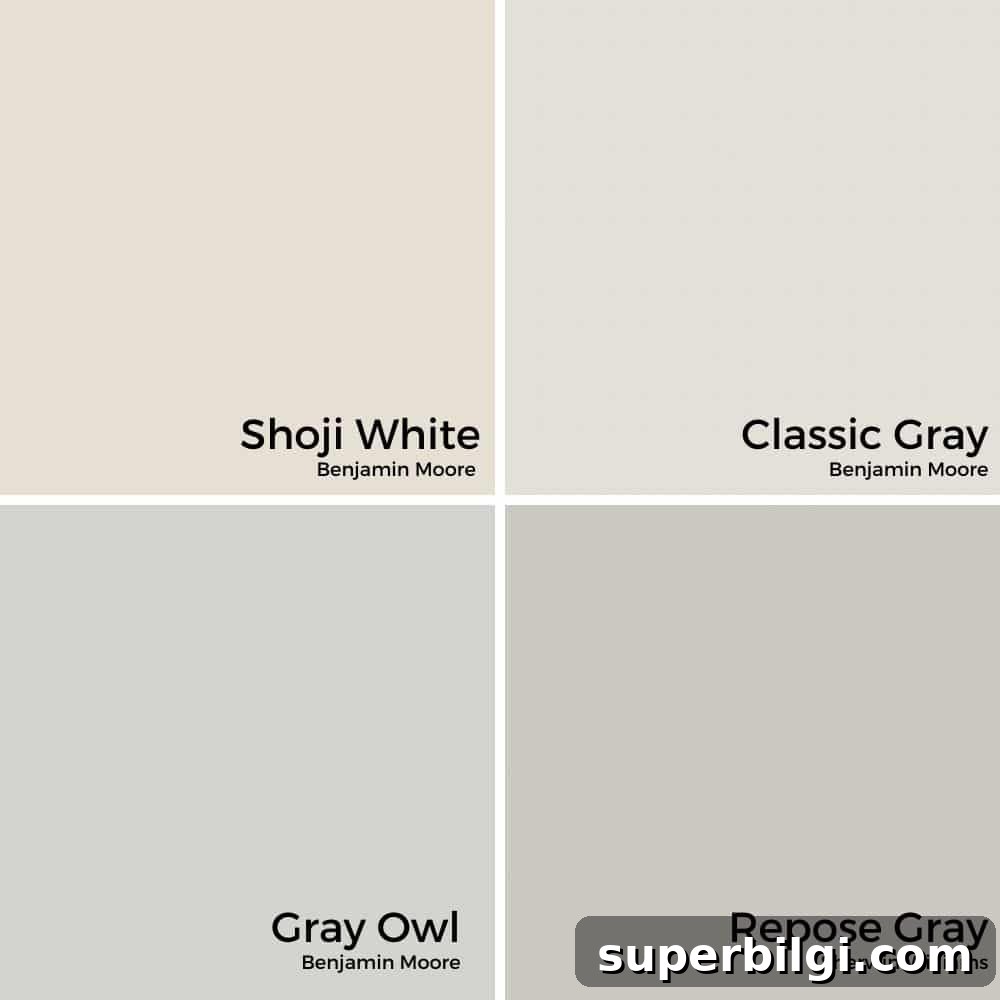
Classic Gray vs. Other Neutral Paint Colors
When choosing a neutral, it helps to compare similar colors. Classic Gray is lighter than many greige options and reads cleaner in bright light. Below are a few comparisons to give context:
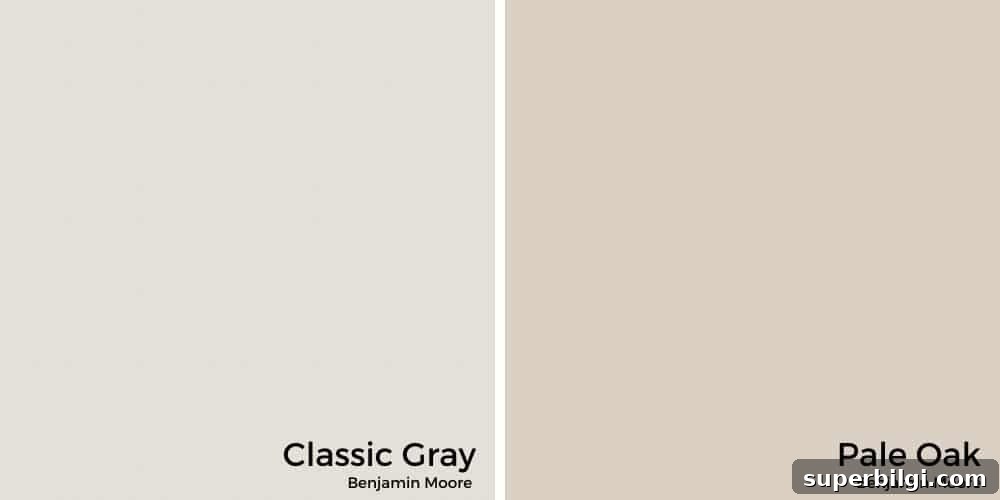
Classic Gray vs. Pale Oak
Benjamin Moore Pale Oak (OC-20) leans more taupe and reads a touch darker than Classic Gray. Pale Oak has warm pinkish undertones and a slightly lower LRV, so it appears cozier and more beige than Classic Gray.
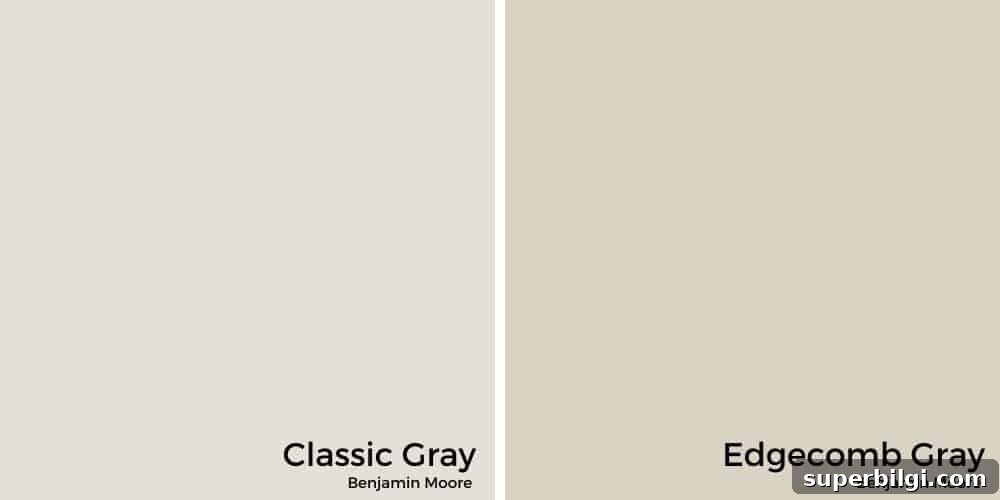
Classic Gray vs. Edgecomb Gray
Edgecomb Gray is a warmer, slightly darker option often chosen for open floor plans. With a lower LRV than Classic Gray it reads richer and more grounded in the same light conditions.
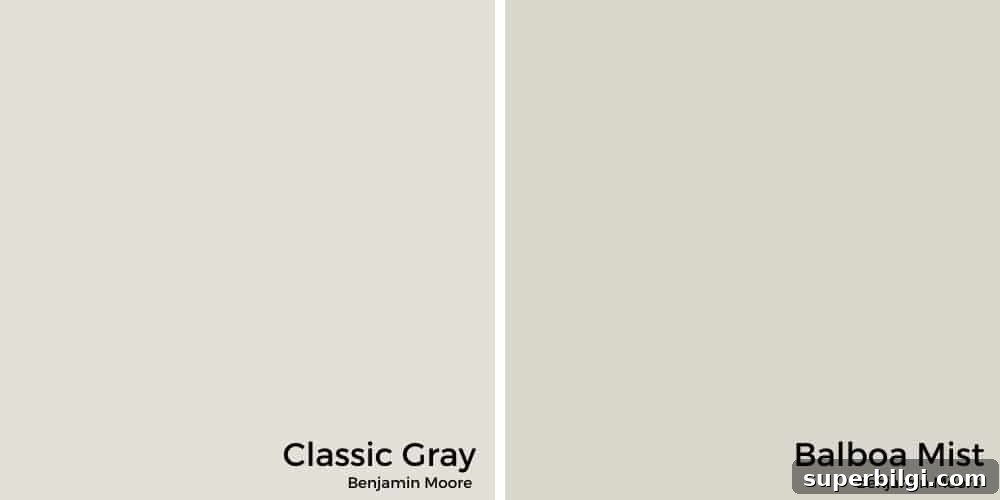
Classic Gray vs. Balboa Mist
Balboa Mist (OC-27) is another popular greige that’s close to Classic Gray but slightly darker and with a touch more violet in its undertone. Both are versatile; Balboa Mist will read a bit moodier in dimmer spaces.
What is Classic Gray’s LRV?
Light Reflectance Value (LRV) measures how much light a paint color reflects on a scale of 0 (black) to 100 (white). Classic Gray’s LRV is approximately 73–74, placing it in the off-white range. That means it reflects substantial light and can read almost white in bright spaces, while still offering soft gray warmth. It’s ideal for rooms with moderate natural light or for open floor plans where a cohesive, airy backdrop is desired.
How Classic Gray Complements Different Rooms
Classic Gray’s flexibility lets it work beautifully across bedrooms, living rooms, bathrooms, and kitchens. Its warm neutrality supports a wide range of decor styles and accent colors, and it highlights artwork and textiles without competing with them.
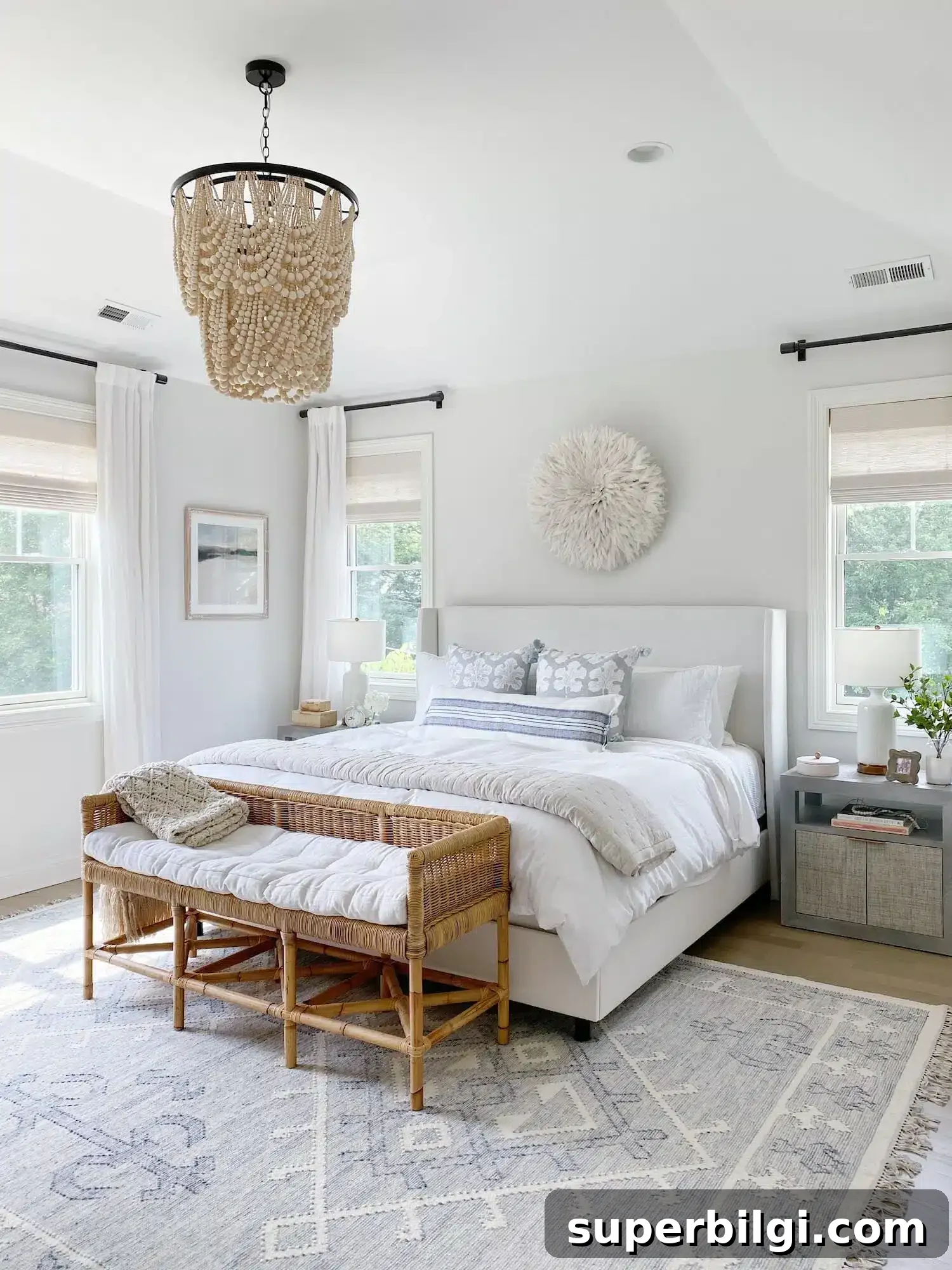
Classic Gray in Bedrooms
For bedrooms, Classic Gray creates a calm, restful atmosphere. Pair it with layered neutrals, soft textiles, and warm white trim for a serene retreat. In bright, sunlit rooms it will often read very light, giving a tranquil, airy feel.
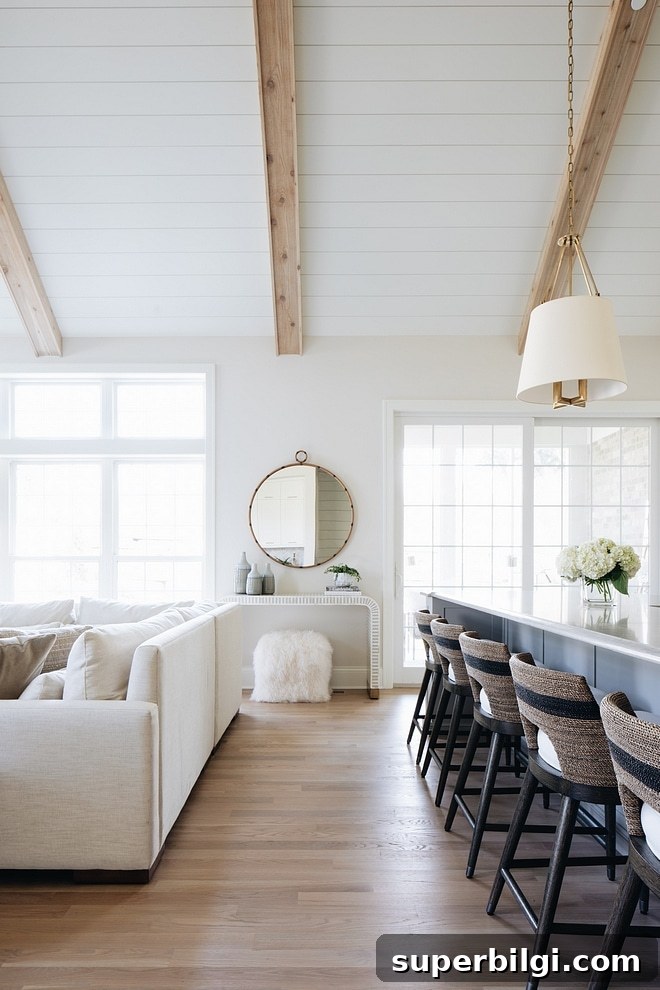
Living Rooms With Classic Gray
Classic Gray makes an inviting backdrop for open living areas. It works with both warm and cool accents, allowing furniture, art, and rugs to stand out while maintaining an overall sense of calm and cohesion.
Classic Gray in the Bathroom
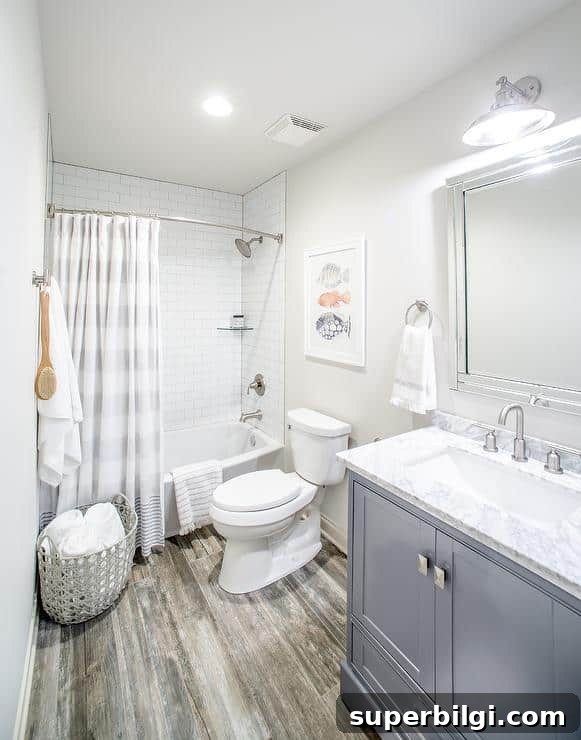
In bathrooms, Classic Gray offers a warm, fresh backdrop that pairs well with marble, white tile, and nickel or chrome fixtures. It brightens smaller baths while maintaining a soft, elevated look.
Classic Gray Featured In Kitchens
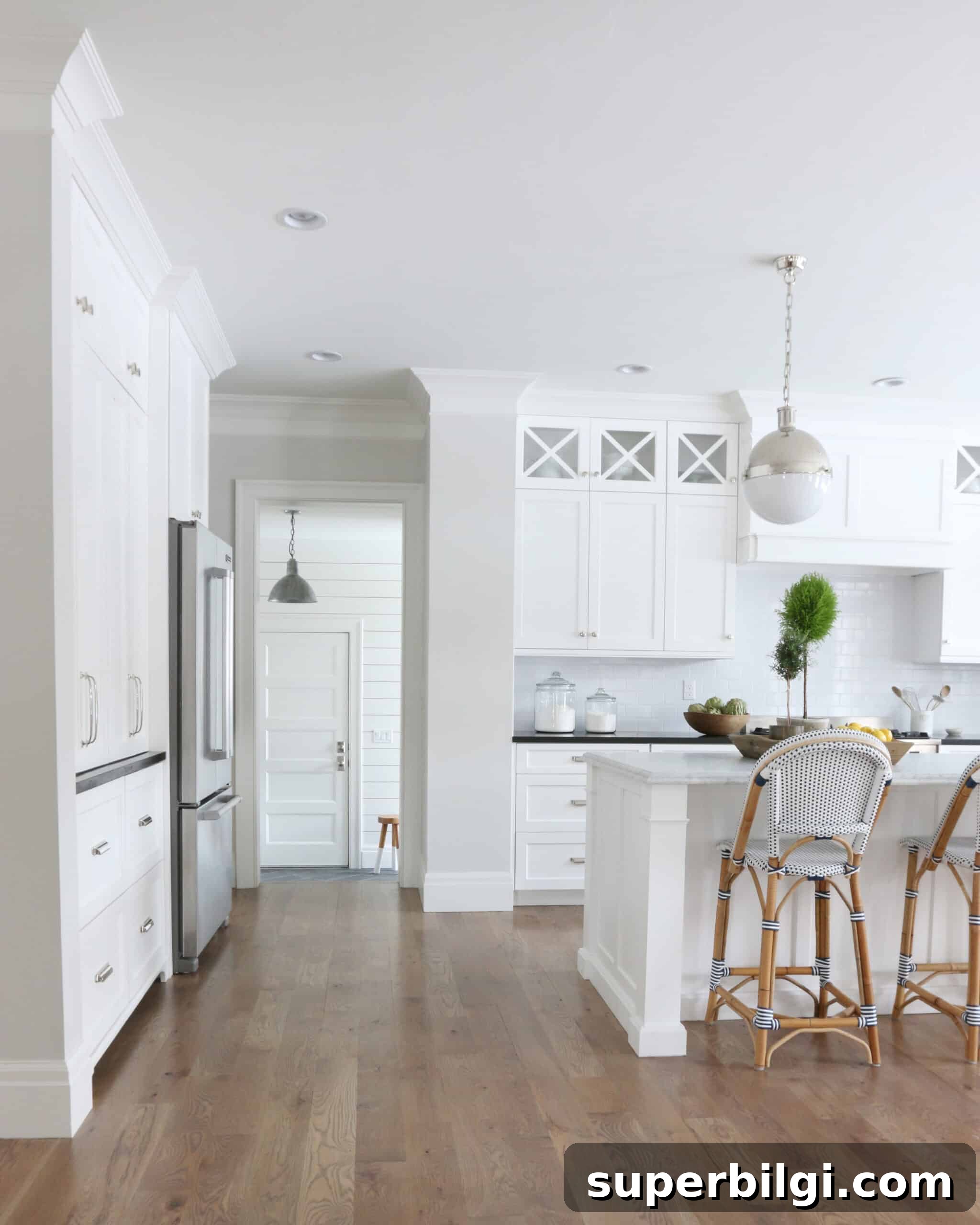
Classic Gray is a tasteful choice for kitchens, whether paired with white cabinets for a bright look or wood tones for warmth. It harmonizes open-concept spaces and helps create a cohesive flow between kitchen, dining, and living areas.
What Colors Coordinate with Classic Gray
Classic Gray pairs beautifully with both muted and bolder tones. Benjamin Moore suggests slate blue, midnight blue, beigewood, and gold accents. Common complementary choices include crisp whites for trim and cabinets, deeper blues, sea haze, and even black accents for contrast.
Trim Colors that Coordinate with Classic Gray
For trim, a bright or warm white creates a clean, elegant contrast. Recommended trim whites include Chantilly Lace for a bright ceiling white, Simply White for clean trim, or White Dove for a softer, warm white.
Final Thoughts
Benjamin Moore Classic Gray is a timeless, adaptable color that elevates many styles and spaces. Its warm neutrality makes it a forgiving choice that remains stylish over time. If you’re seeking a calming, versatile paint that works across rooms and pairs easily with many accent colors, Classic Gray is worth sampling in your home.
Tools To Help Complete A DIY Paint Project
Painting well requires the right tools. Helpful items include a good roller tray, drop cloths, a paint cup for easy cutting-in, quality painter’s tape for sharp lines, and a selection of durable brushes. Investing in these basics will make a DIY paint project faster and produce a cleaner finish.
Other Paint Color Posts
Explore other color guides and inspiration on the blog to help you find the perfect shade for your home.
MORE POSTS YOU WILL LOVE:
- The Best 15 Neutral Paint Colors
- The Best Blue Paint Colors For Your Home
- How to Choose Living Room Curtains