
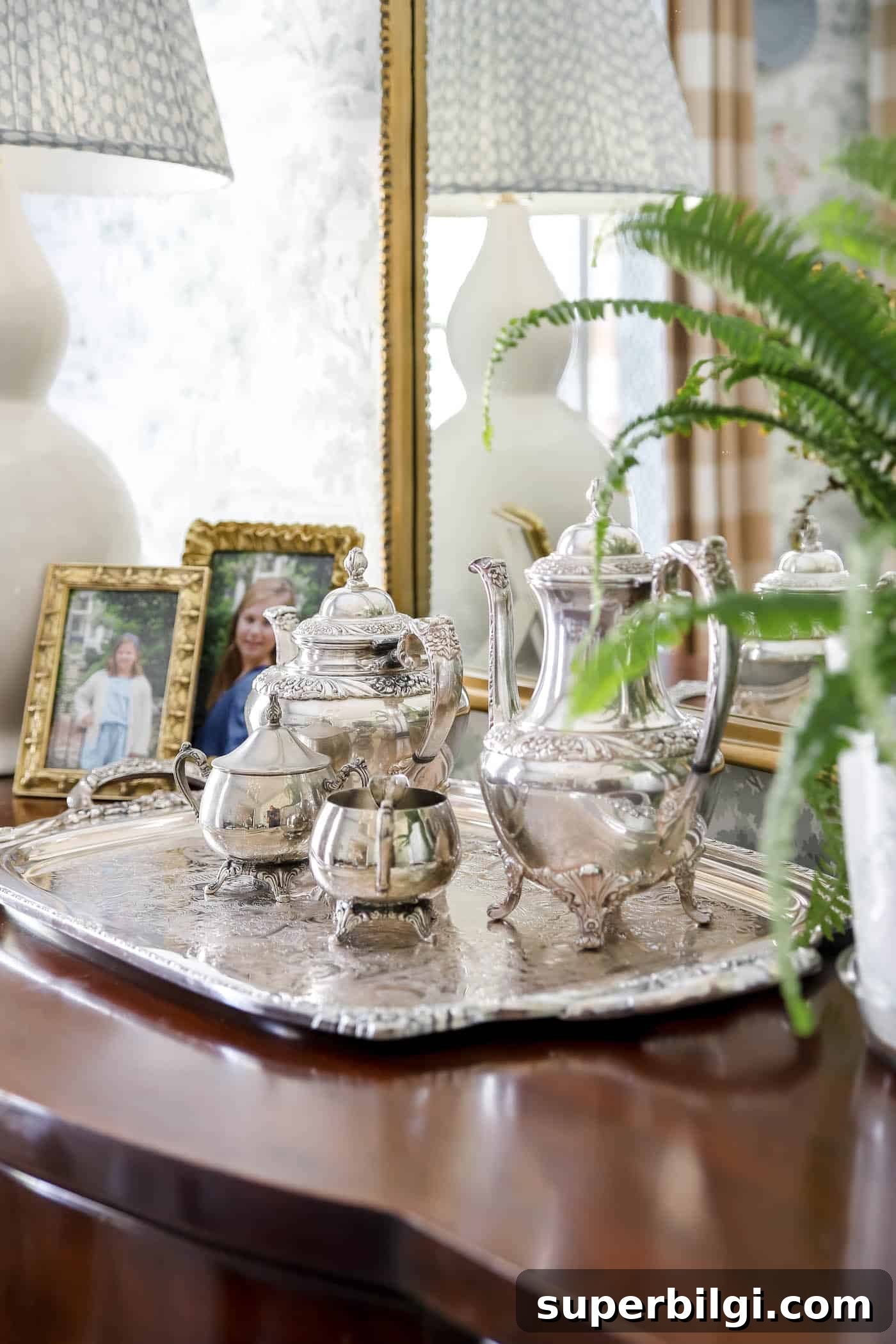
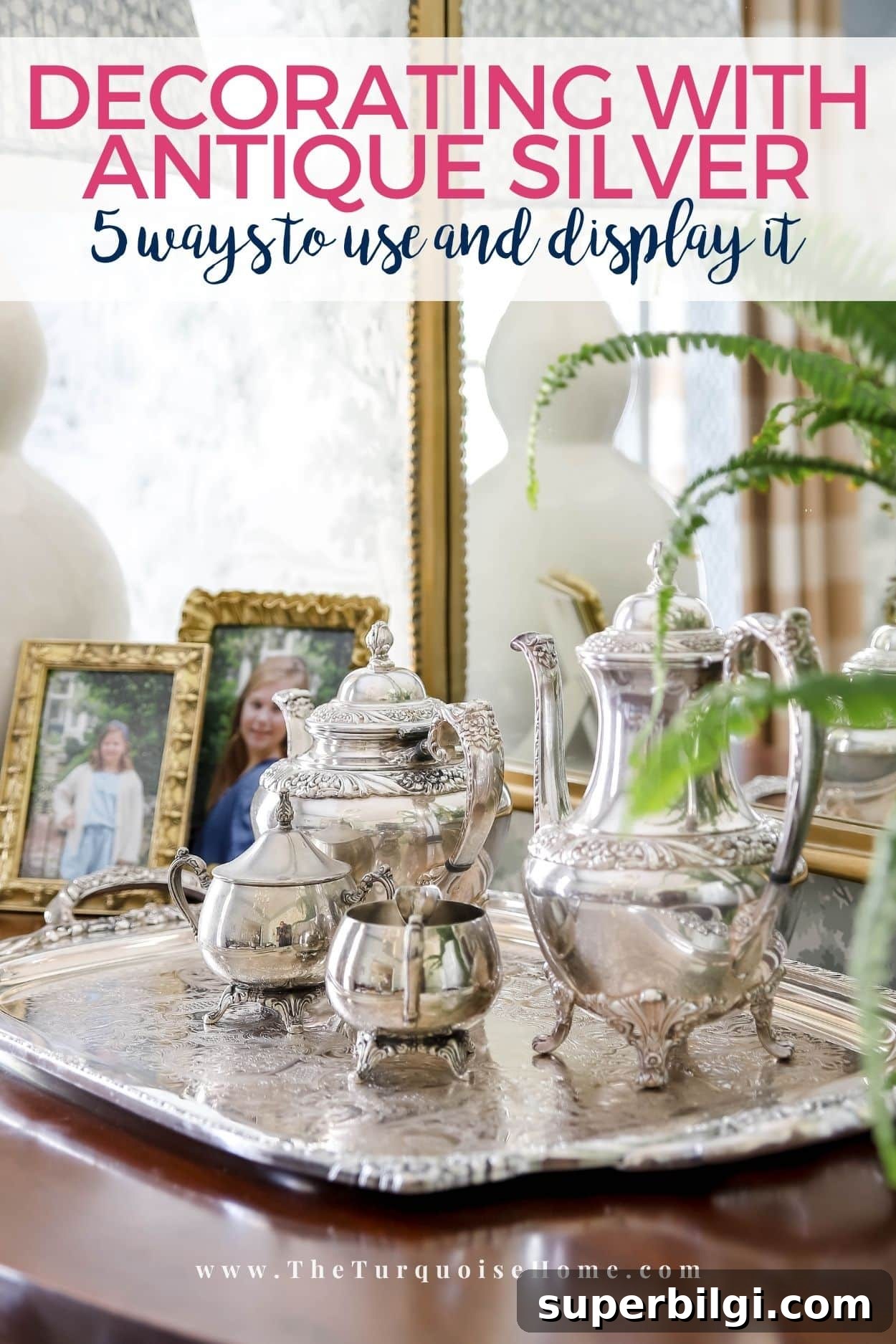
Not sure what to do with inherited silver? Discover simple, beautiful ways to decorate with antique silver serving pieces and put family heirlooms to work in everyday home decor.
When my grandmother passed away last year, I was honored to receive several of her silver pieces. I had already inherited her dining room suite, so bringing the silver into that room felt like a natural reunion of family treasures. It made the whole space feel warmer and more meaningful.
At first I tucked the pieces away in drawers and cabinets because I wasn’t used to using silver regularly. Almost immediately I realized they were too lovely to hide. Having them out where I can see and use them every day has been such a simple way to honor family history—and it makes cleaning and polishing them part of my routine.
Heirlooms don’t need to look old-fashioned or stiff. Antique silver can blend seamlessly into a layered, collected decor when mixed with natural textures, wood, books and pottery. Below I’ll share how I’ve found a place for each special piece and some practical ideas for using inherited silver throughout your home.
Note: You don’t have to inherit silver to start decorating with it. I’m excited to add to my collection by shopping at antique stores and secondhand shops—many beautiful silver pieces are surprisingly affordable.
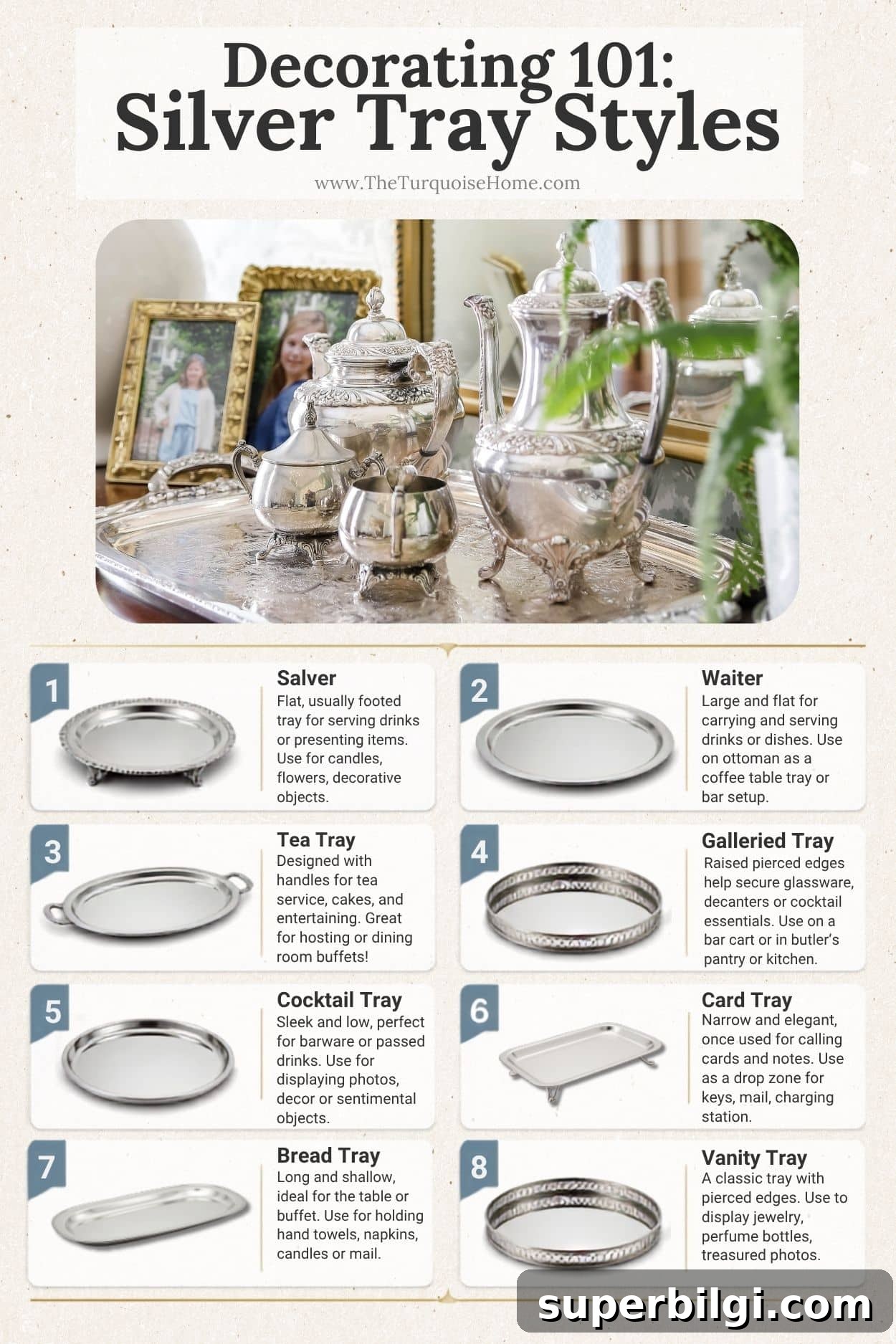
Common Types of Antique Silver Serving Pieces (and What They Were Used For)
If you’re new to collecting antique silver, it helps to recognize common pieces and their original uses. When I opened my grandmother’s box of silver, I didn’t always know the correct names for everything. Learning the intended purpose for an item can spark ideas for how to use it in a modern home—even if you repurpose it entirely.
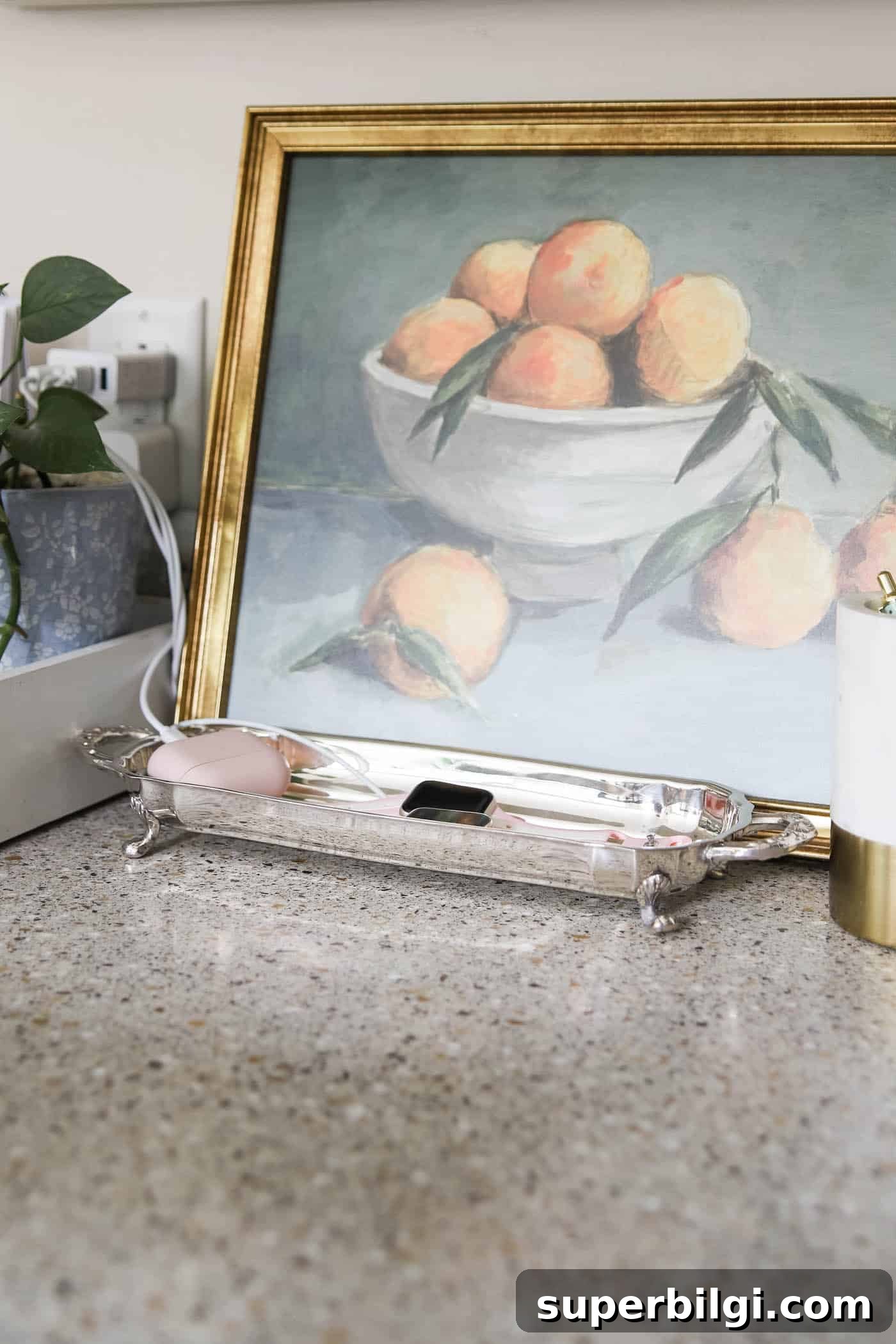
For example, I inherited a silver card tray and later discovered it was originally meant to hold calling cards. Once I learned that, I found it made an ideal charging station for our kitchen desk—an unexpected but practical use. Understanding the history of a piece can inspire creative ways to bring it into daily life.
Why Silver Still Works in Today’s Homes
Antique silver can feel timeless rather than dated when it’s used casually alongside everyday items. The trick is to mix silver with more relaxed textures and finishes so it doesn’t read as overly formal. A tarnished patina often adds charm and warmth—those subtle imperfections tell a story and make a space feel collected and personal.
A few pairing ideas I rely on to keep silver from feeling fussy:
- Warm wood: Natural wood tones balance silver’s cool shine and create visual warmth.
- Woven textures: Rattan, baskets and woven rugs add casual texture that complements silver.
- White dishes: Simple white ceramics make silver feel fresh and useful, whether on display or in everyday use.
- Blue and white pottery: This classic combination enhances a collected, layered look.
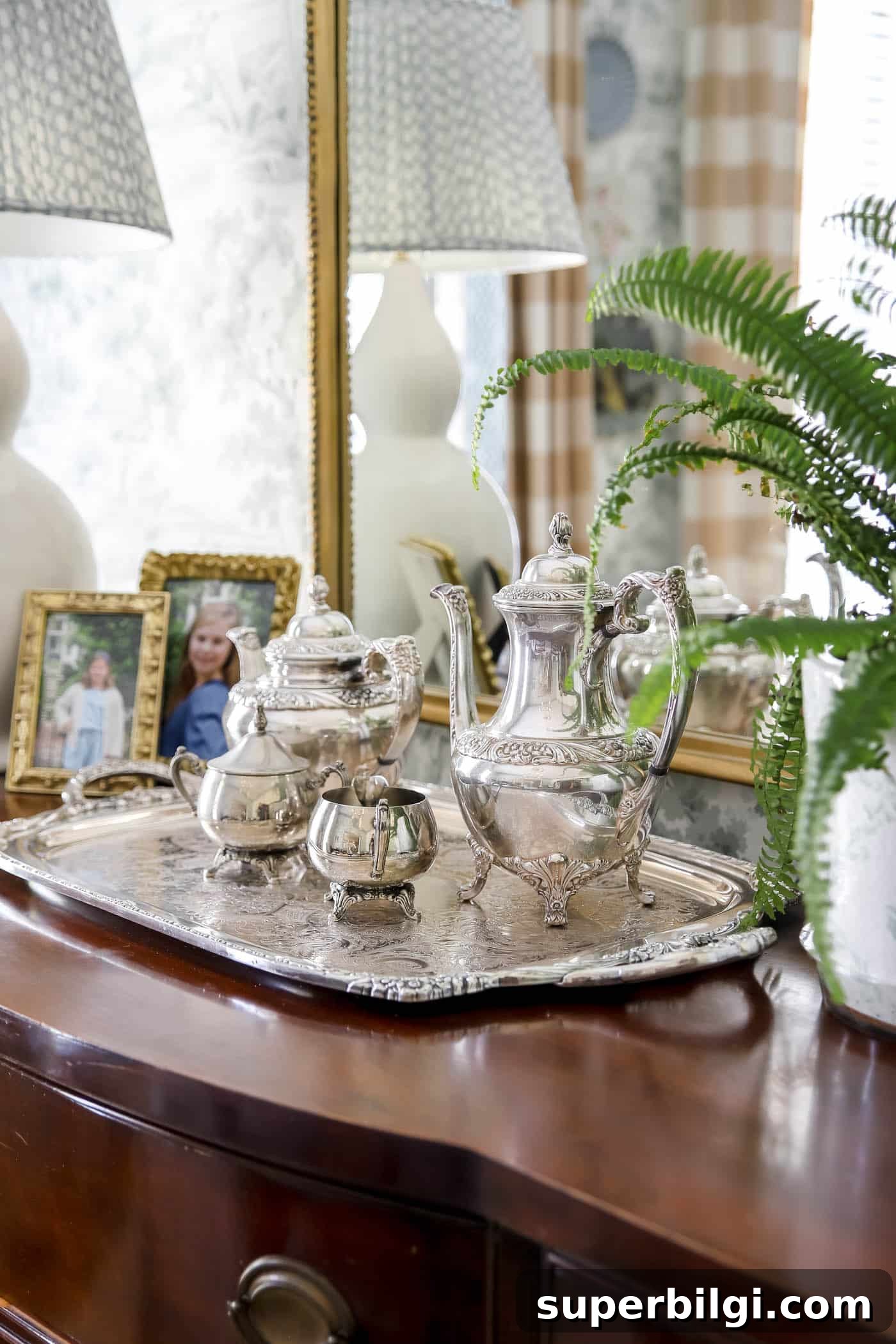
- Greenery: Fresh flowers or clipped branches in a silver vessel immediately relax the piece and add life.
- Brass and gold: Mixing metals creates depth—don’t worry about everything matching perfectly.
- Books and everyday decor: Stacking a small silver bowl on books or pairing trays with candles and frames ties heirlooms into everyday styling.
Using silver as accents rather than a dominant finish helps it integrate into modern rooms. Over time, scattered pieces create that “collected over time” feeling that makes a house feel like home.
How to Use Antique Silver in Your Home
1. Decorate with Antique Silver Trays Throughout Your Home
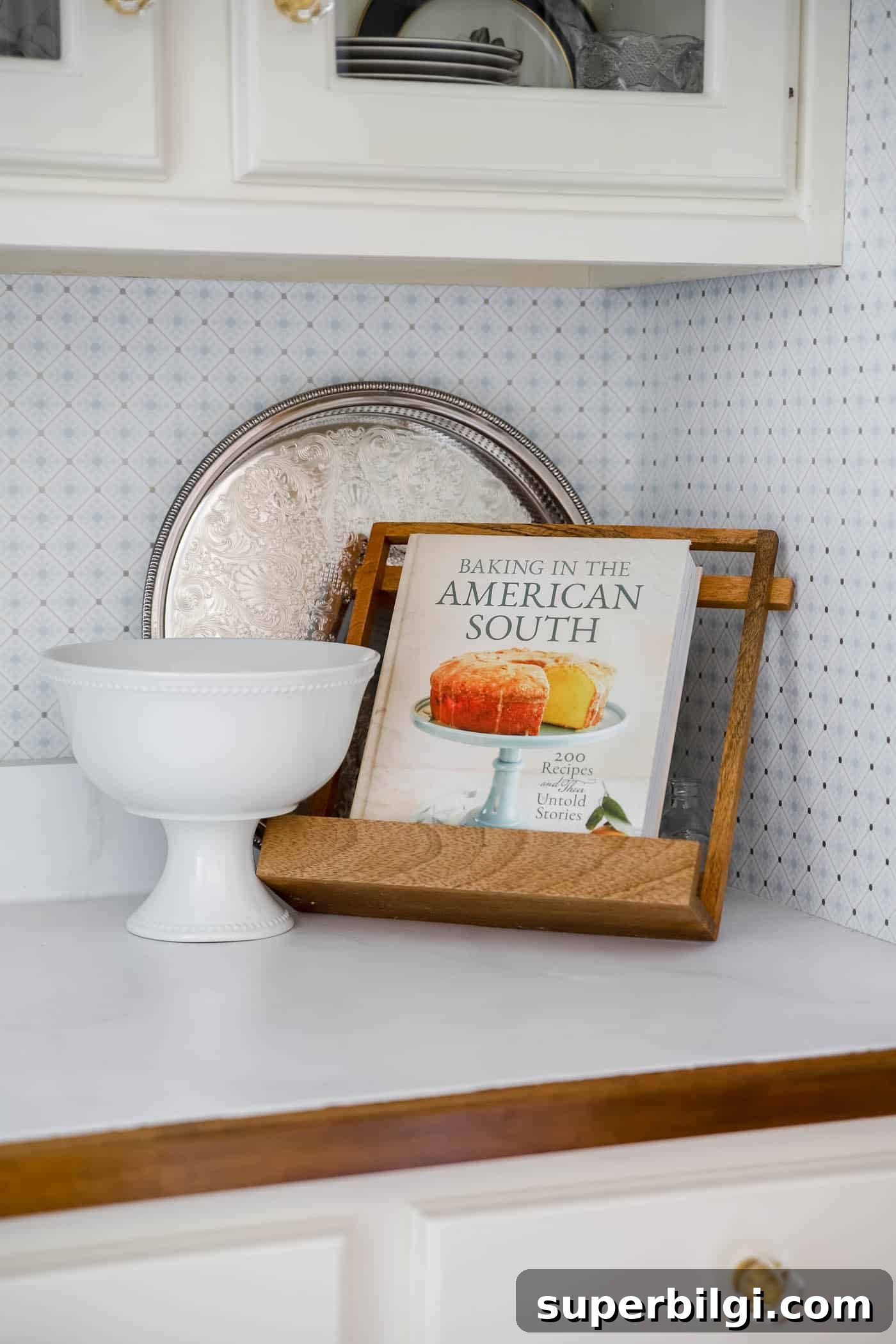
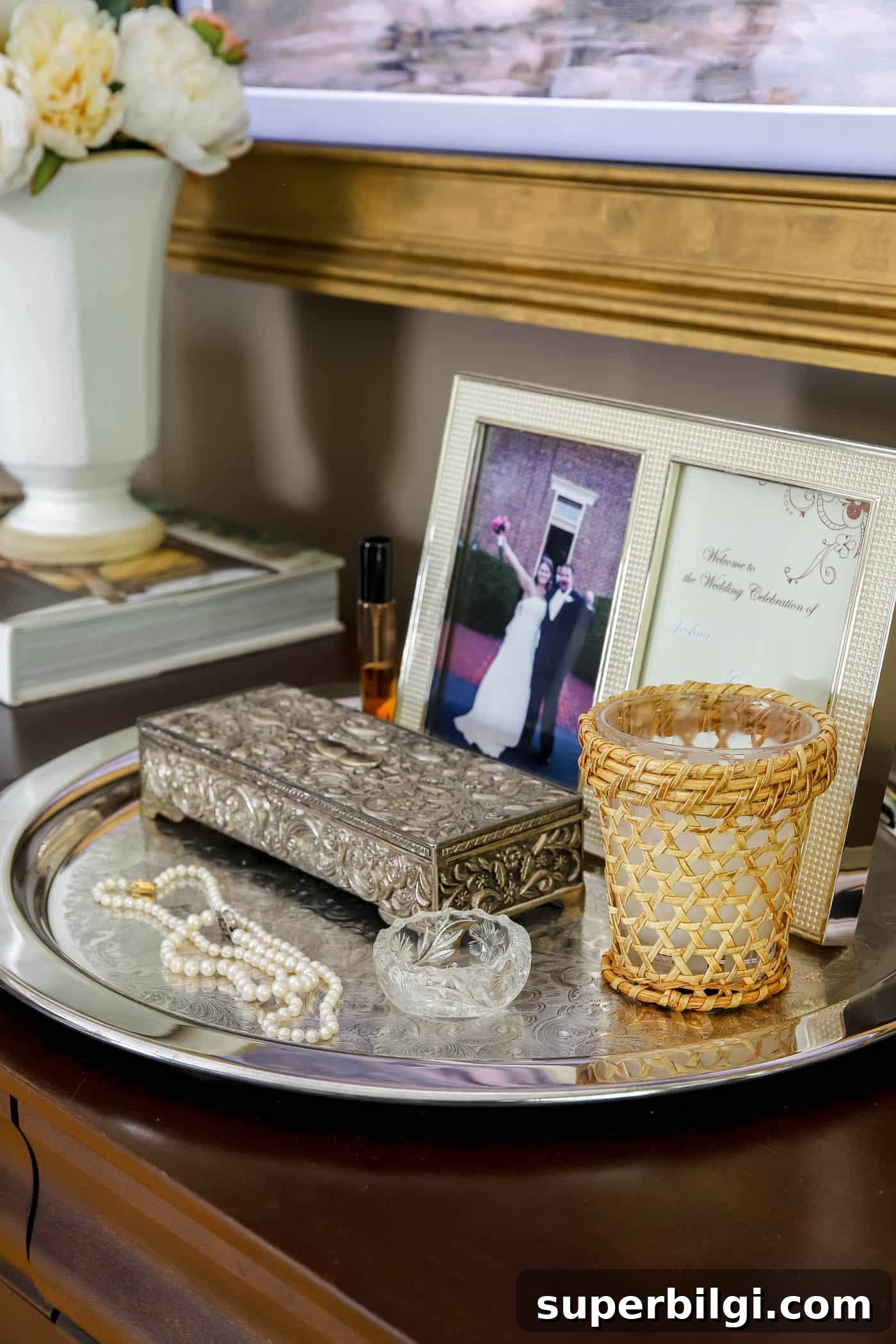
Antique silver trays and platters are among the most flexible pieces to collect. A tray can corral a candle and a vase on a coffee table, hold jewelry and photos on a dresser, or gather everyday items on a kitchen counter. Larger platters can be leaned behind books or dishes to act as a decorative backdrop.
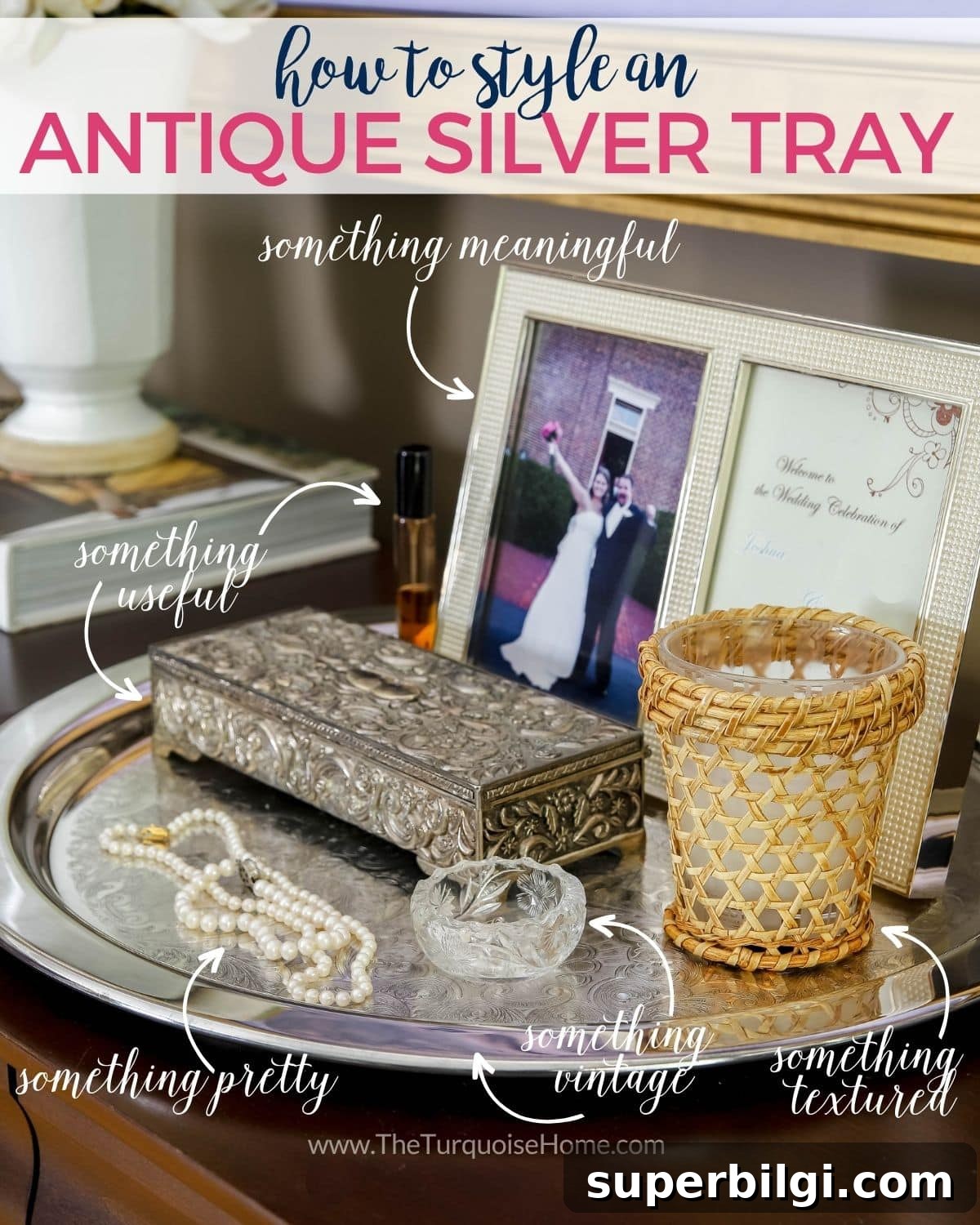
I also use a tray on a bedroom dresser layered with a framed photo, a small jewelry box and a candle. The silver pops against darker wood and mixes well with woven textures for a relaxed look.
2. Turn Silver Bowls Into Pretty Catch-Alls
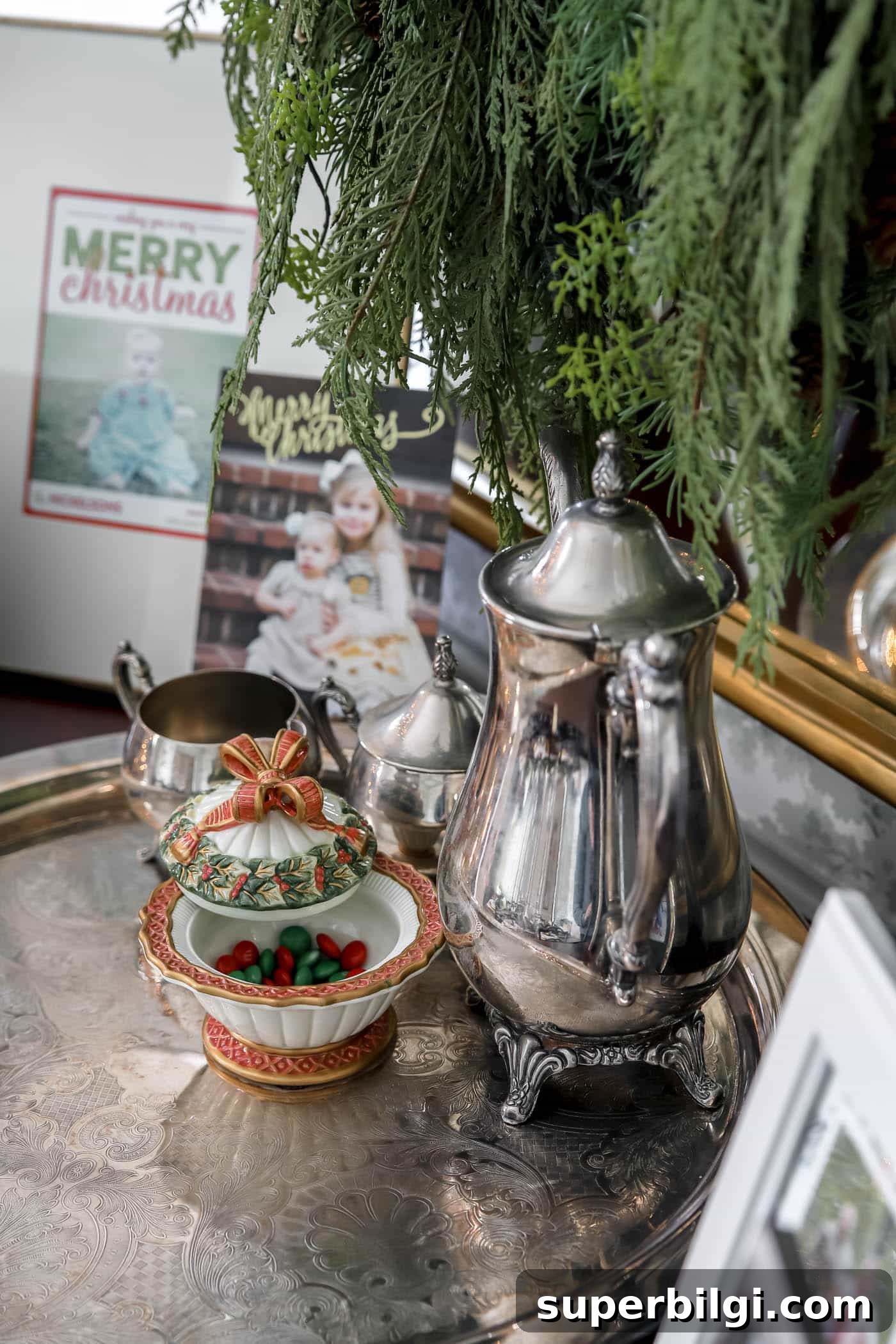
Small silver bowls are perfect for practical, everyday uses. Place one by the front door for keys, on a dresser for rings, or beside a candle to hold matches. They also work wonderfully for seasonal displays—fill a bowl with pinecones in fall, eggs in spring, or ornaments at the holidays.
Even simple functions—holding wrapped candy, soaps in a guest bathroom, or decorative beads—make these pieces feel useful and loved rather than locked away.
3. Use Silver Pitchers and Vessels as Vases
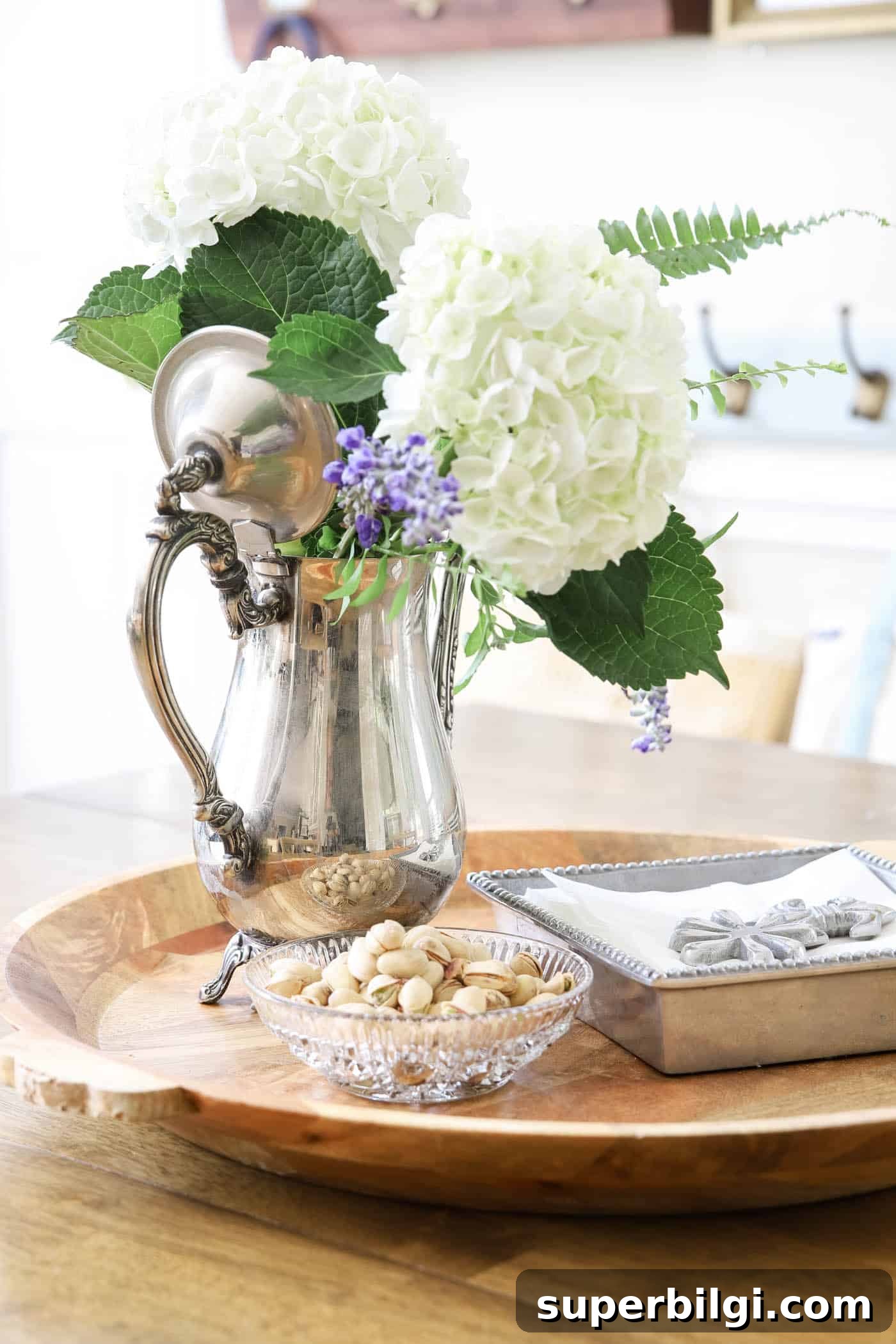
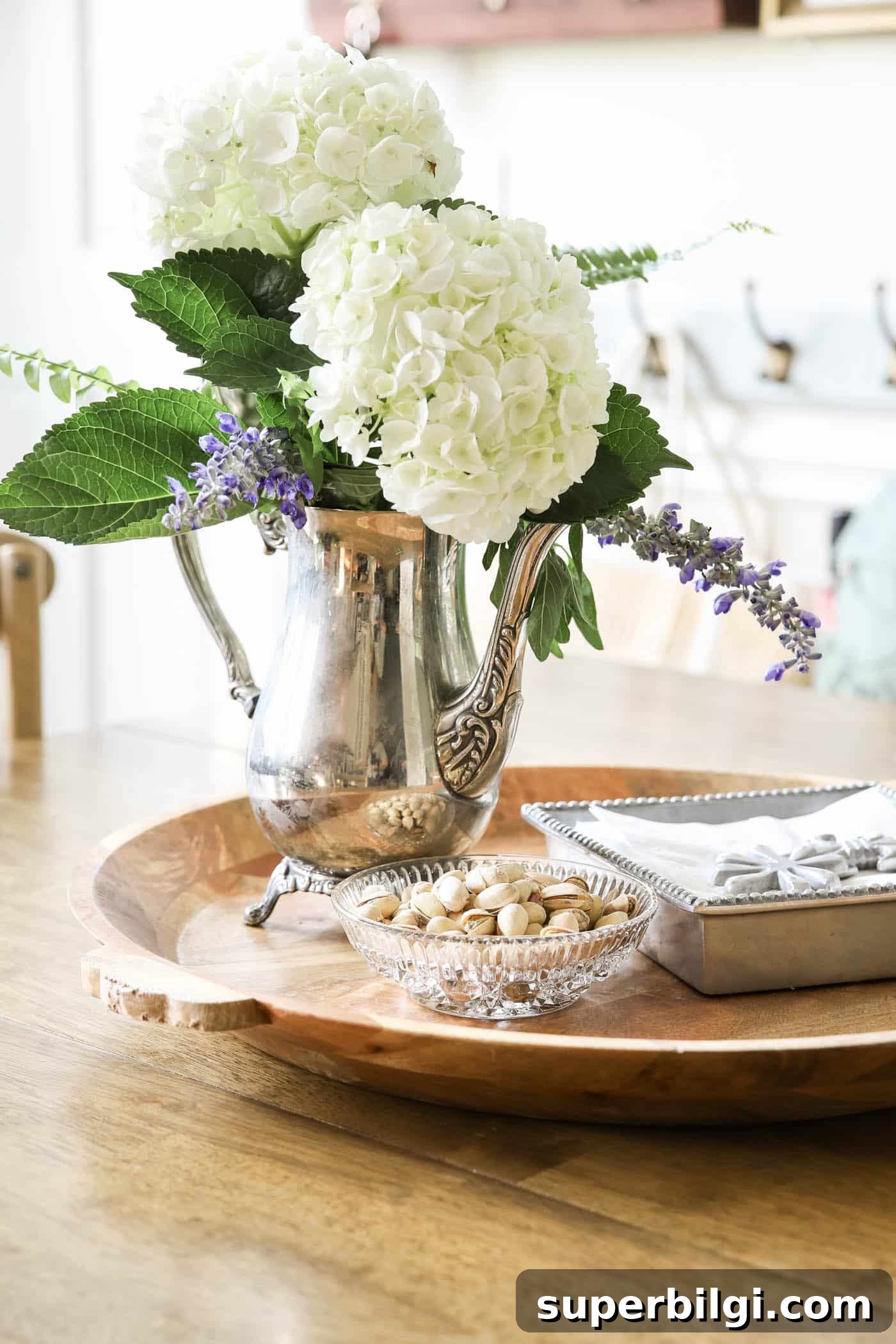
Silver pitchers, coffee pots and creamers make beautiful vases. Fresh blooms instantly soften the look and make a silver vessel feel right at home on a kitchen table, entry console or sideboard. Change the flowers with the seasons to keep arrangements fresh and casual.
4. Mix Antique Silver With Your Everyday Decor
You don’t need a formal, antique-filled home to make silver work. I like to tuck a small silver card tray into a modern kitchen vignette and use it to corral Apple Watch chargers. Paired with a marble-and-brass pencil cup, blue-and-white pottery and a piece of art, the tray looks intentional and useful—far from museum-like.
Can You Mix Silver and Brass?
Yes—mixing metals creates depth and a more collected look. Pair silver with brass frames, lamps or hardware rather than trying to match everything. The contrast helps older pieces blend into modern decor.
5. Actually Use Your Silver for Entertaining
Of course, silver was made to be used. Pull out trays, bowls and pitchers for holiday meals, showers, brunches or even a simple Sunday lunch. Serving store-bought cookies on Grandma’s tray on a random Tuesday feels just as special as a holiday dinner—and it keeps the pieces in circulation so they remain meaningful.
How Do You Know If Inherited Silver Is Valuable?
Sentimental value matters most to me, but it’s helpful to understand what affects monetary value if you’re curious. Value depends on several factors:
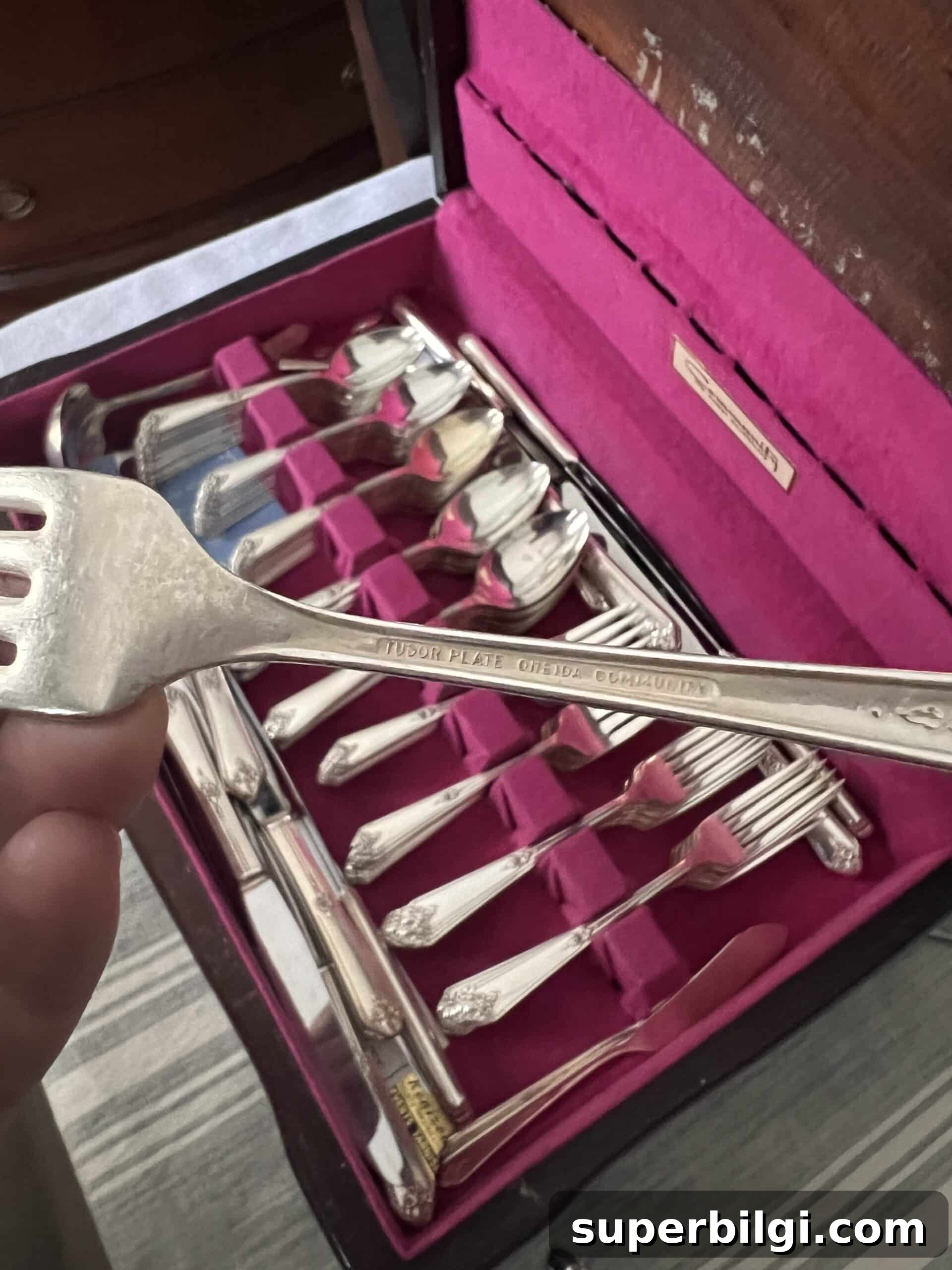
- Sterling vs. silver plate: Sterling (usually marked “Sterling” or “925”) contains more silver and usually has higher intrinsic value than silver-plated pieces.
- Maker and markings: A recognizable maker’s name or hallmark can increase collectibility.
- Pattern and age: Certain discontinued patterns and older pieces may be sought after, though older doesn’t always mean more valuable.
- Condition: Dents, scratches and worn plating reduce value.
A practical first step is to turn the piece over and look for stamps or hallmarks on the bottom, the backs of utensils, or handles. Marks like “Sterling,” “925,” “Silver Plate,” “EPNS” or maker names give you a starting point for research. Even if a piece isn’t worth a fortune, knowing its origin adds to the story you’ll enjoy while using it.
How to Start Collecting Antique Silver
Once you start noticing silver, you’ll see it everywhere: estate sales, antique stores, thrift shops, flea markets and online marketplaces. I look for pieces with attractive shapes, good patina, and a function I can imagine using. I’m less concerned about a perfectly matched set and more excited by mismatched pieces that feel authentic and tell a story.
FAQ About Inherited and Antique Silver
What should I do with old family silver?
Use it. Incorporate pieces into everyday decor, assign small bowls to hold daily items, use pitchers as vases, and bring out serving pieces for meals. Keeping heirlooms visible helps you remember and appreciate them.
Is antique silver still in style?
Yes—antique and vintage silver fits well with modern collected decorating styles. Mixed with wood, woven textures, blue-and-white pottery and books, silver contributes to a timeless, layered look.
Should I polish inherited silver?
That’s up to you. Polishing restores shine, but a bit of tarnish can be attractive and authentic. If you choose to polish, confirm whether a piece is sterling or silver-plated so you use an appropriate cleaner that won’t cause damage.
How can I tell if my silver is sterling or silver plated?
Look for markings: “Sterling,” “925,” or “.925” indicate sterling silver. Silver-plated items often have marks like “Silver Plate,” “EPNS,” or “EP.” Use these marks as a starting point for further research on maker and age.
Can you mix silver and gold or brass decor?
Yes. Mixing warm and cool metals gives a room more character and helps older pieces feel intentional in a modern setting.
Where is the best place to buy antique silver?
Estate sales, antique shops, thrift stores, flea markets and online vintage marketplaces are all great sources. Ask family, too—you might discover a treasure tucked away in someone’s cabinet.
Final Thoughts
I’m grateful to have my grandmother’s silver in our home. Using these pieces regularly—filling a teapot with hydrangeas, leaning a tray against cookbooks, or setting out a bowl for friends—keeps their stories alive. Collecting additional pieces over time, even small ones like napkin rings or vanity items, builds a collection that can be passed to future generations.
Our homes become richer when they include both new finds and beloved heirlooms. I’d rather see Grandma’s silver on a table where we use it than tucked away in a drawer for “someday.” Now I enjoy these pieces every day and look forward to adding thoughtful treasures to the collection.
Do you have silver or other family heirlooms passed down to you? I’d love to hear about how you use them in your home.