

Wondering how high to mount a TV? These practical tips will help you choose the best height so your TV looks great and delivers a comfortable viewing experience.
Remember the bulky box TVs that dominated living rooms for years? They were often awkward and hard to integrate into a stylish space. The arrival of slim flat-screen TVs changed that. Sleeker and less obtrusive, modern TVs can be wall-mounted for a clean, polished look. Some models, like the Frame TV, even display artwork when not in use, making the screen feel like part of the décor.
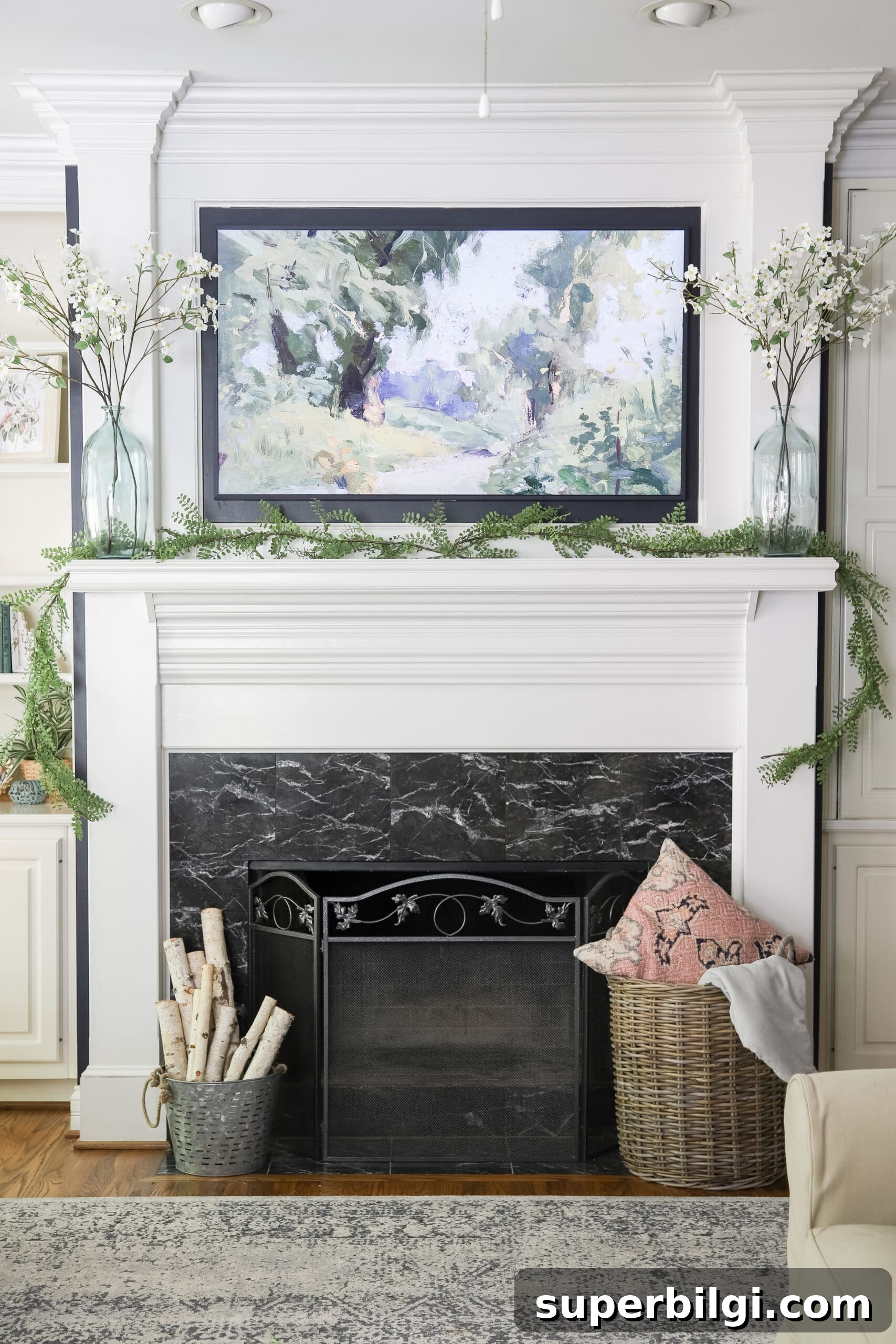
Wall-mounting opens up design possibilities, but it also raises the question: what’s the right height? Before you drill, consider the room, screen size, viewing angle, seating arrangement and who will watch most often. Use the tips below to find the ideal TV mounting height for your space.
How high should you mount a TV?
The basic rule is to place the TV so the screen’s center aligns roughly with the viewers’ eye level in their primary viewing position. That reduces neck strain and improves comfort. But a single “one-size-fits-all” number rarely works—room layout, furniture placement, and how people watch TV all matter.
Start by measuring the eye height of the people who use the room most often while seated or lying down. If multiple people watch from different heights, average those measurements to pick a center height that suits everyone.
1. Viewing angle
Mounting a TV too high forces viewers to tilt their heads, which can lead to neck discomfort over time. For most living rooms where people sit on a sofa or chair, aim to have the middle of the screen at eye level when seated. If you watch while lying down or from varying positions, consider a tilt- or articulating mount that lets you adjust the angle for better comfort.
Pro Tip: A tilting or swivel mount improves viewing comfort for multiple seating areas and reduces glare by allowing you to fine-tune the angle.
2. Size of the TV
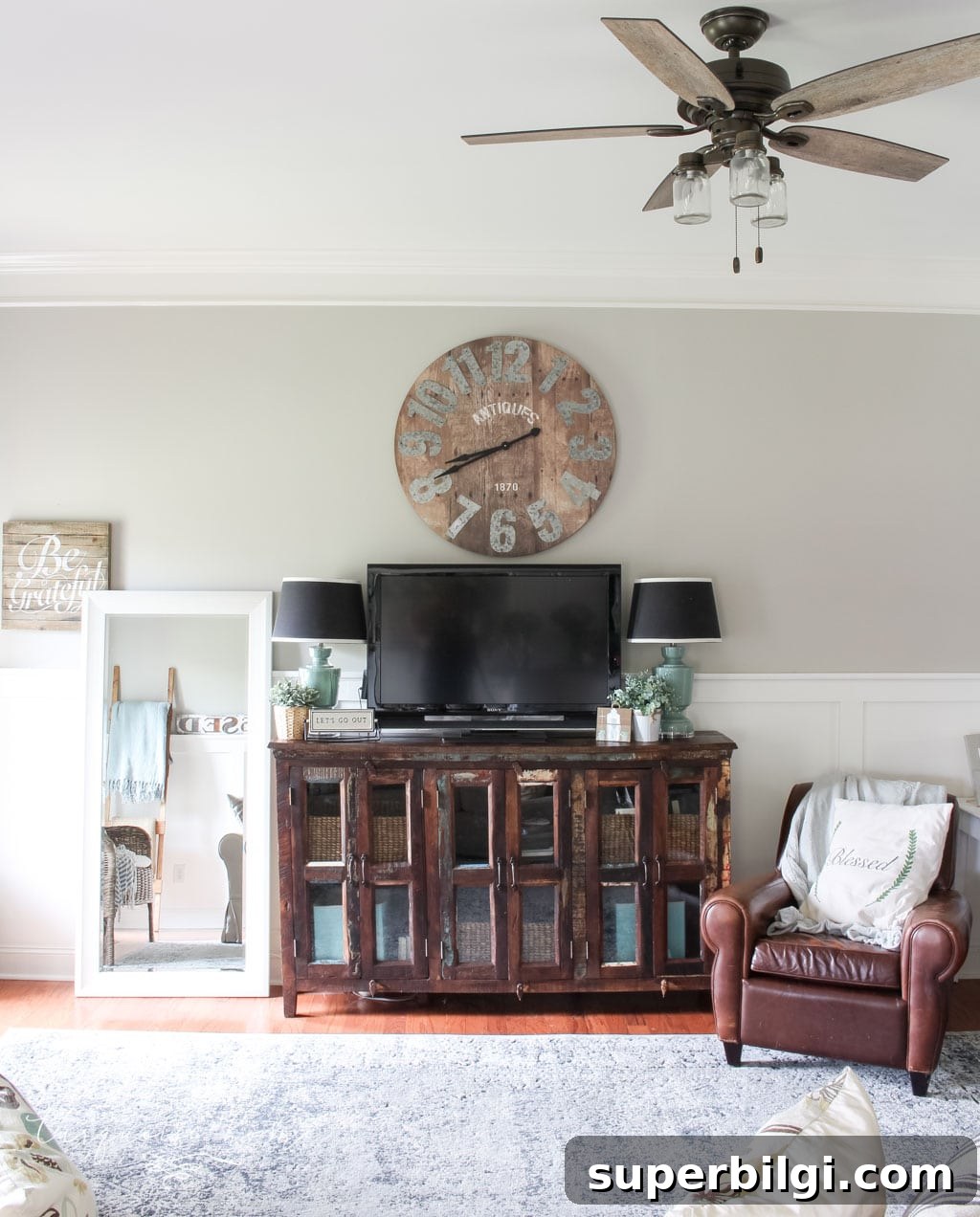
TVs come in many sizes, and larger screens change how high the center needs to be to achieve a comfortable viewing angle. Manufacturers often recommend centering the screen at eye level. To account for varied viewer heights, measure eye level from the floor and place the center of the screen at that height. If several people watch regularly, use the average eye height.
3. The room
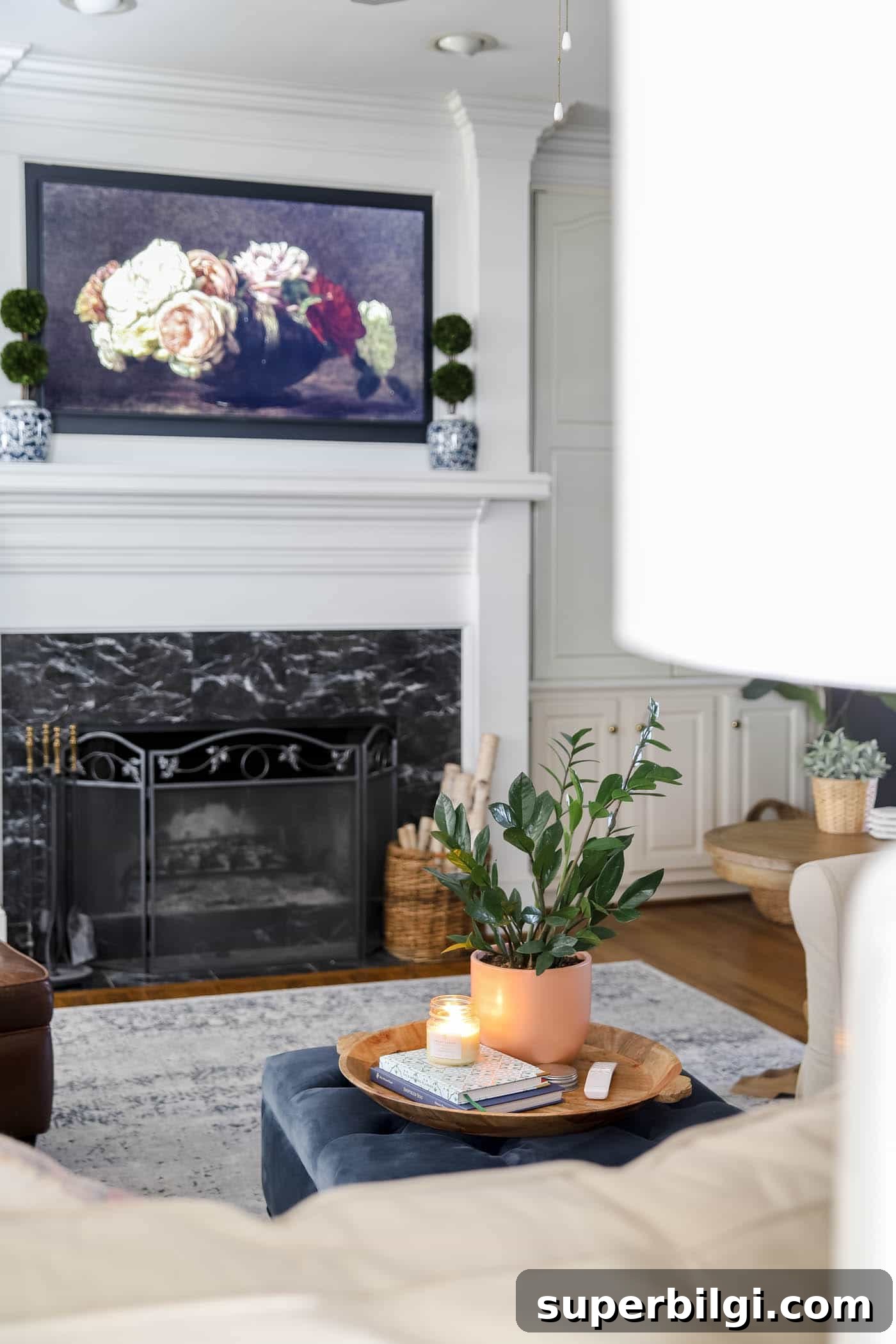
The room itself influences where the TV should go. Natural light from windows, reflective surfaces, and furniture placement can all affect visibility. Think about potential glare, electrical outlet locations, wall features like built-ins or mantels, and the viewing distance between seating and the screen.
Key factors to evaluate:
- Room size and layout
- Visual obstructions and traffic flow
- Features on the wall (built-ins, fireplace, shelving)
- Distance from screen to seating
- Direction the screen will face (sunlight and glare)
- Location of power and cable outlets
4. Viewing distance
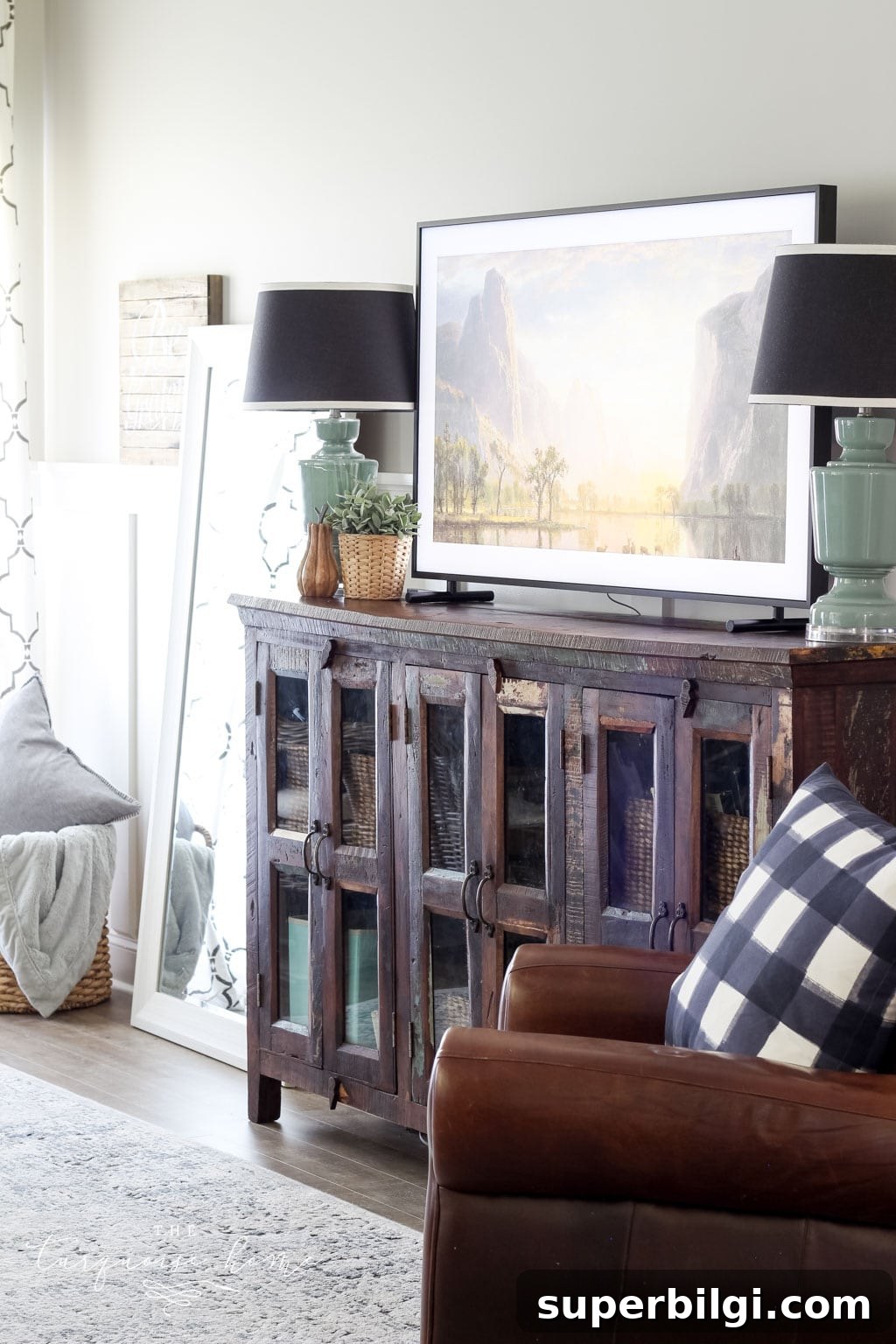
Viewing distance affects comfort and perceived image quality. Sit too close and you may experience eyestrain; sit too far and details may be lost. A common guideline is to divide the TV size by 0.55 to estimate a comfortable viewing distance in inches (for example, a 55″ TV ÷ 0.55 ≈ 100 inches). Use this as a starting point and adjust based on your room and eyesight.
If math isn’t your thing, online calculators can help determine an ideal distance and height based on TV size and preferred viewing position.
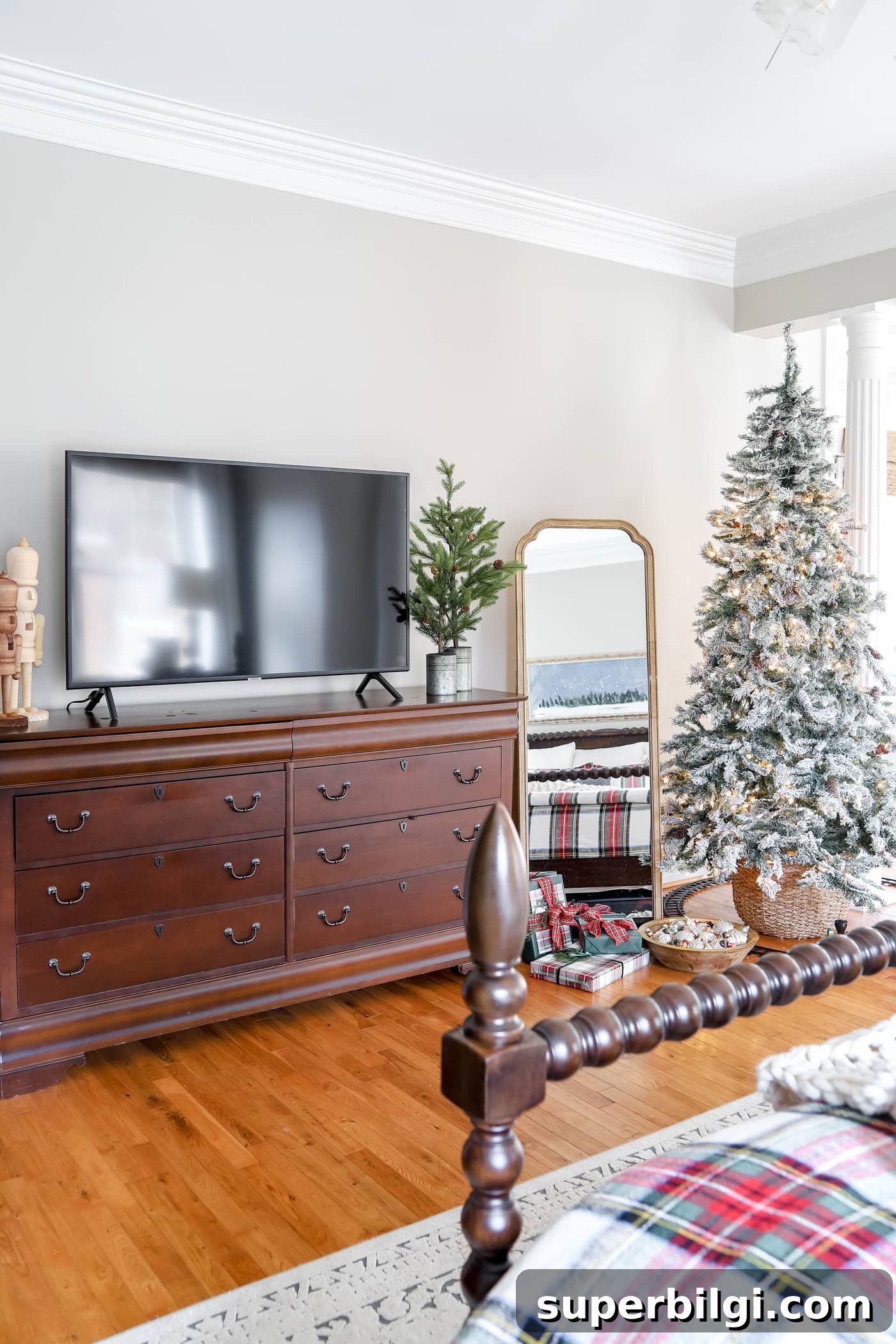
5. Layout
Structural elements like mantels, built-ins or windows sometimes limit your options. If the ideal height conflicts with a fireplace or shelf, consider raising the seating distance or choosing a different wall. In many rooms a slightly higher placement works fine if seating is set back far enough.
In our living room the only practical location was above the mantel between built-ins. That restricted the TV’s height, but because the sofa sits farther back, viewing remains comfortable.

How high to mount a TV: Special considerations
Different viewing habits call for different mounting approaches. Below are a few common scenarios and how to handle them.
People who watch TV lying down
If you often watch from bed or lie down on the couch, place the screen slightly higher so you can view comfortably without craning your neck. A practical method is to have someone lie in your usual spot while another marks the natural line of sight on the wall—place the center of the TV at that mark.
If the room is small, consider mounting the TV to a side wall to improve viewing distance and angle.
Areas where viewers watch standing up
Rooms like home gyms or game rooms, where people tend to watch standing up, require a higher mounting height. Measure the average standing eye level and place the screen center accordingly to avoid awkward viewing angles.
Mounting a TV above a mantle or fireplace
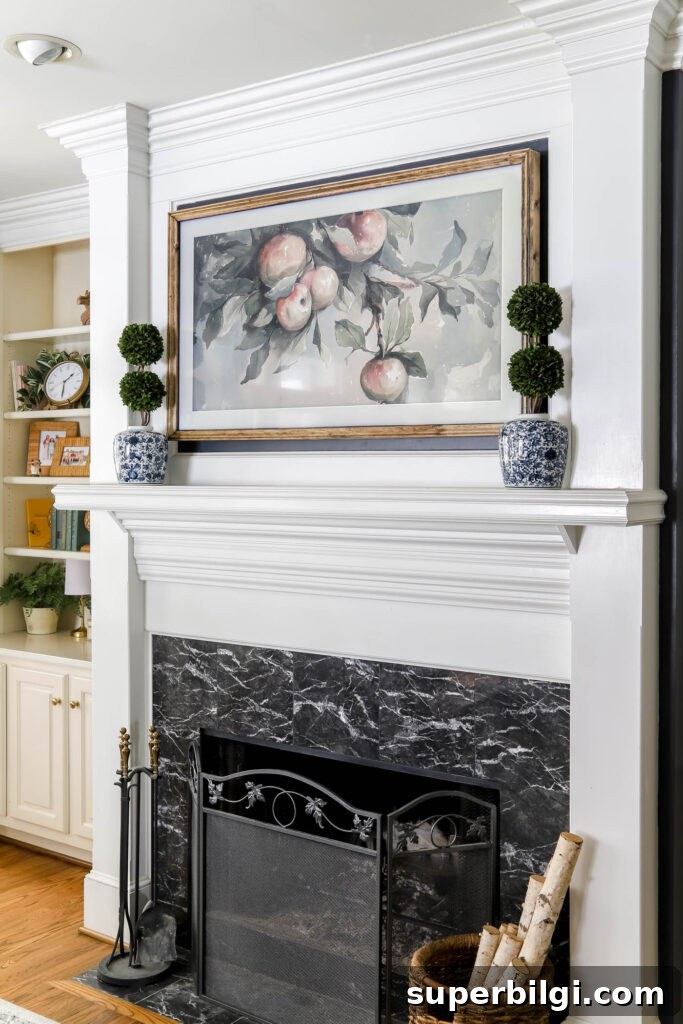
Mounting above a mantel is popular for a centered, polished look. Center the TV horizontally over the mantel and allow roughly 4–6 inches of clearance between the bottom of the screen and the mantel to keep decorations visible and avoid a cramped appearance. If the fireplace generates significant heat, increase clearance to 6–12 inches and verify proper insulation to protect the TV.
Hiding cords inside the wall or running them into nearby cabinets keeps the installation tidy and helps the TV blend with the room’s décor—Frame TVs, for example, blend with the wall when they display art in standby mode.
Final thoughts on how high to mount a TV
Eye-level viewing is a reliable starting point, but mount height should reflect your room, seating, viewing habits and the TV size. Take measurements from your primary viewing positions, account for distance and glare, and use an adjustable mount if multiple viewing angles are needed. Planning ahead will help you achieve both a comfortable viewing experience and a great-looking installation—so think before you drill.
More Living Room Posts You Will Love:
- How to Hang a Christmas Mantel Garland + Video
- 10 Best Ideas for Decorating a Mantel With a TV Above It
- 12 Gorgeous DIY Faux Fireplace Ideas
- 25+ Stunning Summer Fireplace Mantel Decor Ideas
- Fall Fireplace Mantel Decor Ideas