If you’re new here, you might want to read my initial thoughts on the KonMari Method and my post about decluttering the master closet before diving in.
This post contains affiliate links for your convenience. See my full disclosure policy.
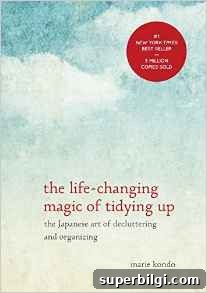
To summarize briefly: I’m working through a six-month decluttering plan guided by The Life-Changing Magic of Tidying Up by Marie Kondo. I don’t follow every rule to the letter, but the method’s principles have kept me motivated and focused. Instead of sporadic efforts, I’m committed to finishing this time — and sharing the progress helps keep me accountable.
This month I tackled books and papers — two categories that can quietly take over a home if you let them.
Decluttering Books
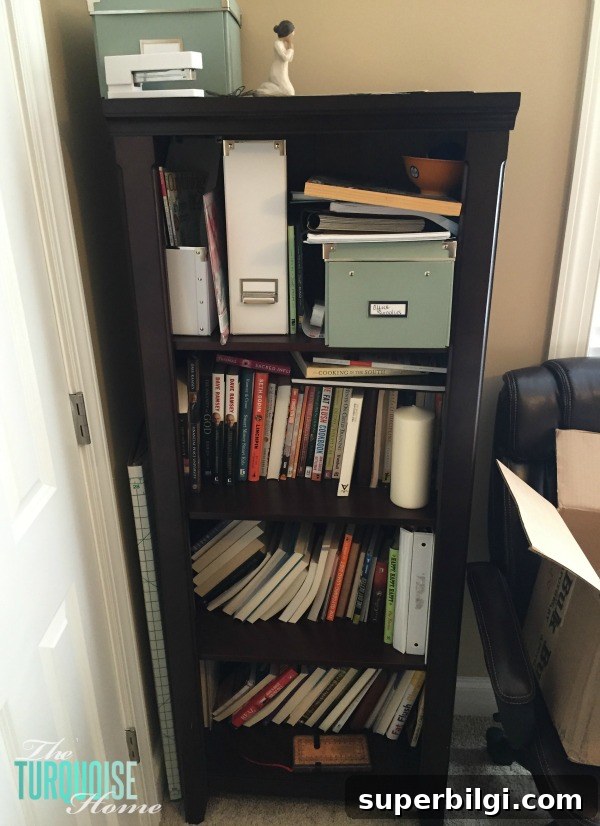
I began with books thinking it would be easy: I already reduced my collection to a small, somewhat messy bookcase. But then I discovered books tucked under the bed, hidden in the closet, in the nightstand and inside the armoire. Gathering every book from around the house is a KonMari must — and it was so revealing. Seeing the full collection helped me make better decisions about what to keep.
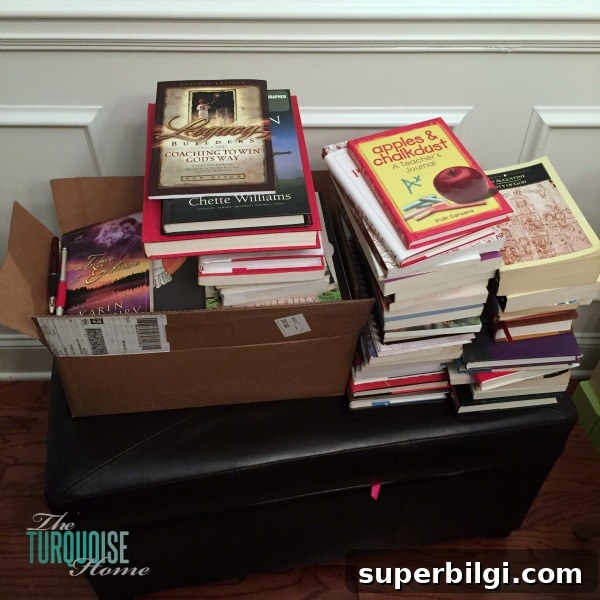
As I held each book I asked, “Does this spark joy?” Some books are keepers — those that shaped me or I’ve reread often. Others were practical reference books I regularly use. I also found many marriage and parenting books I’d bought earlier in life and never revisited; most of those I donated.
I pared down fiction I’d saved “for the beach someday.” Realistically, I won’t be lounging with a paperback for years, and I prefer audiobooks now. I kept a handful of favorites in hard copy — the ones I highlight and return to — and passed the rest on to others who will enjoy them sooner.
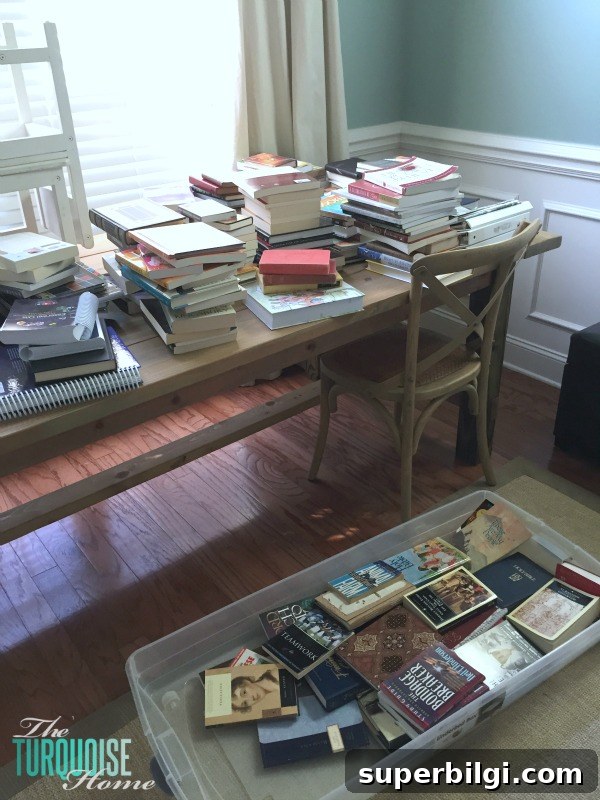
I also cleared out many Bible study workbooks and guides. As much as those felt meaningful at the time, I realized I hadn’t referenced most of them in years. I did not, however, discard any personal journals — those are stored separately with my keepsakes and will be reviewed during the mementos stage.
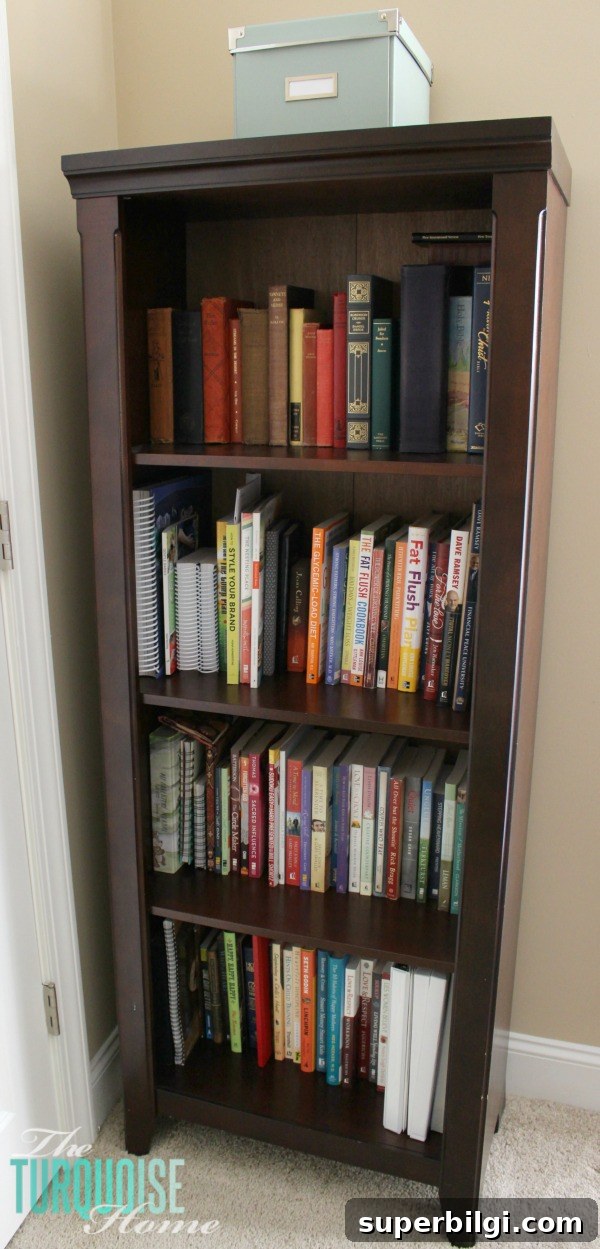
After sorting, I consolidated my remaining books into one small bookcase. I left out cookbooks and my children’s books (I’m not touching their things until I finish mine). For now, limiting myself to a single shelf feels like a practical boundary that will help me avoid future clutter creep.
Decluttering Paper
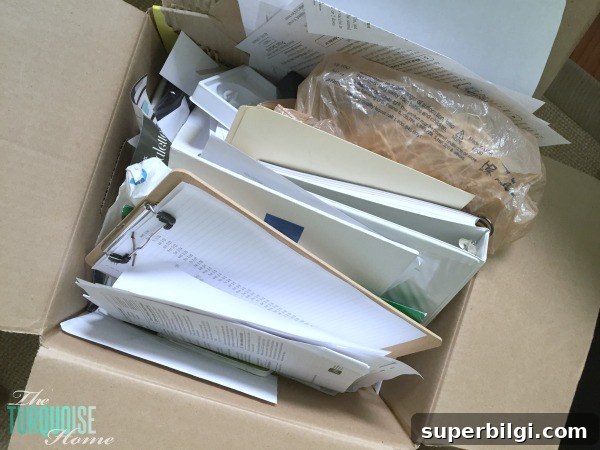
Paper is a tougher category and I’m still working through it. I found boxes of random papers scattered through our office and guest room — a backlog from my baby’s first year when I simply didn’t have the time to sort.
Marie Kondo’s rule for papers is refreshingly simple: discard everything you don’t absolutely need. That’s hard for chronic hoarders, but it reduces the agonizing decisions and is surprisingly freeing.
To keep papers manageable, I created a small command center near the kitchen with two folders: “papers to file” and “follow-up.” If I have a spare moment I grab one folder and process it, and the goal is to keep those folders from overflowing. A weekly slot on the calendar would be ideal to maintain control.
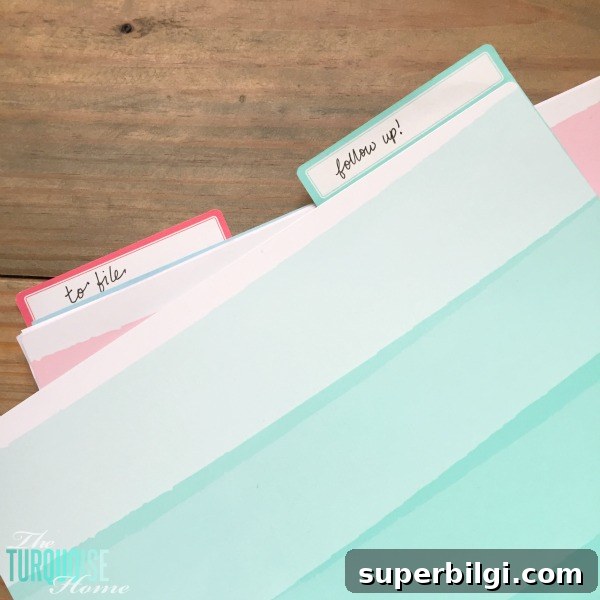
There will always be a small stack of necessary documents — tax papers, mortgage or property records, and warranties — but Kondo recommends keeping those in a single folder rather than obsessively filing by category. When you do need a document, you can thumb through the folder; this approach saves time and reduces filing stress.
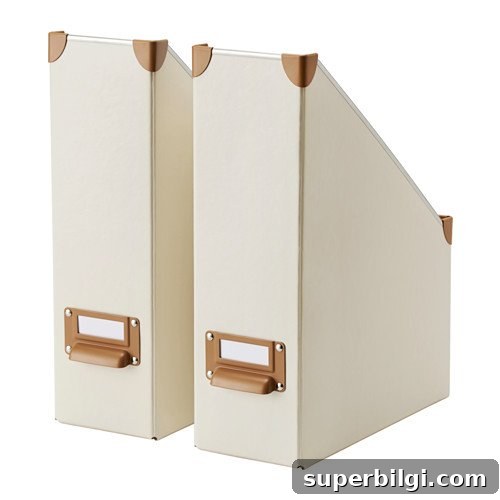
Going through the boxes I found unopened mail, checks to deposit, expired coupons, receipts I needed for taxes, and manuals for appliances. I used to keep dozens of manuals in heavy binders; now I’m keeping only the manuals I might realistically need (vacuum, baby monitor, lawn mower, etc.) and storing them in slim magazine holders instead of bulky binders.
I don’t have a neat “after” photo of my paper purge yet because the work is ongoing, but my office and command center are steadily improving. Creating a simple system has already stopped me from shoving papers into random boxes and forgetting about them.
Next Month’s Topic
Next I’ll tackle komono — miscellaneous items — which for me covers everything from office supplies and craft materials to electronics and decor. Marie Kondo breaks komono into smaller categories, and I’ll start in my office where clutter is worst. Items I plan to sort include:
- Notepads and notebooks
- Binders and folders
- Calendars and envelopes
- Labels, pens, pencils, and markers
- Hole punches, shredders, and printer paper
- Staplers, paper clips, rubber bands, tacks, and magnets
- Erasers, whiteout, stickers, tape, glue, scissors
- Craft supplies, wrapping paper, bubble wrap, cardboard boxes
- Credit and reward cards, spare change
- Video games, board games, CDs/DVDs
- Spare cords, phone accessories, remotes, cameras
- Computers, home decor, and photo props used for blogging
It’s a long list, but I’m already noticing how much lighter I feel as I give away and discard items I haven’t used in years. Decluttering isn’t just about emptying spaces — it’s about clearing mental load.
It’s Not Too Late
If your home feels overwhelmed by stuff, join me on this journey. Decluttering with a clear method and accountability makes the process manageable and even rewarding. Marie Kondo estimates about six months to work through an entire home; it’s not a quick fix, but the result is lasting.
More posts you may enjoy:
- The Two Rules to Eliminate Paper Clutter for Good!
- How to Tame the Paper Clutter: Industrial Command Center
- How to Declutter Your Home in 5 Simple Steps