
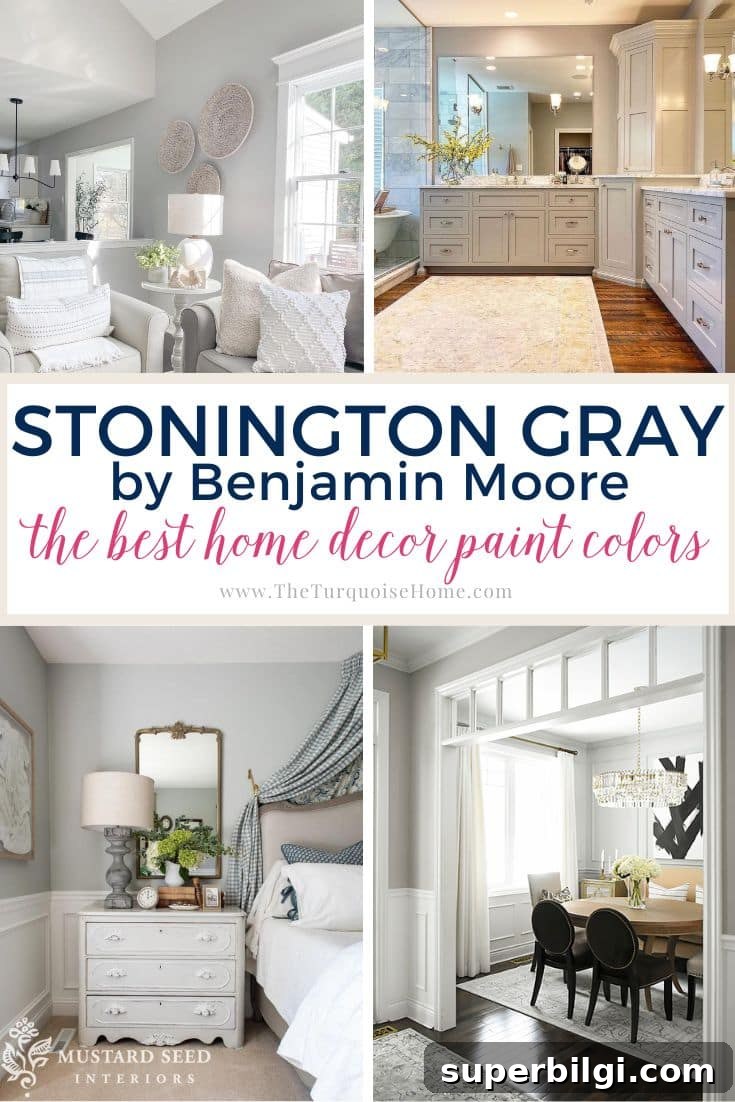
From modern farmhouse to coastal glam, Benjamin Moore Stonington Gray is a versatile cool-toned gray that suits many styles. In this paint spotlight, we’ll explore what makes this popular shade so widely used and how to use it successfully in your home.
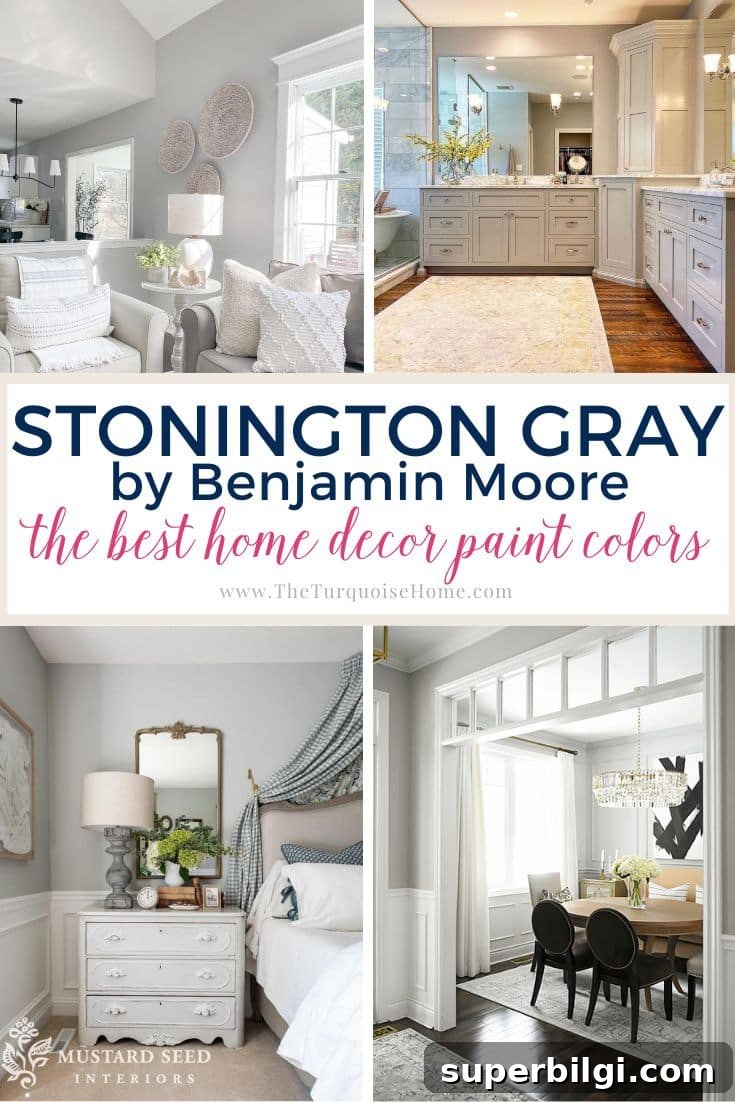
Choosing the right paint color for your home is a big decision—both a time and financial commitment. The color you pick will shape the mood of your space for years, so it’s worth understanding how a particular shade performs under different lighting and alongside different finishes and furnishings.
Benjamin Moore Stonington Gray (BM HC-170) is one of the brand’s best-selling grays. Part of the Historical Collection, it’s a timeless, medium-toned gray that reads as cool and fresh without feeling stark or clinical. That balance makes it a reliable neutral for interiors and exteriors alike.
If you’re considering Stonington Gray, here’s what to know about its undertones, its light reflectance value, complementary colors, and typical uses throughout the home.
This post contains affiliate links for your convenience.
What Are the Undertones of Benjamin Moore Stonington Gray?
All paints have undertones that reveal themselves depending on light and surrounding colors. Stonington Gray is generally cool-toned with subtle blue undertones that are most noticeable in cooler, north-facing light. In some conditions, you may also perceive faint green or purple hints, though these are less dominant than the blue.
Because north-facing rooms tend to amplify cool tones, the blue will often read stronger there. In warm, south-facing light the greenish aspects can briefly emerge. This is why testing the color in your actual space is essential—samples can look different from photos or chips.
Pro tip: Try real paint samples on different walls and observe them at multiple times of day to confirm how the undertones behave in your specific lighting.
What is the Light Reflectance Value of Stonington Gray?
Stonington Gray has a light reflectance value (LRV) of 59.36. LRV measures how much light a color reflects on a scale from 0 (black) to 100 (white). At about 59, Stonington Gray sits squarely in the medium range—light enough not to darken a space unnecessarily, yet substantial enough to anchor a room without appearing washed out.
What Colors Go With Benjamin Moore Stonington Gray?
Stonington Gray behaves like a true neutral in most settings and tends to play well with many palettes. Its cool character pairs beautifully with soft warm whites to create a gentle contrast or with crisp true whites for a clean, modern look.
Trim options:
– A soft warm white such as Simply White or Cloud White can soften Stonington Gray’s coolness and create a welcoming balance.
– A bright true white like Chantilly Lace will produce a sharper, more contemporary contrast; Benjamin Moore commonly recommends Chantilly Lace alongside Stonington Gray.
Accent options:
– Deeper cool grays, such as Puritan Gray, or a classic navy (for example, Hale Navy) create sophisticated depth when used as accent walls, doors, or cabinetry—but keep surrounding finishes light so the room doesn’t feel heavy.
– Greens, both soft and saturated, are a natural companion that can highlight the subtle green undertones Stonington Gray can sometimes reveal.
Benjamin Moore Stonington Gray in the Home
Stonington Gray’s balanced tone makes it useful across many rooms. Below are common applications and finish suggestions.
Kitchen & Dining Room
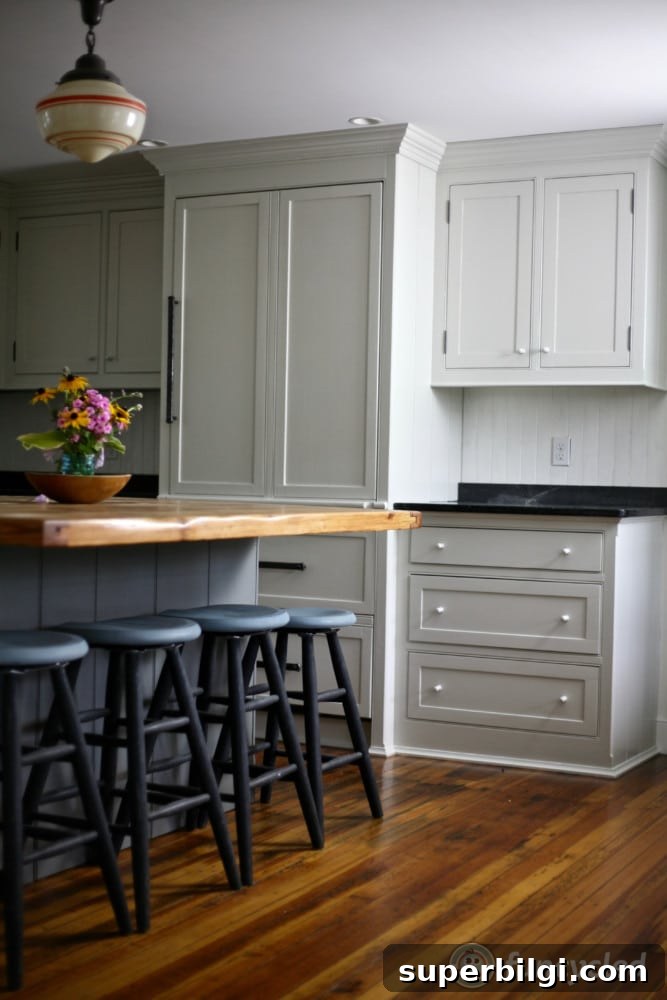
In kitchens, a neutral wall color helps tie together cabinetry, countertops, backsplashes, and furnishings. Stonington Gray works well on walls and can also be an elegant cabinet color—offering contrast without darkening the space.
Recommended sheens:
– Walls: satin for durability with a subtle sheen that’s easy to clean.
– Cabinets: satin, semi-gloss, or high-gloss depending on your style; satin is a popular, practical choice.
Bedroom
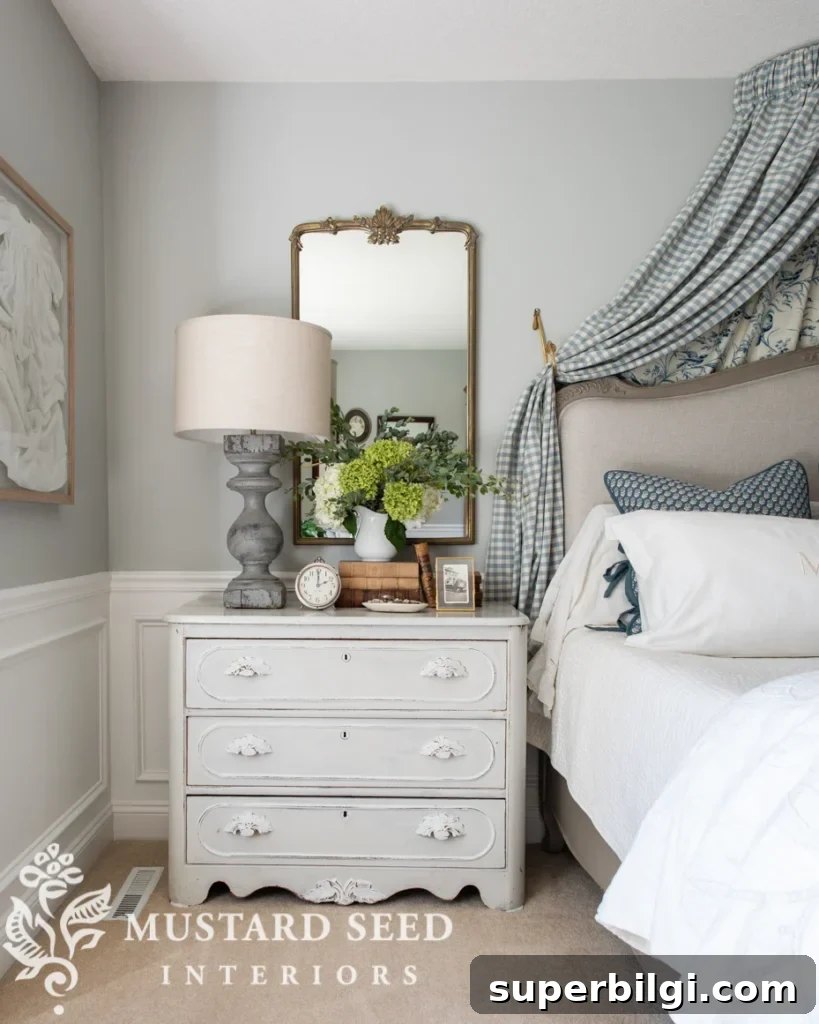
Stonington Gray can create a tranquil, restful bedroom thanks to its cool blue undertone. Pair it with layered textiles—soft neutrals or calming blues—to build a serene retreat. For bedroom walls, eggshell or satin finishes are usually best; eggshell is a common preference for a soft, low-sheen look.
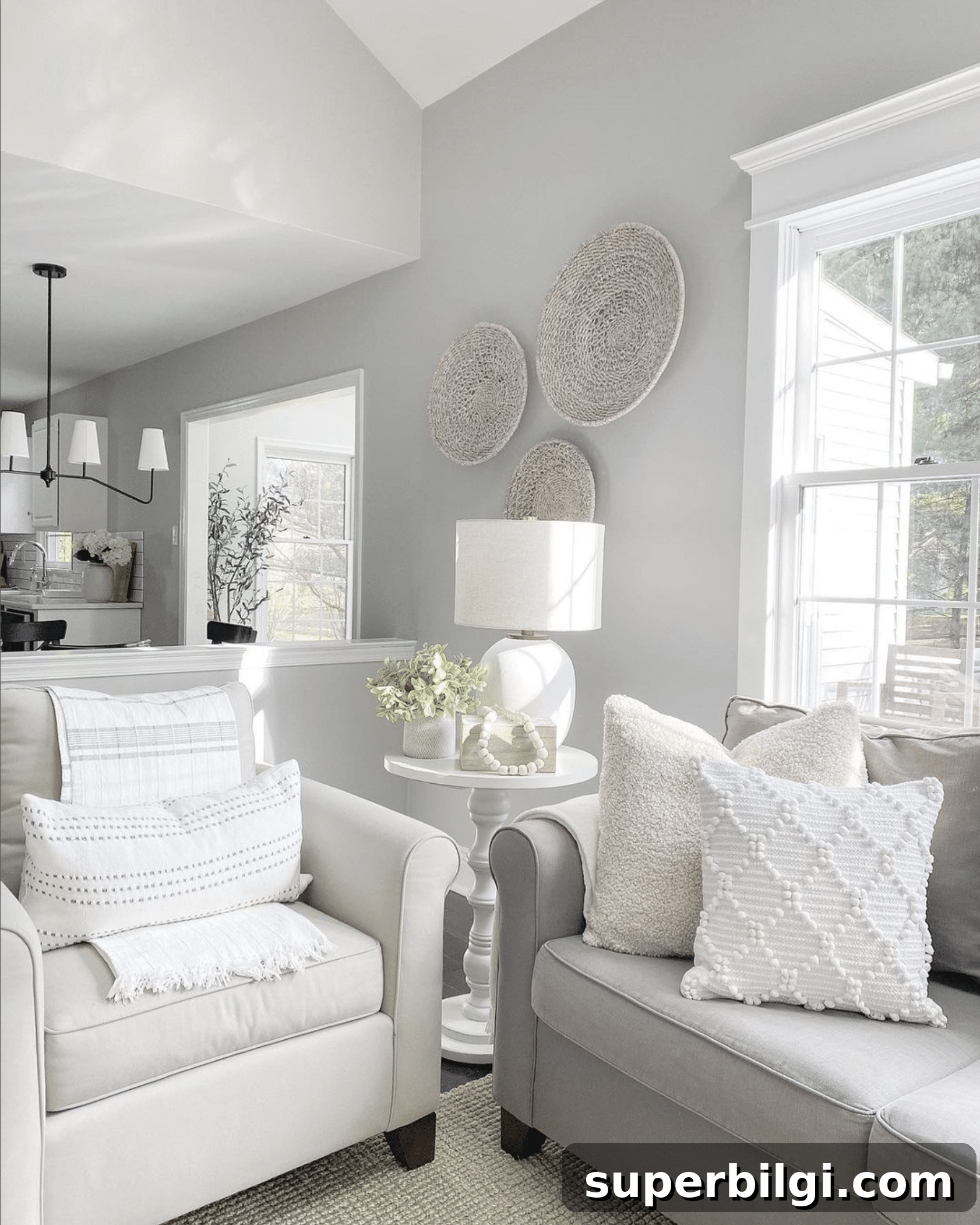
Living Room
Living rooms that receive varied natural light benefit from Stonington Gray’s versatility—the color will shift subtly through the day, which can be a positive design feature. Choose an eggshell or satin sheen for livable durability and an attractive finish.
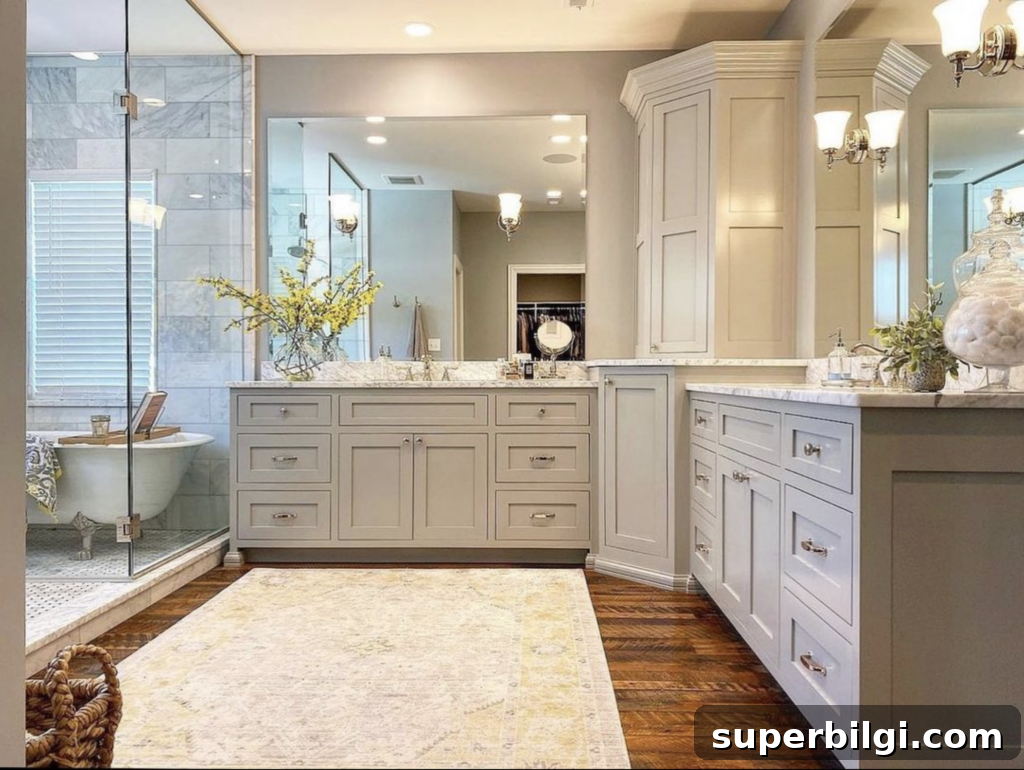
Bathroom
Cool tones like Stonington Gray are ideal for bathrooms because they lend a calm, spa-like feel. Pair the walls with crisp white fixtures and consider blue accents or tiles if you want a coastal vibe. For bathrooms, a satin finish is practical because it handles humidity and is easy to wipe clean.
Other Gray Colors to Consider
If Stonington Gray doesn’t feel like the perfect fit, consider these popular alternatives from Benjamin Moore:
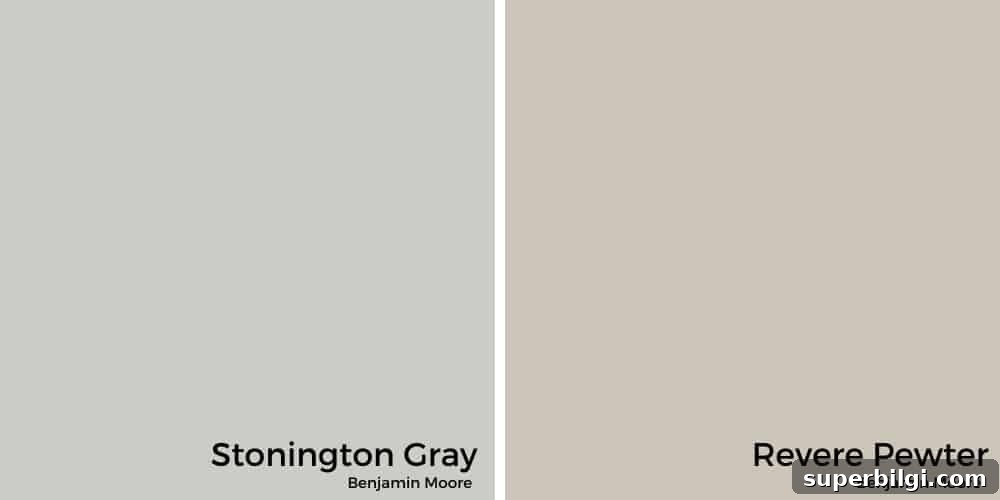
Revere Pewter
Revere Pewter is another bestseller. With an LRV around 55.5, it’s slightly darker than Stonington Gray and generally reads warmer—often leaning beige in certain light. Choose Revere Pewter when you want a cozier, warmer neutral.
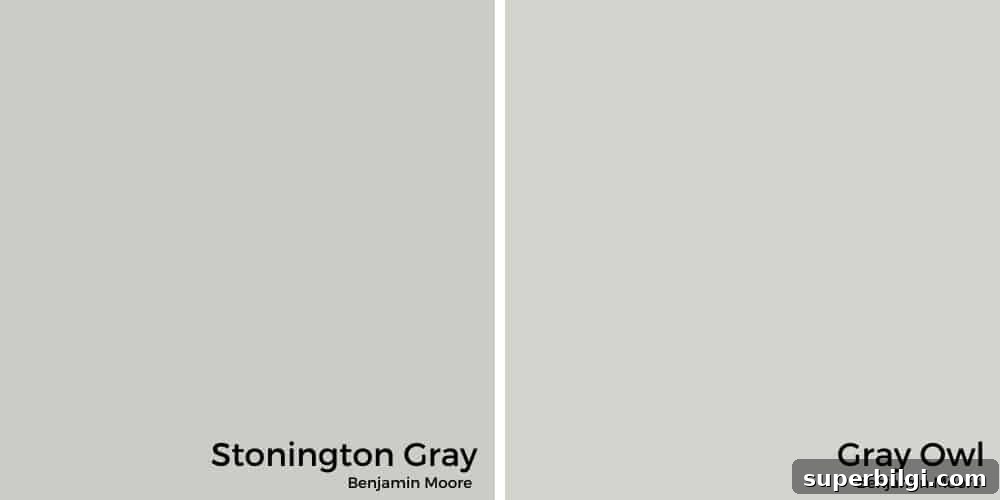
Gray Owl
Gray Owl is often cited as a close alternative. It has a slightly greener undertone and a higher LRV (lighter appearance) than Stonington Gray, so it can feel brighter, especially in rooms with limited natural light.
Final Thoughts on Benjamin Moore Stonington Gray
Stonington Gray is a dependable, medium-toned gray that works well across many styles and rooms. Its balanced LRV keeps spaces from feeling too light or too dark, and its cool blue-leaning undertone gives it a fresh, modern feel.
Before committing, test the color on your walls and observe it at different times of day. Try pairing it with warm whites for softness, crisp whites for contrast, or deeper blues and greens for accents. If you use Stonington Gray, it’s likely to remain a versatile backdrop that adapts to changing décor over time.
More Posts You Will Love:
- The Best 17 Sage Green Paint Colors For Your Home
- How to Paint Countertops to Look Like Marble
- The Best Bedroom Paint Colors
- How to Paint Outlet Covers
- Best Living Room Paint Colors