
Welcome to the 30 Days to Less of a Hot Mess Challenge—a month-long effort to declutter, reorganize, and breathe new life into your home so it feels calmer and more manageable. If this is your first time joining the challenge, you may want to start here at the beginning.
**************************************************************
How to Organize Your Day
Full disclosure: I’m a recovering hot mess when it comes to balancing daily obligations. Most of the time that comes from saying yes to too many things, but over the years I’ve found one consistent habit that keeps me functioning: a daily planner. A simple, paper planner organizes my life in a way digital tools alone haven’t for me.
I know there are countless digital calendars and planning apps, and they work great for many people. For me, though, the foundation of an organized day is a paper planner. I use it for almost everything, and I keep time-sensitive events with phone alerts so nothing slips by. If your partner is a digital calendar user, you can absolutely combine both approaches—use what works best for your family—but keep whatever planner you personally will use every day.
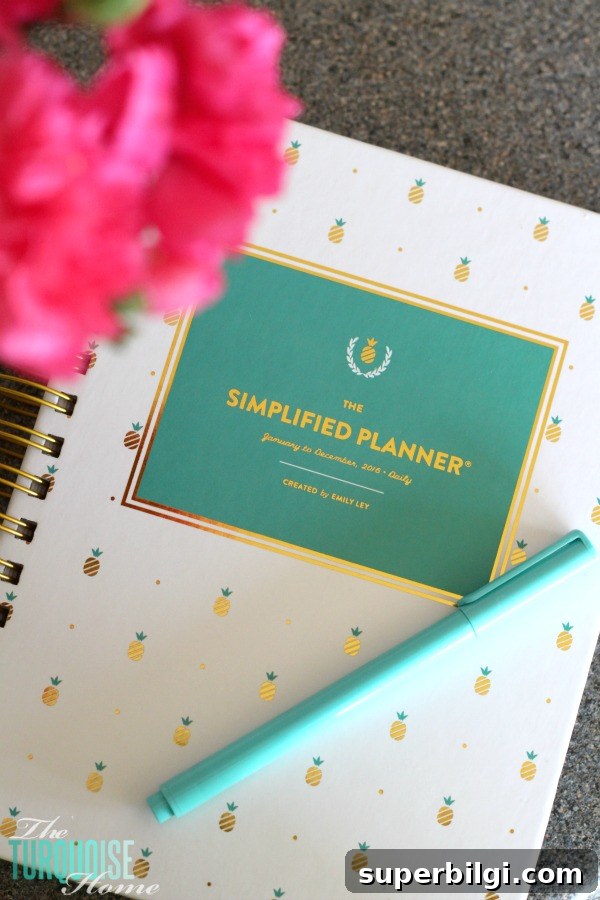
I personally use the Emily Ley Simplified Planner because it’s straightforward and uncluttered—exactly what I need. A simple layout makes it easy to plan time blocks, list priorities, and keep routines visible.
Want to Save This?
If you’d like a copy of these tips, save or bookmark this page so you can return to it when you need a refresher.
RELATED: My Favorite Daily Planner to Keep You Organized
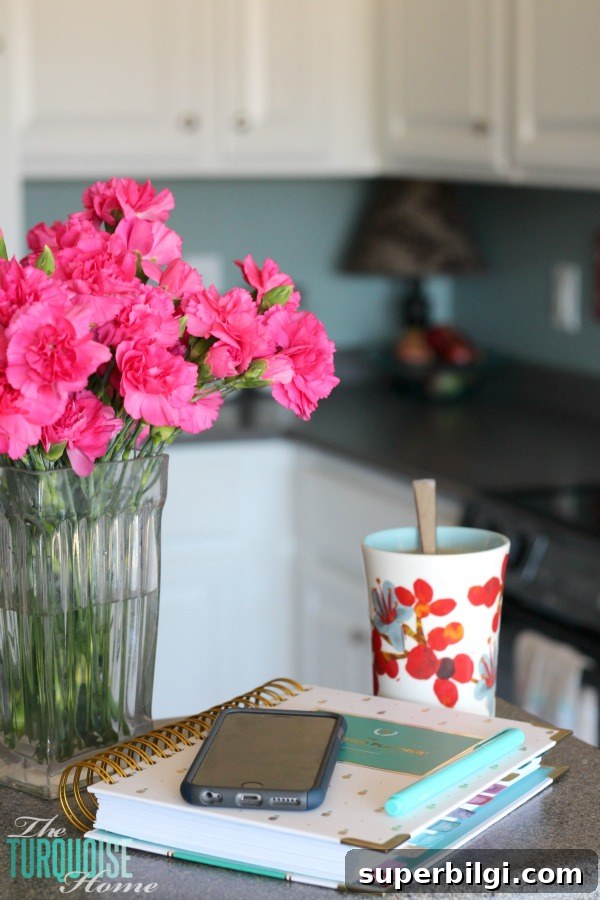
My biggest tip for using a planner is commitment: write everything down and consult the planner multiple times a day—each morning, during the day, and every night before bed. Keep it in a visible spot: beside your computer when you work, or on the kitchen counter when you’re at home. The physical act of writing down tasks and checking them off feels cathartic and motivating. Seeing everything laid out on paper also gives you perspective that can be harder to gain from a list in your head or scattered digital reminders.
Here’s how I use my planner every day:
- I write my to-dos in the task column on the right.
- I use time-blocking on the left side of the planner to schedule everything for the day—work tasks, meal prep, family care, and my morning and evening routines.
- As new tasks come up, I fit them into the schedule where they belong. When I finish a task, I move on to the next item on my list. I intentionally schedule downtime and playtime too—especially important when you’re parenting young children. It rarely goes exactly as planned, but using this method consistently helps me accomplish far more than I would without it.
On a business note: I keep a separate paper planner for blog and business-specific details like content ideas, post titles, and editorial plans. My daily planner holds high-level daily tasks and routines, while the business planner houses the granular project planning.
Another favorite advantage of a paper planner is the ability to look back. When I flip to last year’s entries, I can see patterns and recurring commitments—things like Vacation Bible School in early June, birthday parties before Christmas, or when to begin planning a May beach trip. These historical notes make annual planning much clearer and reduce last-minute stress. As a blogger, making notes for future years (for example, starting Christmas prep on October 1) helps me spread work out so the season isn’t overwhelming.
Weekly Tips for Keeping Your Life Organized
Over the past few years I’ve added simple weekly habits that keep things running smoothly. These small routines make a big difference:
- Each Sunday evening, review the coming week. Note appointments, deadlines, and any errands you’ll need help with—do you need a babysitter for a weekend event? Is there a gift to order?
- Plan your meals for the week on Sunday night (or whenever fits your schedule). If your local stores offer grocery pickup, take advantage of it. I plan meals Sunday, order groceries for Monday pickup, and then pick them up after preschool drop-off—then unload and organize them right away.
- Establish three simple morning and three evening tasks to keep life steady. Too many routines can feel overwhelming; three manageable habits are usually sustainable. My lists look like this:
- Evening:
- Quick tidy up/pick up
- Load or run the dishwasher
- Check the planner and make a short to-do list for tomorrow
- Morning:
- Prayer/devotional time
- Unload the dishwasher
- Pull out any frozen ingredients and plan dinner
- Evening:
Keep planning simple and on paper and you’ll see steady improvement. Each year my planning habits get better, and I become noticeably more organized. If it doesn’t feel like it’s working at first, persistence pays off.
The Messy Work: Write down three morning and three evening tasks, order or choose a paper planner (see my favorites), and pick a day each week to plan your meals.
Tomorrow’s post will cover creating an organized home binder—see you then!
In the mess with you,
Laura
More Posts You Will Love:
- The 10 Easiest Family Command Centers to Get Organized
- How to Declutter Your Home in 5 Simple Steps
- The BEST Holiday Planner Printable Binder
- How To Organize Your Home in 4 Simple Steps
- 10+ Stylish Dog Crate Furniture Ideas