

Shoji White by Sherwin-Williams is one of the most popular white paint colors. It’s a warm, creamy white that balances gray and beige undertones while still providing excellent brightness.

Not all whites are the same. With so many variations on the market, choosing the right white for your home can feel overwhelming. White paint can brighten a room and change its entire mood, but subtle undertones—warm, cool, beige, or gray—make a big difference in how a color reads in different lights.
Shoji White (SW 7042) is a warm, creamy neutral that leans more beige than gray. It’s lighter than many greige paints and, depending on lighting, can appear as a clean white or pick up a faint green or taupe cast. That versatility is a major reason it’s so popular in interior design.
This post contains affiliate links for your convenience. See my full disclosure policy in my site’s disclosure section.
What Color Is Shoji White (SW 7042)?
Shoji White is a neutral off-white with warm beige undertones. It sits comfortably between white and greige—soft and calming rather than stark or clinical. Because it’s not overly bright, Shoji White can read as warm or cool depending on natural and artificial light, making it a flexible choice for many rooms.
Its popularity stems from its neutrality and adaptability: Shoji White works well in spaces with varied lighting and pairs nicely with many other colors and finishes.
Pro Tip
Always test real paint samples in the room you plan to paint. Peel-and-stick paint samples or small sample pots painted on poster board let you move the color around the room so you can see how it performs in morning, midday, and evening light.
Where to Use Shoji White
- Open-plan living spaces
- Bedrooms
- Home offices
- Nurseries
- Entryways
- Kitchens and cabinetry
- Exterior siding and trim
Shoji White is versatile enough to be used throughout a home, from interiors to exteriors.
Best Home Styles for Shoji White
Shoji White pairs well with almost any design style, including:
- Farmhouse
- Traditional
- Transitional
- Modern
- Maximalist
- Minimalist
Shoji White Undertones
Shoji White is an off-white greige with subtle beige undertones and an occasional faint green or taupe hint in certain light. Those slight greenish tones can add warmth when paired with earthy finishes, while brighter natural light can make the color read as a muted white. Because the undertones shift with lighting, sampling the color in your space is essential.
How to Test a Paint Color
Two reliable testing methods:
- Use peel-and-stick real paint samples to test multiple walls and positions without the mess.
- Order a small sample pot, paint a piece of white poster board leaving a white border, and move it around the room at different times of day to observe how the color changes in different lighting.
Shoji White in an Office
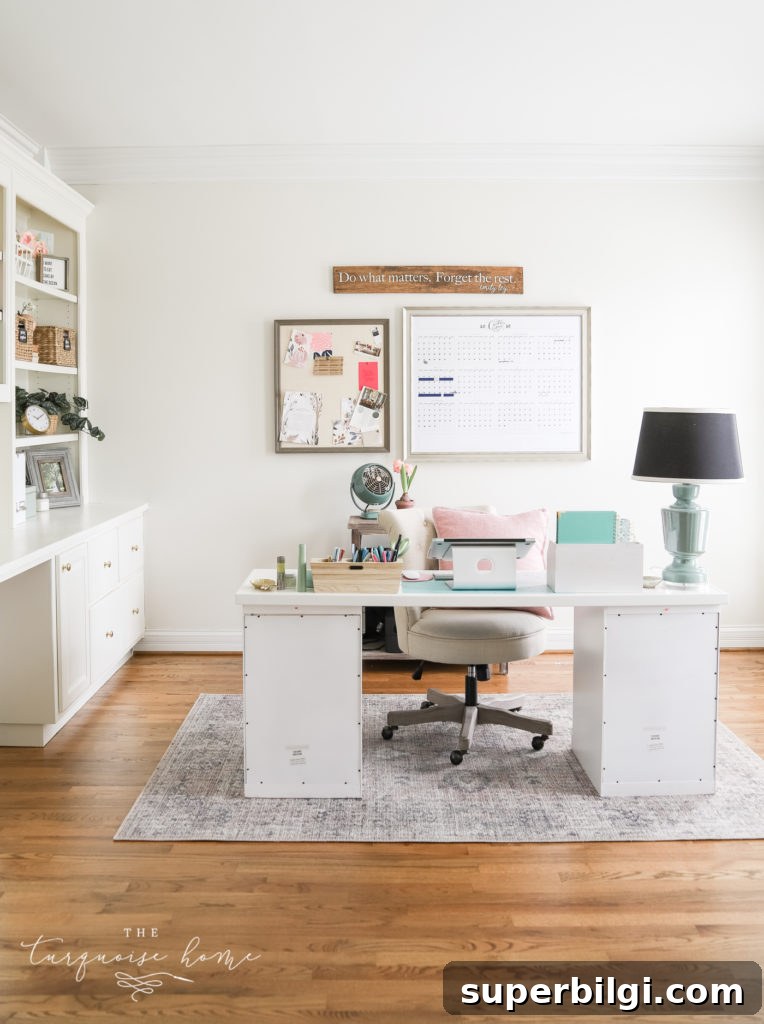
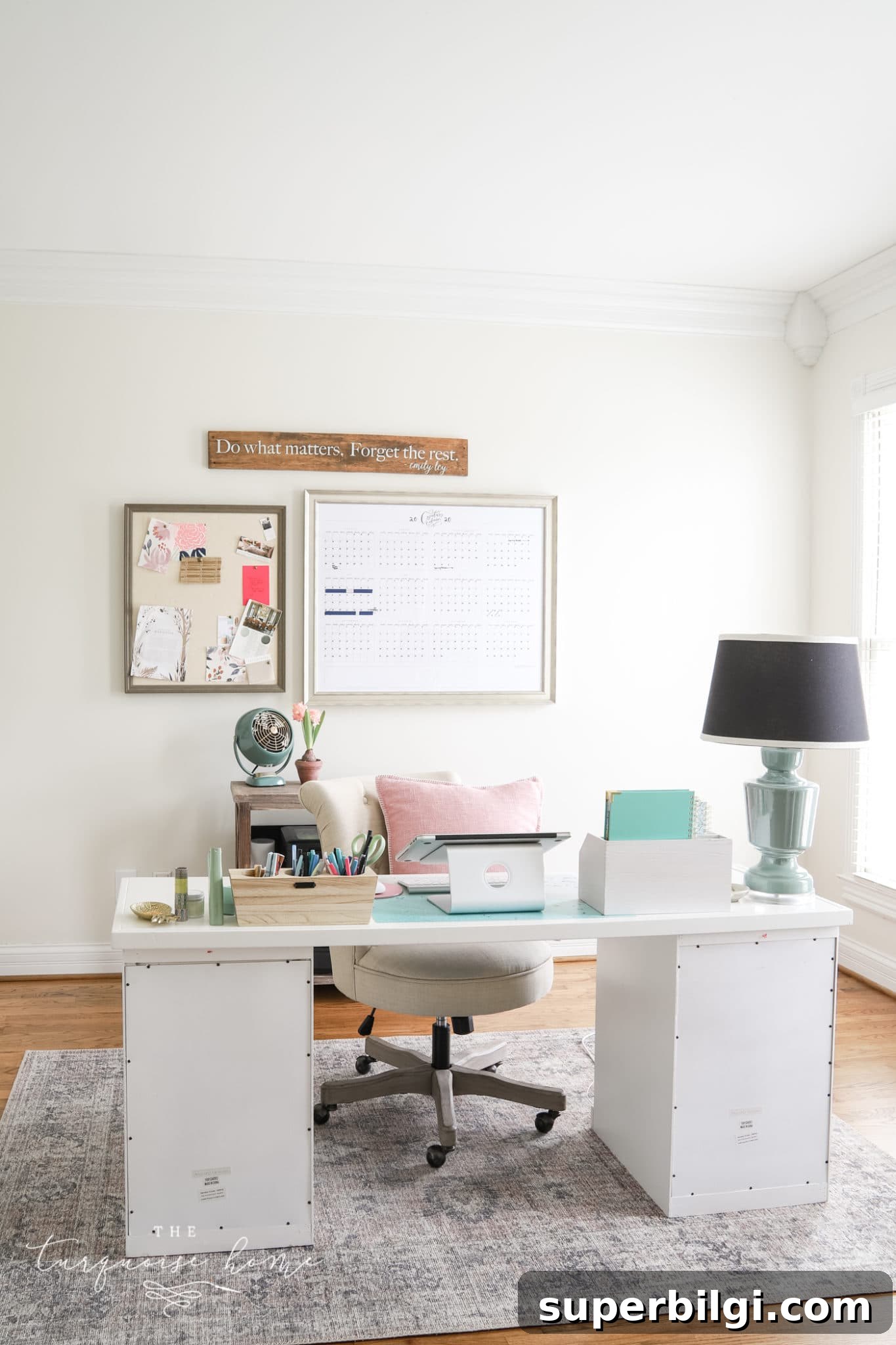
In a recent office refresh, Shoji White worked beautifully. It reads as a true color—clean and crisp without feeling stark—and it balanced built-in off-white bookshelves with brighter white trim. The color’s subtle warmth makes it an excellent backdrop for furnishings and decor.
Shoji White also served as the base color in a plaid wall treatment, showing how well it supports accent finishes while remaining subtle and cohesive throughout the room.
Coordinating Colors with Shoji White
Shoji White pairs particularly well with other warm neutrals and greiges. It complements both darker and brighter whites and looks great with wood tones, metal finishes, and a range of accent colors. Suggested pairings include:
- Pure White (SW 7005)
- Fawn Brindle (SW 7640)
- Worldly Gray (SW 7043)
- Edgecomb Gray (Benjamin Moore HC-173)
- Amazing Gray (SW 7044)
- Intellectual Gray (SW 7045)
- Porpoise (SW 7047)
- Urbane Bronze (SW 7048)
- Iron Ore (SW 7069)
Shoji White Compared with Other Off-Whites
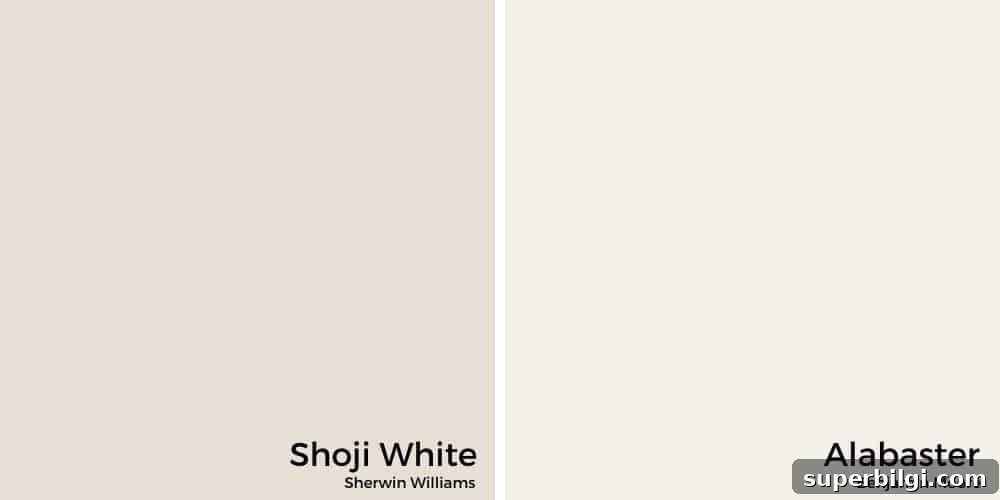
Shoji White vs. Benjamin Moore Alabaster
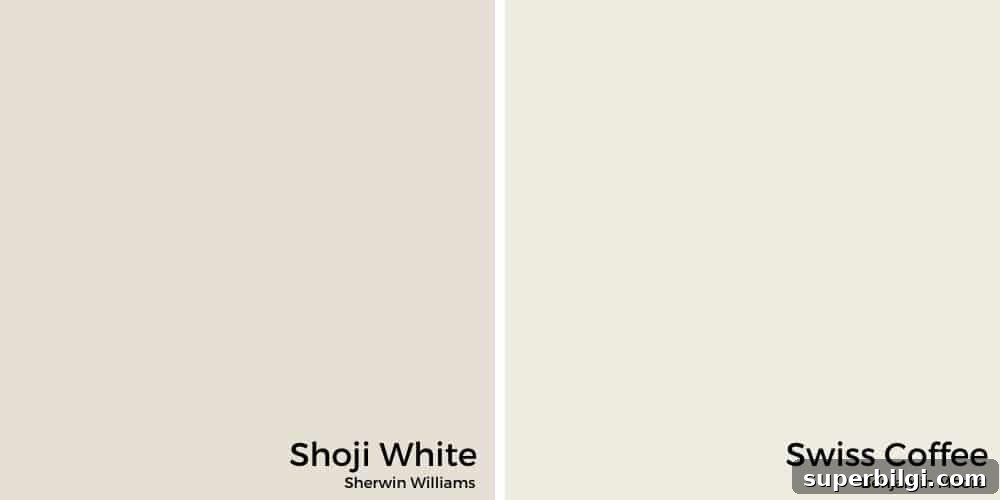
Benjamin Moore’s Alabaster is a popular warm white that reads lighter than Shoji White. When placed side by side, Shoji White appears more beige and grounded, while Alabaster reads cleaner and slightly brighter.
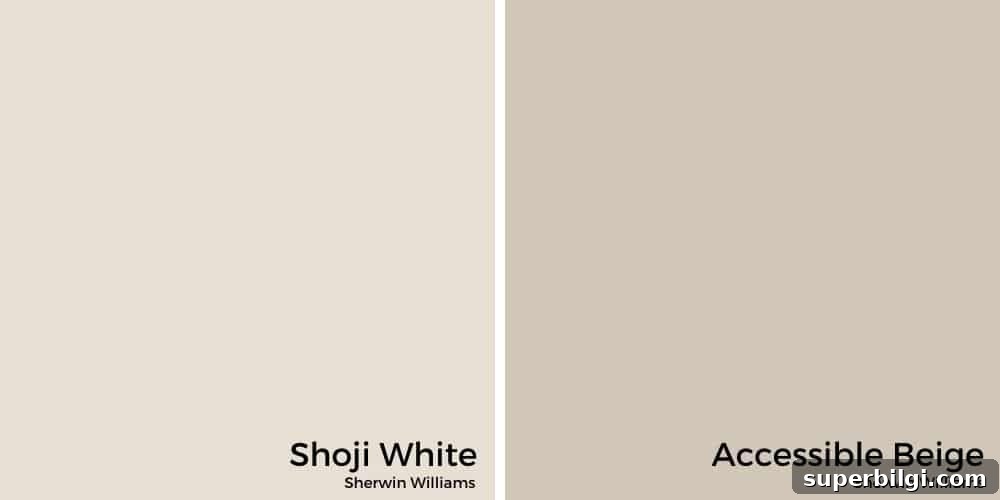
Shoji White vs. SW Accessible Beige
Accessible Beige is a long-time favorite for open-plan spaces. Shoji White is similar but lighter and subtler—an excellent option if you like Accessible Beige but want a softer, less saturated look.
Shoji White vs. Benjamin Moore Swiss Coffee
Swiss Coffee reads as a creamy white with subtle gray, green, and yellow undertones and can appear slightly golden in certain lights. Shoji White is creamier and leans more beige than Swiss Coffee. Both are warm, inviting neutrals that work well in many rooms.
What Is the LRV of Shoji White?
LRV, or Light Reflectance Value, measures how much light a color reflects on a scale from 0 (black) to 100 (white). Shoji White has an LRV of 74, placing it firmly in the off-white category. It reflects a fair amount of light while still reading as a subtle, warm neutral—ideal for rooms with moderate natural light. In very bright rooms it will appear close to muted white, while paired with pure white trim the contrast becomes noticeable.
How SW Shoji White Works in Different Rooms
Here are practical examples of how Shoji White looks in real spaces:
Kitchens
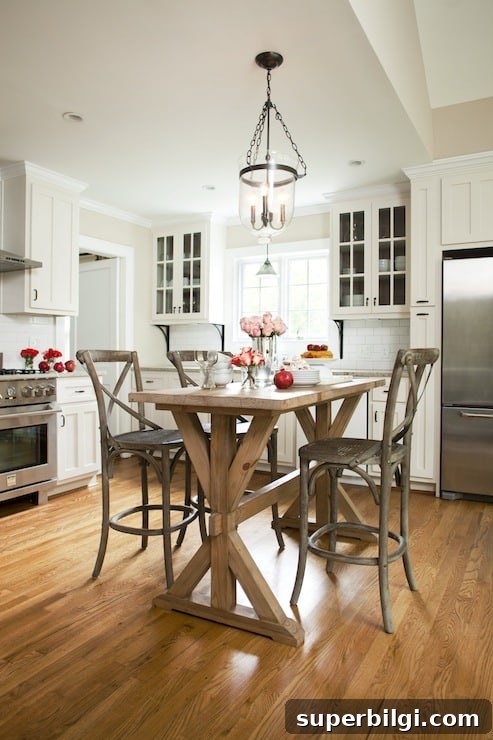
Shoji White warms up kitchen cabinets and walls, especially when paired with wood floors and rustic furniture. Against light gray beams or darker flooring, it brings a soft, inviting glow to open-plan kitchens.
Bedrooms
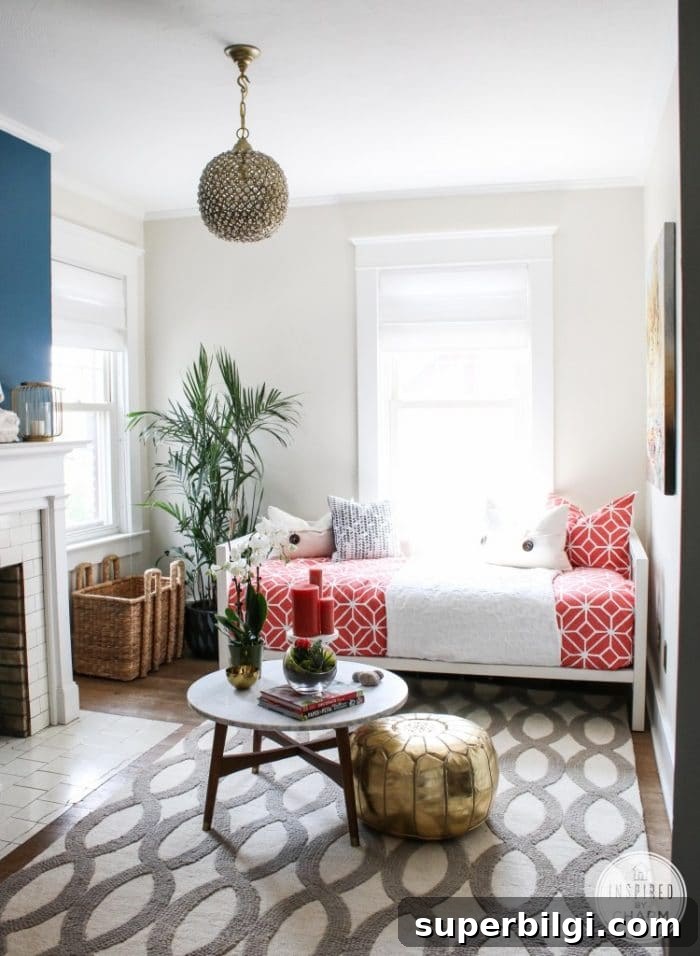
In bedrooms with ample daylight, Shoji White shows a gentle contrast with purer whites and complements darker accents, producing a calm, layered look.
Bathrooms
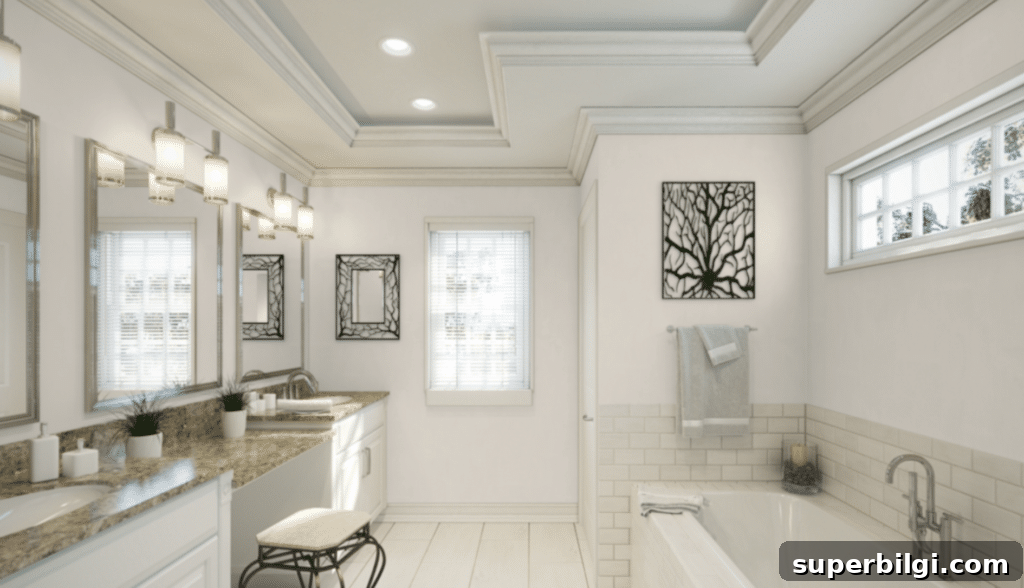
Shoji White creates an elegant, cozy feel in bathrooms when paired with darker accents or warm wood elements. It keeps the space feeling bright without being stark.
Living Rooms
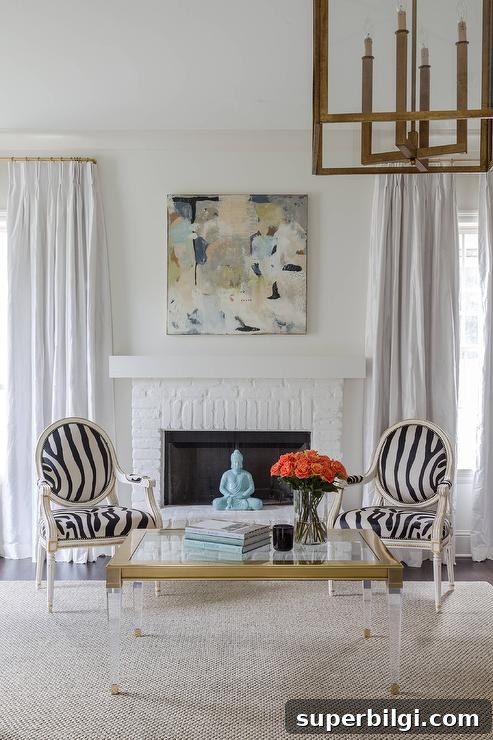
Shoji White pairs beautifully with brighter trim and darker furnishings, offering a warm backdrop that suits both casual and formal living rooms depending on lighting and decor choices.
Shoji White as Exterior Paint
Shoji White also shines on the exterior, offering a bright yet comfortable appearance that pairs well with greige stone and darker trim for contrast. It can make a home feel fresh and inviting from the curb.

After seeing how well Shoji White performs in many settings, it’s worth sampling the color in your own home to see how it looks with your light, finishes, and furnishings.
Tips for Painting a Room Yourself
If you’ll be doing the painting yourself, gather quality tools and follow a simple plan. A few essential items: a good angled paint brush, painter’s tape, drop cloths, a comfortable paint cup, and a reliable roller tray with liners for easy cleanup. For step-by-step guidance, follow a straightforward painting process: prep, tape, cut in, roll, and touch up.
More color ideas to explore:
- Benjamin Moore Revere Pewter
- Benjamin Moore Hale Navy
- Sherwin-Williams Repose Gray
- Sherwin-Williams Agreeable Gray
- Sherwin-Williams Sea Salt
- Benjamin Moore White Dove
- Benjamin Moore Wythe Blue
- Benjamin Moore Gray Owl
Sample Shoji White in your space and compare it to neighboring rooms and trim. Its warm, subtle tone often makes it an ideal neutral that reads differently throughout the day—precisely the kind of versatile white many homeowners and designers reach for.