

Among my top three easy-care houseplants, pothos plants have my heart. Maybe it’s their trailing vines of heart-shaped leaves—whatever the reason, they’re gorgeous and forgiving. Below is a clear, practical guide to growing and caring for pothos successfully in your home.
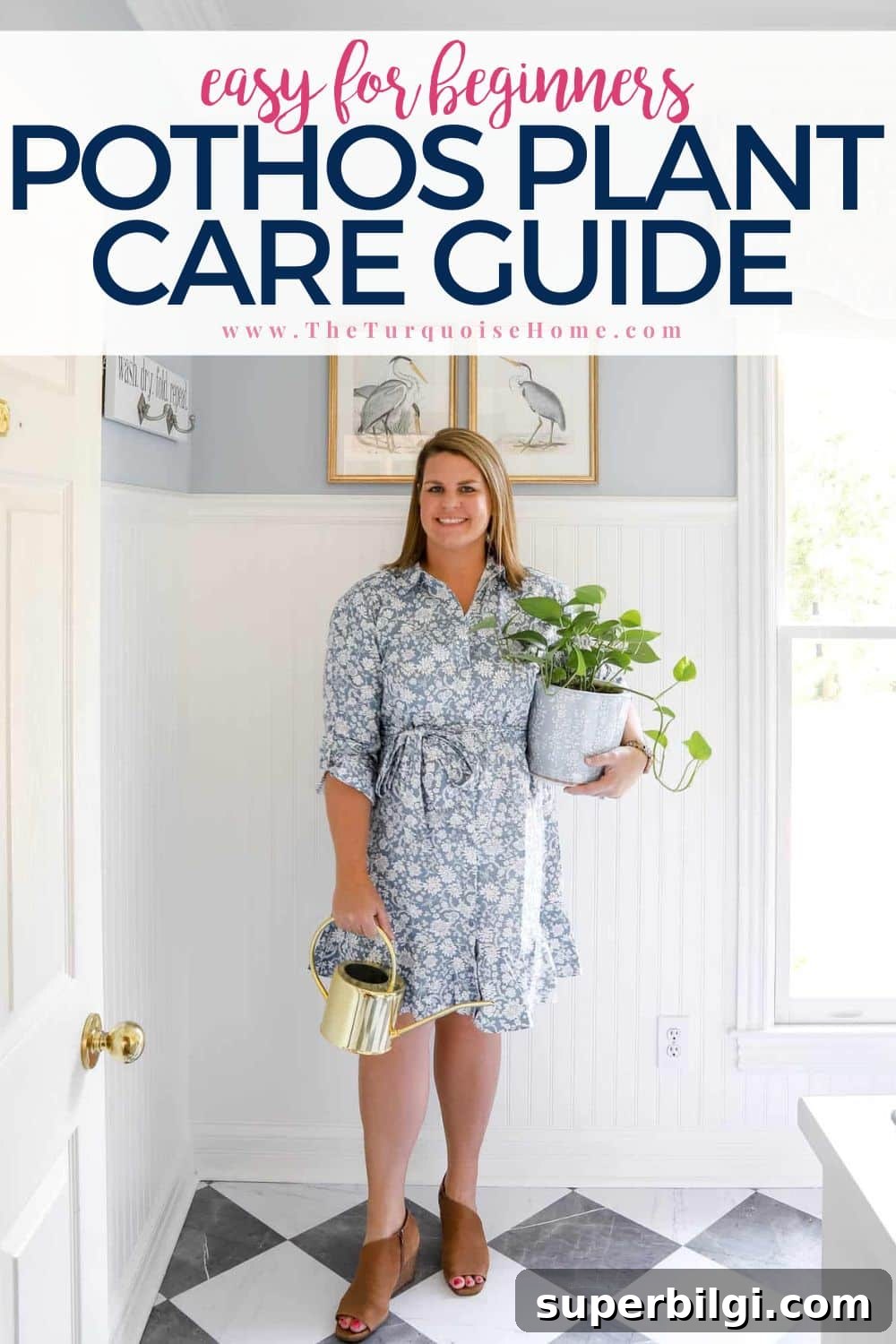
My Marble Queen pothos was the second plant I bought while learning to keep houseplants alive (my first was a ZZ plant). To my surprise, it didn’t just survive—it thrived. I propagated cuttings to fill other rooms and even gave some away. Pothos are that easy and rewarding.
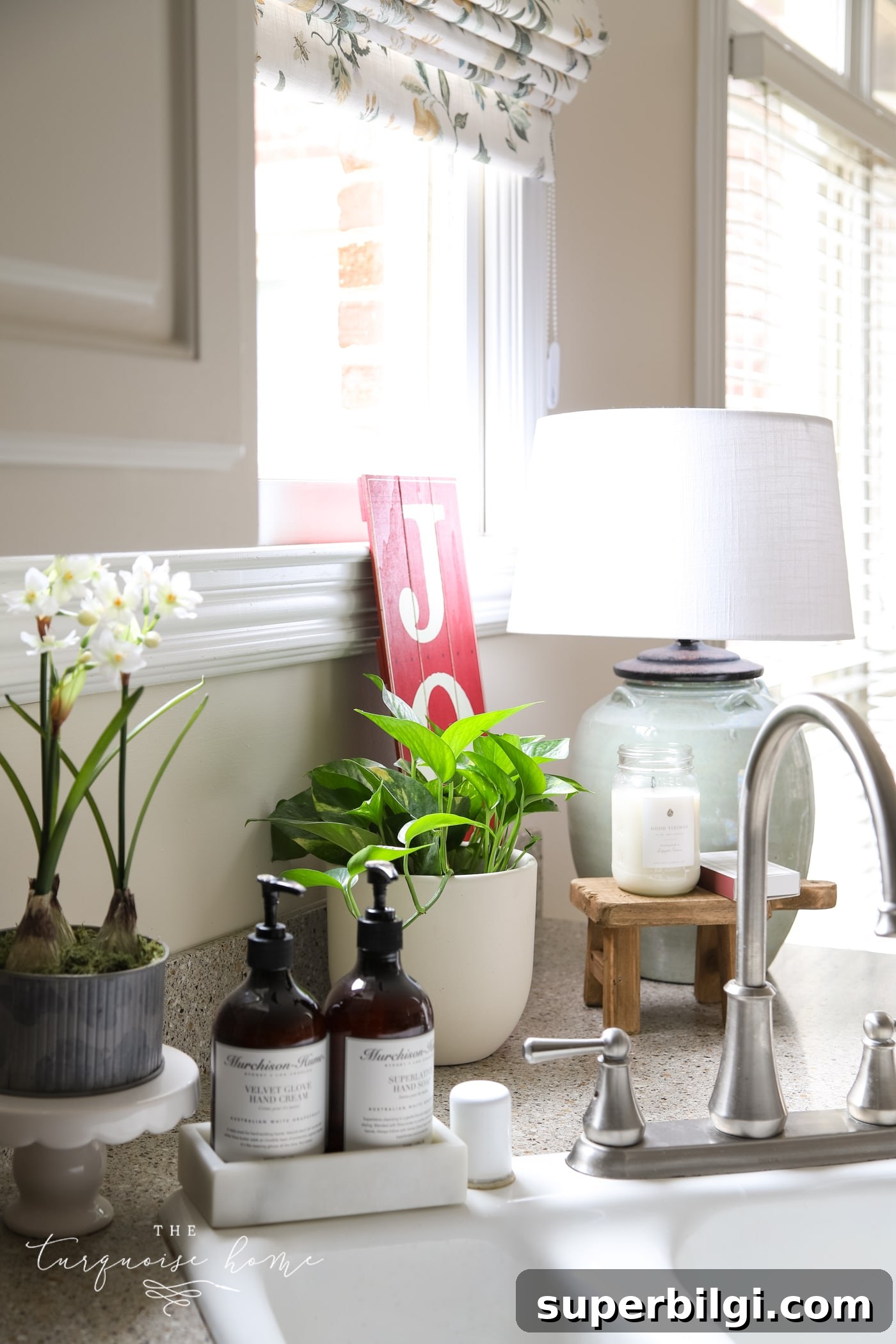
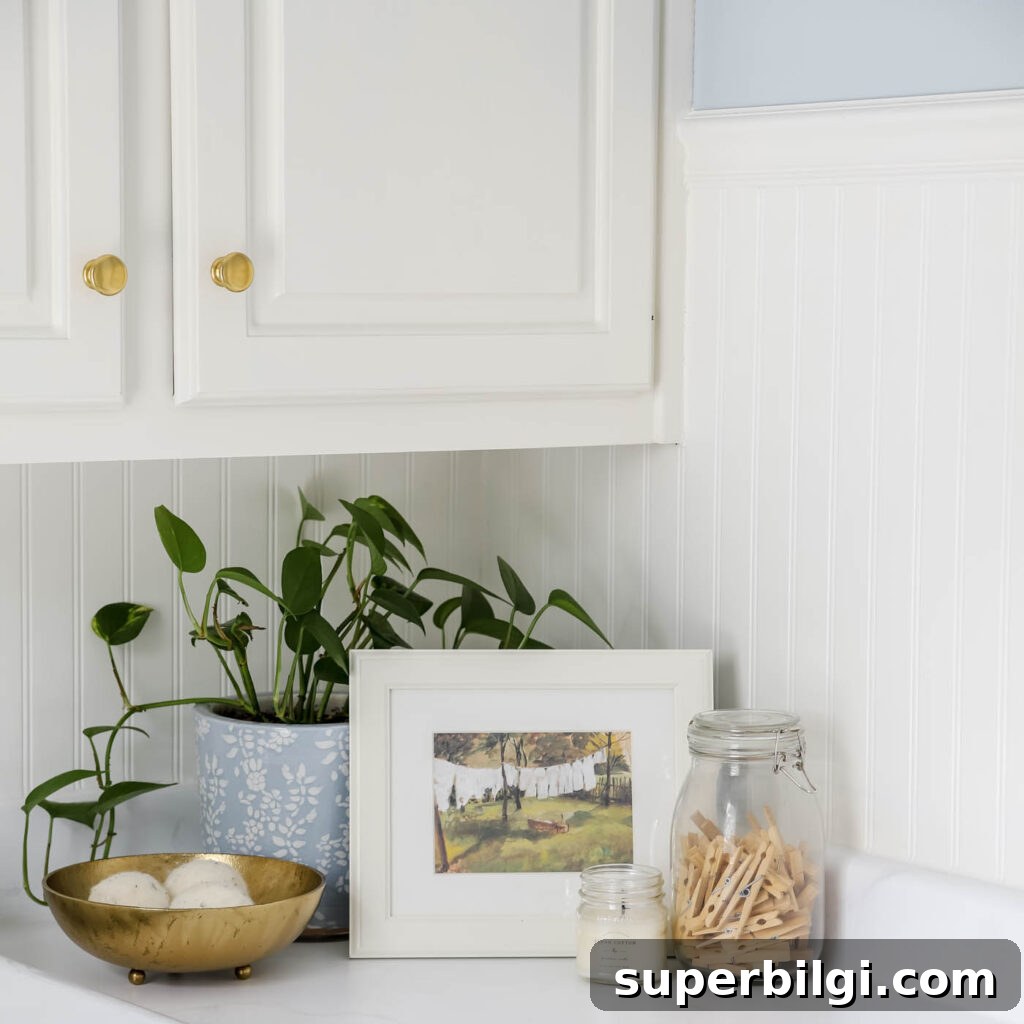
The vine you see in the photo above started as a cutting from my original plant and now lives in my freshly updated laundry room, where it brings color and texture to an otherwise overlooked corner. Read on for straightforward tips on propagation, light, watering, soil, and common problems so you can enjoy healthy pothos too.
This post contains affiliate links for your convenience. See my full disclosure policy.
Want to Save This?
Enter your email below and I’ll send it directly to your inbox!
Names of Pothos Plant
Pothos, or Epipremnum aureum, is one of the most popular houseplants for good reason. You might also hear it called devil’s ivy, hunter’s robe, or silver vine. It’s celebrated for tough, trail‑forming vines and an ability to tolerate a wide range of indoor conditions.
Benefits of Pothos Plants
- Striking appearance: Pothos have lush foliage and cascading vines that add instant life and softness to shelves, baskets, and hanging planters.
- Low-maintenance: They tolerate occasional neglect, making them ideal for beginners or busy households. They bounce back easily from missed waterings or less‑than‑ideal light.
- Air-purifying: Like many houseplants, pothos can help improve indoor air quality by absorbing pollutants such as formaldehyde and benzene.
Varieties of Pothos Plants
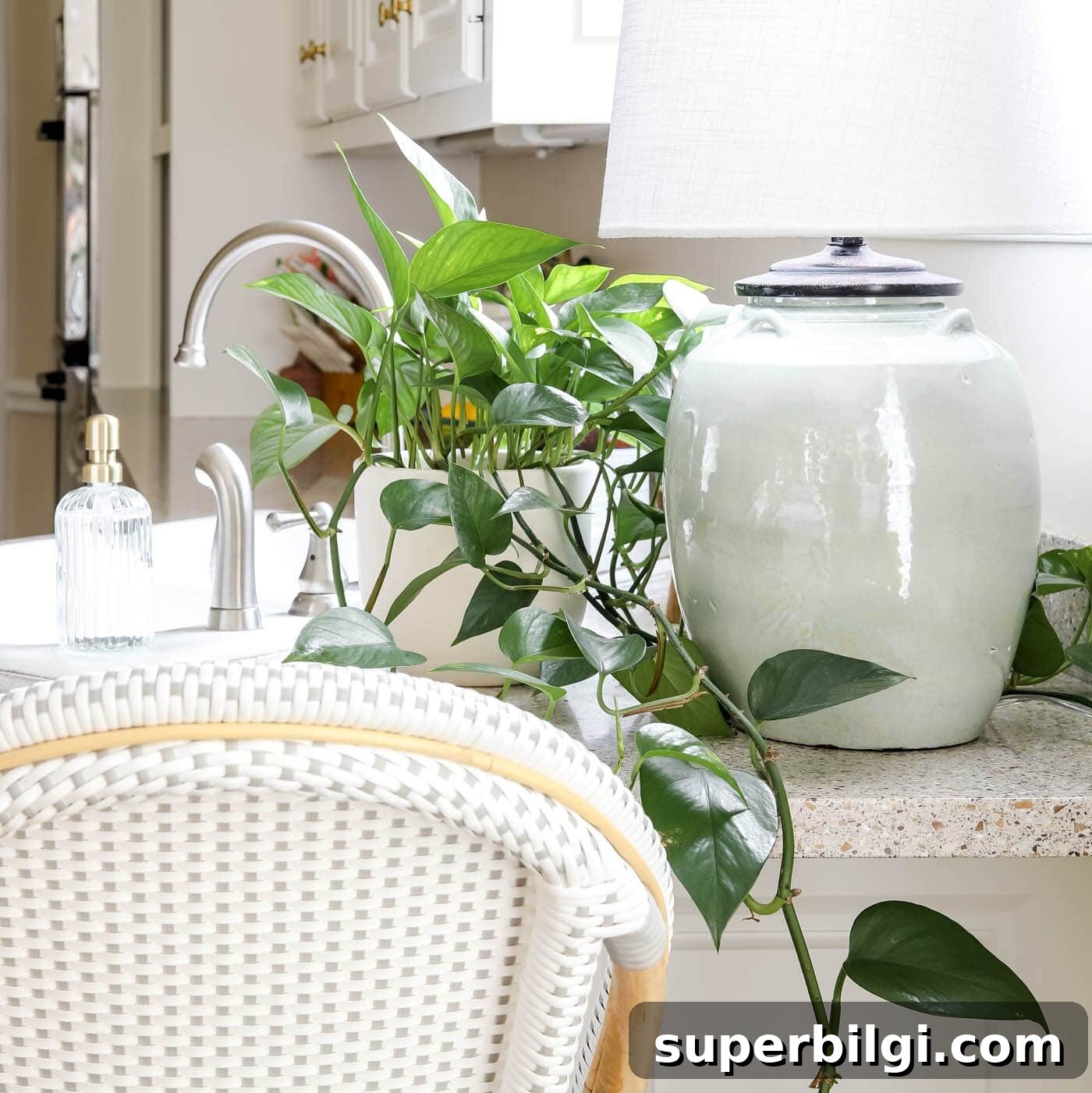
Pothos come in many attractive varieties with different leaf shapes and variegation. Mixing types can create a layered, textured display. Here are some common varieties to consider:
- Golden pothos: Glossy green leaves with yellow-gold variegation; the most familiar type.
- Marble Queen pothos: Dark green leaves marked with creamy white variegation.
- Neon pothos: Bright chartreuse-yellow leaves that make a bold statement.
- Jade pothos: Deep, solid green leaves without variegation.
- Pearls and jade: Dark green leaves dotted with cream and light green spots.
- Manjula pothos: Larger leaves with dramatic white and cream variegation.
- N’Joy pothos: Compact plants with bold white variegation on smaller leaves.
- Cebu blue pothos: Rare, with narrow blue‑green leaves and a silvery sheen.
- Hawaiian pothos: Large glossy leaves with golden variegation.
- Jessenia pothos: Similar patterning to Marble Queen but with chartreuse and yellow tones rather than white.

How to Propagate Pothos Plants
Pothos are easy to propagate from stem cuttings, so you can expand your collection or share plants with friends. The water method is quick and reliable.
Follow these steps for water propagation:
- Choose a healthy 4–6 inch vine with at least four leaves.
- Cut about an inch below a visible root node using clean scissors or pruning shears. Remove any leaf closest to the node to expose the spot where roots will form.
- Place the cutting with the node submerged in a clear glass of water and set it in bright, indirect light. Avoid direct sun, which can overheat the cutting.
- Change the water every few days to keep it fresh and prevent bacteria growth. Roots typically appear in two to three weeks.
- Once roots are a couple of inches long, transplant the cutting into a small pot with well‑draining soil.
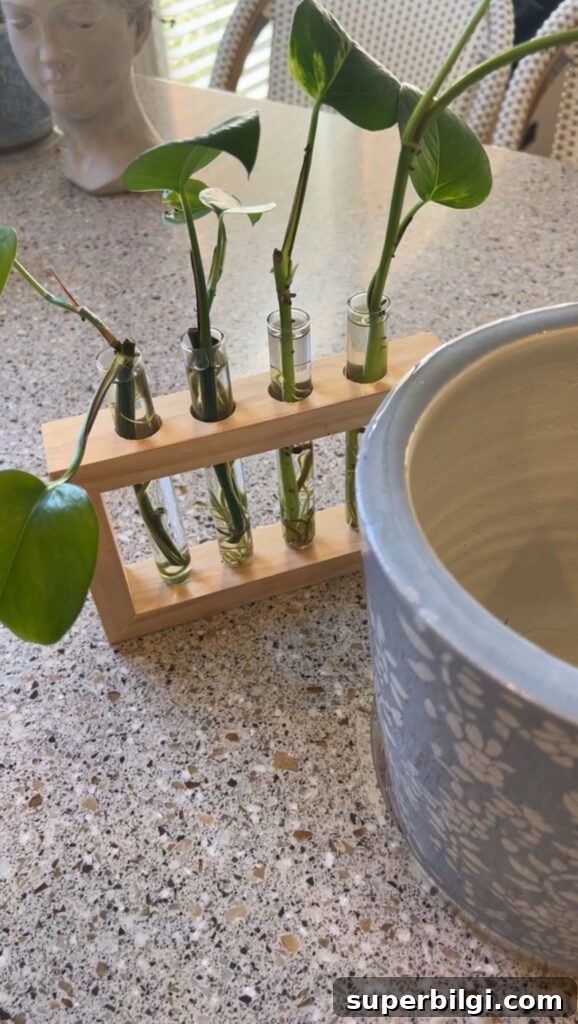
I’ve propagated my pothos multiple times and love gifting the new plants. A small propagation station or glass jar makes the process tidy and attractive.
How to Care for Pothos Plants
Below are practical care tips covering light, water, soil, repotting, temperature, and common issues so your pothos stays healthy and vigorous.
Light
Pothos prefer bright, indirect light but will tolerate low light. Avoid prolonged exposure to direct sunlight, which can scorch the leaves. If growth slows, try moving the plant to a brighter spot with filtered light.
Toxicity and Pets
Pothos are toxic if chewed. Their leaves and stems contain calcium oxalate crystals that can cause irritation and illness in pets and people. Keep pothos out of reach of curious pets and small children.
Watering
Only water when the top inch or two of soil feels dry. Overwatering is the most common problem and can lead to root rot. If you’re unsure, a moisture meter can help you determine when to water.
Pot Size and Drainage
Choose a pot with drainage holes that is roughly one to two sizes larger than the current root ball. Avoid overly large containers, which can retain excess moisture and encourage root rot.
Repotting
Repot every 12–18 months during spring or summer. Move up one pot size and use fresh, well‑draining potting mix. If you see a dense circle of roots or soil that dries unusually fast, it’s a sign your pothos may be rootbound and ready for repotting. Gently loosen the root ball before repotting.
Soil
Use a well‑draining potting mix. A blend of general potting soil with perlite and a bit of orchid bark or coarse material improves aeration and drainage.
Temperature & Humidity
Pothos grow best between 65–80°F (18–27°C). They prefer moderate to high humidity but adapt to normal household humidity. If the air is very dry, mist occasionally or use a humidifier. Kitchens and bathrooms often provide favorable humidity levels.
Common Problems and Solutions
Pothos are forgiving, but they can still show signs of stress. Here’s how to identify and fix common issues:
- Browning leaf tips: Usually caused by low humidity or underwatering. Increase humidity or move the plant to a more humid spot.
- Yellowing leaves: Most often from overwatering. Allow soil to dry between waterings and check roots for rot. Trim any soft, blackened roots and repot in fresh, well‑draining mix if needed.
- Slow growth: Low light or nutrient deficiency can slow growth. Move to brighter indirect light and feed lightly with balanced liquid fertilizer during the active growing season.
Essential Houseplant Accessories
A few helpful tools make pothos care easier:
- Liquid houseplant fertilizer for occasional feeding.
- Self‑watering planters for consistent moisture when you’re busy.
- Plant stands or shelves to create layered displays and place plants in well-lit spots.
- A soil moisture, light, and pH tester to troubleshoot conditions precisely.
I hope these tips make caring for your pothos simple and enjoyable. If you have questions about varieties, propagation, or troubleshooting, leave a comment and I’ll respond as soon as I can!
More Posts You Will Love:
- ZZ Plant Care Guide
- How to Plant Flowers in a Pot, Planter or Container
- The 3 Easiest House Plants + Indoor Plant Care Tips
- Where to Buy the Best Fake Plants
- How to Get Rid of Gnats in House Plants