
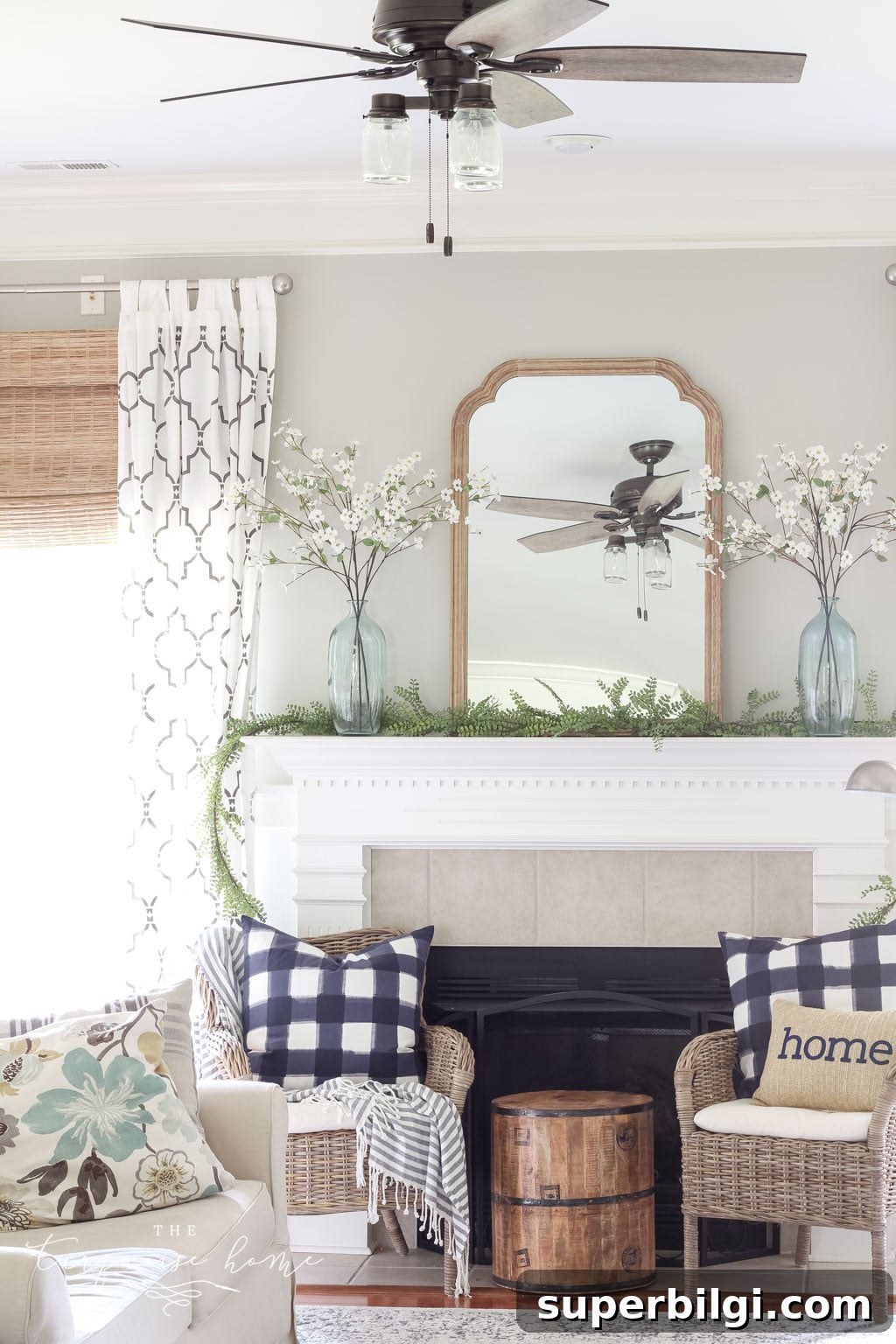
Learning how to decorate a living room can transform the mood and function of your home. From arranging furniture to choosing wall art, this concise guide covers practical steps to decorate a living room with confidence and style.
If I had to pick the room we use most, the choice is between the kitchen and the living room. The kitchen may be the heart of the home, but the living room is just as central—where we relax, entertain, and spend much of our daily time. Because it’s so visible and used so often, the living room is one of my favorite rooms to refresh and decorate.
A few summers ago I unexpectedly got the chance to redecorate: a leaking water filter on our refrigerator damaged the floors, and the drywall was affected too. That meant new flooring, patched walls, and fresh paint—an inconvenient problem that turned into a decorating opportunity. While a flood isn’t something I’d ever wish for, the silver lining was a clean slate to rethink furniture placement, wall art, and the overall style of the room.
UPDATE: Since writing this, we moved to a new home and used many of the same decorating principles to design the living room there.
After the repairs, the gallery wall and clock above the TV were removed, new flooring was installed, and a larger TV will be mounted once our new sectional arrives. Being back at square one gave me a chance to rethink layout, artwork, lighting, and color—so I gathered my favorite living room decorating ideas to share.
How To Decorate A Living Room
Trends change, but good decorating fundamentals endure. Use these practical tips to create a living room that’s comfortable, functional, and visually balanced. Keep calm, take it one step at a time, and remember the goal: a relaxing, welcoming space you enjoy living in.
Step #1: Arrange Your Furniture
Furniture arrangement sets the foundation for how the room feels and functions. Start by identifying the natural focal point: is it a fireplace, built-in shelving, a large window, or the TV? Make that the anchor for the room and arrange seating to face or complement it.
Consider traffic flow. Avoid placing pieces where people naturally walk through. If the room allows, pull furniture away from the walls to create a cozier, more intimate seating area. Group sofas and chairs close enough to encourage conversation, and position the coffee table within easy reach of seating.
You can often refresh a space without buying new furniture—try swapping a sofa for chairs, changing the sofa’s placement, or rotating accent pieces. Always measure before purchasing anything new and keep measurements handy while you shop.
Tip: write measurements in your phone or a home binder and double-check doorways and walkways to ensure new pieces fit and move into place easily.
Pick the Size of Area Rugs Carefully
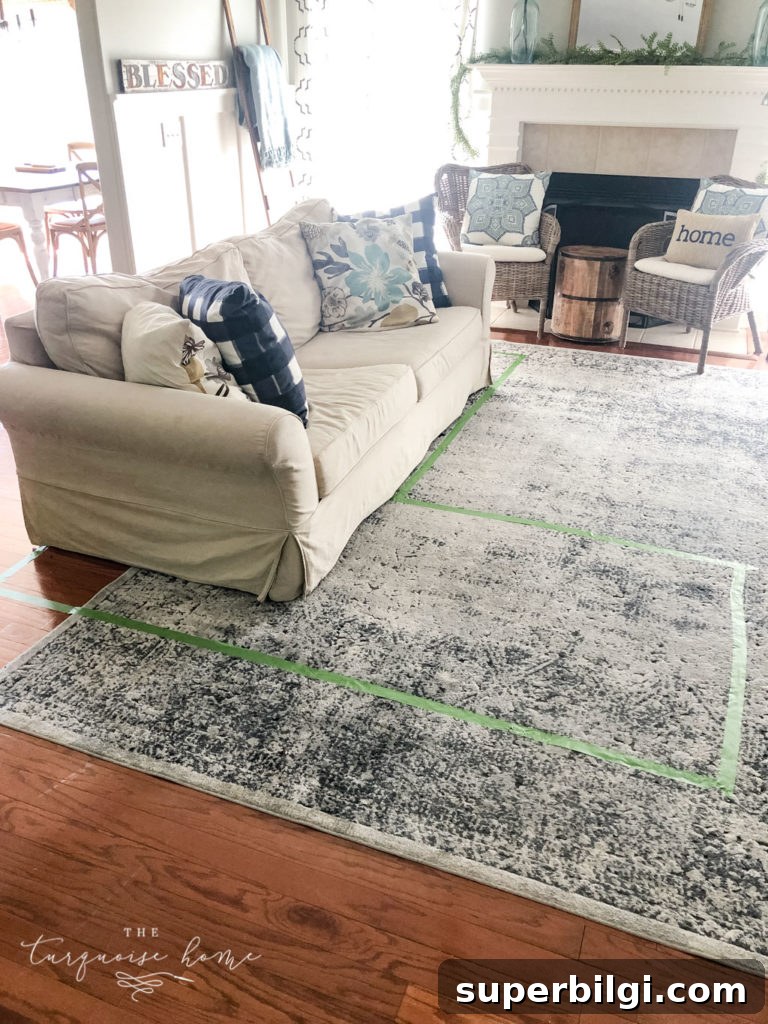
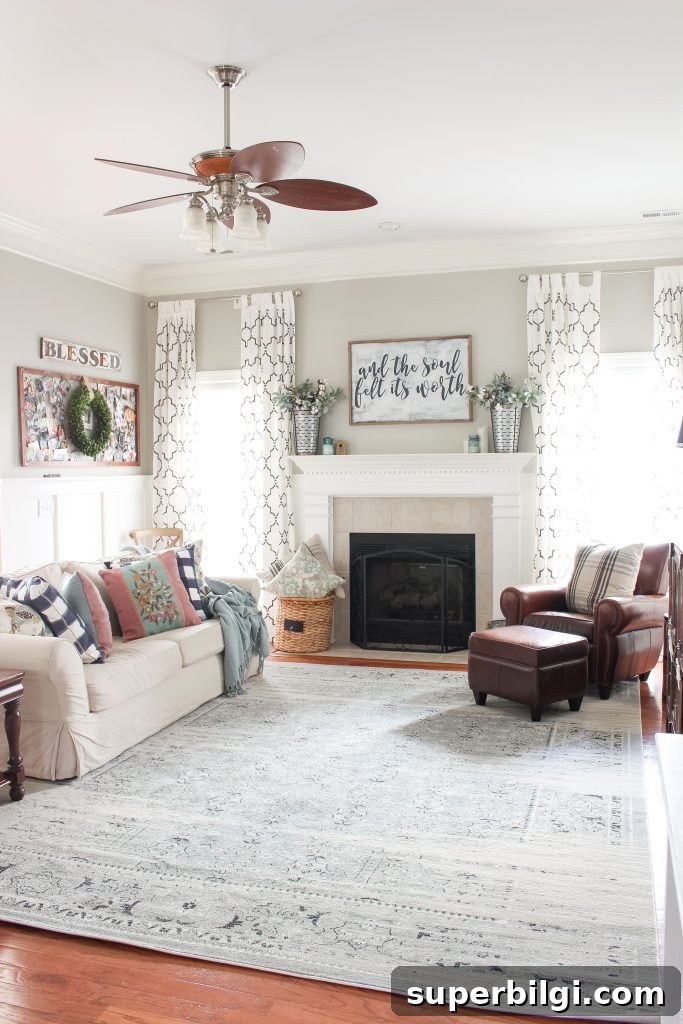
An appropriately sized area rug anchors the seating area and can make the room feel larger or more cohesive. Avoid undersized rugs in big rooms; they can make a space feel disjointed. Conversely, a larger rug that fits proportionally will unify the furniture and visually expand the room.
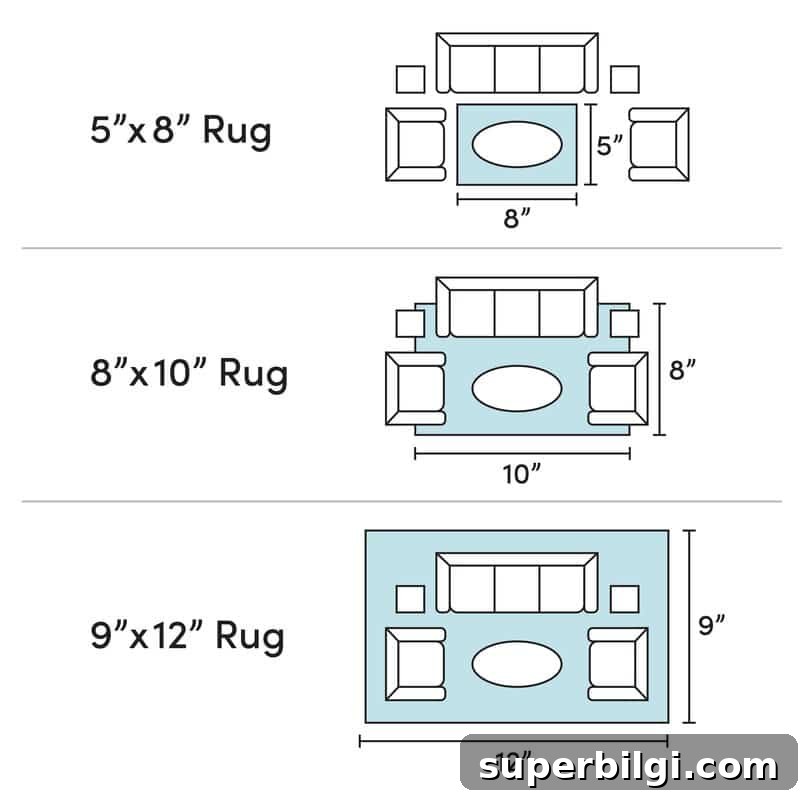
A common guideline is to leave about 18 inches between the edge of the rug and the wall. It’s perfectly fine for the front legs of sofas and chairs to rest on the rug; this creates a connected arrangement. Choose a rug color and pattern that complements your overall palette—don’t be afraid to add a pop of color for interest.
Where To Hang Artwork in the Living Room
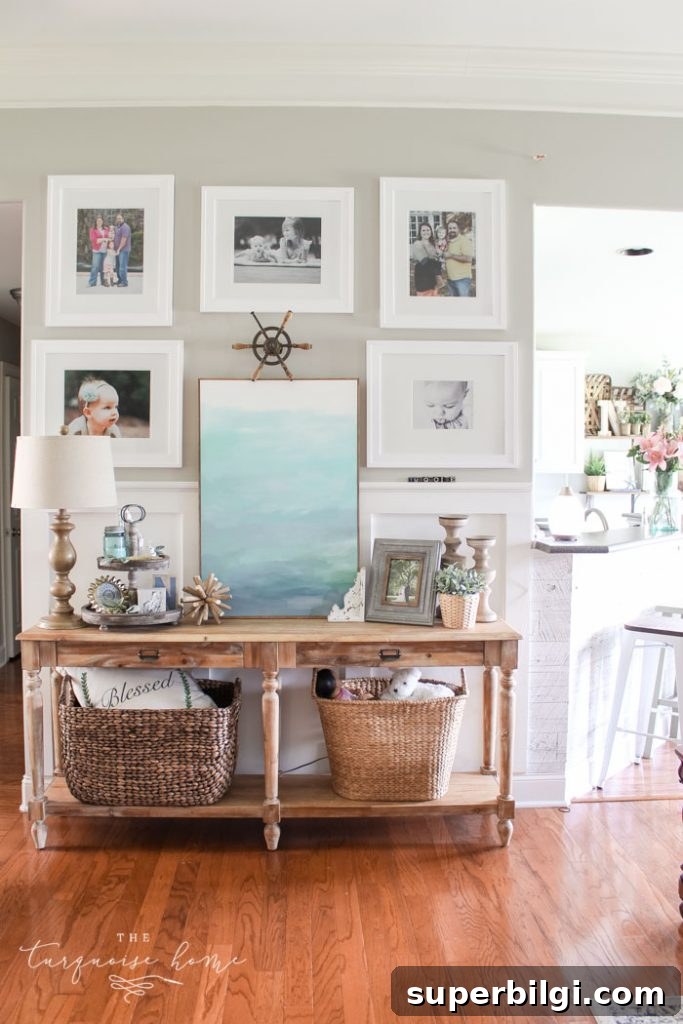
Artwork adds color, texture, and personality. If your room lacks a natural focal point, a large painting or striking piece of art can create one. In living rooms, hang art at a height that works for seated viewing—typically a bit lower than in hallways or entryways.
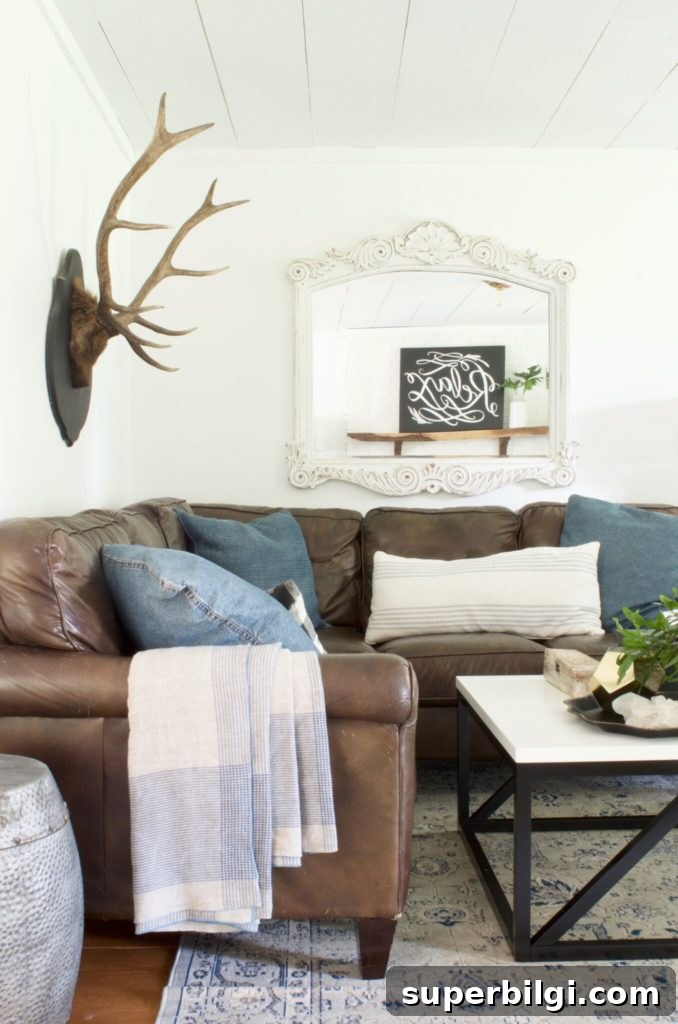
For a single piece above a sofa, aim for artwork that is roughly two-thirds the width of the sofa to maintain balance. If a single piece feels too small or too large, consider a gallery wall that spans the space. When arranging multiple pieces, experiment with paper templates taped to the wall until the composition feels right. Odd-numbered groupings often read better visually, and place larger pieces centrally with smaller ones around them.
Set The Stage With Lighting
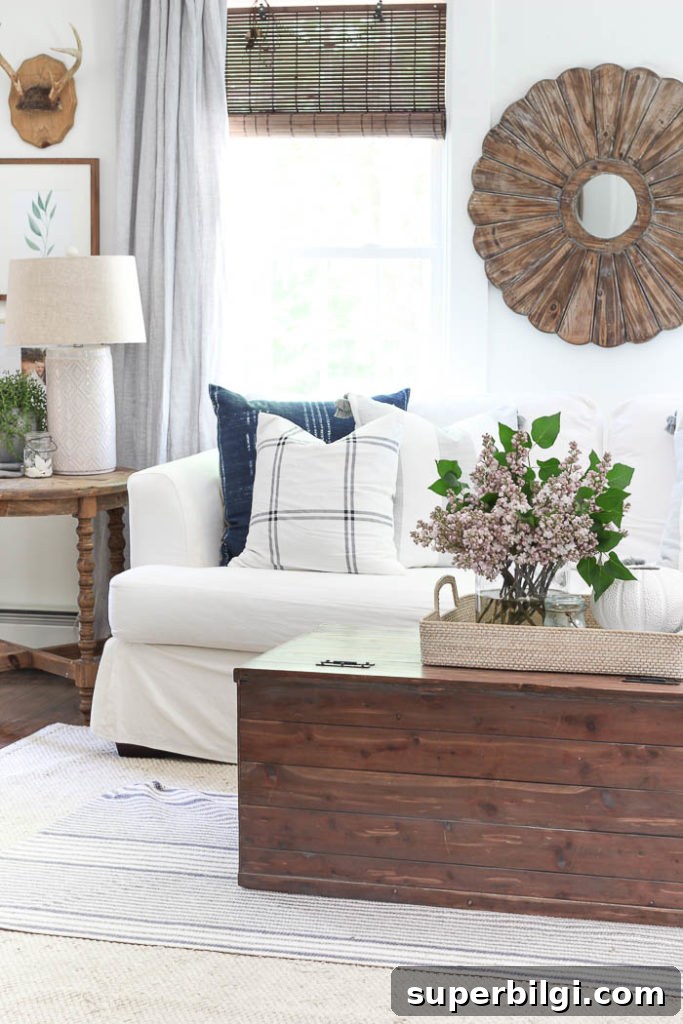
Lighting shapes mood and function. A living room should feel warm and inviting rather than overly bright. Use layered lighting—overhead fixtures, table lamps, and floor lamps—to create flexible ambiance. Dimmable lights are ideal for movie nights and relaxing evenings. Accent lighting can also highlight art or architectural details.
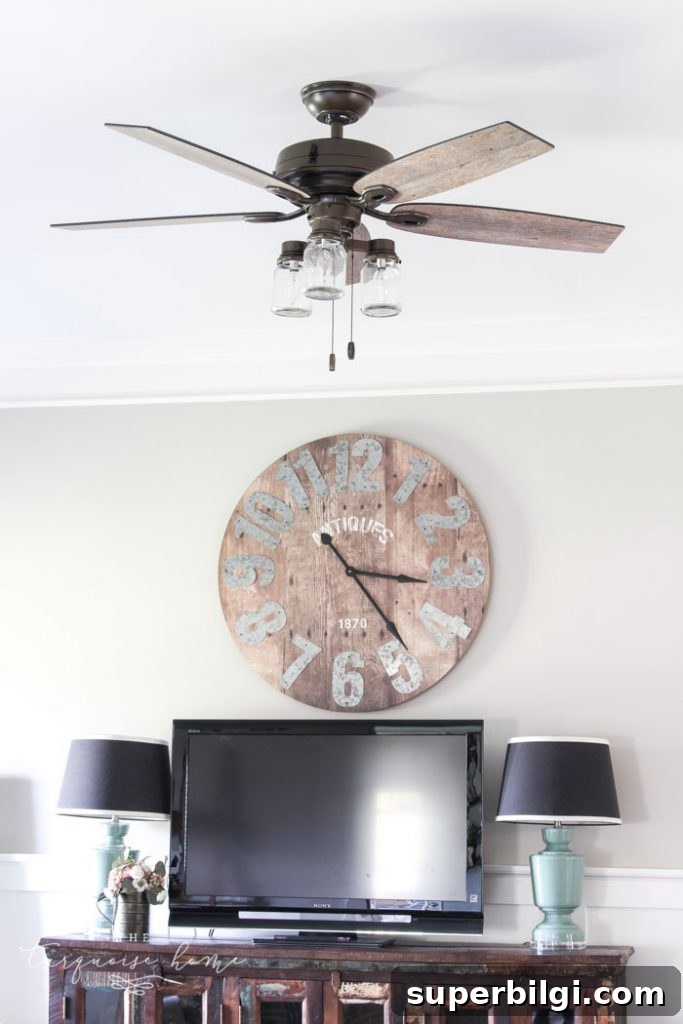
Consider smart controls or timers to automate lamps and dimmers for convenience and energy savings. Small adjustments to how and where light falls can dramatically improve comfort and style.
Choosing Paint Colors
Paint color is a long-term decision, so choose hues you’ll enjoy living with. Neutral palettes—whites, grays, tans, and taupes—are timeless and flexible, allowing decor to change without repainting. If you love bold color, consider an accent wall to introduce drama while keeping the rest of the room calm.
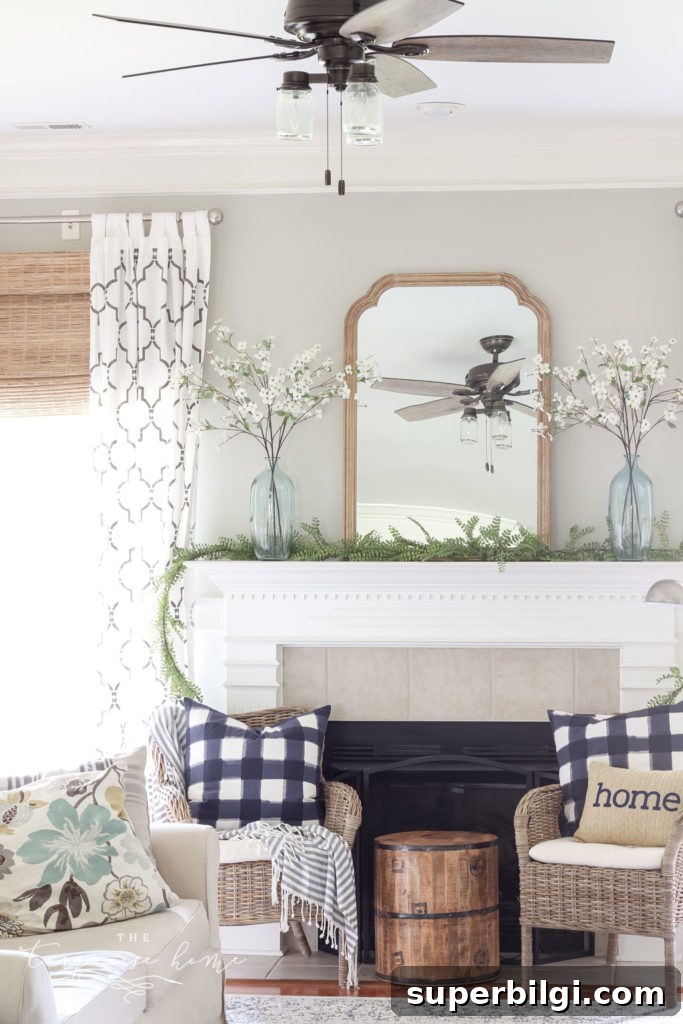
Light colors open up smaller or closed-in rooms, while darker tones work well in larger spaces with ample natural light to create a cozy atmosphere. Ultimately, the best color is the one you love and that supports how the room will be used.
Space Planning & Measuring
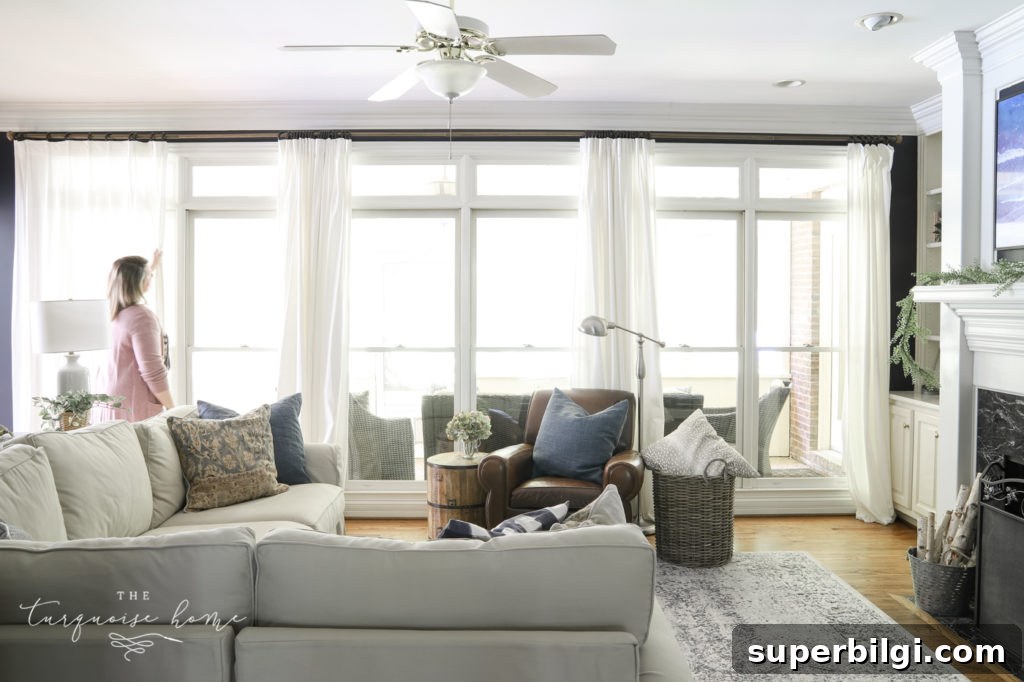
Accurate measuring is essential. Measure the room walls, window and door locations, and existing architectural features. Measure furniture and note dimensions, then sketch a to-scale floor plan on graph paper or use an online room planner to test layouts. Measure twice to avoid mistakes and ensure new pieces fit comfortably through doors and into place.
Good space planning keeps traffic flow clear, aligns furniture to the focal point, and makes sure rugs, lighting, and art scale correctly with the room.
Decorating a living room doesn’t need to be stressful. Start with the essentials—layout, scale, and lighting—then layer in color, texture, and art. Most changes are reversible, so experiment until the room feels like home. Happy decorating!
MORE POSTS YOU WILL LOVE:
- Traditional Christmas Living Room Decor
- How to Style a Console Table Behind a Couch (4 ways!)
- Home Decor 101: How to Decorate End Tables