
Hello friends—how was your first Monday of the year? Ready to take on the months ahead? I am. After reaching a breaking point with clutter at home, I started following the principles from the book The Life-Changing Magic of Tidying Up to make real progress. My house tends to collect clutter—partly from having two small children, but also from habits that simply needed changing. I picked up the book to help me create a manageable system and stick with it.
I shared my initial impressions in an earlier post and appreciated the pushback I received—different approaches work for different people. While the author’s methods can feel strict, the core ideas about tidying by category and keeping only what truly serves you have been helpful. I don’t follow every rule rigidly (for example, I’m not going to empty my purse every time I walk in the door), but I adapt the approach to fit the reality of busy family life.
I began with clothing in my master closet, paused to paint kitchen cabinets and enjoy the holidays, and now I’m back at it. To keep momentum, I’m joining other bloggers who will share monthly decluttering updates on the first Tuesday of every month—an accountability plan that might help if you want to follow along.

This weekend I finished sorting shoes and purses. Purse decluttering was quick—I’ve used the same bag for years—so I removed the extras that were merely collecting dust. With shoes, I followed a focused process that helped me decide what to keep, what to donate, and what to discard.
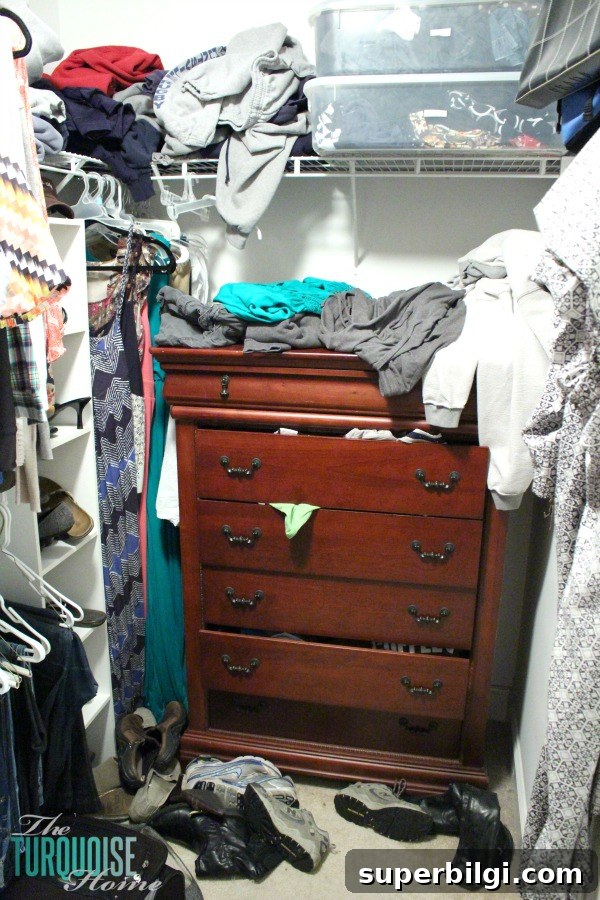
The Before Pictures
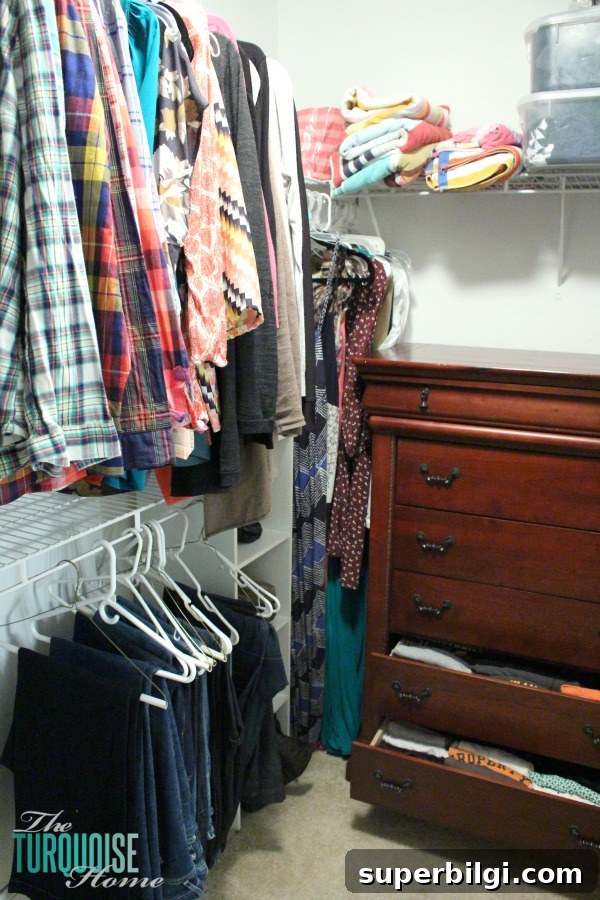
Although I had already pared down my wardrobe earlier, things had become messy again and shoes were overflowing the shelves. I needed to tidy after holiday travel and to put my suitcase away (I have a habit of leaving it on the floor between trips). The closet still contained two tubs: swimsuits/cover-ups and maternity clothes—items I’m glad are out of the way and only brought out seasonally.
I also recommitted to folding clothes the KonMari way. The book explains the technique clearly, and the visual difference in my drawers is impressive—the method helps maximize space and keeps things easier to maintain.
How I declutter using the KonMari method
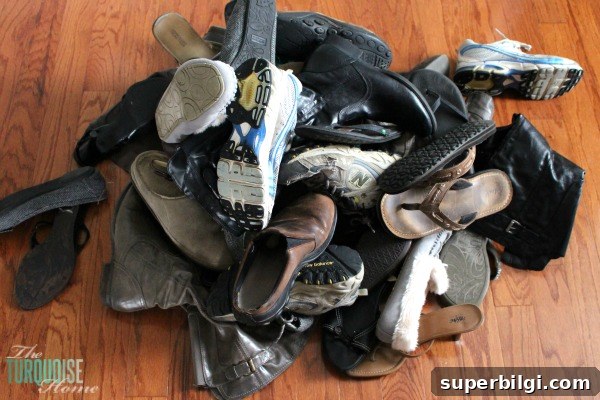
All of my shoes gathered in one place.
- Gather everything in the category. I collected every pair of shoes from around the house so nothing was missed, including a pair of rain boots that had been left in the living room.
- Handle each item and ask, “Does this spark joy?” If it does, keep it. If not, decide whether to donate or discard it. Functional items in good condition go to donation; broken items go to the trash.
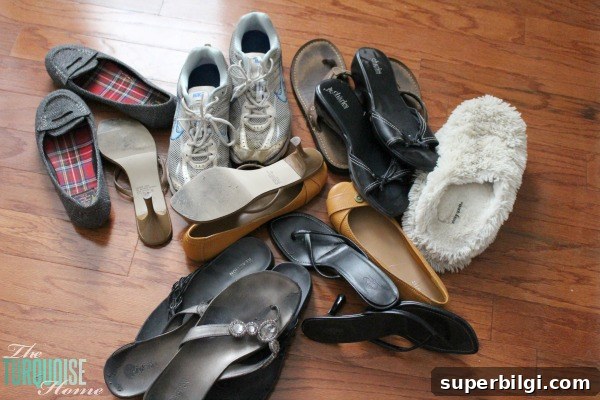
Items that didn’t make the cut were either donated or discarded.
Clarifying the “spark joy” question helped. Joy doesn’t always mean emotional delight; sometimes it’s practical—an item that reliably performs a task. For example, my old Merrell slip-ons aren’t glamorous, but they’re perfect for working in the garage: sturdy, easy to slip on, and protective. They serve a purpose and so they stay.
The tactile part of the method—physically holding each item—is crucial. Looking at a shelf will rarely prompt a decision, but touching an item forces a moment of reflection about whether it belongs in your life. That shift in habit was a turning point for me. (I’m still trying to persuade my husband to handle every item as he declutters.)
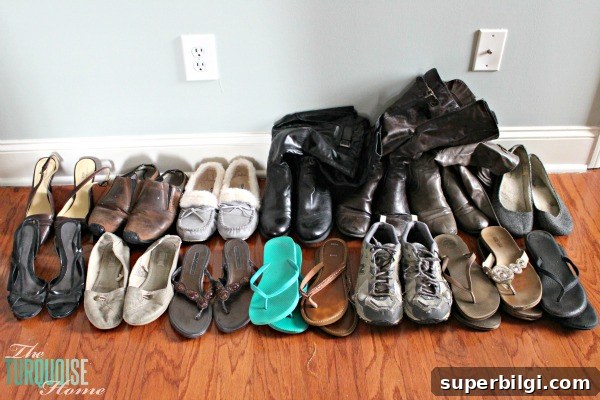
These are the shoes I kept. Several are worn out and will need replacement—making a shopping list is its own small reward.
- Return the items you keep to their designated place. I use simple stackable cubbies for shoes—nothing fancy, but it works. A tidy, functional system is better than an idealized setup you never implement.
Once I commit to a category, I find the process energizing. The relief of removing items I don’t use is genuinely addictive. Of course, parenting interrupts progress—feeding a child or breaking up sibling squabbles will pause a session—but even short bursts of focused work add up.
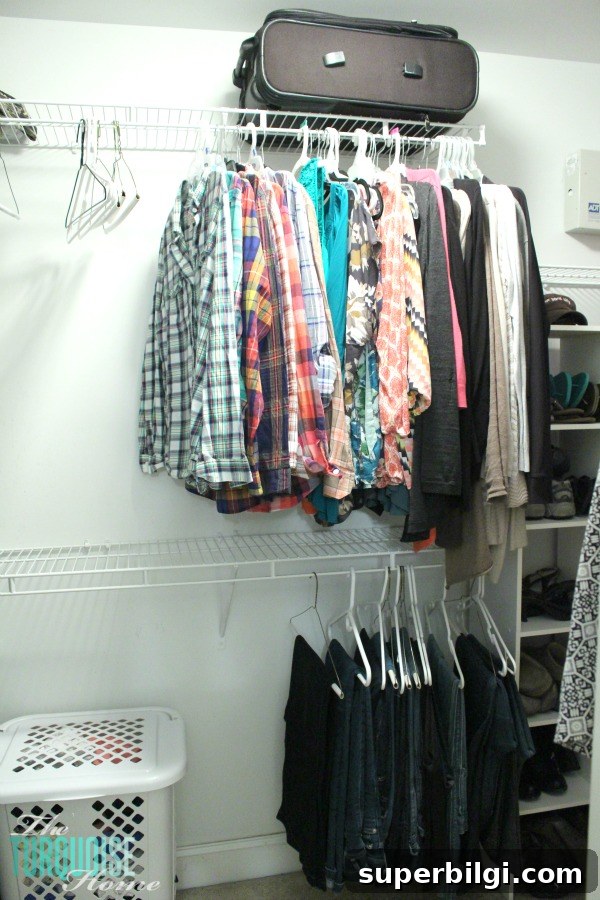
I organized my tops by type: plaid button-downs, blouses, and cardigans/jackets.
I appreciate that working by category gives a sense of completion. Instead of an endless room-by-room project, finishing one category—like shoes—brings clarity and closure. What remains in the closet now are items I love and use; everything else has moved on.
Next Month’s Topic
On the first Tuesday of next month I’ll share how I decluttered books and papers. Books should be straightforward since I’ve already pared our collection down over the past few years, though they’re scattered around the house. Papers, however, may be the toughest challenge: paperwork accumulates relentlessly, and I have boxes of stacks that I shoved away “to sort later.” It’s time to tackle those boxes and create a sustainable system for incoming documents.
Homework
If you feel overwhelmed by the amount of stuff in your home, consider joining me in a month-by-month decluttering plan. Accountability makes the process more enjoyable and more likely to succeed. Start by reading The Life-Changing Magic of Tidying Up and choose one category—closet, shoes, books, or papers—to begin. Marie Kondo suggests the whole process can take roughly six months to complete, so be patient and persistent. In the end, you’ll appreciate a home filled with things you love and use.
More posts you may enjoy:
- How to KonMari Your Inbox
- Decluttering Books and Papers: The KonMari Method
- How to Organize a Linen Closet